LIMA, Peru (AP) — Peru’s electoral tribunal on Monday set a deadline for officials to finish counting votes and name the candidates advancing to the second round in the nation's highly contested presidential election.
The tribunal said that Peru’s elections agency ONPE has until May 15 to publish full voting tallies and say which two candidates will participate in the second round.
Click to Gallery
Presidential candidate Keiko Fujimori, of the Popular Force party, gives a press conference, as electoral authorities continue to count the ballots three days after general elections in Lima, Peru, Wednesday, April 15, 2026. (AP Photo/Gerardo Marin)
Roberto Sanchez, presidential candidate of Together for Peru party, speaks during a press conference in Lima, Peru, Saturday, April 18, 2026. (AP Photo/Guadalupe Pardo)
A supporter of presidential candidate Rafael Lopez Aliaga, of the Popular Renewal party, holds a sign reading in Spanish, "No to electoral fraud" during a rally in Lima, Peru, Sunday, April 19, 2026. (AP Photo/Guadalupe Pardo)
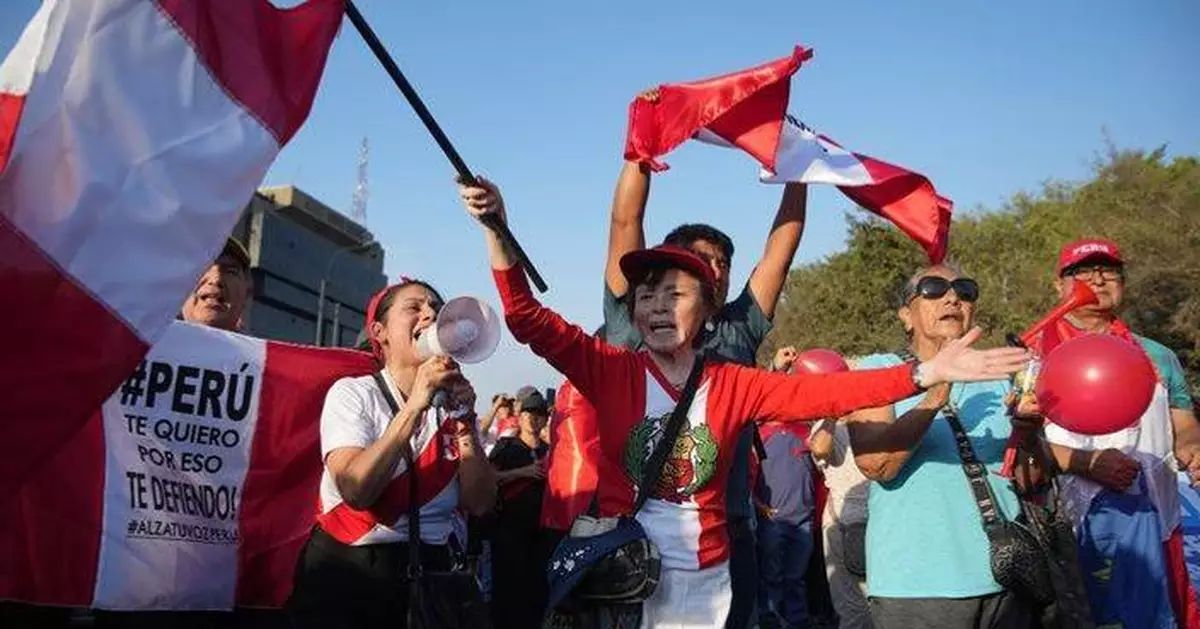
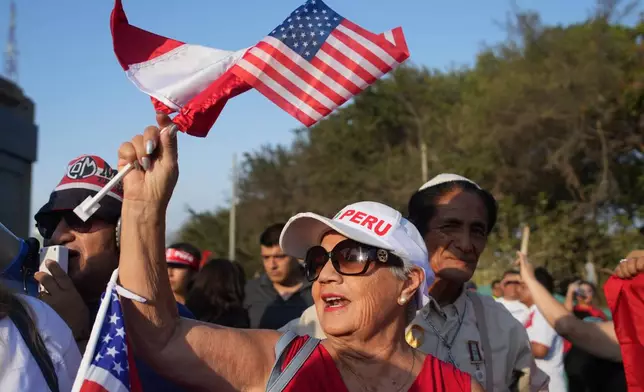
Supporters of presidential candidate Rafael Lopez Aliaga, of the Popular Renewal party, rally in Lima, Peru, Sunday, April 19, 2026. (AP Photo/Guadalupe Pardo)
Supporters of presidential candidate Rafael Lopez Aliaga, of the Popular Renewal party, rally in Lima, Peru, Sunday, April 19, 2026. (AP Photo/Guadalupe Pardo)
More than 30 candidates participated in the April 12 election and the top two contenders must go to a runoff on June 7, because none of the candidates garnered more than half the votes.
However, a razor thin margin currently separates the second and third place candidates, and the election was blighted with irregularities that forced authorities to open some voting stations in the capital city of Lima for an additional day.
Authorities in Peru are still sifting through tally sheets that are arriving from remote areas and also from the nation’s consulates overseas. Hundreds of tally sheets have been challenged by electoral observers and must now be reviewed by officials.
With 93.5% of votes counted, conservative leader Keiko Fujimori is leading the election with 17.05% of the vote, and looks almost certain to enter the June runoff.
Roberto Sánchez, a nationalist congressman and former minister under imprisoned ex-President Pedro Castillo, comes in second place so far with 12% of the votes, but is closely followed by the ultraconservative former mayor of Lima, Rafael López Aliaga, with 11.91% of the votes.
López Aliaga has challenged the partial results of the election saying, without providing any evidence, that a “gigantic fraud” was committed by Peruvian officials, and calling for a “complementary” election, in which hundreds of thousands of Peruvians who did not cast their ballots on April 12 can participate.
A European Union electoral observation mission said last week that while the election had experienced logistical problems there were no signs of a fraudulent vote count.
López Aliaga has focused on a hard-line security agenda during the campaign, proposing to build prisons in the country’s Amazon region, allowing judges to conceal their identities and expelling foreigners who are living illegally in Peru, but has not promised major changes to the country's free market economy.
He cuts a stark contrast with Sánchez, a former commerce minister who has promised to make major economic changes that include a dramatic expansion of government spending, an extensive reform of the tax system and partial nationalization of Peru’s natural resources. The leftist candidate, who has become known for wearing a wide-brimmed traditional hat during his public appearances, also said he would remove the director of Peru's central bank early in his campaign, but then modified his position saying he would respect the bank's autonomy.
While both of these candidates have garnered fewer votes in the first round of the election than Fujimori, either one of them is expected to have a good chance at defeating the conservative political leader in a runoff.
Fujimori, the daughter of a former president who was jailed for human rights abuses, has been a presidential candidate in three previous occasions. She has advanced to the second round of the elections three times, but was unable to win any of these contests.
The winner will be Peru’s ninth president in just 10 years and will replace José María Balcázar, who was elected interim president in February. He replaced another interim leader who was ousted over corruption allegations just four months into his term.
Follow AP’s coverage of Latin America and the Caribbean at https://apnews.com/hub/latin-america
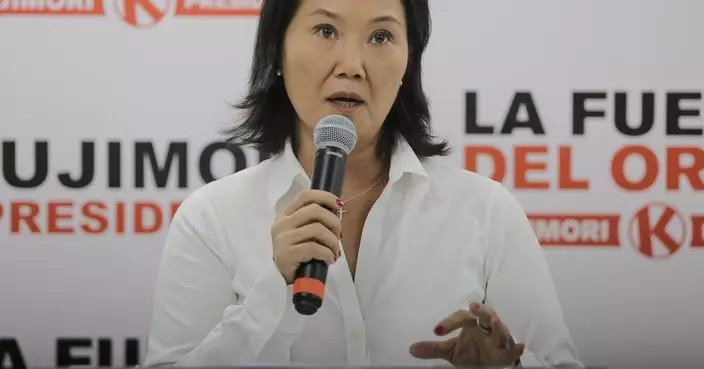
Presidential candidate Keiko Fujimori, of the Popular Force party, gives a press conference, as electoral authorities continue to count the ballots three days after general elections in Lima, Peru, Wednesday, April 15, 2026. (AP Photo/Gerardo Marin)

Roberto Sanchez, presidential candidate of Together for Peru party, speaks during a press conference in Lima, Peru, Saturday, April 18, 2026. (AP Photo/Guadalupe Pardo)
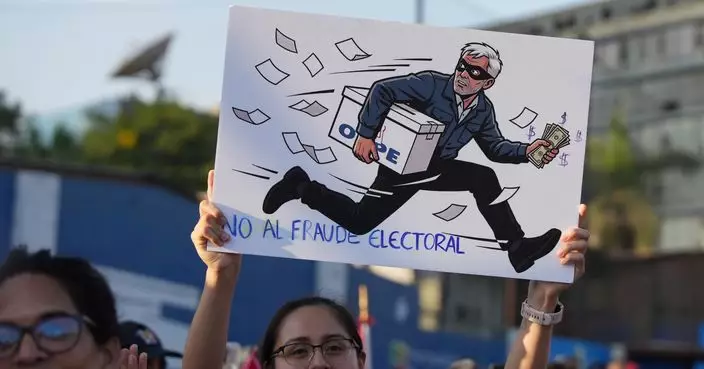
A supporter of presidential candidate Rafael Lopez Aliaga, of the Popular Renewal party, holds a sign reading in Spanish, "No to electoral fraud" during a rally in Lima, Peru, Sunday, April 19, 2026. (AP Photo/Guadalupe Pardo)
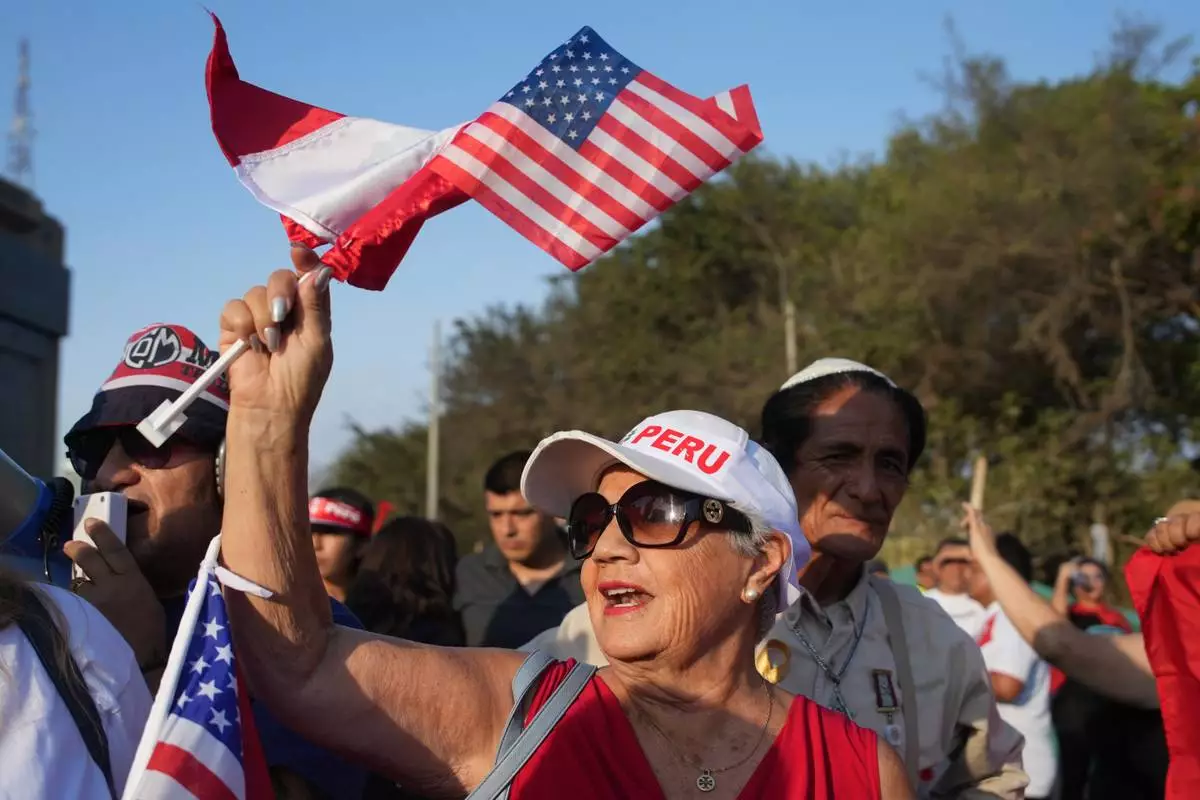
Supporters of presidential candidate Rafael Lopez Aliaga, of the Popular Renewal party, rally in Lima, Peru, Sunday, April 19, 2026. (AP Photo/Guadalupe Pardo)
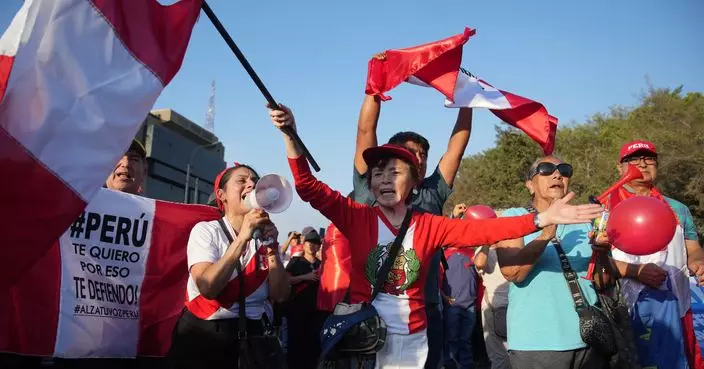
Supporters of presidential candidate Rafael Lopez Aliaga, of the Popular Renewal party, rally in Lima, Peru, Sunday, April 19, 2026. (AP Photo/Guadalupe Pardo)
WASHINGTON (AP) — President Donald Trump offered mixed messages on Monday about the path ahead for the U.S. war against Iran, declaring that he was in no rush to end the conflict while also expressing confidence that further negotiations with Tehran will soon take place in Pakistan.
With the 14-day ceasefire to expire Wednesday, Trump whipsawed in telephone interviews and social media posts between measured optimism that a deal could soon be reached and warning that “lots of bombs” will “start going off” if there's no agreement before the ceasefire deadline.
Trump indicated that he still expects to dispatch his negotiating team, led by Vice President JD Vance, to Pakistan's capital of Islamabad for a second round of talks, even as Iran insisted it would not take part until Trump dialed back his demands.
Iran’s chief negotiator and parliament speaker, Mohammed Bagher Qalibaf, accused the United States of wanting Iran to surrender and added that on the contrary, Iran has been preparing “to reveal new cards on the battlefield."
“We do not accept negotiations under the shadow of threats,” Qalibaf wrote in a post on X early Tuesday.
Trump insisted he feels no pressure to end the war until Iran agrees to his terms.
“I am under no pressure whatsoever,” Trump said on his Truth Social platform, “although, it will all happen, relatively quickly!”
Pakistani officials moved ahead with preparations for a new round of talks between the U.S. and Iran as the tenuous ceasefire was further strained over the weekend by renewed conflict around the Strait of Hormuz.
Trump told Bloomberg News he was “highly unlikely” to renew the ceasefire.
Tensions flared after the U.S. Navy attacked and seized a ship on Sunday that it said was trying to evade its blockade of Iranian ports. On Saturday, Iran fired at vessels and abruptly stopped traffic in the strait, abandoning its promise to allow some ships to pass and claiming the U.S. was not holding up its side of the ceasefire.
The U.S. actions are “incompatible with the claim of diplomacy,” Iranian Foreign Minister Abbas Araghchi said Monday in a social media post.
He gave no indication what Iran will do after the ceasefire expires or whether Iran will return to a second round of negotiations with the U.S.
Over the weekend, Iran said it had received new proposals from the U.S. but suggested that a wide gap remains between the sides. Issues that derailed the last round of negotiations included Iran’s nuclear enrichment program, its regional proxies and the strait.
Iran has throttled traffic through the strait, which connects the Persian Gulf to the open seas, since shortly after the U.S. and Israel attacked Iran on Feb. 28 to start the war. The U.S. has also instituted a blockade of Iranian ports. Roughly one-fifth of the world’s oil trade normally passes through the strait.
The U.S. president lashed out at war critics at home who are urging him to wrap up the conflict that began more than seven weeks ago.
“How bad is it that when you are in the middle of negotiations and you have got the Iranians in a perfect position, including being militarily defeated, and you have Democrats and some Republicans asking to settle it now?” Trump told the New York Post.
Even as Trump bristled at his detractors, he sought to soothe jittery investors as U.S. stocks slipped modestly Monday, following the chaotic weekend in the Persian Gulf.
The president found himself remonstrating his energy secretary, Chris Wright, who on Sunday said American motorists might not see gas prices fall back into the $3 per gallon range until late this year or next year.
“I disagree with him totally. I think it’ll come roaring down if it ends,” Trump told PBS. “If we end it, if Iran does what they should do, it will come roaring down.”
Meanwhile, historic diplomatic talks between Israel and Lebanon were set to resume Thursday in Washington, an Israeli, a Lebanese and a U.S. official said. All three spoke on condition of anonymity to discuss the behind-the-scenes negotiations.
The Israeli and Lebanese ambassadors met last week for the first direct diplomatic talks in decades. Israel says the talks are aimed at disarming Hezbollah and reaching a peace agreement with Lebanon.
A 10-day ceasefire began Friday in Lebanon, where fighting between Israel and Iranian-backed Hezbollah militants broke out two days after the U.S. and Israel launched their war on Iran. Fighting in Lebanon has killed more than 2,290 people.
In two separate encounters on Monday, the Israeli air force struck and killed Hezbollah militants that the military said approached its troops in a threatening way. Israel has carried out several airstrikes since the ceasefire went into effect.
Hezbollah said it detonated explosives Sunday in an Israeli convoy inside Lebanon.
Since the war started, at least 3,375 people have been killed in Iran, according to a new toll released Monday in official Iranian media by Abbas Masjedi, the head of Iran’s Legal Medicine Organization.
He did not break down casualties among civilians and security forces, saying instead that 2,875 were male and 496 were female. Masjedi said 383 of the dead were children 18 years old and younger.
Additionally, 23 people have died in Israel and more than a dozen in Gulf Arab states. Fifteen Israeli soldiers in Lebanon and 13 U.S. service members throughout the region have been killed.
Iran’s grip on the strait has sent oil prices skyrocketing and given rise to one of the worst global energy crises in decades.
Oil prices were up again Monday, with Brent crude, the international standard, at just over $95 a barrel — up from about $70 a barrel before the war started.
Iran said it had reopened the strait to ships Friday, but traffic halted after Trump refused to lift the U.S. blockade.
Sunday's U.S. seizure of the Iranian cargo was the first such interception under the blockade. Iran’s joint military command called the armed boarding an act of piracy and a ceasefire violation.
Trump said the blockade will remain “in full force” until Tehran agrees to a deal. The U.S. military said on Monday that it has directed 27 ships to return to Iranian ports since the blockade began last week.
Ahmed reported from Islamabad, and Bynum reported from Savannah, Georgia. Associated Press journalists Jon Gambrell in Dubai, United Arab Emirates; David Rising in Bangkok; Melanie Lidman in Tel Aviv, Israel; Josef Federman in Jerusalem; Joshua Boak and Matthew Lee in Washington; and Giovanna Dell'Orto in Minneapolis contributed to this report.
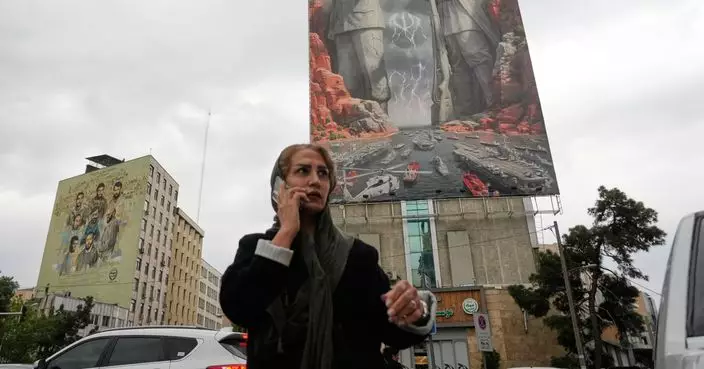
A woman talks on her cellphone as she walks past a billboard showing Rais Ali Delvari, a national hero in an early 1900 uprising against British forces in southern Iran in the Persian Gulf, right, and the late Revolutionary Guard's navy chief Alireza Tangsiri, who was killed in the U.S.-Israeli strike in late March 2026, commanding the closure of the Strait of Hormuz, on a building at a square in downtown Tehran, Iran, Monday, April 20, 2026. (AP Photo/Vahid Salemi)
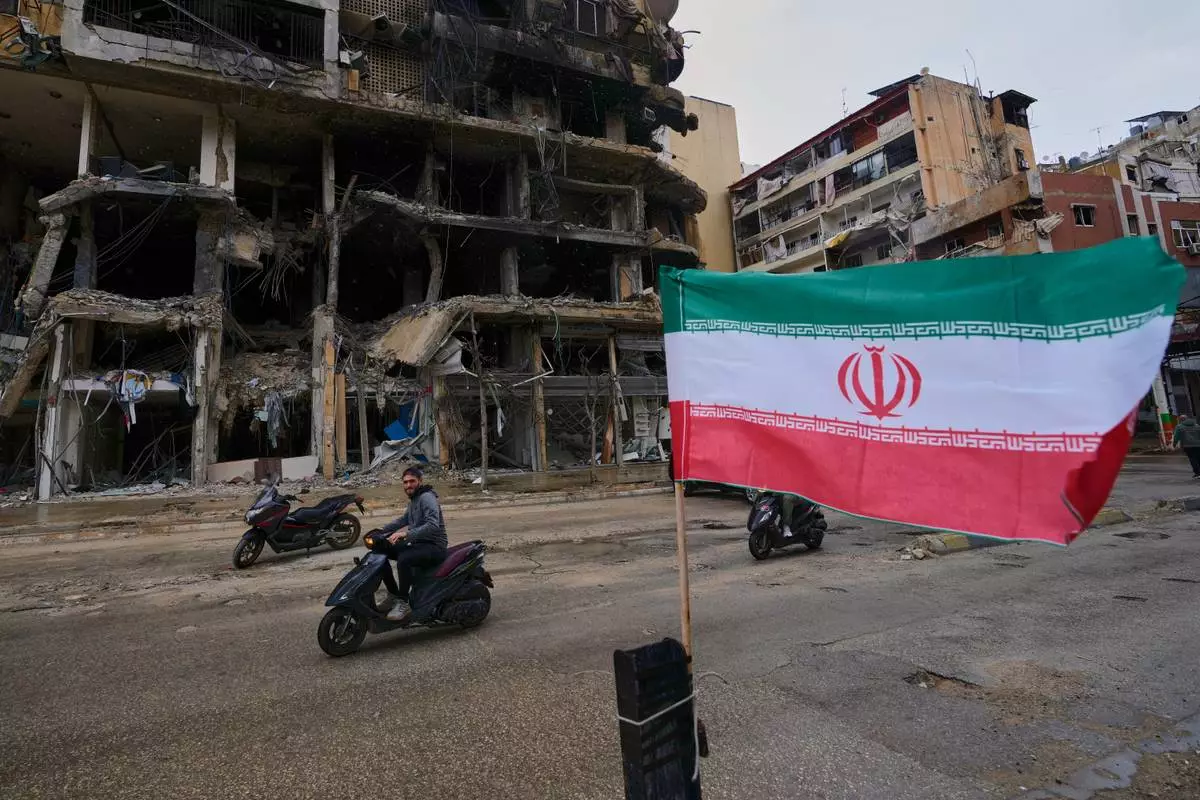
A man on his scooter passes next to an Iranian flag placed in front of a destroyed building, following a ceasefire between Hezbollah and Israel, in Dahiyeh, Beirut's southern suburbs, Lebanon, Monday, April 20, 2026. (AP Photo/Hussein Malla)
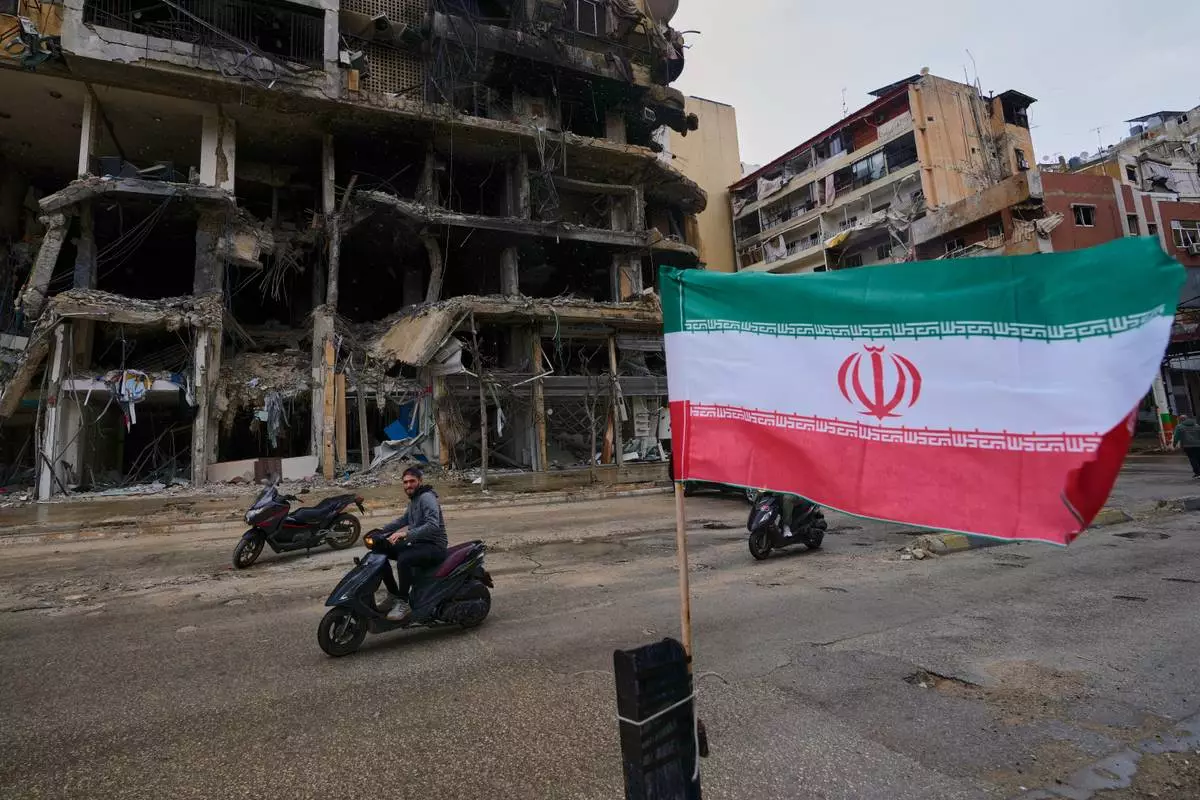
A man on his scooter passes next to an Iranian flag placed in front of a destroyed building, following a ceasefire between Hezbollah and Israel, in Dahiyeh, Beirut's southern suburbs, Lebanon, Monday, April 20, 2026. (AP Photo/Hussein Malla)
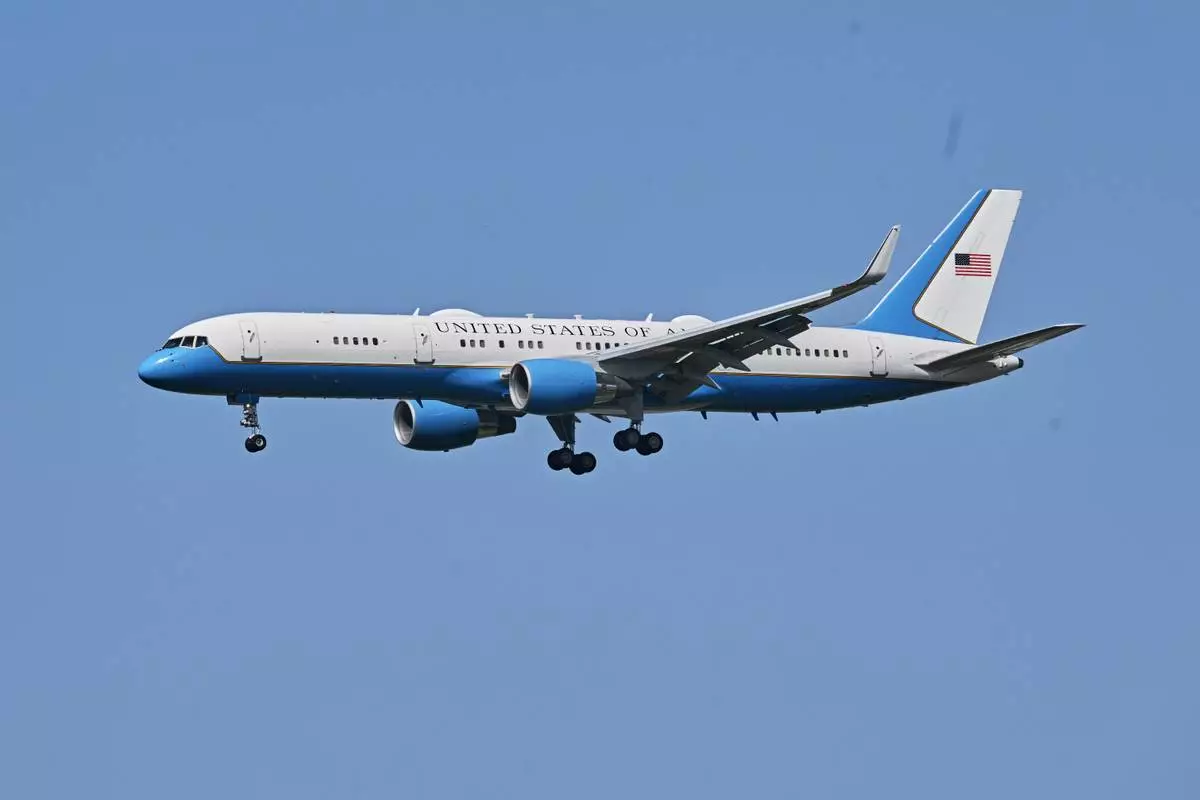
A U.S. Air Force Boeing C-32 plane approaches landing at Nur Khan airbase ahead of second round of negotiations between the U.S. and Iran, in Rawalpindi, Pakistan, Monday, April 20, 2026. (AP Photo/Ehsan Shahzad)
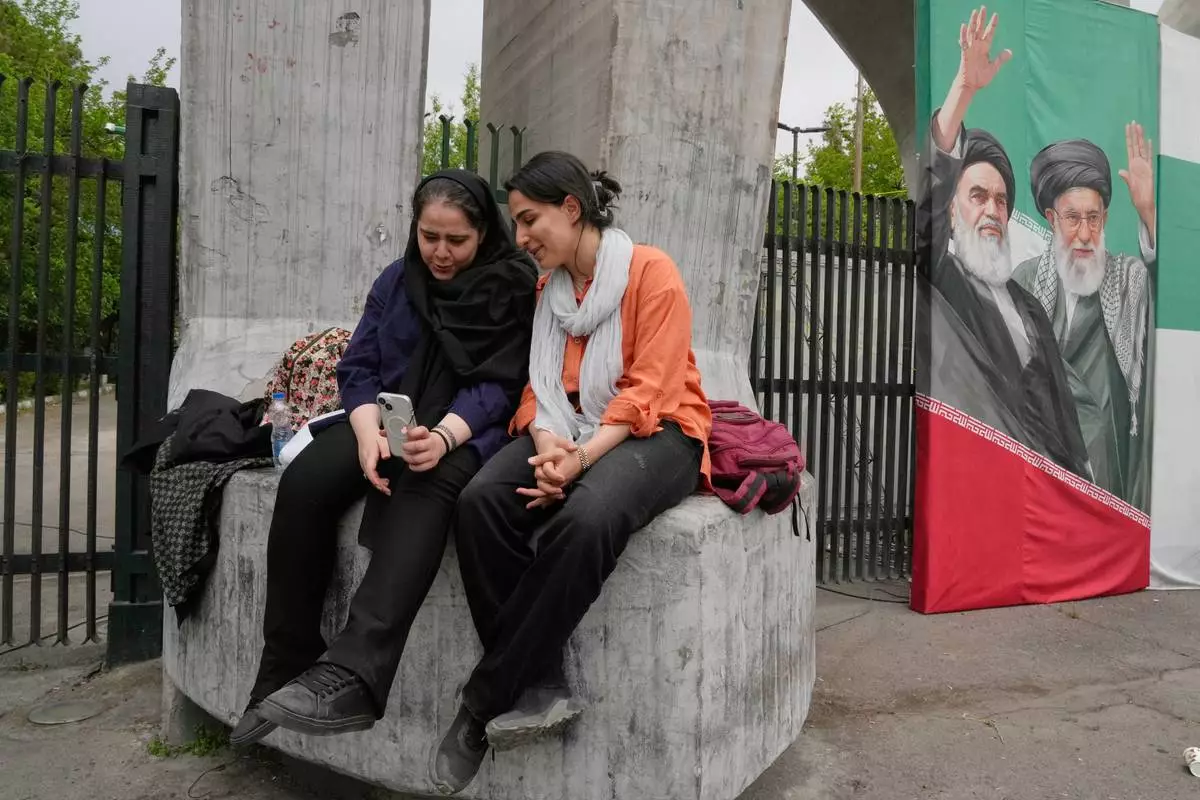
Women share a moment as they look at a smartphone at the main gate of the Tehran University as a banner shows portraits of the late Supreme Leader Ayatollah Ali Khamenei, right, and the late revolutionary founder Ayatollah Khomeini in Tehran, Iran, Sunday, April 19, 2026. (AP Photo/Vahid Salemi)
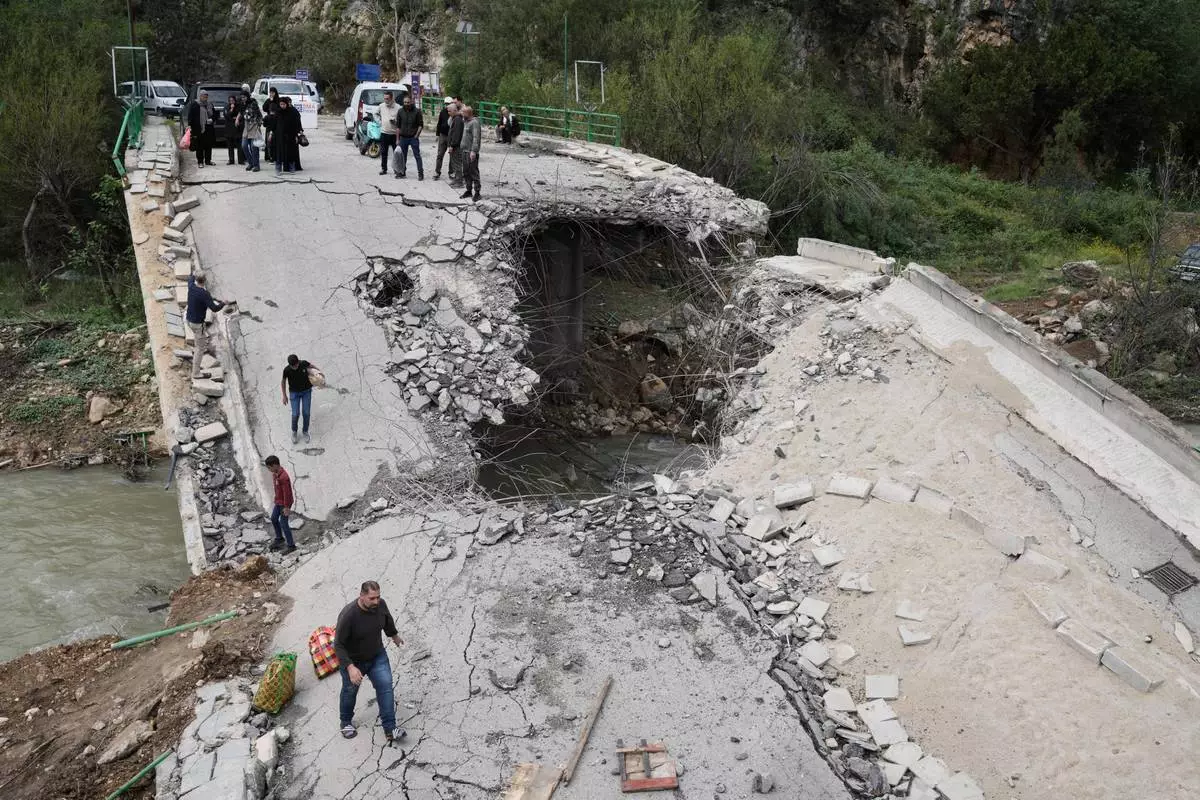
Displaced people cross a destroyed bridge as they return to their villages, following a ceasefire between Hezbollah and Israel, in Tayr Felsay village, southern Lebanon, Sunday, April 19, 2026. (AP Photo/Bilal Hussein)
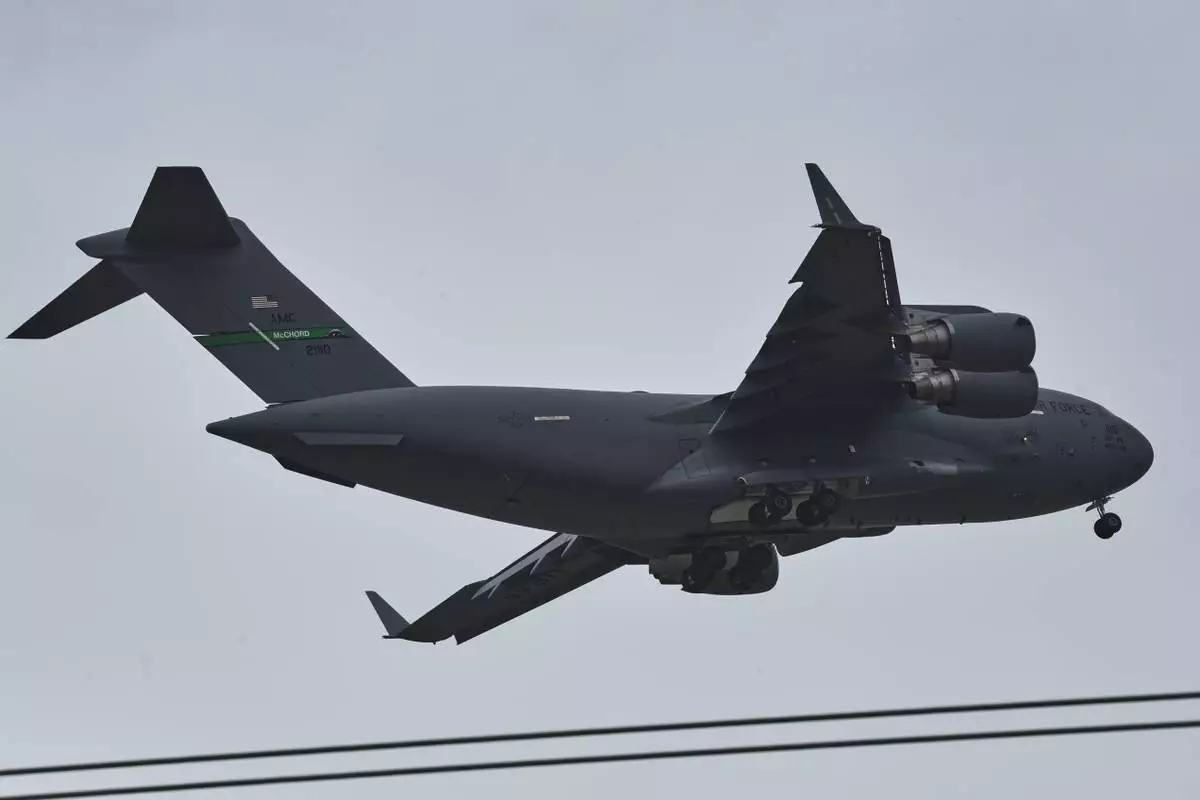
A U.S. Air Force Boeing C-17 Globemaster III transport aircraft prepares to land at Nur Khan airbase, ahead of second round of negotiations between the U.S. and Iran, in Rawalpindi, Pakistan, Monday, April 20, 2026. (AP Photo/Ehsan Shahzad)
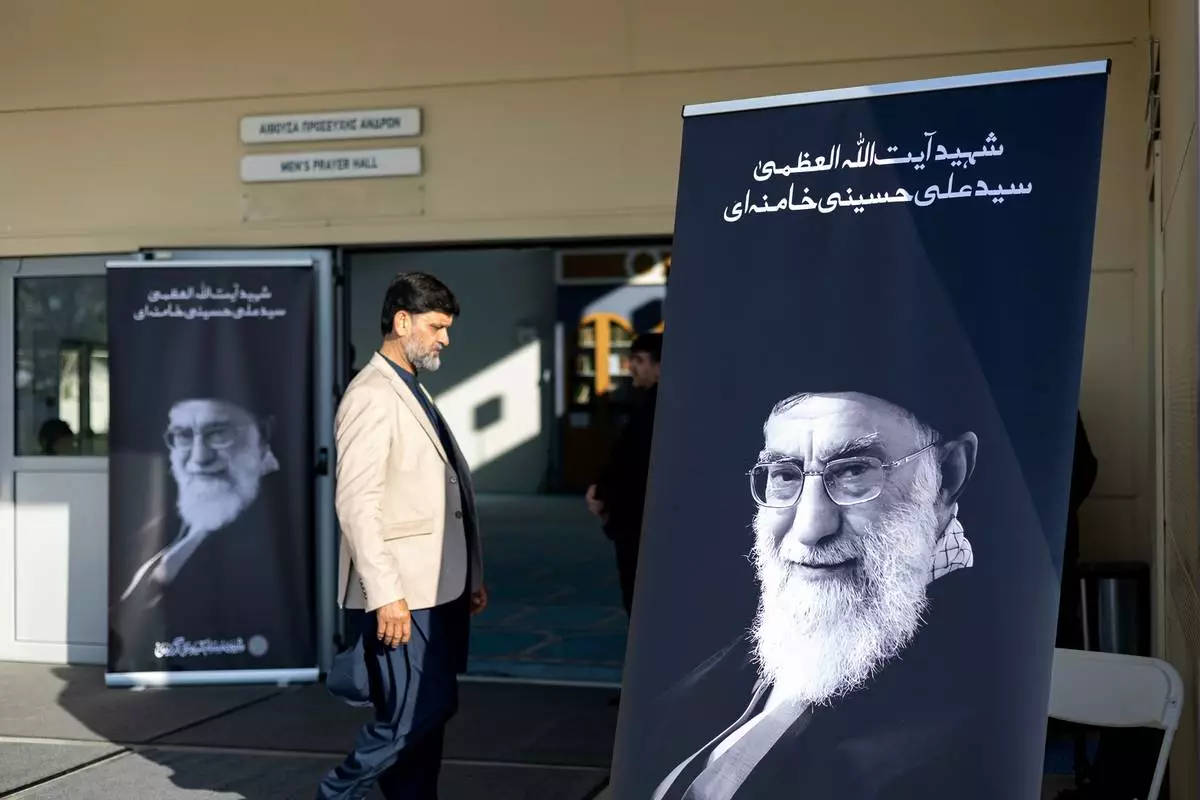
A muslim walks outside a mosque where a commemorative religious event in honor of late Supreme Leader Ayatollah Ali Khamenei is taking place, organized by the Shiite Muslim Community of Greece in Athens, on Sunday, April 19, 2026. (AP Photo/Yorgos Karahalis)
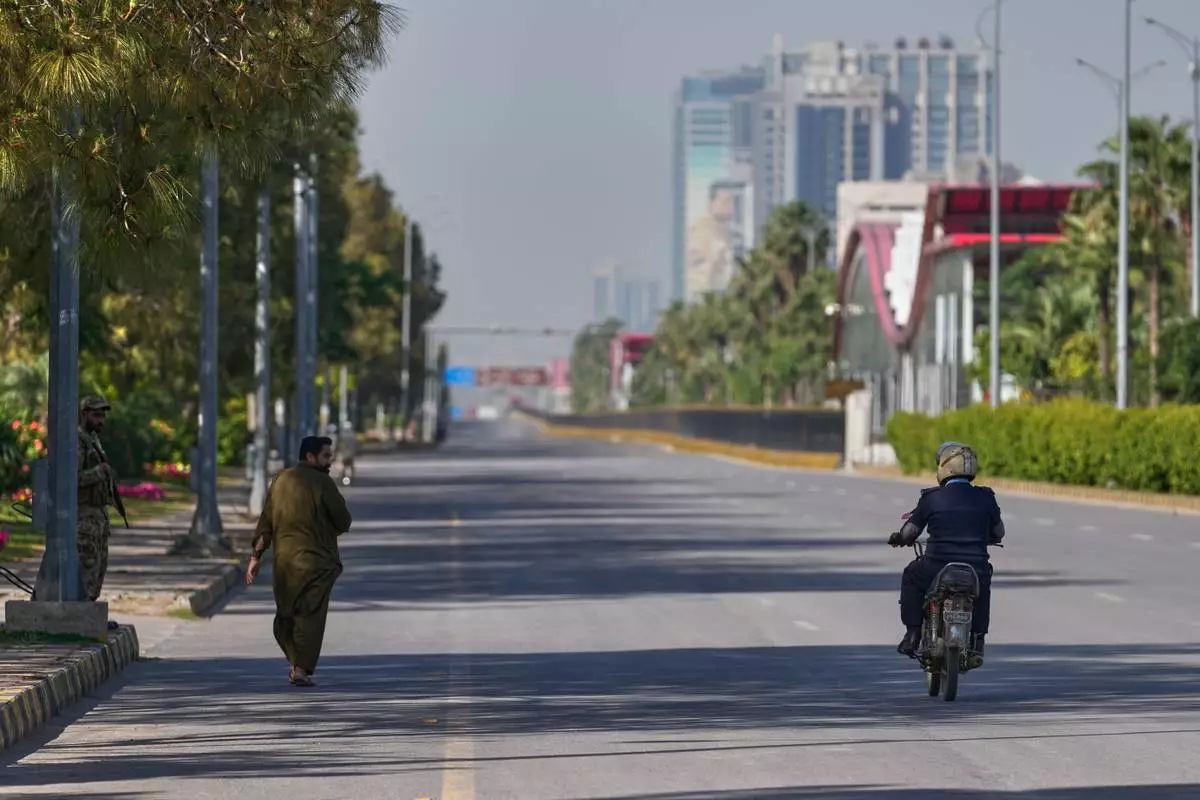
An army soldier, left, walks as police officer drives motorcycle on an empty road ahead of second round of negotiations between the U.S. and Iran, in Islamabad, Pakistan, Monday, April 20, 2026. (AP Photo/Anjum Naveed)