LONDON--(BUSINESS WIRE)--Apr 21, 2026--
Samsara (NYSE: IOT), the pioneer of the Connected Operations Platform®, today launched an industry-first dynamic Smart Compliance solution for fleets across the EU and UK. The platform enables a proactive approach to tachograph (tacho) compliance, helping organisations manage critical elements of driver safety and regulatory workflows in one place.
This press release features multimedia. View the full release here: https://www.businesswire.com/news/home/20260421086632/en/
Designed for compliance managers and safety leaders across industries, Samsara’s Smart Compliance integrates prevention, management, and coaching into a single, open platform.
Traditional compliance often requires managing multiple, disconnected systems for tacho downloads and telematics. This creates administrative burdens and increases the risk of legal fines. With 60% to 80% of EU fleets operating across borders, managing these complexities is a daily challenge.
Samsara is the first platform that eliminates the need for fragmented, legacy systems by seamlessly consolidating AI-based safety, telematics, and comprehensive compliance into a single experience. As one of the first in the industry to offer proactive pre-infringement audio alerts, we empower drivers to correct errors in real time before they result in infringements.
While other solutions offer a patchwork of tools, Samsara provides a true one-stop shop with advanced rulesets for 17 European countries. This unified approach gives organisations the accurate insights they need to scale cross-border operations while keeping their people safe and their supply chains resilient.
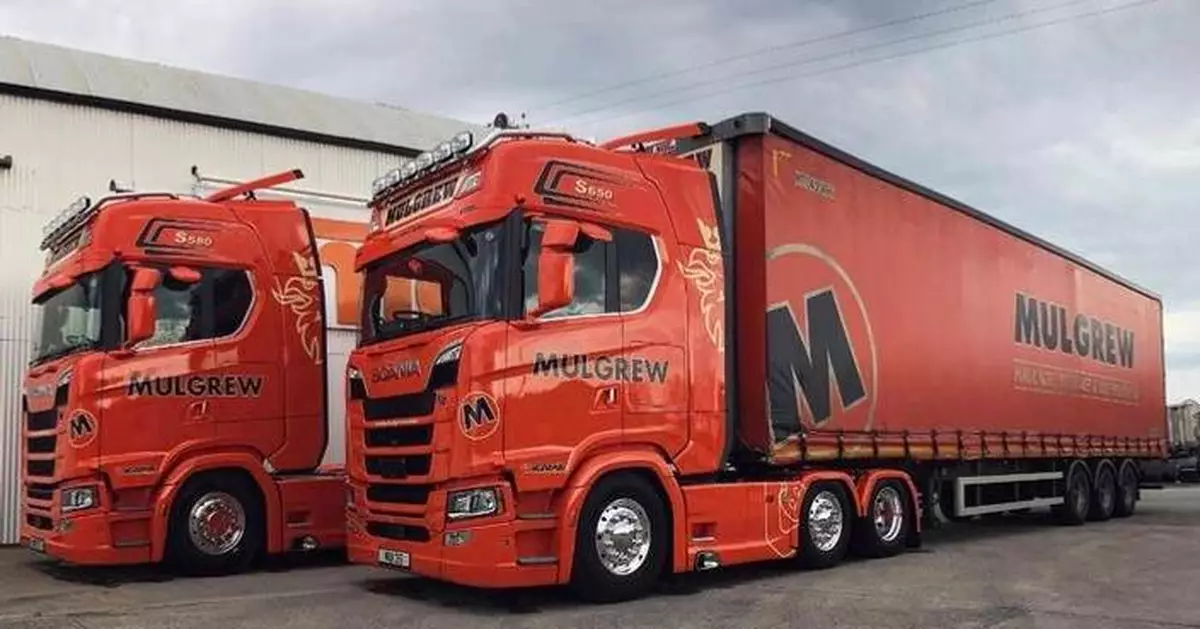
“Previously, we would wait for the infringement report and deal with everything in bulk, which could take most of the day,” said Matt Crossland, UK Area Manager at Mulgrew Haulage Ltd, one of the first customers to trial Smart Compliance. “Now everything is in one place—the infringement, manager response, and driver acknowledgement—and it takes about two minutes per infringement with Smart Compliance. Instead of looking back at last month’s infringements, we review yesterday’s, deal with them immediately, and send them straight to the driver digitally to fully understand what happened. This reduces what previously took a day, to a matter of minutes.”
Key innovations for smarter operations
The stakes for maintaining compliance have never been higher. In 2024, tachograph offenses accounted for 58% of all DVSA HGV prosecutions, and the regulatory landscape continues to evolve. Starting in July 2026, these requirements will extend to cross-border LCVs over 2.5 tonnes, putting additional pressure on international fleets. For many organisations, the risk of non-compliance goes beyond financial penalties; it can lead to the loss of their operator’s licence, making a unified, reliable compliance platform an essential part of their long-term resilience.
Samsara helps physical operations organisations improve safety and efficiency. By moving to an integrated, data-driven system, fleets can reduce administrative costs and significantly cut down on fines. With costs of up to £5,000 per infringement and the risk of suspension or loss of an Operator's License, proactive compliance is critical for fleet operations. This approach also boosts driver retention by replacing punitive measures with helpful, respectful coaching.
"Our customers' operations in Europe are some of the most complex in the world, and there is a huge opportunity to use AI to spot risks and avoid infringements,” said Praveen Murugesan, VP of Engineering EMEA. “Smart Compliance takes the guesswork out of compliance by automating the toil that office teams grapple with every day. We're super excited to provide the technology that keeps these essential supply chains moving safely."
Samsara’s Smart Compliance will be available from today, for fleets across the EU and in the UK. To learn more, visit samsara.com/eu-smart-compliance.
About Samsara
Samsara (NYSE: IOT) is the pioneer of the Connected Operations® Platform, which is an open platform that connects the people, devices, and systems of some of the world’s most complex operations, allowing them to develop actionable insights and improve their operations. With tens of thousands of customers across North America and Europe, Samsara is a proud technology partner to the people who keep our global economy running, including the world’s leading organizations across industries in transportation, construction, wholesale and retail trade, field services, logistics, manufacturing, utilities and energy, government, healthcare and education, food and beverage, and others. The company's mission is to increase the safety, efficiency, and sustainability of the operations that power the global economy.
Samsara is a registered trademark of Samsara Inc. All other brand names, product names or trademarks belong to their respective holders.
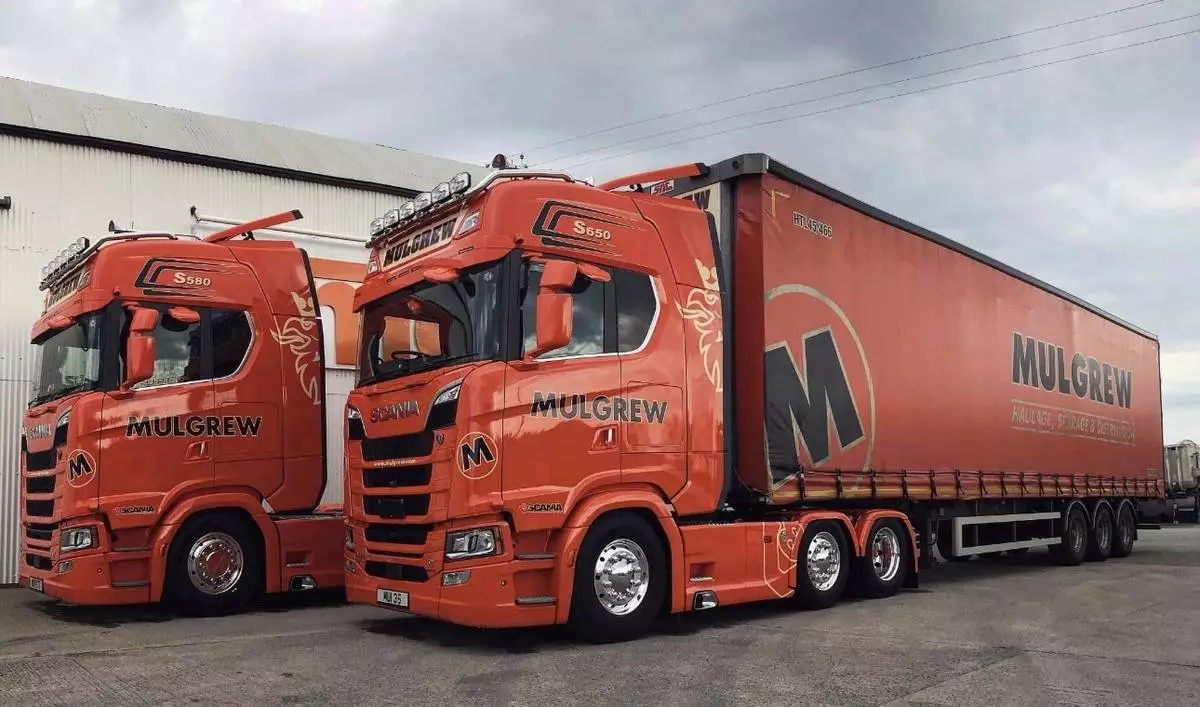
Mulgrew Haulage Ltd
PHILADELPHIA (AP) — Ed Sheeran opened a concert Saturday with comments about Gaza after controversy swirled around his tour and supporting acts withdrew in solidarity with opener Macklemore, who was dropped after making pro-Palestinian comments onstage.
Sheeran began the concert alone on stage with no opener, but was joined by other musicians later in the show.
Sheeran said he wants his music and shows to be about unity and humanity, not politics. But he said the attacks in Israel of Oct. 7, 2023, were horrific and what is happening in Gaza “catastrophic and unjustifiable.”
“I don’t want to disappoint fans, and I’ve never wanted to be an activist musician, but this has put me in the middle of an important and passionate argument about freedom of speech and the most complex political issue on the planet,” Sheeran said during his performance at Lincoln Financial Field in Philadelphia.
The comments before a nearly full stadium came after a tumultuous week that began with rapper Macklemore, Sheeran's original U.S. opener, being dropped in response to exclaiming “Free Palestine” during a Sept. 5 show in New Jersey.
Sheeran has said he was not responsible for the decision, which came at the urging of New England Patriots owner Robert Kraft. His company owns a stadium where Sheeran’s tour was scheduled to play on Friday.
Within hours of Sheeran’s statement Tuesday, his supporting acts withdrew.
Sheeran has performed many songs solo during his Loop Tour concerts, but was joined for several songs at each stop by the Irish folk band Beoga before they dropped out in support of Macklemore.
Macklemore was replaced by Danish band Lukas Graham and Irish singer Aaron Rowe before they backed out, and Finneas, Billie Eilish’s brother and musical collaborator, was due to tour with Sheeran in South America later this year before he too dropped out this week.
Before Saturday's show, a small group of pro-Palestinian demonstrators congregated outside the stadium. Hillary Steinberg, 34, said she got concert tickets a year ago but wound up getting a refund and attended the demonstration instead, disappointed that Sheeran did not take a stand.
“I was, until this week, a big Ed Sheeran fan,” Steinberg said. “I think all art is political, and all music is political, and so this choice — even though he was saying that he wasn’t complicit — is a political choice.”
Diane Savitz, a 53-year-old from Stroudsburg, Pennsylvania, got tickets months ago and attended. She said she is a big Sheeran fan, doesn't think he did anything wrong and a concert is not the place for politics.
“A concert should be for people enjoying the music. Music should bring people together,” Savitz said. “Everyone has their right to freedom of speech, but not every platform is the place for it.”
Macklemore said Wednesday he is donating $1 million to support Palestinian relief efforts and called on Kraft to match the gift; a spokesperson for Kraft has said the billionaire and Sheeran have each agreed to donate $2 million but have not specified where the money will be directed. Sheeran's representatives have not responded to multiple requests for comment.
Sheeran was the No. 3 top-earning concert act of the millennium so far, industry magazine Pollstar calculated in late 2025.
Sheeran has said the tour promoter was ultimately responsible for the decision to drop Macklemore.
The Grammy winner was adamant earlier this week that he wouldn't be drawn into discussion of the war in Gaza, arguing that his fans don’t come to his shows to hear about these issues.
He also said he “spoke with the venues at length all week to try to build a bridge” before Macklemore was dropped. He insisted he would never willingly let down his fans or abandon the touring crew and others who rely on him to make a living.
While promoters and venues wield great power over concert tours, experts say an artist of Sheeran's magnitude generally has the final say about what happens concerning the shows.
Sheeran told the crowd in Philadelphia that everyone is welcome at his concerts, and they can have opposing points of view while still singing his songs, which are about “love, hope and unity.”
He also told fans he worries about venues preapproving performances.
“This happens in so many places that I perform around the world, but it should never happen in the free world,” Sheeran said.
A previous version of this story incorrectly quoted Pollstar magazine as calculating that Sheeran was the third-highest concert earner from 2021-2025. It was from 2001-2025. It has also been edited to correct the spelling of Pollstar.
Associated Press journalist Jessica Hill in Las Vegas contributed.
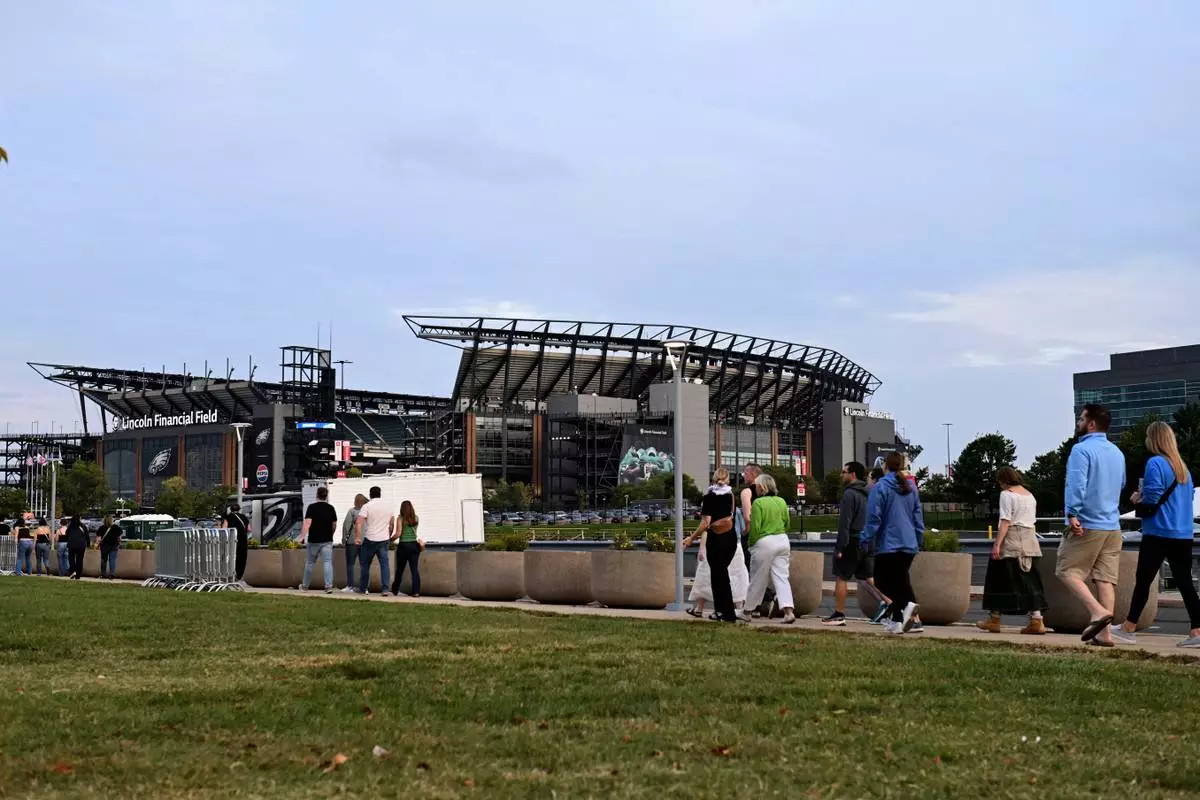
Concert goers arrive to Lincoln Financial Field before an Ed Sheeran concert in Philadelphia, Saturday, Sept. 19, 2026. (AP Photo/Allie Ippolito)
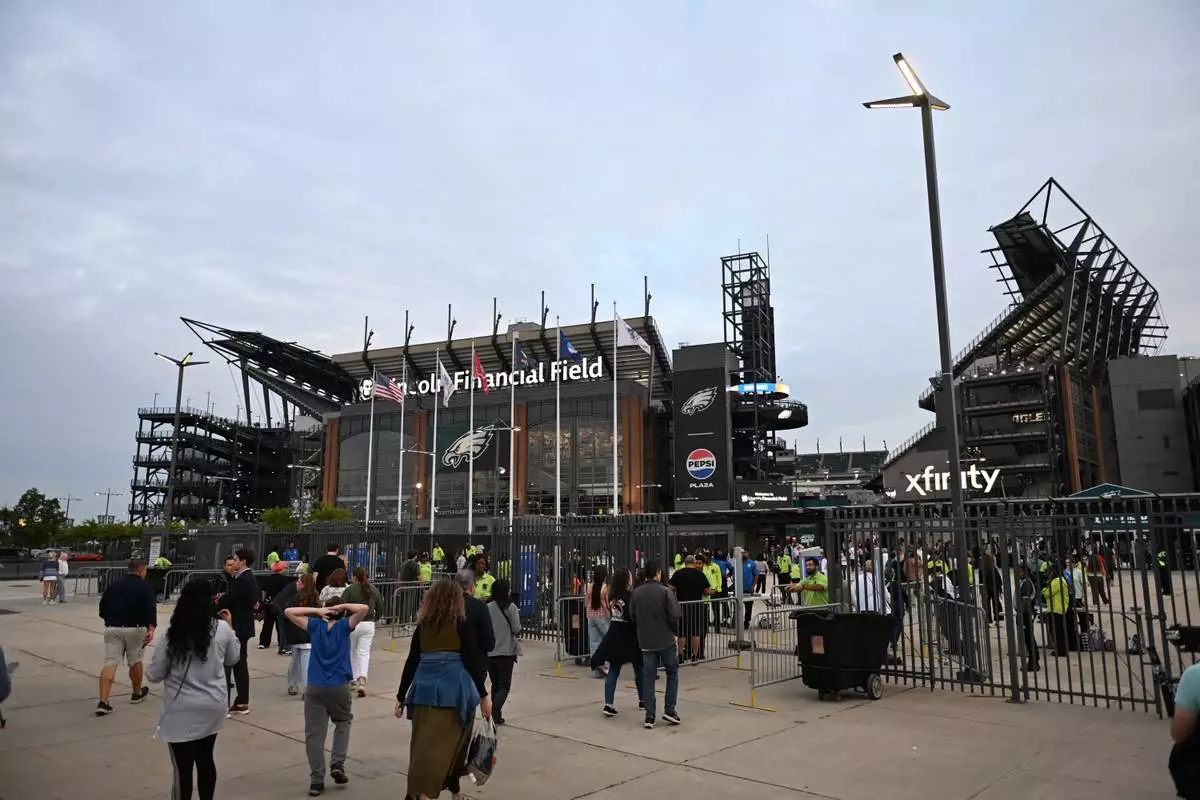
Concert goers arrive to Lincoln Financial Field before an Ed Sheeran concert in Philadelphia, Saturday, Sept. 19, 2026. (AP Photo/Allie Ippolito)
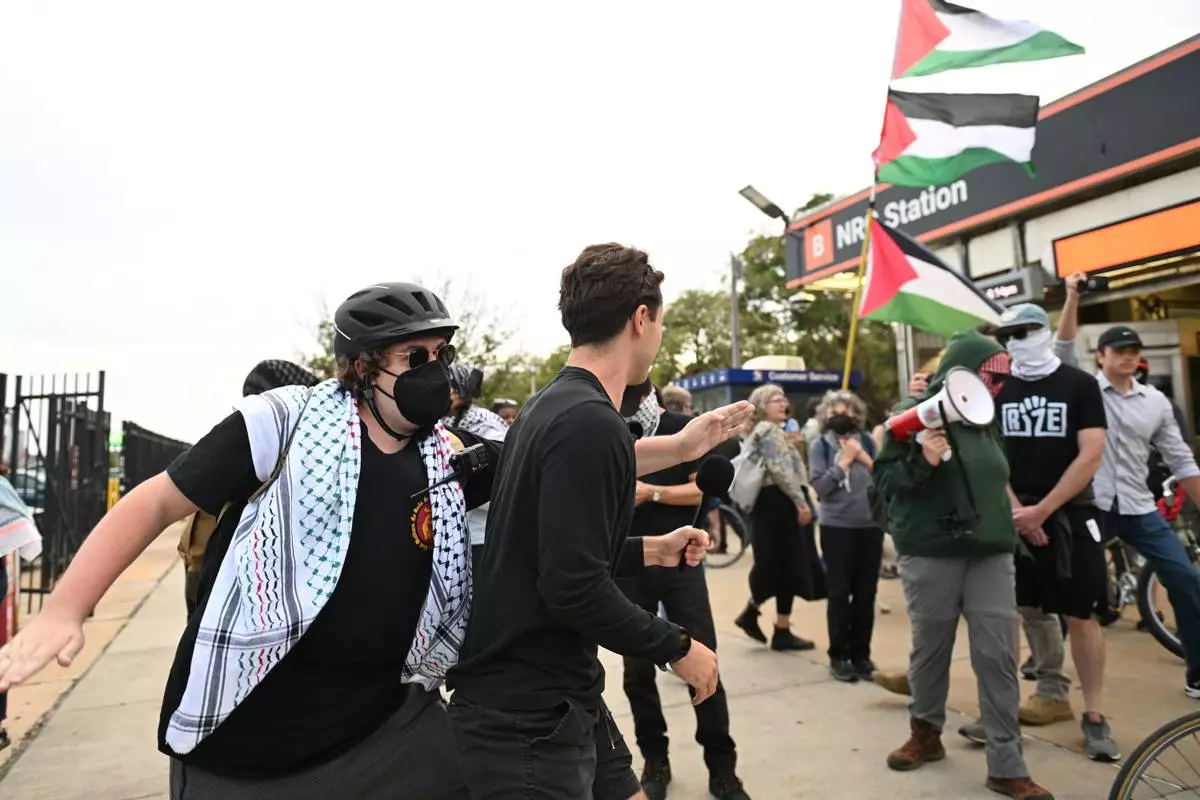
Pro Palestinian protesters, right, march past counter protesters during a protest before an Ed Sheeran concert in Philadelphia, Saturday, Sept. 19, 2026. (AP Photo/Allie Ippolito)

Pro-Palestinian demonstrators hold signs during a "Free Palestine" protest before an Ed Sheeran concert in Philadelphia, Saturday, Sept. 19, 2026. (AP Photo/Allie Ippolito)
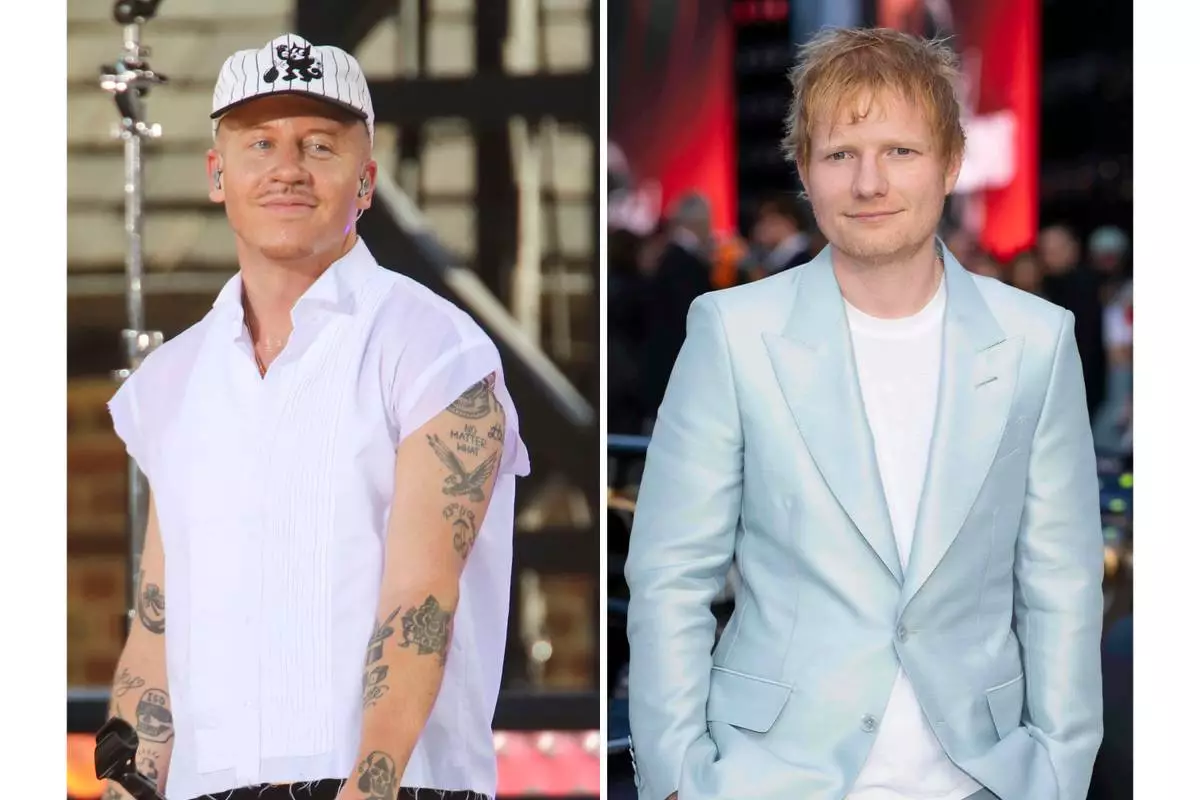
Recording artist Macklemore appears on ABC's "Good Morning America" Summer Concert Series in Central Park in New York on July 22, 2022, left, and Ed Sheeran appears at the premiere of the film "F1 The Movie" in London on June 23, 2025. (AP Photo)
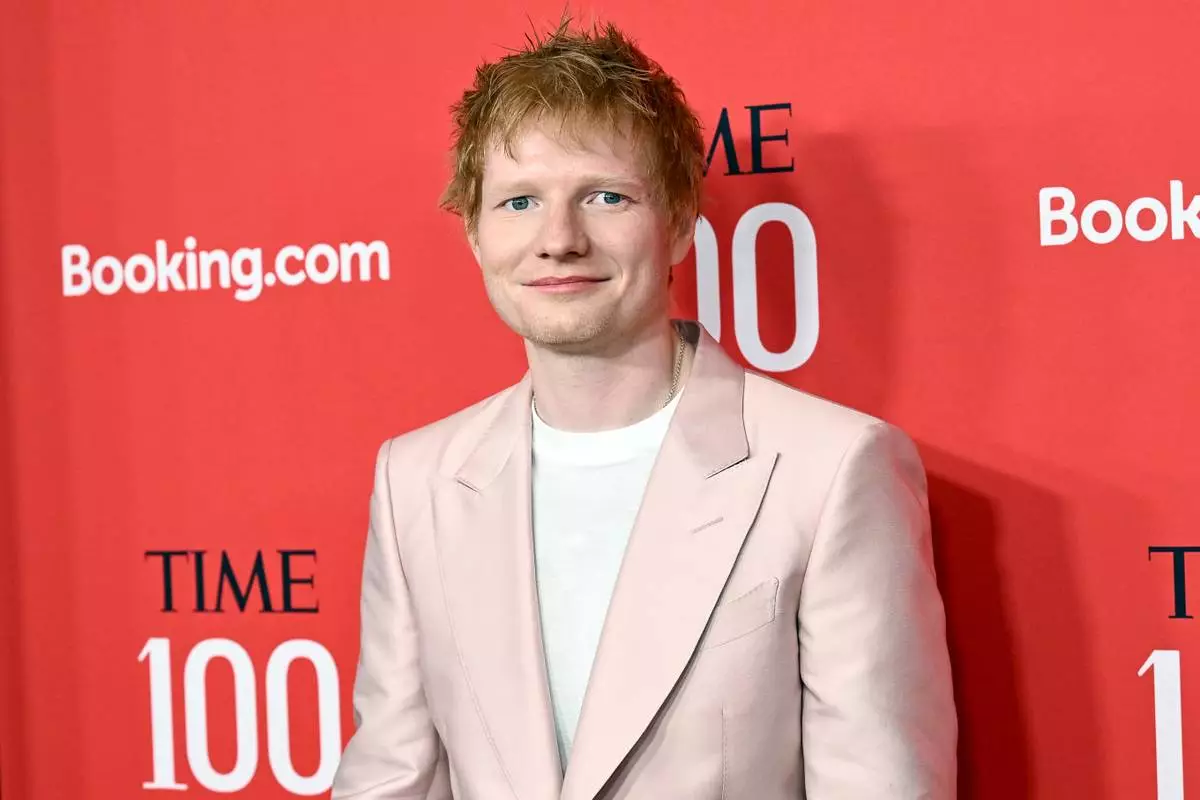
FILE - Ed Sheeran attends the Time100 Gala, in New York on April 24, 2025. (Photo by Evan Agostini/Invision/AP, File)