Skip to Content Facebook Feature Image

Financial Secretary Celebrates World Intellectual Property Day, Highlights Hong Kong's Role in IP and Sports

HK

Financial Secretary Celebrates World Intellectual Property Day, Highlights Hong Kong's Role in IP and Sports
HK

HK

Financial Secretary Celebrates World Intellectual Property Day, Highlights Hong Kong's Role in IP and Sports

2026-04-21 18:53 Last Updated At:04-22 11:23

Speech by FS at World Intellectual Property Day Reception 2026

Following is the speech by the Financial Secretary, Mr Paul Chan, at the World Intellectual Property Day Reception 2026 today (April 21):

Algernon (Secretary for Commerce and Economic Development, Mr Algernon Yau), David (Director of Intellectual Property, Mr David Wong), consuls-general, distinguished guests, ladies and gentlemen,

Good evening. I am pleased to join you tonight in celebration of the World Intellectual Property Day.

Today also marks the second day of the National Intellectual Property Publicity Week. For the first time, Hong Kong has brought the two together in one year, aligning WIPO (World Intellectual Property Organization)'s theme of "IP and Sports", while echoing the country's call to strengthen IP (intellectual property) protection in emerging fields and accelerate the development of new quality productive forces.

These two seemingly divergent themes indeed share one same spirit: IP is a key driver of innovation and industry development.

Promoting IP trading

IP is a strategic asset for economic transformation, and a critical bridge that turns creativity into economic value.

There is substantial economic value to be unlocked through IP. Consider the scale of innovation in the Greater Bay Area (GBA) in IP terms. At last count, the GBA had close to 820 000 valid invention patents, nearly one-sixth of the national total, showing the breadth and depth of investable innovation on our doorstep.

With our common law system, a strong tradition of the rule of law, and world-class professional services, Hong Kong is well positioned to build ourselves into a regional IP trading hub. Indeed, our country fully supports Hong Kong’s development in this direction, as reaffirmed in the National 15th Five-Year Plan.

IP trading is, of course, important. But it is only part of the story. Our goal is to unlock the value of IP in full, and to enable it to play a much stronger role across the economy.

Over the years, we have taken proactive steps to realise this vision. The Budget this year takes this further forward. We are advancing the IP agenda on three key fronts: strengthening the tax regime, promoting IP valuation and financing, as well as nurturing talent.

On the tax front, we have advanced a series of reforms over the years. For example, the patent box regime is now in place. Qualifying IP income is taxed at a concessionary rate of 5 per cent, compared to the standard profits tax rate of 16.5 per cent.

We have also recently completed the trade consultation on tax deductions for capital expenditure incurred on IP acquisitions. Our aim is to amend the Inland Revenue Ordinance this year. This will help lower transaction costs and encourage more IP trading activities in Hong Kong.

More importantly, the case for IP trading is to realise the value of IP in the marketplace. We are now connecting the dots to form a full IP value chain, from creation and protection to transaction and financing.

To this end, valuation is the foundation. It provides an objective basis for trading and financing. The HKSAR (Hong Kong Special Administrative Region) Government supports the Hong Kong Technology and Innovation Support Centre to launch a Pilot Patent Valuation Support Scheme to help SMEs (small and medium-sized enterprises) establish the value of their patent assets, with reference to the national standards, or Guobiao.

Financing is the last mile in unlocking the commercial value of intangible assets. The IP financing sandbox, launched at the end of last year, allows stakeholders to capture the full life cycle value of IP. In essence, when patents can serve as collateral, innovation and technology companies will be able to convert patents into active capital. This will help address the needs of innovative enterprises, particularly the smaller innovations, who are rich in IP assets but lack tangible assets.

On talent, both nurturing specialists and upskilling the existing talent pool are essential. The IPD (Intellectual Property Department) has expanded its team of patent examiners, strengthening our capacity to handle original grant patent applications. Last year, the number of such applications processed increased by more than 30 per cent.

In this year's Budget, I announced the establishment of an Intellectual Property Academy, and allocated $52 million for a two-year pilot scheme. The Academy will commence operations by the end of this year, serving different sectors of the community. It will provide practical, on-the-job training aligned with the Qualifications Framework.

IP and sports

Ladies and gentlemen, when we talk about IP, people often think first of patents and technology. But of course, trademarks, copyright, and designs matter just as much. They are intangible assets that businesses work hard to build.

This is why this year's World IP Day theme - "IP and Sports" - is so relevant. IP is everywhere in sports: in equipment and gear, team and event branding, broadcasting, sponsorship and digital content.

I understand many of you here come from the legal profession. IP is indeed an integral part of the wider matrix of sports legal services. Recently, Hong Kong has made good progress in sports-related arbitration. I encourage you to capture the opportunities of IP in sports too. They sit at the heart of modern sport, and opportunities are abundant as we continue to expand and diversify Hong Kong's sports offerings.

My thanks to the IPD for organising this evening’s reception. I wish you all a rewarding World IP Day and the best of health and IP business in the time ahead. Thank you.
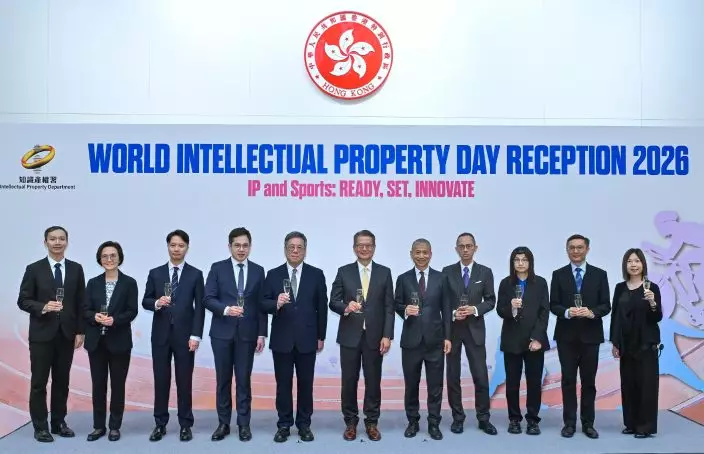
The Financial Secretary, Mr Paul Chan, attended the World Intellectual Property Day Reception 2026 today (April 21). Photo shows Mr Chan (centre); the Secretary for Commerce and Economic Development, Mr Algernon Yau (fifth left); the Director of Intellectual Property, Mr David Wong (fifth right), and other guests at the reception. Source: HKSAR Government Press Releases
The Financial Secretary, Mr Paul Chan, attended the World Intellectual Property Day Reception 2026 today (April 21). Photo shows Mr Chan (centre); the Secretary for Commerce and Economic Development, Mr Algernon Yau (fifth left); the Director of Intellectual Property, Mr David Wong (fifth right), and other guests at the reception. Source: HKSAR Government Press Releases

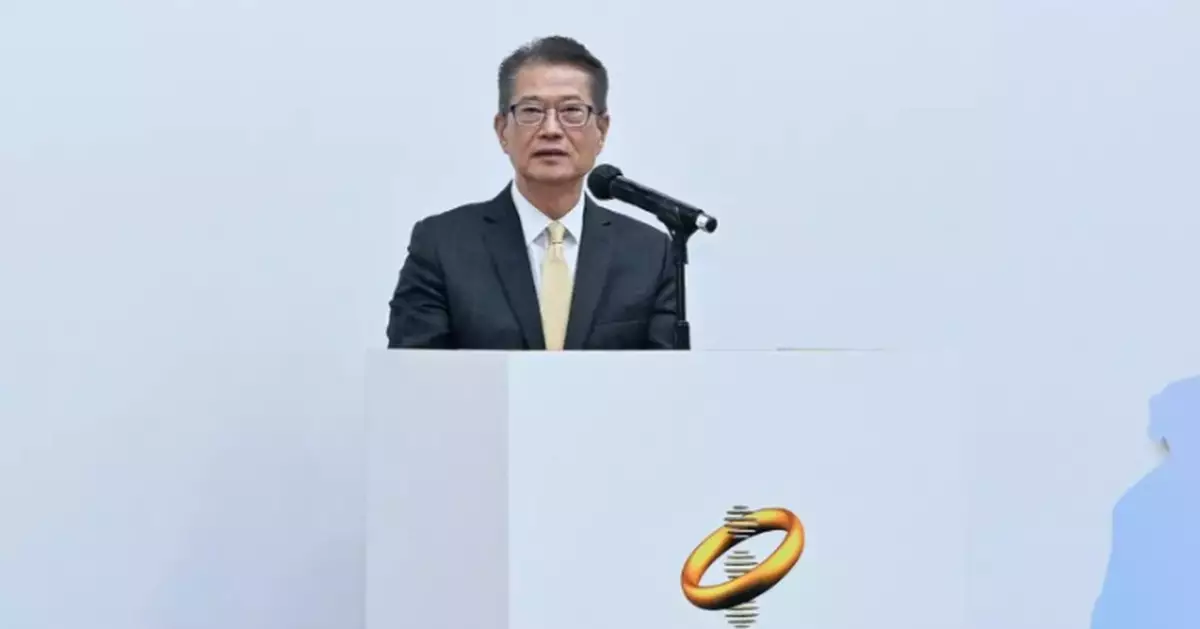
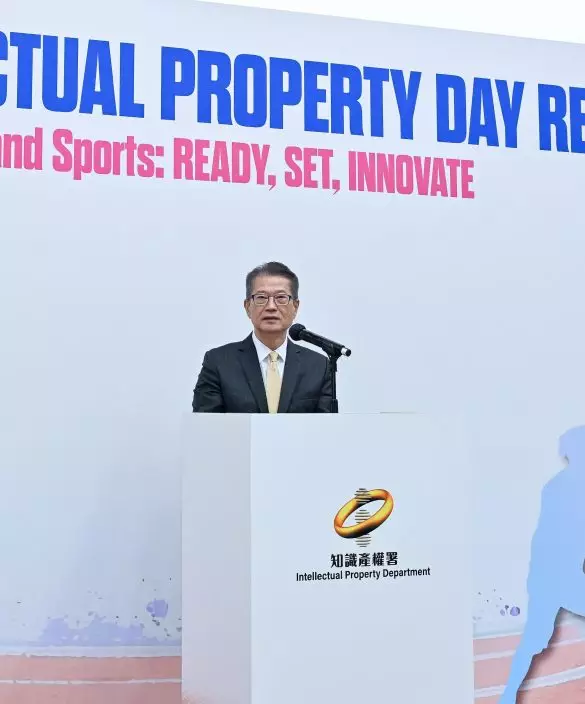
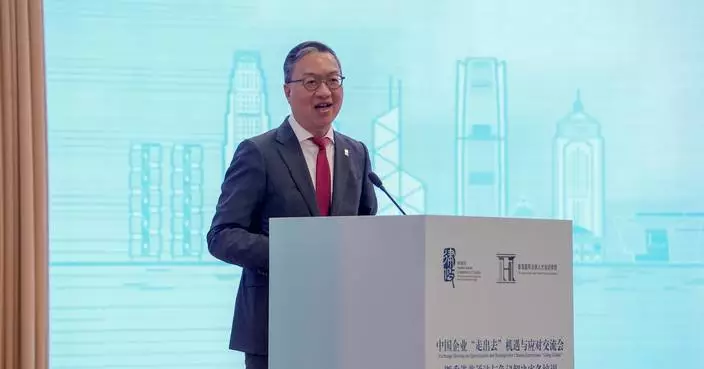
The Financial Secretary, Mr Paul Chan, speaks at the World Intellectual Property Day Reception 2026 today (April 21). Source: HKSAR Government Press Releases
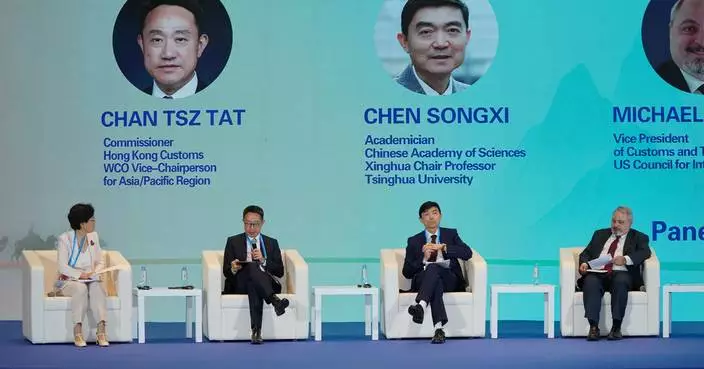
The Financial Secretary, Mr Paul Chan, speaks at the World Intellectual Property Day Reception 2026 today (April 21). Source: HKSAR Government Press Releases
Speech by CE at Welcome Dinner for Global Prosperity Summit 2026 (with photos/video)

Following is the speech by the Chief Executive, Mr John Lee, at the Welcome Dinner for the Global Prosperity Summit 2026 today (May 18):

Vice President Han Zhiqiang (Vice President of the China Public Diplomacy Association), Deputy Commissioner Li Yongsheng (Deputy Commissioner of the Office of the Commissioner of the Ministry of Foreign Affairs of the People's Republic of China in the Hong Kong Special Administrative Region), Mrs Regina Ip (Chairperson of Savantas Policy Institute and Convenor of the Non-official Members of the Executive Council), distinguished guests, ladies and gentlemen,

Good evening. It's a pleasure to join you, tonight, for the welcome dinner of the third Global Prosperity Summit.

This annual summit is dedicated to fostering cross-cultural dialogue and, in turn, advancing sustainable prosperity worldwide.

China, our country, certainly shares these goals.

The Global Governance Initiative, unveiled last year by President Xi Jinping at the "Shanghai Cooperation Organization Plus" Meeting, highlights the importance of abiding by international rule of law, practising true multilateralism, advocating a people-centred approach, and other principles in line with the United Nations Charter.

It adds to our country's Global Development Initiative, Global Security Initiative and Global Civilization Initiative. Together, they underscore China's commitment to building a community with a shared future for humanity.

As a special administrative region of China, Hong Kong upholds these important values, and endeavours to realise them. A champion of free trade and multilateralism, Hong Kong's doors have long been open – wide and welcoming to all.

In a world riddled with geopolitical and economic ruptures, Hong Kong stands out as an economy, and a society, built on stability, certainty and trust. Call them our natural resources, entrusted to us by the "one country, two systems" principle. And know that they are in great demand, because they instil confidence, encourage co-operation, and the rewarding opportunities co-operation enables.

In its latest assessment on Hong Kong's economic and financial situation, published last week, the International Monetary Fund reaffirms Hong Kong's role as an international financial centre and "super connector", particularly as a leading fundraising hub and premier offshore Renminbi centre. It notes that Hong Kong's economy has continued to recover, supported by robust technology-related exports, improving private demand and a rebound in financial market activity.

Indeed, the Hong Kong economy, I'm pleased to note, has expanded robustly in the first quarter of 2026 – growing 5.9 per cent year-on-year. That's a significant acceleration from the 4.0 per cent growth in the preceding quarter. Last year, Hong Kong became the world's fifth-largest trading entity in merchandise trade, achieving a 17.5 per cent year-on-year increase.

These are all backed by Hong Kong's unique edge under the "one country, two systems" principle, which brings together the China advantage and the global advantage in this world city. It ensures our established tradition of the rule of law, and a common law system that resembles most global financial hubs. It ensures our low and simple tax regime. It ensures the free flow of information, capital, goods and talent.

More than that, it ensures our city continues to thrive as a conduit of cultures, a platform for exchange, and an engine of sustainable innovation.

This Global Prosperity Summit is a compelling illustration of that. Tomorrow morning's opening session puts a bright spotlight on APEC, the Asia-Pacific Economic Cooperation. This year, China, our country, is APEC's host economy, with the APEC Economic Leaders' Meeting taking place in Shenzhen in November and Hong Kong hosting, for the first time, the APEC Finance Ministers' Meeting in October, thanks to the unwavering support of our country.

Finance ministers and senior officials from APEC's 21 member economies are expected to attend the meeting. We anticipate that representatives of international organisations such as the World Bank, the International Monetary Fund and the Asian Development Bank will also be there.

For Hong Kong, it is a precious, and much welcomed, opportunity to deepen international co-operation and exchanges, while showcasing our formidable strengths as a global financial centre and much more.

Of course, APEC and the world at large are well aware of Hong Kong's stature and structure as an international financial centre – ranked third in the world, and topping the Asia-Pacific rankings, in the latest Global Financial Centres Index. But the Finance Ministers' Meeting gives APEC leaders the chance to see, firsthand, why Hong Kong is also the world's leading offshore Renminbi centre, gateway to China's capital markets and magnet for Mainland and international IPOs – with more and more listings coming from rising technology industries.

And that creates another splendid prospect – the opportunity to showcase the Northern Metropolis. We're eager to welcome international financial and business leaders, investors and entrepreneurs, here for the APEC meetings and more, to take a close-up look at Hong Kong's future economic engine and innovation and technology hub.

The National 15th Five-Year Plan, approved in March, supports the fast-track development of the Northern Metropolis. Spanning one-third of Hong Kong's area, the Northern Metropolis borders Hong Kong's boundary with the Mainland city of Shenzhen.

It provides valuable land for innovative development, and will boost our contributions to the country's overall development and our integration with the Guangdong-Hong Kong-Macao Greater Bay Area. In cutting-edge technology, in global finance, and in many more areas.

Take education, for example. Hong Kong is the only city that boasts as many as five universities in the world's top 100. Subjects like dentistry, nursing, and education offered by our institutions are ranked among the global top 10. Our two medical schools are both in the world's top 50.

To build on the strengths of our world-class education sector, the HKSAR (Hong Kong Special Administrative Region) Government will develop the Northern Metropolis University Town. It will provide fresh pieces of land for post-secondary institutions to introduce signature programmes, research collaborations and exchange projects.

Hong Kong's third medical school will admit its first students in two years' time. It will eventually move to a permanent site in the Northern Metropolis, together with an integrated medical education, research and patient-care hospital.

There it will take its place as a pillar of the Northern Metropolis University Town, supporting Hong Kong's rise as an education hub and medical research and innovatin centre, attracting a world of teaching, research and medical talent.

The Greater Bay Area Clinical Trial Collaboration Platform was launched at the end of last year, in the Hetao Shenzhen-Hong Kong Science and Technology Innovation Co-operation Zone, a vast area that covers both sides of our boundary with Shenzhen. There, we work together with our Shenzhen counterpart in co-ordinating multi-centre, cross-boundary clinical trials that meet both national and international standards.

Later this year, we will set up the Hong Kong Centre for Medical Products Regulation, focused on its emergence as an internationally recognised regulatory authority for medical products. The Centre, let me add, will emphasise both Western and Chinese medicine and medical devices.

And, in late March, we began implementation of primary evaluation for new drug registration. It will allow for the faster approval of innovative drugs in Hong Kong, while encouraging local R&D (research and development).

In September, we will host the World Cancer Congress, welcoming medical specialists and researchers from all over the world to Hong Kong.

Deepening international exchanges and co-operation through such mega events allows the world to see Hong Kong as the free and open economy, and society, it is – one committed to creating rewarding opportunities for all concerned.

I'm also pleased to add that the 94th INTERPOL General Assembly will be held in Hong Kong in November. That, ladies and gentlemen, speaks of Hong Kong's growing prominence in international law enforcement. Delegates from some 190 law enforcement bodies worldwide will gather here – to see that our law enforcement agencies are highly regarded, that we are home to a globally recognised anti-corruption commission, and that Hong Kong is one of the world's safest cities.

We are among the world's leading sports and entertainment cities, too, let me add. Last month, the Hong Kong Sevens celebrated its 50th anniversary in style, at our world-class Kai Tak Sports Park. The event was said to have generated economic benefits of more than HK$100 million. And the organisers have plans to expand it from a three-day tournament to a week-long festival of sports and entertainment.

In December, Hong Kong will host the Association of National Olympic Committees General Assembly, one of the sports world's major events.

The international gathering is expected to attract over 1 200 sports leaders, dignitaries and representatives from over 200 National Olympic Committees, as well as the International Olympic Committee and the Organising Committees of the Olympic Games.

There's more, much more to tell, ladies and gentlemen. And in so many sectors, industries and areas, each and every one reflecting, in its own inimitable way, Hong Kong's singular status as a multi-level bridge connecting economies, cultures, peoples and opportunities.

My thanks to the organisers – the Savantas Policy Institute, the Shanghai Institutes for International Studies and the European Chamber of Commerce in Hong Kong – for once again bringing the world to us.

Ladies and gentlemen, I wish you all the best of business at the Global Prosperity Summit, and a memorable stay with us in Hong Kong.

Thank you very much.

Speech by CE at Welcome Dinner for Global Prosperity Summit 2026 (with photos/video) Source: HKSAR Government Press Releases

Speech by CE at Welcome Dinner for Global Prosperity Summit 2026 (with photos/video) Source: HKSAR Government Press Releases
Speech by CE at Welcome Dinner for Global Prosperity Summit 2026 (with photos/video) Source: HKSAR Government Press Releases
Speech by CE at Welcome Dinner for Global Prosperity Summit 2026 (with photos/video) Source: HKSAR Government Press Releases

Recommended Articles