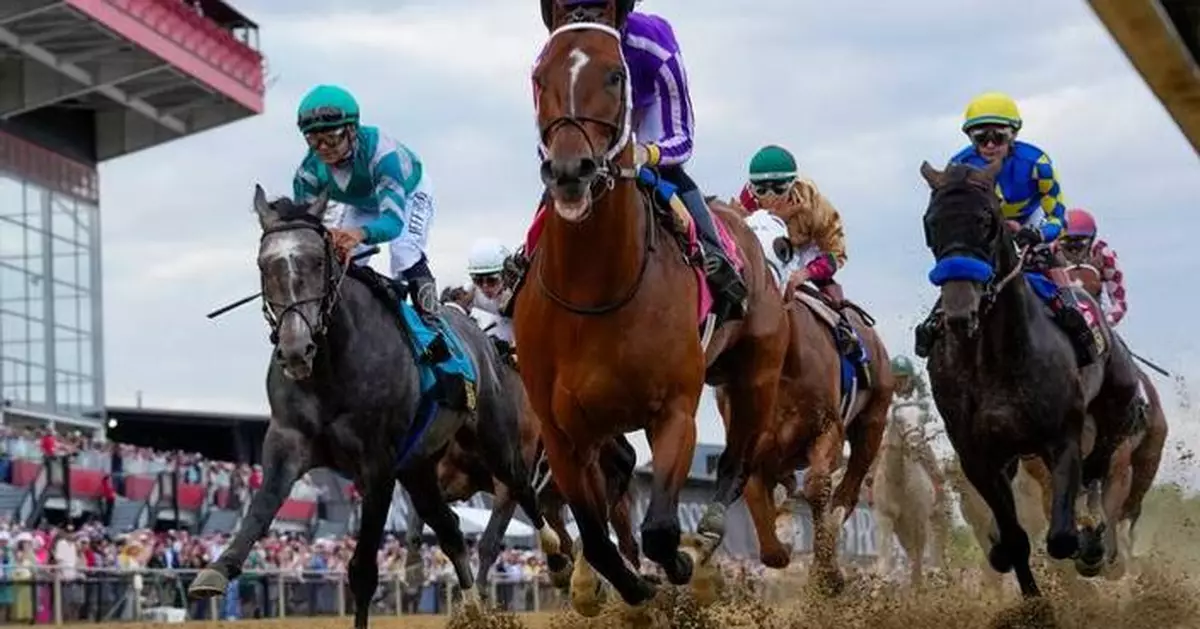
Churchill Downs Incorporated said Tuesday it has entered into an agreement to acquire the intellectual property for the Preakness Stakes and Black-Eyed Susan-Stakes from 1/ST Racing’s Maryland department for $85 million, subject to customary closing conditions.
Churchill Downs, the home of the Kentucky Derby, plans to license the rights annually to the state of Maryland to stage the races. The parties expect the transaction to close after the next running of the Preakness, which is set to happen at Laurel Park on May 16 while Pimlico Race Course in Baltimore is rebuilt as part of a major reconstruction project.
“This acquisition adds one of the most iconic brands in American sports to our portfolio and is consistent with our strategy of investing in premier thoroughbred racing assets with long-term growth potential,” Churchill Downs Incorporated CEO Bill Carstanjen said. “In keeping ownership of the Preakness intellectual property in the racing industry, CDI will support efforts to fully realize the potential of a redeveloped Pimlico and Preakness Stakes within the Triple Crown and the broader sports and entertainment landscape.”
The agreement comes a week after a report surfaced that the Preakness was planning to shift back a week in May, something officials have been discussing for years. A spokesperson for the Maryland Jockey Club told The Associated Press that the organization is in the negotiation stage of a new media rights agreement, which could play a large role in timing for the Triple Crown, and that it had not yet spoken with Churchill Downs or the New York Racing Association about the date.
Currently, the Preakness takes place two weeks after the Kentucky Derby, which is run on the first Saturday in May, with the Belmont Stakes three weeks later as the third and final leg of the Triple Crown. The spacing of the racing has been one of the biggest subjects of debate in the sport, especially with several owners and trainers of Derby winners opting in recent years to skip the Preakness.
AP sports: https://apnews.com/hub/sports
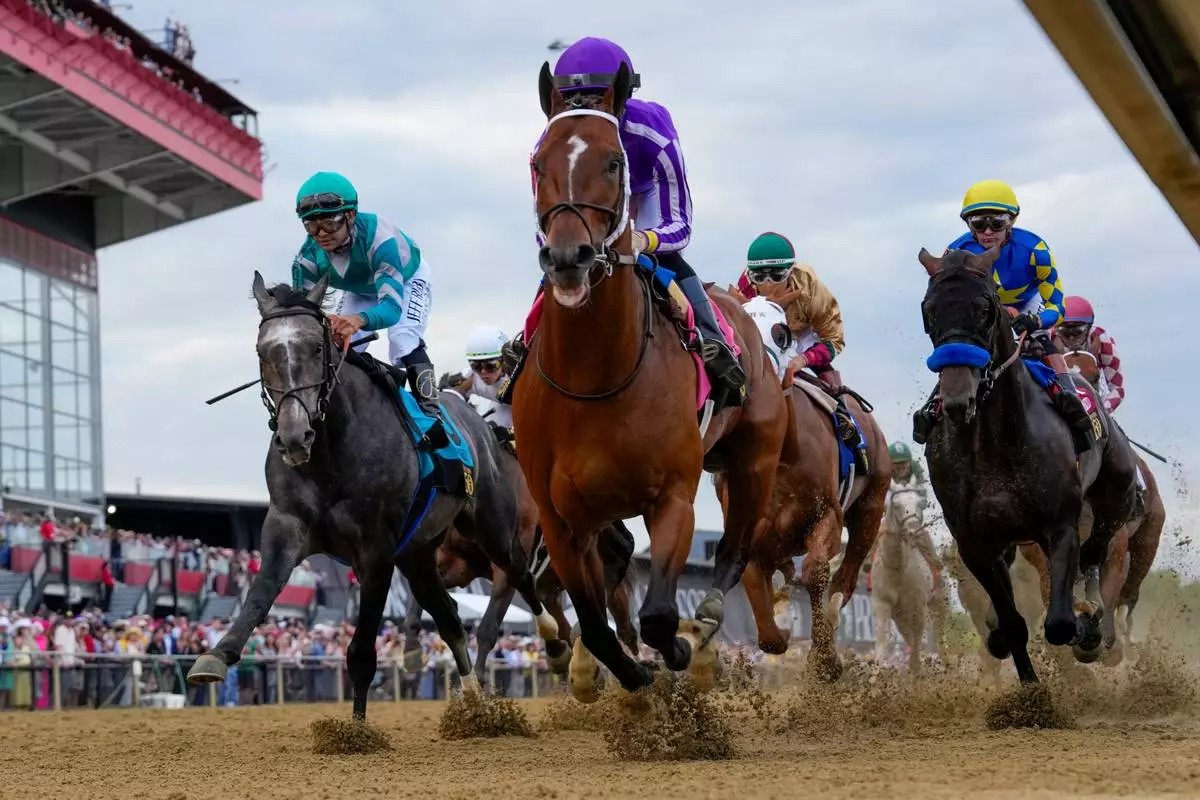
FILE - Jockeys compete during the 150th running of the Preakness Stakes horse race on May 17, 2025, at Pimlico Race Course in Baltimore. (AP Photo/Stephanie Scarbrough, File)
NEW YORK (AP) — U.S. stocks are wavering Tuesday as Wall Street weighs the latest round of profit reports from big companies with the lingering risks from the ongoing war between the U.S. and Iran.
UnitedHealth Group and other big companies showed they’re making even bigger profits than analysts expected. Oil prices, meanwhile, remained relatively stable as optimism seems to be sticking in financial markets that the United States and Iran will avoid a worst-case scenario for the economy, even with their war ongoing.
The S&P 500 fell 0.1%, coming off just its second drop in 14 days, and is hovering below its all-time high. The Dow Jones Industrial Average was down 14 points, or less than 0.1%, as of 11:16 a.m. Eastern time, and the Nasdaq composite was mostly unchanged.
UnitedHealth helped lead the market with a jump of 7.7% after reporting stronger profit and revenue for the beginning of the year than analysts expected. It also raised its forecast for profit over the full year of 2026.
That’s big because stock prices tend to follow the path of corporate profits over the long term. It’s a double-plus for investors when companies not only top earnings estimates but also forecast even better growth ahead.
Quest Diagnostics rose 4.2% after it likewise joined the fattening list of companies topping expectations for profit and revenue during the latest quarter. It also raised its forecast for profit for the full year.
They helped offset an 8.3% drop for Tractor Supply, whose profit and revenue for the latest quarter fell short of expectations.
Other signals are also indicating the U.S. economy may be doing OK despite sharp up-and-down swings for oil prices because of the war with Iran. A report on Tuesday morning showed that U.S. retailers made more money in March, the first full month of the war, than analysts expected.
Growth was even relatively stable for retail sales when not including those from gasoline stations.
“It’s become cliched to say that the economic hit will depend on the duration of the Middle East conflict, but that cliché does ring true,” according to Brian Jacobsen, chief economic strategist at Annex Wealth Management.
The price for a barrel of Brent crude oil, the international standard, rose 1.3% to $96.72 ahead of Wednesday's scheduled expiration for a U.S.-Iran ceasefire agreement. Both sides are continuing to talk tough, but hope remains after both have signaled they will hold a new round of ceasefire talks in Pakistan.
Much of the tension in financial markets has focused on what will happen to the Strait of Hormuz, a narrow waterway off Iran’s coast that oil tankers use to exit the Persian Gulf. A long-term closure would keep crude oil pent up in the gulf and away from customers worldwide.
The price for a barrel of Brent oil has gone from roughly $70 before the war to $119 at times as worries have risen and fallen about a long-term closure for the strait.
On Wall Street, Apple slipped 1.5% after Tim Cook said he’ll step down as CEO on Sept. 1 and become the iPhone maker’s executive chairman. He’s handing control over to John Ternus, a company veteran who rose through Apple's hardware engineering ranks.
Amazon rose 1.8% after Anthropic said it signed a new agreement and is committing more than $100 billion over the next 10 years to AWS technologies to train and run its Claude chatbot.
In stock markets abroad, indexes were lower in Europe following a stronger finish in Asia. South Korea’s Kospi rose 2.7% for one of the world’s biggest moves.
In the bond market, Treasury yields gained ground. The yield on the 10-year Treasury rose to 4.29% from 4.26% late Monday.
Kevin Warsh, President Donald Trump's nominee to chair the Federal Reserve, appeared on Capitol Hill Tuesday. He's facing a tightrope walk, as investors want to see if he would maintain the Fed's independence from political meddling. During the hearing, he pledged to fight inflation even though Trump has been pushing hard for lower interest rates. Higher inflation typically leads the Fed to raise rates, or at least keep them unchanged, rather than cut them.
AP Business Writers Matt Ott and Elaine Kurtenbach contributed to this report.
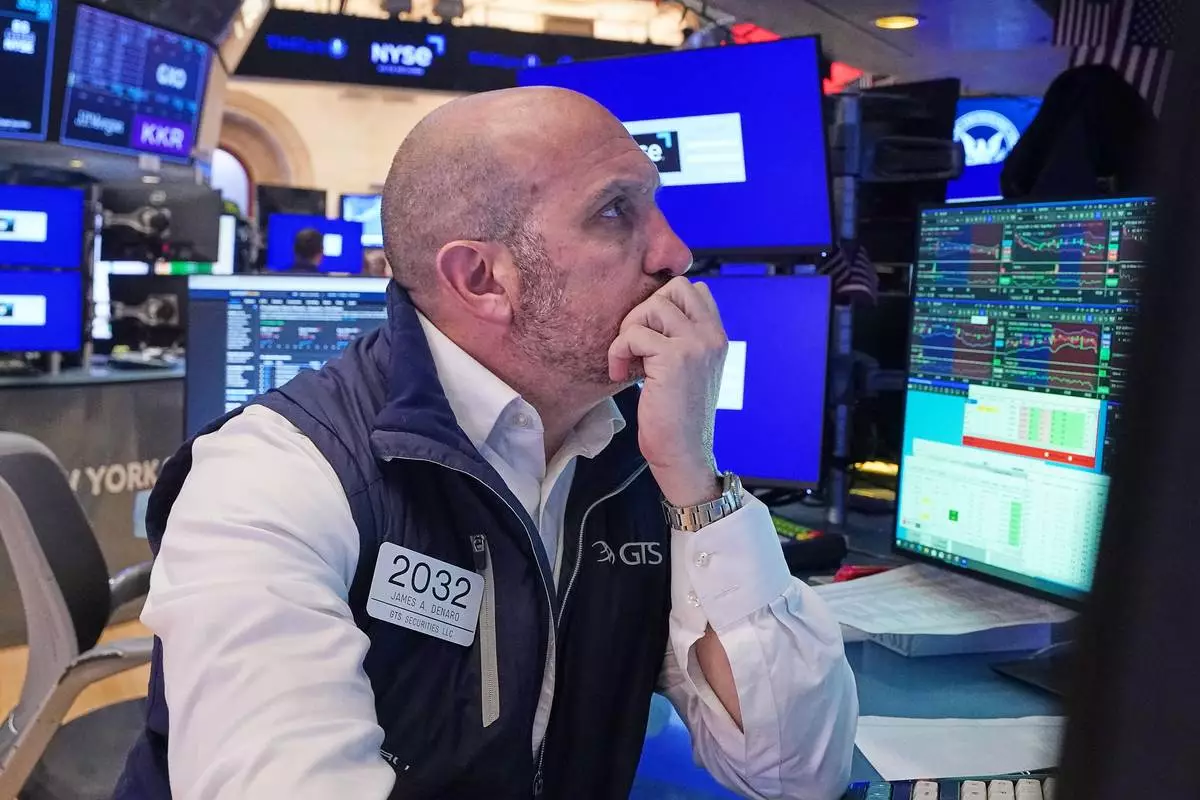
Specialist James Denaro works at his post on the floor of the New York Stock Exchange, Monday, April 20, 2026. (AP Photo/Richard Drew)
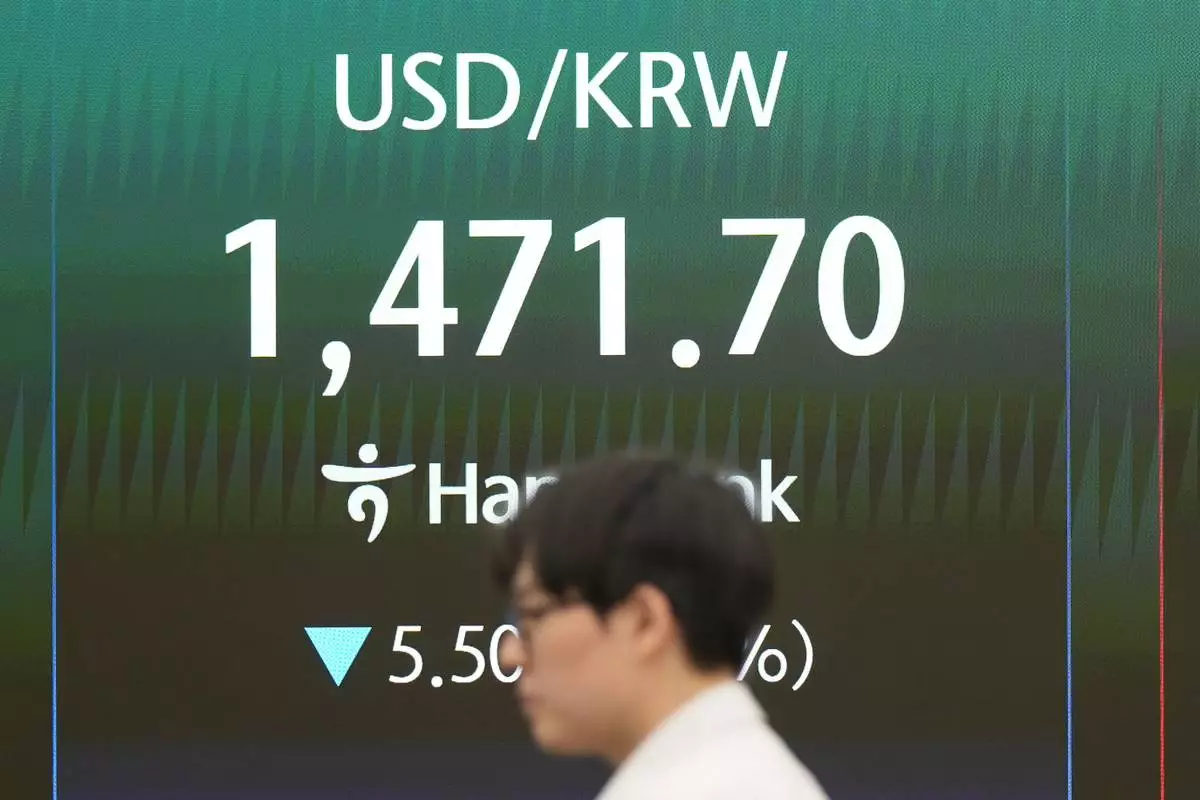
A dealer walks past the screen showing the foreign exchange rate between U.S. dollar and South Korean won at a dealing room of Hana Bank in Seoul, South Korea, Tuesday, April 21, 2026. (AP Photo/Lee Jin-man)
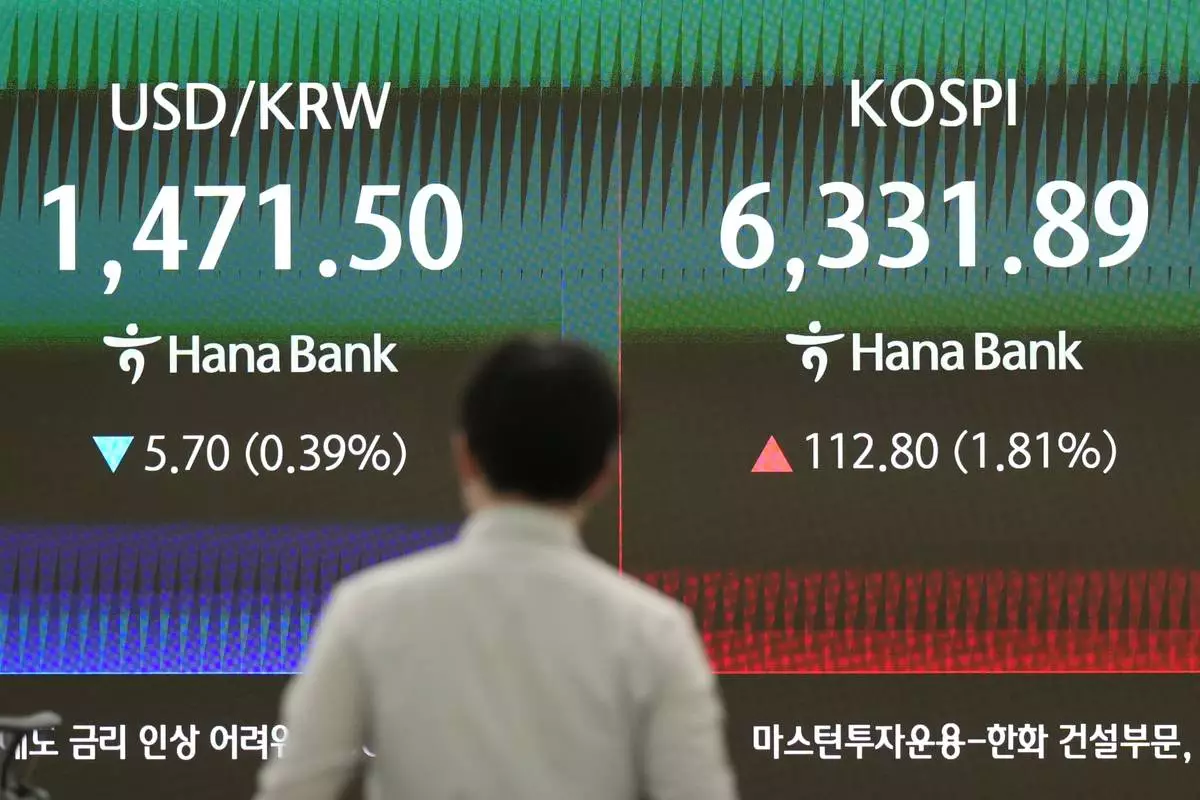
A dealer walks past the screens showing the Korea Composite Stock Price Index (KOSPI) and the foreign exchange rate between U.S. dollar and South Korean won at a dealing room of Hana Bank in Seoul, South Korea, Tuesday, April 21, 2026. (AP Photo/Lee Jin-man)
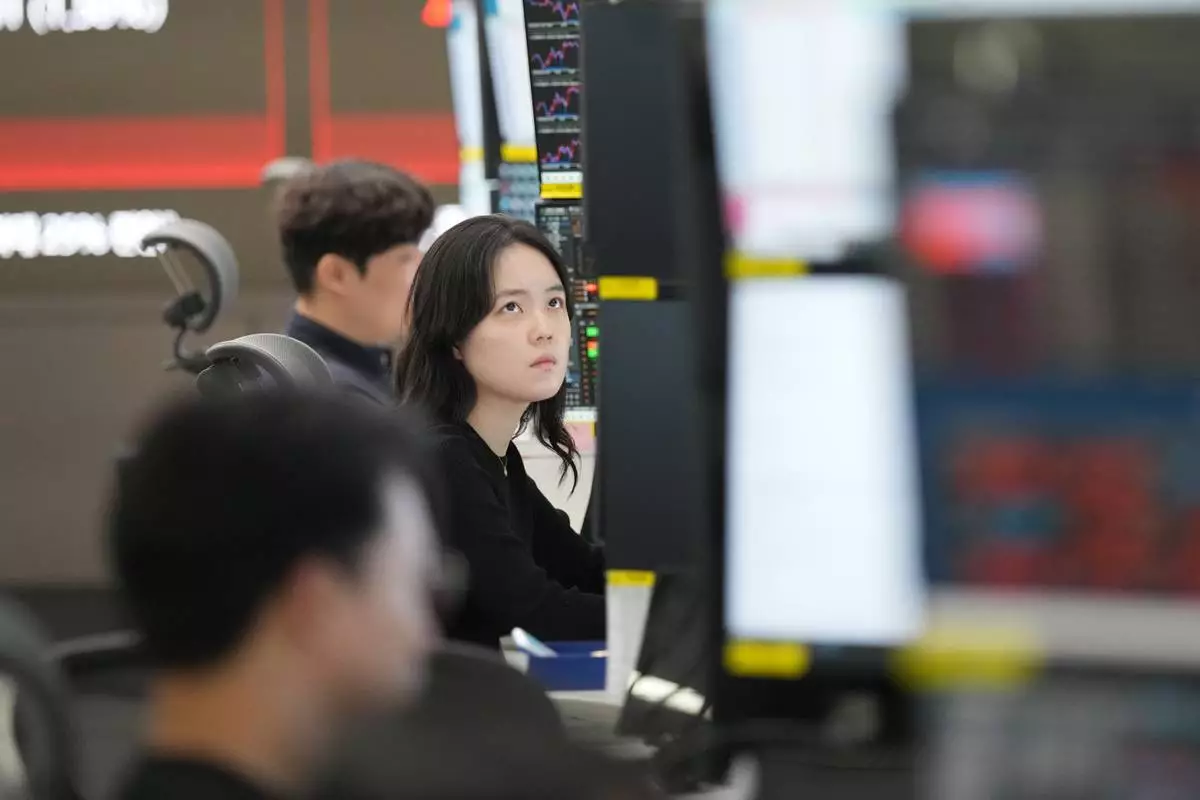
A dealer watches computer monitors at a dealing room of Hana Bank in Seoul, South Korea, Tuesday, April 21, 2026. (AP Photo/Lee Jin-man)
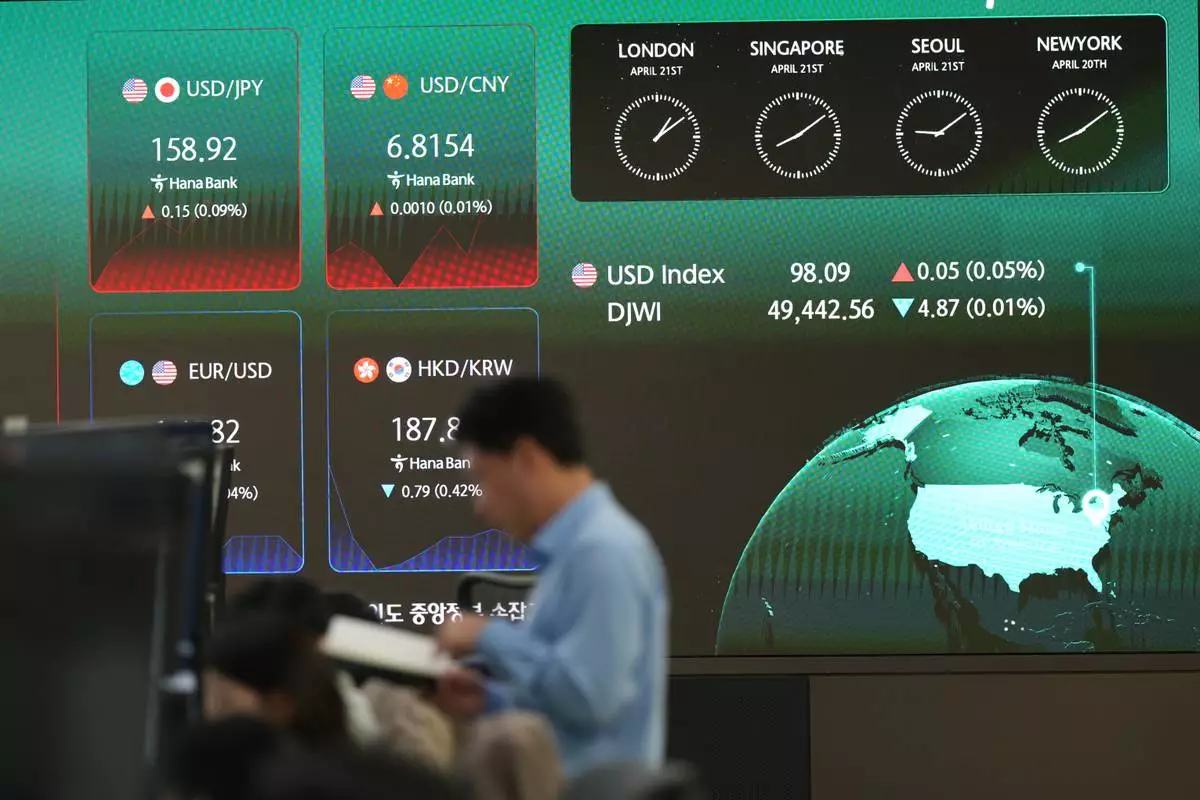
A dealer stands near the screens showing the foreign exchange rates at a dealing room of Hana Bank in Seoul, South Korea, Tuesday, April 21, 2026. (AP Photo/Lee Jin-man)
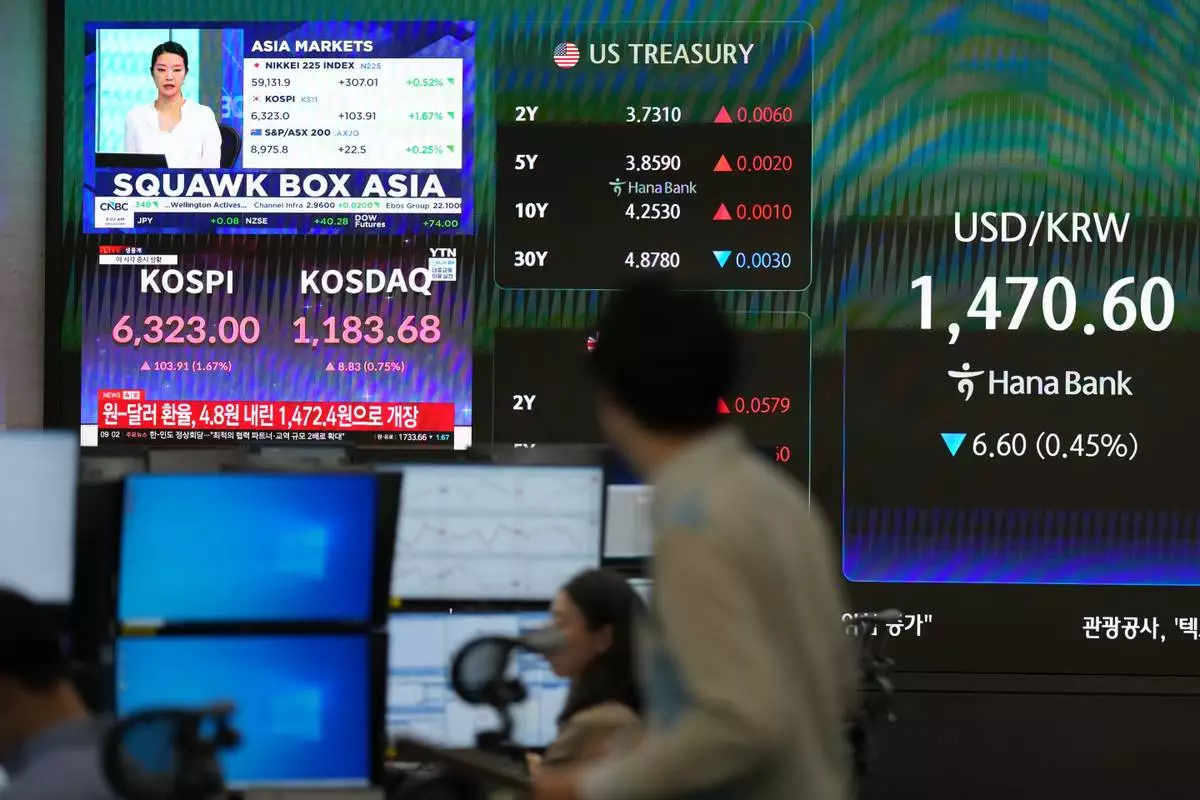
A dealer walks past the screens showing the foreign exchange rate between U.S. dollar and South Korean won at a dealing room of Hana Bank in Seoul, South Korea, Tuesday, April 21, 2026. (AP Photo/Lee Jin-man)
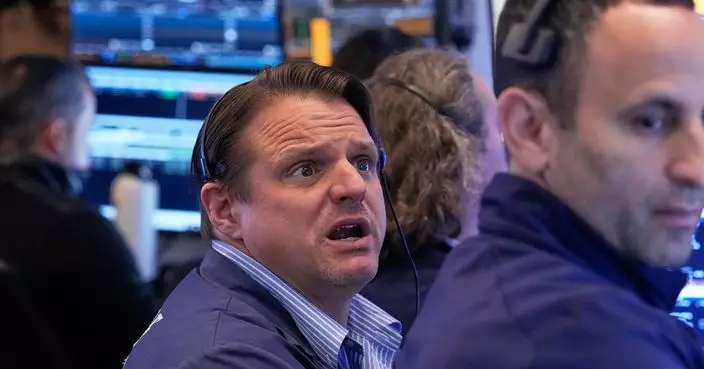
Trader Michael Milano, left, works on the floor of the New York Stock Exchange, Monday, April 20, 2026. (AP Photo/Richard Drew)