NOUAKCHOTT, Mauritania (AP) — Two female opposition lawmakers in Mauritania have been charged with insulting the president after accusing him of adopting a discriminatory attitude towards Black people and descendants of slaves in the West African nation.
The lawmakers also were charged Monday with inciting violence, attacking the symbols of the state and calling for gatherings with a view to undermining public security via social networks, according to the prosecutor.
Slavery remains a sensitive topic in Mauritania years after it was formally abolished.
Marieme Cheikh Dieng and Ghamou Achour had posted messages on social media critical of President Mohamed Ould Ghazouani. They were detained over 10 days ago.
Biram Dah Abeid, leader of the Initiative for the Resurgence of the Abolitionist Movement coalition group, accused the government of a witch hunt against elected officials who descended from former slaves.
The lawmakers are with the coalition, which is not a registered political party but allied with the registered Sawab party to help them get elected.
The prosecutor has asserted that the two lawmakers have forfeited their parliamentary immunity because the charges are so serious. The lawmakers' lawyers reject the argument, calling it a means to settle scores.
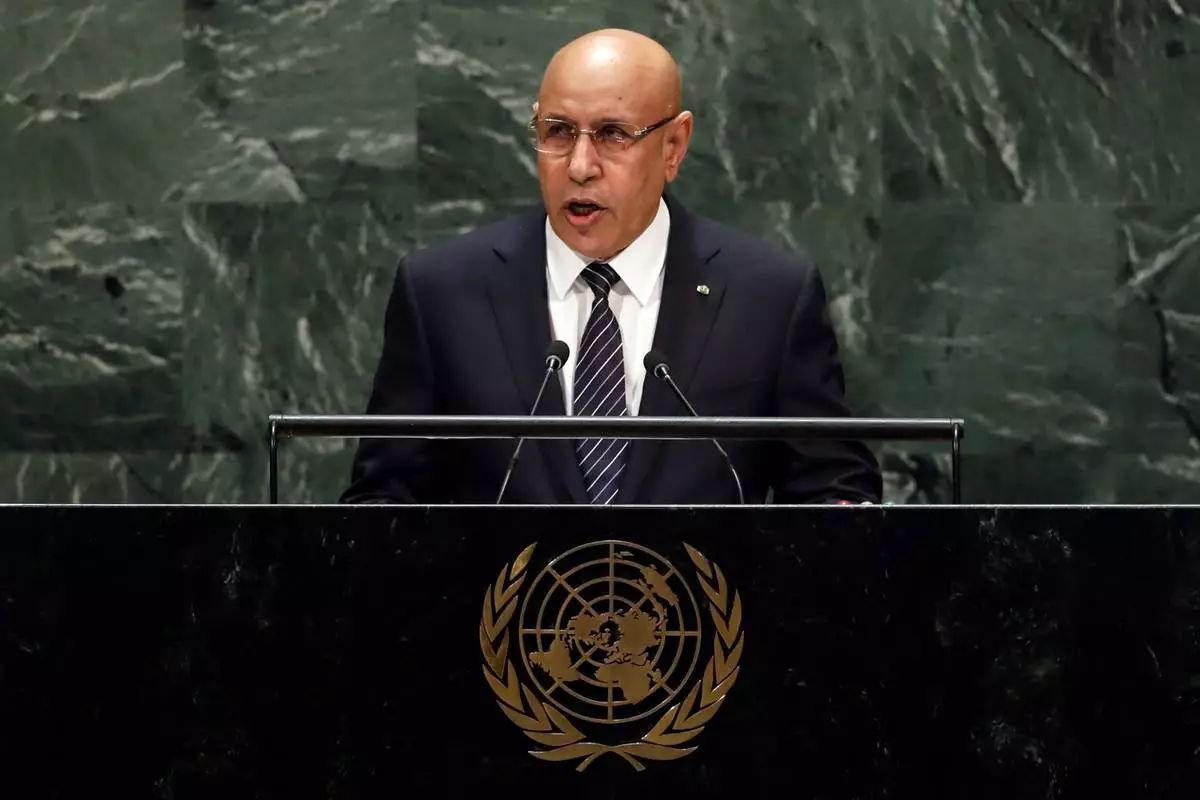
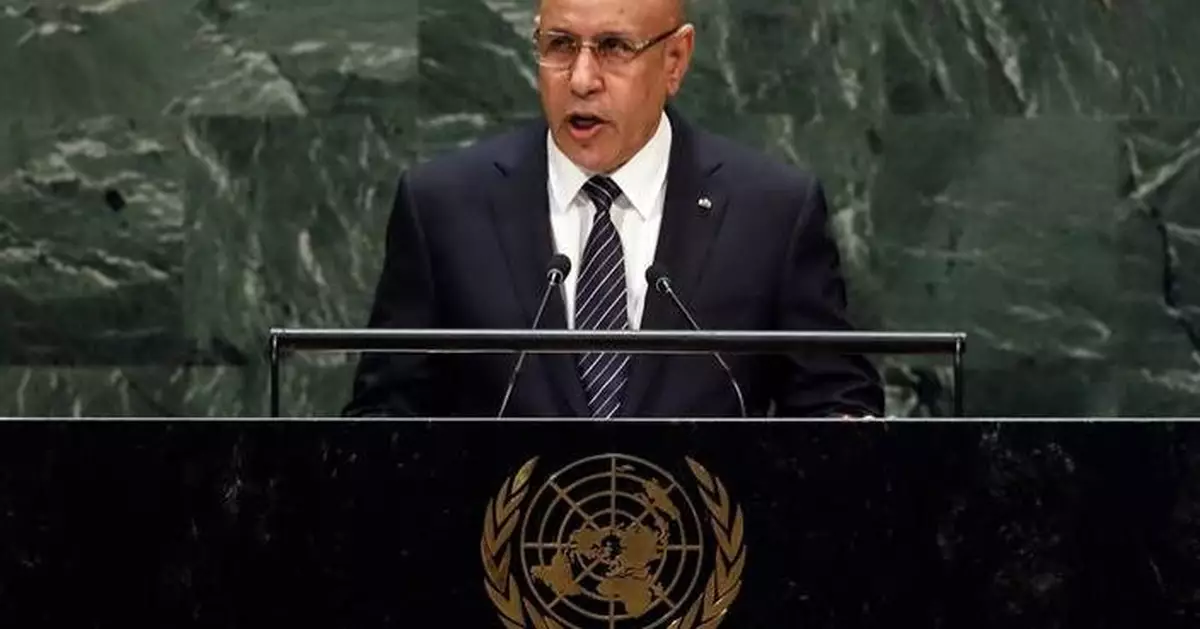
FILE - President Mohamed Ould Ghazouani of Mauritania addresses the 74th session of the United Nations General Assembly, Sept. 25, 2019. (AP Photo/Richard Drew, File)
JOHANNESBURG (AP) — The French ambassador to South Africa said Tuesday that the country should be allowed to attend the Group of 20 summit this year in the United States despite U.S. President Donald Trump’s move to bar the it from the meeting.
Trump said last year he would not invite South Africa — a full G20 member — to the summit that the U.S. will host in Florida in December, following diplomatic tensions between the two. South African officials have said they have also been locked out of G20 meetings that traditionally happen throughout the year ahead of a summit.
The Trump administration has criticized South Africa’s Black-led government as being anti-white and anti-American, while the Republican president has made baseless claims that there is a widespread campaign of violence against the country’s white minority farmers.
The move by Trump has been criticized by other G20 members, who say no country should have the authority to bar another. The bloc of developed and developing nations operates on a consensus basis.
“France being also a founding member of the G20, we consider of course that South Africa is a full-fledged member of the G20 and should be part of all of its meetings,” French Ambassador David Martinon told reporters in Johannesburg.
The tensions between Washington and Johannesburg marred South Africa's hosting of the G20 summit — the first in Africa — last year when the U.S. boycotted. There was a spat at the end of the summit when the U.S. sent officials from its embassy to take part in a handover ceremony to the next host country. South Africa refused that, saying it was an insult that South African President Cyril Ramaphosa should hand over to what it called junior diplomatic officials.
The South African government has referred to the U.S. decision to bar it from this year's G20 as a “punitive move” based on “ completely false” information.
Martinon said there have been discussions among diplomatic officials from G20 countries over South Africa's barring and its potential absence from the summit at Trump's Miami-area Doral golf club. South Africa is the only African nation in the G20.
France also has denied it bowed to U.S. pressure to rescind an invitation to South Africa to attend the Group of Seven summit it hosts in June.
Ramaphosa's spokesperson said last month that a personal invitation extended by French President Emmanuel Macron to Ramaphosa last year was retracted and the reason given by French officials was pressure from the Trump administration, which didn't want South Africa at the G7 summit.
Ramaphosa later backtracked on his spokesperson's comments and said he was not aware of any pressure from the U.S., a move largely seen as an attempt to defuse tensions.
South Africa is not a G7 member but has sometimes attended summits.
Martinon repeated that France had not rescinded an invitation but instead opted for a more “streamlined” G7 summit in the resort town of Évian-les-Bains. The leaders of India, Brazil, Kenya and South Korea have been invited as guests to join those from members Canada, France, Germany, Italy, Japan, U.K. and the U.S.
“As for the G7, I can only refer to what President Ramaphosa said about it, if I remember it's something like ‘you can’t be de-invited from a forum you don’t belong to’, but that’s his words,” Martinon said Tuesday.
AP Africa news: https://apnews.com/hub/africa
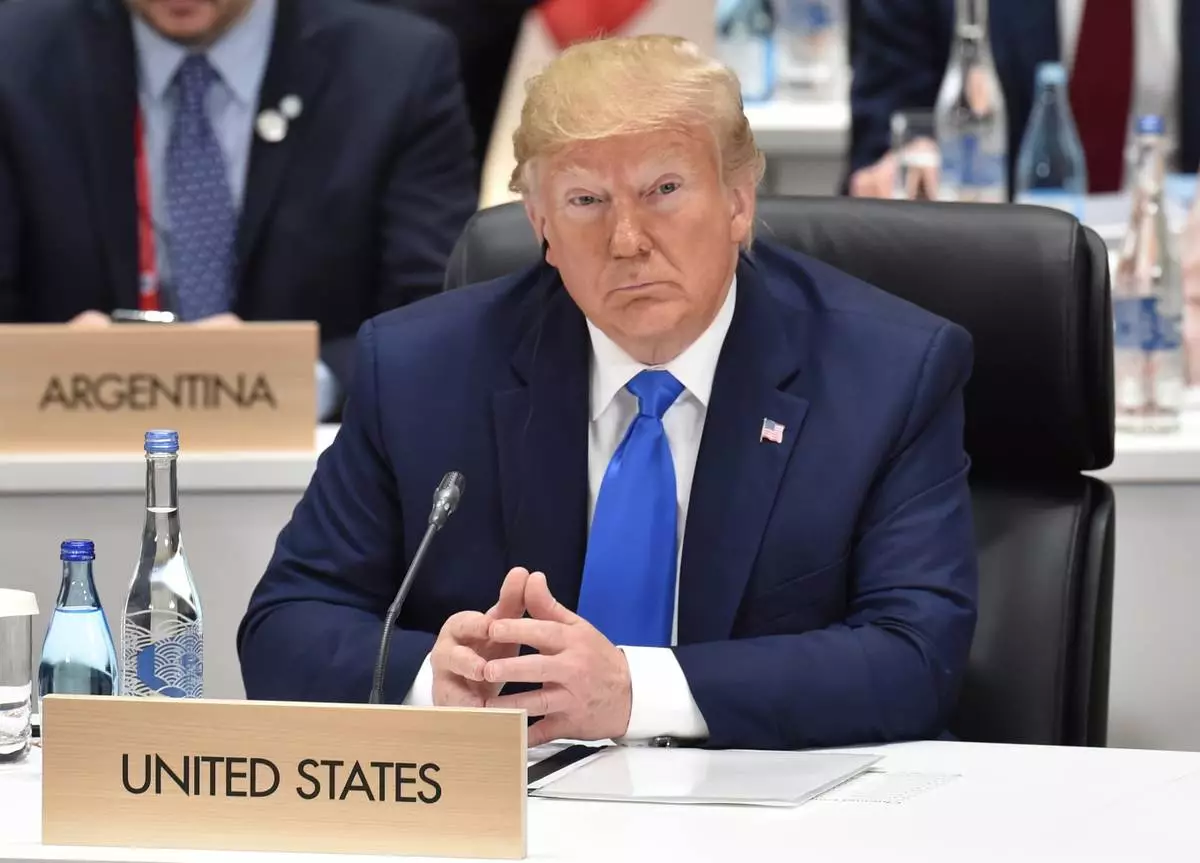
FILE - U.S. President Donald Trump attends a session at the G-20 Summit in Osaka on June 29, 2019. (Kazuhiro Nogi/Pool Photo via AP, File)
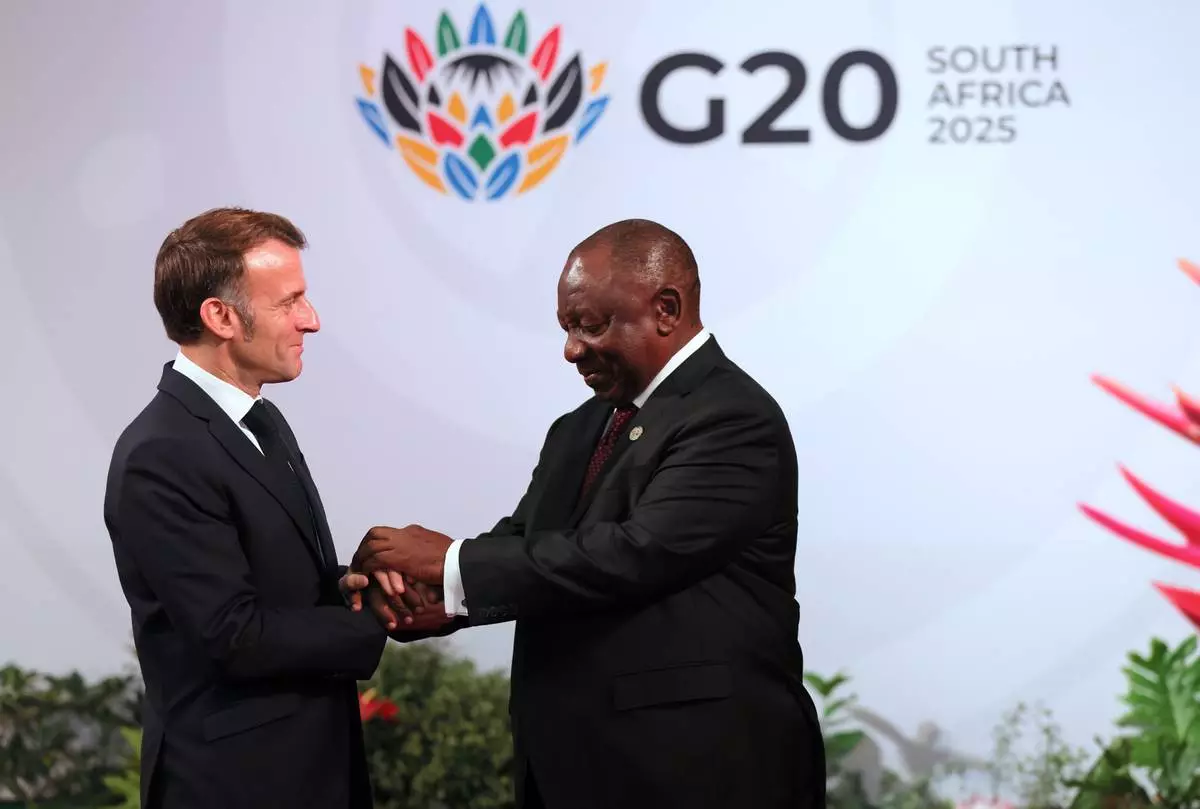
FILE - South African President Cyril Ramaphosa, right, welcomes French President Emmanuel Macron on the opening day of the G20 Summit in Johannesburg, South Africa, Saturday, Nov. 22, 2025. (Halden Krog/Pool Photo via AP, File)