TOKYO (AP) — Japan's trade deficit was 1.7 trillion yen ($10.7 billion) in the fiscal year that ended in March, the government said Wednesday, the fifth straight fiscal year of deficits.
Exports rose 4% from the previous year, while imports inched up just 0.5%, the Finance Ministry reported.
U.S. President Donald Trump's higher tariffs on imports from Japan and other countries have proven to be a harsh blow for global automakers and other manufacturers. Japan's overall exports to the U.S. fell 6.6% in the last fiscal year, with shipments of autos dropping 16%.
However, Japan’s trade surplus rose 26% in March from a year earlier in a sign that the export sector is recovering from last year’s shocks. Exports jumped nearly 11.7% in March and imports rose almost 10.9%.
Japan’s auto giants, like Toyota Motor Corp., have moved much of their production to nations where the vehicles are sold to avoid suffering from such policy shifts. But some automakers still export a large share of their vehicles to the U.S. from Japan.
Japan imports nearly all of its oil and gas and the war with Iran has raised worries over disruptions of oil shipments from the Middle East. Apart from the impact on energy, shortfalls of oil can affect production of naphtha-related products which are key for medical supplies and other plastics.
The Japanese government has tried to assuage the public by noting the country's 254-days of oil reserves for such emergencies, which were established after the so-called “oil shock” of the 1970s. The government is releasing some reserves to stabilize supplies.
Japan is also working on alternative routes other than through the Strait of Hormuz, the main supply route for much of Asia's oil and gas. It is effectively closed because of the war.
Yuri Kageyama is on Threads: https://www.threads.com/@yurikageyama
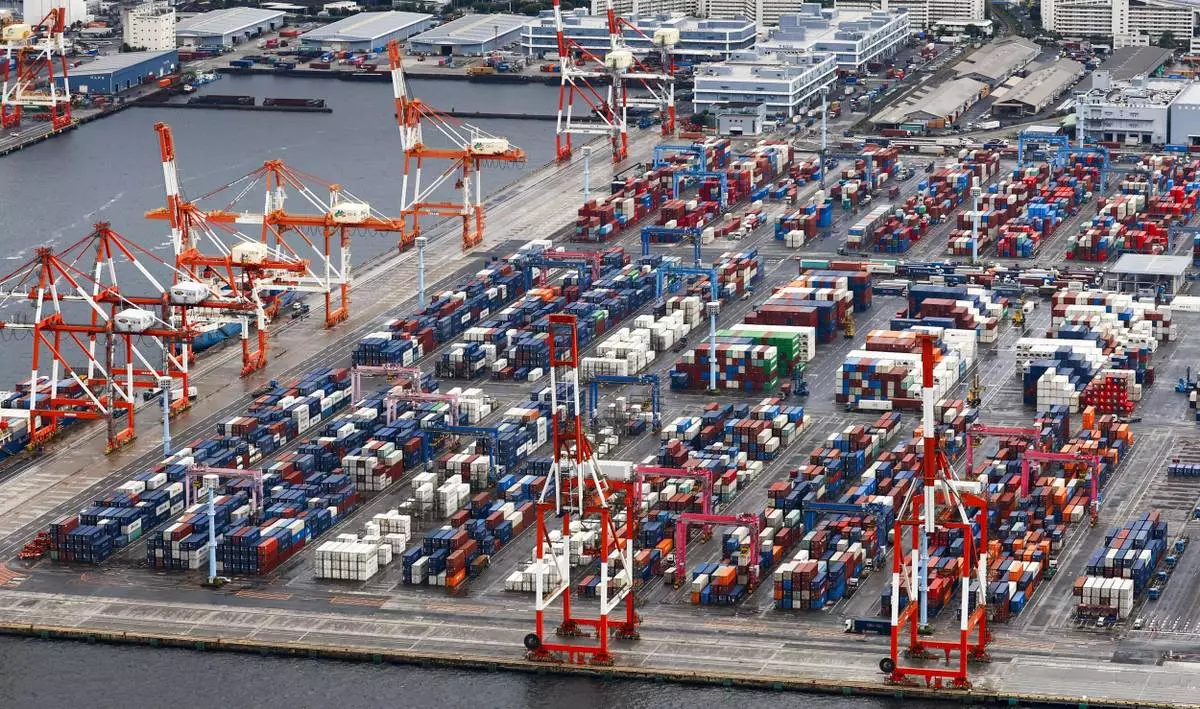
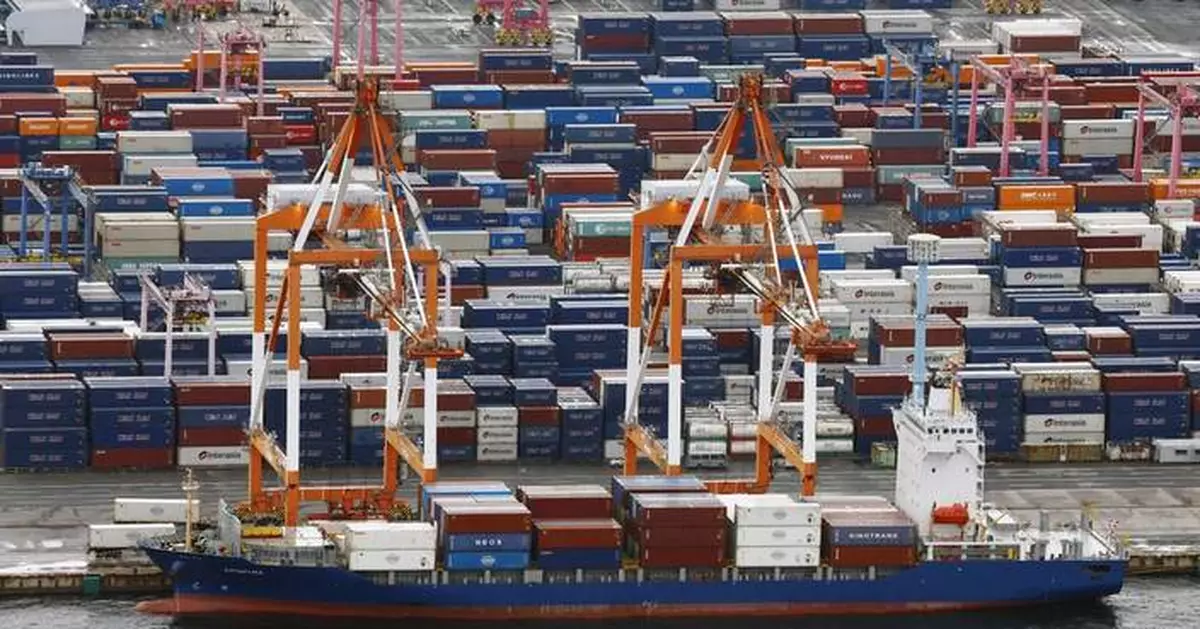
Containers are stacked at a port in Yokohama, near Tokyo on Aug. 1, 2025. (Takuto Kaneko/Kyodo News via AP)
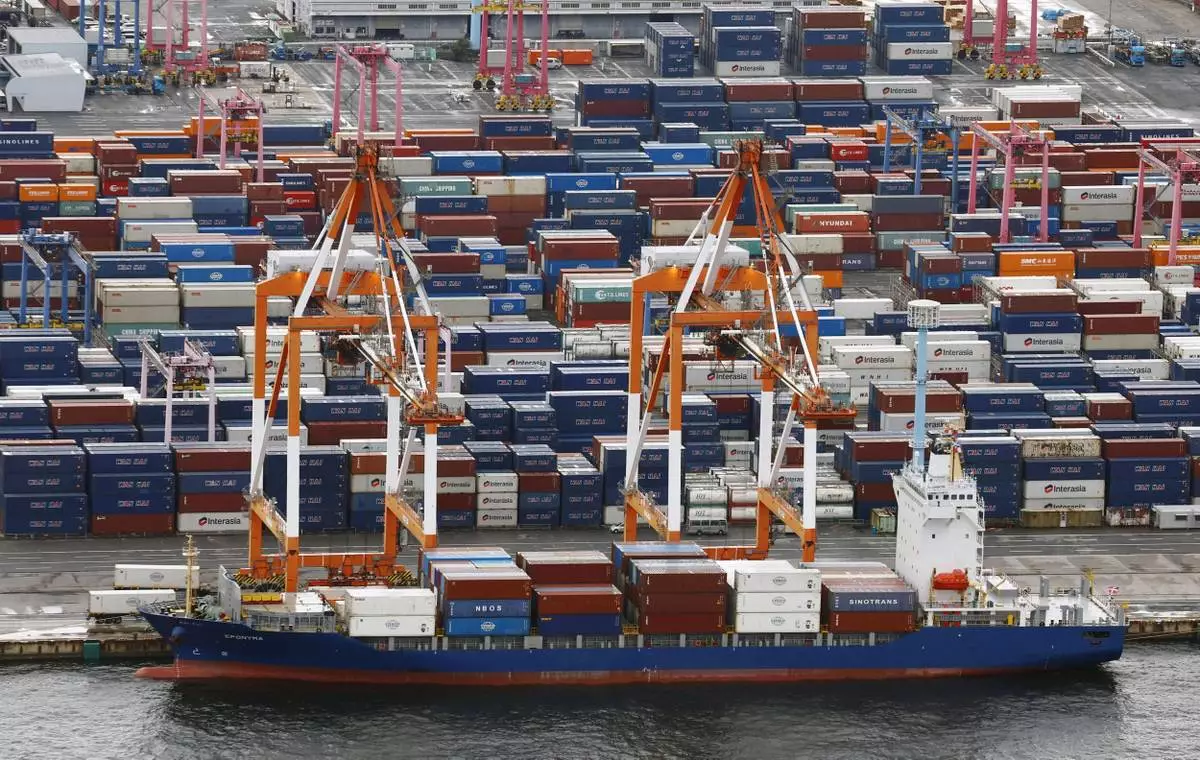
Containers are stacked at a port in Yokohama, near Tokyo on Aug. 1, 2025. (Takuto Kaneko/Kyodo News via AP)
EVIAN-LES-BAINS, France (AP) — Right after his 80th birthday party celebrations, U.S. President Donald Trump is heading to a summit in France of the G7 club of powerful democracies to dive into issues — Iran, Ukraine, trade and more — that have been sources of friction with allies he will be meeting.
Hours before leaving Washington, Trump announced an agreement to end the war — a development that could change the dynamic for the G7 leaders during the talks from late Monday to Wednesday.
Just days ago, when the Iran-U.S. ceasefire was hanging by a thread, with resumed strikes, the gathering on the shores of Europe’s largest Alpine lake appeared headed for stormy waters.
Analysts speculated that tempers could flare and that Trump might not stick around for long in Evian-les-Bains, the Alpine spa town that's been enveloped in a security bubble for the G7 leaders and guests also invited by French President Emmanuel Macron, the host.
Aside from France and the U.S., the other G7 nations are Canada, Germany, Italy, Japan and the United Kingdom.
Here's what to know about their latest annual summit:
Shared values and interests, leaders' personal chemistry and the informality of G7 gatherings — the club first came together in 1975 to brainstorm fixes for the ailing global economy — have facilitated discussion at previous meetings.
“Many of the great G7 summit initiatives have come from leaders’ spontaneous combustion, created by them on the spot, based on free, unrestricted dialogue about the values, memories and even the sports, like baseball, that they share,” said John Kirton, a G7 specialist at the University of Toronto.
But Trump’s relationships with European allies have been fraught even before he launched the Iran war with Israel in February without consulting them. The Evian gathering is their first get-together since then.
Allies that Trump berated for refusing to join the war are likely to greet any Iran deal with relief if it reopens the Strait of Hormuz and enables Persian Gulf energy exports to flow freely again.
As host, Macron has packed the meatiest and potentially most contentious topics into the summit’s first 24 hours, including the Iran war and its impact on energy supplies and the Ukraine war that’s largely slipped down the White House's list of top priorities.
Tuesday's morning session on Ukraine will afford invited guest President Volodymyr Zelenskyy an opportunity to showcase progress that Ukrainian forces are making against the Russian invasion. If Zelenskyy is able to convince Trump that Russian President Vladimir Putin cannot achieve his aims in the war militarily, he might perhaps also be able to persuade him that Putin should be pushed to the negotiating table.
After his Oval Office thrashing by Trump and Vice President JD Vance last year, Zelenskyy now has "a significantly stronger hand,” said Maria Snegovaya, a Russia expert at the Center for Strategic and International Studies, a Washington, D.C., think tank.
The Trump administration “does tend to look more favorably at those states that have certain positions of power tilting in their favor,” she said.
A lunch meeting Tuesday on the Middle East could go any number of ways. The U.S.-Iran deal is expected to be signed on Friday, followed by technical talks on details over the next 60 days. Trump will be pressed for more information about the terms of the agreement.
If it reopens the Strait of Hormuz, France and Britain are expected to make the case that they could help rid the narrow waterway of any mines and escort tankers through it. They have been working on such plans with other nations but have been waiting for a stable ceasefire to launch the mission.
G7 leaders are also expected to talk about developing other energy supply routes out of the Gulf, including via Egypt. The Egyptian president, Abdel-Fattah el-Sissi, as well as Qatar’s ruling emir and the United Arab Emirates' president will join those talks. Trump is also meeting with each of those regional leaders privately during the summit.
China, not a G7 member, is expected to be a focus of economic talks on Wednesday. G7 nations are concerned that China is flooding export markets with subsidized products, unfairly out-competing their own industries and destroying jobs. China's economy dwarfs those of all G7 nations except the United States.
Discussions are also scheduled on artificial intelligence, including how to protect young people online, and how to economically aid developing countries.
Indian Prime Minister Narendra Modi and Brazil’s President Luiz Inácio Lula da Silva are attending some of the summit. So, too, are the leaders of South Korea and Kenya.
The G7 countries take turns hosting and organizing activities. France inherited the G7 presidency from Canada, last year’s summit host, and will pass it to the U.S. in 2027.
The club's first summit, in Rambouillet, France, in 1975, brought together the leaders of six nations — France, West Germany, Italy, Japan, the U.K. and the U.S. — for brainstorming on how to speed their recovery from the sharpest economic slump since World War II. Canada joined the following year, making the G7.
No G7 leader has ever skipped an annual summit, a perfect attendance record for more than 50 years, said Kirton, the University of Toronto specialist.
Membership has always been limited to democracies, enabling Russia to join as a fledgling democracy in 1998 but ruling out Communist Party-ruled China.
The club has broken off with Russia since 2014, when Putin seized Crimea from Ukraine, foreshadowing the full-scale war now raging since 2022.
Associated Press writers Jamey Keaten in Geneva and Sylvie Corbet in Paris contributed.
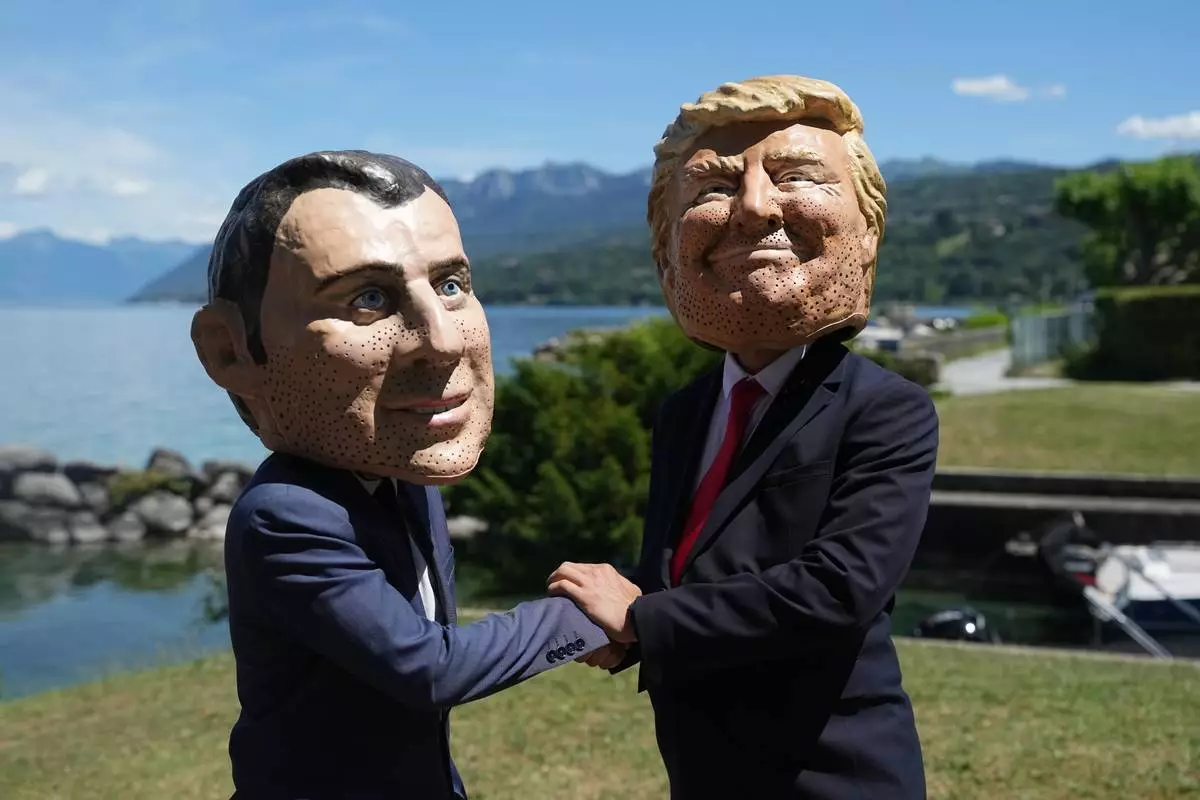
Oxfam's satirical 'big heads' of the G7 leaders depicting French President Emmanuel Macron, left, and U.S. President Donald Trump pose, in Evian-les-Bains, France, Sunday, June 14, 2026, ahead of the G7 summit scheduled to take place in France June 15-17. (AP Photo/Thibault Camus)
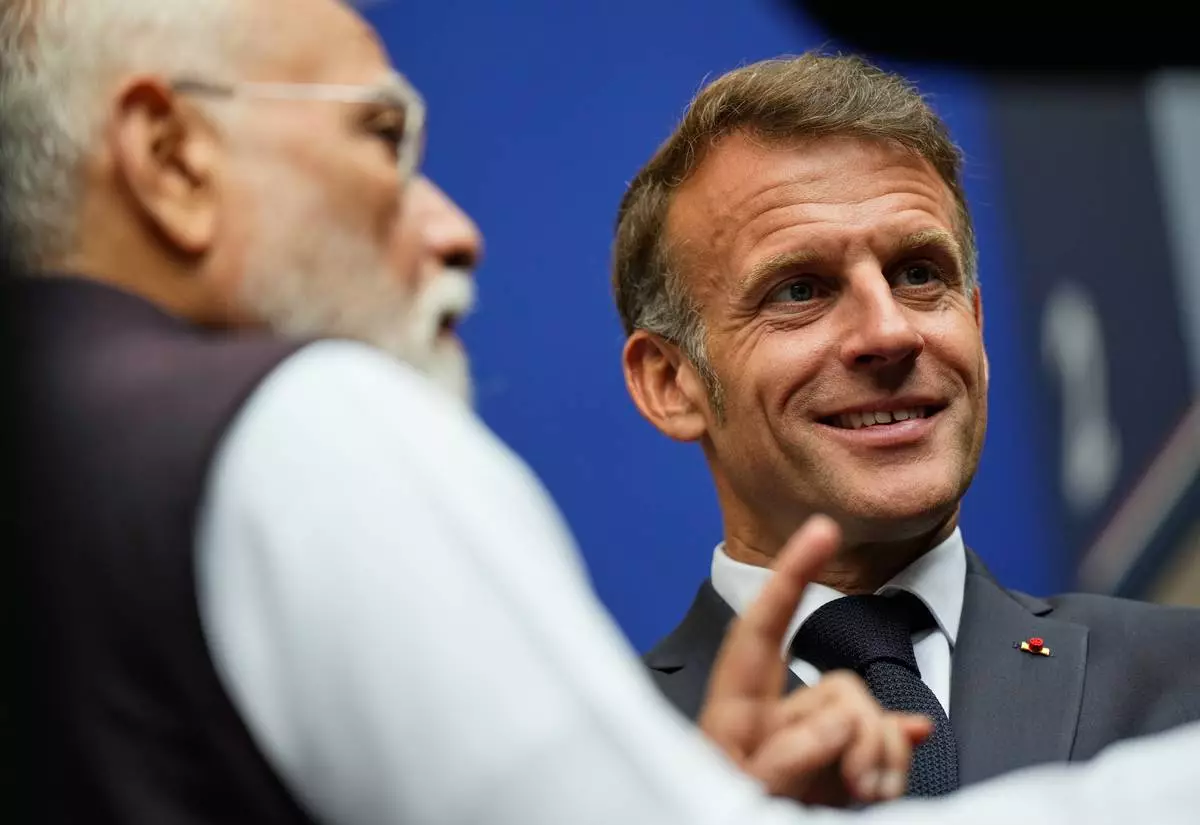
Indian Prime Minister Narendra Modi, left, and French President Emmanuel Macron attend an Indian education and ecosystem event in Nice, southern France, Sunday, June 14, 2026. (AP Photo/Lewis Joly, Pool)
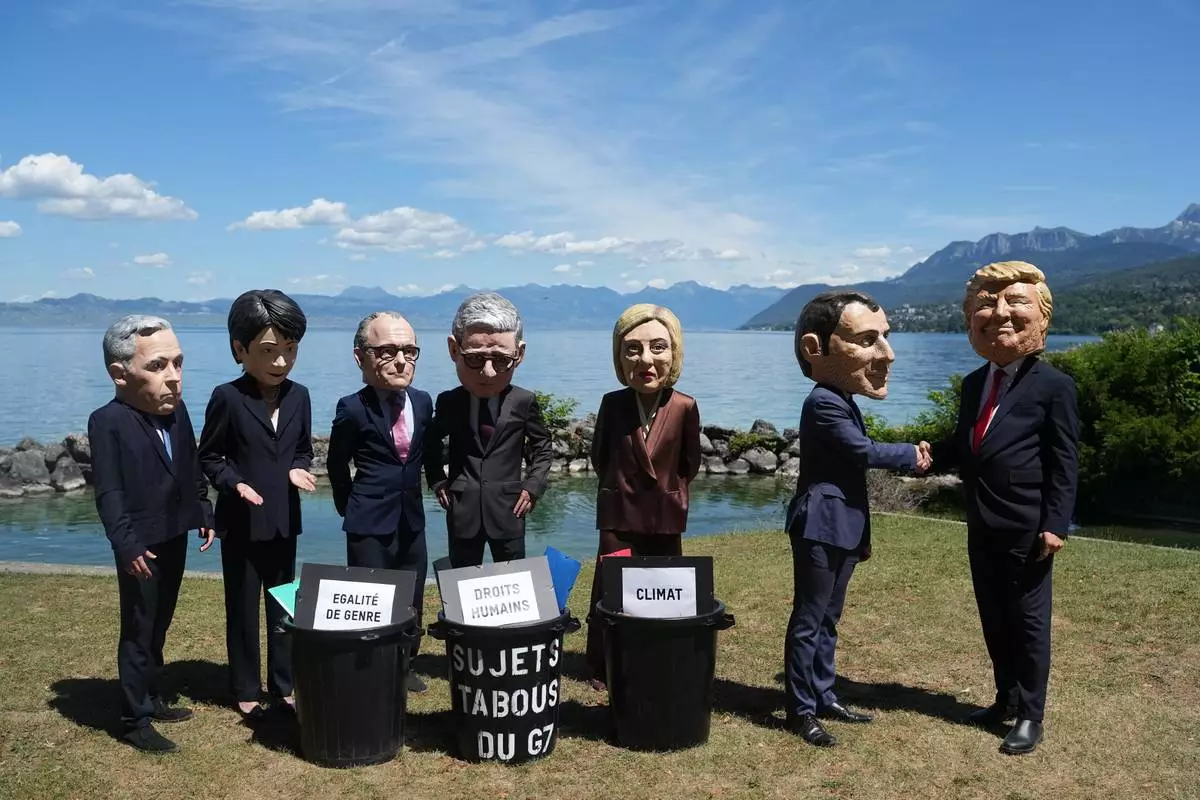
Oxfam's satirical 'big heads' of the G7 leaders pose, in Evian-les-Bains, France, Sunday, June 14, 2026, ahead of the G7 summit scheduled to take place in France June 15-17. (AP Photo/Thibault Camus)