Skip to Content Facebook Feature Image

Chulalongkorn University's Engineering Prepares for "SMRs"--Newer, Safer Small Nuclear Power Plants for Clean Energy in Thailand

Business

Chulalongkorn University's Engineering Prepares for "SMRs"--Newer, Safer Small Nuclear Power Plants for Clean Energy in Thailand
Business

Business

Chulalongkorn University's Engineering Prepares for "SMRs"--Newer, Safer Small Nuclear Power Plants for Clean Energy in Thailand

2026-04-22 12:52 Last Updated At:13:15

BANGKOK, April 21, 2026 /PRNewswire/ -- Chulalongkorn University aims for carbon neutrality, promotes knowledge in nuclear energy and Small Modular Reactor (SMR) technology, safer small-scale nuclear power plants with zero carbon emissions, preparing personnel to drive the nation toward energy security and enhance future economic competitiveness.

Many countries around the world are accelerating their transition toward carbon neutrality while simultaneously strengthening energy security. Solar, wind, and hydropower are clean energy sources that have attracted significant attention, with continuous advancements in technology. Another indispensable high-efficiency clean energy source that does not emit greenhouse gases is nuclear power. 

Today, the global nuclear energy trend is moving toward small nuclear power plants, or Small Modular Reactors (SMRs), which feature more advanced technology, enhanced safety, and greater flexibility in deployment. At present, there are two operational SMRs in the world, located in China and Russia. However, within the next five years, additional SMRs are expected to be developed in several countries, including China, Russia, Canada, and the United States. 

For Thailand, the latest draft of Power Development Plan (PDP) 2024 mentions the consideration of SMRs as a future energy option. Thailand has long demonstrated readiness in terms of personnel and nuclear expertise, developed over several decades by the Department of Nuclear EngineeringFaculty of Engineering, Chulalongkorn University, the only institution in Thailand that offers education in nuclear engineering. 

Half a Century of Thailand's Nuclear Energy
Nuclear energy is not new to Thai society; rather, it has been around for over half a century. Assoc. Prof. Nares Chankow, a lecturer in the Department of Nuclear Engineering, Faculty of Engineering, Chulalongkorn University, explained that Thailand began discussing nuclear energy as early as 1966. In 1967.  A ten-member subcommittee was formed to conduct a feasibility study in various aspects, including personnel training.  

"Early preparations for nuclear energy were carried out seriously and systematically. Several potential sites were surveyed, and the conclusion was to designate Ao Phai in Si Racha District, Chonburi Province, as the location for Thailand's first nuclear power plant. This plan was approved by the Atoms for Peace Committee, which was chaired by the Prime Minister at that time," he said. 

This project is also regarded as the starting point for the establishment of the Department of Nuclear Engineering, Faculty of Engineering, Chulalongkorn University. 

"In 1970, Chulalongkorn University established the Nuclear Engineering School, initially focusing on training personnel from the Office of Atoms for Peace. In 1971, professors from the United States assisted in developing the curriculum. By 1972, the university launched a Graduate Diploma program and a Master of Engineering program in Nuclear Technology. In the early period, before a formal department existed, the program was administratively housed within the Department of Sanitary Engineering—now known as the Department of Environmental Engineering and Sustainability. It was not until 1974 that the Department of Nuclear Technology was officially established, marking the beginning of nuclear engineering education in Thailand. The department was later renamed the Department of Nuclear Engineering to align with other departments within the Faculty of Engineering," Assoc. Prof. Nares said. 

Over the past 50 years, the Department of Nuclear Engineering, Faculty of Engineering, Chulalongkorn University, has played a key role in producing skilled personnel and continuously advancing knowledge in the field, even during periods when nuclear power plant projects were put on hold. 

"The key factor that first led to the slowdown of the project was the discovery of natural gas resources in the Gulf of Thailand around 1977. At the time, it was estimated that these natural gas reserves would last for at least 40 years, and even today, nearly 50 years later, they are still being utilized. As a result, the government decided to postpone nuclear power projects. Discussions about nuclear power plants tend to resurface periodically during times of energy crises." 

In addition to the availability of natural gas, another major obstacle to nuclear power development has been public understanding and acceptance. This challenge has been intensified by news of major accidents at large-scale nuclear power plants, such as the Chernobyl nuclear reactor explosion in Ukraine in 1986, or more recently, the Fukushima Daiichi nuclear disaster in Japan in 2011, which was triggered by a tsunami. Such events heightened public fear and uncertainty, leading to stronger opposition to the construction of nuclear power plants. 

"Every time we are about to move forward with a project, an incident occurs that makes nuclear energy look bad—whether it's Chernobyl or Fukushima. These events frighten people and cause projects to stall," Assoc. Prof. Nares said, drawing a parallel with the criticism surrounding the Chula Tunnel, which has now been in use for over 40 years. "When the tunnel was first built, there was heavy criticism—people said it would be dangerous, that it would flood, that the road would collapse. Anything new, unfamiliar, or not well understood naturally causes fear. What we need to do is communicate accurate information about nuclear energy to the public as clearly as possible." 

Small Modular Reactors (SMR): The Future of Energy Security  
Efforts by many countries around the world to achieve Net Zero targets have brought nuclear energy back into focus. This time, however, attention is not on large-scale nuclear power plants, such as those associated with past disasters and media headlines, but rather on a new hope for the global energy sector: Small Modular Reactors (SMRs).  

"SMRs are modern nuclear power plants with a generating capacity of no more than 300 megawatts, which is much smaller than conventional nuclear power plants that typically have a capacity of around 1,000 megawatts," explained Assoc. Prof. Dr. Somboon Rassame, Head of the Department of Nuclear Engineering, Faculty of Engineering, Chulalongkorn University.  

At present, there are only two SMR facilities in actual operation worldwide. The first is in Russia, where the reactors are installed on a ship with a total generating capacity of 2 × 35 megawatts and have been in operation since 2020. The second is in China, with a generating capacity of approximately 210 megawatts, supplying electricity to the public since 2021. 

"At present, there are several SMR power plant projects under construction. China, for example, is building one additional unit, which is expected to be completed by the end of this year. Canada has begun construction on four units, and the United States is preparing multiple sites for future construction," Assoc. Prof. Dr. Somboon Rassame said. He anticipates that by the end of 2030, several SMRs will be in operation worldwide. 

As for Thailand, after signing the NDC 3.0 (Nationally Determined Contribution), a commitment to reduce carbon dioxide emissions to achieve carbon neutrality by 2050 and net-zero greenhouse gas emissions by 2065, nuclear power projects have once again become a prominent topic in national development planning. 

In the country's energy security master plan—the latest 2024 draft of Thailand's Power Development Plan (PDP) prepared by the Energy Policy and Planning Office (EPPO)—small nuclear power plants (Small Modular Reactors: SMRs) are being considered as a potential future option. The plan includes two SMR units, each with a capacity of approximately 300 megawatts, to be located in the northeastern and southern regions of Thailand, with operations expected to begin by 2037. 

"Due to pressure from the global community regarding carbon emissions, Thailand has very limited options. In the future, everyone will be closely scrutinized over where their electricity comes from; if it is still generated from carbon-emitting sources, additional carbon taxes will be imposed," Assoc. Prof. Dr. Somboon Rassame said. "Relying solely on renewable energy may not yet be sufficient and poses risks to the country's electricity security. Wind and solar power have limitations in terms of continuity, while the use of battery storage increases costs. Natural gas and coal still emit large amounts of carbon. As a result, Thailand must now turn to alternative energy sources that can ensure safety and produce no carbon emissions." 

SMRs: A Leap Forward of Nuclear Technology for Enhanced Safety
Assoc. Prof. Dr. Somboon noted that SMRs offer several advantages, the first of which is flexibility.  "If a large nuclear power plant is built, we must be confident that the area has sufficiently high electricity demand. However, SMRs can be built in medium-sized communities, on islands, or in industrial estates. Most importantly, SMRs allow additional generating units to be added in line with growing demand. For example, a project could begin with 100 megawatts in the first five years, and when demand increases, another 200 megawatts can be added. This offers greater flexibility and better supports economic growth than large power plants, which require a massive one-time investment."  

The most significant advantage of SMRs is their newly developed safety systems. Assoc. Prof. Dr. Somboon explained that nearly all SMR designs feature self-reliant safety systems that do not depend on external power supplies. Even in the event of a disaster or emergency where the plant will automatically shut down, the SMR's safety systems will operate independently to safely bring the reactor to a halt. Emergency cooling in SMRs is also designed to be simpler and more self-sustaining, relying on natural cooling principles such as fluid circulation and gravity, rather than large volumes of coolant or water as required by large-scale plants. This significantly reduces the risk of reactor core meltdown and the release of radioactive materials into the environment, as occurred during the Fukushima nuclear accident in Japan in 2011. 

3 Key Advantages of SMRs and Issues Requiring Careful Preparation
Assoc. Prof. Dr. Somboon Rassame outlined the advantages of SMRs in three main points as follows:  

Although SMRs are smaller than conventional nuclear power plants, they still raise the same issue of radioactive waste. Therefore, Thailand needs to develop concrete plans for managing radioactive waste in the future in accordance with international standards, while also building public confidence that the country has safe, transparent, and verifiable systems for the storage and disposal of waste from SMRs.  

SMRs: Costs and Cost-Effectiveness  
One of the questions the public is most interested in is, "If SMRs are introduced, will electricity prices become cheaper?" 

Assoc. Prof. Dr. Somboon Rassame addressed this issue by saying, "SMRs are like any new product—much like when new smartphone models are first released. Naturally, the price will not be low at the beginning, but as more people use them, prices should decrease according to market mechanisms."  

Importantly, he emphasized that cost-effectiveness should not be assessed based on price alone, but should also take into account several key advantages, including:  

  • Energy security – SMRs can generate electricity continuously 24 hours a day and are not dependent on weather conditions, unlike solar and wind energy.  
  • Carbon-free electricity generation – This helps the country avoid carbon taxes and maintain its competitiveness in terms of economic growth and investment. 
  • Flexibility – SMRs can be installed in remote areas and allow generating capacity to be expanded in line with demand. 

ASEAN Moves Toward Nuclear Energy: Where Does Thailand Stand?  
"At present, there are only two SMRs in operation worldwide, with another four to five projects beginning construction. Thailand does not plan to deploy SMR nuclear power plants this year or next year; according to current plans, implementation would be around 12 years from now. By that time, it is expected that SMR adoption will have increased globally, leading to lower costs and more reasonable pricing, making them more competitive with other types of power plants." 

Several neighboring countries are moving forward with nuclear energy projects in earnest. Assoc. Prof. Dr. Somboon Rassame noted that Vietnam has made more progress in developing nuclear power plants than Thailand, largely due to strong government support and direct endorsement from its leader. Indonesia is also advancing seriously, having built a solid research foundation related to nuclear power over many years. The country has developed its own nuclear fuel and plans to commission its first nuclear power plant by 2032. Meanwhile, the Philippines has plans to construct nuclear power plants, including SMRs, by 2033–2034.  

"It is clear that many countries in this region are about 5 years ahead of Thailand. Therefore, if Thailand delays its decision to move forward with such projects, it will lose its competitive edge. This competition is not only about technology but also about the ability to attract investment. Countries that can produce clean, carbon-free energy are more likely to attract investors, especially in industries such as AI and data centers, which consume enormous amounts of electricity and require clean energy," Assoc. Prof. Dr. Somboon explained.  

Chula as a Knowledge and Workforce Hub: Preparing for SMRs
Establishing a nuclear power plant is not a simple undertaking, especially for countries that have never had one before. Assoc. Prof. Dr. Somboon Rassame explained that, according to International Atomic Energy Agency (IAEA) standards, countries without prior experience in nuclear power must spend at least 10–12 years on preparation. This readiness process must cover 19 key areas, such as: 1) human resources – sufficient numbers of well-trained engineers and experts; 2) laws and regulations – appropriate legal frameworks for regulation and oversight; 3) management planning – emergency preparedness plans and spent fuel management plans; 4) financing – clear financial support from the government. 

"Having a nuclear power plant is not easy—it's not something you decide today and purchase tomorrow. A country must demonstrate its capabilities and gain acceptance from the international community, nuclear power plant businesses, and IAEA, showing that it is truly ready to implement an SMR nuclear power project. The Department of Nuclear Engineering, Faculty of Engineering, Chulalongkorn University, has long played a key role in preparing the country in the nuclear field, particularly through the development of skilled human resources." 

"Whether or not there is a nuclear power plant project, the department continues to offer courses and conduct research. If we were to close the department or suspend teaching and research, the body of knowledge and expertise in nuclear engineering would be disrupted, and restarting would not be easy. Chulalongkorn University is a key institution for producing engineers, researchers, and specialists specifically in nuclear engineering. At present, many universities are beginning to show interest in establishing nuclear engineering programs, and Chulalongkorn University is ready to provide guidance and support in developing curricula to strengthen the country's capacity for workforce development in nuclear power," he said.  

At present, the department is involved in preparing the country for nuclear engineering readiness through multiple channels.  

  • Training programs – Short-term training courses of 18 hours are offered to the Electricity Generating Authority of Thailand (EGAT) and several private energy companies. This year, approximately 3-4 courses have already been conducted, with about 50 participants per cohort. 
  • Graduate production – The department has offered bachelor's, master's, and doctoral degree programs in nuclear and radiation engineering since 1972. To date, several hundred students have graduated at the master's and doctoral levels. 
  • Academic services – The department provides consultation to private companies and government agencies on site selection, suitability assessments, project planning, and the selection of appropriate technologies. 

Nuclear in Daily Life
Whether or not nuclear power plants are built, nuclear and radiation technologies have long been part of everyday life. Assoc. Prof. Nares explained this with several interesting examples, such as: 

  • Medical applications – King Chulalongkorn Memorial Hospital is equipped with a proton therapy machine that uses radiation to treat cancer. This technology can deliver highly precise radiation to targeted areas, minimizing damage to surrounding organs compared with conventional radiation therapy. 
  • Food and pharmaceutical industries – Gamma irradiation is used to sterilize a wide range of products, from herbal inhalers that are currently gaining popularity to fermented pork, fruits, exported animal feed, syringes, and saline IV tubes used in hospitals. All of these products must undergo irradiation to eliminate pathogens. 
  • Quality control – In beverage manufacturing plants, radiation is used to measure liquid levels in bottles to ensure consistent volumes. In military weapons factories, X-rays are used for quality inspection. Even some brands of toothpicks undergo irradiation to prevent contamination.  

"The Department of Nuclear Engineering at Chulalongkorn University has produced a large number of professionals who work across various industries. Therefore, even without nuclear power plants, nuclear knowledge is highly beneficial to society," stated Assoc. Prof. Nares. 

Rare Earth Elements and Nuclear Technology  
Assoc. Prof. Nares further explained that another interesting dimension is the relationship between nuclear technology and rare earth elements, which are critical raw materials for modern technologies such as smartphones, electric vehicles, computer equipment, drones, and various electronic devices.  

"Rare earth elements often contain traces of radioactive materials, so nuclear techniques can be used for exploration and analysis. In addition, there are many nuclear-based techniques that can be applied to survey, identify, and quantify rare earth elements. In the past, the Office of Atoms for Peace had a rare earth minerals project and even designed a processing plant, but the project was halted. It is not too late to resume development, as rare earth minerals are extremely important for high-tech industries," he said.  

Public Acceptance Is the Key to Success  
Although SMRs offer many advantages and align well with energy security needs and Net Zero goals, they also present challenges that must be addressed. These include the country's clarity and commitment in moving forward with such projects, the establishment of regulatory organizations and legal frameworks, and the development of qualified personnel—particularly as current enrollment in nuclear engineering programs remains insufficient. Most importantly, public acceptance is a critical factor.  

The Fukushima nuclear power plant accident in 2011 may have reduced public acceptance of nuclear energy. However, Assoc. Prof. Dr. Somboon Rassame observed that over the past 3-4 years, as more information about SMRs has been disseminated, public opinion on social media has begun to shift. Many people now view SMRs as a newer, more advanced, and safer technology, with younger generations in particular showing a growing willingness to accept this form of energy. 

"The role of educational institutions is to provide the public with clear and straightforward information about what this technology is, how it has been developed and improved, and how likely accidents are compared with nuclear power plants in the past. Institutions must present both the advantages and the limitations in a comprehensive manner. Once the public has been fully informed, the decision belongs to the people, and we must all accept the outcome," Assoc. Prof. Dr. Somboon concluded.  

"I would like to urge national leaders to allow qualified experts in nuclear engineering and nuclear technology to lead and manage the country's key nuclear agencies, including the Office of Atoms for Peace (OAP) and the Thailand Institute of Nuclear Technology (TINT). This would allow our country to fully enter an era in which nuclear technology can be applied to national development across many sectors—energy, industry, agriculture, the environment, materials, and beyond," Assoc. Prof. Nares added in closing. 

Small Modular Reactors (SMRs) represent a significant opportunity that Thailand should prepare for. With greatly advanced technology, superior safety systems, installation flexibility, and, most importantly, carbon-free electricity generation, SMRs offer strong potential. Backed by more than half a century of accumulated commitment, knowledge, and experience, the Department of Nuclear Engineering, Faculty of Engineering, Chulalongkorn University, stands ready to play a role in advancing the country's opportunity to achieve sustainable energy security.

In approximately 12 years, Thailand plans to begin operating its first SMR capable of actual electricity generation. Clean energy for a new era is within reach, and Thailand is preparing to move confidently toward that future.  

Find more information on the Department of Nuclear Engineering, Faculty of Engineering, Chulalongkorn University, on Facebook: Nuclear Engineering, Chulalongkorn University 

Continue reading a full article on the website: https://www.chula.ac.th/en/highlight/286177/

About Chulalongkorn University
Chulalongkorn University has made the world's top 50 university list for employment outcomes, which reflects both the high employment rate and work ability of Chula graduates. The university is also listed as the best in Thailand for the 15th Consecutive Year (since 2009), according to the newly released QS World University Rankings 2024, putting Chula at 211th in the world, up from 244th last year.

Social Media:
Facebook: https://www.facebook.com/ChulalongkornUniversity
Youtube: https://www.youtube.com/chulauniversity
Linkedin: https://www.linkedin.com/school/15101896/


** This press release is distributed by PR Newswire through automated distribution system, for which the client assumes full responsibility. **

Chulalongkorn University's Engineering Prepares for "SMRs"--Newer, Safer Small Nuclear Power Plants for Clean Energy in Thailand

Chulalongkorn University's Engineering Prepares for "SMRs"--Newer, Safer Small Nuclear Power Plants for Clean Energy in Thailand
Introduced at Money20/20 Asia, the StableX Know Your Agent Framework establishes how AI agents are identified, authorised, monitored and held accountable to provide financial services in payments, compliance, and wealth management — authored in Singapore, designed for the world

BANGKOK, April 22, 2026 /PRNewswire/ -- MetaComp Pte. Ltd. (MetaComp), today launched the StableX Know Your Agent (KYA) Framework – a governance framework for AI agents operating in regulated financial services in payments, compliance, and wealth[1] workflows authored by a licensed financial institution and believed to be the first of its kind globally. MetaComp is Asia's pioneer in unified Web2.5 digital financial solutions bridging fiat and stablecoin capabilities across payments, treasury, and wealth[1] management through a group-level platform. The KYA framework is open for adoption by financial institutions, regulators, and network partners.

Introduced at Money20/20 Asia, the StableX Know Your Agent Framework establishes how AI agents are identified, authorised, monitored and held accountable to provide financial services in payments, compliance, and wealth management — authored in Singapore, designed for the world.

The announcement was made at Money20/20 Asia in Bangkok, Thailand, alongside the expansion of MetaComp's AgentX agentic financial services Skill ecosystem, the first such ecosystem from a regulated financial institution, which will be available across Claude, Claude Code, OpenClaw, and other compatible AI platforms from 21 April 2026 at www.metacomp.ai.

Ms Tin Pei Ling, Co-President, MetaComp said:

"AI agents are already operating in financial services — initiating payments, making compliance decisions, managing portfolios. And yet there is no agreed standard for who those agents are, what they are permitted to do, or who is accountable when they act outside their mandate. KYA is our active contribution to establish that standard for regulated financial services. It governs agents across their full lifecycle — identity, authorisation, behaviour monitoring, and how they interact with each other — within a single architecture."

To understand why this matters in practice, take something as fundamental as identity. When a human leaves an organisation, their access is revoked. When an AI agent completes a transaction, its identity and permissions do not automatically expire. It can persist in a system long after its mandate has lapsed — with no verified identity anchor, no accountability chain, and no mechanism to intervene. "Also, the longitudinal behavioural trail, if without safeguards such as time limits or privacy protection, risks being tracked and exploited. Hence, holistic lifecycle governance is imperative," she added.

The Governance Gap Agentic Finance Has Yet to Close

Financial institutions globally are deploying AI agents to initiate payments, execute compliance decisions, and manage portfolios, yet fewer than one in three organisations have adequate governance and controls in place to oversee them, according to McKinsey's 2026 State of AI Trust survey. Similarly, PwC's Global AI Performance Study 2026, found that while Singapore businesses outperform the global average on AI adoption (67 per cent report a higher risk appetite for AI investment versus 41 per cent globally), only 47 per cent have a documented responsible AI framework, compared to 63 per cent among global AI leaders.

In January 2026, Singapore's Infocomm Media Development Authority (IMDA) published the world's first cross-sector governance framework for AI agents. Budget 2026 built on this with the establishment of a National AI Council chaired by Prime Minister Lawrence Wong, designating finance as one of four national AI mission sectors and committing to regulatory sandboxes for AI innovation.

Ms Tin Pei Ling added:

"We developed KYA drawing on IMDA's Model AI Governance Framework for Agentic AI, and we went back to IMDA directly to seek their feedback. We are in active engagement with other regulators and stakeholders. We are not presenting this as a finished answer. We are publishing it openly, because this is not a problem any one institution can resolve on its own. We are asking financial institutions, regulators, and technology partners to adopt it, challenge it, and build on it with us."

To the best of MetaComp's knowledge and based on publicly available information, no licensed financial institution has published a governance architecture addressing agent identity, authorisation, action scope, behavioural monitoring, risk scoring, audit trails, and agent-to-agent governance in a single framework specifically for regulated payments, compliance, and wealth[1] workflows.

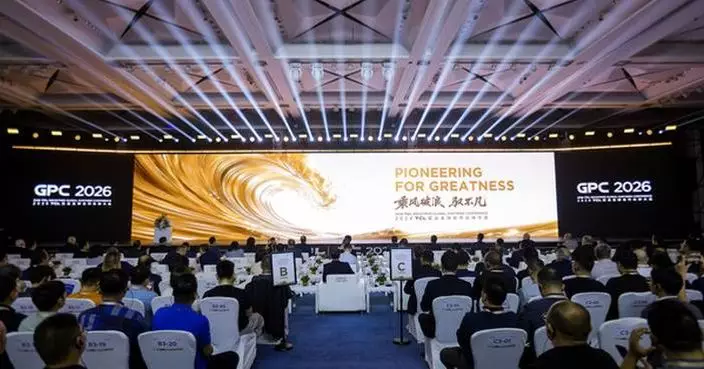
KYA governs AI agents across their full operational lifecycle, to establish who the agent is, what it is permitted to do, what it actually does and how it interacts. The framework is organised across four pillars: Agent Identity and Registration; Authority and Permission Control; VisionX Behaviour Monitoring and Risk Intelligence; and Ecosystem and Interaction Governance, which extends the FATF Travel Rule to agent-to-agent transactions.

Under the KYA framework, every AI agent is anchored to a verified identity linked to a real-world individual or institution through a tamper-resistant registry, ensuring clear accountability from the outset. Each agent operates within strictly defined permissions – governing what it can access, decide, and execute – with built-in safeguards that require human escalation when actions exceed approved thresholds.

The framework goes beyond traditional controls by introducing continuous, real-time monitoring of agent behaviour, assessing not just what actions are taken, but how they are executed and whether outcomes align with intent. As agents operate, their risk profiles are dynamically updated, enabling proactive risk management. All activities and interactions are securely authenticated and recorded, creating a comprehensive, end-to-end audit trail that delivers full transparency and traceability for regulators, institutions, and ecosystem participants.

KYA extends its governance to agent-to-agent interactions, building on the principles of the Financial Action Task Force (FATF) Travel Rule by requiring the exchange of verified identity and transaction information not only between institutions, but also across agent-initiated and agent-to-agent activities within a unified architecture. This ensures that every interaction remains traceable, attributable, and compliant by design.

The framework governs all agents operating within the StableX Network, including those accessing MetaComp's capabilities through the AgentX Skill ecosystem. Financial institutions and developers can access MetaComp's regulated infrastructure (compliance, payments, and wealth[1] management) directly through the AI platforms they already use, including Claude, Claude Code, and other compatible platforms via Model Context Protocol (MCP).

The ecosystem's first Skill, the VisionX Know Your Transaction (KYT) Skill, packages the Web2.5 VisionX Engine into a single agent-callable compliance layer combining more than four blockchain analytics vendors in parallel. New Skills across cross-border payments, treasury, and wealth[1] management will be available by late Q2 2026.

The Compliance Foundation and the Evidence Behind It

The framework sits on top of a compliance architecture that MetaComp has validated across real-world transaction flows. Cross-border transactions today increasingly span both traditional banking rails and blockchain networks within a single transfer. FATF data from June 2025 shows that 73 per cent of jurisdictions have passed Travel Rule legislation, but 59 per cent have taken no supervisory or enforcement action.

Ms Summer Yu, Group Chief Compliance Officer, Alpha Ladder Group, said: "Today's compliance frameworks were designed for a world where humans initiate transactions. That assumption no longer holds. Our analysis of more than 7,000 real-world transactions shows that even in hybrid fiat and blockchain environments, relying on a single screening tool can leave up to 25% of high-risk exposures undetected. In an agent-driven environment, these risks multiply, and without a defined identity layer, clear authorisation boundaries, or shared accountability standards, the control framework simply does not exist. VisionX Web2.5 closes the visibility gap. KYA establishes the governance layer. Both are essential, and both must be in place before agentic finance can scale safely."

Today's announcement continues a period of sustained momentum for MetaComp. Since closing US$35 million across two Pre-A funding rounds within three months, the group has launched the Web2.5 VisionX Engine, established a joint venture with Maqam International Holding to connect Abu Dhabi's real asset base to Asian capital markets through the StableX Network, and now introduced the KYA Framework as the governance layer for the next phase of institutional agentic finance. Capital is being deployed across all three dimensions: deepening compliance capabilities, expanding regulated payment corridors across Asia, the Middle East, Africa, and Latin America, and building the institutional standards that the agentic era requires.

[1] All products and/or services in relation to securities and capital market products are offered and operated solely by Alpha Ladder Finance Pte. Ltd.

About MetaComp

MetaComp is Asia's pioneer in unified Web2.5 digital financial solutions, bridging fiat and stablecoin capabilities across payments, treasury, and wealth management on an institutional, group-level platform. Licensed by the Monetary Authority of Singapore as a Major Payment Institution to provide Digital Payment Token (DPT) and Cross-border Money Transfer (CBMT) services, MetaComp serves more than 1,000 institutional and accredited clients across major financial hubs globally.

In 2025, the group-level platform processed over US$10 billion in payment and OTC volume across 13+ stablecoins, operating at a monthly run rate exceeding US$1 billion. Through the StableX Network, institutions move, convert and manage capital across fiat and stablecoin rails within a compliant, unified Web2.5 financial architecture. Treasury and investment services are provided through Alpha Ladder Finance Pte. Ltd., MetaComp's MAS-licensed affiliate holding Capital Markets Services (CMS) and Recognised Market Operator (RMO) licences, with wealth AUM surpassing US$500 million across its solutions.

MetaComp has raised US$35 million in its Pre-A funding rounds to date and achieved full-year net profitability in 2025, reflecting strong institutional demand for regulated Web2.5 financial solutions.

Learn more at www.mce.sg, or follow MetaComp on X @MetaCompHQ or LinkedIn (https://www.linkedin.com/company/metacompsg).

Introduced at Money20/20 Asia, the StableX Know Your Agent Framework establishes how AI agents are identified, authorised, monitored and held accountable to provide financial services in payments, compliance, and wealth management — authored in Singapore, designed for the world

BANGKOK, April 22, 2026 /PRNewswire/ -- MetaComp Pte. Ltd. (MetaComp), today launched the StableX Know Your Agent (KYA) Framework – a governance framework for AI agents operating in regulated financial services in payments, compliance, and wealth[1] workflows authored by a licensed financial institution and believed to be the first of its kind globally. MetaComp is Asia's pioneer in unified Web2.5 digital financial solutions bridging fiat and stablecoin capabilities across payments, treasury, and wealth[1] management through a group-level platform. The KYA framework is open for adoption by financial institutions, regulators, and network partners.

Introduced at Money20/20 Asia, the StableX Know Your Agent Framework establishes how AI agents are identified, authorised, monitored and held accountable to provide financial services in payments, compliance, and wealth management — authored in Singapore, designed for the world.

The announcement was made at Money20/20 Asia in Bangkok, Thailand, alongside the expansion of MetaComp's AgentX agentic financial services Skill ecosystem, the first such ecosystem from a regulated financial institution, which will be available across Claude, Claude Code, OpenClaw, and other compatible AI platforms from 21 April 2026 at www.metacomp.ai.

Ms Tin Pei Ling, Co-President, MetaComp said:

"AI agents are already operating in financial services — initiating payments, making compliance decisions, managing portfolios. And yet there is no agreed standard for who those agents are, what they are permitted to do, or who is accountable when they act outside their mandate. KYA is our active contribution to establish that standard for regulated financial services. It governs agents across their full lifecycle — identity, authorisation, behaviour monitoring, and how they interact with each other — within a single architecture."

To understand why this matters in practice, take something as fundamental as identity. When a human leaves an organisation, their access is revoked. When an AI agent completes a transaction, its identity and permissions do not automatically expire. It can persist in a system long after its mandate has lapsed — with no verified identity anchor, no accountability chain, and no mechanism to intervene. "Also, the longitudinal behavioural trail, if without safeguards such as time limits or privacy protection, risks being tracked and exploited. Hence, holistic lifecycle governance is imperative," she added.

The Governance Gap Agentic Finance Has Yet to Close

Financial institutions globally are deploying AI agents to initiate payments, execute compliance decisions, and manage portfolios, yet fewer than one in three organisations have adequate governance and controls in place to oversee them, according to McKinsey's 2026 State of AI Trust survey. Similarly, PwC's Global AI Performance Study 2026, found that while Singapore businesses outperform the global average on AI adoption (67 per cent report a higher risk appetite for AI investment versus 41 per cent globally), only 47 per cent have a documented responsible AI framework, compared to 63 per cent among global AI leaders.

In January 2026, Singapore's Infocomm Media Development Authority (IMDA) published the world's first cross-sector governance framework for AI agents. Budget 2026 built on this with the establishment of a National AI Council chaired by Prime Minister Lawrence Wong, designating finance as one of four national AI mission sectors and committing to regulatory sandboxes for AI innovation.

Ms Tin Pei Ling added:

"We developed KYA drawing on IMDA's Model AI Governance Framework for Agentic AI, and we went back to IMDA directly to seek their feedback. We are in active engagement with other regulators and stakeholders. We are not presenting this as a finished answer. We are publishing it openly, because this is not a problem any one institution can resolve on its own. We are asking financial institutions, regulators, and technology partners to adopt it, challenge it, and build on it with us."

To the best of MetaComp's knowledge and based on publicly available information, no licensed financial institution has published a governance architecture addressing agent identity, authorisation, action scope, behavioural monitoring, risk scoring, audit trails, and agent-to-agent governance in a single framework specifically for regulated payments, compliance, and wealth[1] workflows.

KYA governs AI agents across their full operational lifecycle, to establish who the agent is, what it is permitted to do, what it actually does and how it interacts. The framework is organised across four pillars: Agent Identity and Registration; Authority and Permission Control; VisionX Behaviour Monitoring and Risk Intelligence; and Ecosystem and Interaction Governance, which extends the FATF Travel Rule to agent-to-agent transactions.

Under the KYA framework, every AI agent is anchored to a verified identity linked to a real-world individual or institution through a tamper-resistant registry, ensuring clear accountability from the outset. Each agent operates within strictly defined permissions – governing what it can access, decide, and execute – with built-in safeguards that require human escalation when actions exceed approved thresholds.

The framework goes beyond traditional controls by introducing continuous, real-time monitoring of agent behaviour, assessing not just what actions are taken, but how they are executed and whether outcomes align with intent. As agents operate, their risk profiles are dynamically updated, enabling proactive risk management. All activities and interactions are securely authenticated and recorded, creating a comprehensive, end-to-end audit trail that delivers full transparency and traceability for regulators, institutions, and ecosystem participants.

KYA extends its governance to agent-to-agent interactions, building on the principles of the Financial Action Task Force (FATF) Travel Rule by requiring the exchange of verified identity and transaction information not only between institutions, but also across agent-initiated and agent-to-agent activities within a unified architecture. This ensures that every interaction remains traceable, attributable, and compliant by design.

The framework governs all agents operating within the StableX Network, including those accessing MetaComp's capabilities through the AgentX Skill ecosystem. Financial institutions and developers can access MetaComp's regulated infrastructure (compliance, payments, and wealth[1] management) directly through the AI platforms they already use, including Claude, Claude Code, and other compatible platforms via Model Context Protocol (MCP).

The ecosystem's first Skill, the VisionX Know Your Transaction (KYT) Skill, packages the Web2.5 VisionX Engine into a single agent-callable compliance layer combining more than four blockchain analytics vendors in parallel. New Skills across cross-border payments, treasury, and wealth[1] management will be available by late Q2 2026.

The Compliance Foundation and the Evidence Behind It

The framework sits on top of a compliance architecture that MetaComp has validated across real-world transaction flows. Cross-border transactions today increasingly span both traditional banking rails and blockchain networks within a single transfer. FATF data from June 2025 shows that 73 per cent of jurisdictions have passed Travel Rule legislation, but 59 per cent have taken no supervisory or enforcement action.

Ms Summer Yu, Group Chief Compliance Officer, Alpha Ladder Group, said: "Today's compliance frameworks were designed for a world where humans initiate transactions. That assumption no longer holds. Our analysis of more than 7,000 real-world transactions shows that even in hybrid fiat and blockchain environments, relying on a single screening tool can leave up to 25% of high-risk exposures undetected. In an agent-driven environment, these risks multiply, and without a defined identity layer, clear authorisation boundaries, or shared accountability standards, the control framework simply does not exist. VisionX Web2.5 closes the visibility gap. KYA establishes the governance layer. Both are essential, and both must be in place before agentic finance can scale safely."

Today's announcement continues a period of sustained momentum for MetaComp. Since closing US$35 million across two Pre-A funding rounds within three months, the group has launched the Web2.5 VisionX Engine, established a joint venture with Maqam International Holding to connect Abu Dhabi's real asset base to Asian capital markets through the StableX Network, and now introduced the KYA Framework as the governance layer for the next phase of institutional agentic finance. Capital is being deployed across all three dimensions: deepening compliance capabilities, expanding regulated payment corridors across Asia, the Middle East, Africa, and Latin America, and building the institutional standards that the agentic era requires.

[1] All products and/or services in relation to securities and capital market products are offered and operated solely by Alpha Ladder Finance Pte. Ltd.

About MetaComp

MetaComp is Asia's pioneer in unified Web2.5 digital financial solutions, bridging fiat and stablecoin capabilities across payments, treasury, and wealth management on an institutional, group-level platform. Licensed by the Monetary Authority of Singapore as a Major Payment Institution to provide Digital Payment Token (DPT) and Cross-border Money Transfer (CBMT) services, MetaComp serves more than 1,000 institutional and accredited clients across major financial hubs globally.

In 2025, the group-level platform processed over US$10 billion in payment and OTC volume across 13+ stablecoins, operating at a monthly run rate exceeding US$1 billion. Through the StableX Network, institutions move, convert and manage capital across fiat and stablecoin rails within a compliant, unified Web2.5 financial architecture. Treasury and investment services are provided through Alpha Ladder Finance Pte. Ltd., MetaComp's MAS-licensed affiliate holding Capital Markets Services (CMS) and Recognised Market Operator (RMO) licences, with wealth AUM surpassing US$500 million across its solutions.

MetaComp has raised US$35 million in its Pre-A funding rounds to date and achieved full-year net profitability in 2025, reflecting strong institutional demand for regulated Web2.5 financial solutions.

Learn more at www.mce.sg, or follow MetaComp on X @MetaCompHQ or LinkedIn (https://www.linkedin.com/company/metacompsg).

** This press release is distributed by PR Newswire through automated distribution system, for which the client assumes full responsibility. **

MetaComp launches the world's first AI agent governance framework for regulated financial services

MetaComp launches the world's first AI agent governance framework for regulated financial services

MetaComp launches the world's first AI agent governance framework for regulated financial services

MetaComp launches the world's first AI agent governance framework for regulated financial services

Recommended Articles