MALÉ, Maldives--(BUSINESS WIRE)--Apr 22, 2026--
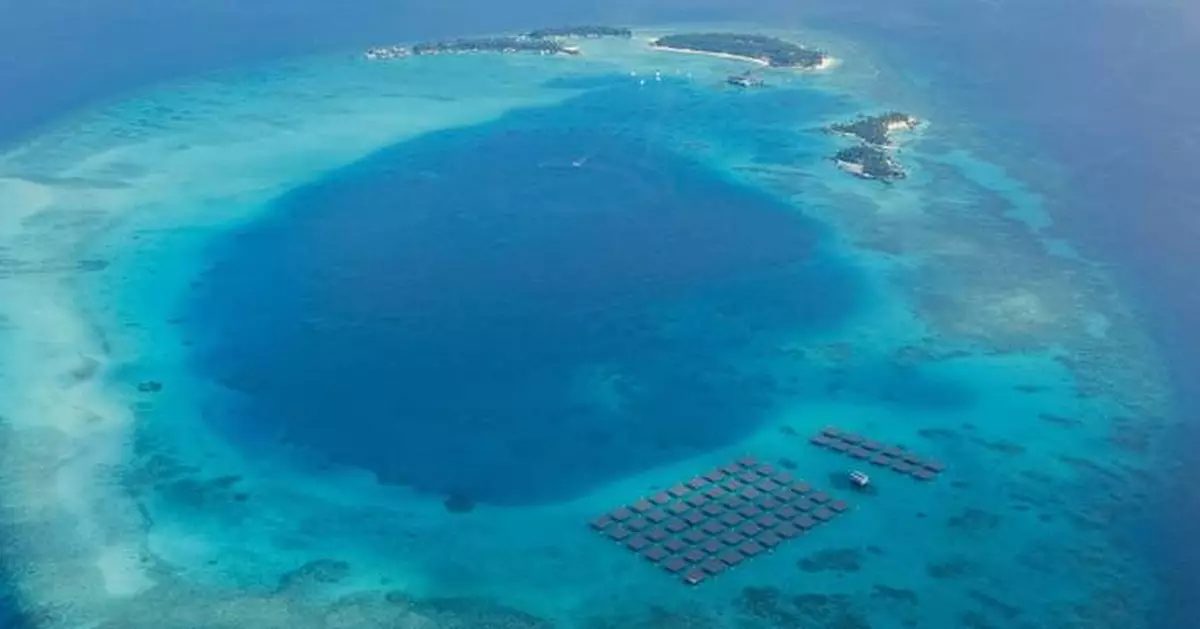
Swimsol's 2.4 MW SolarSea® PV array, floating at sea in the Maldives, runs the island of Cheval Blanc Randheli entirely on solar during daylight hours — saving an estimated USD 1.5 million per year in diesel costs as fuel prices climb worldwide.
This press release features multimedia. View the full release here: https://www.businesswire.com/news/home/20260422437338/en/
In the Maldives, each island generates its own electricity with diesel generators — there are no grid connections between distant atolls. The country spends around a tenth of GDP on diesel imports alone, the equivalent of one hour of every working person's day going toward electricity. With global fuel prices climbing, SolarSea® replaces that with a foreseeable electricity price for 30 years.
Martin Putschek, founder and CEO of Swimsol: "When we installed our first prototype in 2014, there were a lot of very valid questions about whether it would last. More than a decade later, those early platforms are still producing. The 2.4 MW system at Cheval Blanc proves it works at scale. Multiple SolarSea projects are now completed, with many more underway across the Maldives, Seychelles, and other island nations."
Lionel Valla, General Manager, Cheval Blanc Randheli: "Beauty of the Maldives is a treasure that must be protected. By embracing the sun's boundless energy, we honour nature's generosity and reduce our reliance on fossil resources, illuminating a future where sustainability is not only our responsibility but also in the highest interest of our planet."
World's First Floating Solar at Sea
In 2014, Swimsol installed the world's first floating solar platform at sea. The challenge is physical: less than 1% of the Maldives is land — the rest is ocean. Most islands are so small you can walk around them in half an hour. A single 2.4 MW installation needs more than two football fields of space — space that simply does not exist on many islands. SolarSea® was built to put solar panels on the sea.
From Zero Trust to 50 Islands
When Swimsol first approached Maldives resorts about solar, the answer was simple: no. Diesel was polluting, but familiar and reliable. Island engineers did not want to risk blackouts at properties where guests pay over USD 2,000 per night. The company had to earn that trust one island at a time — and in the process, make it all hassle-free.
The team came to the Maldives with floating solar technology, but had to start with rooftop panels just to prove that solar works at all. Then prove that generators can shut down safely during solar hours. Then — finally — that solar can float at sea. It took six years to sign the first major resort. Then word spread, resorts talk. Today, more than 50 resort islands run on Swimsol PV systems, including Four Seasons, Waldorf Astoria, One&Only, and The Ritz-Carlton.
What It Takes to Power an Island
There are no ports, no warehouses, and often no space to lay down a container. Swimsol engineers move eight-tonne transformers across islands where the widest path is a sandy track built for golf buggies — and designed custom trolleys to do it. Every system is designed to European engineering standards and maintained by a team of more than 150 professionals across Austria and the Maldives. Swimsol has done this more than 50 times — each one a unique island, a unique grid.
For the resort, it's simple. Swimsol designs, builds, operates, and maintains everything. One provider and one contract. Foreseeable electricity price, cheaper than diesel. The resort focuses on hospitality.
Scaling Across Island Nations
SolarSea systems are operating at ten locations — most in the Maldives, with additional installations in Indonesia and Chile. Further installations are taking shape across the Maldives, Seychelles, and beyond. Applications now extend beyond resorts to fish farms and public electricity grids, with growing demand from Small Island Developing States and coastal nations worldwide. The Maldives has 600 MW of installed electricity capacity — more than 90% of it still diesel-powered. Swimsol has installed 50 MWp of solar capacity to date.
The Full Story
The full documentary follows Swimsol's journey from the world's first floating solar platform at sea in 2014 to the 2.4 MW system now powering Cheval Blanc Randheli — the engineering, the logistics, and the team that made it possible.
Short film: https://youtu.be/Urjh-FLk55A
Full documentary: https://youtu.be/qupjpr0Nud8
High-resolution images available at: https://drive.google.com/drive/folders/1iXohvyL0n_RqiEUXTinChlGJvfMDjUXe?usp=share_link
About Swimsol
Founded in Austria, operating continuously in the Maldives since 2012. Over 50 MWp of solar capacity and 25 MWh of battery storage installed across more than 50 resort islands. Over 150 professionals across Austria and the Maldives. Swimsol pioneered the world's first floating solar platform at sea and remains the leading solar energy provider in the Maldives. The company specialises in micro-grids and remote tropical island energy — combining offshore floating solar (SolarSea®), rooftop and ground-mounted PV, and battery storage into complete island energy systems, offered turnkey or financed under long-term Power Purchase Agreements.
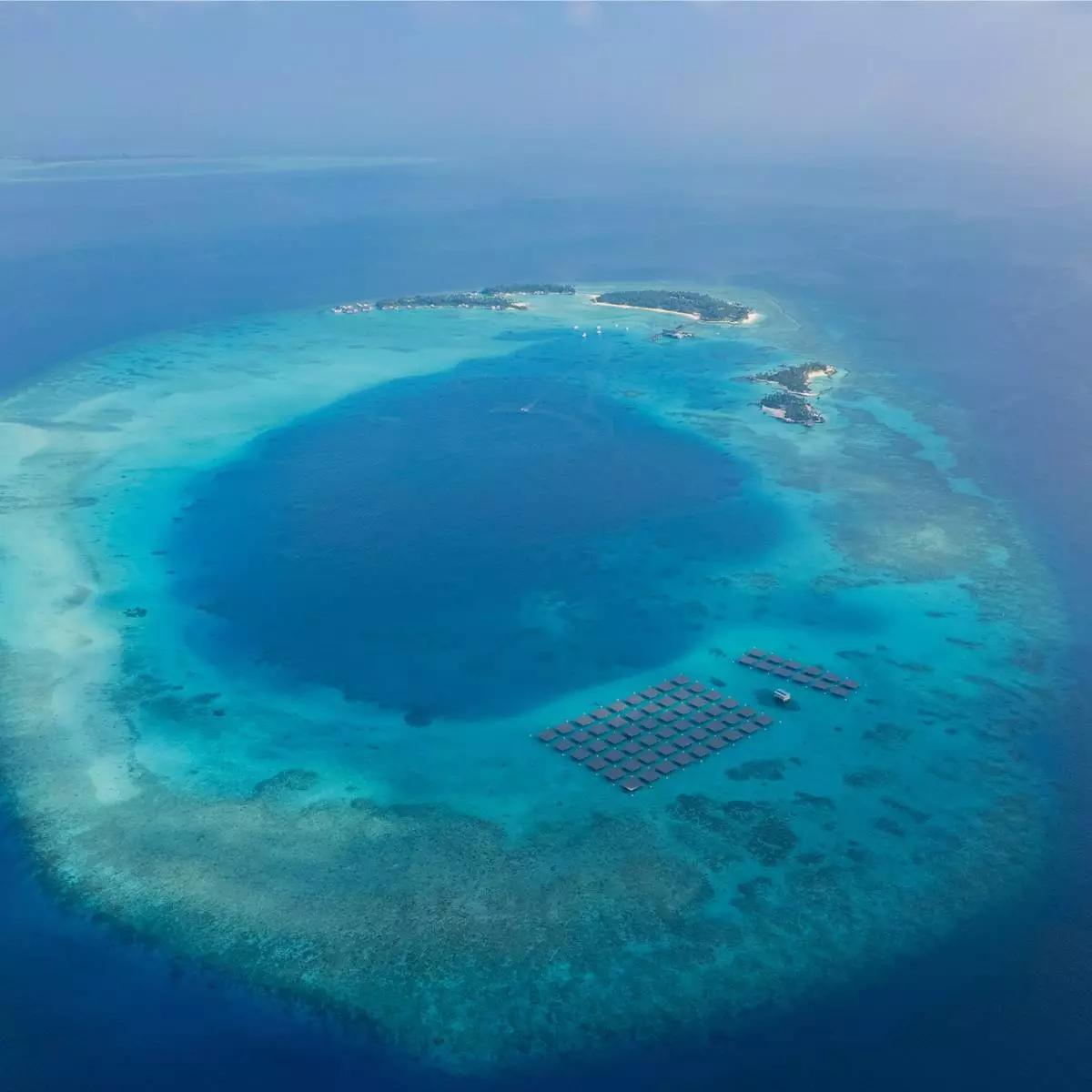
Aerial view of the 2.4 MW SolarSea floating photovoltaic installation at Cheval Blanc Randheli, Noonu Atoll, Maldives — the largest floating solar array at sea in the country. Installed by Swimsol, the system replaces an estimated USD 1.5 million per year in diesel. (Photo: Swimsol)
ISTANBUL (AP) — Sadri Haghshenas spends her days selling borek — a layered, savory pastry — at a shop in Istanbul, but her mind is on her daughter in Tehran.
The family had to send her home to Iran after they ran into difficulties renewing her visa, despite fears that a shaky ceasefire could soon collapse.
For years, short-term residency permits have allowed tens of thousands of Iranians to pursue economic opportunities and enjoy relative stability in neighboring Turkey. But it's a precarious situation, and the war has raised the stakes.
“I swear, I cry every day,” Haghshenas said, raising her hands from behind the counter of the pastry shop. “There is no life in my country, there is no life here, what shall I do?”
Haghshenas and her husband moved to Turkey five years ago with their then-teenage daughters and have been living on tourist visas renewable every six months to two years.
They could not afford a lawyer this year, because her husband is out of work due to health problems. As a result, they missed the deadline to apply for a new visa for their 20-year-old daughter, Asal, who is still in her final year of high school.
Asal was detained at a checkpoint earlier this month and spent a night at an immigration facility. Her mother found a friend to take her back to Tehran rather than face deportation proceedings that could complicate her ability to return to Turkey. They hope she can come back on a student visa.
Haghshenas has been unable to talk to her daughter since she left because of a monthslong internet blackout in Iran.
Turkey has not seen an influx of refugees, as most Iranians have sought safety within their country. Many who have crossed the land border were transiting to other countries where they have citizenship or residency.
Nearly 100,000 Iranians lived in Turkey in 2025, according to the Turkish Statistical Institute. Around 89,000 have entered Turkey since the start of the war, while around 72,000 have departed, according to the United Nations' refugee agency.
Some Iranians have used short-term visa-free stays to wait out the war, but there are few options for those who want to stay longer.
Sedat Albayrak, of the Istanbul Bar Association’s Refugee and Migrant Rights Center, said that getting international protection status can be difficult, and the system encourages Iranians to apply for short-term permits instead.
“There are people who have lived on them for over 10 years," he said.
Nadr Rahim came to Turkey for his children’s education 11 years ago. Now, the war may force him to go home.
Because of the difficulty of getting a permit to start a business or work legally in Turkey, he lived off the profits of his motorcycle salesroom in Iran. But there have been no sales since the war started, and international sanctions — and the internet outage — make it extremely difficult to transfer funds.
His family only has enough money to stay in Turkey a few more months. His children grew up in Turkey and don't read Farsi or speak it fluently. He worries about how they would adapt to living in Iran, but said “if the war continues, we will have no choice but to return.”
In the meantime, he spends most of his days scrolling on his phone, waiting for news from his parents in Tehran or discussing the war over waterpipes with Iranian friends.
A 42-year-old Iranian woman came to Turkey eight months ago, hoping to make money to support her family. She and her daughter registered as university students to get study visas. She attends classes in the morning to keep her legal status before rushing to service jobs, sometimes working until 3 a.m.
They share a room with six other people at a women's boarding house, she said, speaking on condition of anonymity out of fear for her security should she return to Iran.
“I truly love Iran. If necessary, I would even go and defend it in war,” she says. But she sees no future there, while in Turkey, she’s barely scraping by and only able to send small amounts of money to her parents.
“I have a bad life in Turkey, and my parents have a bad life in Iran,” she said. “I came to Turkey with so much hope, to support my parents and build a future. But now I feel hopeless.”
A 33-year-old freelance architect from Tehran traveled to Turkey during Iran's violent crackdown on mass protests in January. She had planned to return after the situation calmed down, but then the United States and Israel went to war with Iran at the end of February.
“I started to believe that it’s a very bad situation, worse than I expected,” she said, speaking on condition of anonymity for fear of persecution if she returns to Iran.
She has been unable to work for her usual clients back in Iran because of the internet blackout. With the end of her 90-day visa-free window approaching, she can't afford to apply for a longer stay in Turkey.
Instead, she has decided to go to Malaysia, where she will get free accommodation in return for building shelters during a month of visa-free stay.
She has no plan for what comes next.
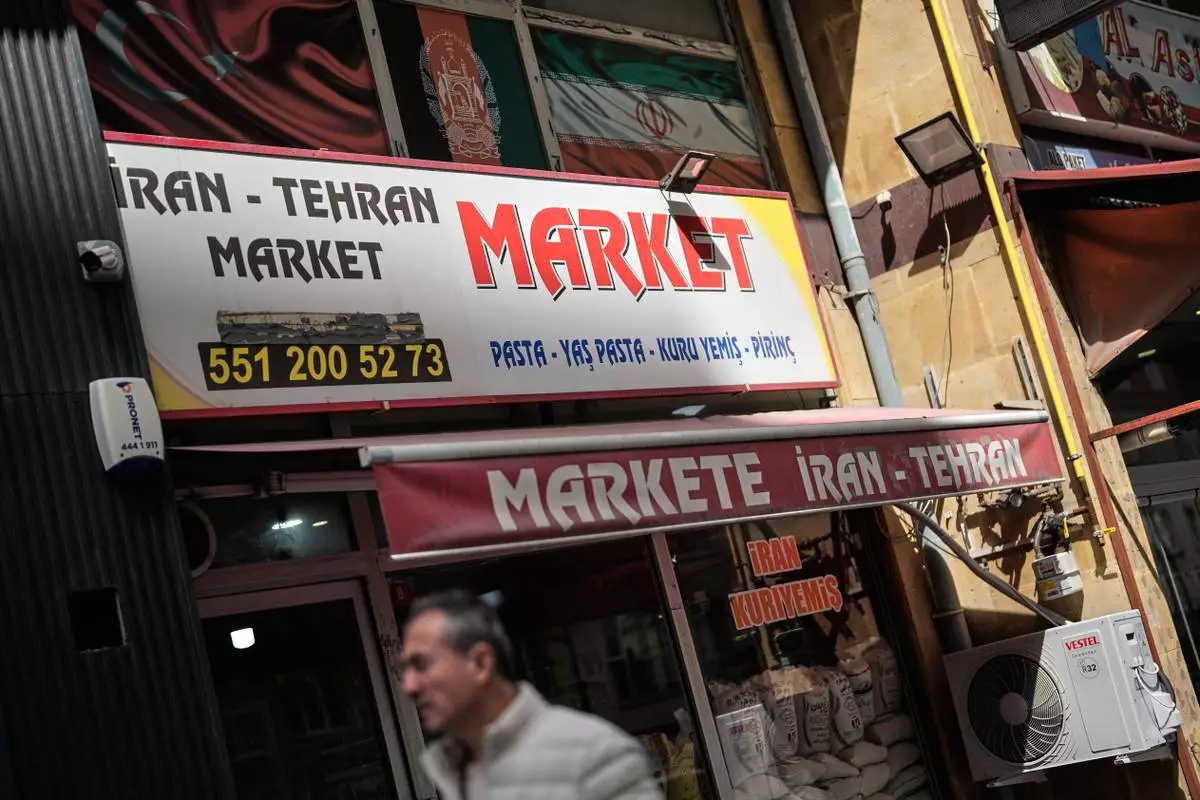
A man walks past an Iranian grocery shop in Istanbul on Tuesday, April 14, 2026. (AP Photo/Khalil Hamra)
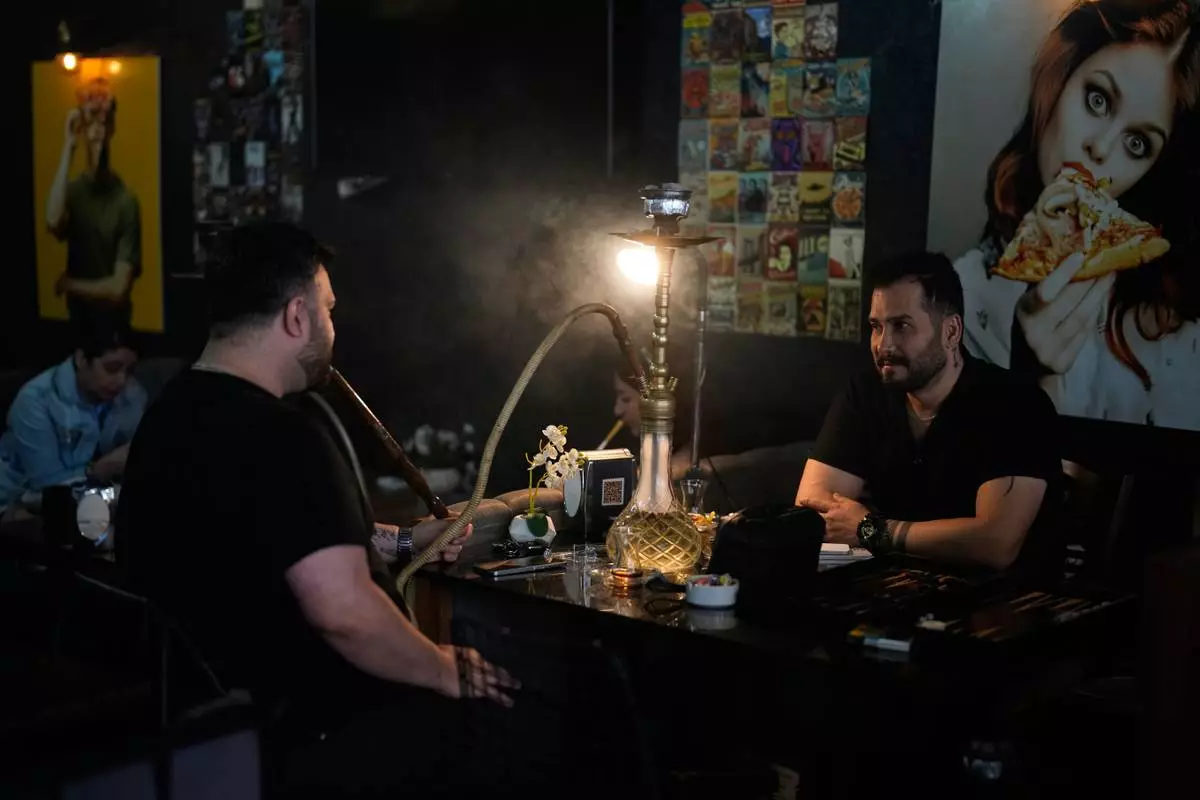
Nadr Rahim, right, sits with a friend at an Iranian coffee shop in Istanbul on Tuesday, April 14, 2026. (AP Photo/Khalil Hamra)
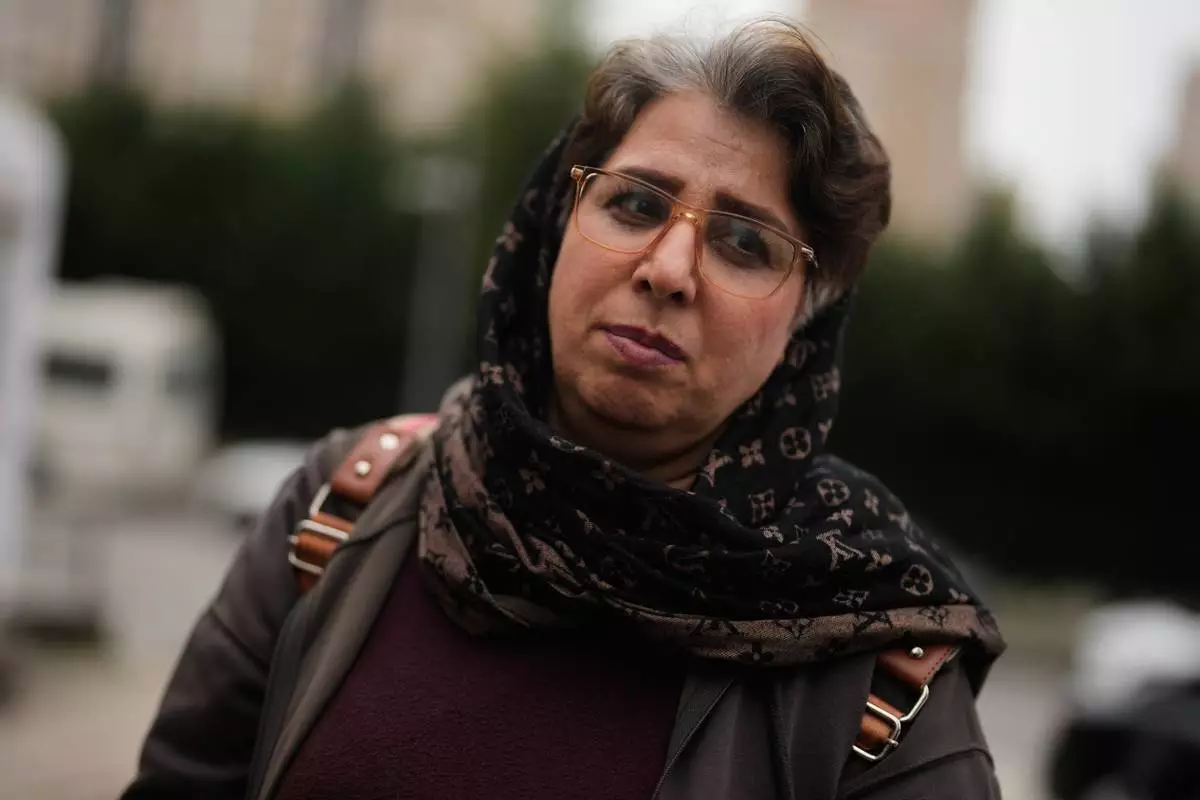
Sadri Haghshenas, a 47-year-old Iranian woman who works at a borek shop, walks in Istanbul on Tuesday, April 14, 2026. (AP Photo/Khalil Hamra)
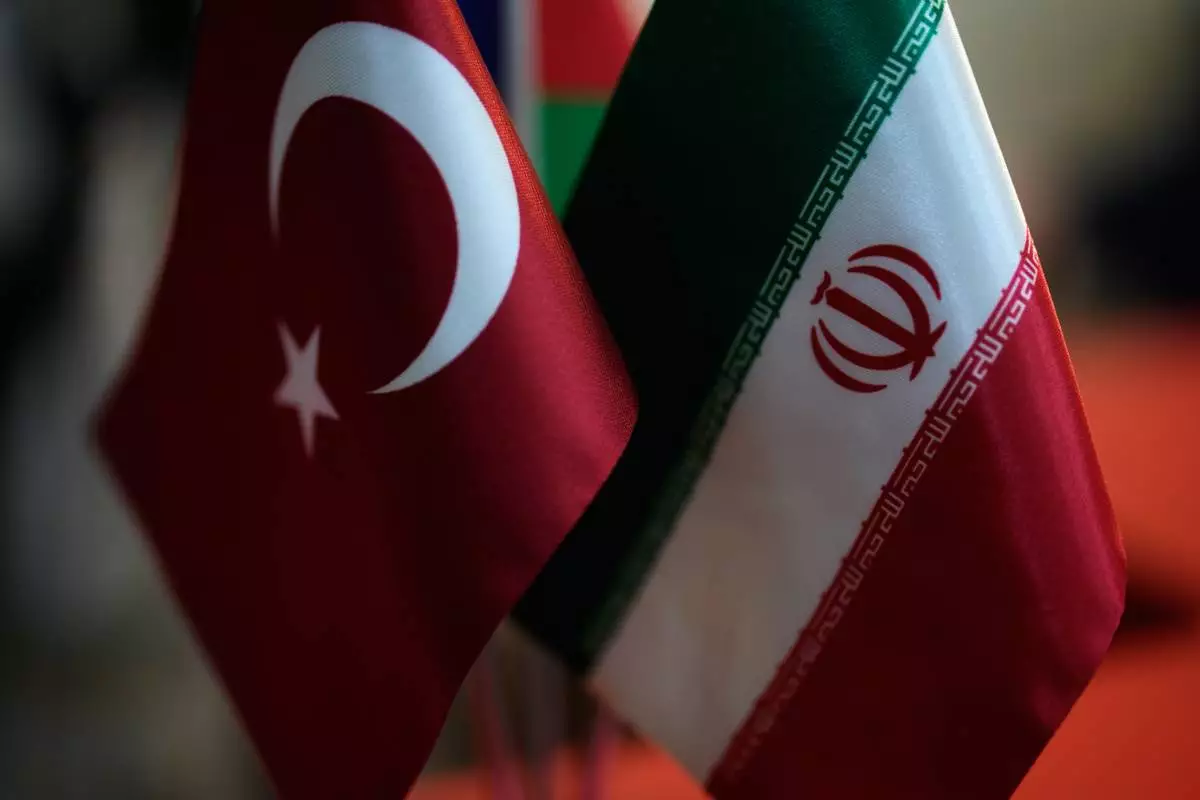
Turkish and Iranian flags are seen in an Iranian currency exchange business in the Aksaray district of Istanbul on Monday, April 13, 2026. (AP Photo/Khalil Hamra)
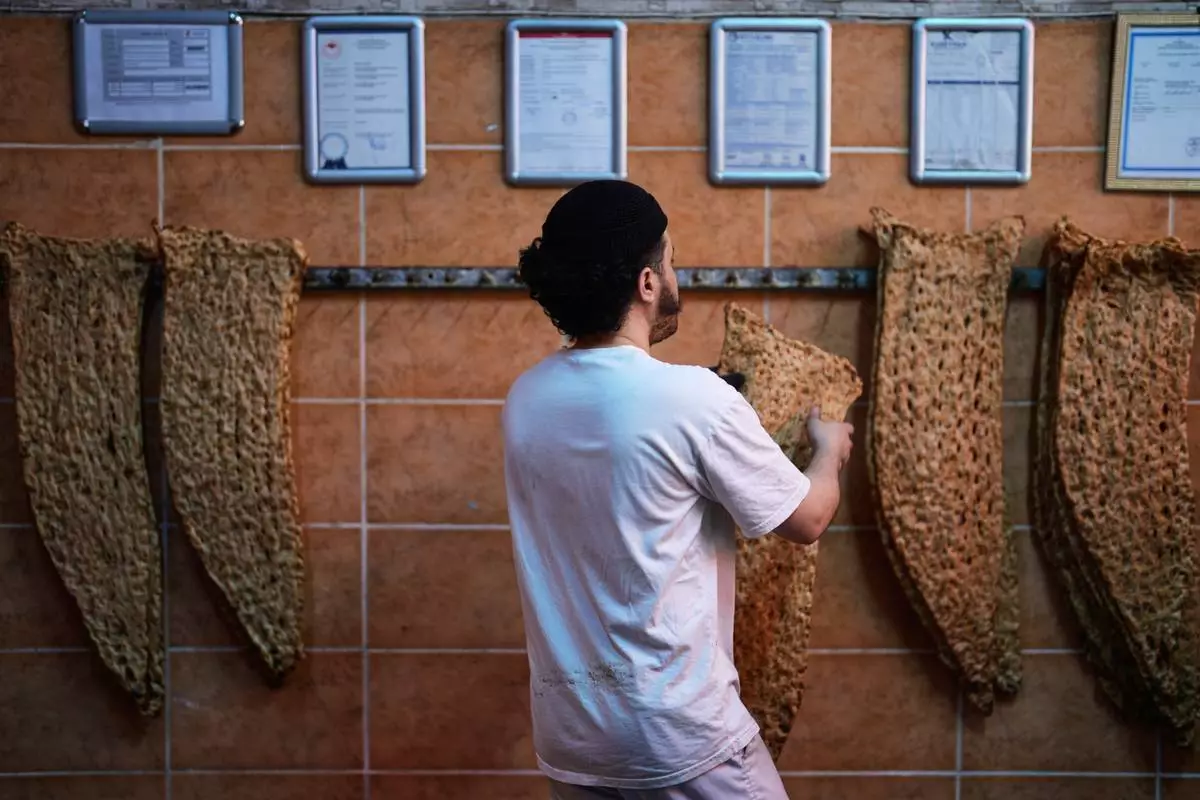
A baker hangs bread in an Iranian bakery in Istanbul on Tuesday, April 14, 2026. (AP Photo/Khalil Hamra)