Skip to Content Facebook Feature Image

Climate doom and gloom? Try laughing instead. Activists embrace joy in the fight to save Earth

ENT

Climate doom and gloom? Try laughing instead. Activists embrace joy in the fight to save Earth
ENT

ENT

Climate doom and gloom? Try laughing instead. Activists embrace joy in the fight to save Earth

2026-04-22 19:03 Last Updated At:19:20

When several different team-building groups shared space at a retreat center in New York's Hudson Valley, one bunch of people stood out because of their constant laughter — so much that someone from another group eventually asked, “Who are you guys?”

They were activists meeting to figure out how to better fight against worsening climate change, a cause usually associated with failure, sacrifice and doom.

More Images
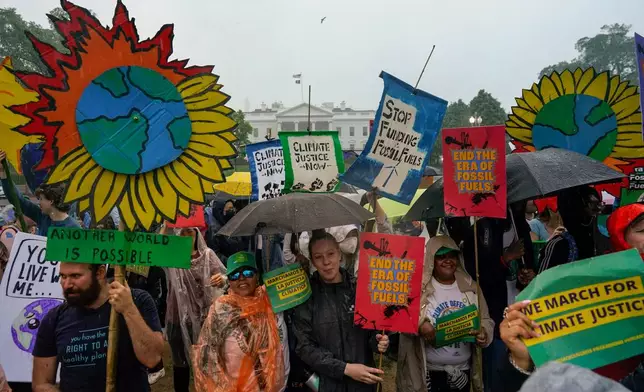
FILE - Climate activists hold a rally to protest the use of fossil fuels on Earth Day in the rain front of the White House on April 22, 2023, in Washington. (AP Photo/Carolyn Kaster, File)
FILE - Climate activists hold a rally to protest the use of fossil fuels on Earth Day in the rain front of the White House on April 22, 2023, in Washington. (AP Photo/Carolyn Kaster, File)

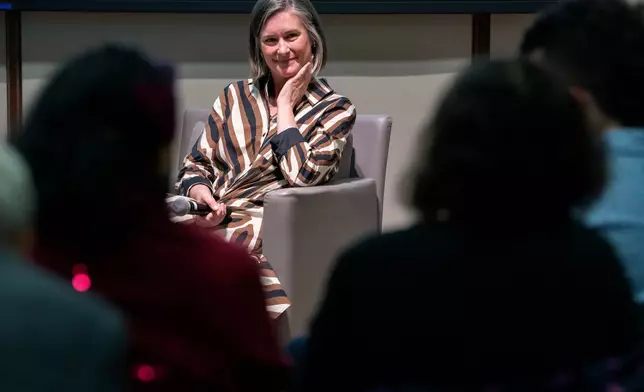
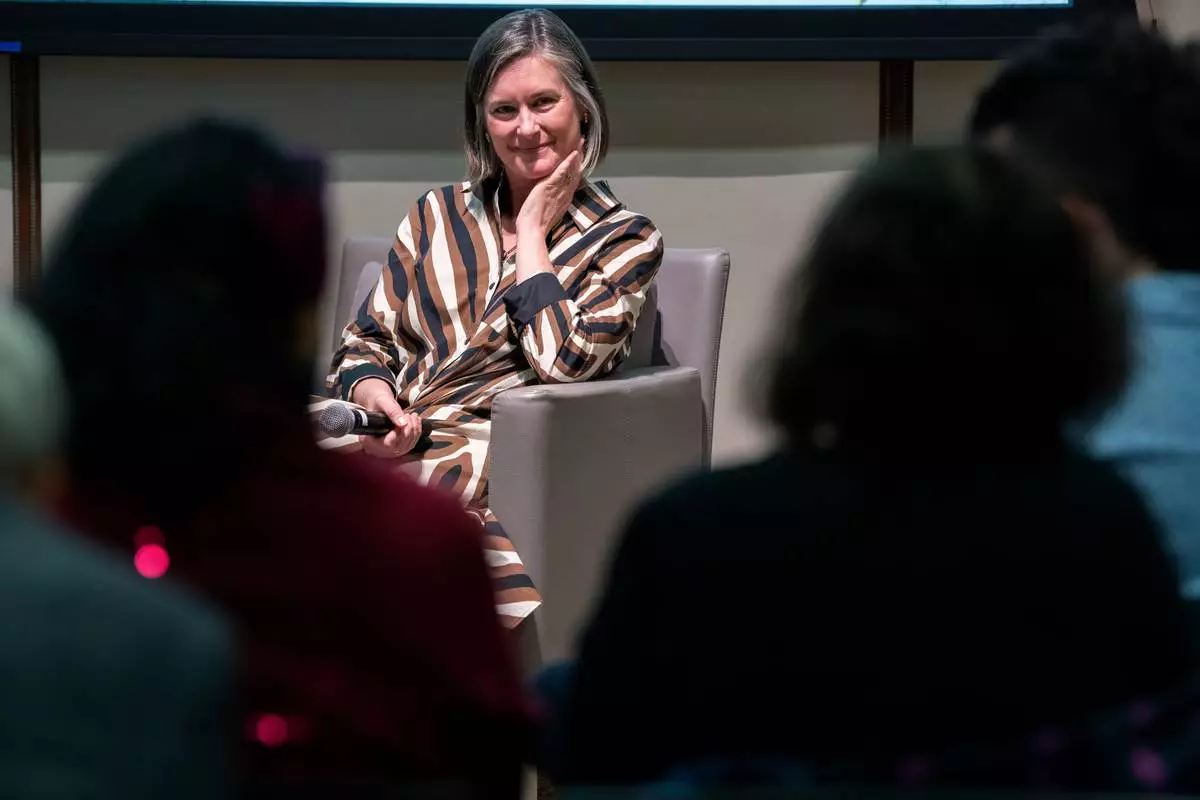
Katharine Wilkinson gives a talk about living with climate uncertainty at American University in Washington on April 14, 2026. (AP Photo/Michael Phillis)

Katharine Wilkinson gives a talk about living with climate uncertainty at American University in Washington on April 14, 2026. (AP Photo/Michael Phillis)

FILE - A woman rides a bicycle on a path, as the San Francisco skyline is seen in the background, Aug. 19, 2025, in Alameda, Calif. (AP Photo/Godofredo A. Vásquez, File)
FILE - A woman rides a bicycle on a path, as the San Francisco skyline is seen in the background, Aug. 19, 2025, in Alameda, Calif. (AP Photo/Godofredo A. Vásquez, File)

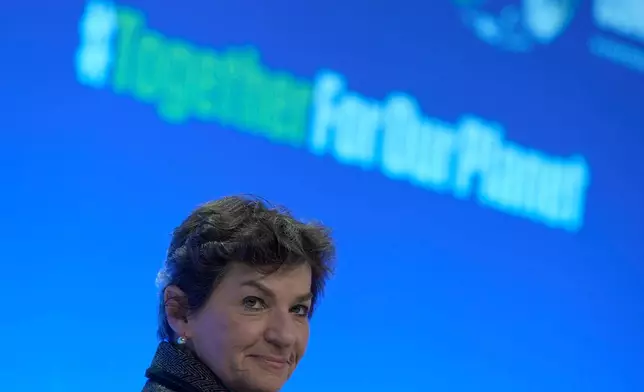
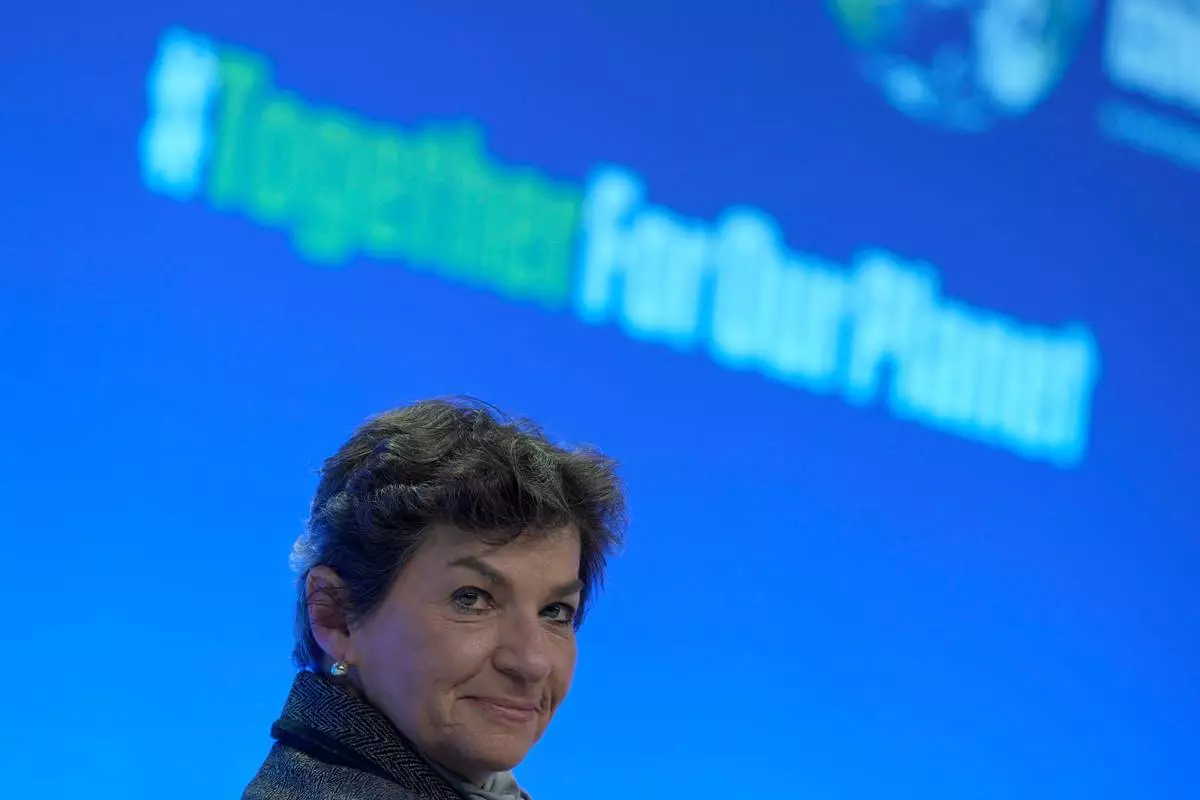
FILE - Christiana Figueres, former U.N. climate chief who led the 2015 Paris Agreement, speaks to The Associated Press in Glasgow, Scotland, Oct. 31, 2021. (AP Photo/Alastair Grant, File)
FILE - Christiana Figueres, former U.N. climate chief who led the 2015 Paris Agreement, speaks to The Associated Press in Glasgow, Scotland, Oct. 31, 2021. (AP Photo/Alastair Grant, File)

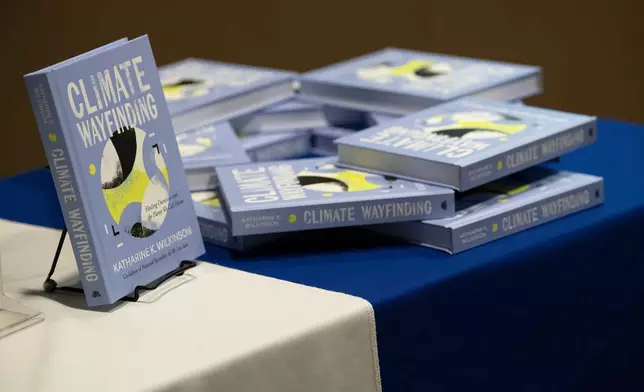
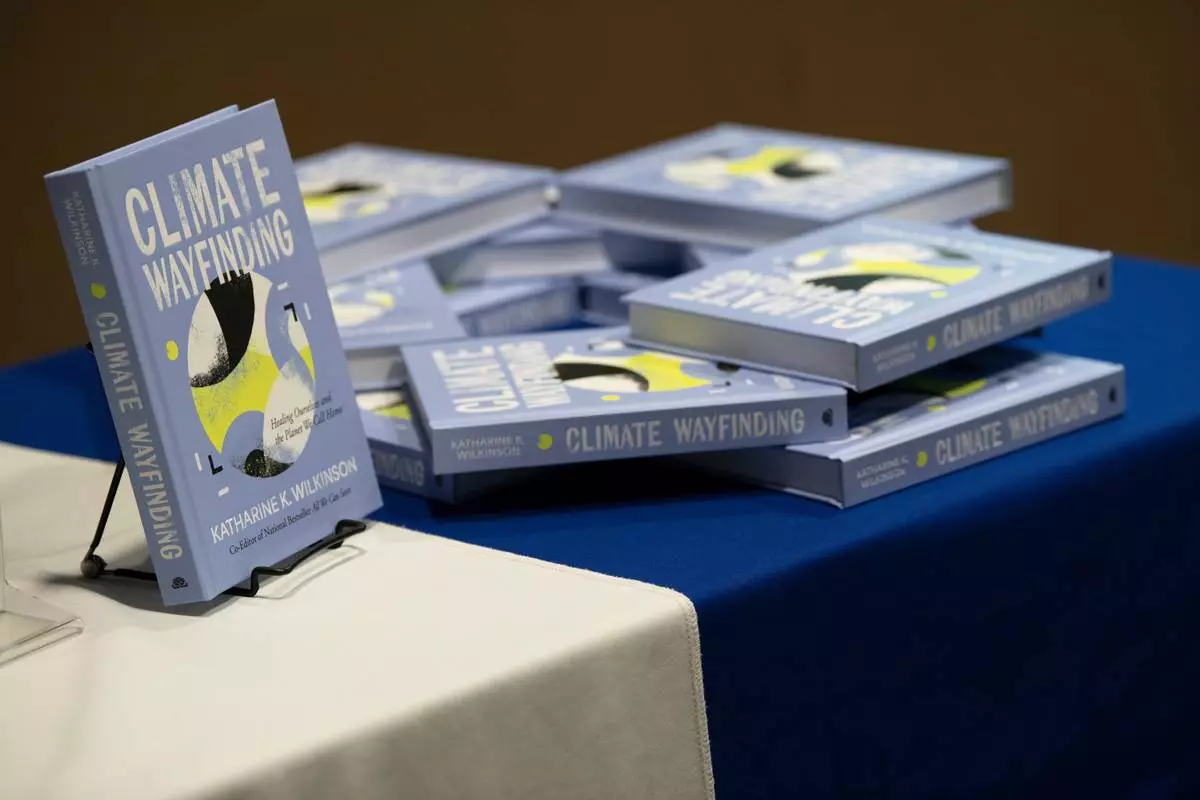
Katharine Wilkinson's book "Climate Wayfinding: Healing Ourselves and the Planet We Call Home" is displayed at her talk on April 14, 2026, in Washington. (AP Photo/Michael Phillis)

Katharine Wilkinson's book "Climate Wayfinding: Healing Ourselves and the Planet We Call Home" is displayed at her talk on April 14, 2026, in Washington. (AP Photo/Michael Phillis)

Katharine Wilkinson gives a talk about living with climate uncertainty at American University in Washington on April 14, 2026. (AP Photo/Michael Phillis)
Katharine Wilkinson gives a talk about living with climate uncertainty at American University in Washington on April 14, 2026. (AP Photo/Michael Phillis)
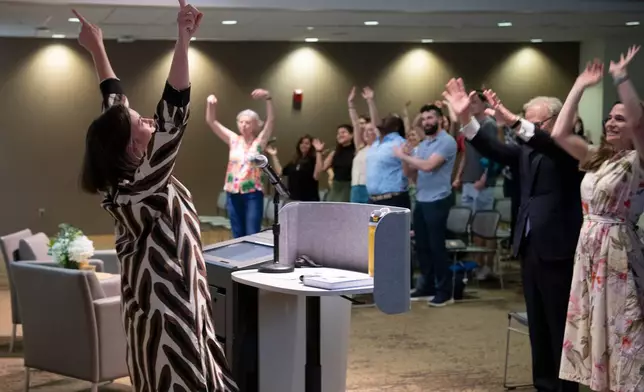
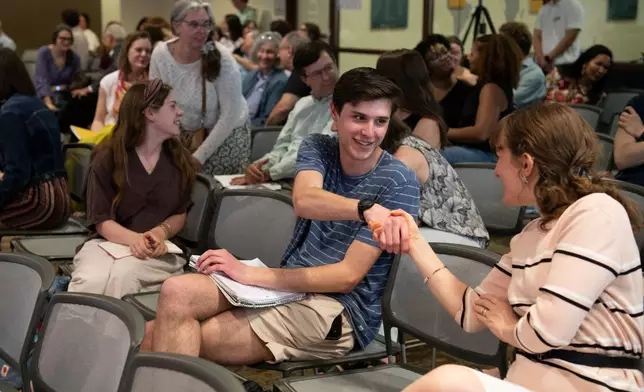
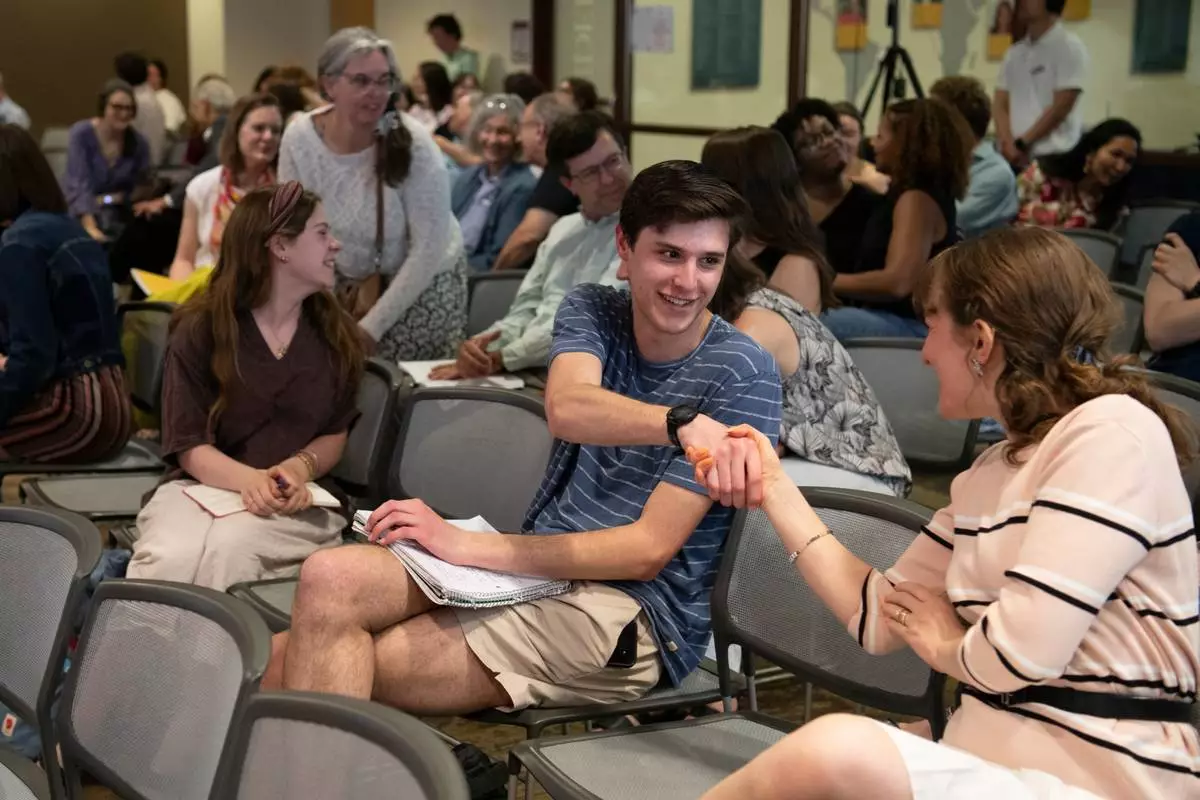
Itai Citrin shakes the hand of another attendee at a talk on climate uncertainty at American University in Washington on April 14, 2026. (AP Photo/Michael Phillis)

Itai Citrin shakes the hand of another attendee at a talk on climate uncertainty at American University in Washington on April 14, 2026. (AP Photo/Michael Phillis)

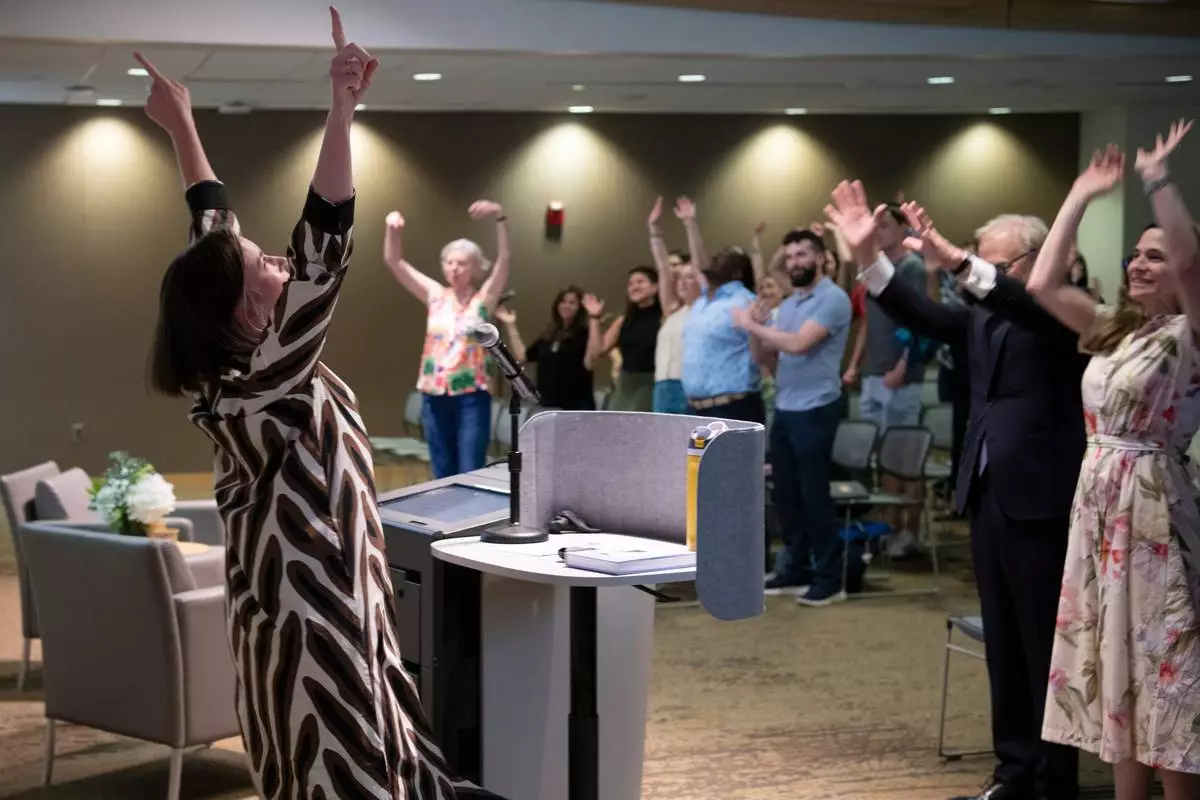
Katharine Wilkinson gives a talk about living with climate uncertainty at American University in Washington on April 14, 2026. (AP Photo/Michael Phillis)

Katharine Wilkinson gives a talk about living with climate uncertainty at American University in Washington on April 14, 2026. (AP Photo/Michael Phillis)

Across the world, groups of activists, teachers and psychologists are tackling one of the planet's most daunting problems with laughter, dancing, hugs and most especially joy. With a heavy emphasis on what works psychologically, seminars, books and college classes are trying to change how people approach climate change, by talking more about community and happiness than sacrifice. Earth Day, founded in 1970, has become a day of both protest and celebration, its founders say.

“I believe that joy is all the more necessary and maybe all the more holy in difficult times,” said Katharine Wilkinson, an activist who led the Hudson Valley seminar that got the other groups' notice. “Joy is like, how do we take part in the shimmy and the shimmer even as the world lurches?”

People like Wilkinson want to harness happiness to power those fighting to curb the burning of coal, oil and gas and the heat-trapping gases they emit, causing Earth to warm. In a recent speech at American University, Wilkinson called power and joy “a really potent portal to the gifts that we want to offer in this time of immense trouble and yet also immense possibility.”

Some psychologists call such thinking healthy and helpful.

“Joy is what made our species survive in the first place,” said Jiaying Zhao, a professor of psychology and sustainability at the University of British Columbia. “If we’re rewarded, reinforced by it, then we continue doing it. We spill over. We become contagious. We get others on board.”

Often that's with a laugh.

“Laughter is really one of the best strategies for coping with stress,” said Julia Kim-Cohen, a clinical psychology professor at the University of Illinois-Chicago. “So there are physiological benefits to laughter. The science shows that it reduces blood pressure and relaxes people’s nervous systems. And so when we’re relaxed through laughter, I think that helps us feel our hearts open to one another. Sharing laughter I think is this ancient, evolutionarily wired thing that humans do to connect.”

But reality is still key, said Christiana Figueres.

Figueres was the United Nations climate chief in 2015 when she helped shepherd the groundbreaking Paris climate deal that sought to limit Earth's warming. At that summit, Figueres said she felt she succeeded because she listened to everyone “deeply with an open heart and an open mind to what people are saying and especially what they're not saying” to find some common ground. And at night she and her staff danced to feel joy.

Figueres later founded Global Optimism, an activist group that put its mindset in its name, and she also runs seminars across the globe that involve joy, dancing and reality.

“We cannot turn our back to the suffering and the grief and the eco-anxiety and all that family of emotions because they are very there,” Figueres said. “Not to deny reality, not to deny the challenges that we have — that's step No. 1.

Figueres said the trick is “to anchor ourselves precisely in the pain and the suffering, embrace the pain, and the suffer” and then turn it into something good. She likened it to converting nasty kitchen waste into compost and fertilizer for a beautiful garden.

In this case it's accepting these emotions and converting them to “a sense of agency” so people can try to the change the world, she said.

Wilkinson, who runs seminars called Climate Wayfinding and a has an upcoming book of the same name, said she invites the darker emotions into her seminars because “when those come in then we also open space for the pendulum to go to the other side.”

And that's where laughter, joke-telling, hugging and dancing happen.

For years, governments and activists have talked about consuming less — such as energy and meat — to save the planet.

“If we have to win the fight against climate change by getting people to give up the things they enjoy, I don’t think we’re going to win the fight,” said University of British Columbia psychology professor Elizabeth Dunn.

Emphasizing sacrifice “is counterproductive,” said Zhao, who teamed with Dunn to write the book “Leave the Lights On.”

“Instead of asking people to sacrifice the things that bring them joy, our book is making the exact opposite claim: Do more of the stuff that brings you pleasure but also have a low carbon footprint,” she said.

“We’re actually trying to get people to change their behaviors. And joy is the missing ingredient here,” Zhao said. “All we’re saying is give this a shot.”

Dunn, using biking to work as an example, said, “If we enjoy doing something, it is a lot easier to stick with it.”

Even though she teaches psychology, including a class on the psychology of climate change, Kim-Cohen said she used to approach fighting climate change all wrong.

“I was that person at the cocktail party bringing up, you know, have you have you heard about the latest wildfire? Have you seen the flood in Spain?” Kim-Cohen said. “It was such a downer. I was such a pooper. There’s actually a term called ‘eco pooper.’ I was that person. And it didn’t work. People would just shut down.”

After a few years she burned out and got angry, Kim-Cohen said. But then Wilkinson's seminar changed that: “I came out with my heart filled with love.”

Senior Leah Glaser said she signed up for Kim-Cohen's class this semester thinking it would be a downer. It isn't.

“I leave every class feeling empowered to do something,” Glaser said. “I definitely leave with a smile on my face. It just really uplifts me in ways that other classes really don't.”

The Associated Press’ climate and environmental coverage receives financial support from multiple private foundations. AP is solely responsible for all content. Find AP’s standards for working with philanthropies, a list of supporters and funded coverage areas at AP.org.
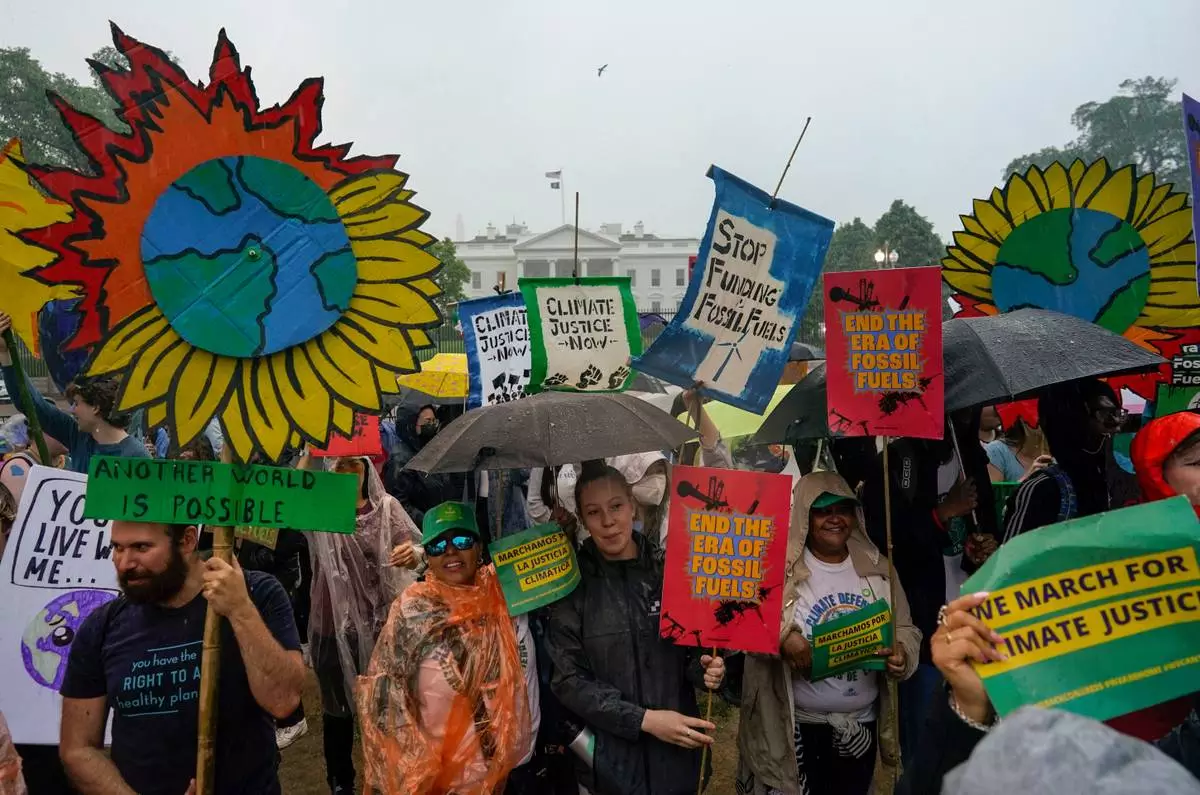
FILE - Climate activists hold a rally to protest the use of fossil fuels on Earth Day in the rain front of the White House on April 22, 2023, in Washington. (AP Photo/Carolyn Kaster, File)
FILE - Climate activists hold a rally to protest the use of fossil fuels on Earth Day in the rain front of the White House on April 22, 2023, in Washington. (AP Photo/Carolyn Kaster, File)

Katharine Wilkinson gives a talk about living with climate uncertainty at American University in Washington on April 14, 2026. (AP Photo/Michael Phillis)

Katharine Wilkinson gives a talk about living with climate uncertainty at American University in Washington on April 14, 2026. (AP Photo/Michael Phillis)

FILE - A woman rides a bicycle on a path, as the San Francisco skyline is seen in the background, Aug. 19, 2025, in Alameda, Calif. (AP Photo/Godofredo A. Vásquez, File)
FILE - A woman rides a bicycle on a path, as the San Francisco skyline is seen in the background, Aug. 19, 2025, in Alameda, Calif. (AP Photo/Godofredo A. Vásquez, File)

FILE - Christiana Figueres, former U.N. climate chief who led the 2015 Paris Agreement, speaks to The Associated Press in Glasgow, Scotland, Oct. 31, 2021. (AP Photo/Alastair Grant, File)
FILE - Christiana Figueres, former U.N. climate chief who led the 2015 Paris Agreement, speaks to The Associated Press in Glasgow, Scotland, Oct. 31, 2021. (AP Photo/Alastair Grant, File)

Katharine Wilkinson's book "Climate Wayfinding: Healing Ourselves and the Planet We Call Home" is displayed at her talk on April 14, 2026, in Washington. (AP Photo/Michael Phillis)

Katharine Wilkinson's book "Climate Wayfinding: Healing Ourselves and the Planet We Call Home" is displayed at her talk on April 14, 2026, in Washington. (AP Photo/Michael Phillis)

Katharine Wilkinson gives a talk about living with climate uncertainty at American University in Washington on April 14, 2026. (AP Photo/Michael Phillis)
Katharine Wilkinson gives a talk about living with climate uncertainty at American University in Washington on April 14, 2026. (AP Photo/Michael Phillis)
Itai Citrin shakes the hand of another attendee at a talk on climate uncertainty at American University in Washington on April 14, 2026. (AP Photo/Michael Phillis)


Itai Citrin shakes the hand of another attendee at a talk on climate uncertainty at American University in Washington on April 14, 2026. (AP Photo/Michael Phillis)
Katharine Wilkinson gives a talk about living with climate uncertainty at American University in Washington on April 14, 2026. (AP Photo/Michael Phillis)
Katharine Wilkinson gives a talk about living with climate uncertainty at American University in Washington on April 14, 2026. (AP Photo/Michael Phillis)
ISTANBUL (AP) — Sadri Haghshenas spends her days selling borek — a layered, savory pastry — at a shop in Istanbul, but her mind is on her daughter in Tehran.

The family had to send her home to Iran after they ran into difficulties renewing her visa, despite fears that a shaky ceasefire could soon collapse.

For years, short-term residency permits have allowed tens of thousands of Iranians to pursue economic opportunities and enjoy relative stability in neighboring Turkey. But it's a precarious situation, and the war has raised the stakes.

“I swear, I cry every day,” Haghshenas said, raising her hands from behind the counter of the pastry shop. “There is no life in my country, there is no life here, what shall I do?”

Haghshenas and her husband moved to Turkey five years ago with their then-teenage daughters and have been living on tourist visas renewable every six months to two years.

They could not afford a lawyer this year, because her husband is out of work due to health problems. As a result, they missed the deadline to apply for a new visa for their 20-year-old daughter, Asal, who is still in her final year of high school.

Asal was detained at a checkpoint earlier this month and spent a night at an immigration facility. Her mother found a friend to take her back to Tehran rather than face deportation proceedings that could complicate her ability to return to Turkey. They hope she can come back on a student visa.

Haghshenas has been unable to talk to her daughter since she left because of a monthslong internet blackout in Iran.

Turkey has not seen an influx of refugees, as most Iranians have sought safety within their country. Many who have crossed the land border were transiting to other countries where they have citizenship or residency.

Nearly 100,000 Iranians lived in Turkey in 2025, according to the Turkish Statistical Institute. Around 89,000 have entered Turkey since the start of the war, while around 72,000 have departed, according to the United Nations' refugee agency.

Some Iranians have used short-term visa-free stays to wait out the war, but there are few options for those who want to stay longer.

Sedat Albayrak, of the Istanbul Bar Association’s Refugee and Migrant Rights Center, said that getting international protection status can be difficult, and the system encourages Iranians to apply for short-term permits instead.

“There are people who have lived on them for over 10 years," he said.

Nadr Rahim came to Turkey for his children’s education 11 years ago. Now, the war may force him to go home.

Because of the difficulty of getting a permit to start a business or work legally in Turkey, he lived off the profits of his motorcycle salesroom in Iran. But there have been no sales since the war started, and international sanctions — and the internet outage — make it extremely difficult to transfer funds.

His family only has enough money to stay in Turkey a few more months. His children grew up in Turkey and don't read Farsi or speak it fluently. He worries about how they would adapt to living in Iran, but said “if the war continues, we will have no choice but to return.”

In the meantime, he spends most of his days scrolling on his phone, waiting for news from his parents in Tehran or discussing the war over waterpipes with Iranian friends.

A 42-year-old Iranian woman came to Turkey eight months ago, hoping to make money to support her family. She and her daughter registered as university students to get study visas. She attends classes in the morning to keep her legal status before rushing to service jobs, sometimes working until 3 a.m.

They share a room with six other people at a women's boarding house, she said, speaking on condition of anonymity out of fear for her security should she return to Iran.

“I truly love Iran. If necessary, I would even go and defend it in war,” she says. But she sees no future there, while in Turkey, she’s barely scraping by and only able to send small amounts of money to her parents.

“I have a bad life in Turkey, and my parents have a bad life in Iran,” she said. “I came to Turkey with so much hope, to support my parents and build a future. But now I feel hopeless.”

A 33-year-old freelance architect from Tehran traveled to Turkey during Iran's violent crackdown on mass protests in January. She had planned to return after the situation calmed down, but then the United States and Israel went to war with Iran at the end of February.

“I started to believe that it’s a very bad situation, worse than I expected,” she said, speaking on condition of anonymity for fear of persecution if she returns to Iran.

She has been unable to work for her usual clients back in Iran because of the internet blackout. With the end of her 90-day visa-free window approaching, she can't afford to apply for a longer stay in Turkey.

Instead, she has decided to go to Malaysia, where she will get free accommodation in return for building shelters during a month of visa-free stay.

She has no plan for what comes next.

A man walks past an Iranian grocery shop in Istanbul on Tuesday, April 14, 2026. (AP Photo/Khalil Hamra)

A man walks past an Iranian grocery shop in Istanbul on Tuesday, April 14, 2026. (AP Photo/Khalil Hamra)

Nadr Rahim, right, sits with a friend at an Iranian coffee shop in Istanbul on Tuesday, April 14, 2026. (AP Photo/Khalil Hamra)

Nadr Rahim, right, sits with a friend at an Iranian coffee shop in Istanbul on Tuesday, April 14, 2026. (AP Photo/Khalil Hamra)

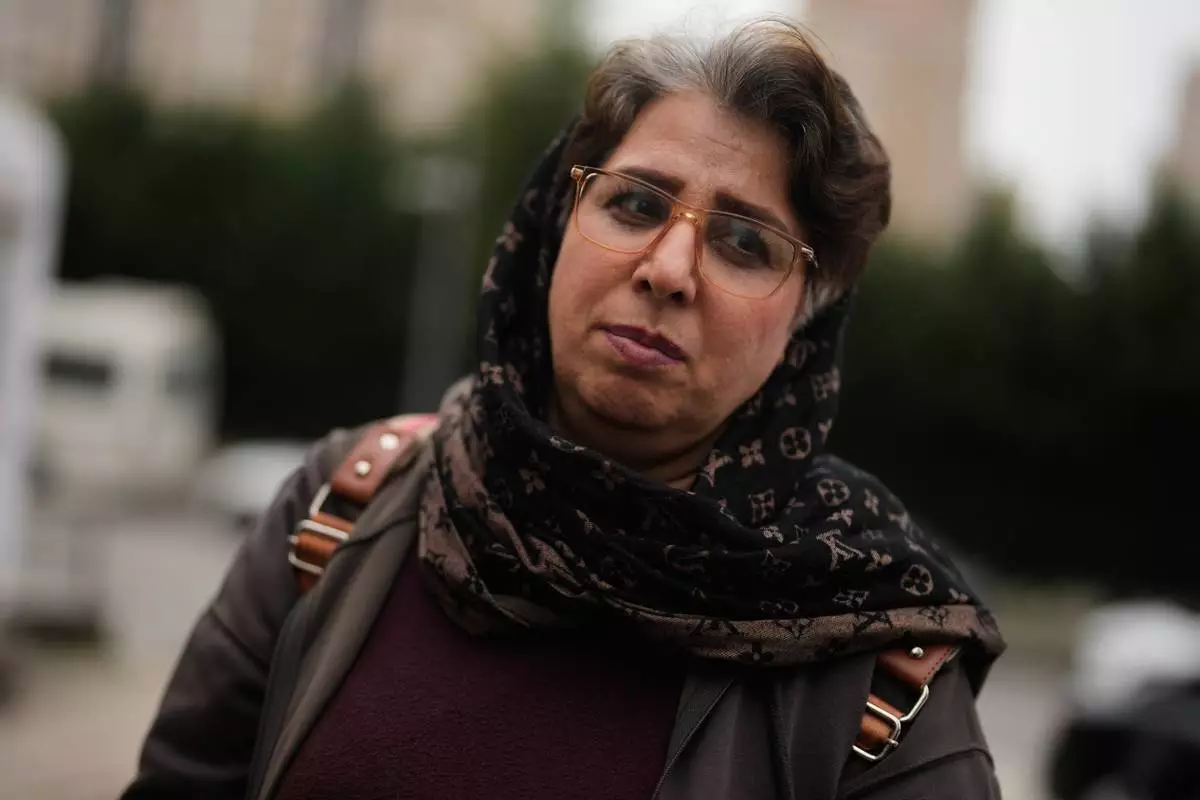
Sadri Haghshenas, a 47-year-old Iranian woman who works at a borek shop, walks in Istanbul on Tuesday, April 14, 2026. (AP Photo/Khalil Hamra)

Sadri Haghshenas, a 47-year-old Iranian woman who works at a borek shop, walks in Istanbul on Tuesday, April 14, 2026. (AP Photo/Khalil Hamra)

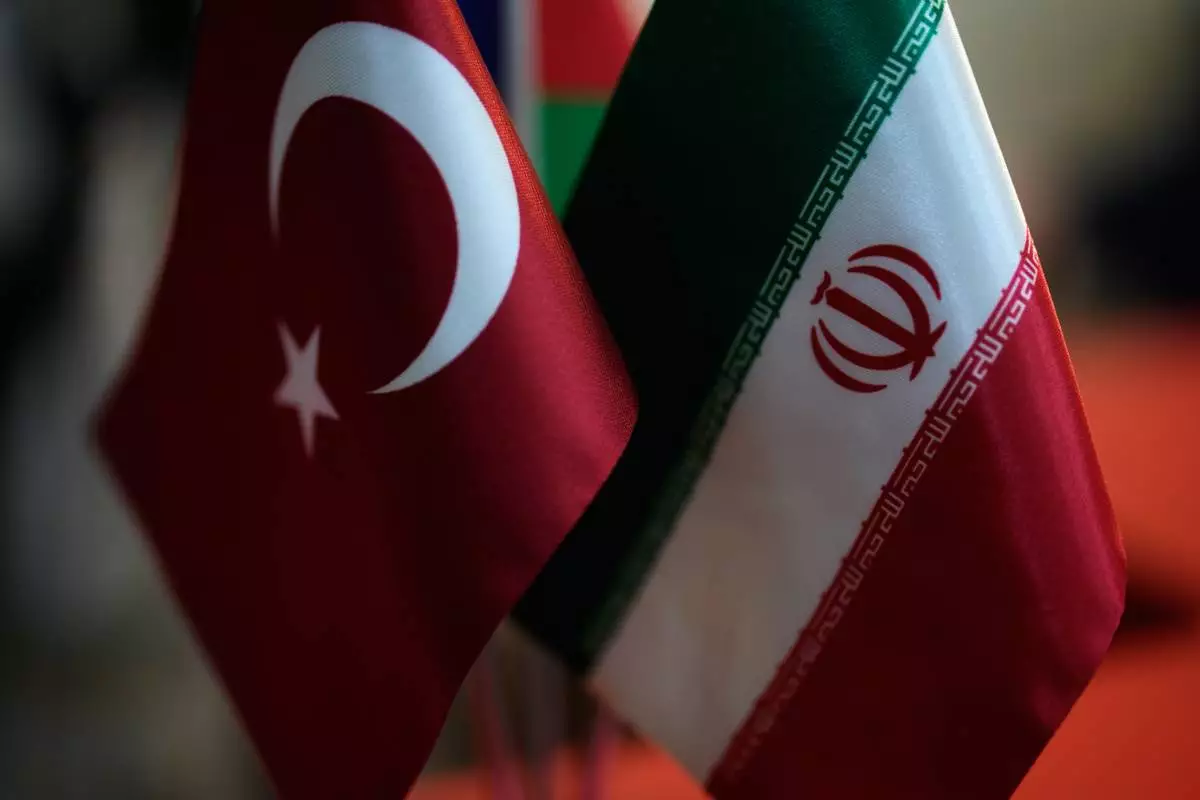
Turkish and Iranian flags are seen in an Iranian currency exchange business in the Aksaray district of Istanbul on Monday, April 13, 2026. (AP Photo/Khalil Hamra)

Turkish and Iranian flags are seen in an Iranian currency exchange business in the Aksaray district of Istanbul on Monday, April 13, 2026. (AP Photo/Khalil Hamra)

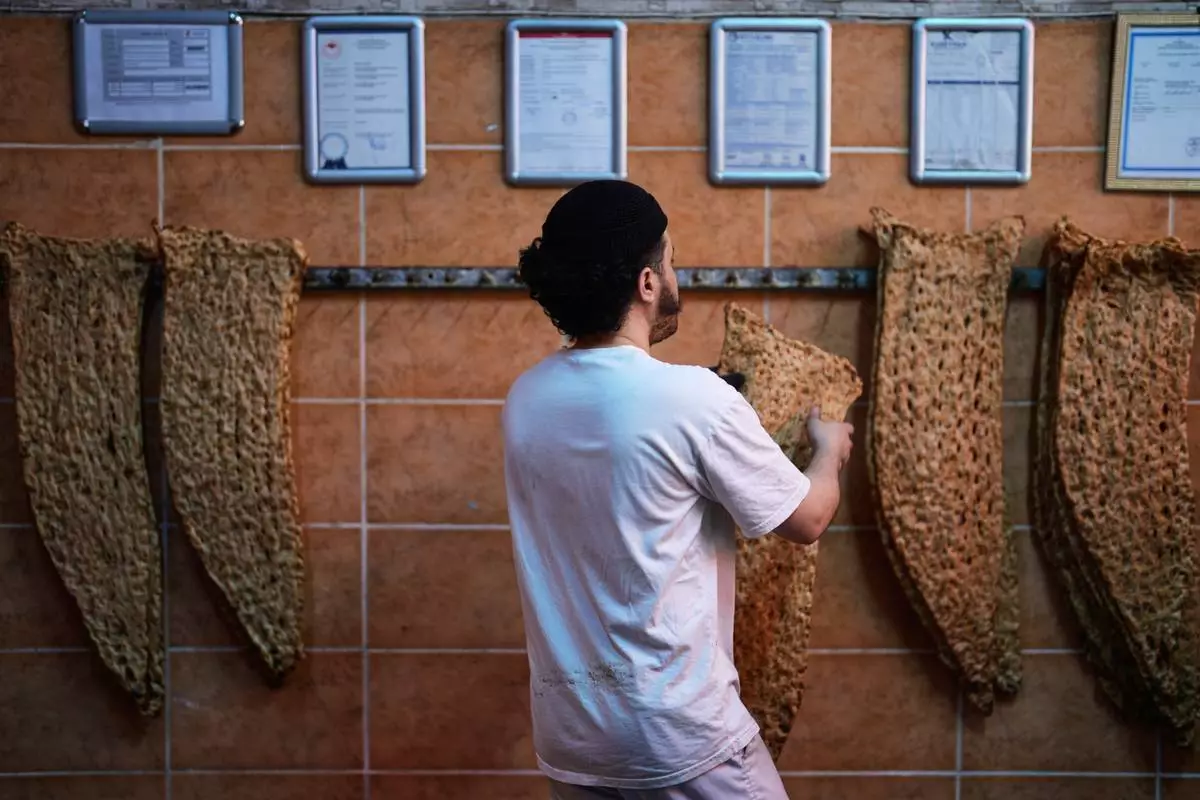
A baker hangs bread in an Iranian bakery in Istanbul on Tuesday, April 14, 2026. (AP Photo/Khalil Hamra)

A baker hangs bread in an Iranian bakery in Istanbul on Tuesday, April 14, 2026. (AP Photo/Khalil Hamra)

Recommended Articles