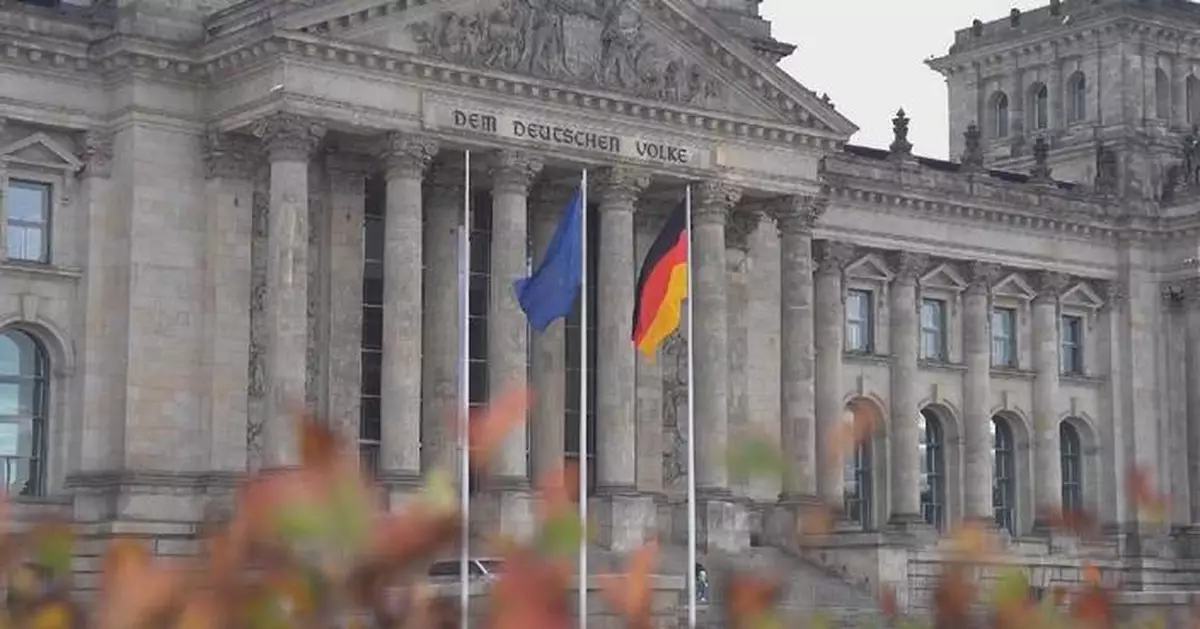
Germany's government on Wednesday halved its economic growth forecast for 2026, as escalating tensions in the Middle East pushed energy prices higher and weighed on Europe's largest economy.
The government now expects gross domestic product (GDP) to expand by just 0.5 percent this year, down from a 1 percent projection in January, according to its latest economic outlook.
Economy Minister Katherina Reiche said the conflict in the Middle East, including disruptions to the Strait of Hormuz, has driven up energy and raw material prices, weighing on households and raising costs for German businesses.
Germany's economy grew by just 0.2 percent in 2025 after two consecutive years of contraction. It was expected to recover more firmly this year, buoyed by billions of euros in government spending on infrastructure and defense.
However, Berlin already lowered its outlook in January, citing weaker-than-expected recovery momentum and limited impact from fiscal stimulus.
The government also lowered its 2027 forecast to 0.9 percent from 1.3 percent, Reiche said, adding that the outlook remains highly uncertain and largely dependent on developments in the Middle East.
Energy prices in Germany have surged following the outbreak of the conflict in the Middle East in late February. The spike has pushed up inflation and increased cost pressures across the economy.
Driven by a 7.2-percent rise in energy prices -- the first year-on-year increase in more than two years -- Germany's inflation rate climbed sharply to 2.7 percent in March, from 1.9 percent in February. The government expects inflation to average 2.7 percent in 2026 and 2.8 percent in 2027.
Earlier this month, Germany's leading economic institutes also cut their 2026 growth forecast to 0.6 percent from 1.3 percent projected last autumn.
To cushion the blow, the government has announced measures including temporary fuel tax cuts and financial support for employees. However, Reiche cautioned that such steps can only offer short-term relief and will not address Germany's deeper structural weaknesses, calling for reforms to reduce tax burdens, cut energy costs and streamline bureaucracy.
Germany halves GDP forecast for 2026 due to impact of Iran war