Skip to Content Facebook Feature Image

Lebanon and Israel to resume rare direct talks in Washington to extend Israel-Hezbollah ceasefire

News

Lebanon and Israel to resume rare direct talks in Washington to extend Israel-Hezbollah ceasefire
News

News

Lebanon and Israel to resume rare direct talks in Washington to extend Israel-Hezbollah ceasefire

2026-04-23 18:12 Last Updated At:18:20

BEIRUT (AP) — Lebanon and Israel were set to begin a second session of direct talks in Washington on Thursday to discuss the possibility of extending a truce between Israel and the Hezbollah militant group and plans for future negotiations between the two neighbors with a long history of hostile relations.

The meeting between Lebanese Ambassador to the U.S. Nada Hamadeh Moawad and her Israeli counterpart Yechiel Leiter is the second between the two diplomats, days after they held the first such direct talks between the two countries in three decades.

Lebanon President Joseph Aoun said Wednesday that contacts are ongoing to extend the 10-day ceasefire between Israel and Hezbollah that went into effect Friday.

Hamadeh will put forward an extension of the ceasefire during the meeting and ask for an end to ongoing Israeli home demolitions in villages and towns occupied by Israel after the latest war broke out on March 2, Aoun said in comments released by his office.

Preparations are ongoing for wider-reaching negotiations between Lebanon and Israel. The aim of the future talks is to “fully” stop Israeli attacks, withdrawal of Israeli troops from Lebanon, release of Lebanese prisoners held in Israel, deployment of Lebanese troops along the border and beginning the reconstruction process, Aoun said.

Israeli Foreign Minister Gideon Saar called on Lebanon to work with Israel to disarm the Iranian-backed militant group Hezbollah ahead of negotiations in Washington.

“We don’t have any serious disagreements with Lebanon. There are a few minor border disputes that can be solved,” Saar said during Independence Day remarks to Israel’s ambassadors and diplomatic corps in which he also described the neighboring country as a “failed state.”

“The obstacle to peace and normalization between the countries is one: Hezbollah,” he said, adding that Lebanon could have “a future of sovereignty, independence and freedom from the Iranian occupation.”

The latest war started after Hezbollah fired rockets into northern Israel, two days after Israel and the U.S. launched attacks on Iran. Israel responded with widespread bombardment of Lebanon and a ground invasion in which it captured dozens of towns and villages along the border.

Israel’s military currently occupies a buffer zone stretching as much as 10 kilometers (6 miles) into southern Lebanon. Israel says it aims to remove the threat of short-range rockets and anti-tank missiles towards northern Israel.

Despite Hezbollah’s outright rejection, the talks are a major step for two countries with no diplomatic relations that officially have been at war since Israel’s inception in 1948.

The Lebanese government hopes the talks will pave the way to a permanent end to the war. While Iran has set ending the wars in Lebanon and the region as a condition for talks with the U.S., Lebanon insists on representing itself.

Wafiq Safa, a high-ranking member of the militant group’s political council, told The Associated Press that the group will not abide by any agreements made during the direct talks, which it opposes.

Since the ceasefire went into effect last week, there have been multiple violations by both side sides.

The latest Israel-Hezbollah war killed around 2,300 people in Lebanon, including hundreds of women and children, and displaced over 1 million people.

Last week’s talks were the first between Israel and Lebanon since 1993. Both countries have relied on indirect communication, often brokered by the U.S. or UNIFIL, the United Nations peacekeeping mission in southern Lebanon.

Lebanon’s top political authorities, critical of Hezbollah’s decision to fire rockets toward Israel on March 2 in solidarity with Iran, quickly proposed direct talks in a bid to stop the escalation, hoping Israel would not launch its ground invasion.

Abby Sewell in Beirut contributed.
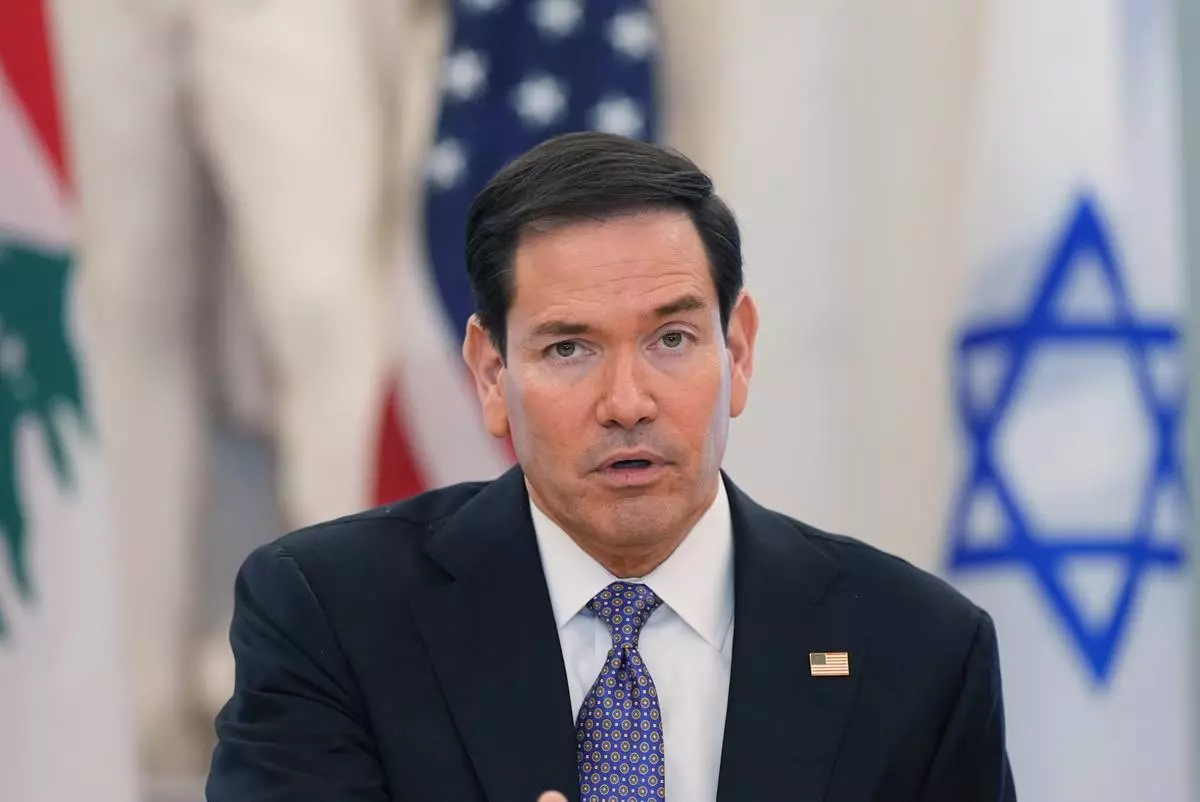
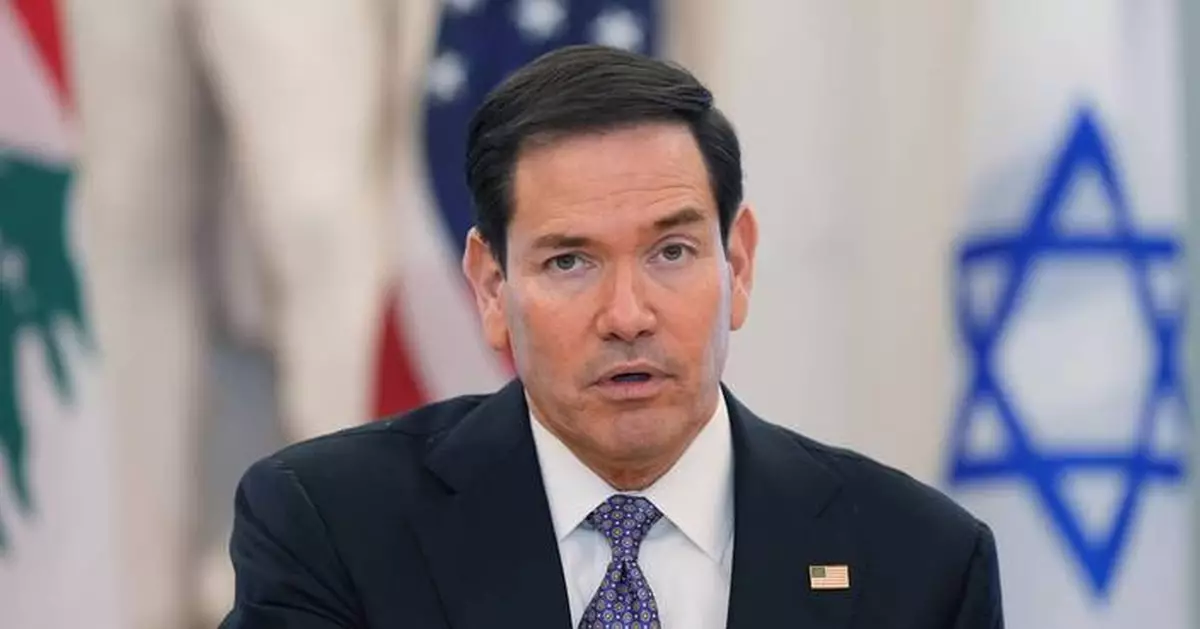
Secretary of State Marco Rubio speaks during diplomatic talks with ambassadors of Lebanon and Israel at the State Department in Washington, Tuesday, April 14, 2026. (AP Photo/Jacquelyn Martin)

Secretary of State Marco Rubio speaks during diplomatic talks with ambassadors of Lebanon and Israel at the State Department in Washington, Tuesday, April 14, 2026. (AP Photo/Jacquelyn Martin)
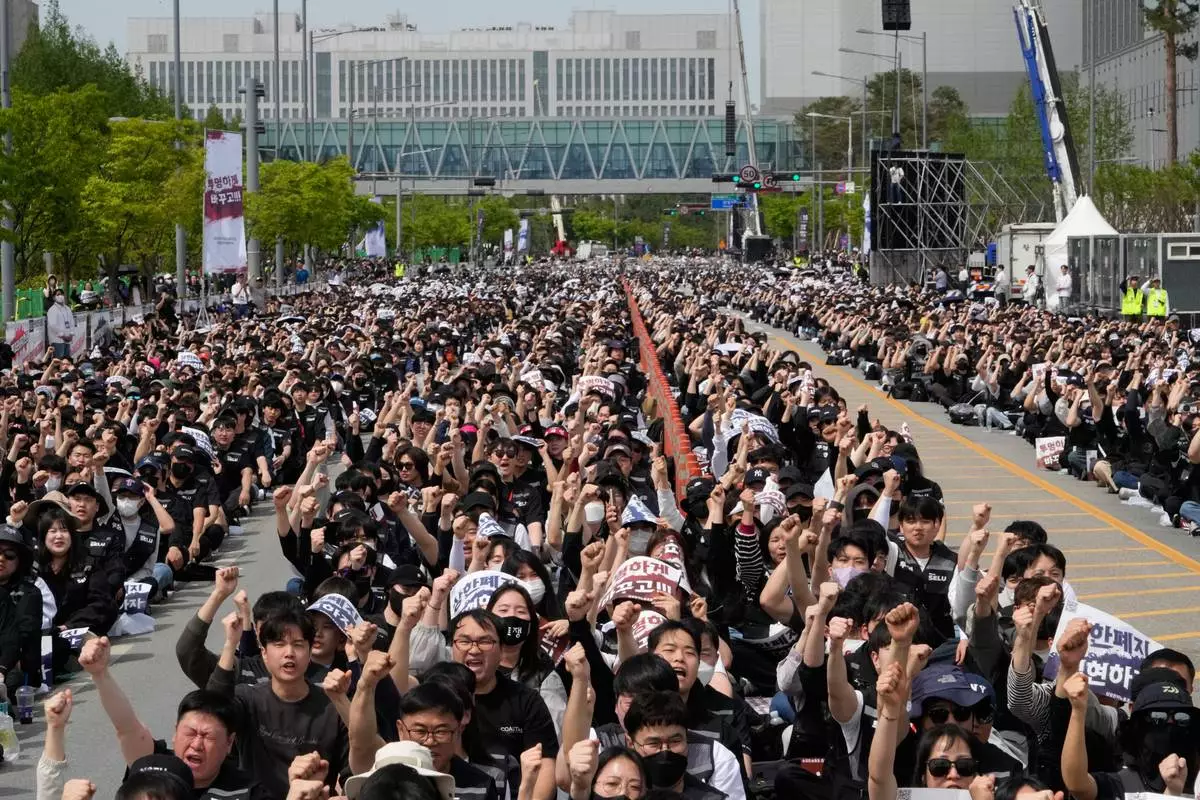
PYEONGTAEK, South Korea (AP) — Thousands of Samsung Electronics workers rallied Thursday at its computer chip complex in Pyeongtaek, South Korea, demanding higher bonuses and threatening to strike as booming demand for artificial intelligence drives up memory-chip profits.

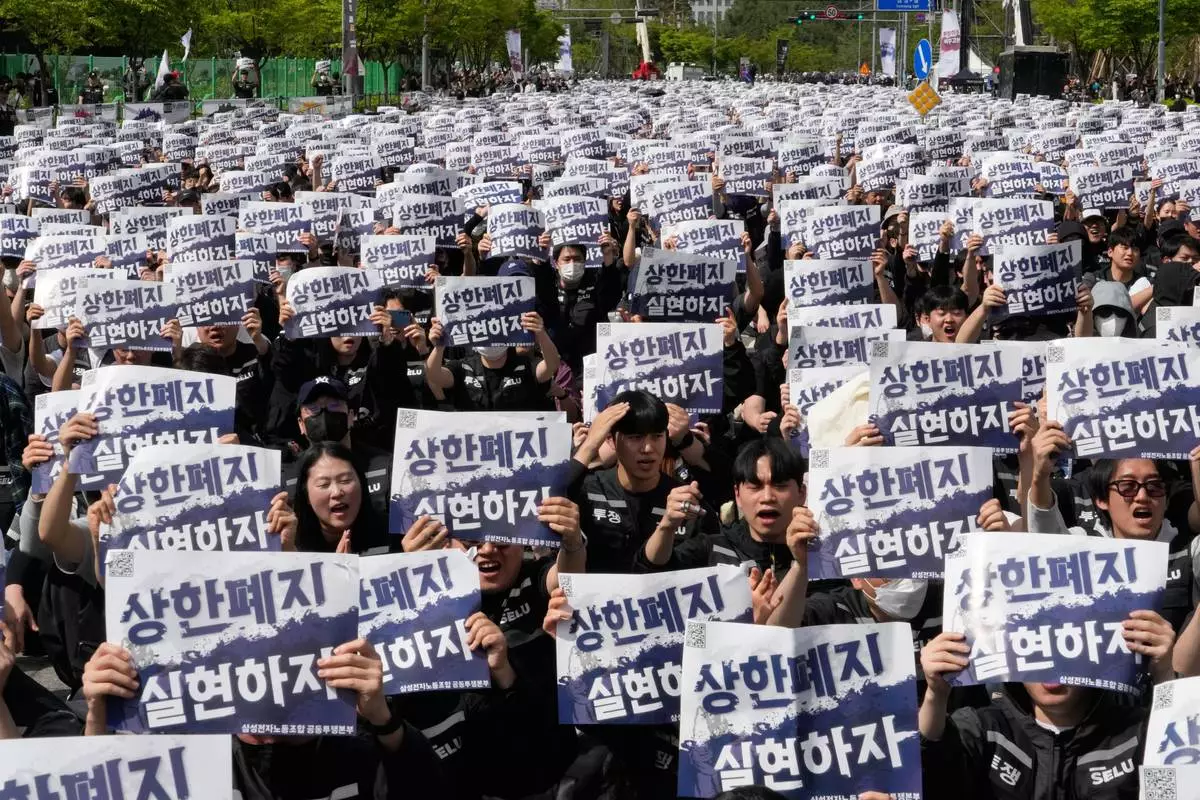
Holding signs and waving banners, the workers gathered at a factory compound amid a heavy police presence, shouting “make compensation transparent and remove maximum limits on bonuses!” Union officials said about 40,000 members participated in the protest. Police did not immediately provide a crowd estimate.

The rally came hours after Samsung’s cross-town rival, SK Hynix, posted an all time high in quarterly revenue and operating profit for the January-March quarter, a jump it attributed to expanding global investments in data centers and other AI infrastructure that drove up the demands for its memory chips.

Samsung, which together with SK Hynix produces about two-thirds of global memory chips, forecast earlier this month that its first-quarter operating profit would reach a record 57.2 trillion won ($38.6 billion). That would be higher than the 37.6 trillion won ($25.4 billion) posted by SK Hynix on Thursday, although Samsung has a more diverse lineup of businesses, including smartphones and consumer electronics.

Samsung’s union, which represents about 74,000 workers, says the company has failed to offer adequate compensation despite its strong performance. It has rejected the management’s proposal for bonuses of restricted stock and calling for removing caps on bonuses.

The union has threatened to stage an 18-day walkout starting May 21 if negotiations with management fail and claims that such action would cost the company more than 1 trillion won ($676 million) a day.

“We won’t stop this fight until our fair demands are met,” Choi Seung-ho, a union leader, said through a loudspeaker from atop a crane-mounted structure.

While semiconductor makers have benefited from the AI boom, the war in the Middle East has clouded the future outlook, disrupting supplies of key materials such as helium that are crucial to chipmaking and pushing up energy costs.

In a conference call Thursday, Woo Hyun Kim, SK Hynix’s chief financial officer, said the company is closely monitoring the conflict but does not expect a meaningful impact on production, saying it has been diversifying its sourcing of helium and bromine beyond the Middle East and has sufficient inventory.

__

Kim Tong-hyung reported from Seoul, South Korea. AP writer Hyung-jin Kim contributed to the report from Seoul.

Members of the Samsung Electronics labor union shout slogans during a rally demanding higher bonuses at its computer chip complex in Pyeongtaek, South Korea, Thursday, April 23, 2026. (AP Photo/Ahn Young-joon)

Members of the Samsung Electronics labor union shout slogans during a rally demanding higher bonuses at its computer chip complex in Pyeongtaek, South Korea, Thursday, April 23, 2026. (AP Photo/Ahn Young-joon)

Members of the Samsung Electronics labor union hold up their cards during a rally demanding higher bonuses at its computer chip complex in Pyeongtaek, South Korea, Thursday, April 23, 2026. The letters read "Remove the bonuses caps." (AP Photo/Ahn Young-joon)

Members of the Samsung Electronics labor union hold up their cards during a rally demanding higher bonuses at its computer chip complex in Pyeongtaek, South Korea, Thursday, April 23, 2026. The letters read "Remove the bonuses caps." (AP Photo/Ahn Young-joon)

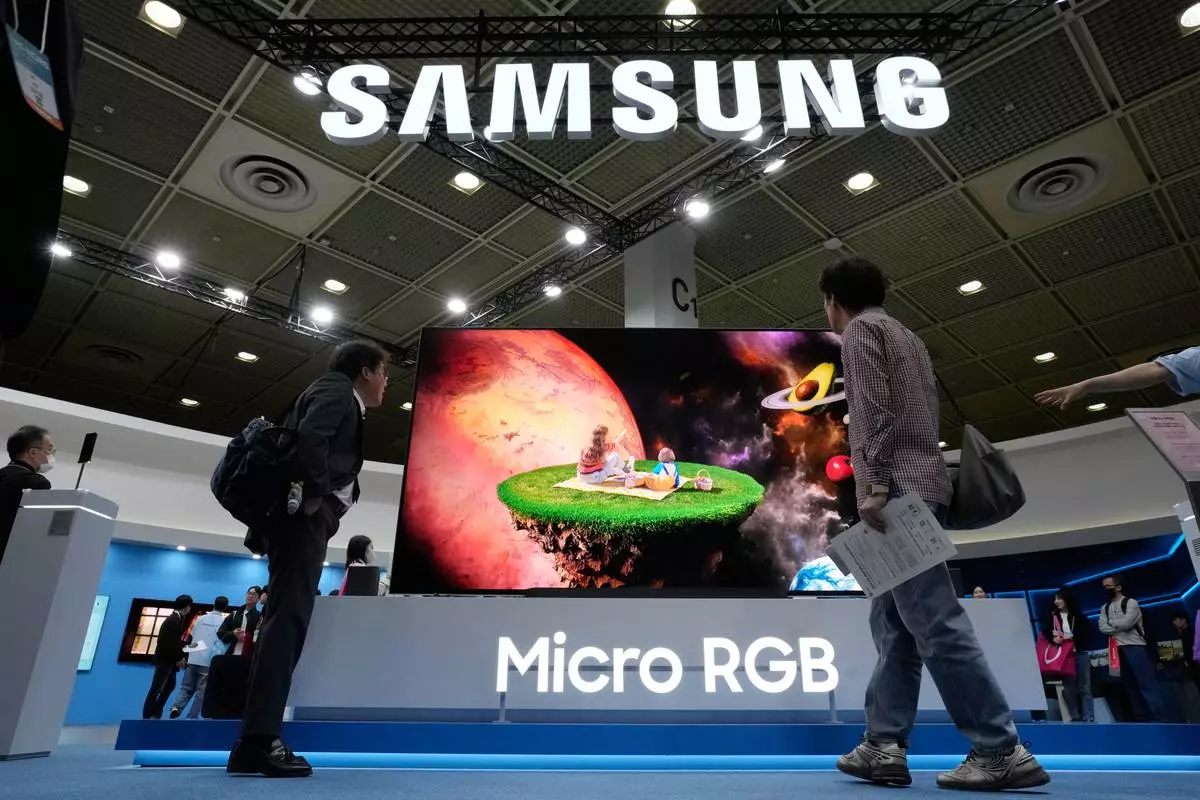
Visitors watch a Samsung Electronics' Micro RGB TV at its booth during the World IT Show in Seoul, South Korea, Wednesday, April 22, 2026. (AP Photo/Ahn Young-joon)

Visitors watch a Samsung Electronics' Micro RGB TV at its booth during the World IT Show in Seoul, South Korea, Wednesday, April 22, 2026. (AP Photo/Ahn Young-joon)

Recommended Articles