The European Commission proposed a package of measures on Wednesday in the hope to protect European households and industries from energy crisis and accelerate the shift to clean and homegrown energy.
In a statement, the commission said that, for the second time in less than five years, Europeans were paying the price of Europe's dependency on imported fossil fuels. Since the escalation of the conflict in the Middle East, the European Union (EU) has spent an additional 24 billion euros on energy imports due to higher prices, without receiving any extra energy.
The package, called "AccelerateEU," includes both short-term and structural measures to reduce dependence on volatile fossil fuel markets and strengthen Europe's resilience through homegrown clean energy and electrification.
According to the commission, the proposed actions include closer coordination among members on refilling underground gas storage, the use of flexibilities in filling rules, and any exceptional releases of oil stocks. A new Fuel Observatory will also be established to track EU production, imports, exports and stock levels of transport fuels.
The commission said measures to protect consumers and industry from price hikes may include targeted income support schemes, energy vouchers, social leasing schemes and lower excise duties on electricity for vulnerable households. It also said it would adopt a State Aid Temporary Framework to give national governments additional flexibility to support the most exposed economic sectors.
The commission said it would present an Electrification Action Plan by the summer, including an electrification target and measures to remove barriers in the industrial, transport and building sectors. It also said it would present a legislative proposal on network charges and taxation to ensure that electricity is taxed less than fossil fuels.
The commission said the measures would be discussed by EU leaders at the informal European Council in Cyprus on April 23 and 24.

EU proposes measures to address energy crisis

EU proposes measures to address energy crisis

EU proposes measures to address energy crisis
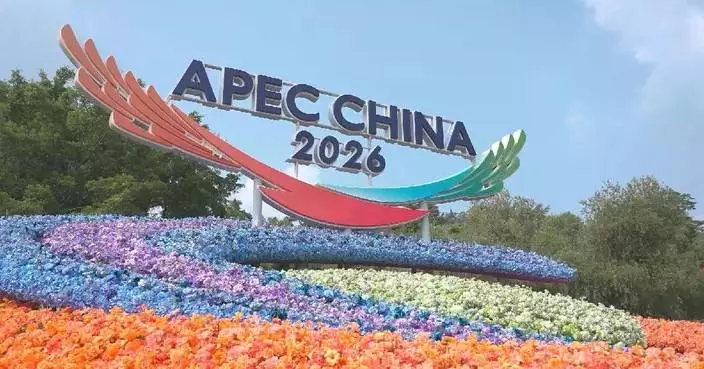
The newly upgraded Huanggang Port connecting the Hong Kong Special Administrative Region and the Chinese mainland recorded more than 3.44 million inbound and outbound passenger trips in its first month of operation, averaging 114,000 per day -- a 120 percent year-on-year increase, as Shenzhen prepares for the 2026 Asia-Pacific Economic Cooperation (APEC) Economic Leaders' Week.
With the event approaching, all 25 APEC-dedicated channels across Shenzhen's ports in south China have been opened to facilitate the entry of participants and media from APEC member economies.
The upgraded Huanggang Port is operating smoothly, with its single-day passenger flow recently hitting the highest level since 2019.
At Huanggang Port, travelers now only need to queue once and present their documents once to complete immigration procedures for both sides.
"Usually it takes about one minute to go through customs on both sides. My fastest time was 36 seconds," said a passenger from the Hong Kong Special Administrative Region.
Huanggang Port is the only 24-hour land passenger port between Shenzhen and Hong Kong.
Since November, Shenzhen's ports have opened a total of 25 APEC-dedicated inspection channels. Among them, the Huanggang Border Inspection Station has processed 14,000 trips of foreign nationals from APEC economies, a month-on-month increase of 102 percent. "Facing the continuous high passenger flow, the Huanggang Border Inspection Station has strengthened early warning and analysis, continuously enhanced communication and coordination with the Hong Kong side, cross-border operating units, and foreign affairs departments, and reinforced our multilingual service team to ensure efficient and smooth customs clearance," said Yang Huan, staff member at the Huanggang Border Inspection Station.
As China's largest single port building and the world's largest land port complex, the facility covers a total floor area of 689,700 square meters, featuring four underground and five above-ground floors.
The original Huanggang Port, which opened in 1989, was China's first large-scale land port with 24-hour clearance. Reconstruction on the original site began in 2019 to meet the surging demand for cross-border passage.
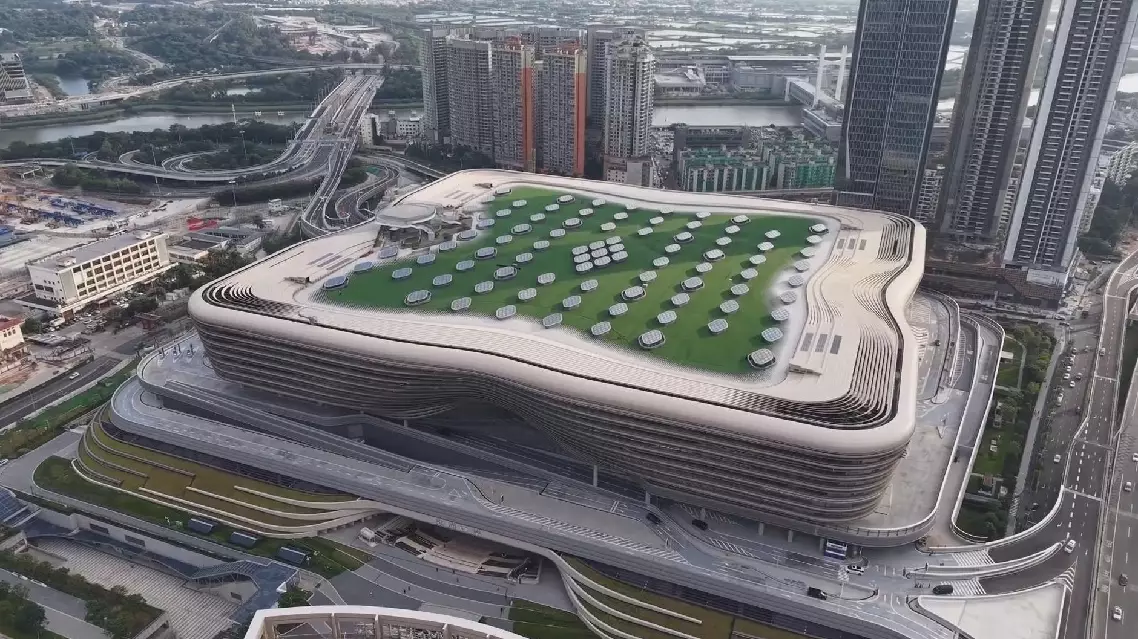
Upgraded Huanggang Port handles over 3.44 million passenger trips in first month