Skip to Content Facebook Feature Image

Republican proposes giving Democratic-leaning part of Virginia back to DC after redistricting vote

News

Republican proposes giving Democratic-leaning part of Virginia back to DC after redistricting vote
News

News

Republican proposes giving Democratic-leaning part of Virginia back to DC after redistricting vote

2026-04-24 04:39 Last Updated At:04:50

Virginia's redistricting referendum, which could net Democrats a 10-1 House seat advantage, is spurring Republican legislation that would expand the borders of Washington, D.C., and cost the state Democratic voters.

Georgia Republican Rep. Rich McCormick said Thursday he introduced the Make DC Square Again Act, a bill that would undo the 19th century return of the southwestern part of the district to the state of Virginia, known as retrocession.

“The Make DC Square Again Act restores the original ten-mile-square District and ends the artificial advantage Virginia Democrats have recently gained from all the federal bureaucrats moving into Virginia," McCormick said in a statement.

The measure's prospects are unlikely in a Congress that can barely keep the lights on. But it's the latest partisan salvo in an effort to gain the upper hand in the closely divided House ahead of this year's contested midterms elections.

Proponents of statehood for the federal district are critical of the measure, saying it shows how Washington can be used as a “political football.”

“The residents of the district are not fully participating in the democracy of this country because we are not allowed to,” said Alicia Yass, advocacy director at the American Civil Liberties Union of D.C. “Bills like this that mess around with the district just show how important it is for D.C. to have the full benefits and rights of a democracy.”

Critics of Virginia’s referendum are calling on President Donald Trump to issue an executive order declaring the pre-Civil War return of Alexandria and Arlington to Virginia unconstitutional.

“This order would be on better legal footing than many of President Joe Biden ’s most egregious orders,” former Trump Justice Department chief of staff Chad R. Mizelle wrote in a Fox News opinion article.

Here's a closer look at the issue.

Retrocession refers to the reincorporation into Virginia of the land it gave for the federal capital. Beginning in 1846, Congress voted to allow 31 square miles (80 square kilometers) of the District of Columbia to return to Virginia. That included the City of Alexandria and the areas that now include the Pentagon and Arlington National Cemetery.

Virginia and Maryland had given over the land decades before to form the nation’s capital, but resident's rumblings over a trailing local economy and fears that Congress would ban slavery in the district fueled the return to Virginia in 1847, according to the City of Alexandria. Virginia would go on to secede from the United States, with the Confederacy’s capital in Richmond.

The discussion over reversing retrocession has kept up in the decades since. Proponents argue that Congress never had the power to cede back the land and that the local referendum failed to meet the voting requirements outlined by Congress for retrocession.

Whether Congress could vote to bring parts of Virginia back into the federal district isn't clear. George Derek Musgrove, an associate professor of history at the University of Maryland Baltimore County, was skeptical of McCormick's effort because the congressman said the measure stemmed from the results of the Virginia referendum, which could benefit Democrats.

“It’s not even a retrocession bill. It’s really a Virginia voter suppression bill,” he said.

The text of the measure wasn't immediately available.

The area holds the separate municipalities of the City of Alexandria and Arlington County, which are packed with Democratic voters. In the 2024 presidential election in both places, Democratic candidate Kamala Harris won 77% of the votes cast, with Donald Trump pulling only about 20%.

The region's blue voters helped bolster Virginia's redistricting referendum, approved by voters Tuesday to boost Democrats' chances of winning four additional seats in the U.S. House. But if the entire area was ceded back to the District of Columbia, the electoral advantage in the new districts would be dulled and new districts would be drawn in light of the state's shrunken footprint.

The region's approximately 400,000 residents would also likely lose full representation in both the U.S. Senate and House.

McCormick's legislation invokes making the district “square” again and refers to how the boundaries would look on the map if they're restored. It's not the only proposal out there.

The American Capital Project, a little-known group that advocates for the land to be returned to the District of Columbia, says the path forward is through a presidential executive order declaring the original law void. That would eventually push the question in front of the U.S. Supreme Court, forcing it to rule on the legality of the original law.

It's unclear who funds or manages the American Capital Project. Its website does not list any contact information nor the names of the people or groups behind it.

There have also been efforts, pushed by Democrats, to grant the district statehood. In 2021, the Democrat-led House passed such a bill, but it did not advance out of the Senate. At the time some Senate Republicans suggested returning the current district to Maryland as a way to give voters their a chance for full representation in Congress.
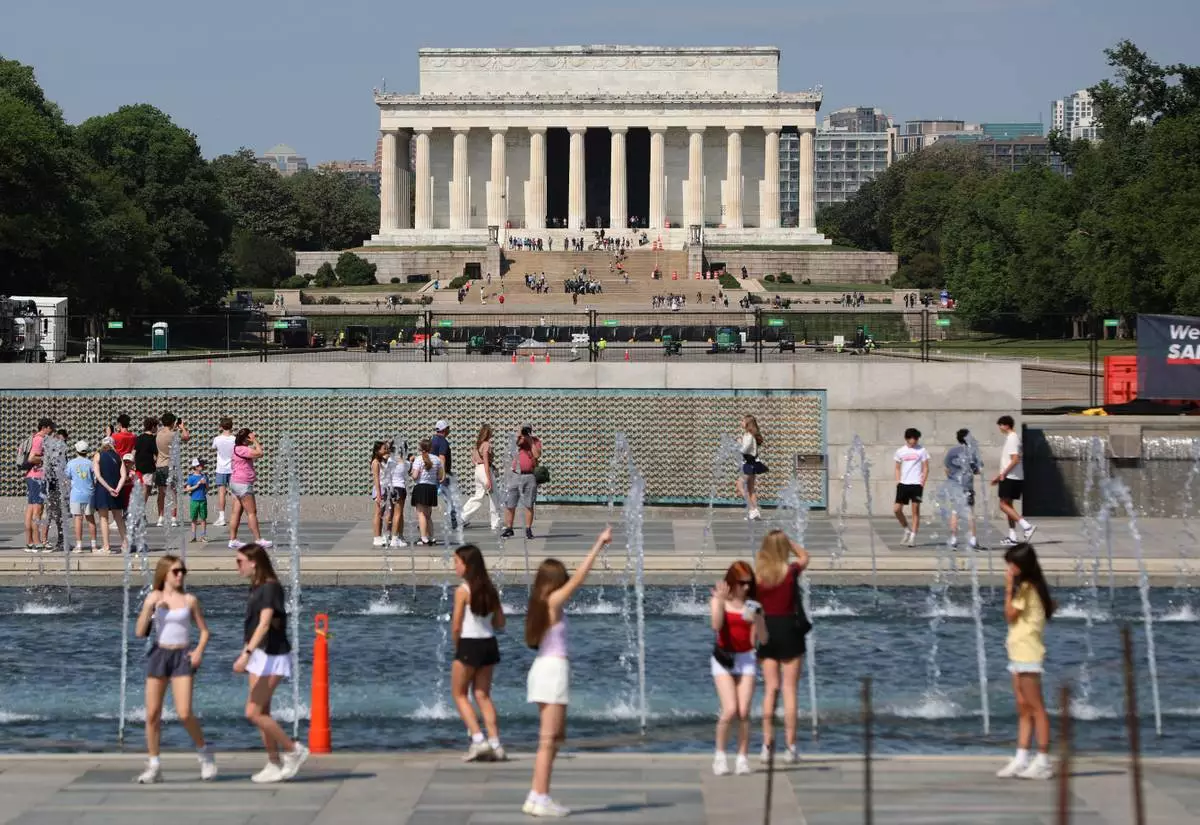
Tourists are seen visiting near the Lincoln Memorial, Thursday, April 23, 2026, in Washington. (AP Photo/Rahmat Gul)
Tourists are seen visiting near the Lincoln Memorial, Thursday, April 23, 2026, in Washington. (AP Photo/Rahmat Gul)

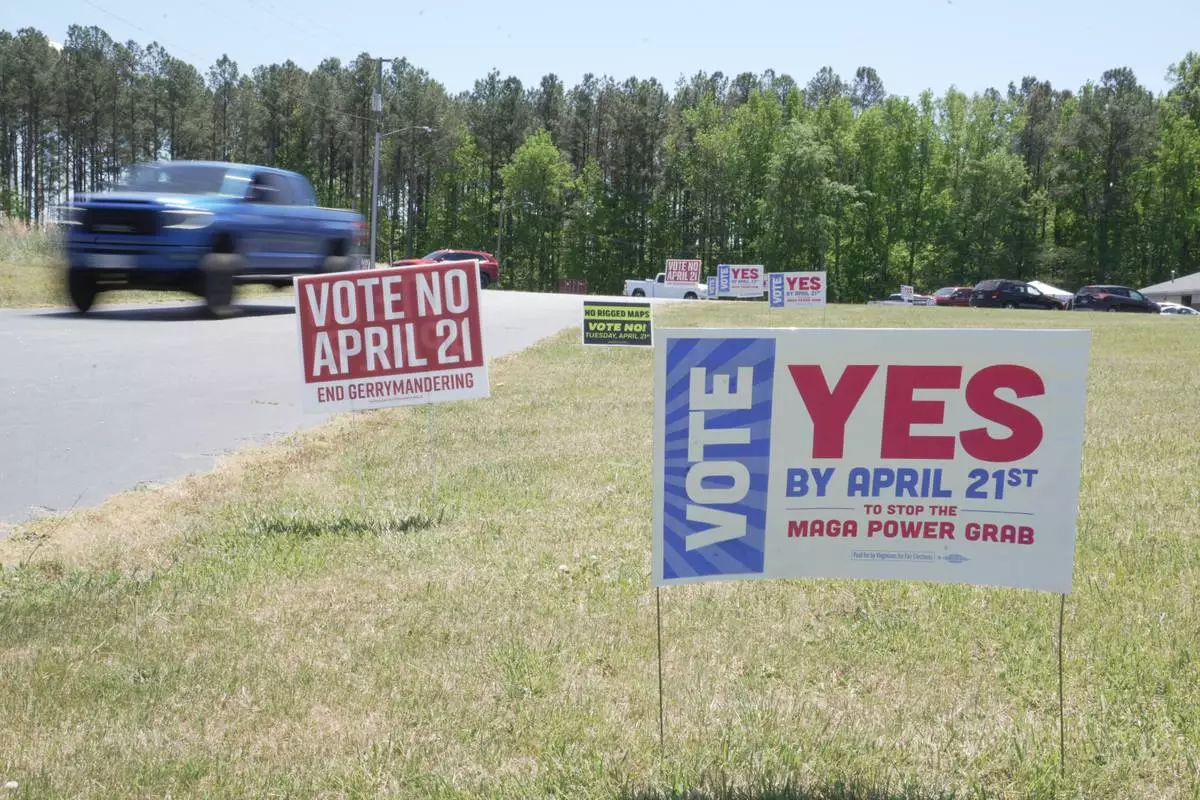
A truck passes political signs outside a polling place at Good Shepherd Catholic Church in South Hill, Va., on Tuesday, April 21, 2026. (AP Photo/Allen G. Breed)

A truck passes political signs outside a polling place at Good Shepherd Catholic Church in South Hill, Va., on Tuesday, April 21, 2026. (AP Photo/Allen G. Breed)
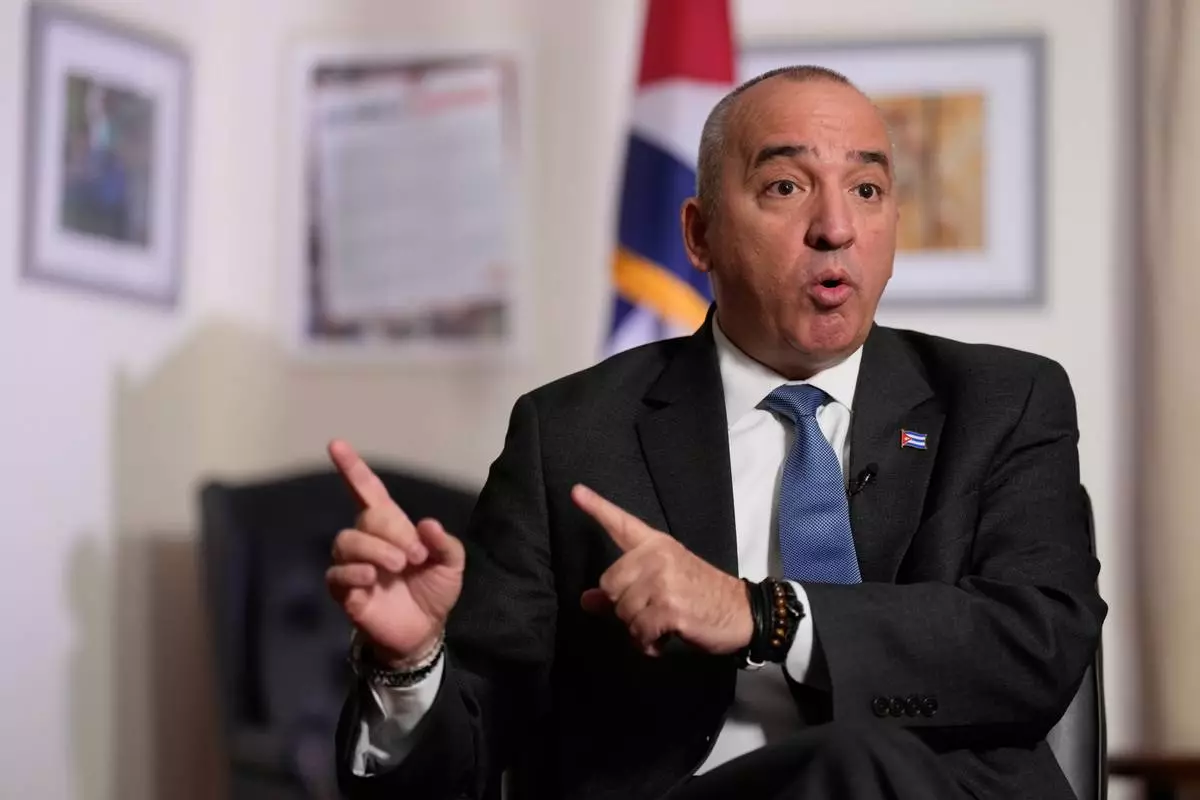
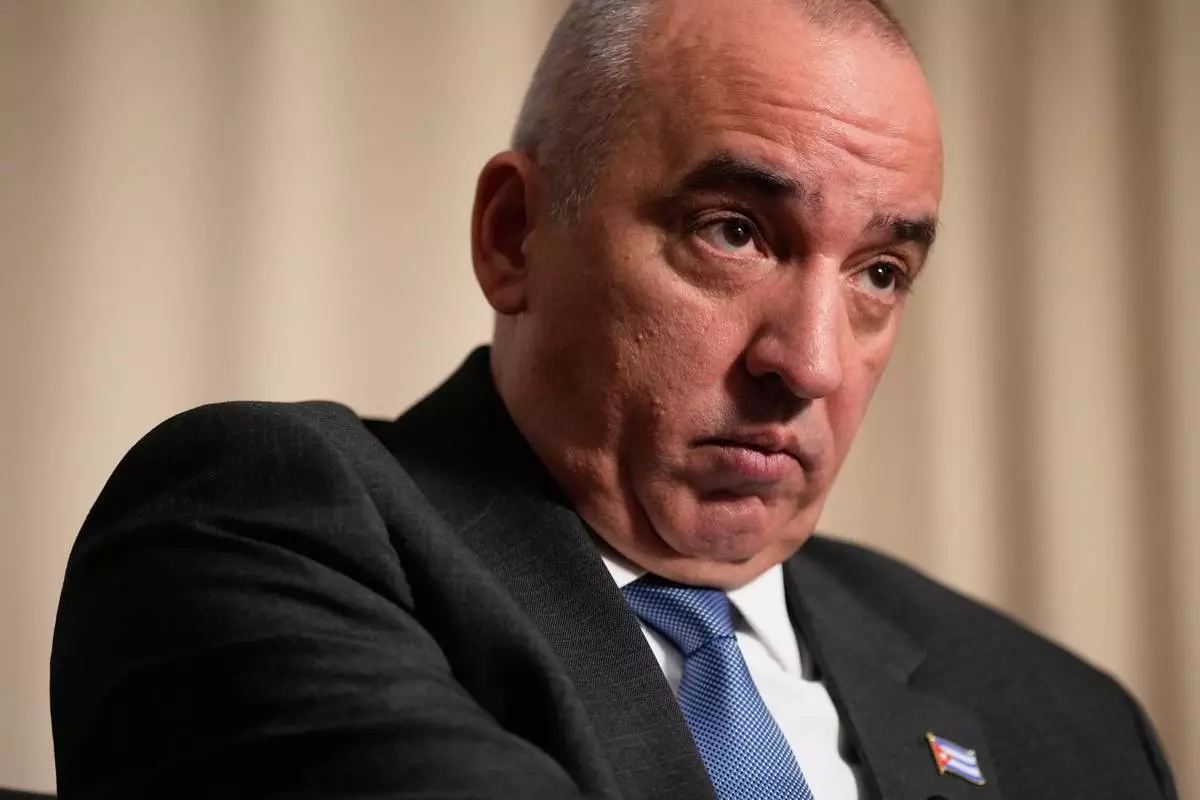
UNITED NATIONS (AP) — Havana will not abide by any American “ultimatums” to release political prisoners as part of new talks, a Cuban diplomat said Thursday, while asserting that leaders are “preparing for all scenarios” if U.S. President Donald Trump makes good on threats to intervene in the island nation.

In an interview with The Associated Press, Cuban Ambassador to the U.N. Ernesto Soberón Guzmán said internal issues regarding detainees “are not on the negotiating table.” The release of political prisoners was a key U.S. demand as the longtime adversaries held discussions in Cuba this month for the first time in a decade.

“We have our legal system, like here in the U.S., they have their legal system,” he said. “So we have to respect both of our internal affairs.”

In response, the State Department said in a statement that the administration remains “committed to the release of all political prisoners.”

“The Cuban regime should stop playing games as direct talks are occurring. They have a small window to make a deal,” the statement continued.

An American delegation arrived for secret meetings in Havana on April 10 in a diplomatic push to urge Cuba to make major changes to its economy and political governance or face continued economic pressure and potentially risk U.S. military escalation. Neither side has named who took part, but Guzmán said it was at the undersecretary of state level for the Americans and deputy foreign minister level for the Cubans.

Despite the recent revival in diplomatic relations, tensions between the two countries have steadily increased in the last few months over a U.S. energy blockade that has further strained economic and other crises in the Caribbean country.

Trump has threatened tariffs on any country that sells or supplies oil to Cuba and said the U.S. might have “the honor of taking Cuba” following military operations in Venezuela and Iran. The State Department did not immediately respond to requests for comment on Guzmán's remarks.

The blockade, coupled with the island’s severe water and power shortages, has deepened poverty and increased hunger across Cuba as severe blackouts persist.

In late March, a Russian tanker carrying 730,000 barrels became the first fuel shipment Cuba had received in three months. Guzmán said that the shipment has been able to fulfill only a fraction of what the country needs to operate.

Other concerns the U.S. raised during the meeting this month centered on the influence of foreign powers on the island, the AP has reported. The Americans also discussed proposals to compensate hundreds of thousands of legal claims by Cuban Americans whose homes, businesses and land were seized after revolutionary leader Fidel Castro took power in 1959.

Guzmán confirmed that such compensation was among the topics at the meeting and that Havana is receptive to it. But, he added, that it could only happen in conjunction with reciprocal economic relief for the decadeslong economic embargo against Cuba.

“There is not only this claim but also the claim from our side because the embargo has an economic impact,” he said. “This is a highway with two directions.”

Asked whether Cuban officials can trust diplomatic efforts amid U.S. threats, Guzmán said that while they are optimistic about creating a “new approach” to U.S.-Cuban relations, the Trump administration's foreign policy approach in the last year has put them on high alert.

“We have been seeing what is happening all around the world, in our region, in the Middle East, so we are not a naive person,” he said. “We are preparing for all the scenarios. And I insist, our first option — what we really want — is a successful dialogue with the U.S. government.”

But, he added, if U.S. military aggression were to happen, “we are ready to fight back.”

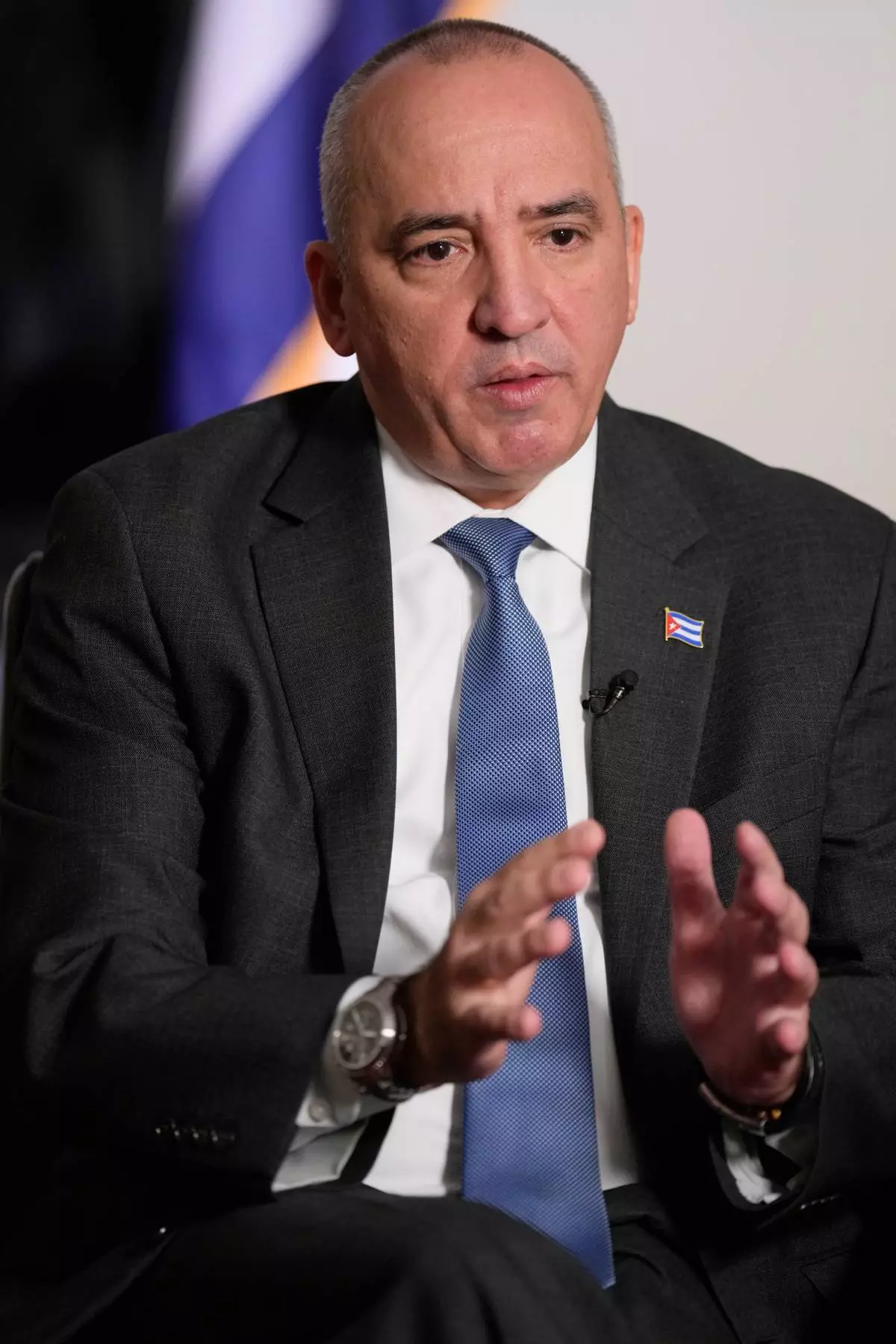
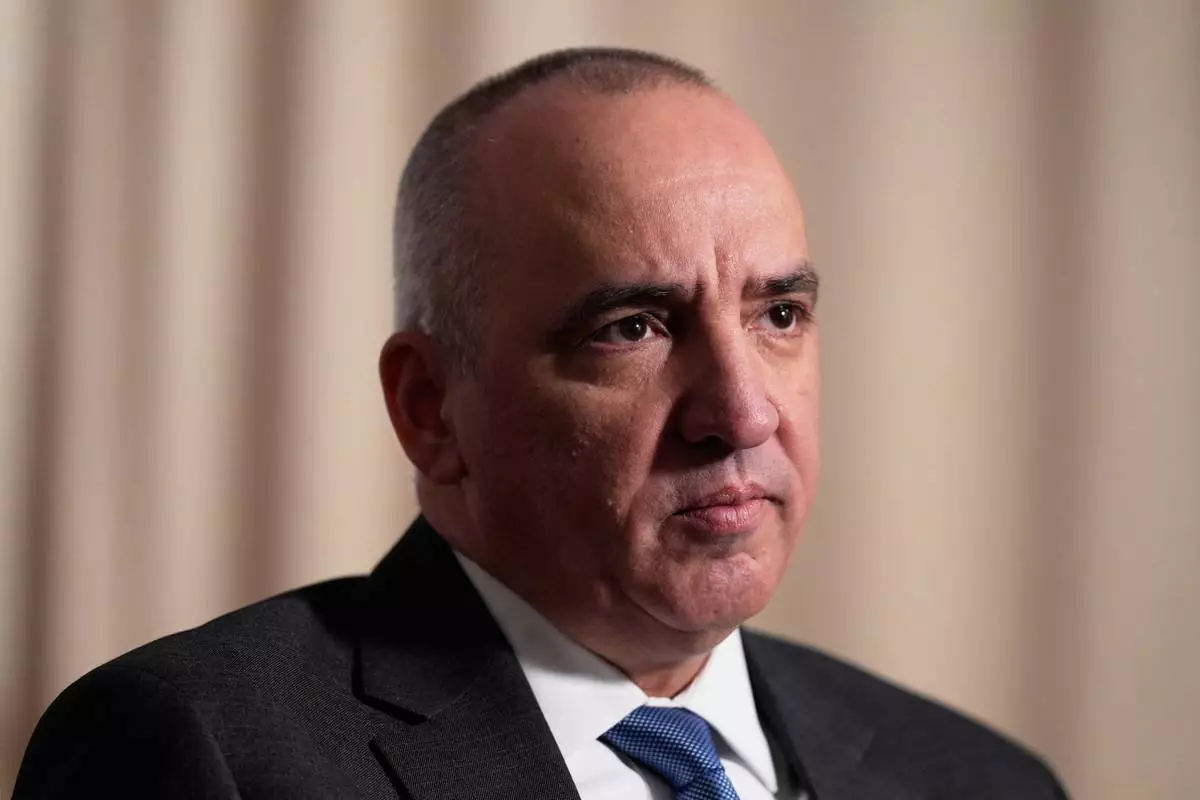
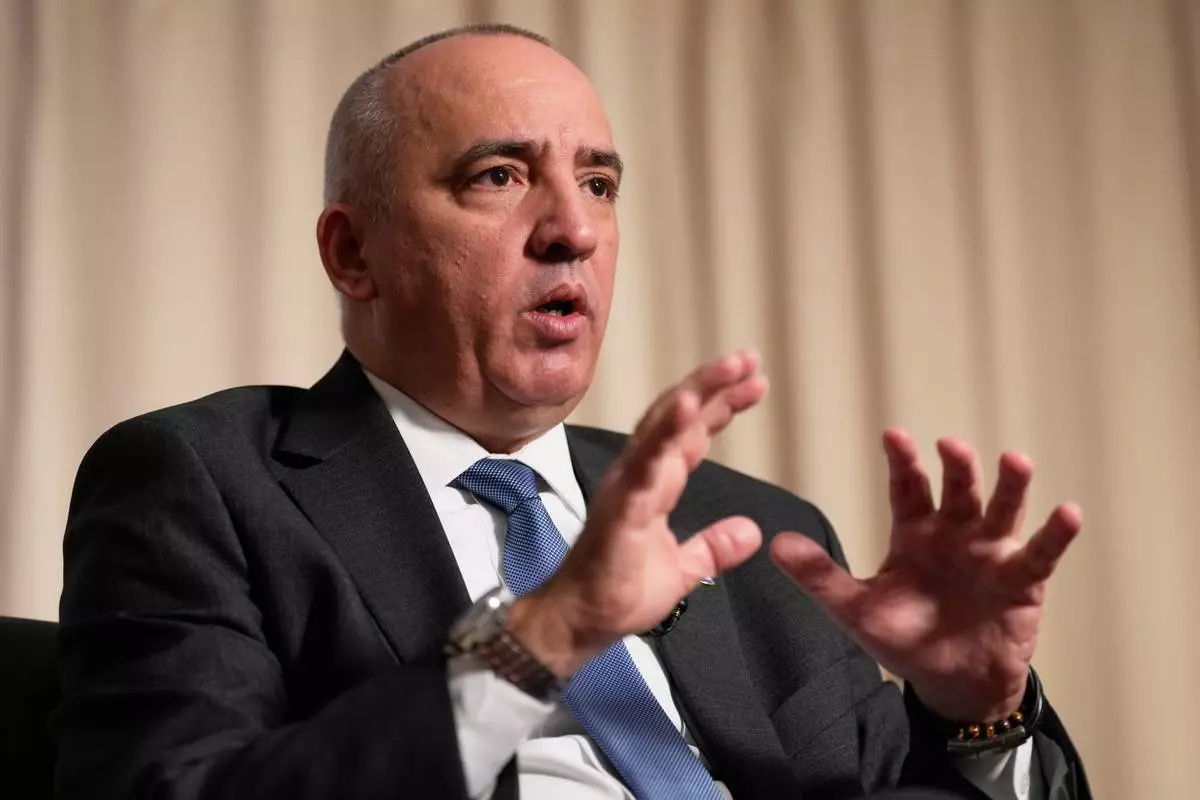
Ernesto Soberón Guzmán, Cuban ambassador to the United Nations, speaks to reporters in New York, Thursday, April 23, 2026. (AP Photo/Seth Wenig)

Ernesto Soberón Guzmán, Cuban ambassador to the United Nations, speaks to reporters in New York, Thursday, April 23, 2026. (AP Photo/Seth Wenig)

Ernesto Soberón Guzmán, Cuban ambassador to the United Nations, speaks to reporters in New York, Thursday, April 23, 2026. (AP Photo/Seth Wenig)

Ernesto Soberón Guzmán, Cuban ambassador to the United Nations, speaks to reporters in New York, Thursday, April 23, 2026. (AP Photo/Seth Wenig)

Ernesto Soberón Guzmán, Cuban ambassador to the United Nations, speaks to reporters in New York, Thursday, April 23, 2026. (AP Photo/Seth Wenig)

Ernesto Soberón Guzmán, Cuban ambassador to the United Nations, speaks to reporters in New York, Thursday, April 23, 2026. (AP Photo/Seth Wenig)

Ernesto Soberón Guzmán, Cuban ambassador to the United Nations, speaks to reporters in New York, Thursday, April 23, 2026. (AP Photo/Seth Wenig)

Ernesto Soberón Guzmán, Cuban ambassador to the United Nations, speaks to reporters in New York, Thursday, April 23, 2026. (AP Photo/Seth Wenig)

Ernesto Soberón Guzmán, Cuban ambassador to the United Nations, speaks to reporters in New York, Thursday, April 23, 2026. (AP Photo/Seth Wenig)

Ernesto Soberón Guzmán, Cuban ambassador to the United Nations, speaks to reporters in New York, Thursday, April 23, 2026. (AP Photo/Seth Wenig)

Recommended Articles