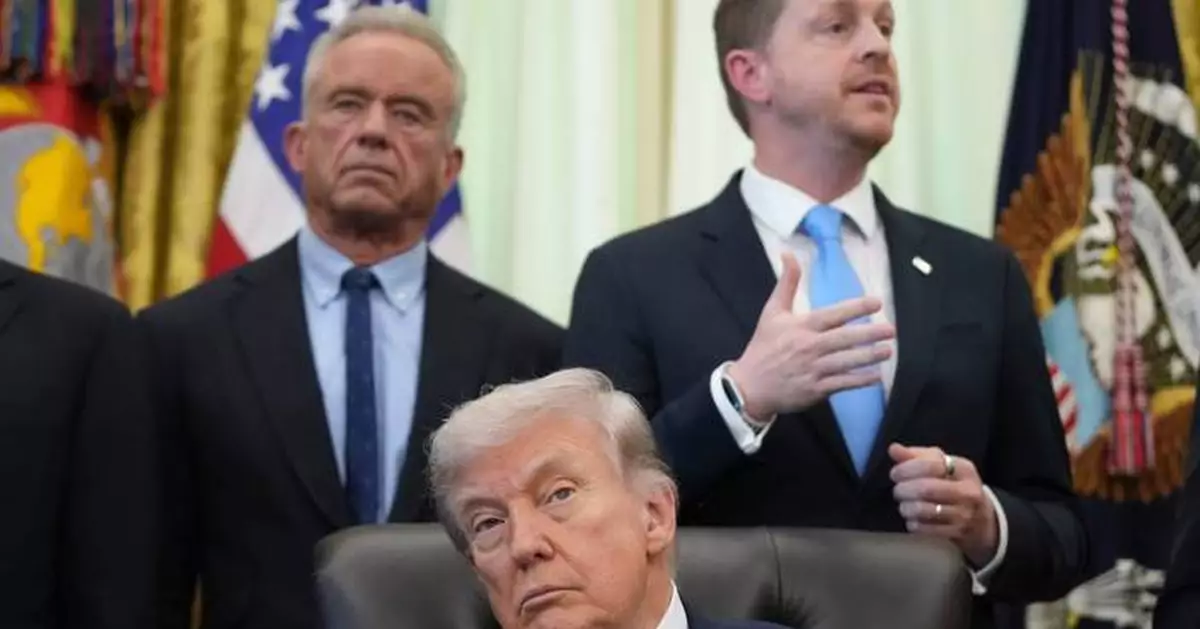
WASHINGTON (AP) — President Donald Trump, who helped push the term “ fake news ” into the mainstream, now seems to have a new favorite subject: fake math.
During a Thursday event announcing a deal with drugmaker Regeneron to lower the cost of its pharmaceutical products, Trump defended his past claims that prices on prescription medications had been cut by well over 100% — something that is mathematically impossible without manufacturers dropping prices to zero and then presumably paying consumers to use their product.
Trump acknowledged having boasted that his efforts to lower drug prices had reduced what consumers pay by “500%, 600%.” But he added, “We also sometimes say 50%, 60%” and called it a "different kind of calculation" that could go up to "70, 80 and 90%."
“People understand that better,” Trump said. “But they're two ways of calculating” and “either way, it doesn't make any difference.”
There could indeed be two ways of calculating such things — but the difference is very important. One is correct. The other is nonmathematical.
It was one of several times Trump used his own — but incorrect — math during the drug pricing event. He claimed the 7 1/2-week-and-still-going Iran war actually fell within the four- to six-week timeline he predicted early on. The president also brought up the crowd size for his 2017 inauguration — a subject that led onetime top Trump adviser Kellyanne Conway to unwittingly make the phrase “ alternative facts ” famous.
Trump’s incorrect take on percentages — something he has long repeated — came just after his health chief, Robert F. Kennedy Jr., brought up the issue on his own during the same Oval Office event Thursday.
Kennedy noted that he was reminded of his exchange the previous day with Sen. Elizabeth Warren, D-Mass., at a congressional hearing when she said that claiming price cuts exceeding 100% might suggest “companies should be paying you to take their drugs.”
Kennedy said during the hearing that Trump “has a different way of calculating.”
On Thursday, Kennedy argued that drug manufacturers had raised prices on popular medications by more than 100% and that Trump was then cutting the price down substantially — meaning he was wiping out percentages of costs worth more than 100%.
“If the drug was $100, and it raised the price to $600, that would be a 600% rise,” Kennedy said. Then he continued, “And the president used that mathematical device.”
But no such device exists for the way Trump characterizes it — at least not when math is done correctly.
Something can increase in price by more than 100%. A product that increases from $1 to $2.10 has increased by 110%. But prices cannot be reduced by more than 100% without being pushed to a value of $0 — or reduced 100% of the full price — and then into negative territory, where consumers presumably would need to be paid for using a product.
In a subsequent question-and-answer session with reporters during the price announcement event, meanwhile, Trump offered another dash of fake math for how long the war in Iran, which began Feb. 28, had been going on.
Asked about the war having exceeding the four to six weeks he originally suggested it would last, Trump argued that he'd actually met his own timeline because Iran's military was “decimated” by then.
The U.S. and Iran agreed to a ceasefire this month, and Trump announced this week that he was extending it. But neither side says the war is over, and a conclusion that hasn't been achieved certainly didn't occur in the four to six weeks that have already elapsed.
Trump also brought up his 2017 inaugural crowd size issue on Thursday, when talking about renovations at the Lincoln Memorial Reflecting Pool. He noted that Martin Luther King Jr. had drawn hundreds of thousands of people to the National Mall for his “I Have a Dream” speech in 1963 and claimed: “I had the same exact crowd. Maybe a little bit more,” arguing that pictures of both events backed him up.
“I actually had more people," Trump added. “But that’s OK.”
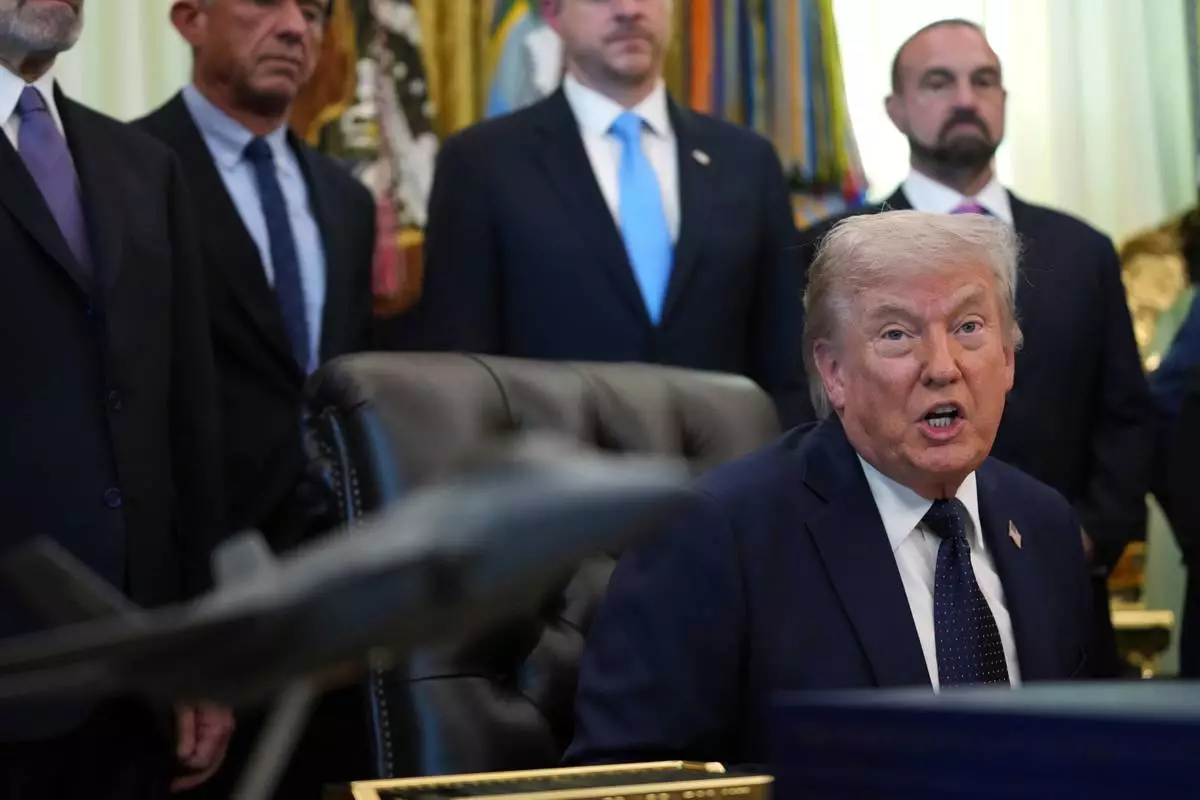
President Donald Trump speaks during an event on health care affordability in the Oval Office at the White House, Thursday, April 23, 2026, in Washington. (AP Photo/Mark Schiefelbein)
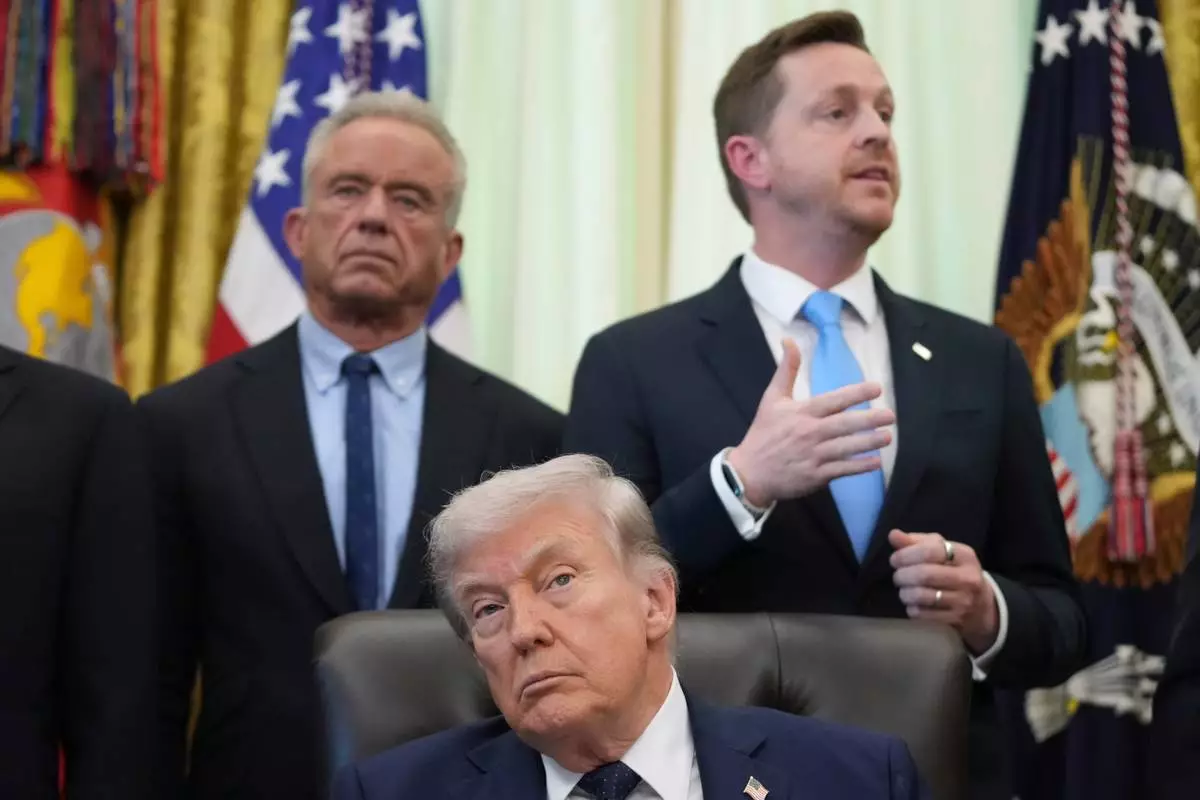
Chris Klomp, director of the Centers for Medicare and Medicaid Services, right, speaks as President Donald Trump and Health and Human Services Secretary Robert F. Kennedy Jr. listen during an event on health care affordability in the Oval Office at the White House, Thursday, April 23, 2026, in Washington. (AP Photo/Mark Schiefelbein)
ATLANTA (AP) — Three professors at Atlanta's Emory University filed a lawsuit Thursday over their arrests during a 2024 campus protest over the Israel-Hamas war, saying the university broke its own free speech policies when it called in police and state troopers to aggressively disband the protest, making 28 arrests.
“The judicial system would find that Emory failed to protect its students, to protect its staff, to protect the educational mission of the university,” said philosophy Professor Noelle McAfee, one of the plaintiffs. “So this isn’t just about people’s individual rights. It’s our educational mission to train people in free and critical inquiry, to be able to learn how to engage with others, to be fearless.”
Laura Diamond, a spokesperson for Emory, said the university believes “this lawsuit is without merit.”
“Emory acts appropriately and responsibly to keep our community safe from threats of harm,” Diamond said in a statement. “We regret this issue is being litigated but we have confidence in the legal process.”
The suit is just one example of how the nationwide wave of protests continues to reverberate on elite campuses. There are many examples of lawsuits against universities by students and faculty who say they were discriminated against because of the protests. But the Emory suit is unusual. McAfee, English and indigenous studies Professor Emilio Del Valle-Escalante and economics Professor Caroline Fohlin all remain tenured faculty members and none were convicted of any charges.
The civil lawsuit in DeKalb County State Court demands that the private university repay money the three spent defending themselves against misdemeanor charges that were later dismissed, along with punitive damages. McAfee said she's suing her employer “to try to get them to be accountable and to change.”
All three say they were observers on April 25, 2024, when some students and others set up tents on the university's main quad to protest the war. They say Emory broke its own policies by calling in Atlanta police and Georgia state troopers without seeking alternatives.
McAfee was charged with disorderly conduct after she said she yelled “Stop!” at an officer roughly arresting a protester. Del Valle-Escalante said he was trying to help an older woman when he was arrested and charged with disorderly conduct. Fohlin said that when she protested against officers pinning a protester to the ground, she herself was thrown face-first to the ground and arrested, suffering a concussion and a spine injury. Fohlin was charged with misdemeanor battery of an officer.
Emory claimed that day that those arrested were outsiders who trespassed on school property. But 20 of the 28 people arrested were affiliated with the university. The professors said that after their arrests, they were targeted by threats and harassment, part of a pushback by conservatives who said universities were failing to protect Jewish students from antisemitism and allowing lawlessness.
Nationwide, advocates say there is a “Palestine exception” in which universities are willing to curb pro-Palestinian speech and protest. Palestine Legal, a legal aid group supporting such speech, said Tuesday that it received 300% more legal requests in 2025 than its annual average before 2023, mostly from college students and faculty.
McAfee served as president of the Emory University Senate after her arrest. The body makes policy recommendations and had helped draft the university’s open expression policy. She said she asked then-President Gregory Fenves in fall 2024 why Emory police weren’t dropping the charges against her and others. McAfee said Fenves told her that he wanted “to see justice.” The open expression policy was revised after 2024 to clearly prohibit tents, camping, occupations of university buildings and demonstrations between midnight and 7 a.m.
Whatever the policy, McAfee said, students are afraid to protest at Emory, saying the university has turned its back on what Atlanta Civil Rights icon John Lewis called “good trouble.”
“Students know right now that any trouble is not going to be good trouble at Emory, that they could get arrested," she said. ”So students are afraid."
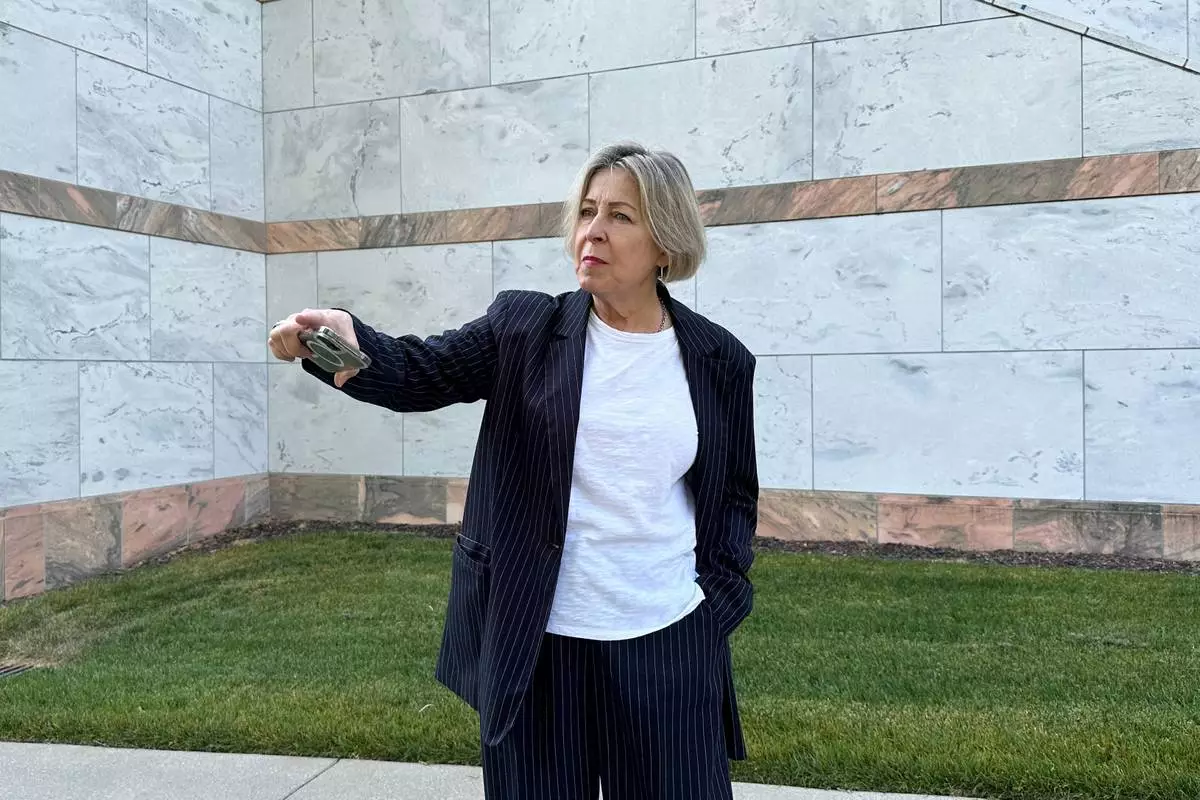
Noelle McAfee, an Emory University professor, talks about her lawsuit against the school over her 2024 arrest at a protest over the Israel-Hamas war on Thursday, April 23, 2026, on the Emory University campus in Atlanta. (AP Photo/Jeff Amy)
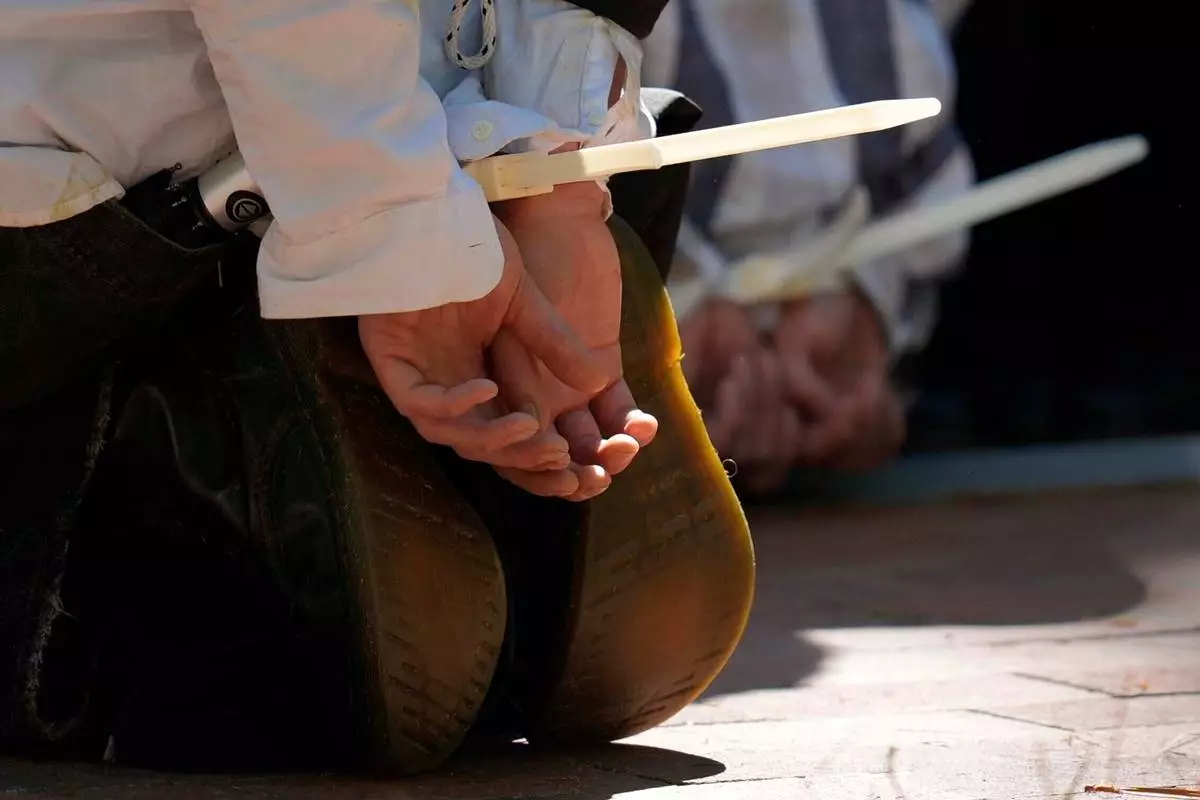
FILE - Protesters are cuffed after being detained on the campus of Emory University during a pro-Palestinian demonstration on April 25, 2024, in Atlanta. (AP Photo/Mike Stewart, File)
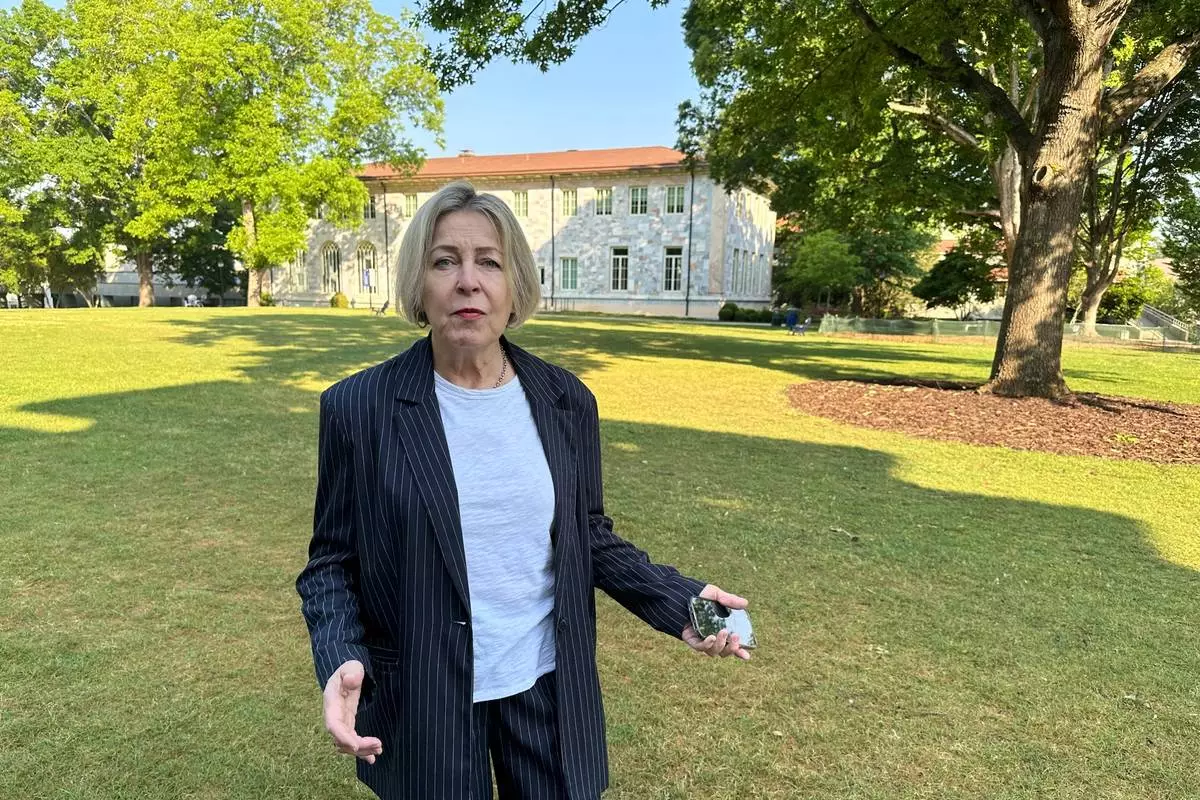
Noelle McAfee, an Emory University professor, talks about her lawsuit against the school over her 2024 arrest at a protest over the Israel-Hamas war on Thursday, April 23, 2026, on the Emory University campus in Atlanta. (AP Photo/Jeff Amy)