LOS ANGELES--(BUSINESS WIRE)--Apr 23, 2026--
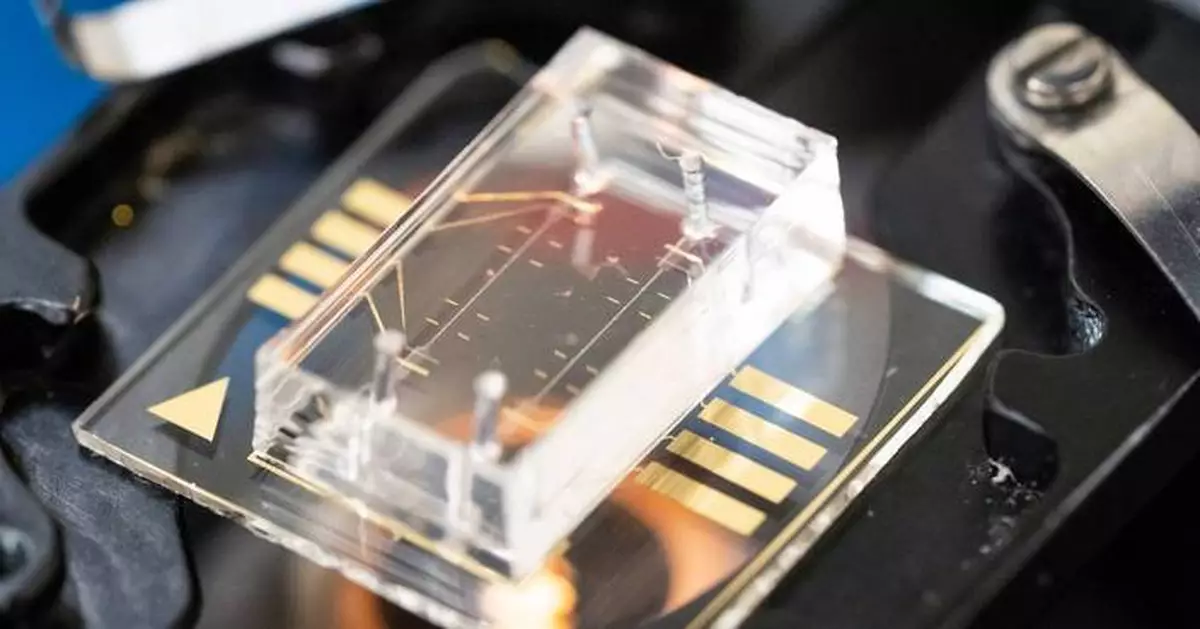
Researchers at City of Hope ®, a cancer research and treatment organization, and the University of California, Berkeley, have created a novel microfluidic platform that can assess women’s breast cancer risk at the cellular level.
This press release features multimedia. View the full release here: https://www.businesswire.com/news/home/20260423831593/en/
The first-of-its-kind platform squeezes individual breast epithelial cells, creating a taxing environment to measure how they deform, recover and behave under stress, according to a new study published today in Lancet’s eBioMedicine.
Because more than 90% of women lack a known genetic predisposition to or a family history of breast cancer, this innovative approach could fill a critical gap in risk assessment and save countless lives.
“For women with a known genetic risk factor for breast cancer, there are things you can do like follow a higher-risk screening protocol. For everybody else, you’re left wondering, ‘Am I at high risk?’” said Mark LaBarge, Ph.D., a professor in the Department of Population Sciences at City of Hope. “By translating physical changes in cells into quantifiable data, this tool gives women something tangible to discuss with their doctors — not just risk estimates, but evidence drawn directly from their own cells.”
Researchers from the two institutions developed a machine learning algorithm that identifies and measures cells that show signs of accelerated aging, quantifying an individual breast cancer risk score. Importantly, the AI platform uses simple electronics that would be easy and affordable to replicate on a large scale.
“Our team isn’t the first to measure the mechanical properties of cells; however, other approaches require advanced imaging technology that’s expensive, cumbersome and has limited availability,” said Lydia Sohn, Ph.D., the Almy C. Maynard and Agnes Offield Maynard Chair in Mechanical Engineering at UC Berkeley. “In contrast, MechanoAge uses computer chips that are simpler than an Apple Watch and ‘RadioShack parts’ that are cheap and easy to assemble, potentially making the device highly scalable.”
About 6% of women who develop breast cancer carry known genetic mutations. For women outside this group, risk is estimated indirectly based on population models or measurements like breast density. These approaches can both overestimate and underestimate women’s individual breast cancer risk, leading to over-screening, under-screening, unnecessary worry or missed warning signs.
Currently, there is no non-genetic test available that can identify women at higher risk for breast cancer. A downside to screening mammograms is that they can catch cancer only once it has begun to grow. With the MechanoAge platform, researchers shifted the scientific lens to the cellular level, calculating risk by looking for physical changes in individual cells.
Using the innovative platform, researchers uncovered an unexpected insight: breast cells appear to have a “mechanical age” separate from a person’s chronological age demonstrated by how the cells physically respond to stress. While engineers study the aging of materials such as metals, concrete and polymers, this is the first time that mechanical age has been quantified in biological cells. This fundamental scientific discovery would not have been possible without MechanoAge.
“We learned that the older the mechanical age, as determined by how cells respond to being squeezed through our microfluidic device, the higher the risk for breast cancer,” Dr. Sohn said.
In this type of mechano-node-pore sensing, an electrical current is measured across a liquid-filled channel, much like how current is measured across a wire. As cells pass through, they disrupt the current, generating measurements about the cells’ size and shape. By making parts of the channel very narrow, researchers squeeze cells, then measure how long it takes each cell to recover its normal shape.
Machine-learning algorithms developed by the researchers were then used to detect differences in cells from older and younger women. The researchers found that the physical properties of breast cells changed with age; cells from older women were stiffer and took longer to bounce back after being squeezed.
Then came a surprising finding: a subset of younger women had cells that behaved like they came from older women. These cells came from women with genetic mutations that put them at high risk of breast cancer.
Researchers then refined the algorithm to assign a risk score based on all the mechanical and physical properties measured in the cells. This algorithm successfully identified women with known genetic risks. Next the team used it to compare cells from healthy women, women who had family history of breast cancer and cells taken from the healthy breast of women with breast cancer in the other breast.
“With accuracy, we were able to figure out which women were at high risk of breast cancer and which women didn’t seem to be,” Dr. LaBarge said.
This work grew out of more than 12 years of collaboration between the two labs, combining engineering innovation with cancer and aging biology. The long-term partnership enabled discoveries that neither group could have reached alone.
“It’s a true collaboration. We’ve learned a lot from each other,” Dr. Sohn said.
“In my view, this is what happens when you have a real collaboration that develops over a long time,” LaBarge added. “This result is not what we imagined at the beginning.”
The Lancet’s eBioMedicine study titled “MechanoAge, a machine learning platform to identify individuals susceptible to breast cancer based on mechanical properties of single cells,” was supported by the National Institutes of Health (R01CA237602, BC181737, 1R01EB024989) and the American Cancer Society – Fred Ross Desert Spirit Postdoctoral Fellowship (PF-21-184-01-CSM, P30CA033572).
About City of Hope
City of Hope's mission is to make hope a reality for all touched by cancer and diabetes. Founded in 1913, City of Hope has grown into one of the largest and most advanced cancer research and treatment organizations in the United States, and one of the leading research centers for diabetes and other life-threatening illnesses. City of Hope research has been the basis for numerous breakthrough cancer medicines, as well as human synthetic insulin and monoclonal antibodies. With an independent, National Cancer Institute-designated comprehensive cancer center that is ranked among the nation’s top cancer centers by U.S. News & World Report at its core, City of Hope’s uniquely integrated model spans cancer care, research and development, academics and training, and a broad philanthropy program that powers its work. City of Hope’s growing national system includes its Los Angeles campus, Orange County, California, campus, a network of clinical care locations across Southern California and cancer treatment centers and outpatient facilities in the Atlanta, Chicago and Phoenix areas. City of Hope’s affiliated group of organizations includes Translational Genomics Research Institute and AccessHope™. For more information about City of Hope, follow us on Facebook, X, YouTube, Instagram and LinkedIn.
About UC Berkeley
Founded in 1868, UC Berkeley is the world’s No. 1 public university, with 63 Nobel laureates and 50 graduate programs ranked in the nation’s top 10. Berkeley researchers advance fundamental science while addressing society’s greatest challenges — from artificial intelligence to climate change to human health. The university enrolls nearly 46,000 students, with 28% of undergraduates receiving federal Pell Grants, reflecting its commitment to access. Learn more at berkeley.edu.
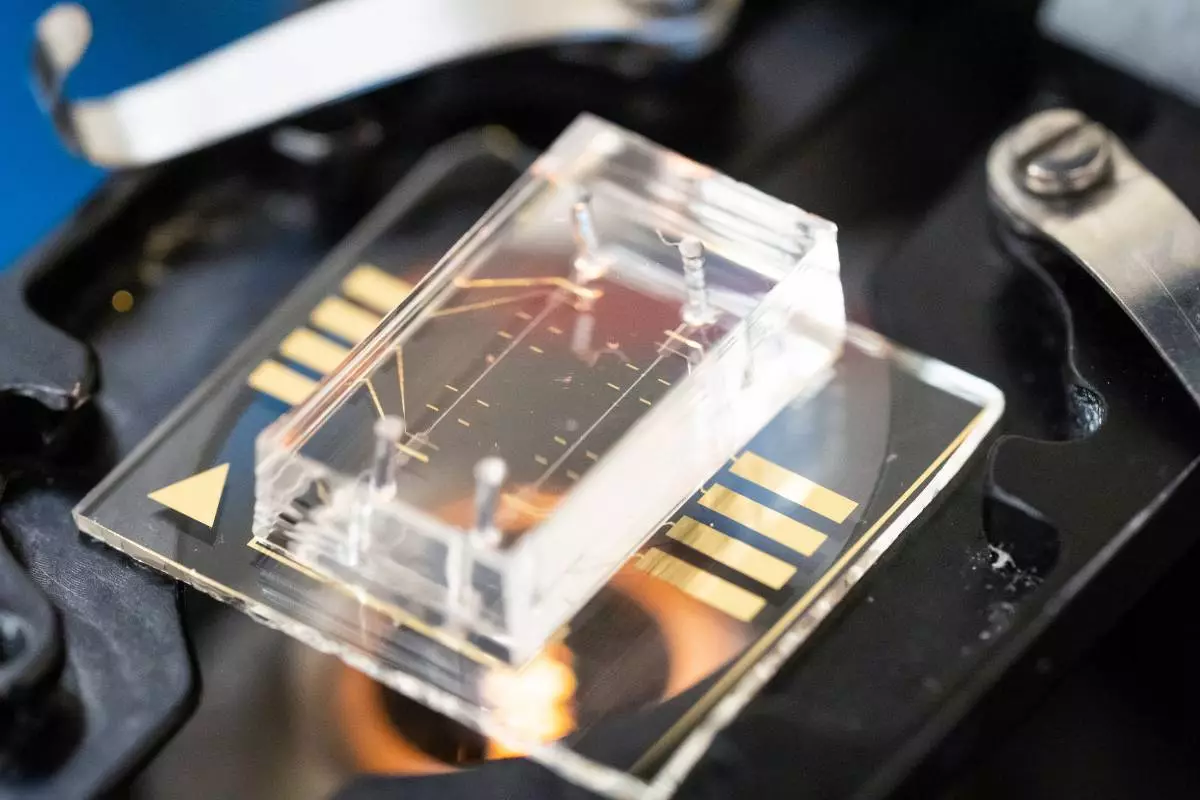
Researchers at UC Berkeley and City of Hope have developed a machine-learning platform to identify individuals susceptible to breast cancer based on mechanical properties of single cells. The technique, called mechano-node pore sensing (Mechano-NPS), is described in a new paper appearing in Lancet’s eBioMedicine. This image depicts the MechanoAge platform. Credit: Adam Lau/Berkeley Engineering