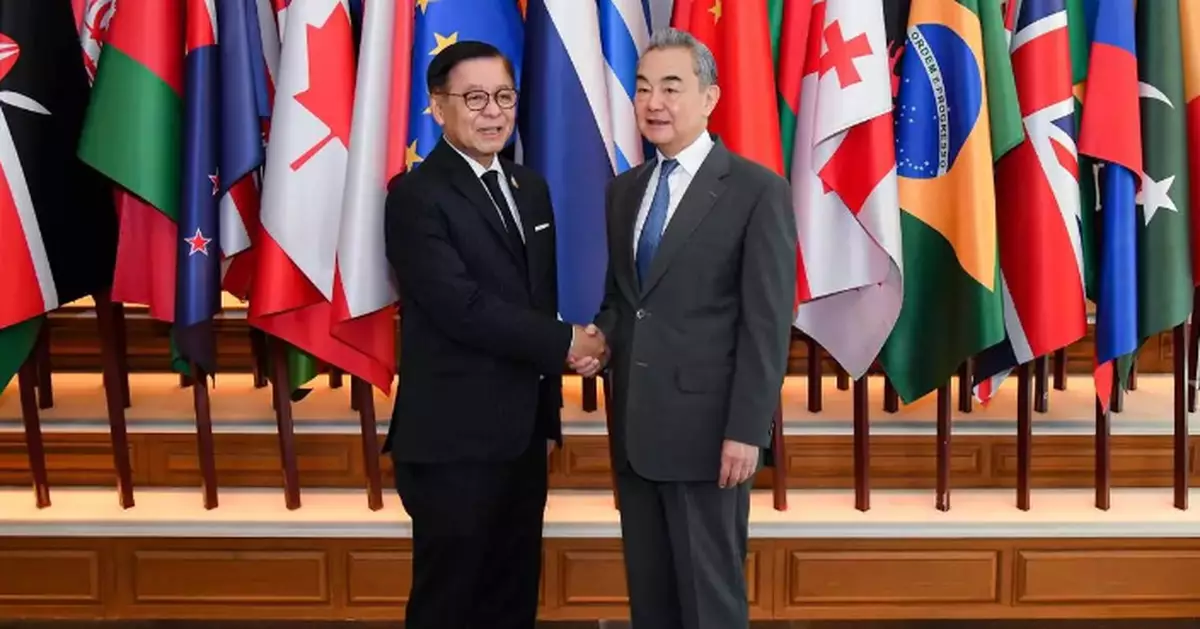
BANGKOK (AP) — Chinese Foreign Minister Wang Yi met Thailand’s Prime Minister Anutin Charnvirakul on Friday during a visit aimed at strengthening the countries’ strategic partnership and expanding cooperation.
The two agreed to strengthen collaboration in fighting transnational crime and cyberscams and other areas, Thai government spokesperson Rachada Dhnadirek said.
She said Anutin thanked China for its continued support for Thailand, while Wang congratulated Anutin on retaining his office after an election and expressed confidence that Thailand-China relations will continue to improve.
Anutin greeted Wang at Government House in Bangkok. They shook hands while posing for photographs before the meeting.
Wang also talked earlier with his Thai counterpart Sihasak Phuangketkeow, officials said.
Wang arrived in Thailand on Thursday for a three-day visit following meetings with government ministers in Cambodia focused on enhancing their countries' political and security ties.
He is scheduled to visit Myanmar next, according to the Chinese Foreign Ministry.
China is Thailand's biggest trading partner, and the two countries celebrated their 50th anniversary of establishing diplomatic relations last year. Thai King Maha Vajiralongkorn also made the first-ever visit to China by a reigning Thai monarch in November.
Chinese investment in Thailand has accelerated in recent years, particularly as many Chinese companies have moved production to Southeast Asia to avoid U.S. tariffs.
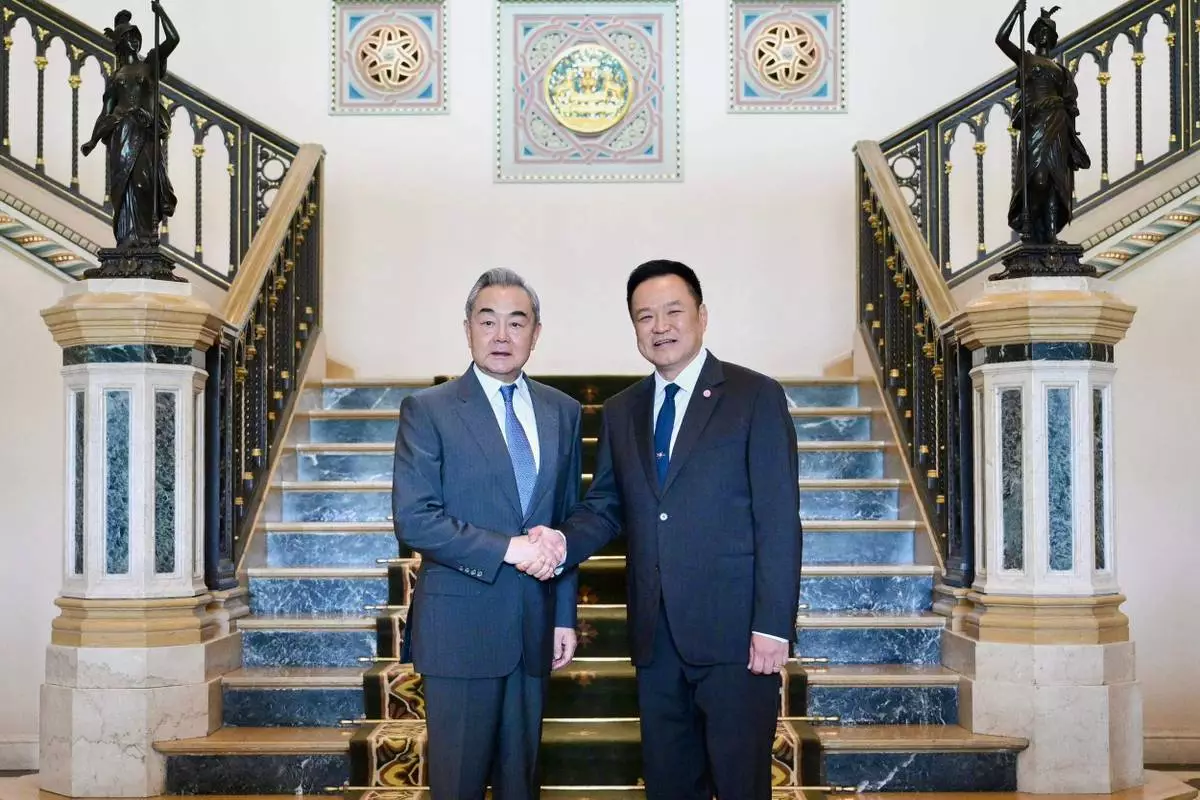
In this photo released by Thailand's Prime Minister's Office, Thai Prime Minister Anutin Charnvirakul, right, greets Chinese Foreign Minister Wang Yi during their meeting in Bangkok, Thailand, on Friday, April 24, 2026. (Thailand's Prime Minister's Office via AP)
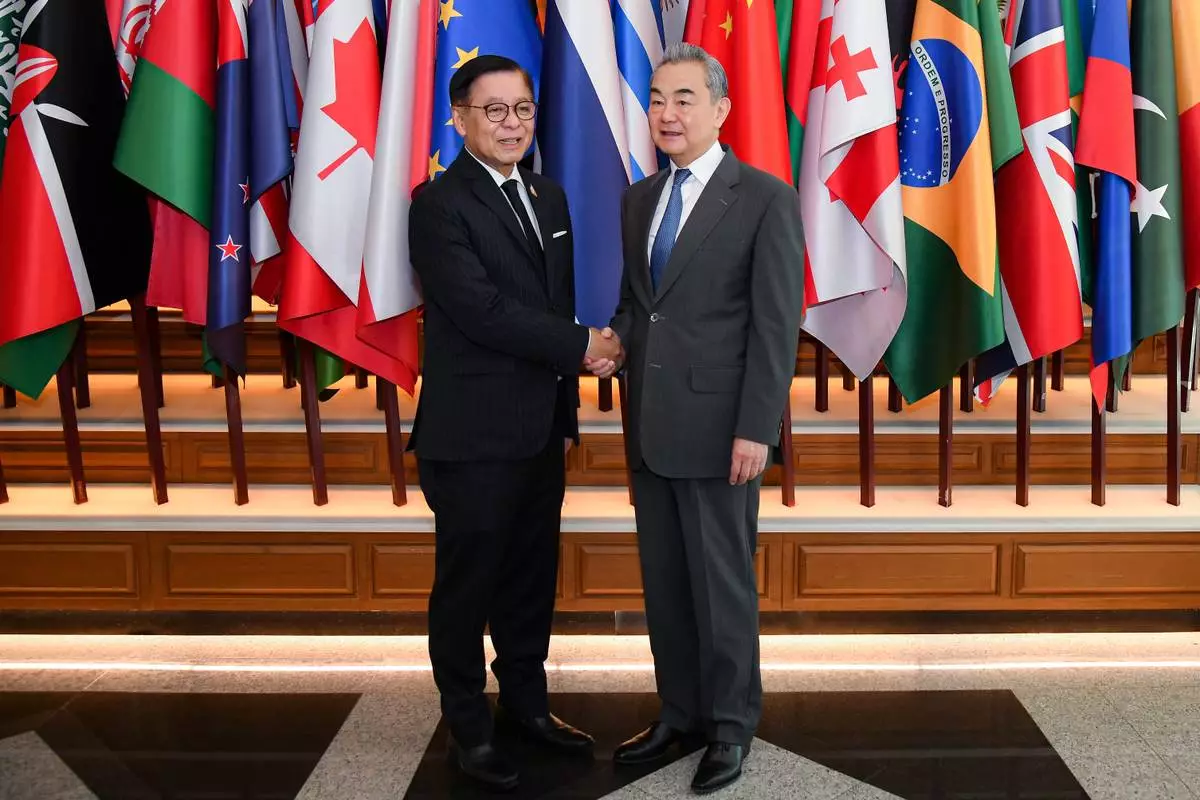
In this photo released by the Ministry of Foreign Affairs of Thailand, Thai Foreign Minister Sihasak Phuangketkeow, left, greets Chinese Foreign Minister Wang Yi during their meeting in Bangkok, Thailand, on Friday, April 24, 2026. ( Ministry of Foreign Affairs of Thailand via AP)
SEOUL, South Korea (AP) — South Korean prosecutors Friday requested a 30-year prison term for ousted President Yoon Suk Yeol over allegations he deliberately tried to escalate tensions with North Korea in 2024 by ordering drone flights over Pyongyang as he sought to create justifiable conditions for martial law at home.
Yoon is charged with benefiting an adversary and abusing his powers, which are among a long list of indictments against the conservative former leader over his short-lived imposition of martial law in South Korea in December 2024.
The request came in the closing stages of a trial at the Seoul Central District Court, where a team of investigators led by special prosecutor Cho Eun-suk said Yoon and his top defense officials were responsible for alleged drone infiltrations into North Korea, about two months before he imposed martial law while portraying the liberals as North Korea-sympathizing, “anti-state” forces.
Yoon’s lawyers, who had denied the accusations, did not immediately comment on the prosecution’s requested prison term.
In February, the court sentenced Yoon to life in prison after finding him guilty of the more serious rebellion charge. That verdict was appealed both by Yoon and prosecutors, who had sought a death sentence.
Cho’s team in a statement Friday claimed that Yoon tried to create a warlike situation between the Koreas while plotting an authoritarian push to remove his political opponents and “monopolize and extend his power.” Prosecutors are seeking a 25-year prison term for Yoon’s former defense minister, Kim Yong Hyun, a key confidant who helped plan and mobilize forces for the martial law declaration.
North Korea accused Seoul of flying drones over its capital, Pyongyang, to drop propaganda leaflets three times in October 2024. Kim initially made a vague denial, but Seoul's Defense Ministry later switched to saying it couldn’t confirm whether or not the claims were true. Tensions with North Korea rose sharply at the time.
Yoon proceeded with his late night martial law declaration on Dec. 3, 2024, delivering a televised address in which he blasted liberals over a range of issues, but largely over their impeachments of his top officials and cuts to his government’s budget bill.
The decree lasted about six hours until a quorum of lawmakers broke through a blockade of heavily armed soldiers and police Yoon had deployed to the National Assembly. They then voted to overturn it, forcing his Cabinet to lift the measure.
Yoon was suspended from office on Dec. 14, 2024, after being impeached by the liberal-led legislature and was formally removed by the Constitutional Court in April 2025. He was arrested in July that year and has been undergoing various criminal trials since.
Though brief, Yoon’s martial law decree threw the country into a severe political crisis, paralyzing politics and high-level diplomacy and rattling financial markets. The turmoil eased only after his liberal rival Lee Jae Myung won an early presidential election in June last year.
Shortly after taking office, Lee approved legislation that launched independent investigations into Yoon’s martial law stunt and other criminal allegations involving him, his wife and associates.
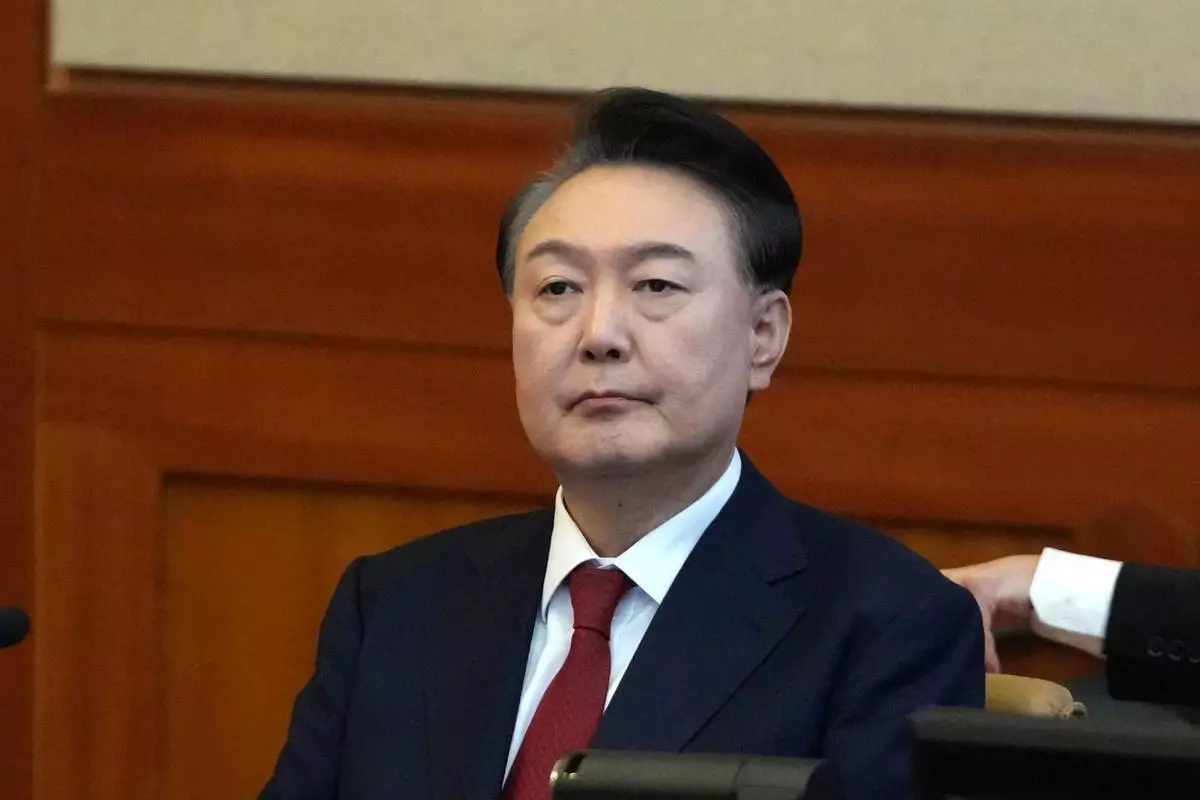
FILE - South Korea's impeached President Yoon Suk Yeol attends a hearing of his impeachment trial at the Constitutional Court in Seoul, South Korea, Feb. 11, 2025. (AP Photo/Lee Jin-man, Pool, File)