The discovery of two new minerals from lunar samples brought back by China's Chang'e-5 mission will broaden human knowledge and understanding of the formation and evolution of planets in the galaxy, said Chinese scientists.
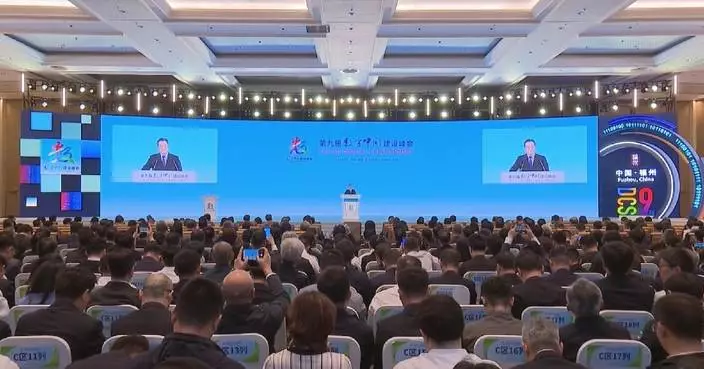
At the opening ceremony for 2026 Space Day of China held in Chengdu, capital of southwest China's Sichuan Province, on Friday, the China National Space Administration announced these two findings: magnesiochangesite-(Y) and changesite-(Ce), both of which have been approved by the Commission on New Minerals, Nomenclature and Classification of the International Mineralogical Association.
Chinese scientists behind the new findings were working with just milligrams of lunar soil samples.
Out of the hundreds of thousands of tiny grains on one epoxy mount, scientists singled out special grains that could hold evidence of a new mineral. The grains are only a few micrometers across, or about one-third to one-thirtieth the thickness of a human hair.
Scientists then zoom in with more precise tests, including chemical analysis, spectroscopy, and crystal structure determination.
This marks the latest achievement following their first discovery of a lunar mineral, changesite-(Y), in 2022. To date, the total number of new minerals discovered from Moon samples worldwide has reached eight.
"The new minerals mean new members to the lunar mineral database. The new discoveries have also strengthened our technical capabilities and demonstrated our country's scientific research capacity. This should show that our research in lunar regolith mineralogy has reached an internationally advanced level," said Ge Xiangkun, deputy director of the Analytical Laboratory at the Beijing Research Institute of Uranium Geology under the China National Nuclear Corporation (CNNC).
China's slew of new lunar mineral findings could shed new light on the Moon and the Earth.
"This is very important for understanding the lunar material makeup and composition, and for understanding the Moon's formation and evolution. It also provides valuable reference for our understanding on Earth of how rare earth elements migrate, become enriched, differentiate, and form mineral deposits. Going forward, our work is to continue studying the original samples and investigate new components in the lunar regolith samples, so we can keep expanding our understanding of the Moon's composition, formation, and evolution. We also aim to further broaden our knowledge and understanding of how planets in the galaxy form and evolve, while providing a scientific basis for future resource development and utilization," said Hou Zengqian, an academician of the Chinese Academy of Sciences.
The Chang'e-6 mission of China successfully collected approximately 1.9 kilograms of samples from the far side of the Moon, marking the first time such an achievement has been made in human history. The preceding Chang'e-5 mission had retrieved around 1.7 kilograms of lunar samples. For approximately five years, China has been distributing lunar samples to research institutions, which has led to numerous new scientific discoveries and a deeper understanding of the Moon.
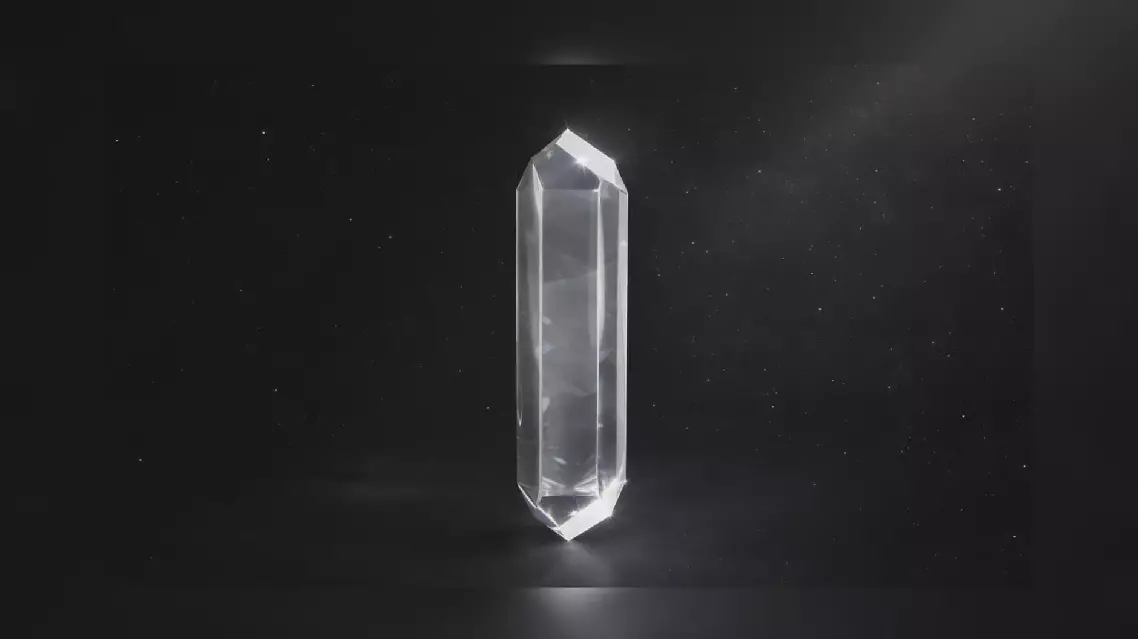
Discovery of 2 new lunar minerals broadens understanding of planet formation: Chinese scientists