Skip to Content Facebook Feature Image

Young doctors meet in Shanghai for dialogue on jointly addressing world challenges

China

China

China

Young doctors meet in Shanghai for dialogue on jointly addressing world challenges

2026-04-24 21:01 Last Updated At:21:47

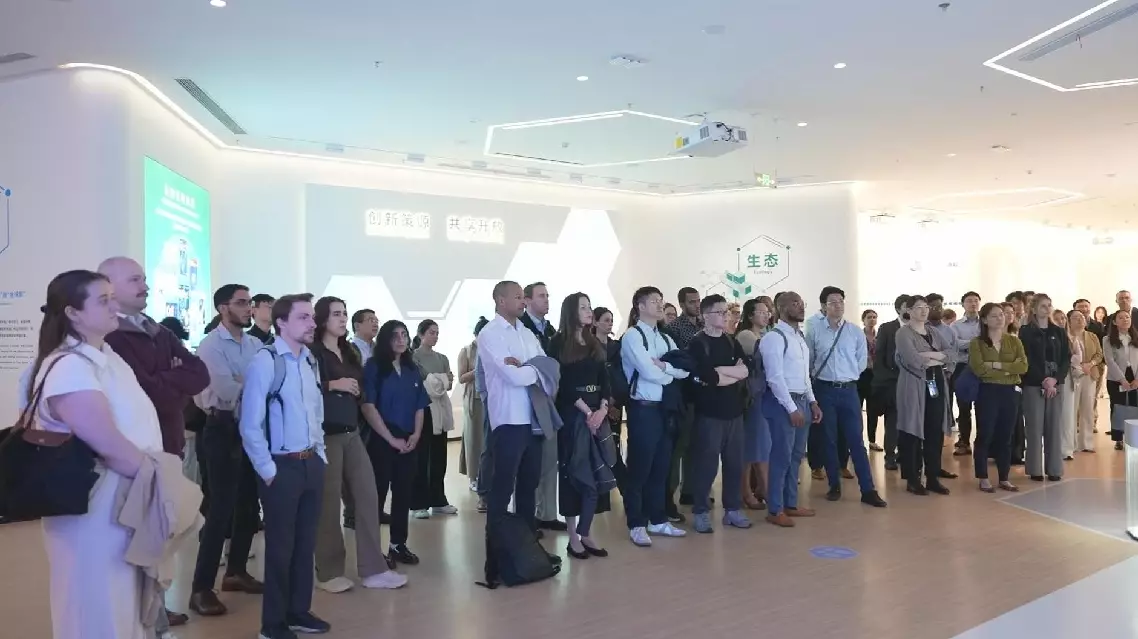
The 2026 China-U.S. Youth Health Dialogue Shanghai Station, held from April 20 to 21, brought together young medical professionals to explore the integration of Artificial Intelligence into healthcare.

During the dialogue, the next generation of scientists from China and the United States forged new pathways for collaboration.

The delegation toured the city's cutting-edge Zhangjiang Pharma Valley and Ruijin Hospital, exchanging ideas on how machine learning can assist diagnostics and treatment.

"I think that there can be a lot of collaboration specifically in rare diseases where one individual company doesn't have enough patients to have all the data that we need to find the best treatments. So I think combining forces and all of our data can be really helpful in that setting," said Ian Roundtree, attending physician in Oncology, Massachusetts General Hospital, Harvard University.

"AI can help us to predict or design some procedures before the real surgery. For example, the tumor of the pancreas, we have three types of surgery we can do. AI calculation can tell us which one is the best. Secondly, it can predict some potential complications or risks during or after surgery, that can help me to decide which I can do, which I should do, which I should not," said Jin Jiabin, Vice President of Ruijin Hospital Hainan Campus, also chief physician at Pancreatic Surgery.

This push for innovation is supported by national policies, with areas like the Hainan Free Trade Port creating special zones to fast-track new medical technologies.

"The most important thing is that the Boao Lecheng (International Medical Tourism Pilot Zone in Hainan) has this special policy that we can land these new drugs and devices that have not been in the market of China, but have already been proven in other countries. Because of the Free Trade Port policy, lots of countries, they can fly directly to Hainan, then they can also use these new drugs or devices," said Jin.

The dialogue has demonstrated that the future of China-U.S. relations may be grounded in scientific innovation. The world's shared challenges, from environmental protection to AI in health care, are now in the focus of these young doctors and scientists.
Young doctors meet in Shanghai for dialogue on jointly addressing world challenges

Young doctors meet in Shanghai for dialogue on jointly addressing world challenges

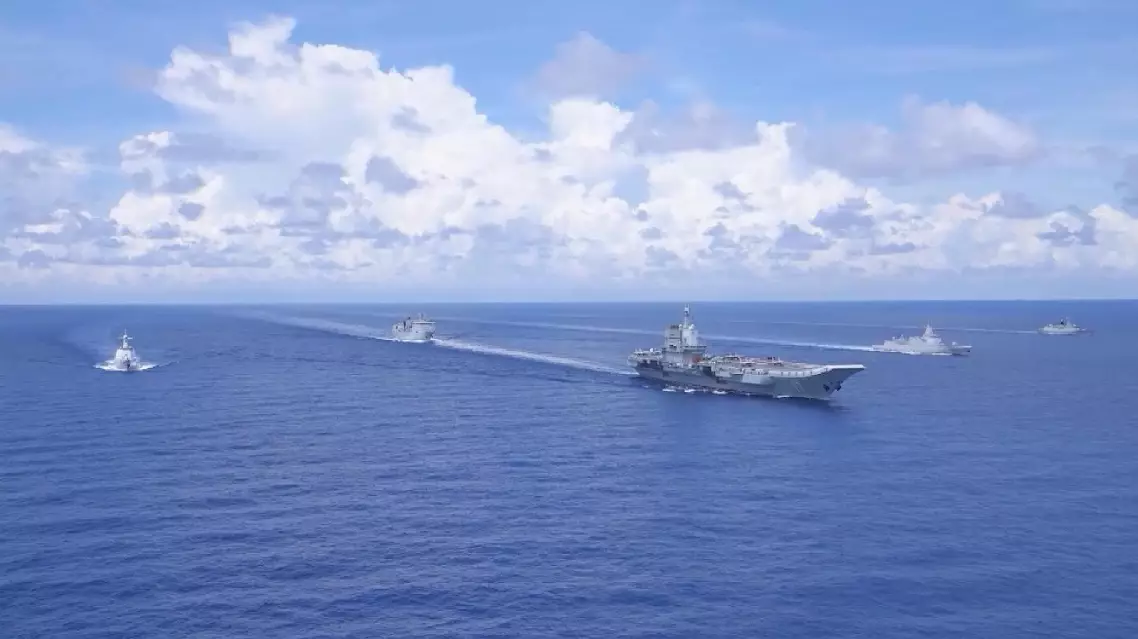
The Chinese People's Liberation Army (PLA) Navy has strengthened itself through scientific and technological advances and personnel training, striving to effectively fulfill their missions and tasks in the new era.

China on Thursday marked the 77th anniversary of its navy, whose presence and growing strength have become an important force in maintaining regional and global stability.

"In recent years, we have been doing scientific research and honing technology for combat. We have utilized experimental resources to build practical combat scenarios, and carried out combat training and operational application verification for the troops in combination with equipment tests. As scientific and technological workers for new ear, we advanced research, testing and training in an integrated and coordinated manner, thus accelerating the formation of naval equipment capabilities and the generation of military combat effectiveness," said Li Yongzhe, a navy officer.

On the front line of scientific and technological innovation, a team of young engineers with an average age of less than 35 has been steadfastly working under high temperature, high humidity and high salt conditions for years.

"Master's degree holders account for 80 percent in our troop, allowing us to introduce talents into the actual combat tasks, thus making our combat effectiveness stronger and more targeted," said Jin Shan, another navy officer.

Song Meiyan, who is working at guided-missile frigate Yantai (Hull 538), has grown from a grassroots crew member to a commander of a new type of warship since she joined the navy 20 years ago.

"We consider every voyage as a battle, and every training session as an actual combat, which facilitates iterative upgrading of naval equipment and the continuous improvement of the talent cultivation system," she said.

Yin Yanwu, a navy soldier of 25 years, has engraved every single equipment at the submarine in his mind.

"It is a huge challenge to study new equipment, through which, however, we can improve ourselves, enhance our control over the new equipment and get better familiar with it. As a result, our submarines can achieve their maximum combat performance," he said.

Sci-tech advances, personnel training drive China's PLA navy building

Sci-tech advances, personnel training drive China's PLA navy building

Recommended Articles