MANCHESTER, England (AP) — Brazil forward Estevao's World Cup hopes are in doubt after it was confirmed Friday he would miss the rest of the season with a hamstring injury.
It is not clear if the Chelsea player will recover in time for the tournament that runs through June and July.
Chelsea interim coach Calum McFarlane did not give a timeframe for Estevao's recovery from the injury sustained in the first half of last week's game against Manchester United.
“Estevao unfortunately won’t play for us this season because he is going to be out for a little bit of time. That's really unfortunate, especially for someone so young and so talented," McFarlane said. "I am sure he is very hopeful he can make the World Cup, but I don’t know on that.”
The 19-year-old Estevao was taken off after 16 minutes of the 1-0 loss at Stamford Bridge and missed Tuesday's 3-0 defeat at Brighton.
Former coach Liam Rosenior revealed last week that the teenager was in tears after being taken off. Hamstring injuries can take several weeks to recover from, or months in the most severe cases.
Brazil's first game at the World Cup is against Morocco at New York/New Jersey Stadium on June 13.
Estevao joined Chelsea from Palmeiras last year and has scored eight goals this season. He was expected to be part of Carlo Ancelotti's squad for the World Cup in the United States, Canada and Mexico after scoring five times in his last six international appearances.
His injury is the latest blow to Brazil, which will be without Real Madrid winger Rodrygo because of a torn ACL and meniscus in his right knee.
Chelsea plays Leeds in the semifinals of the FA Cup on Sunday. Injured duo Cole Palmer and Joao Pedro could both be in contention to play.
James Robson is at https://x.com/jamesalanrobson
AP soccer: https://apnews.com/hub/soccer

Manchester City's Nico O'Reilly, left, and Chelsea's Estevao fight for the ball during the Premier League soccer match between Chelsea and Manchester City in London, Sunday, April 12, 2026. (AP Photo/Ian Walton)
OSLO, Norway (AP) — Norway was bidding its final farewell to King Harald V on Wednesday as the popular monarch's coffin set off for a funeral attended by royalty and leaders from across Europe and beyond, with thousands of people lining the streets.
A 21-gun salute rang out over Oslo at the start of the procession from the royal palace to Oslo Cathedral. Harald's son, new King Haakon VIII, and other senior royals walked behind the coffin, draped with the red Norwegian royal standard.
Harald, who died on Aug. 28 aged 89, was Europe’s oldest monarch and had reigned for 35 years.
He had modernized the royal house, but refused to follow in the footsteps of other aging monarchs who have abdicated in recent times. His son immediately became King Haakon VIII and last week pledged an oath of allegiance to Norway’s constitution in parliament.
Large crowds flocked to the capital for the funeral, and thousands of people stood behind barriers on streets lined with national flags. The downtown area was closed to vehicles and electric scooters, and police have instructed people not to bring bicycles, umbrellas or sharp objects.
People were tuning in from across the country. Scores of churches, libraries, cultural centers and city halls were making big screens available for the public to watch the funeral, public broadcaster NRK reported.
Ahead of the funeral, Norwegians waited patiently to file past Harald's coffin in the chapel of the royal palace. The queue was seven hours long at one point over the weekend. Over 46,000 people visited the chapel during the week it lay in state.
Among the guests expected on Wednesday were the monarchs of Sweden, Denmark, Spain, the Netherlands, Belgium and Jordan. The heir to the British throne, Prince William, is also expected, as is Crown Prince Akishino of Japan. Presidents from a range of European countries will join them.
Ukrainian President Volodymyr Zelenskyy was also on hand. On Tuesday, he met with Norwegian Prime Minister Jonas Gahr Støre in Oslo to discuss the war in Ukraine. The United States will be represented by Under Secretary of State for Political Affairs Allison Hooker.
A minute's silence will be held across Norway at the start of the funeral ceremony. Eulogies will be delivered by Norway's parliament speaker and prime minister, and there will be a candlelighting ceremony with representatives of different faiths.
The government says it's not an official holiday, but schools and workplaces could individually opt to let students and employees tune in for Wednesday's events, advising that “noisy events should be suspended while the funeral is ongoing.”
After the funeral, Harald's coffin will be taken in a procession to the palace chapel at Akershus Castle, where the late king's ancestors are buried. After a private ceremony for the Norwegian royals, who will be joined by some of the foreign guests and senior Norwegian officials, it will be lowered into the crypt.
Norway’s monarchy traces its origins to King Harald Fairhair in the ninth century. When Norway regained its independence from Sweden in 1905, three-quarters of voters in a national plebiscite approved restoring the monarchy.
The Norwegian royal house has kinfolk in other European royal families. Harald and Haakon are related to both Britain’s King Charles III and Spain’s King Felipe VI: They’re all descendants of Queen Victoria in the UK.
Today, the throne's role is largely symbolic and power lies with the elected government and parliament, but the Norwegian royal family retains a role in promoting the wealthy Scandinavian nation around the world.
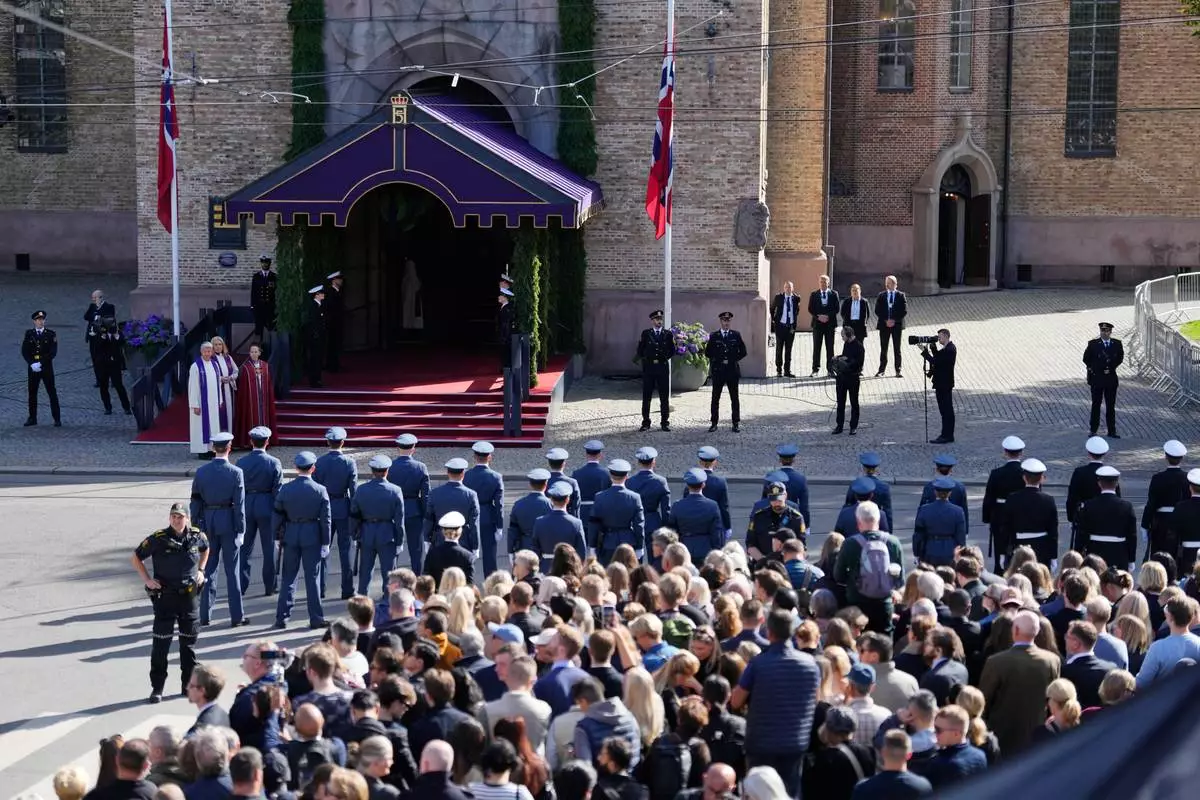
Military personnel wait in front of Oslo Cathedral ahead of the procession for the funeral of Norway's King Harald V in Oslo, Wednesday, Sept. 9, 2026. (AP Photo/Markus Schreiber)
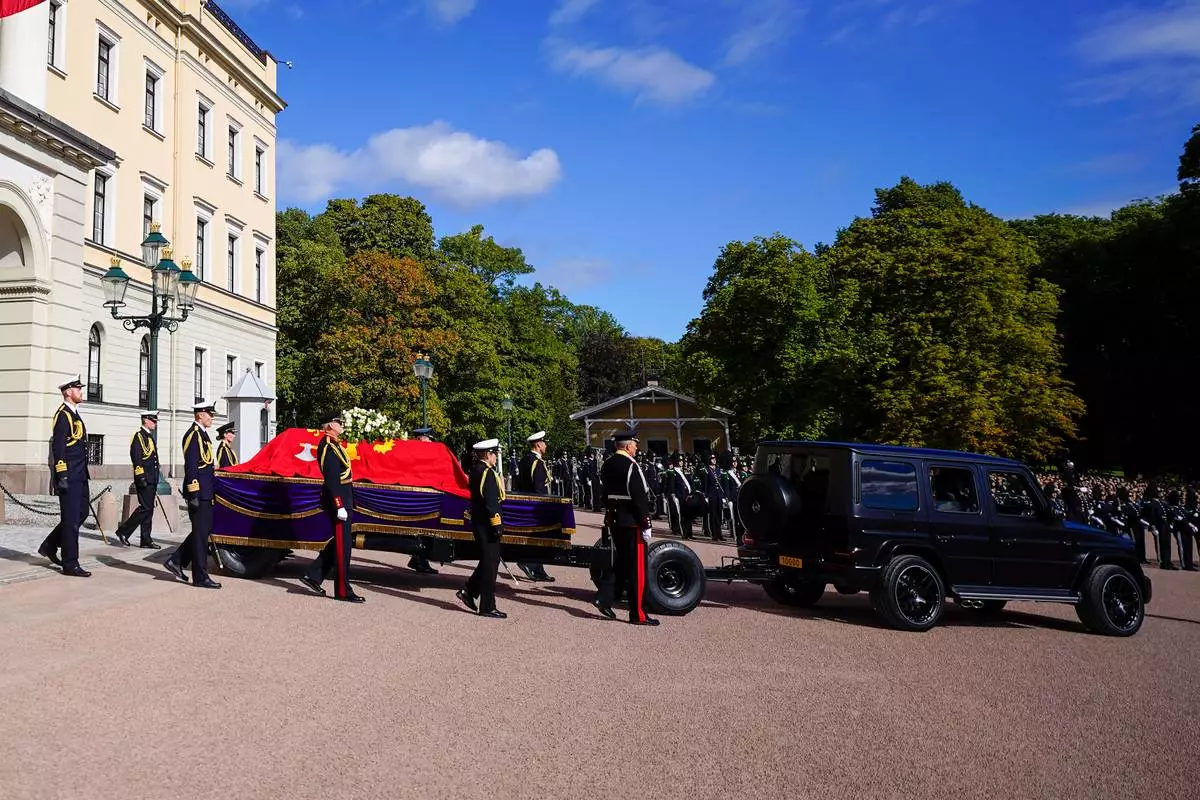
The coffin of King Harald V is taken in procession from the Royal Palace to Oslo Cathedral, in Oslo, Norway, Wednesday, Sept. 9, 2026. (Håkon Mosvold Larsen/NTB Scanpix via AP)
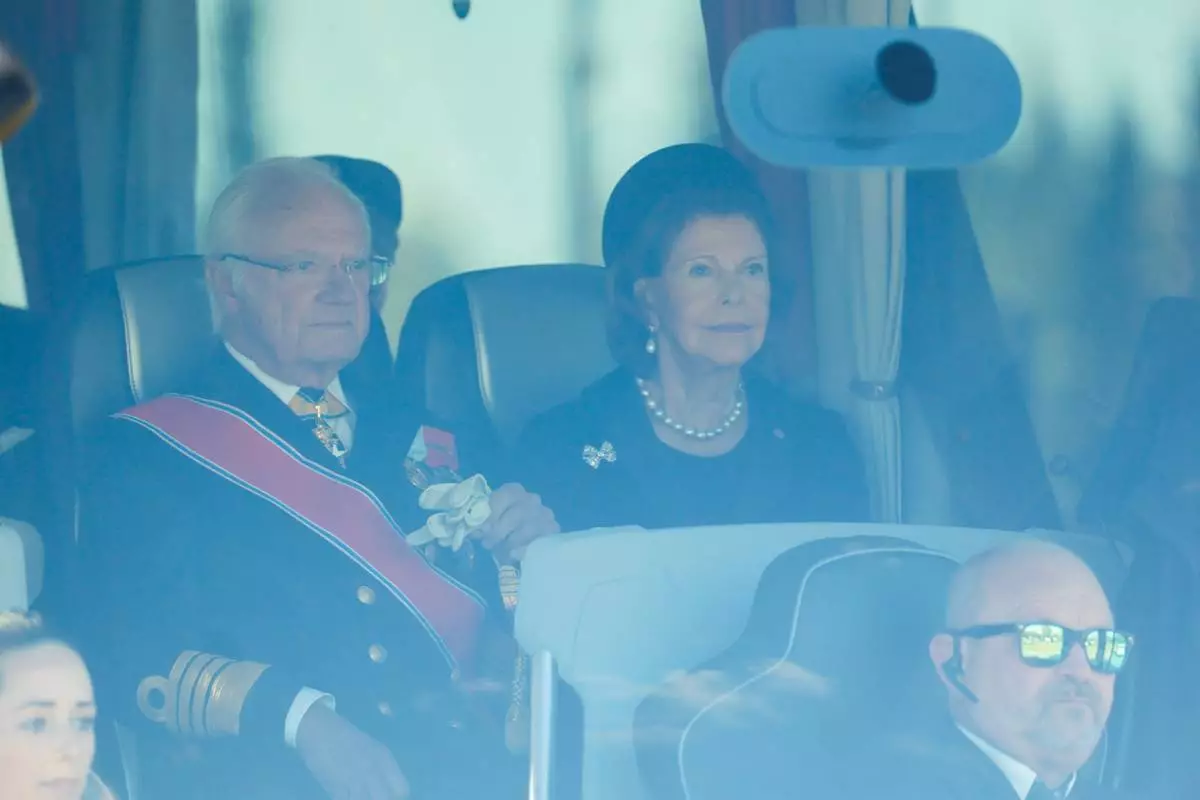
Sweden's King Carl Gustaf and Queen Silvia on board a bus at Oslo Airport as they arrive for King Harald V funeral, Wednesday, Sept. 9, 2026. (Frederik Ringnes/NTB Scanpix via AP)
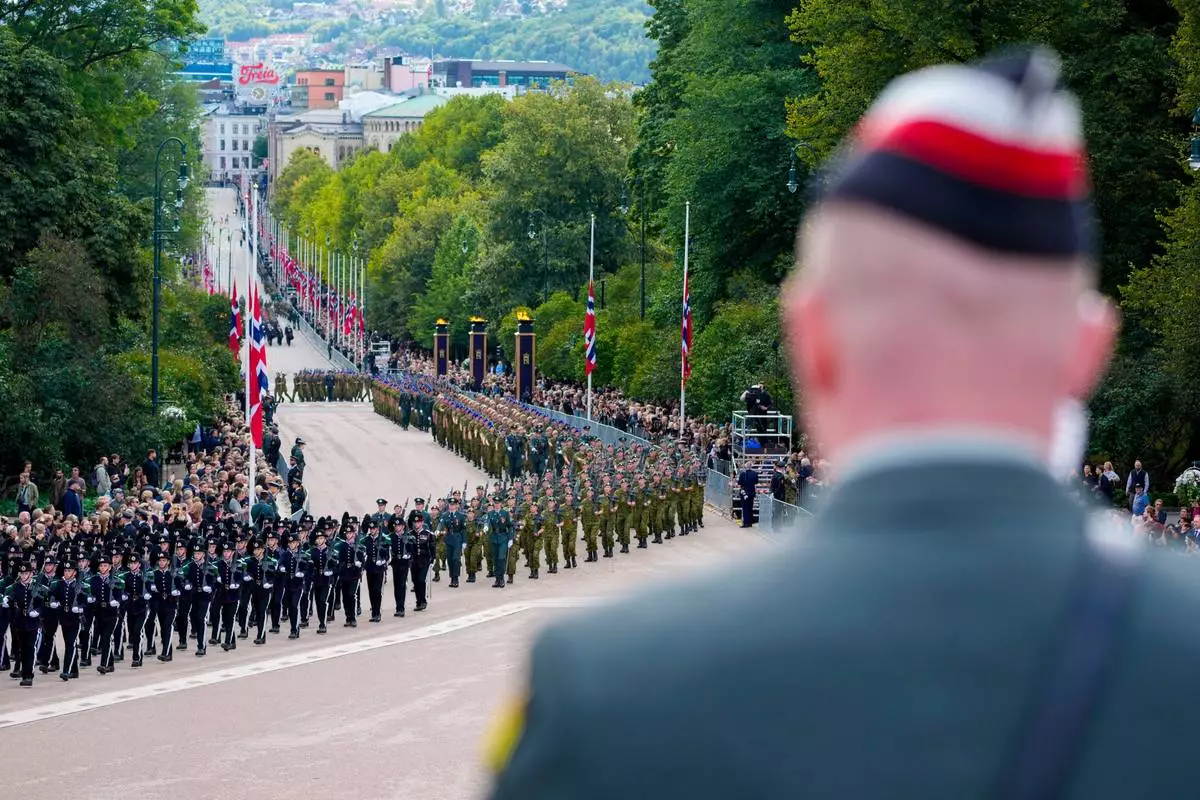
Soldiers march up Karl Johan before the coffin of King Harald V is carried from the Palace to Oslo Cathedral, on Wednesday, Sept. 9, 2025. (Ole Berg-Rusten/NTB Scanpix via AP)
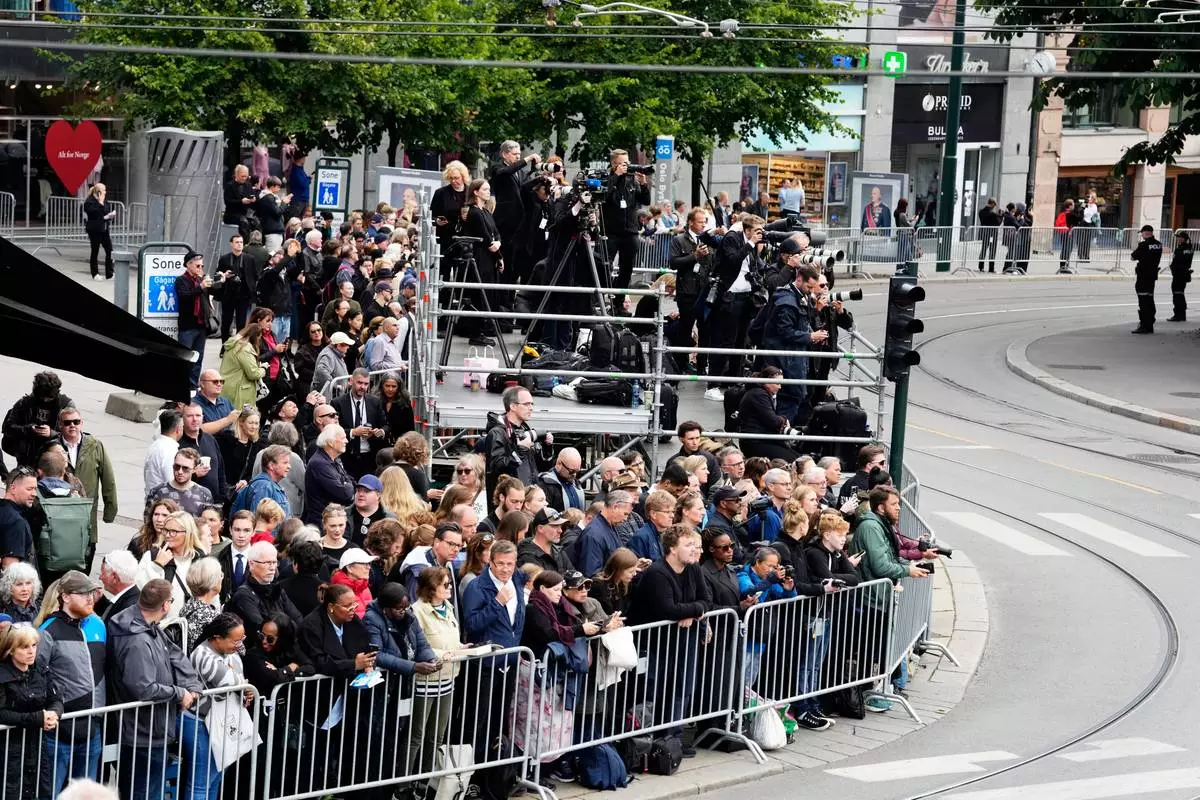
Members of the public wait behind a barrier along the route of the procession for the funeral of Norway's King Harald V near Oslo Cathedral in Oslo, Wednesday, Sept. 9, 2026. (AP Photo/Markus Schreiber)
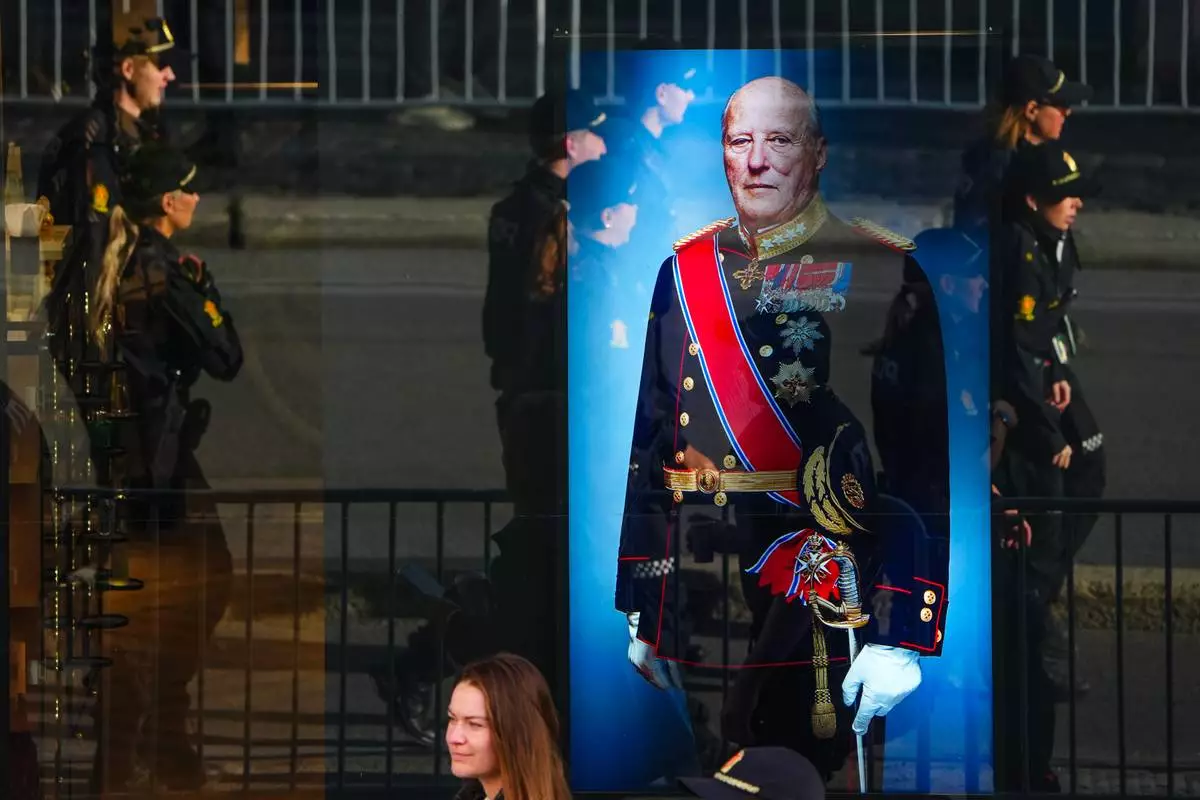
Police officers reflected in a window with a display showing Norway's late King Harald V prior to his funeral in Oslo, Norway, Wednesday, Sept. 9, 2026. (AP Photo/Markus Schreiber)
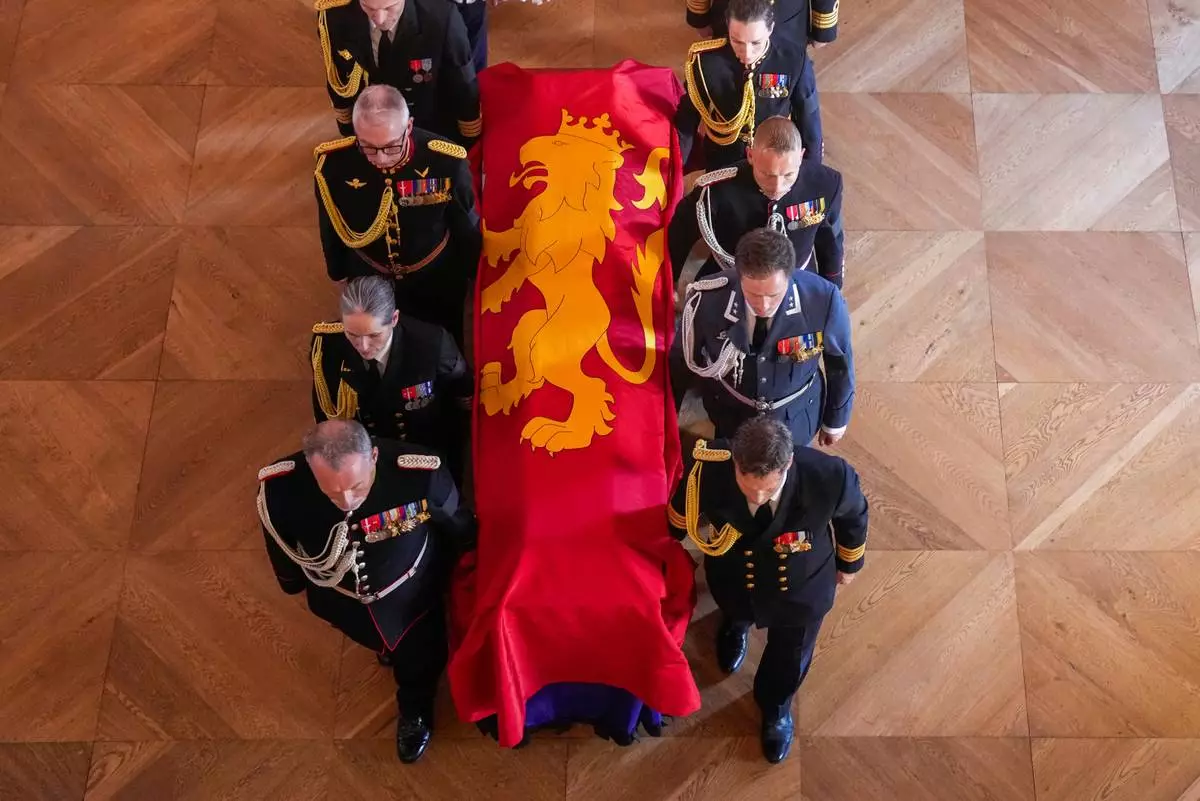
Norway's King Harald V's coffin is moved by King Harald's family and court staff from the Red Salon to the Palace Chapel in Oslo, Monday, Aug. 31, 2026. (Javad Parsa/Pool Photo via AP)
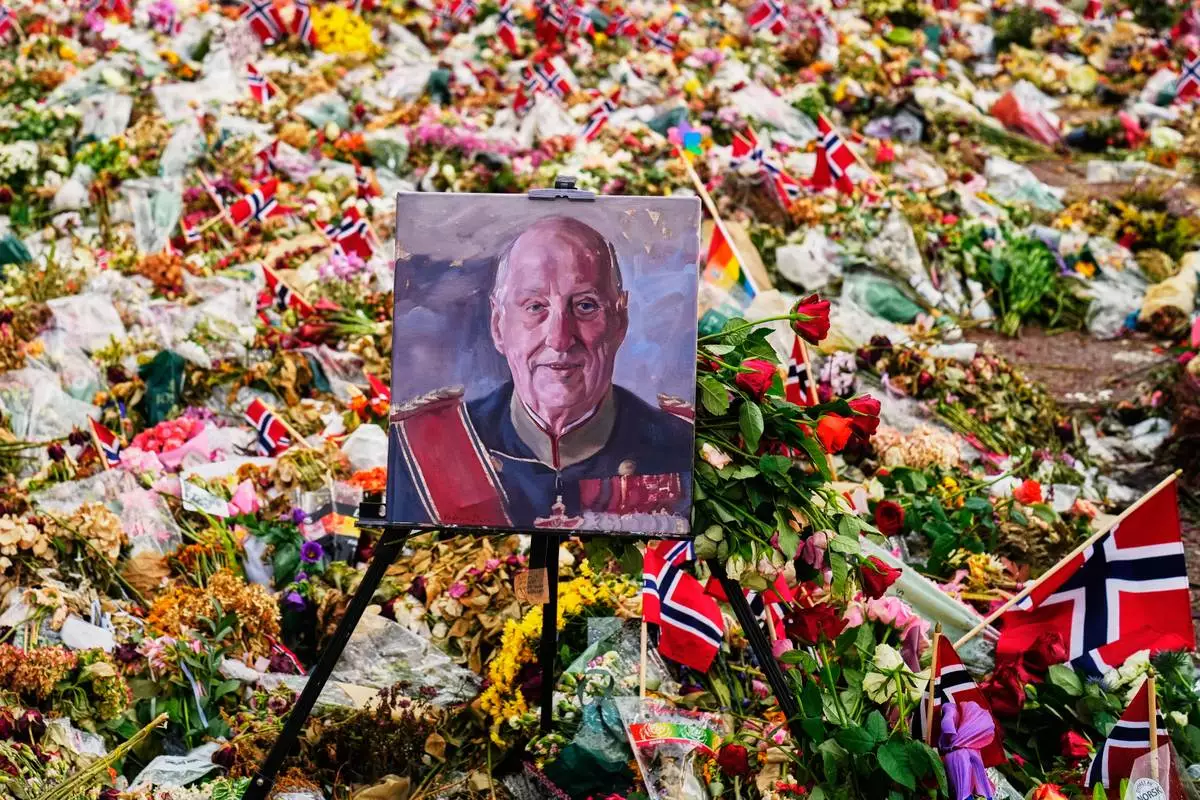
A painting of Norway's late King Harald stand in flora tributes at the Palace Square in Oslo, Norway, Monday, Sept. 7, 2026. (AP Photo/Markus Schreiber)
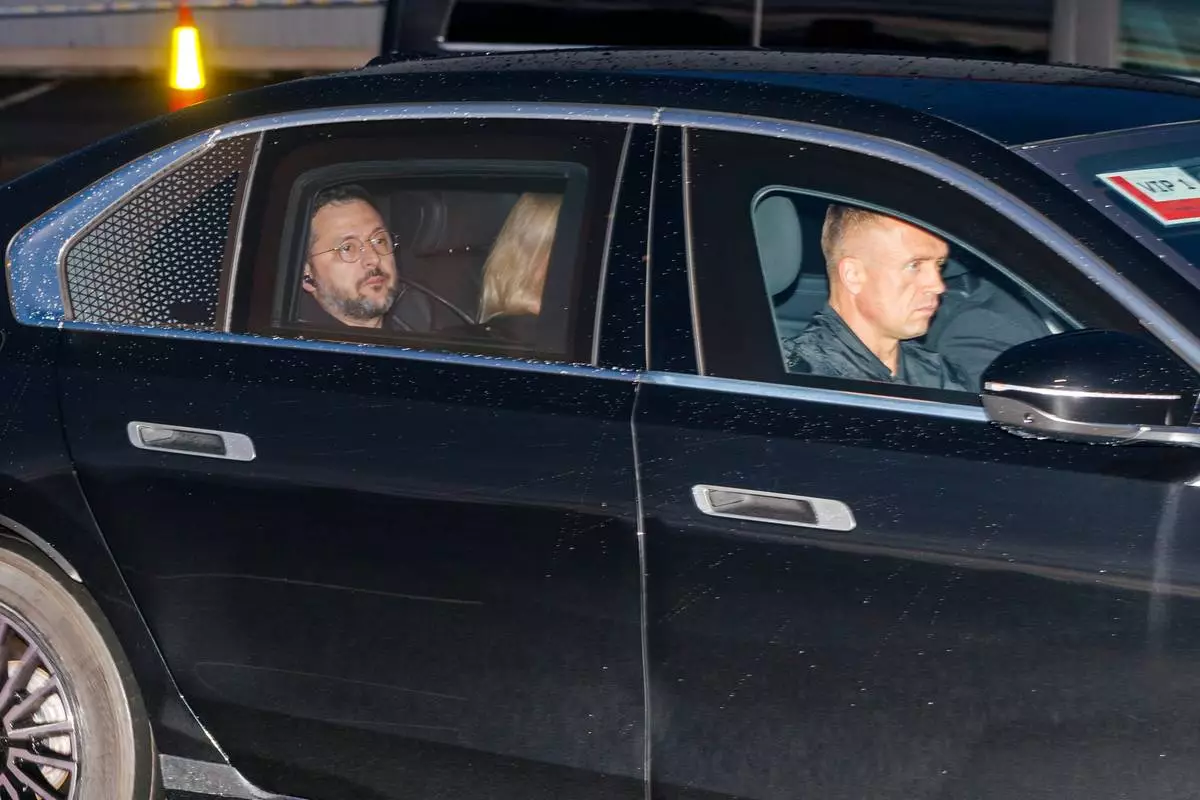
Ukraine President Volodymyr Zelenskyy is transported after arriving in Oslo, Norway, Tuesday, Sept. 8, 2026, one day ahead of King Harald V's funeral. (Frederik Ringnes/NTB Scanpix via AP)