TUNIS, Tunisia (AP) — Authorities in Tunisia have ordered a one-month suspension of the Tunisian League for Human Rights, one of the oldest rights groups in Africa and the Arab world and part of the National Dialogue Quartet awarded the 2015 Nobel Peace Prize, in the latest move raising concerns over a widening crackdown on civil society.
The league confirmed the suspension in a statement late Friday, warning that the decision amounted to “a serious and arbitrary violation of freedom of association” and “a direct assault” on one of Tunisia’s key democratic gains.
President Kais Saied has often cited foreign funding, which rights groups sometimes rely on, as a threat to Tunisia, using it to fuel a populist narrative and accuse his political opponents and social justice activists of being foreign agents and stirring unrest at home.
“This measure cannot be seen in isolation from a broader context in the country marked by increasing systematic pressure on civil society and independent voices,” the group said, adding that it would challenge what it called an unjust decision in court while continuing to defend victims of rights violations without discrimination.
The suspension follows a series of similar measures targeting rights groups in the North African country, where courts last year ordered multiple prominent NGOs to halt activities for a month, including organizations focused on migrants’ and women’s rights.
The decision comes as journalist Zied El-Heni was placed under 48-hour detention over a Facebook post, amid a broader pattern of arrests and legal pressure targeting critics.
Mohamed Yassine Jlassi, a former president of the Tunisian journalists union SNJT, told The Associated Press on the sidelines of a protest in Tunis on Friday that hundreds of people are being detained over speech-related charges, including social media posts.
“Repression has come to affect everyone. Journalism has become a crime, civil society work has become a crime, political opposition has been criminalized,” he said.
“People now increasingly find themselves facing arbitrary prosecutions without the bare minimum guarantees of a fair trial.”
Meanwhile, the investigative outlet Inkyfada faces a court hearing on May 11, as authorities pursue the dissolution of Al Khatt, the association that publishes it.
The group said in a statement that it disputes the legal basis of the case and says the claims cited by the government have not been examined by Tunisian courts since 2024.
These developments add to growing concerns among rights advocates over restrictions on independent media, civil society and any dissenting voices under Saied, who has consolidated power since 2021 and has increasingly targeted groups he repeatedly accuses of receiving foreign funding to stir unrest and destabilize Tunisia’s national interests.
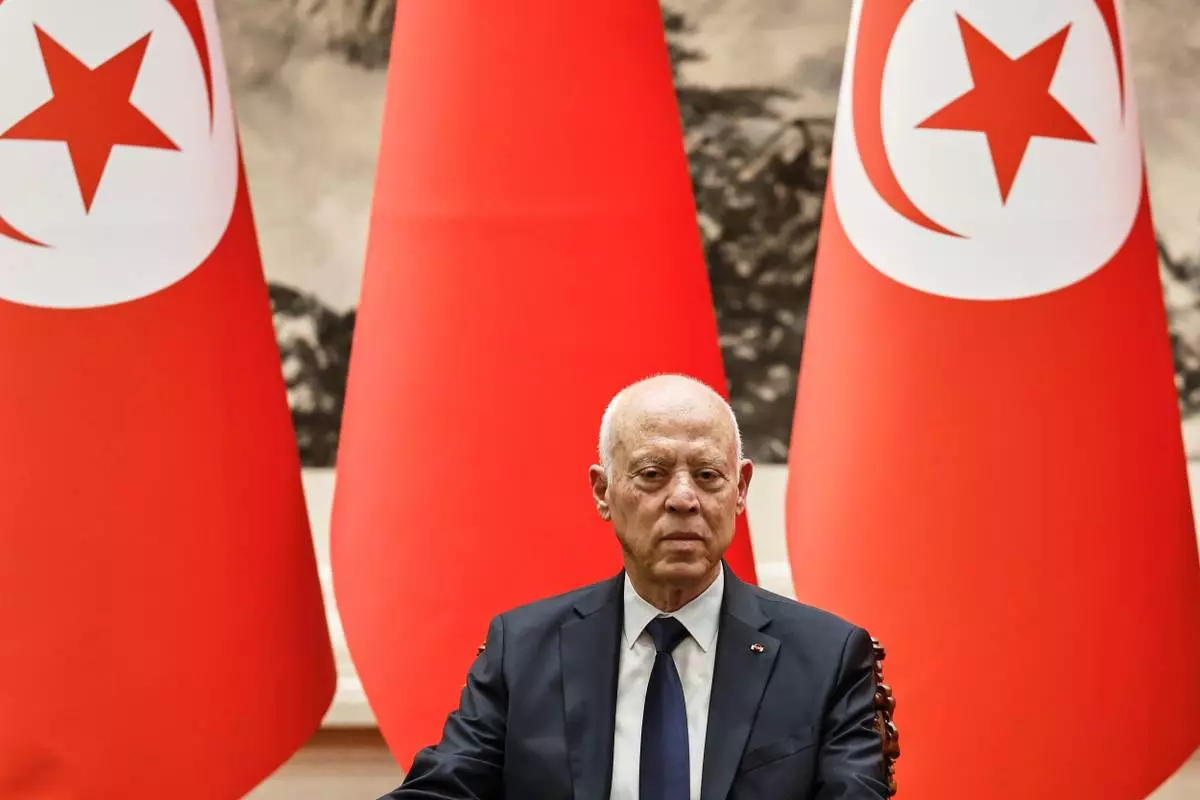
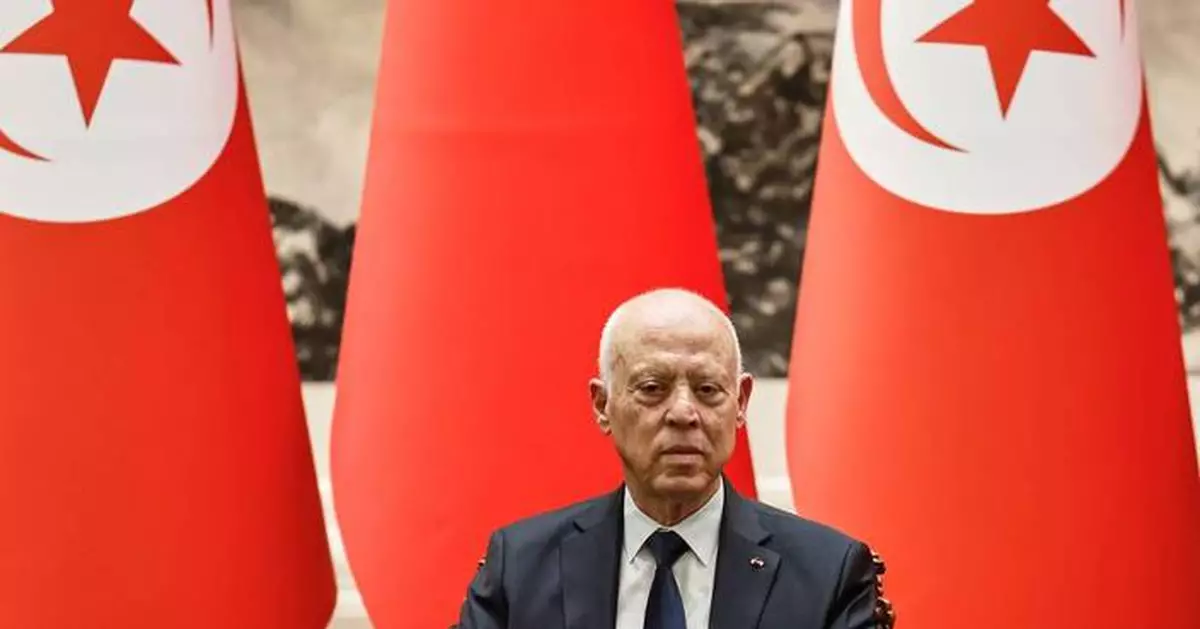
FILE - Tunisian President Kais Saied attends a signing ceremony in Beijing, May 31, 2024. (Tingshu Wang/Pool Photo via AP, File)
BOCA RATON, Fla. (AP) — Klay Thompson's legacy was secured long ago. He was part of four championship teams with Golden State, is one of the best shooters the NBA has ever seen, holds the league's single-game record for 3-pointers made and is surely headed to the Basketball Hall of Fame.
He wants more.
And that's why the Miami Heat pounced quickly when the 36-year-old Thompson was bought out by the Dallas Mavericks over the summer. They're convinced that Thompson still has much to offer and will flourish on a new-look Heat with Giannis Antetokounmpo teaming up with Bam Adebayo.
“I want to be able to look back one day and say I gave it everything I had,” Thompson said Tuesday after his first training camp practice with the Heat, held at Florida Atlantic University. “And I think being with the Heat, it gives me that opportunity. They’re wholly committed to winning. And I've said this before: winning trumps any individual performance I’ve ever had. To be a part of a season of chasing that goal is special.”
Thompson's resume is almost beyond compare.
He's made at least 200 3-pointers in a season 11 times; that's second-most in NBA history behind his former Golden State teammate and “Splash Brother” Stephen Curry, who has 12 such seasons. With 2,899 career 3s, he's only 74 behind former Heat guard Ray Allen for No. 3 on the all-time list — and 101 away from the 3,000-made milestone, something only Curry and James Harden have surpassed.
And here's one that not everyone might expect: Thompson — even without being a full-time starter — is also the only player in the NBA with at least 200 made 3s in each of the last four seasons. He made 202 last season in Dallas, despite playing a career-low 21.7 minutes per game.
“What Klay’s done in this league, I think should be celebrated and respected in our locker room — which it is," Heat coach Erik Spoelstra said. “We can take from those experiences. And I think also he can be excited about this possibility of a new experience to be able to create hopefully something similar, but in a different way and a different locker room and different culture.”
The general perception is that Thompson will play a role similar to what Allen played in the Heat era that featured LeBron James, Dwyane Wade and Chris Bosh. If defenders help off Thompson, it's likely that they'll pay by leaving one of the best shooters in the world — someone who doesn't need much time to get a shot off — open. And if they don't help off him, that's just going to make life easier for Adebayo, Antetokounmpo and everyone else in Heat colors.
“We've got former champions,” Heat guard Davion Mitchell said. “They know what it takes to win.”
Thompson is about to enter his 14th season, not counting two missed because of injury. He’s a career 41% shooter from beyond the arc, is a five-time All-Star and has made at least 10 3s in a game on nine different occasions.
And this summer, in a workout that led to a viral video from famed skills coach Chris Brickley, Thompson made 72 consecutive shots from beyond the arc.
“It’s a good feeling,” Thompson said, “but I would rather make 10 in a row in an NBA game.”
The Heat would like to see that as well. They always have championship aspirations, but the changes to the roster this summer — adding Antetokounmpo, another knockdown shooter in Tim Hardaway Jr., Bobby Portis and Thompson, among others — make those hopes quite legitimate, even with Miami competing against a loaded Eastern Conference.
“I hopefully one day get the chance to be in the Hall, but before that I still feel like I have so much left to give this game,” Thompson said. “The records even matter to me. I want to still climb up the record books because I’m such a basketball junkie. I grew up watching Ray Allen, Reggie Miller, and those guys inspire me to shoot the ball every single day. And the fact that I have a chance to pass Ray in a Heat uniform, that gives me so much motivation to keep going.”
See AP’s full NBA coverage here
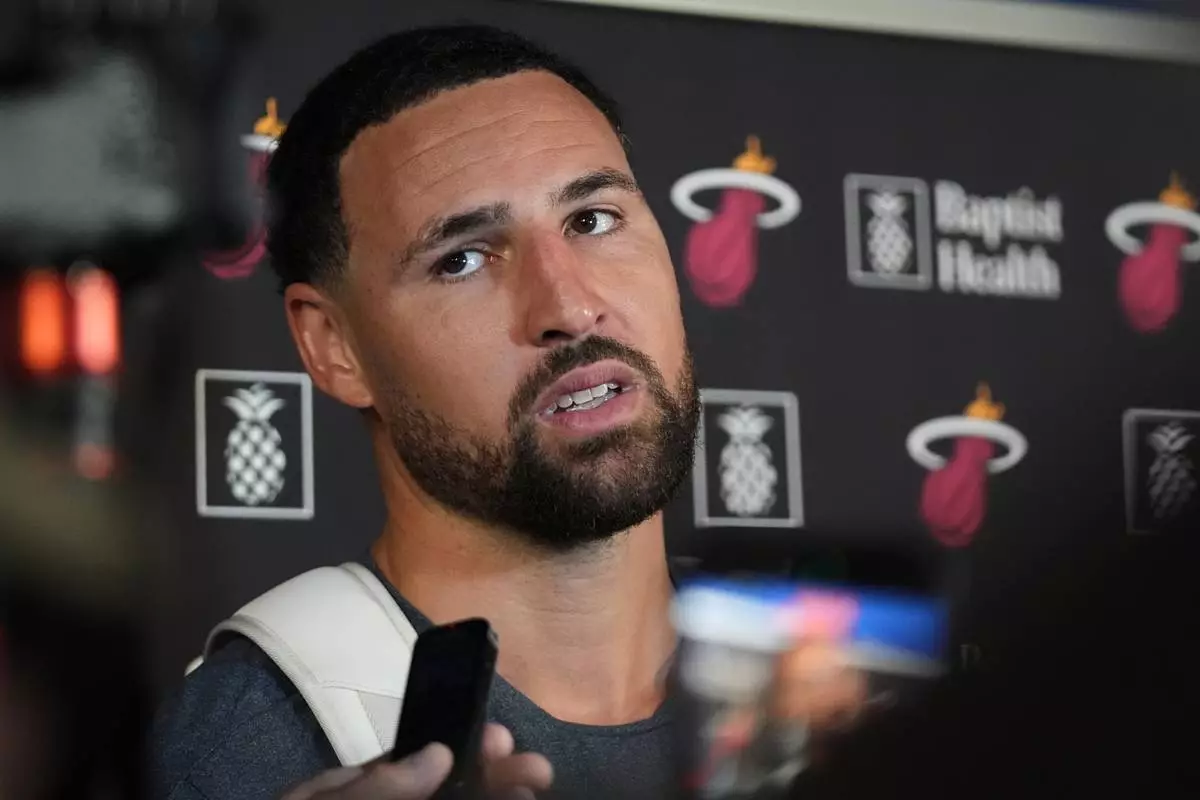
Miami Heat guard Klay Thompson speaks with the media during NBA basketball training camp, Tuesday, Sept. 29, 2026, in Boca Raton, Fla. (AP Photo/Lynne Sladky)
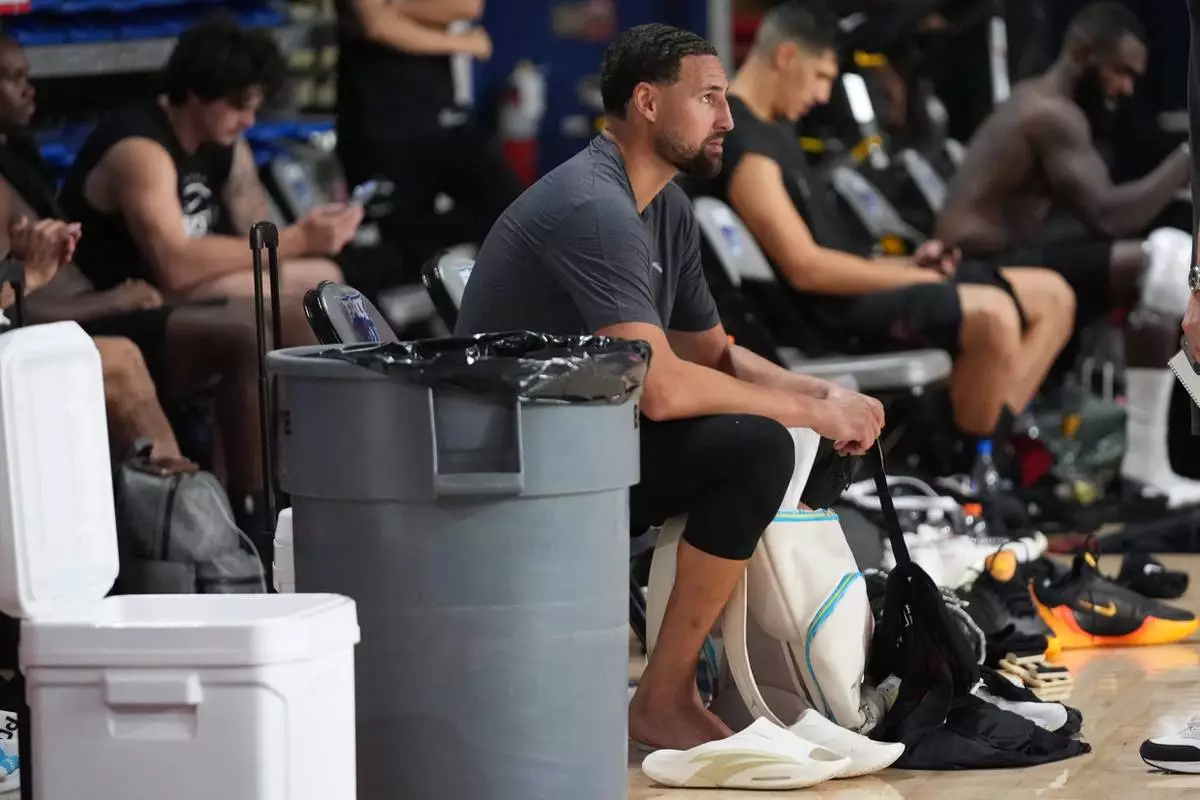
Miami Heat guard Klay Thompson sits on the sideline during the NBA basketball team's training camp, Tuesday, Sept. 29, 2026, in Boca Raton, Fla. (AP Photo/Lynne Sladky)
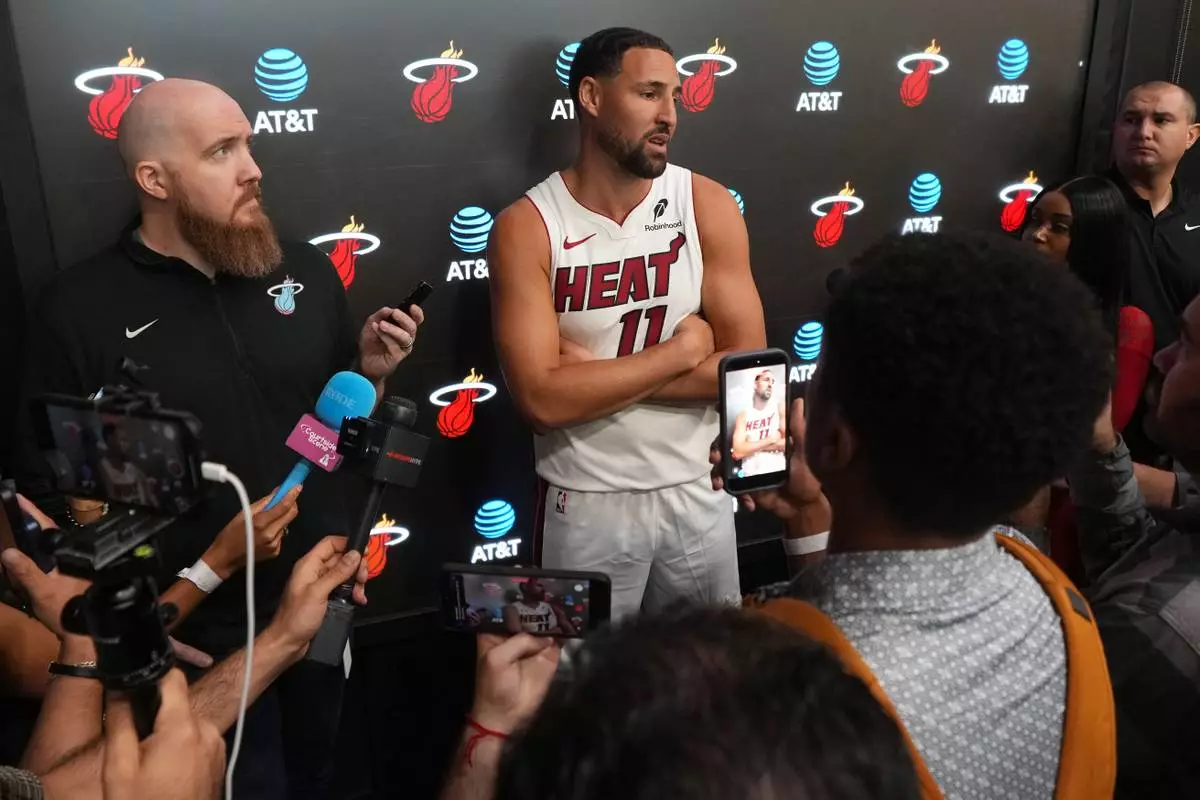
Miami Heat forward Klay Thompson (11) takes questions during the NBA basketball team's media day, Monday, Sept. 28, 2026, in Miami. (AP Photo/Jim Rassol)
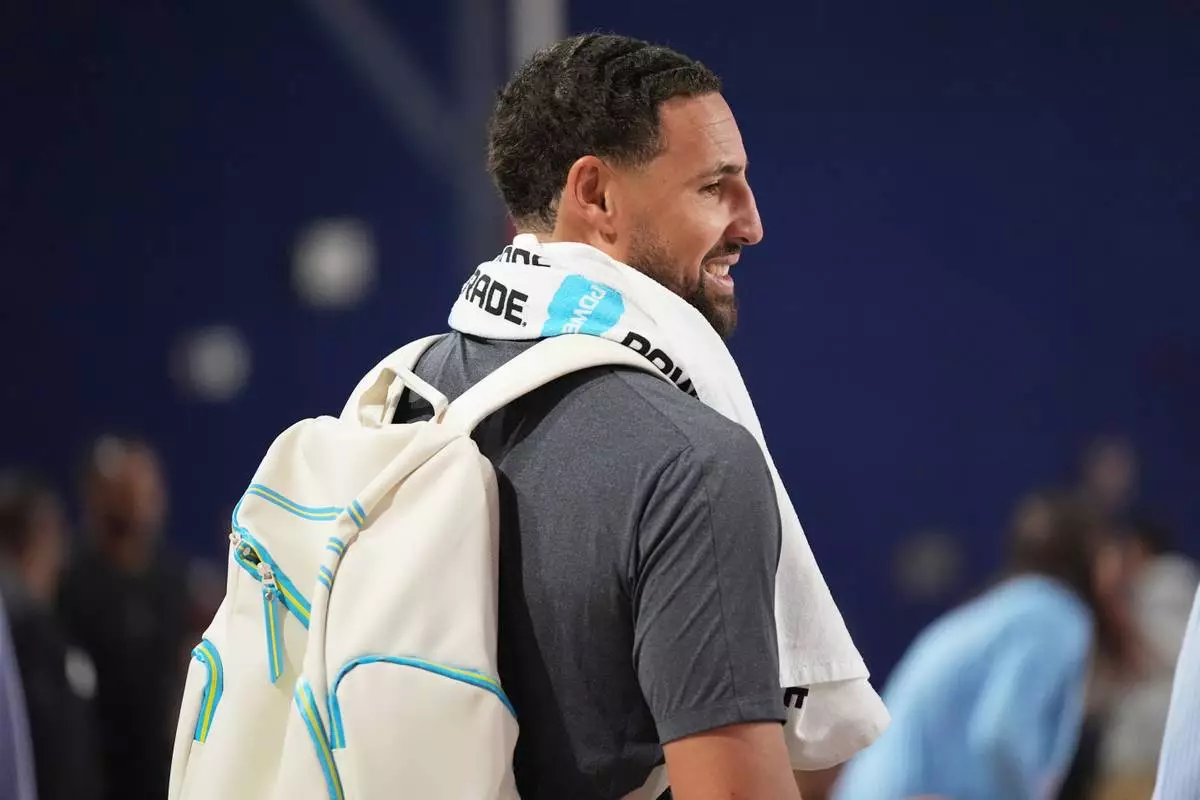
Miami Heat guard Klay Thompson walks from the court during NBA basketball training camp, Tuesday, Sept. 29, 2026, in Boca Raton, Fla. (AP Photo/Lynne Sladky)
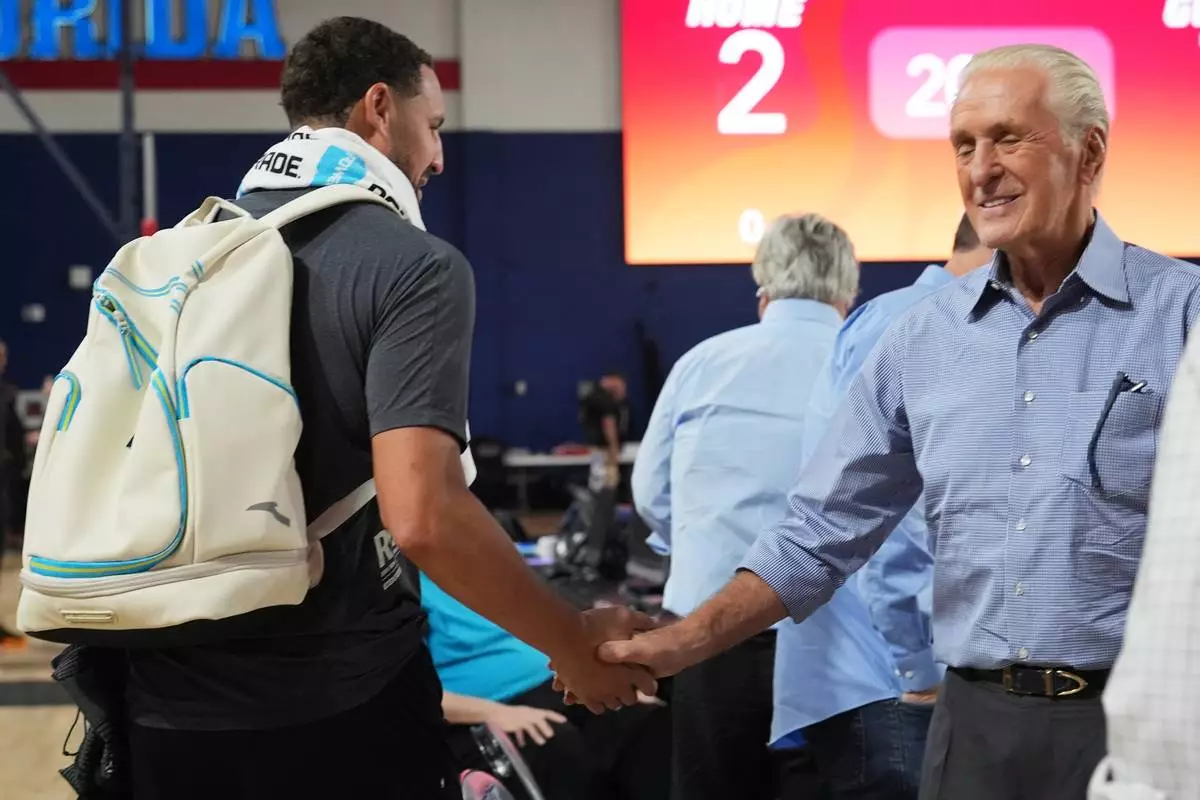
Miami Heat guard Klay Thompson, left, shakes hands with Miami Heat president Pat Riley, right, during NBA basketball training camp, Tuesday, Sept. 29, 2026, in Boca Raton, Fla. (AP Photo/Lynne Sladky)