The Hengqin Port in Zhuhai City, south China's Guangdong Province, had handled more than 100 million cross-border passenger trips since it was put into operation in August 2020, with the milestone reached by Friday afternoon, according to the Zhuhai General Station of Immigration Inspection.
The port had also processed 11.7 million inbound and outbound vehicle trips in less than six years, underscoring its emergence as one of the busiest hubs in the Guangdong-Hong Kong-Macao Greater Bay Area city cluster in south China.
Located at the southern tip of Zhuhai and separated from Macao by a narrow stretch of water, Hengqin has become a core center for personnel exchanges, economic and trade cooperation, and livelihood integration between Guangdong and the neighboring Macao, as well as a vital gateway for the Guangdong-Macao In-Depth Cooperation Zone.
With increasingly convenient customs clearance procedures, more Macao residents are choosing to live, work and start up businesses in Hengqin, leading to a steady increase in cross-border travel.
Immigration procedures for both Zhuhai and Macao now require only a single facial recognition and fingerprint verification, cutting average clearance time to under 20 seconds.
"[The customs clearance] is incredibly fast. From queuing [at the checkpoints] to finishing [the exit-entry procedure], it feels like just ten seconds. For those of us running cross-border businesses, time means efficiency, and the changes at this port have really saved us a lot of time," said a Macao resident surnamed Lyu.
The streamlined clearance has boosted flows of people, goods, capital and information. Daily cross-border passenger trips have risen from some 20,000 at the beginning to around 100,000 today, with annual growth in passenger flow exceeding 40 percent.
"In the first quarter of this year, the Hengqin Port processed more than 9.22 million cross-border passenger trips and over 1.08 million vehicle crossings, up 31.7 percent and 46.5 percent year on year, respectively. Both passenger and motor vehicle flows continue to grow with strong momentum," said Zhang Xin, deputy head of the Border Inspection Division at the Hengqin Port.
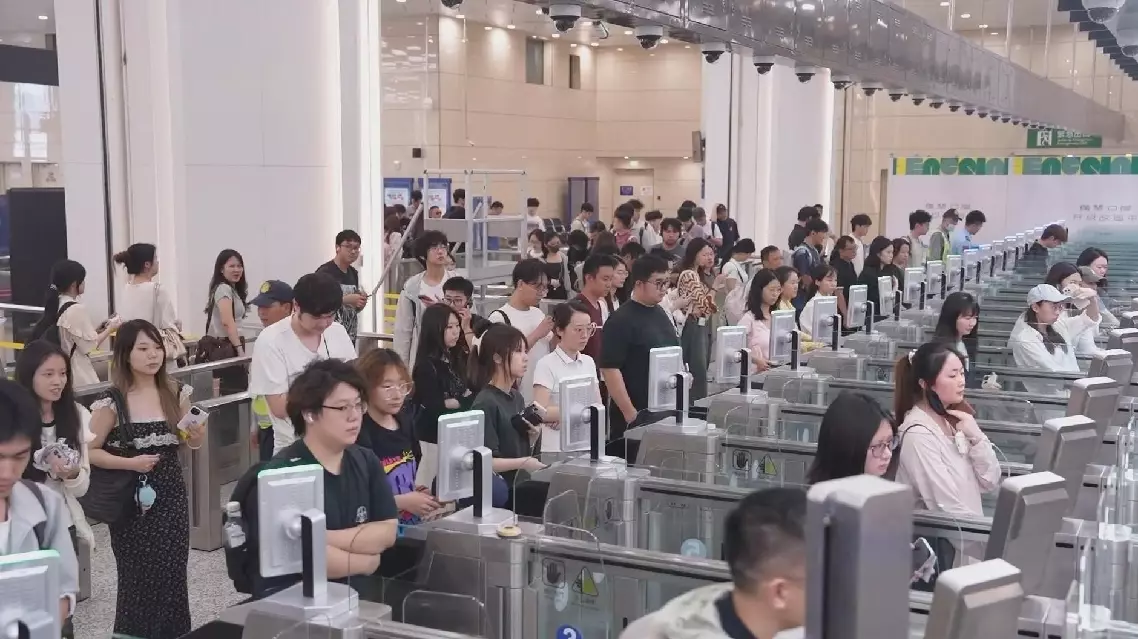
South China's Hengqin Port emerges as busiest Greater Bay Area gateway
The ongoing China-ASEAN Expo serves as a bridge for China and the Association of Southeast Asian Nations (ASEAN) to boost trade flows, helping both sides reap shared development dividends.
Scheduled to run from Sept 17 to 21 in Nanning City of south China's Guangxi Zhuang Autonomous Region, the event draws more than 3,400 exhibitors from over 70 countries and regions.
This year, Timor-Leste is participating for the first time as a full ASEAN member and a co-host of the expo, with participants noting results have exceeded expectations, bolstered by China's vast market.
"I brought 60 packages of 250-gram coffee, which would be sold out in one day. Now I'm thinking that China market is open for everybody and it's very huge," said an exhibitor from Timor-Leste.
Participants also hailed the construction of China's Pinglu Canal, which officially opened to traffic on Wednesday.
The 134.2-km-long canal runs from Hengzhou, a county-level city in Guangxi, to the Beibu Gulf, the closest maritime outlet for much of southwest China.
The canal becomes a cost-competitive river-sea intermodal shortcut connecting ASEAN producers with the vast consumer market in southwest China, said the participants.
"In the past, shipments into the southwest China usually went by sea to Guangzhou and then overlands. Too many handover made it hard to keep products fresh. Losses were high and transit time was unreliable. Now that the canal is open, we can enter [the] Guangxi [Zhuang Autonomous Region] directly from the Beibu Gulf and move on to Yunnan, Guizhou and Sichuan restaurants, faster onto the supermarket shelves and tables in the southeast [part of China]," said an exhibitor from Vietnam.
With the formal signing of the China-ASEAN Free Trade Area (FTA) 3.0 Upgrade Protocol in Oct 2025, bilateral cooperation has expanded beyond economic and trade areas to emerging fields such as the digital economy and the green economy.
"I am looking for an investor to develop agriculture and integrated tourism with us in Malaysia," said an exhibitor from Malaysia.
Economic ties between China and ASEAN have continued to deepen. Bilateral trade topped 1 trillion U.S. dollars for the first time in 2025, totaling 1.05 trillion dollars, up 7.4 percent year on year. In the first seven months of 2026, trade between the two sides reached 744.41 billion dollars, an increase of 24.7 percent year on year and accounting for 21.8 percent of China's total foreign trade.
China has remained ASEAN's largest trading partner for 17 consecutive years, while ASEAN has been China's largest trading partner for six successive years.
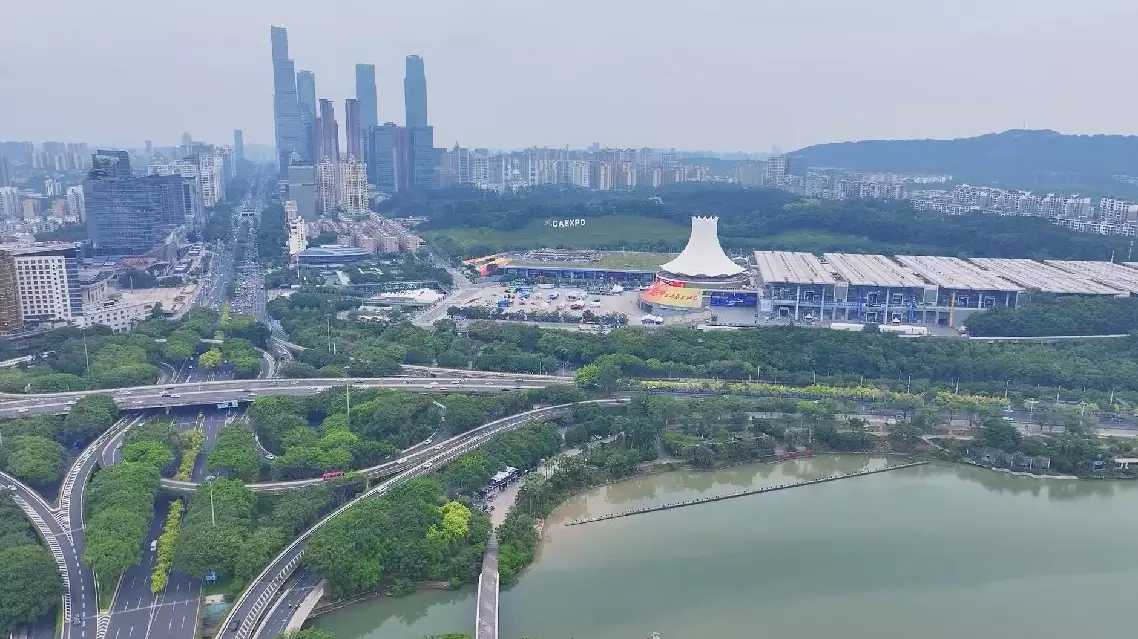
China-ASEAN Expo boosts bilateral cooperation, delivers shared dividends