Skip to Content Facebook Feature Image

Here's what we know about security measures at the White House Correspondents' Association dinner

News

Here's what we know about security measures at the White House Correspondents' Association dinner
News

News

Here's what we know about security measures at the White House Correspondents' Association dinner

2026-04-26 13:35 Last Updated At:13:40

WASHINGTON (AP) — The suspect detained after a shooting at the White House Correspondents' Association dinner is believed to have made it past the outermost layer of security at the event at which President Donald Trump was scheduled to speak because he was a guest of the hotel, officials said Saturday.

The shooting suspect was identified as Cole Tomas Allen, 31, of Torrance, California, two law enforcement officials told the AP. Officials told reporters after the incident that Allen was armed with a shotgun, a handgun and multiple knives.

Security for the annual event is always tight when the president attends, especially given the venue’s history — 45 years ago, the Washington Hilton was the site of an attempted assassination of President Ronald Reagan — and law enforcement argued that their “multi-layered protection” worked as designed. Still, the incident was sure to set off more questions about security around the president and political events in the wake of high-profile acts of political violence in recent years.

Here's what we know about the security of the correspondents' dinner.

The interim police chief for Washington's Metropolitan Police Department, Jeffery Carroll, told reporters Saturday evening that investigators believe that the suspect was staying in the hotel and that appears to be how he was able to enter the hotel at the time of the event.

The hotel was closed to the public beginning at 2 p.m. Saturday in anticipation of the dinner which began at 8 p.m. Outside, dozens of protesters gathered in the rain — mostly directing their criticism at the media attending the event.

Access to the hotel was restricted to hotel guests, people with tickets to the dinner itself, an invitation to one of the receptions that are held at the hotel before or after the dinner, or documents from the White House Correspondents' Association indicating affiliation with the dinner.

The 2,300 guests at the event in the hotel's cavernous subterranean ballroom had to pass through several additional checks to enter the room, including showing tickets to association volunteers and hotel staff and passing through magnetometers manned by the Secret Service and Transportation Security Administration.

It was not immediately released when the suspect checked into the hotel. Security camera footage released by Trump to social media shortly after the incident shows the gunman running past security officers who appear to be disassembling the metal detectors. Once the president was seated in the ballroom, additional attendees were not permitted to enter the secured area, which is why they were taking them down.

“It shows that our multi-layered protection works,” Secret Service director Sean Curran said. His comments were echoed by Carroll, who said the security plan for the evening was developed by the Secret Service and “that security plan did work this evening.”

Inside the ballroom for the dinner itself there were further security measures.

The U.S. Secret Service maintained another perimeter around the president that included a buffer separating him and others seated at the head table from the rest of the attendees. Armored plates were hidden under the table where Trump was seated. Secret Service agents were at their posts in front of the stage and in its wings, as were heavily armed counter-assault agents ready to respond to threats. Security details for dozens of other high-profile attendees were also in the ballroom.

A spokesperson for the hotel directed questions about their security measures to the U.S. Secret Service.

The hotel itself has a long presidential history, and everyday people have regularly booked rooms or filled the lobby bar to watch people at an event that attracts Washington's elite and has also drawn celebrities like George Clooney and Kim Kardashian as well as hosts including Jimmy Kimmel and Trevor Noah.

Although known for the correspondents' dinner, the hotel regularly hosts large events in the nation's capital, especially those that feature the president. It was the site of the shooting of Reagan by John Hinckley Jr. on March 30, 1981.

Reagan was returning to his limousine after a speaking engagement when Hinckley shot him with a revolver, seriously wounding him. Hinckley believed the attack would impress the actress Jodie Foster.

After that incident, the hotel built extensive security modifications specifically to accommodate the president, including a secured garage designed to fit the presidential limo which leads to a dedicated elevator and staircase to ferry them to a secured suite reserved for their personal use.

The suite includes a reserved bathroom that the hotel traditionally adorns with monogrammed towels for the president for the handful of times they are in the space every year.

Because of the venue's long presidential history, the Secret Service has long used the annual event to put some agents through their paces because the venue has been extensively studied by the agency for decades.

However, since the 2017 mass shooting in Las Vegas, many major hotels have also tightened security protocols, in some cases adopting measures such as periodic room checks or policies aimed at flagging extended privacy requests. It was not immediately clear when the person involved Saturday checked into the hotel, or whether any such measures would have had any bearing in this case.
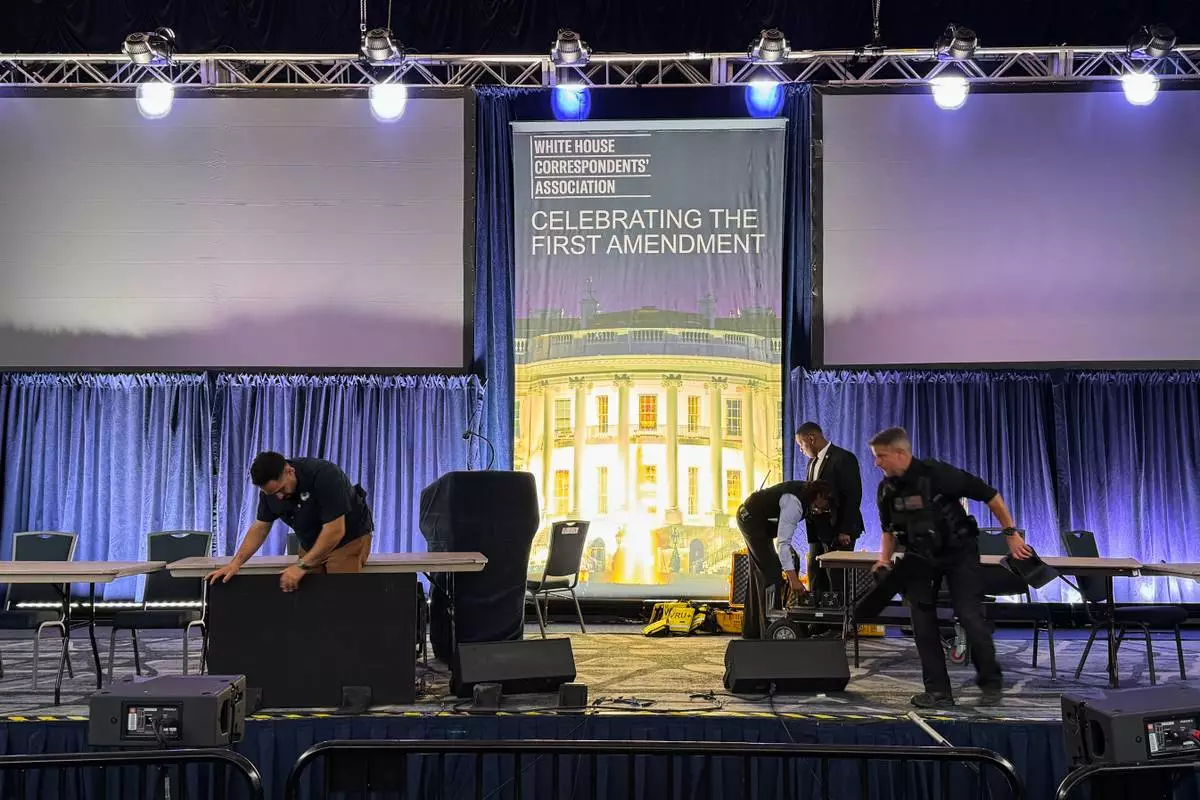
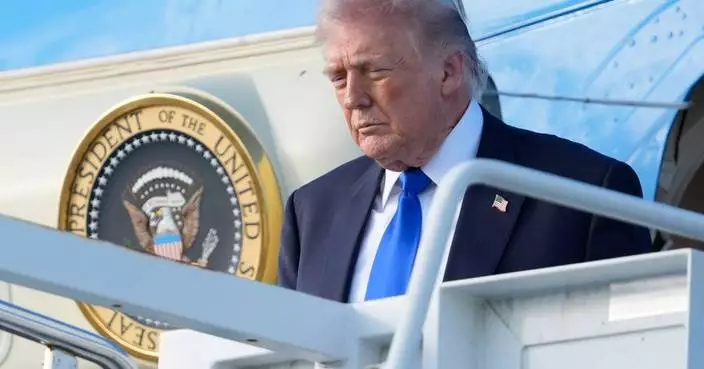
Staff clean up after a shooting incident at the White House Correspondents Dinner, Saturday, April 25, 2026, in Washington. (AP Photo/Mark Schiefelbein)

Staff clean up after a shooting incident at the White House Correspondents Dinner, Saturday, April 25, 2026, in Washington. (AP Photo/Mark Schiefelbein)
GREEN BAY, Wis. (AP) — Green Bay’s confidence in its returning players was evident from the way the Packers approached this week’s draft.

With virtually all their starting positions already settled, the Packers made just six draft selections to match their lowest total in franchise history.

It represented a major contrast for general manager Brian Gutekunst, who had averaged 10 picks over his previous eight drafts.

“I’ve talked a little about (how) I like the depth of our football team,” Gutekunst said. I like the way our roster is shaping up. Yeah, I would have loved to have more. But the board didn’t line up like that would have been a good thing for us."

The other years in which the Packers had only six draft selections were 2001, 2002 and 2004. That 2004 draft also marked the only other time Green Bay selected just one offensive player.

Green Bay’s lone offensive draft pick in 2004 was the seventh-round selection of guard Scott Wells. This year the only offensive player Green Bay selected was Kentucky lineman Jager Burton in the fifth round at No. 153 overall.

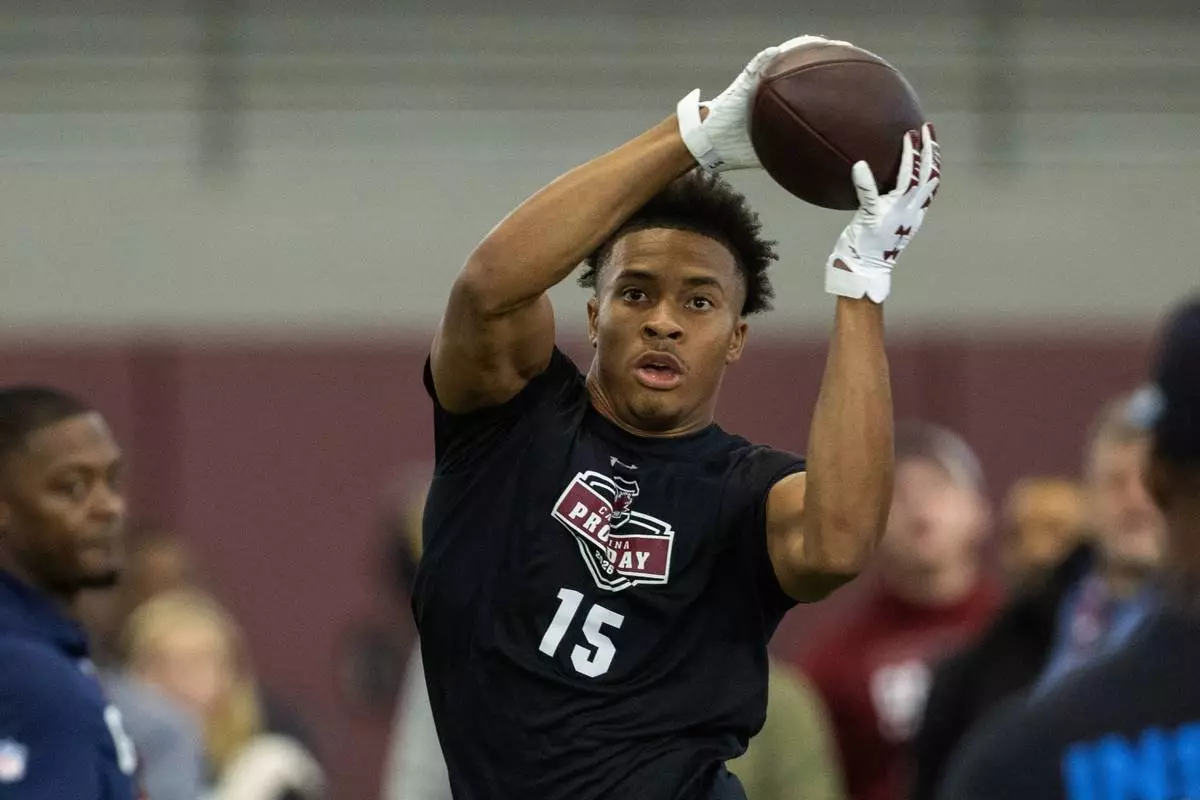
The Packers focused on adding defensive depth to help new coordinator Jonathan Gannon. Green Bay selected South Carolina cornerback Brandon Cisse in the second round (No. 52 overall), Missouri defensive tackle Chris McClellan in the third (No. 77), Penn State edge rusher Dani Dennis-Sutton in the fourth (No. 120) and Alabama cornerback Domani Jackson in the fifth (No. 201).

Green Bay traded its 2026 and 2027 first-round picks to Dallas last August as part of the package to acquire All-Pro pass rusher Micah Parsons. The Packers also sent a fifth-round pick to Tampa Bay move up seven spots in the second round to take McClellan. They traded their two seventh-round picks to Seattle for a second sixth-round selection that they used on Florida kicker Trey Smack (No. 216).

Smack was the only kicker drafted. He will compete with incumbent Brandon McManus, who signed a three-year, $15.3 million contract last year.

“It’s a surreal feeling,” Smack said. “I’ve still got the shakes a little bit. I’m like, ‘Wow is this really happening right now?’ ”

McManus missed two field goals and an extra-point attempt in Green Bay’s 31-27 wild-card playoff loss at Chicago.

Green Bay also has Lucas Havrisik, who went 4 of 4 on field-goal attempts while filling in for an injured McManus last season.

“Just like any other position, you can never have enough competition," coach Matt LaFleur said.

Smack made 82.8% of his field-goal attempts at Florida and went 10 of 13 from at least 50 yards.

The selection of Dennis-Sutton had the apparent approval of Parsons, who also starred at Penn State. Parsons posted on Instagram a post Penn State released after the pick was made.

Dennis-Sutton said he spoke with his new teammate a couple of times when Parsons visited Penn State’s campus.

“Obviously he’s the best in the league and yeah, it’s really cool to be alongside him and get the opportunity to play for the Packers," Dennis-Sutton said.

Dennis-Sutton had 23½ sacks at Penn State, including 8½ each of the past two years. Packers director of player personnel John Wojciechowski said he didn’t expect Dennis-Sutton to remain available in the fourth round.

“It definitely leaves a chip on my shoulder,” Dennis-Sutton said.

Green Bay loves drafting versatile offensive linemen, and the Packers believe they’ve found another one in Burton. He made 47 total starts at three different positions (left guard, right guard and center).

“I don’t really have a preference,” Burton said. “Just whatever is going to help the Packers win games.”

Gutekunst has a history of finding quality offensive linemen on the final day of a draft.

Zach Tom, a 2022 fourth-round pick, is Green Bay’s best offensive lineman. Rasheed Walker, a 2022 seventh-round selection, was a three-year starter at left tackle before leaving for Carolina in free agency. Jon Runyan Jr., a 2020 sixth-round selection, was a three-year starting guard for Green Bay before the New York Giants signed him away.

Green Bay didn’t draft anyone who could back up Jordan Love at quarterback or Josh Jacobs at running back

The Packers had one of the NFL's best backup quarterback situations in the NFL with Malik Willis, who filled in well enough to earn a three-year, $67.5 million contract from the Miami Dolphins. Joining Love on Green Bay’s roster this year are Kyle McCord and Desmond Ridder, who has an 8-10 record in 18 starts.

Green Bay's running backs aside from Jacobs include Chris Brooks, MarShawn Lloyd, Damien Martinez and Pierre Strong Jr. Lloyd, a 2024 third-round pick, has appeared in only one game because of injuries.

Jackson was the nation’s No. 5 prospect in his high school class according to composite rankings of recruiting sites compiled by 247Sports, but he had an inconsistent college career that included stints at Southern California (2022-23) and Alabama (2024-25).

He was benched for a stretch last season. Jackson said he took comfort from the advice of former Alabama safety Ha Ha Clinton-Dix, who played for the Packers from 2014-18.

“He became a brother to me,” Jackson said. “He just pulled me aside and had real life conversations.”

AP NFL: https://apnews.com/hub/nfl

FILE - South Carolina cornerback Brandon Cisse (15) runs drills during the school's NFL football Pro Day, March 17, 2026, in Columbia, S.C. (AP Photo/Scott Kinser, File)

FILE - South Carolina cornerback Brandon Cisse (15) runs drills during the school's NFL football Pro Day, March 17, 2026, in Columbia, S.C. (AP Photo/Scott Kinser, File)

Recommended Articles