DAMASCUS, Syria (AP) — The first public trial in Syria of officials linked to the rule of former President Bashar Assad opened in Damascus Sunday.
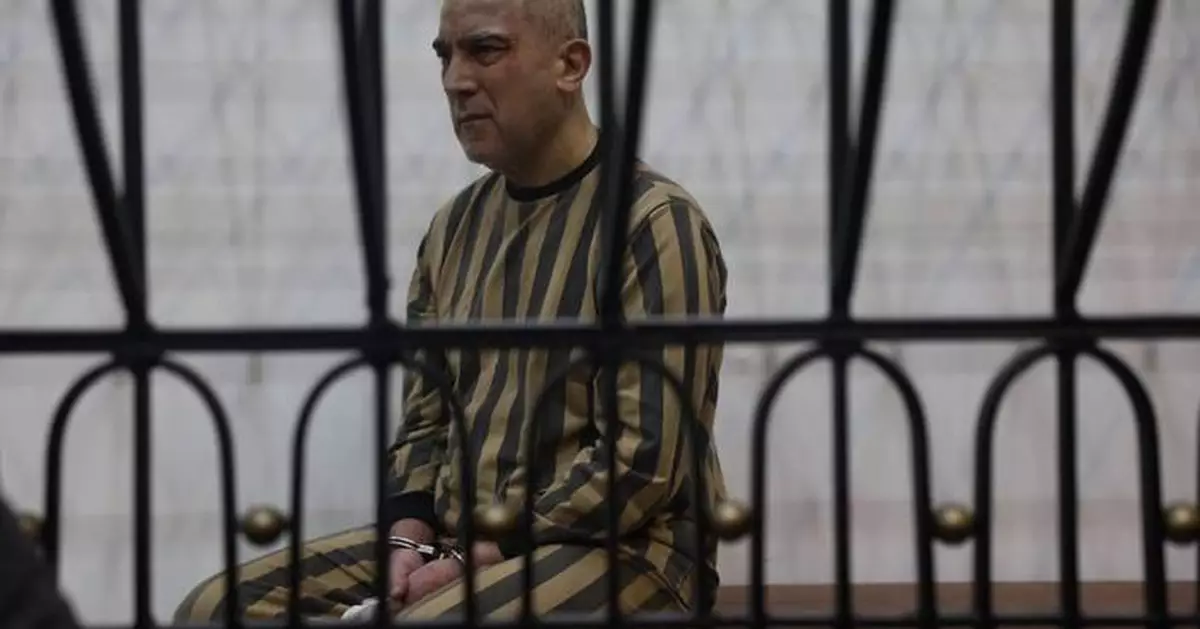
Atef Najib, a former Syrian army brigadier general who was head of the Political Security Branch in southern Syria's Daraa province under Assad and who is also a cousin of the former president, appeared in the courtroom to face charges related to “crimes against the Syrian people,” state-run news agency SANA reported.
Najib was in that position in 2011 when teenagers who scrawled anti-government graffiti on a school wall in Daraa were arrested and tortured. The case became a catalyst for mass protests against the repressive policies of Assad's government security forces.
The protests were met by a brutal government crackdown and spiraled into a 14-year civil war that ended with Assad's ouster in December 2024 in a lightning rebel offensive. Assad fled to Russia, while most members of his inner circle also escaped Syria.
Assad himself and his brother, Maher, former commander of the Syrian military's 4th Armored Division — which Syrian opposition activists have accused of killings, torture, extortion and drug trafficking, in addition to running its own detention centers — were charged in absentia, along with a number of other former high-ranking security officials.
Najib was the only one of the defendants who was arrested and present in person in court Sunday for a preparatory session in the trial, which will continue next month.
Crowds gathered outside the courthouse to celebrate.
The government of interim President Ahmad al-Sharaa has faced criticism over delays in launching a promised transitional justice process. Syria is struggling to heal following 14 years of civil war that left an estimated half a million people dead, millions more displaced, and the country battered and divided.
Authorities now appear to be moving more aggressively to prosecute officials linked to Assad.
Syrian authorities on Friday arrested Amjad Yousef, a former intelligence officer who appeared in a video leaked four years ago that purportedly showed him and his comrades executing dozens of blindfolded and shackled prisoners in the Damascus suburb of Tadamon during the country’s civil war.
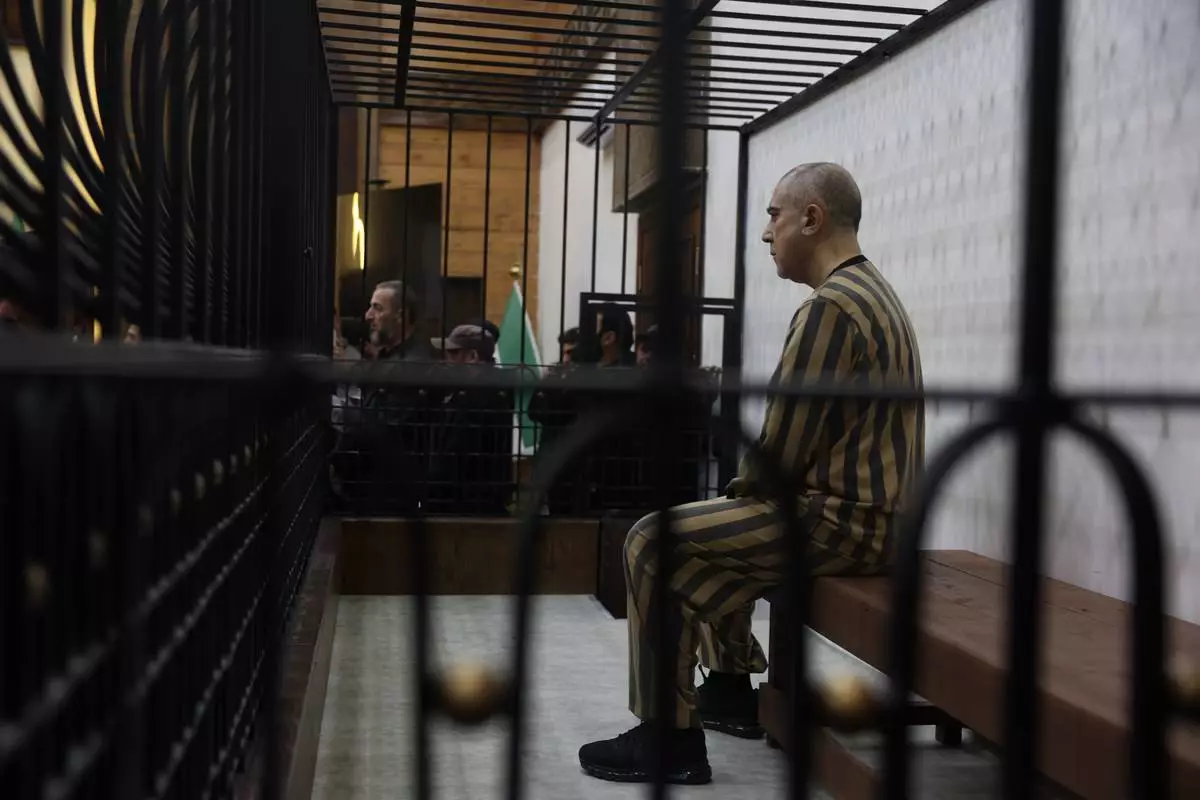
Atef Najib, former head of the Political Security Branch in the Daraa area during Bashar Assad's rule, sits in the defendants' cage during a trial session at the Palace of Justice in Damascus, Syria, Sunday, April 26, 2026. (AP Photo/Ghaith Alsayed)
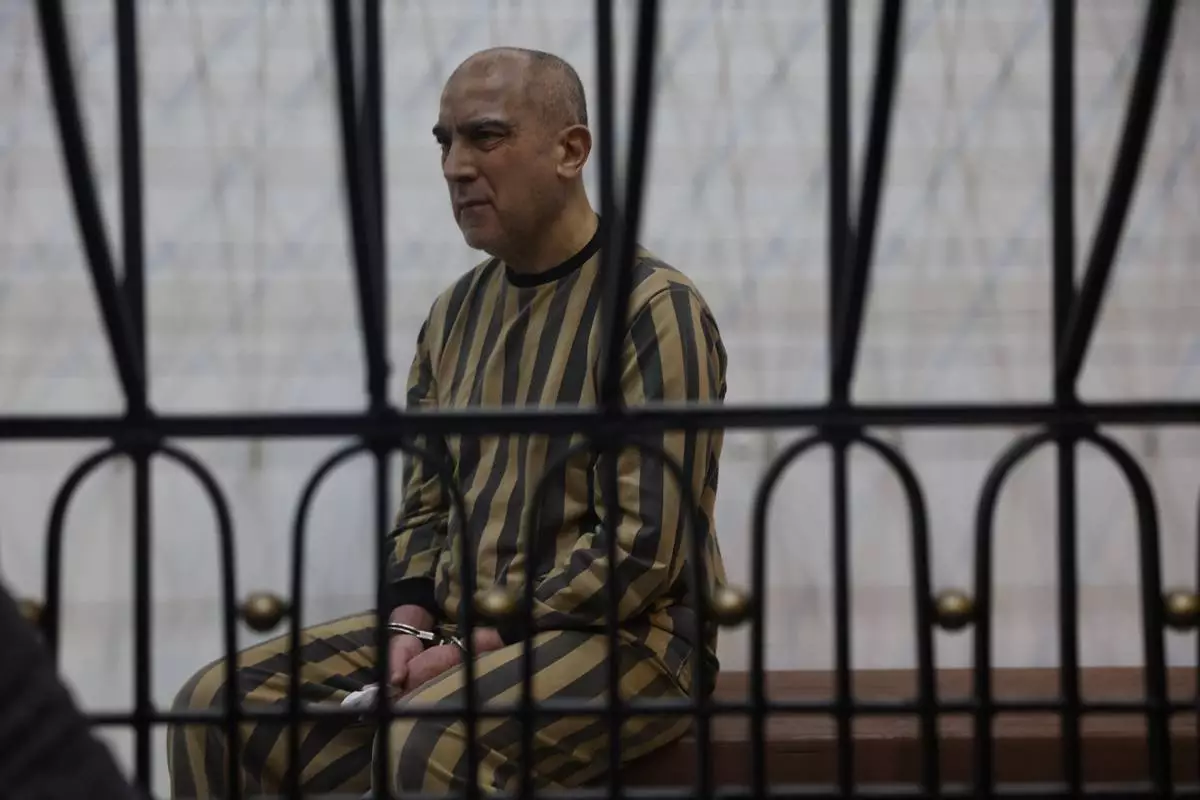
Atef Najib, former head of the Political Security Branch in the Daraa area during Bashar Assad's rule, sits in the defendants' cage during a trial session at the Palace of Justice in Damascus, Syria, Sunday, April 26, 2026. (AP Photo/Ghaith Alsayed)
U.S. President Donald Trump said he told his top envoys Steve Witkoff and Jared Kushner not to travel to Pakistan to negotiate with Iran on Saturday.
“If they want to talk, all they have to do is call!!!” Trump said on social media.
Iran's President Masoud Pezeshkian said his country won’t negotiate while the United States imposes a blockade on its ports. Pezeshkian told Pakistani Prime Minister Shehbaz Sharif during a phone call Saturday night that the U.S. “should first remove operational obstacles, including the blockade,” to allow a new round of negotiations, according to the ISNA and Tasnim news agencies in Iran.
Pakistan’s top political and military leadership is continuing to mediate between the U.S. and Iran, with indirect ceasefire talks still alive despite mounting tensions between the sides, two Pakistani officials said Sunday.
Iranian Foreign Minister Abbas Araghchi left Pakistan on Saturday evening, officials said. Iran’s state-run IRNA news agency said Araghchi is expected back in Pakistan’s capital Islamabad on Sunday.
Trump said Thursday that Israel and Lebanon agreed to extend a ceasefire between Israel and Hezbollah by three weeks after talks at the White House. The meeting was the second high-level negotiation between the two countries this month. The initial 10-day ceasefire had been due to expire Monday.
The Trump administration is placing economic sanctions on a major China-based oil refinery and roughly 40 shipping companies and tankers involved in transporting Iranian oil. The move announced Friday is part of the administration’s threat to impose secondary sanctions on entities doing business with Iran in an effort to cut off Iran’s oil exports, which are a key source of its revenue.
Airlines worldwide have begun canceling flights as the war in the Middle East strains jet fuel supplies and pushes up prices. Experts have offered information to travelers about what to do if a flight is canceled.
Here is the latest:
Syed Mohammad Ali, an independent political analyst in Pakistan, said indirect talks between the United States and Iran were progressing despite U.S. President Donald Trump’s decision not to send envoys to talks that had been set to begin this weekend.
“The delay in the second round of Islamabad talks must not be seen as a setback to ceasefire negotiations and peace efforts, which remain on track,” Ali told The Associated Press on Sunday.
Ali said ongoing tensions between Washington and Tehran cannot be eased overnight and the negotiation process “requires wisdom and patience from both sides.”
“This is a sensitive and complicated process, and there will be ups and downs, which are normal in such matters. But the good thing is that the ceasefire is holding, and both sides have a desire to end the conflict in a way that does not backfire at home,” Ali said.
Pakistan’s top political and military leadership is continuing to mediate between the United States and Iran, with indirect ceasefire talks still alive despite mounting tensions between the sides, two Pakistani officials said Sunday.
Iranian Foreign Minister Abbas Araghchi is expected to arrive in Pakistan’s capital Islamabad on Sunday evening for a second visit in as many days after a short trip to Oman.
Araghchi was in Islamabad on Saturday and presented Tehran’s position on ending the regional conflict to Pakistan Prime Minister Shehbaz Sharif, army chief Field Marshal Asim Munir, Foreign Minister Ishaq Dar and other senior officials.
There were no immediate plans for U.S. envoys to return for talks, according to the Pakistani officials, who spoke on condition of anonymity because they were not authorized to speak to the media.
Israeli Prime Minister Benjamin Netanyahu, a close ally of U.S. President Donald Trump, said Sunday morning he was shocked by what he called an “attempted assassination” at an event attended by Trump.
Trump was uninjured and rushed off the stage at the White House Correspondents Dinner on Saturday night after a man armed with guns and knives stormed the lobby outside the event in Washington.
Police believe the man opened fire and acted alone but did not say who was his intended target or describe a motive. He was taken into custody.
One officer was shot in a bullet-resistant vest but was recovering, officials said.
“We send our wishes for a full and speedy recovery to the wounded police officer and salute the US Secret Service for their swift and decisive action,” Netanyahu wrote on X.
Life began returning to normal in Pakistan’s capital on Sunday morning.
Authorities in Islamabad eased near-lockdown measures imposed during a week of heightened security prior to planned ceasefire talks between the United States and Iran.
The restrictions enforced across Islamabad and the nearby garrison city of Rawalpindi disrupted daily life for hundreds of thousands. Commuters were forced to make long detours, traffic thinned along major arteries and parents struggled to reach schools.
By Sunday, barriers were being lifted and traffic was gradually building on the city’s main roads. Residents described a sense of relief after days of gridlock and uncertainty.
The government said in a social media post late Saturday that tourist destinations, parks and bus terminals were being reopened.
Security remained tight around the heavily guarded Red Zone, home to key government buildings and the site where U.S.-Iran talks were held earlier this month.
Iran on Sunday hanged a man who was convicted of carrying out terrorist activities in the southeastern province of Sistan and Baluchistan, state media reported.
Amer Ramesh was hanged after the country’s Supreme Court upheld a death sentence issued by a primary court, according to Iran’s judiciary news outlet, Mizanonline.
Mizanonline did not report where he was hanged or when and where he was arrested.
Mizanonline said Ramesh received training in a regional country and was a member of militant group Jaish al-Adl, which reportedly aims to achieve greater rights for people in the Baloch ethnic group.
Iran has executed other people over similar charges and in recent weeks has hanged more than a dozen people accused of terrorist activities.
Iran President Masoud Pezeshkian said his country won’t negotiate while the United States imposes a blockade on its ports, according to Iranian media.
Pezeshkian told Pakistani Prime Minister Shehbaz Sharif during a phone call Saturday night that the U.S. “should first remove operational obstacles, including the blockade,” to allow a new round of negotiations, the ISNA and Tasnim news agencies reported.
The Pakistani premier described the call as a “warm and constructive discussion.”
Iranian Foreign Minister Abbas Araghchi concluded a one-day trip to Pakistan’s capital Islamabad on Saturday after meeting with Pakistani military and government officials.
The trip did not produce a breakthrough in efforts to relaunch negotiations after U.S. President Donald Trump canceled a planned trip by his envoys to Islamabad.
Iran’s state-run IRNA news agency said Foreign Minister Abbas Araghchi will return to Pakistan after his current visit to Oman on his way to visiting Russia.
The report said he was expected to be back in Pakistan's capital Islamabad on Sunday and would join other members of his delegation who had gone to Tehran for consultations and “instructions on the topics related to the end of the war.”
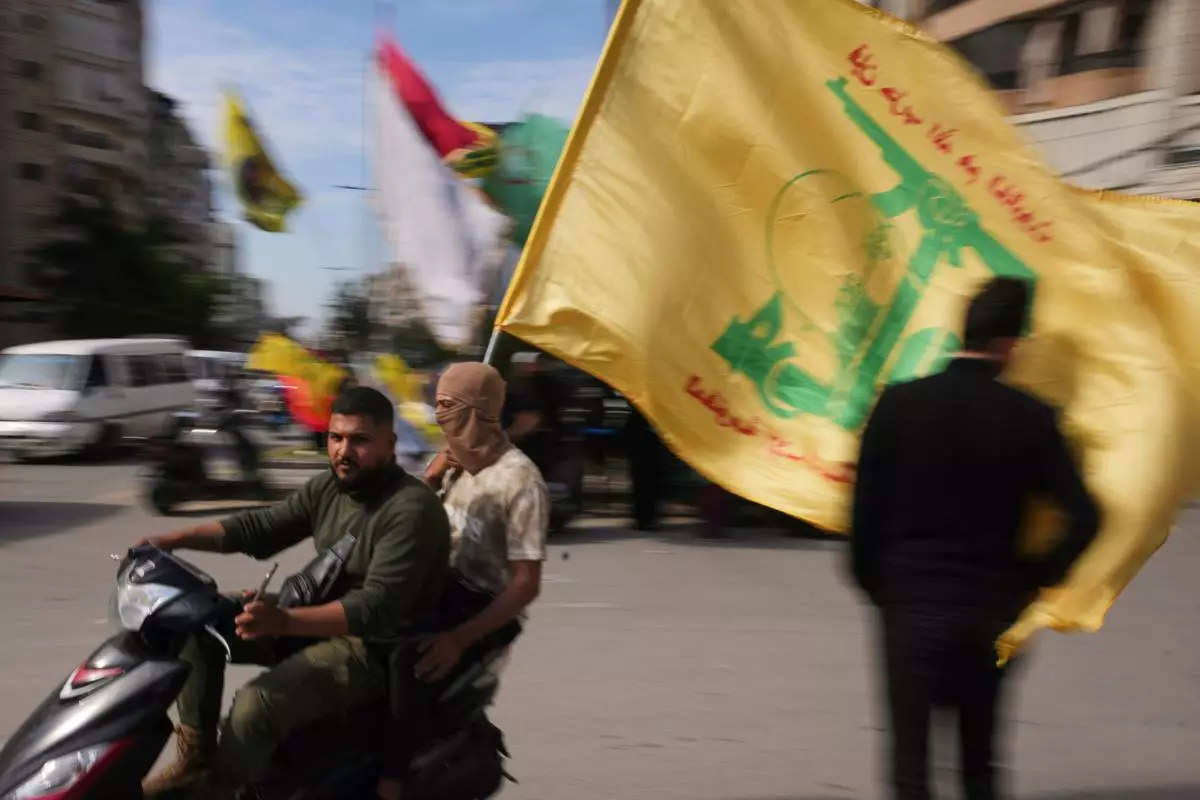
Men ride a scooter while waving a Hezbollah flag during a small gathering in Dahiyeh, Beirut's southern suburbs, Lebanon, Saturday, April 25, 2026. (AP Photo/Hassan Ammar)
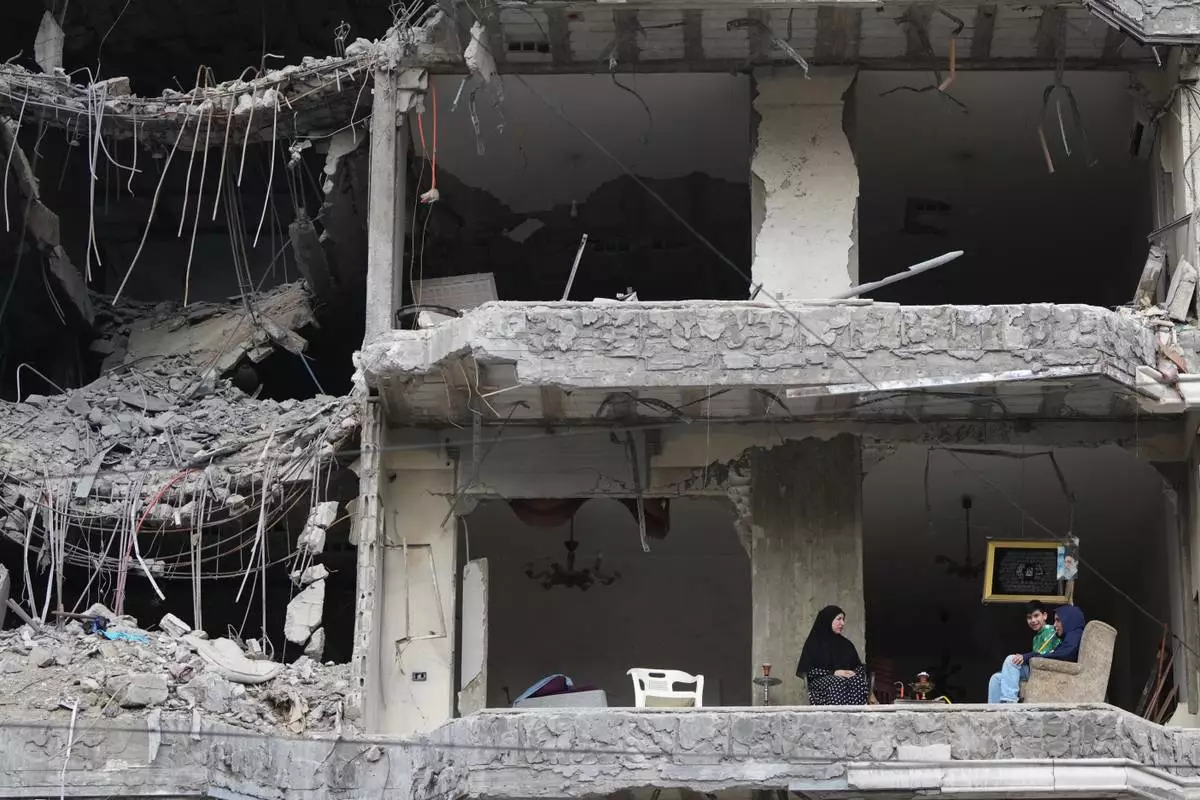
The wife and children of Fadi Al Zein, who lost both his homes in Israeli strikes in his village of Khiam and in Dahiyeh, sit on the balcony of their heavily damaged apartment building in Beirut's southern suburbs, Lebanon, Saturday, April 25, 2026. (AP Photo/Hassan Ammar)
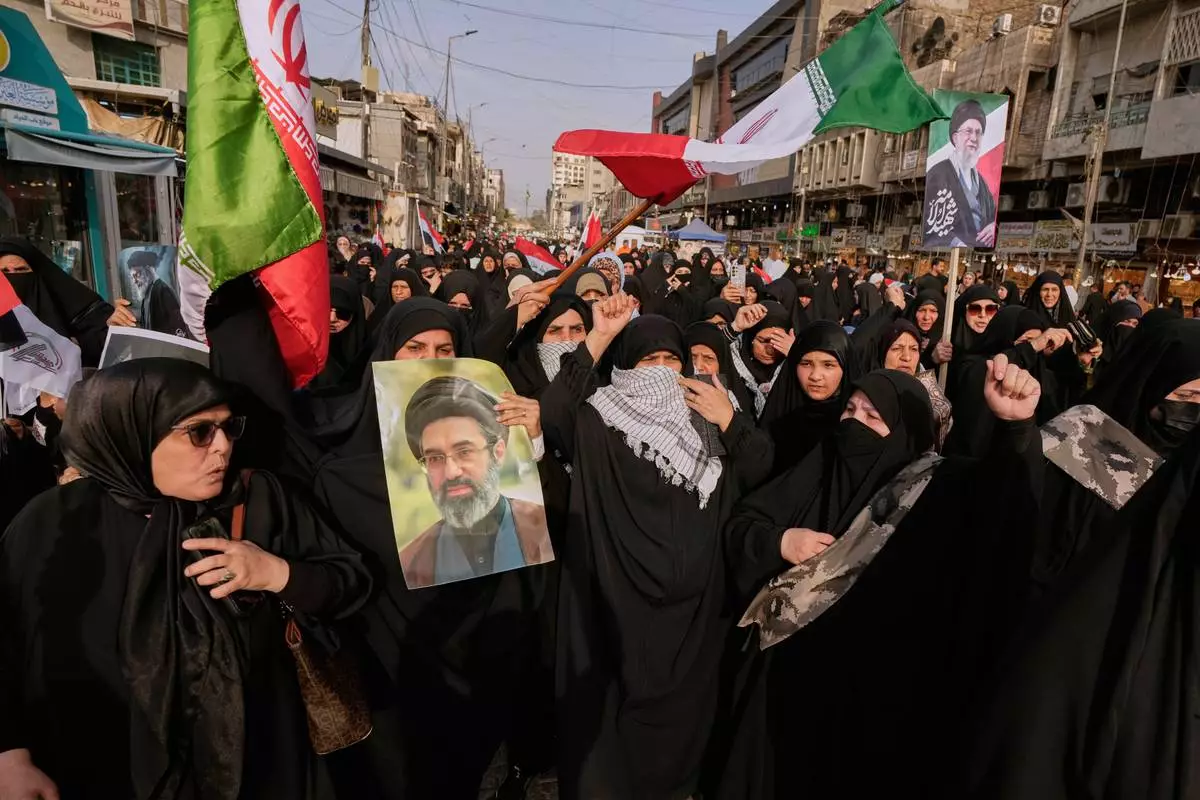
Iraqis Muslim women hold portraits of Iran's late Supreme Leader Ayatollah Ali Khamenei and his son Ayatollah Mojtaba Khamenei, during a protest against U.S. and Israeli attacks on multiple cities across Iran, in Baghdad, Iraq, Saturday, April 25, 2026. (AP Photo/Hadi Mizban)
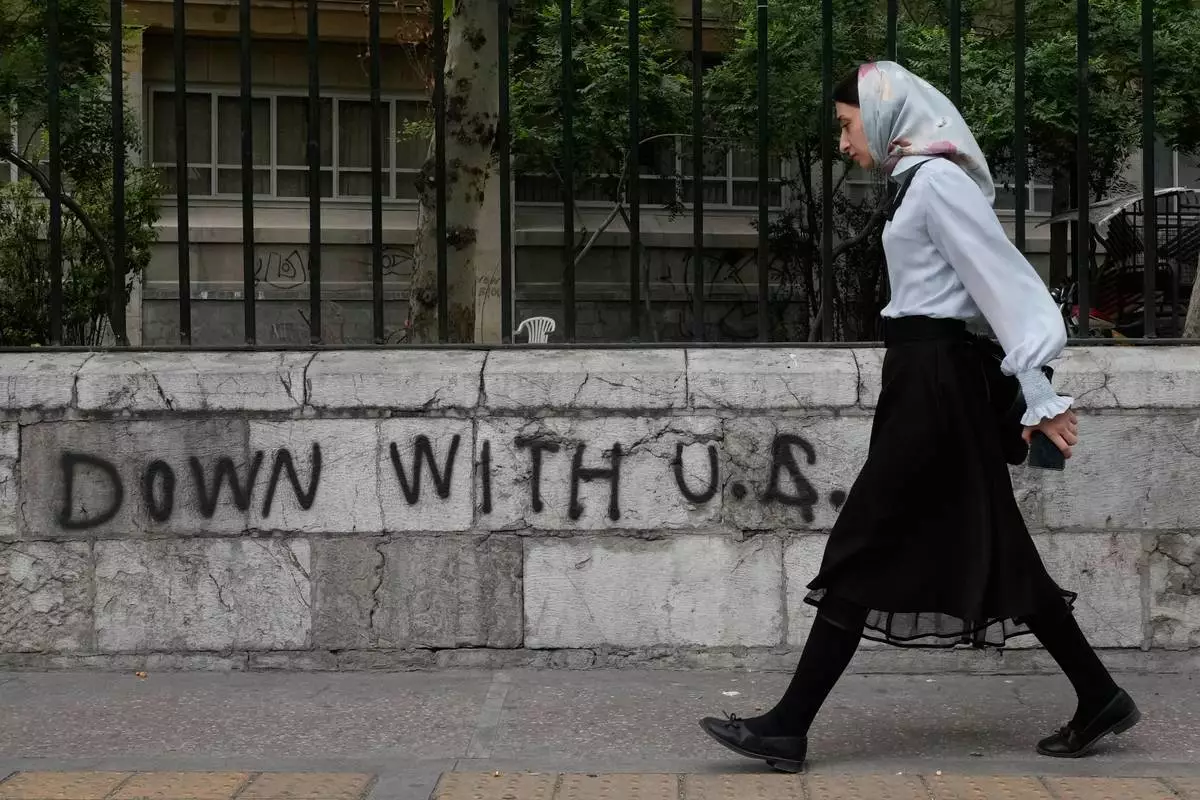
A woman walks past an anti-U.S. graffiti painted on the wall of the Tehran University on Enqelab-e-Eslami (Islamic Revolution) street in downtown Tehran, Iran, Saturday, April 25, 2026. (AP Photo/Vahid Salemi)
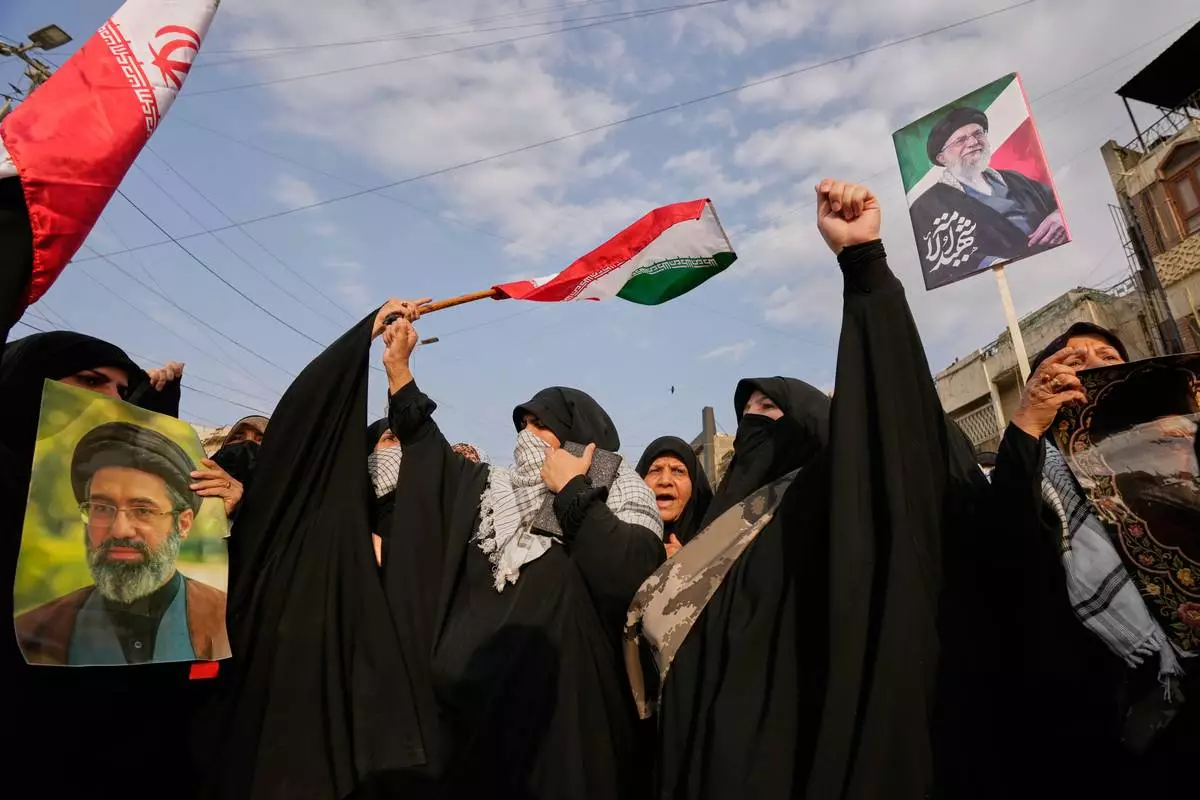
Iraqi Muslim women hold portraits of Iran's late Supreme Leader Ayatollah Ali Khamenei and his son Ayatollah Mojtaba Khamenei, during a protest against U.S. and Israeli attacks on multiple cities across Iran, in Baghdad, Iraq, Saturday, April 25, 2026. (AP Photo/Hadi Mizban)