BOSTON (AP) — For decades, the 1990 theft of 13 artworks from the Isabella Stewart Gardner Museum — now valued at more than $500 million — has remained unsolved.
It remains the largest art theft in history — far surpassing more recent museum thefts, including a daylight heist at the Louvre that involved far fewer works and was resolved more quickly. In 2013, the FBI said it knew who was responsible for the Boston museum heist but declined to name them, fueling speculation that persists today.
A former FBI agent who led the investigation for more than two decades is now offering the first detailed account of how investigators reached that conclusion — and publicly identifying the men he believes were involved. In a new book, Geoff Kelly traces how the artworks moved through criminal networks, where violence took the lives of key suspects and witnesses, and challenges long-circulating theories by revisiting key details.
The irony at the center is that Gardner’s intention was for the museum to remain frozen in time, stipulating in her will that nothing in the Venetian palazzo-inspired building would be changed after her death. Gardner, who lived in the museum and died there in 1924, intended for the paintings, sculptures and architectural fragments to remain exactly as she had arranged.
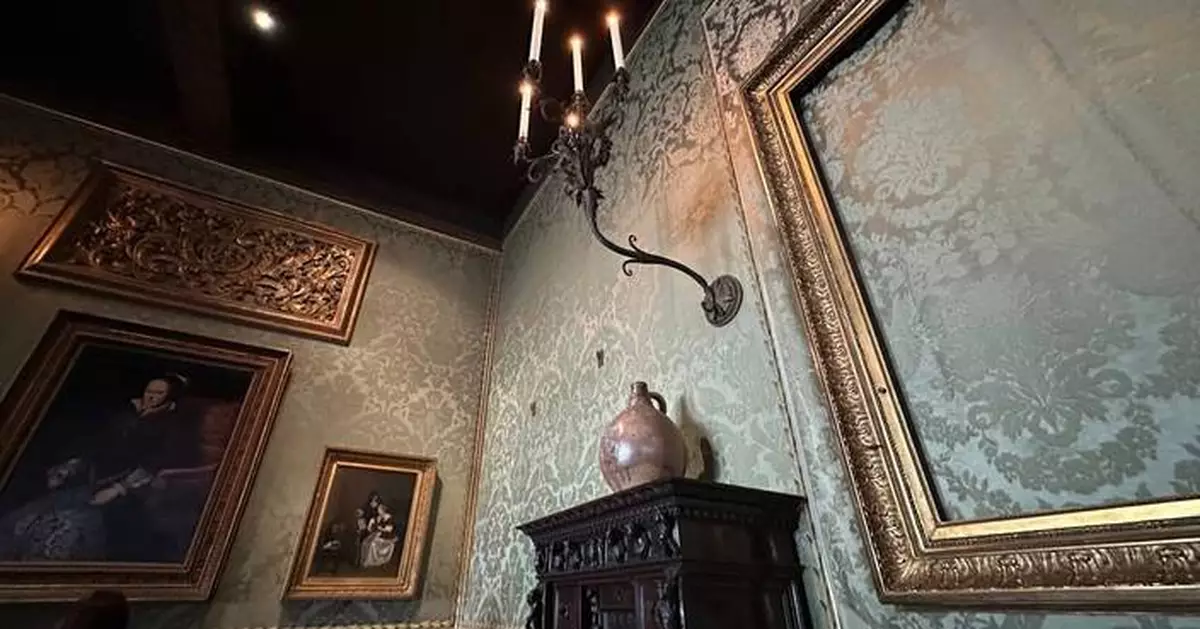
The empty gilded frames of the missing paintings still hang in the museum today — silent witnesses to what was taken.
Early on March 18, 1990, as Boston wound down from St. Patrick’s Day celebrations, two men dressed as police officers arrived at the museum and convinced a security guard to let them in, violating protocol.
The men handcuffed the guards in the basement and made their way to the museum’s Dutch Room, where they cut Vermeer’s “The Concert” and Rembrandt’s “Christ in the Storm on the Sea of Galilee" from their frames, also taking works by Degas and Manet.
They also took a Napoleonic eagle finial — a decorative metal piece of comparatively little value that investigators later found puzzling — and the museum’s security videotapes.
The museum offered a $5 million reward that they then doubled a decade later for information leading to the recovery of the works.
Some tips pointed to the Irish Republican Army and to Boston mob figures, including notorious crime boss Whitey Bulger.
Kelly followed one lead to France, where he watched through binoculars as FBI agents, posing as wealthy intermediaries, lounged on a yacht — drinking champagne and eating strawberries — in an effort to draw out suspected Corsican mob figures.
Closer to home, agents searched houses across New England, relying heavily on informants. A triple murderer known as “Meatball” who was terminally ill secretly recorded conversations with suspected associates in hopes of earning money for his family.
But none of the tips led to the paintings.
In the decades since the robbery, several people believed to have ties to the heist were killed, and another died under suspicious circumstances.
Robert “Bobby” Donati, a Boston mob associate long suspected in the case, was found stabbed to death in 1991, his body left in the trunk of a car after his home had been ransacked.
Years earlier, Donati has visited the Gardner with another known art thief, Myles Connor, to scope it out for a robbery and said that if he ever took the museum’s Napoleonic finial, it would be his “calling card.” Years later, a jeweler told investigators Donati tried to sell a finial from the Isabella Stewart Gardner Museum but backed off, saying it was “too hot.”
A separate line of evidence centered on George Reissfelder, who investigators believe owned the getaway car.
Kelly tracked down Reissfelder’s brother, a retired military officer who had initially not believed his brother was involved. He broke down after being shown Manet’s “Chez Tortoni,” saying he recognized it as a painting he himself hung above his brother’s bed.
Reissfelder later died under suspicious circumstances. When investigators searched his home, the painting was gone.
Both men had ties to TRC Auto Electric, a Dorchester shop linked to Charles “Chuck” Merlino’s crew.
Though investigators believed they knew who was responsible, they had a difficult time finding definitive proof.
In its early stages, the FBI assigned a single agent to the case, which Kelly said slowed progress.
“You have to keep in mind when you’re talking about investigations, they come down to dollars and cents,” Kelly said. It was “like pulling teeth” to secure resources. At the time, federal investigators in Boston were heavily focused on violent crime, drug trafficking and organized crime cases.
Kelly said a decision to release surveillance footage despite investigators’ objections became a lasting distraction. With no usable video from the night of the robbery, prosecutors released footage from the night before that showed a museum employee entering the building after his car broke down. Kelly said he objected to the theory that the employee was casing the museum, since that possibility had already been reviewed and dismissed. The footage fueled years of misplaced suspicion, since the man was later determined not to be involved.
Among the questions that linger is whether it was an inside job.
In photos from that night, a museum guard is seen handcuffed in the basement, his head wrapped in duct tape.
Investigators noted that shortly before the robbery, the guard opened a door against policy — one that faced the area where the thieves were later seen waiting — a move investigators considered highly unusual and suspicious.
“It’s the immutable laws of time and space,” Kelly said. “I think that there was enough information back then that he could have been charged. Would it be enough to convict him? I don’t know.”
By the time investigators examined those questions more closely, Kelly said, the statute of limitations had expired, leaving them with little leverage to compel cooperation.
The museum guard, Rick Abath, denied any involvement in the theft. He died in 2024.
Kelly personifies the missing artworks and describes them as “perfect fugitives.”
“They don’t go to the doctor. They don’t get stopped for speeding. They don’t leave fingerprints,” he said. “They can just disappear.”
Unlike human fugitives, he said, artworks can also be copied.
Over the years, that has meant chasing down false leads — including paintings spotted in a Reno antique market, hanging in private homes and even one that appeared in an episode of the TV show “Monk.”
Because the works are so recognizable, it's nearly impossible to sell them publicly.
“Stealing the artwork from the museum, that’s the easy part,” Kelly said. “Profiting from it, that’s the difficult part.”
He imagines the paintings will surface one day — outliving those who carried out the heist.
“I have no doubt they still exist,” he said
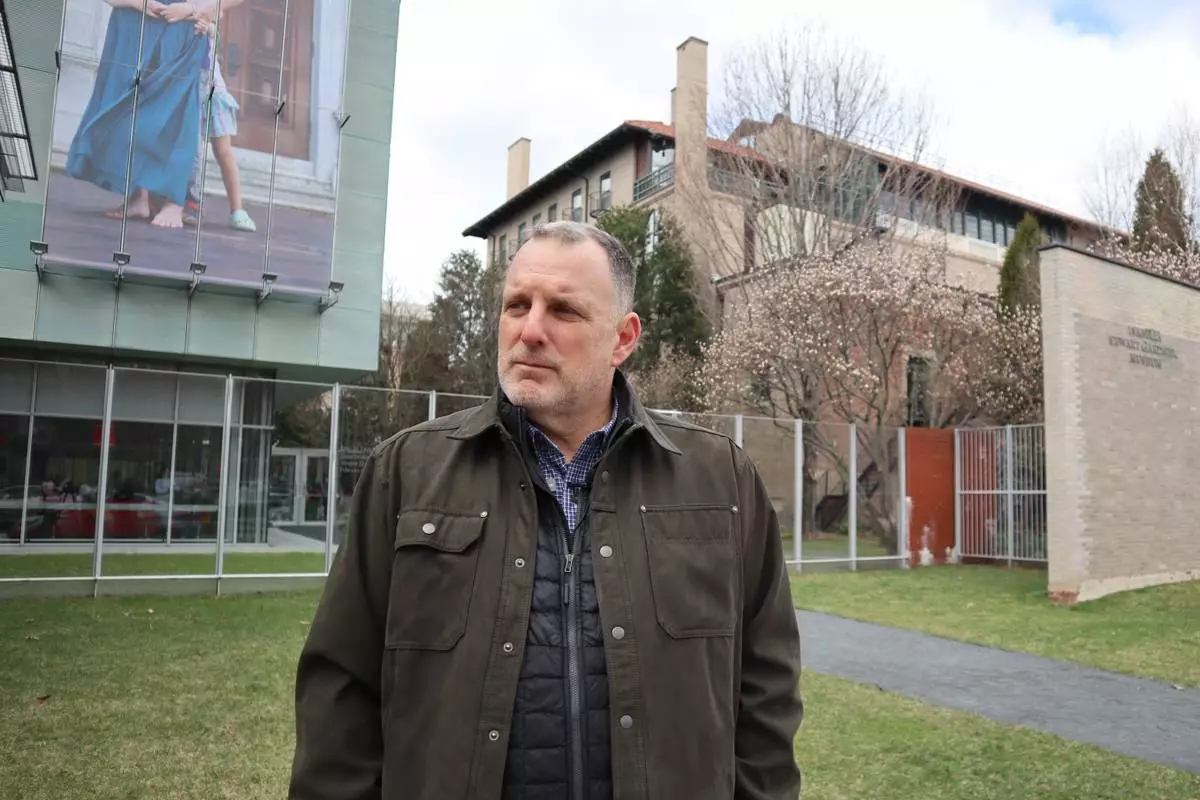
Geoff Kelly, a former FBI agent who spent decades investigating the 1990 art heist at the Isabella Stewart Gardner Museum, stands outside the museum on April 6, 2026, in Boston. (AP Photo/Leah Willingham)
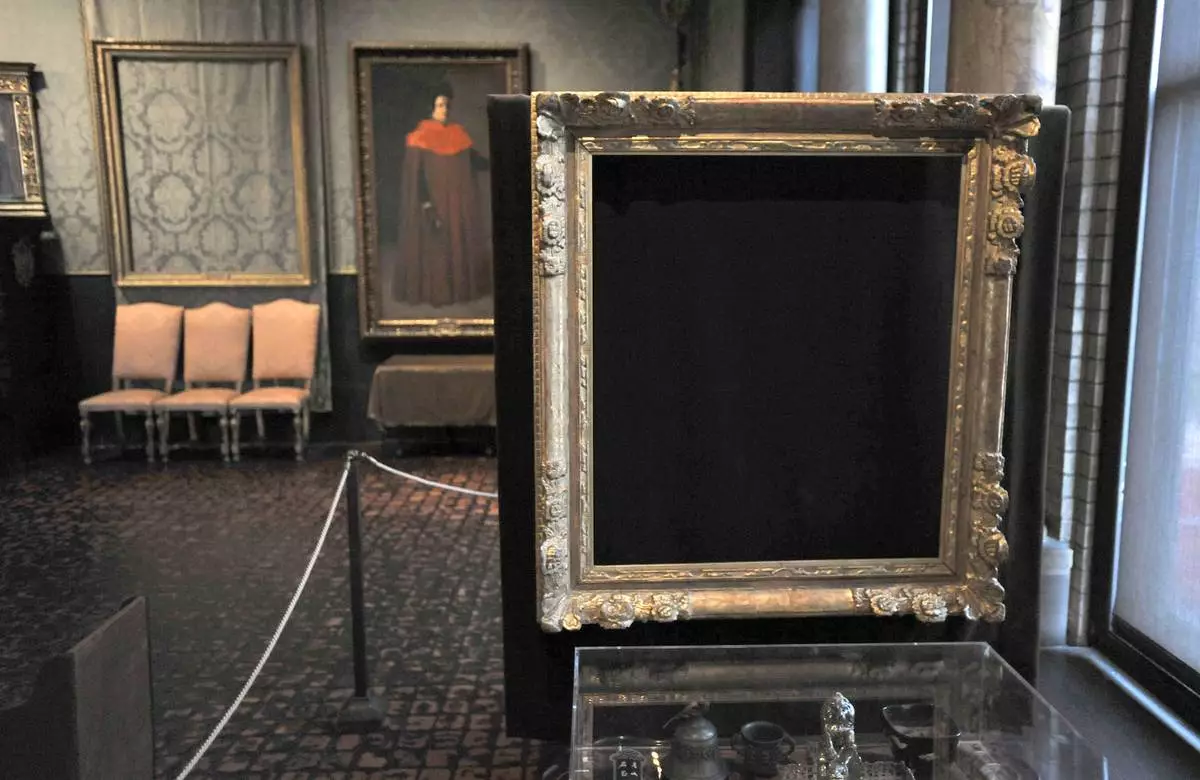
FILE - Empty frames from which thieves took "Storm on the Sea of Galilee," left background, by Rembrandt and "The Concert," right foreground, by Vermeer, remain on display at the Isabella Stewart Gardner Museum in Boston, n this Thursday, March 11, 2010. (AP Photo/Josh Reynolds, File)
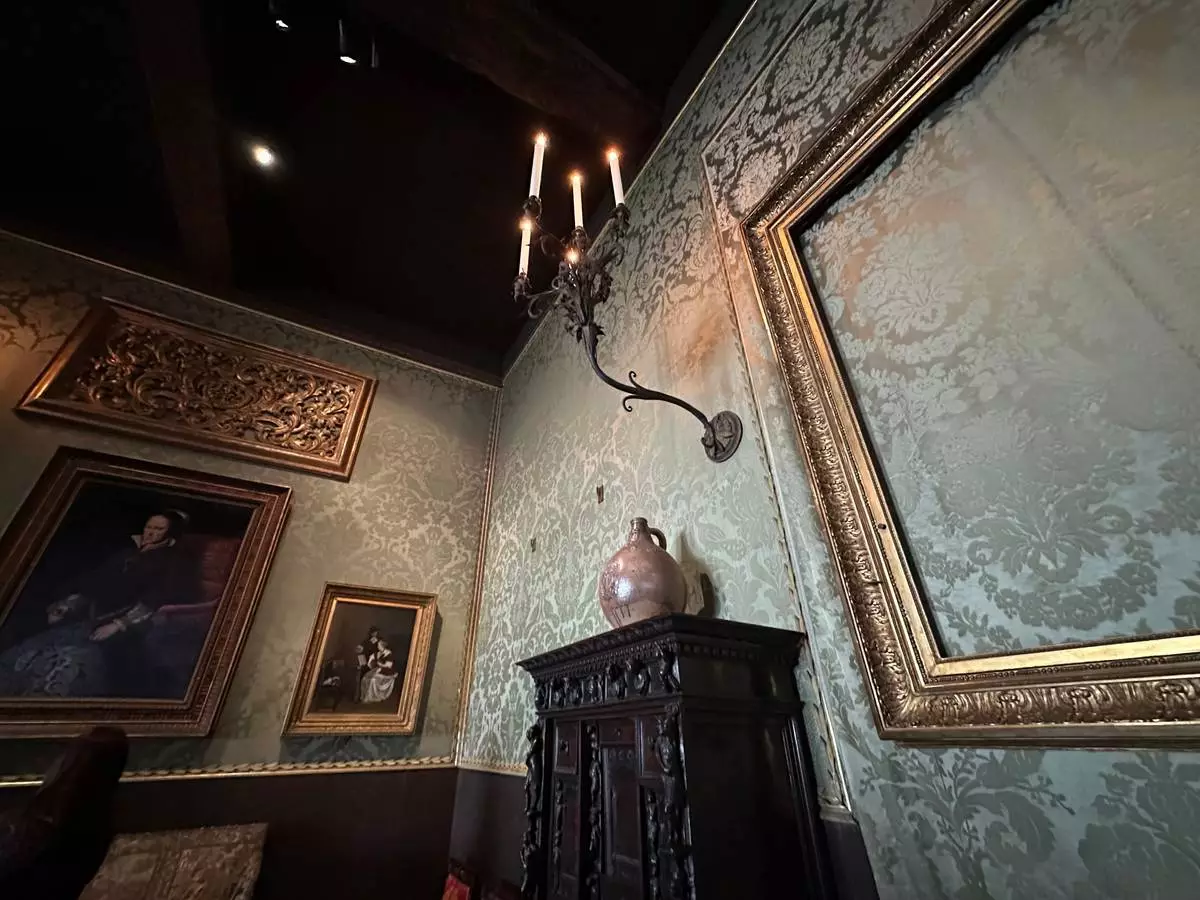
An empty frame hangs on patterned green walls in the Dutch Room at the Isabella Stewart Gardner Museum, where artworks were stolen in a 1990 art heist, April 9, 2026, in Boston. (AP Photo/Leah Willingham)
COLUMBUS, Ohio (AP) — Ohio has a contested Republican primary for governor fast approaching, but there are few signs that the top candidate sees it as a competitive race.
Vivek Ramaswamy has parlayed his national name recognition, tech industry connections and alliance with President Donald Trump into a record fundraising haul that he is tapping for advertising spots aimed at the November election. He is using campaign rallies and advertising to criticize his would-be general election opponent, Democrat Amy Acton, the state’s former public health director.
Ramaswamy feels so assured of gliding through the May 5 primary that his campaign has all but ignored his GOP opponent so far.
“I believe this year we face the single greatest contrast between two candidates in the history of governor's races in Ohio,” he told Republicans at a recent party fundraising dinner, referencing the general election. “We face the most consequential election for governor in the history of our state.”
Nonetheless, the primary season has exposed potential vulnerabilities for the 2024 presidential candidate.
Ramaswamy faces growing headwinds within a GOP base disgruntled over the rising cost of living, the disjointed release of the Jeffrey Epstein files, the burgeoning demands of data centers and the war with Iran. Ramaswamy is also under criticism for some of his proposals, such as consolidating the state's university system and raising the voting age to 25. Critics say those ideas suggest the Ivy League-educated biotech billionaire is out of touch with average Ohioans.
The criticism has veered into the personal, surfacing as ethnic and racial animosity toward Ramaswamy, a child of Indian immigrants.
If Ramaswamy is the nominee, his supporters worry less that Republicans will switch sides and vote for a Democrat than about the factors that could depress conservative turnout. If enough voters stay home in the fall, Ohio could see its first Democratic governor in 20 years.
“We have three opponents right now in this race,” Ramaswamy’s running mate, state Senate President Rob McColley, said in remarks to Republicans in rural Marion County that were shared by WGH Talk. “We have Amy Acton, we have the national political environment and then we have complacency. I would argue the third opponent is the most dangerous opponent we possibly have.”
Discontent among a segment of Ohio’s conservative voters is being funneled into curiosity about Casey Putsch's campaign.
An engineer and vehicle designer who calls himself “The Car Guy,” Putsch has attracted fans with provocative YouTube videos that troll Ramaswamy and criticize national Republicans over their handling of the Epstein files, positions on energy-guzzling data centers and support for Israel.
His events are sparsely attended and his campaign has raised only $123,000, but Putsch has won over some conservative voters. Tyler Morris, an ambulance manufacturing worker from central Ohio, is among them.
“When I hear people like Casey speak, he’s a guy like me,” Morris, 32, said as he was on his way to see Putsch speak at a Columbus park. “He’s just a guy that got pissed off one day. He’s not a politician. He’s like, do you know what -- I want to speak for the average, everyday Ohioan.”
Morris said he used to support Trump, but has since soured on him and will not back a candidate endorsed by the president, as Ramaswamy is.
“I say I’m politically cynical, because it’s just like regardless of who I vote for, I feel like as an average Ohioan, it seems like things are just getting worse and worse for everyone,” he said.
Putsch’s messaging has gone beyond the pitch to make life better for working-class Ohioans. He has been accused of contributing to the spread of ethnic hatred toward Ramaswamy, including repeatedly taking issue with the candidate's Indian heritage and Hindu faith.
As he was beginning his campaign, Putsch said Ramaswamy had contempt for “American cultural values.” In one online video, he called for Ramaswamy to “be destroyed.”
The day after Putsch's launch, a Ramaswamy opinion piece in The New York Times asked Republicans to reject the far-right, white nationalist element within the Republican Party in favor of a vision of American identity “based on ideals.”
“No matter your ancestry, if you wait your turn and obtain citizenship, you are every bit as American as a Mayflower descendant as long as you subscribe to the creed of the American founding and the culture that was born of it,” he wrote. “This is what makes American exceptionalism possible.”
Ramaswamy, who was born and raised in Cincinnati, followed up the column by rebuking racism and antisemitism within Trump's “Make America Great Again” movement during a speech at Turning Point USA’s AmericaFest, angering some members of his party.
Amid the fallout from that speech, Ramaswamy’s social media posts were drawing increasingly ugly and racist reactions. Putsch also has pushed racial epithets, including depicting Ramaswamy as a stink bug he is spraying with insecticide and challenging him to a game of “cowboys and Indians.”
In January, Ramaswamy announced he was getting off Instagram and the social media site X.
“Leaders who depend on social media to gauge public opinion are looking through a broken mirror,” he wrote in a Wall Street Journal column.
Putsch mocked Ramaswamy for the decision, posting to X that his rival “can’t take the heat.”
The Ohio Republican Party chairman, Alex Triantafilou, dismisses Putsch's attacks as typical for a primary election.
“The online right these days, it’s meaningless to the message of where we are as a party on the ground,” Triantafilou said.
He cited Ramaswamy's national profile, his political skills and his fundraising prowess — a record $50 million in total contributions, though roughly half is from Ramaswamy's own fortune.
“In every possible category of what we want in a candidate, he has it,” Triantafilou said.
Aaron Baer, president of the Columbus-based Center for Christian Virtue, also rejects Putsch's disparagement of Ramaswamy's background, including questioning Ramaswamy's ability to lead “a Christian state.”
“The bottom line is Vivek Ramaswamy, while he doesn't share the Christian faith with me and millions of other Ohioans, he very much shares our values,” Baer said.
Ramaswamy has been running what looks like a general election campaign, drawing impressive crowds during visits to each of Ohio’s 88 counties. His strategy appears to be working for voters like Pam Koch, a 70-year-old pharmacy worker who attended a Lincoln Reagan Day dinner where Ramaswamy was the featured speaker.
Koch described herself as an anti-abortion Christian and said she came to the event “just to see where he stands, you know, spiritually and (on) everything that we value.” Afterward, she said she was delighted with what she heard.
“I think he lines up with all of our values, so I’m excited about that,” she said.
Ron Eckles, a retired communications worker, is sticking with Putsch, partly for qualities the candidate shares with Ramaswamy, such as being a native Ohioan and building his own business. But he believes Putsch is stronger on gun rights and likes that Putsch is an Ohio State University alumnus; Ramaswamy attended Harvard and Yale.
Putsch's stark financial disadvantage in the primary doesn't bother him.
“I believe in miracles,” Eckles said.
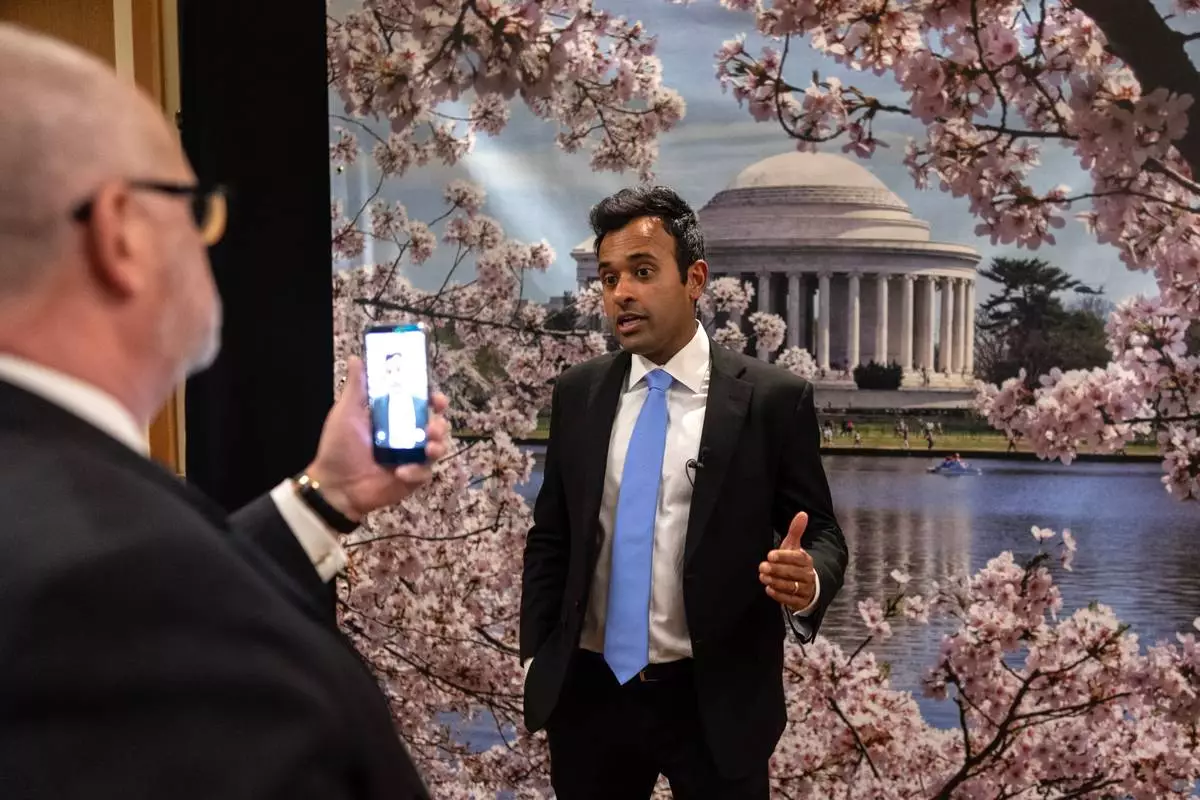
Republican Ohio gubernatorial candidate Vivek Ramaswamy records a video before the Warren County Republicans Lincoln Day Dinner at the Great Wolf Lodge in Mason, Ohio, Friday, April 10, 2026. (AP Photo/Carolyn Kaster)
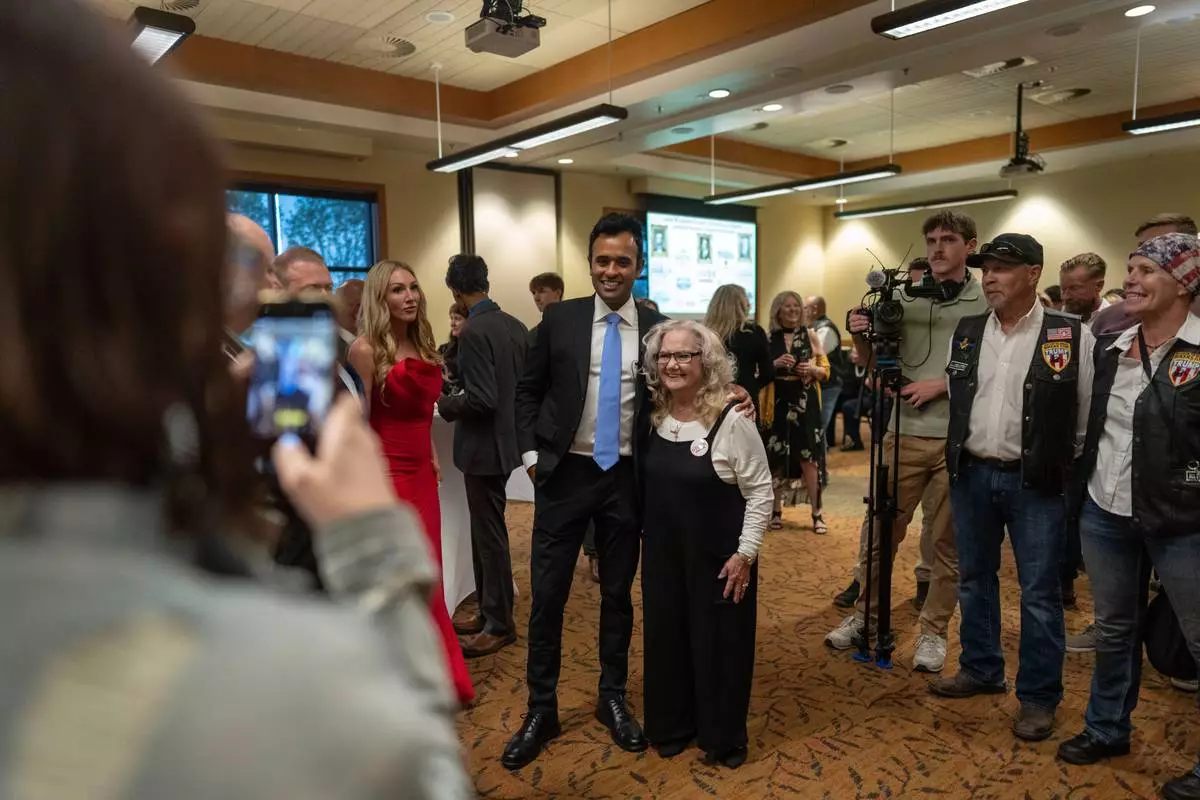
Republican Ohio gubernatorial candidate Vivek Ramaswamy, left, and Beverly Aikins, the mother of Vice President JD Vance, pose for a photo before the Warren County Republicans Lincoln Day Dinner at the Great Wolf Lodge in Mason, Ohio, Friday, April 10, 2026. (AP Photo/Carolyn Kaster)
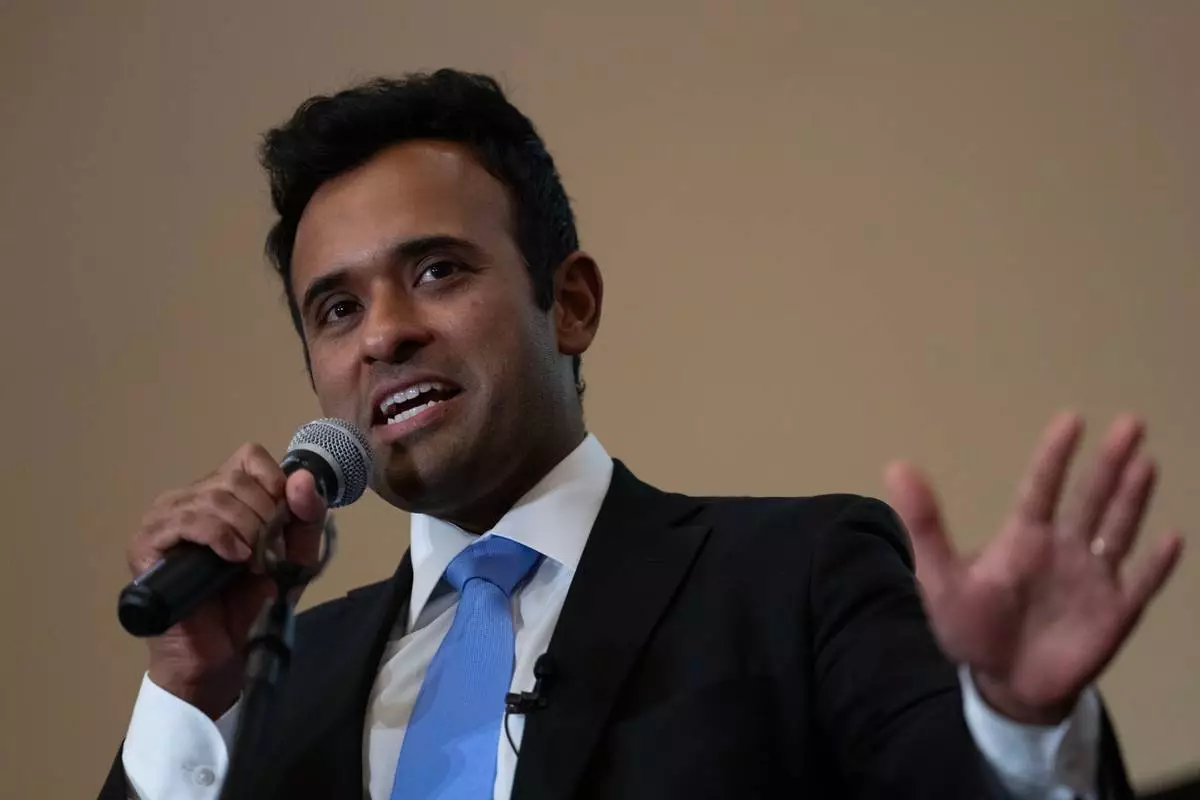
Republican Ohio gubernatorial candidate Vivek Ramaswamy speaks during the Warren County Republicans Lincoln Day Dinner at the Great Wolf Lodge in Mason, Ohio, Friday, April 10, 2026. (AP Photo/Carolyn Kaster)