A composable architecture that keeps customer data in-country from day one and outlasts the components inside it.
SINGAPORE, April 27, 2026 /PRNewswire/ -- Toku, a Singapore Exchange (SGX) Catalist-listed AI-powered customer experience platform, today launched Makimoto, its open-source initiative for conversational AI in Asia-Pacific. The first release, Makimoto Kawa ("Kawa"), will be available from 1 July 2026 as a managed transcription API1 service hosted in Singapore. Additional country-specific APIs and a containerised, self-hostable release will follow, enabling deployment in the customer's cloud, data centre, or jurisdiction of choice. The waiting list for early access opens today at makimoto.ai. Alongside the waiting list, Toku is opening ten Singapore-based roles on the Makimoto team for recent graduates.
"In an era where AI capabilities evolve on a weekly cycle, the biggest risk of any technology decision is creating tomorrow's legacy today. Makimoto is our response: a composable architecture where every component can be swapped as the field evolves." said Thomas Laboulle, Founder and CEO at Toku.
A response to a fragmenting regulatory landscape
Data-processing regulations across Asia-Pacific are tightening and diverging. Indonesia's Personal Data Protection Law, Vietnam's Personal Data Protection Law, and recent updates to Singapore's PDPA have all raised the weight that enterprises place on where audio, transcripts, and customer conversations are processed. For teams building voice and chat automation across the region, the primary engineering question is no longer which model is most accurate: it is which deployment satisfies each regulator while scaling across markets.
Makimoto is designed to answer that question on day one, and to keep answering it as requirements evolve. Kawa's first release runs exclusively in Singapore, keeping customer audio and transcripts within the country and supporting in-country processing for customers subject to Singapore's PDPA and regulated-sector guidelines, including those issued by the Monetary Authority of Singapore.
Makimoto gives teams optionality for markets such as Indonesia and Vietnam, which enforce among the strictest in-country data-processing mandates on real-time communications and transcription services, frequently requiring local servers for critical or personal data.
"With Kawa, customer data is processed in country, not just stored there. Every stage of the pipeline runs within a single jurisdiction, so our customers always know exactly where their data is going." said Thomas Laboulle.
Orchestration-first: composable by design
Makimoto Kawa is an open-source orchestration framework that assembles, configures, and runs multiple open-source components as a production-grade transcription pipeline. What Toku open-sources under the MIT licence2 is the orchestration layer itself: the glue code, configuration, and APIs that allow every component in the pipeline to be swapped without rewriting the surrounding system.
Kawa will be offered through two APIs at launch: one for real-time transcription, which developers can use to build live voice agent experiences, live captioning, or in-conversation analytics; and one for post-conversation transcription, suited for recorded calls, voicemail, and batch analytics of archived conversations. Under the surface, both APIs run the same five-stage modular pipeline: audio resampling, noise filtering and audio enhancement, voice activity detection with speaker diarisation, speech-to-text inference, and post-processing for normalisation, temporal ordering, speaker labelling, and structured output. Operators can swap or tune any individual stage to optimise for a given language, domain, or deployment environment.
Makimoto is a natural extension of the composable customer engagement approach recognised by Gartner in its Cool Vendor research.
"We are obsessed with the orchestration layer, because models and components turn over every few months, but the layer that keeps them swappable is what makes the whole stack durable." said Thomas Laboulle.
A progressive path to full transparency
At launch, Makimoto opens the orchestration layer of Kawa as MIT-licensed source code, while its internal components, including voice activity detection, diarisation, noise handling, the speech-to-text model, and post-processing, remain managed by Toku. Over subsequent releases, Toku will progressively open additional layers of the pipeline, working towards full transparency and community modifiability of every component. This phased approach lets the Makimoto community review, contribute to, and eventually replace each part of the stack while Toku maintains production stability for early-access users.
Makimoto is operated through Makimoto Technology Pte Ltd, a wholly-owned subsidiary of the Toku Group, established to preserve community trust and transparent governance, and to maintain a clear distinction between the enterprise and community editions of Kawa. Toku believes this separation unlocks innovation in both: the community edition evolves under open governance and external contribution, while the enterprise edition stays focused on the reliability, security, and commercial support that regulated-sector customers require. Toku commits to keeping Makimoto's open-source components permissively licensed, with no plans to adopt source-available or Business Source License-style terms. Over time, additional components of Toku's technology stack will migrate into Makimoto, evolving the group's architecture toward an open-core approach that reinforces the composability thesis at the heart of this initiative.
Developing future-ready talent
Alongside the early-access programme, Toku is opening ten Singapore-based positions on the Makimoto team, open to recent graduates of Singapore's universities and polytechnics. The roles span engineering, developer relations, and community work. The hiring programme reflects Toku's conviction that Asia-Pacific open-source infrastructure benefits from engineers and community builders rooted in the region, and that Makimoto should be a place where early-career talent joins a production-grade open-source initiative from the start. Applications open today at makimoto.ai.
A complement to the regional AI ecosystem
Makimoto is designed to complement, not replace, the broader Singapore and APAC AI ecosystem. Kawa is built to interoperate with open regional language models such as SEA-LION from AI Singapore and MERaLiON from A*STAR, which developers can plug in as reasoning or dialogue layers in applications that depend on accurate transcription of regional speech.
1 API refers to Application Programming Interface - a way for software systems to communicate with each other, allowing developers to access functionality or data without building it from scratch.
2 MIT licence is a widely-used open-source licence that allows anyone to use, modify, and distribute software with minimal restrictions, including for commercial purposes.
About Toku
Headquartered in Singapore, Toku Ltd. (SGX Catalist: TKU) is a cloud-native, AI-powered customer experience platform purpose-built for enterprises operating in complex, multi-national environments.
Trusted by leading enterprises and public-sector organisations, Toku helps organisations streamline operations, scale customer engagement and deliver consistent experiences in fragmented markets worldwide.
For more information about Toku, visit toku.co
About Makimoto
Makimoto is Toku's open-source initiative, operated through Makimoto Technology Pte Ltd, dedicated to building composable conversational AI infrastructure for Asia-Pacific. Its first release, Makimoto Kawa, is an MIT-licensed orchestration framework for production-grade transcription pipelines.
For more information about Makimoto, visit makimoto.ai
Forward-Looking Statements
This press release contains forward-looking statements regarding Toku's expansion plans and business strategy. These statements are based on current expectations and assumptions and are subject to risks and uncertainties that could cause actual results to differ materially. Toku undertakes no obligation to update these statements to reflect subsequent events or circumstances.
** This press release is distributed by PR Newswire through automated distribution system, for which the client assumes full responsibility. **
Toku launches Makimoto: open-source conversational AI built for Asia-Pacific data residency
|
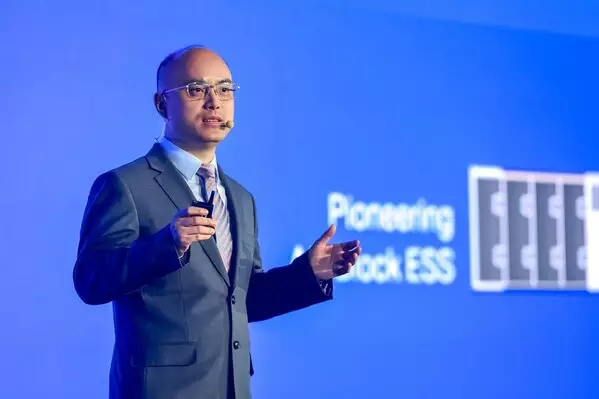
HEFEI, China, April 27, 2026 /PRNewswire/ -- Sungrow, the globally leading PV inverter and energy storage system (ESS) provider, presented its full-scenario solution at Sungrow GRES (Global Renewable Energy Summit) 2026 on April 24th, outlining how integrated energy solutions can address the surging power demands and structural challenges facing industries worldwide.
Sectors such as mining & microgrid, hydrogen production, and EV charging are expanding at an unprecedented speed, with power supply becoming increasingly critical. According to third-party analysis, combined annual electricity demand from these sectors is expected to reach 4,000 TWh by 2030, while the power costs have already become a major operational challenge.
Despite a shared demand for reliable and affordable electricity, each industry faces unique pain points. Additionally, the wide divergence in operating environments, grid strength, load conditions, and power quality requirements underscores the need for scenario-specific energy solutions. Sungrow believes that premium, customized energy solutions are essential to addressing the diverse needs of different scenarios.
Customized Designs for Full-Scenario Applications
AIDC Scenario
In the digital era, rapid advances in AI are driving a surge in data center power demand, calling for a next-generation power supply architecture defined by high efficiency, high density, and strong resilience. Leveraging its expertise in power electronics and renewable energy, Sungrow entered the AIDC (Artificial Intelligence Data Center) sector last year with a comprehensive grid-to-chip solution. This year, Sungrow will launch a dedicated SST (Solid-State Transformers) solution for data centers, significantly reducing footprint while improving efficiency. Sungrow will also integrate grid-forming technology in AIDC ESS to mitigate grid disturbances and enhance system stability.
Mining Microgrid Scenario
Most mines are located in remote areas with limited grid access, complex loads, and strict power stability requirements, making energy supply a significant challenge. Sungrow addresses this with an integrated PV–wind–storage–EV charger–controller solution, reducing energy costs by 20–50% compared with a diesel generator. Given the variability of mining loads, Sungrow leverages advanced simulation capabilities to deliver tailored solutions with optimized equipment configurations, ensuring a reliable power supply and reduced CAPEX. Moreover, a five-level progressive protection system further safeguards stable operations under extreme conditions.
PV-ESS-EV Charging Integrated Scenario
Many EV charging projects suffer from poor coordination among system components, resulting in underperformance and reduced returns. Sungrow addresses this challenge with a one-stop, fully integrated solution that enables deep synergy across equipment and incorporates AI-driven operations, increasing overall revenue by more than 50%. Meanwhile, grid-forming technology has been extended to C&I applications to mitigate grid fluctuations caused by large-scale ultra-fast charging. In addition, Sungrow's systems enable seamless integration with VPPs (Virtual Power Plants) through unified interfaces, unlocking greater value through diversified, future-ready revenue streams.
Hydrogen Production Scenario
In hydrogen production applications, Sungrow optimizes equipment configuration, reducing CAPEX by over 20% through PV–wind–storage–hydrogen integration and system-level simulation. In parallel, PV–storage–hydrogen DC coupling and flexible production technologies enhance energy efficiency and lower electricity costs by more than 10%.
Powering the Next Phase of Energy Transition
Renewable energy is shifting from a supplementary resource to a primary power source. This transition drives demand for premium energy solutions built on multi-energy integration for cost-efficient power, systematic grid-forming technologies for enhanced stability, and customized designs tailored to diverse scenarios. Sungrow believes that the deep integration of premium products and proven expertise is key to delivering truly scenario-adapted solutions.
Looking ahead, Sungrow will continue to build a more flexible, resilient, and sustainable energy landscape, helping industries meet growing energy demand and accelerate the transition to a low-carbon future.
About Sungrow
Sungrow, a global leader in renewable energy technology, has pioneered sustainable power solutions for over 29 years. As of Dec 2025, Sungrow has installed over 1000 GW of power electronic converters worldwide. The company is recognized as the world's most bankable PV inverter and energy storage company (BloombergNEF). Its innovations power clean energy projects across the globe, supported by a network of 520 service outlets guaranteeing excellent customer experiences. At Sungrow, we're committed to bridging to a sustainable future through cutting-edge technology and unparalleled service. For more information, please visit: www.sungrowpower.com/en
HEFEI, China, April 27, 2026 /PRNewswire/ -- Sungrow, the globally leading PV inverter and energy storage system (ESS) provider, presented its full-scenario solution at Sungrow GRES (Global Renewable Energy Summit) 2026 on April 24th, outlining how integrated energy solutions can address the surging power demands and structural challenges facing industries worldwide.
Sectors such as mining & microgrid, hydrogen production, and EV charging are expanding at an unprecedented speed, with power supply becoming increasingly critical. According to third-party analysis, combined annual electricity demand from these sectors is expected to reach 4,000 TWh by 2030, while the power costs have already become a major operational challenge.
Despite a shared demand for reliable and affordable electricity, each industry faces unique pain points. Additionally, the wide divergence in operating environments, grid strength, load conditions, and power quality requirements underscores the need for scenario-specific energy solutions. Sungrow believes that premium, customized energy solutions are essential to addressing the diverse needs of different scenarios.
Customized Designs for Full-Scenario Applications
AIDC Scenario
In the digital era, rapid advances in AI are driving a surge in data center power demand, calling for a next-generation power supply architecture defined by high efficiency, high density, and strong resilience. Leveraging its expertise in power electronics and renewable energy, Sungrow entered the AIDC (Artificial Intelligence Data Center) sector last year with a comprehensive grid-to-chip solution. This year, Sungrow will launch a dedicated SST (Solid-State Transformers) solution for data centers, significantly reducing footprint while improving efficiency. Sungrow will also integrate grid-forming technology in AIDC ESS to mitigate grid disturbances and enhance system stability.
Mining Microgrid Scenario
Most mines are located in remote areas with limited grid access, complex loads, and strict power stability requirements, making energy supply a significant challenge. Sungrow addresses this with an integrated PV–wind–storage–EV charger–controller solution, reducing energy costs by 20–50% compared with a diesel generator. Given the variability of mining loads, Sungrow leverages advanced simulation capabilities to deliver tailored solutions with optimized equipment configurations, ensuring a reliable power supply and reduced CAPEX. Moreover, a five-level progressive protection system further safeguards stable operations under extreme conditions.
PV-ESS-EV Charging Integrated Scenario
Many EV charging projects suffer from poor coordination among system components, resulting in underperformance and reduced returns. Sungrow addresses this challenge with a one-stop, fully integrated solution that enables deep synergy across equipment and incorporates AI-driven operations, increasing overall revenue by more than 50%. Meanwhile, grid-forming technology has been extended to C&I applications to mitigate grid fluctuations caused by large-scale ultra-fast charging. In addition, Sungrow's systems enable seamless integration with VPPs (Virtual Power Plants) through unified interfaces, unlocking greater value through diversified, future-ready revenue streams.
Hydrogen Production Scenario
In hydrogen production applications, Sungrow optimizes equipment configuration, reducing CAPEX by over 20% through PV–wind–storage–hydrogen integration and system-level simulation. In parallel, PV–storage–hydrogen DC coupling and flexible production technologies enhance energy efficiency and lower electricity costs by more than 10%.
Powering the Next Phase of Energy Transition
Renewable energy is shifting from a supplementary resource to a primary power source. This transition drives demand for premium energy solutions built on multi-energy integration for cost-efficient power, systematic grid-forming technologies for enhanced stability, and customized designs tailored to diverse scenarios. Sungrow believes that the deep integration of premium products and proven expertise is key to delivering truly scenario-adapted solutions.
Looking ahead, Sungrow will continue to build a more flexible, resilient, and sustainable energy landscape, helping industries meet growing energy demand and accelerate the transition to a low-carbon future.
About Sungrow
Sungrow, a global leader in renewable energy technology, has pioneered sustainable power solutions for over 29 years. As of Dec 2025, Sungrow has installed over 1000 GW of power electronic converters worldwide. The company is recognized as the world's most bankable PV inverter and energy storage company (BloombergNEF). Its innovations power clean energy projects across the globe, supported by a network of 520 service outlets guaranteeing excellent customer experiences. At Sungrow, we're committed to bridging to a sustainable future through cutting-edge technology and unparalleled service. For more information, please visit: www.sungrowpower.com/en
** This press release is distributed by PR Newswire through automated distribution system, for which the client assumes full responsibility. **
Sungrow Unveils Full-Scenario Solution to Address Emerging Global Energy Challenges