ARLINGTON, Texas (AP) — Aaron Judge and Ben Rice had the first back-to-back homers for the Yankees this season, and Jazz Chisholm Jr. also went deep as AL-best New York beat the Texas Rangers 4-2 on Monday night.
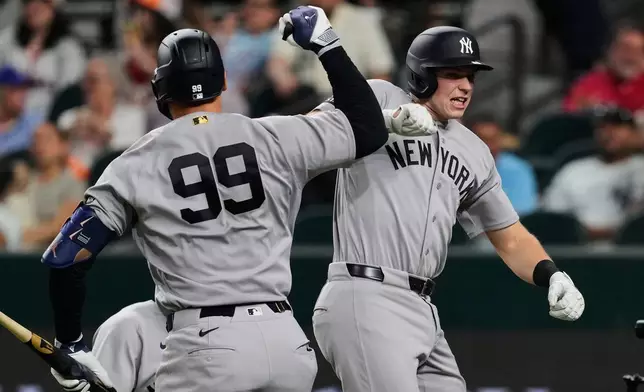
Judge matched the big league lead with his 11th homer, a day after also hitting one on his 34th birthday, to make it 3-0 with two outs in the third inning. That came right after Rice’s 10th homer, his sixth in 11 games.
Click to Gallery
New York Yankees' Jazz Chisholm Jr. celebrates his solo home run in the fourth inning of a baseball game as umpire Ben May and Texas Rangers third baseman Josh Jung, right rear, look on Monday, April 27, 2026, in Arlington, Texas. (AP Photo/Tony Gutierrez)
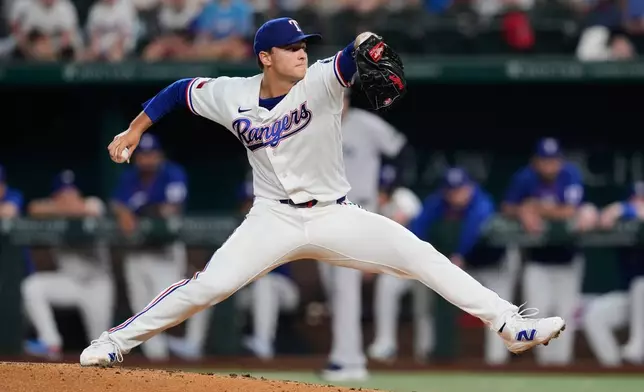
Texas Rangers pitcher Jack Leiter throws to the New York Yankees in the third inning of a baseball game Monday, April 27, 2026, in Arlington, Texas. (AP Photo/Tony Gutierrez)
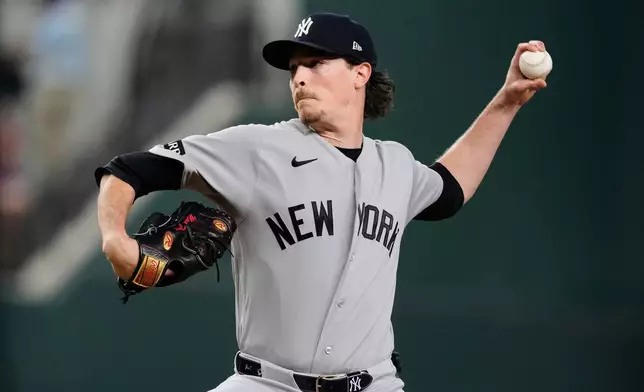
New York Yankees pitcher Max Fried throws to the Texas Rangers in the first inning of a baseball game Monday, April 27, 2026, in Arlington, Texas. (AP Photo/Tony Gutierrez)
New York Yankees' Aaron Judge and Ben Rice, right, celebrate Rice's two-run home run in the third inning of a baseball game against the Texas Rangers Monday, April 27, 2026, in Arlington, Texas. (AP Photo/Tony Gutierrez)
New York Yankees' Aaron Judge rounds the bases after hitting a solo home run in the third inning of a baseball game against the Texas Rangers Monday, April 27, 2026, in Arlington, Texas. (AP Photo/Tony Gutierrez)
They became the second pair of Yankees teammates to each have 10 or more homers in the first 29 games, joining Mickey Mantle and Yogi Berra in 1956.
Max Fried (4-1) scattered four singles over six scoreless innings pitching out of the stretch as the Yankees (19-10) got their 10th win in 12 games. David Bednar, the third reliever, allowed an unearned run in the ninth while getting his eighth save in nine chances when Ezequiel Duran grounded into a forceout with two on.
Texas starter Jack Leiter (1-2) allowed the three homers in six innings.
Pinch-hitter Joc Pederson had a solo homer for Texas in the seventh.
Rice's two-run shot came a pitch after Trent Grisham reached on a single, the ball deflecting off Leiter’s glove with charging shortstop Corey Seager unable to make a barehand pickup.
Judge, who also had two doubles, followed with a 414-foot drive that landed in the left-field seats not far from the spot he hit his AL season record 62nd homer on Oct. 4, 2022.
After no homers his first 23 games, Chisholm has three in five games. He homered on the first pitch of the fourth.
Fried has allowed no runs in four of seven starts, going at least six innings in each of those scoreless outings.
The left-hander also had the Yankees' 38th pickoff since 2017, the most by any pitcher in that span. The Yankees have picked off a runner in fourth straight games for the first time since 1995; one of those pitchers 31 years ago was David Cone, who was in the ballpark broadcasting Monday's game.
Seager, a two-time World Series MVP, went 0 for 4 with three strikeouts on his 32nd birthday.
Jacob deGrom (2-0, 2.13 ERA) pitches for Texas on Tuesday night, and 25-year-old right-hander Cam Schlittler (3-1, 1.77) goes for New York.
AP MLB: https://apnews.com/hub/mlb

New York Yankees' Jazz Chisholm Jr. celebrates his solo home run in the fourth inning of a baseball game as umpire Ben May and Texas Rangers third baseman Josh Jung, right rear, look on Monday, April 27, 2026, in Arlington, Texas. (AP Photo/Tony Gutierrez)

Texas Rangers pitcher Jack Leiter throws to the New York Yankees in the third inning of a baseball game Monday, April 27, 2026, in Arlington, Texas. (AP Photo/Tony Gutierrez)
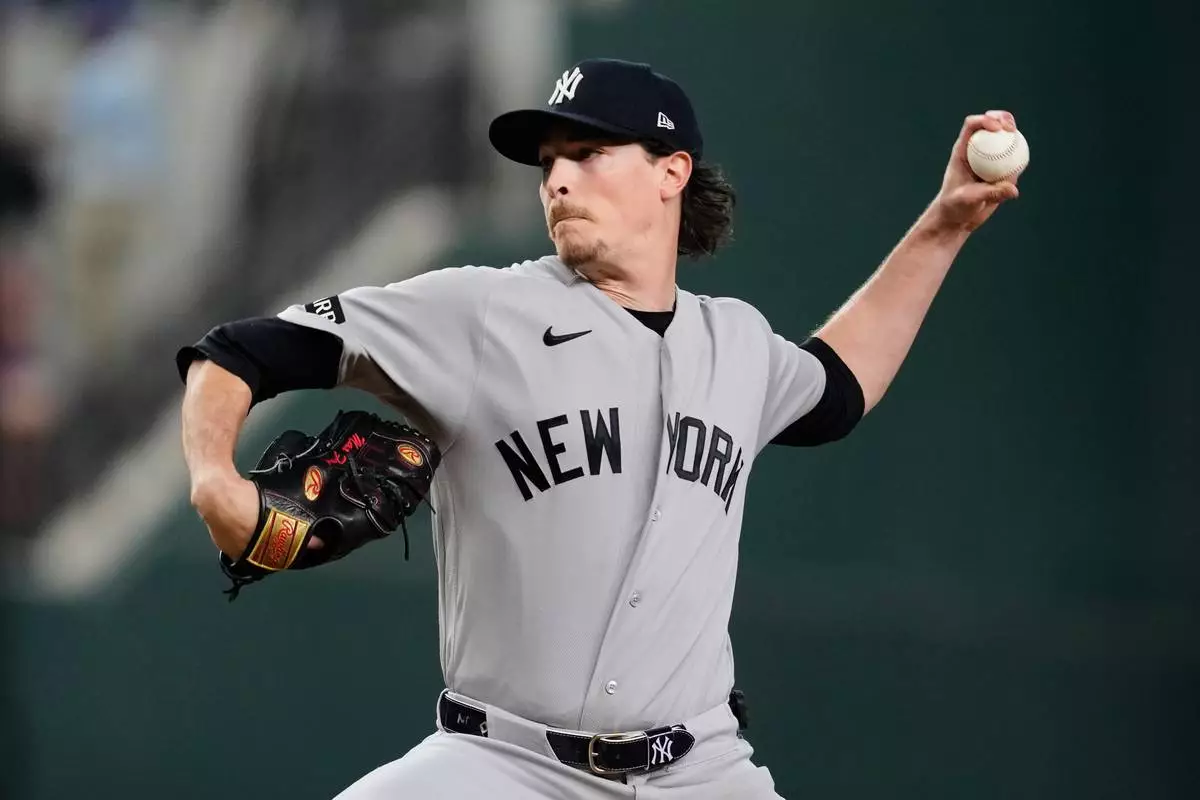
New York Yankees pitcher Max Fried throws to the Texas Rangers in the first inning of a baseball game Monday, April 27, 2026, in Arlington, Texas. (AP Photo/Tony Gutierrez)
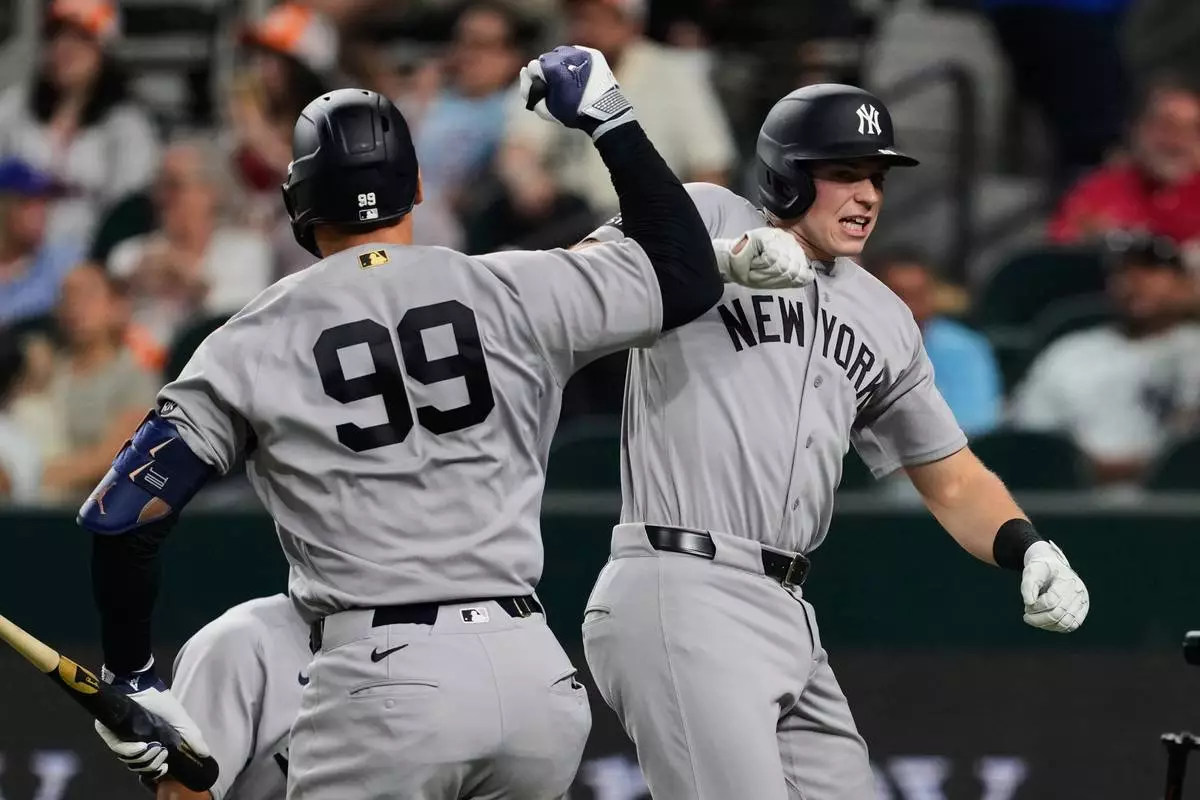
New York Yankees' Aaron Judge and Ben Rice, right, celebrate Rice's two-run home run in the third inning of a baseball game against the Texas Rangers Monday, April 27, 2026, in Arlington, Texas. (AP Photo/Tony Gutierrez)

New York Yankees' Aaron Judge rounds the bases after hitting a solo home run in the third inning of a baseball game against the Texas Rangers Monday, April 27, 2026, in Arlington, Texas. (AP Photo/Tony Gutierrez)
LOS ANGELES (AP) — An SUV driver was under the influence of drugs when she swerved into the wrong lane, blew a red light and slammed into a Los Angeles city bus, killing two riders, prosecutors said Thursday as they charged her with murder.
It was a tragedy compounded by the subsequent fatal crash of a TV news helicopter that had been covering the collision.
Bailee Lynn Rios was speeding and impaired when she drove her 2004 Ford Expedition the wrong way down a busy avenue and struck a vehicle before plowing into a city bus on Tuesday, Los Angeles County District Attorney Nathan Hochman told a news conference.
Rios, 36, faces two charges of second-degree murder in the deaths of the two people on the bus, identified as Daniel Castillo, 46, and Gage Weida, 31.
Rios was being held on $4.1 million bail and is scheduled to appear in court Friday. Online court records did not list a lawyer who might speak on her behalf, and the public defender’s office said it had not been appointed to represent her.
Reached Wednesday, her mother Cindy Rios said she was shocked and saddened by the string of events. She said she had not spoken to Bailee Lynn Rios since her arrest and had not been contacted by law enforcement. She could not immediately be reached Thursday for additional comment.
The news helicopter crash killed both people on board, pilot George Marciniw and reporter Eliana Moreno, and a man on the ground, Edy Gutierrez Mejia. At least four cars and two storage containers burned after the helicopter caught fire.
In surveillance footage obtained by NBC4 Los Angeles, the helicopter can be seen dropping out of the sky on a slight diagonal angle and landing behind a few trees and other objects. Moments later, a large plume of black smoke and flames erupt from the crash site.
Hundreds gathered in the Chatsworth neighborhood of Los Angeles on Thursday evening for a candlelit vigil honoring the victims of both crashes. Friends and family members brought photos of their loved ones and joined in prayer.
Castillo’s daughter, Johaunna Castillo, said he was on the way home from his job at a car parts warehouse Tuesday, on the same bus he took every day.
“The back was his favorite seat,” she said. “He liked people-watching.”
While she moved to Georgia with her mother and siblings as a teen and now attends college there, she spent her school breaks and summers in LA with her father. When they were apart, he called her after work every single day.
“He would just tell me about all the people he’s met and all the things that happened on the bus,” she said.
That day, he told her he was getting on the bus and would call her when he was walking home. But the call never came.
She said her father was a hard worker, and a bright and lively person who touched anyone he interacted with. His co-workers, friends, and even many people who only knew him in passing have reached out to share “how much of a light that he was,” she said.
“That’s who he was and that’s how he should be remembered — someone who brought a lot of joy and love into people’s lives,” Johaunna Castillo said. Hundreds have donated to an online fundraiser for funeral expenses.
There were no immediate details on what caused the helicopter to go down, but investigators said significant clues could come from the last seconds of video the crew broadcast. In it, an alarm could be heard inside the helicopter’s cockpit as it lost altitude.
National Transportation Safety Board investigator Fabian Salazar said Wednesday that the video is “probably the most important evidence that we have discovered so far.”
Just after the beeping starts, a woman’s voice says “uh oh.” The helicopter moves quickly away from the bus crash site and starts losing altitude. The woman says “You can’t pull up?” before the video stops as the chopper nears the ground.
Aviation safety expert Jeff Guzzetti said the alarm suggests a potential loss of engine power and a dangerous decrease in the main rotor speed. He said the pilot appeared to be trying to perform an emergency maneuver to use the wind to force the rotor to spin again.
The NTSB is also investigating the bus collision.
Moreno and Marciniw both worked for Angel City Air, a helicopter contractor, and provided aerial coverage for NBC4 and Telemundo 52.
Moreno, born in Orange County, joined Angel City Air in 2010, the same year she earned a broadcast journalism and political science degree from Chapman University. She reported for several news outlets and began flying with Marciniw in 2023, NBC4 said.
Marciniw grew up in Southern California and graduated from Burbank High School in 1974.
There have been at least eight fatal crashes involving news helicopters in the U.S. since 2000, killing 16 people, according to a review of federal accident records and news accounts.
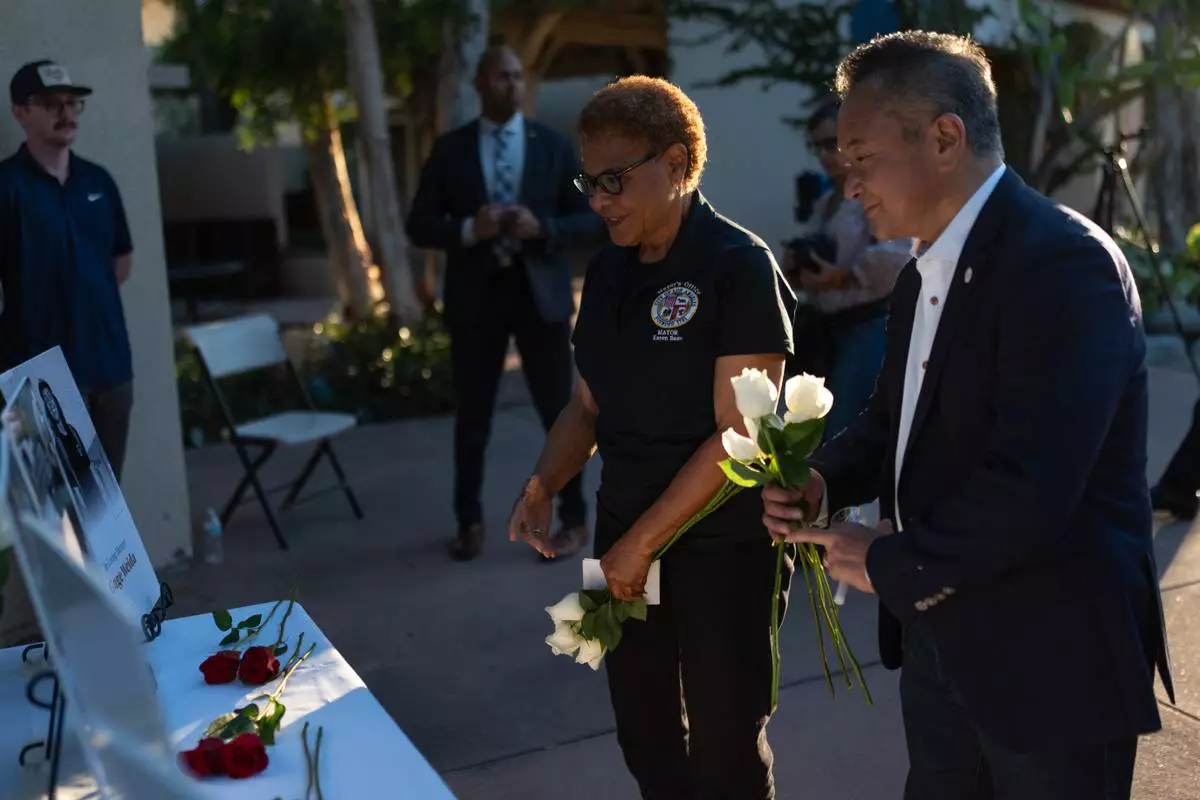
Los Angeles Mayor Karen Bass, center, and City Councilmember John Lee arrive at a vigil for the victims of Tuesday's fatal SUV-Metro bus collision and the subsequent crash of a TV news helicopter that was covering it in the Chatsworth neighborhood of Los Angeles, Thursday, Sept. 17, 2026. (AP Photo/Jae C. Hong)
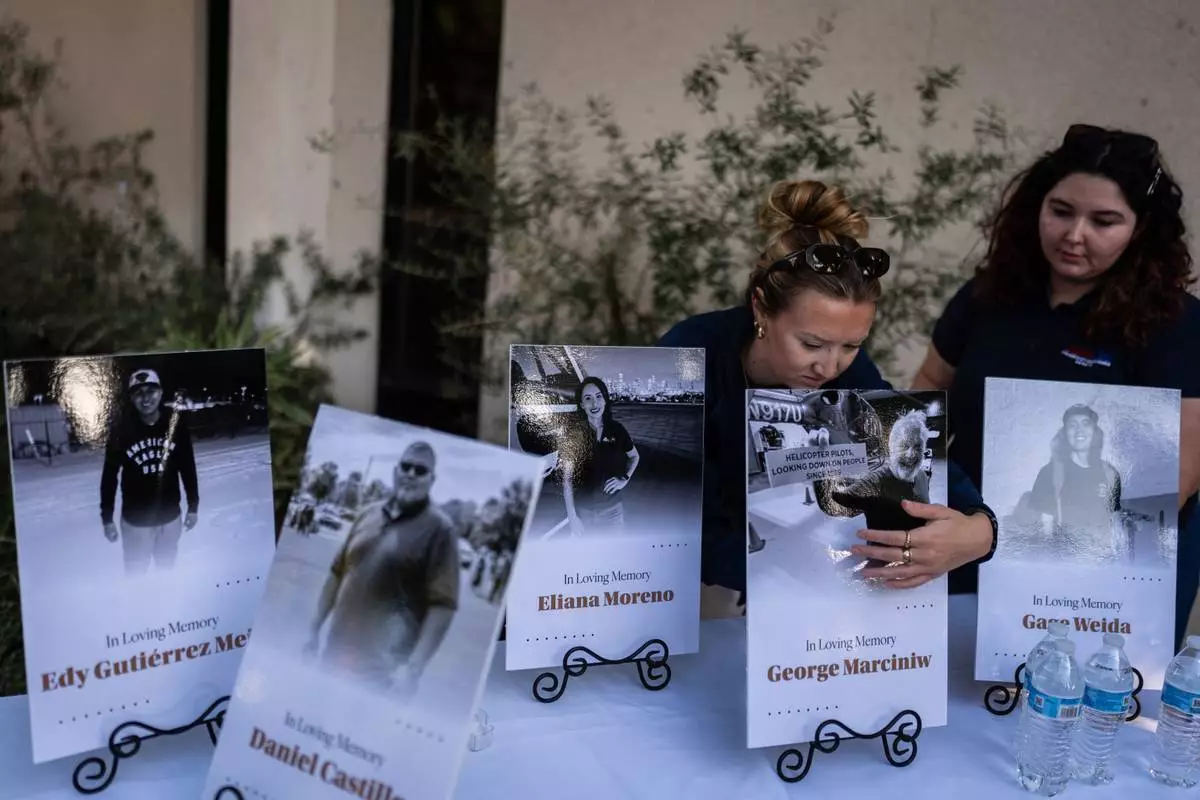
Savannah Sampson, right, and Nicole Lewis, help set up a vigil for the victims of Tuesday's fatal SUV-Metro bus collision and the subsequent crash of a TV news helicopter that was covering it in the Chatsworth neighborhood of Los Angeles, Thursday, Sept. 17, 2026. (AP Photo/Jae C. Hong)
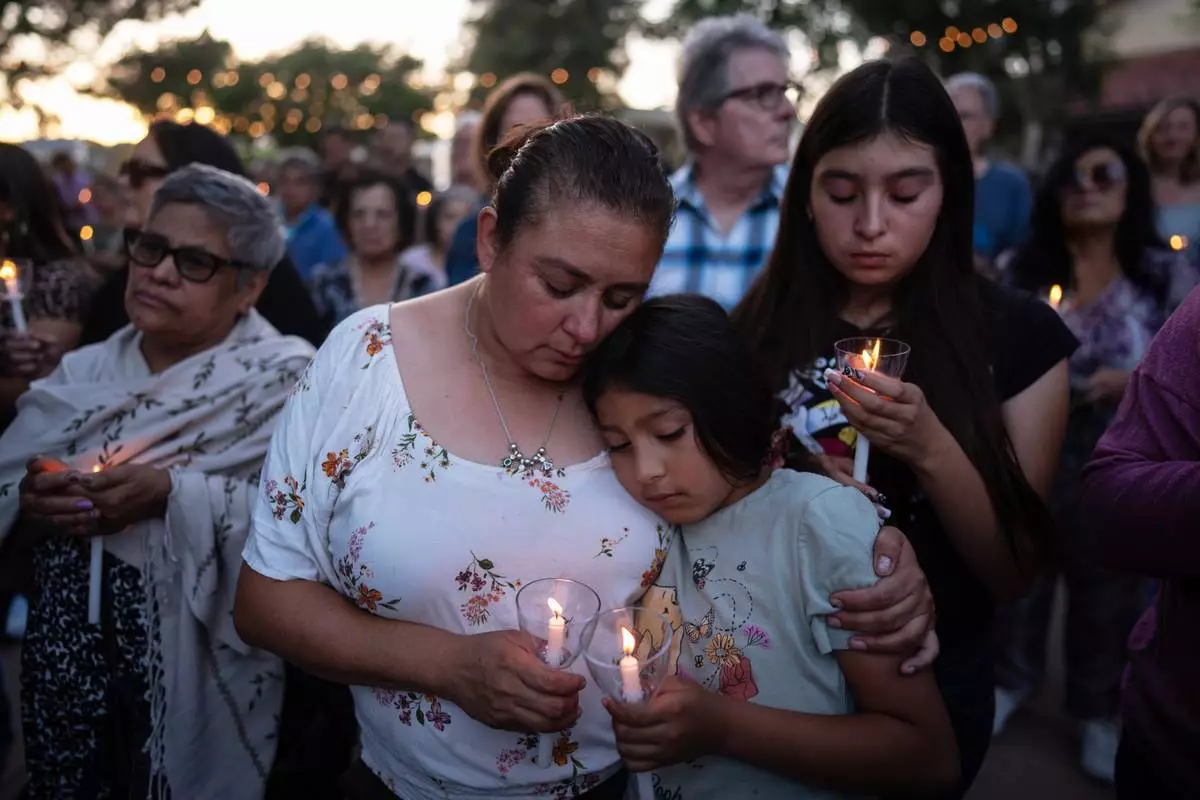
Judith Cabrera and her daughter, April, attend a vigil for the victims of a fatal SUV-Metro bus collision and the subsequent crash of a TV news helicopter covering it in the Chatsworth neighborhood of Los Angeles, Thursday, Sept. 17, 2026. (AP Photo/Jae C. Hong)
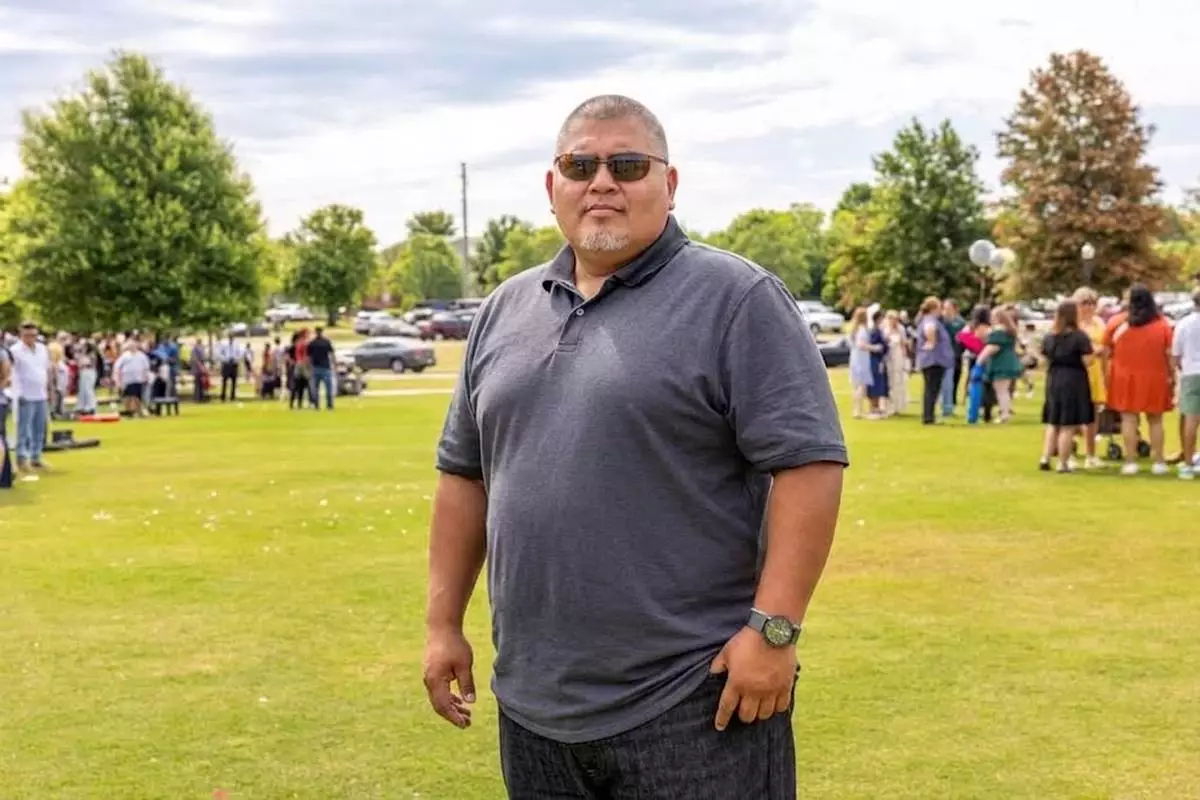
This photo provided by Johaunna Castillo shows Daniel Castillo on May 23, 2025, in Evans, Ga. (Johaunna Castillo via AP)
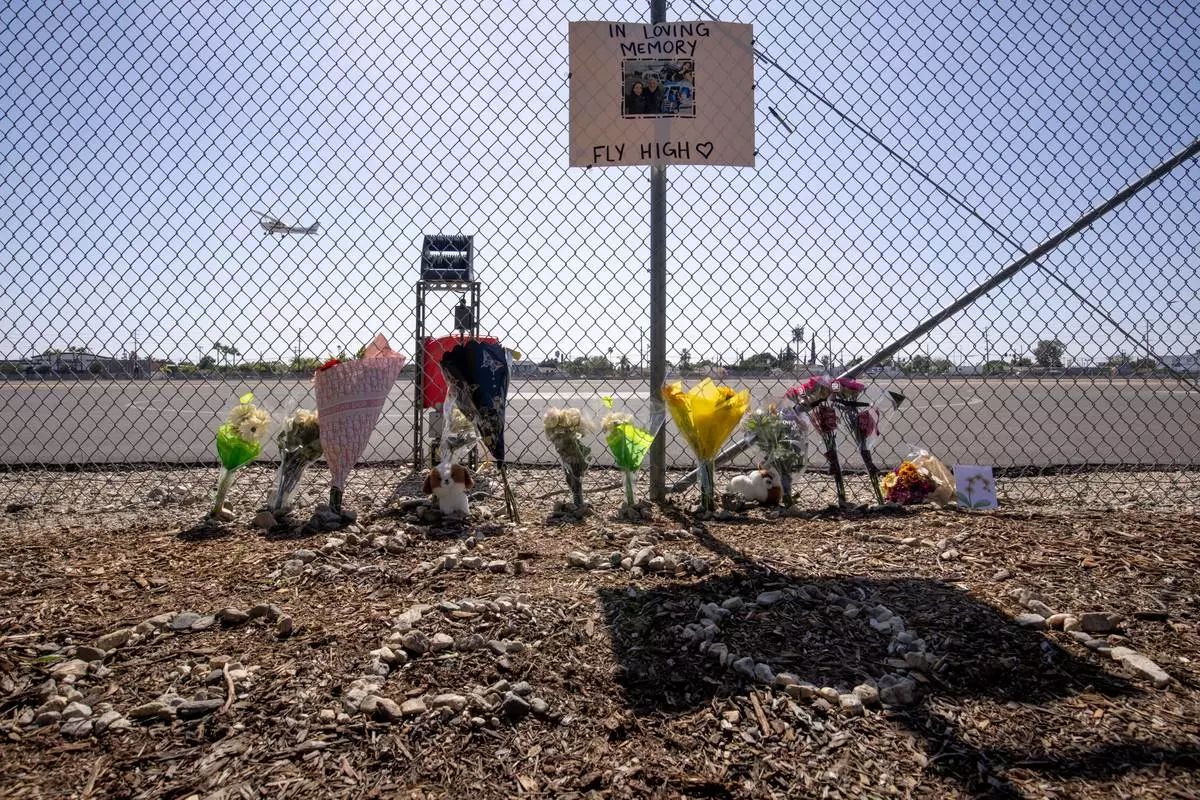
A memorial for Eliana Moreno and George Marciniw, who died in a helicopter crash the day prior while covering an accident for a television station, at the site where their helicopter used to park at Whiteman Airport in Los Angeles, Wednesday, Sept. 16, 2026. (AP Photo/Ethan Swope) ADDITION: the day prior while covering an accident for a television station.
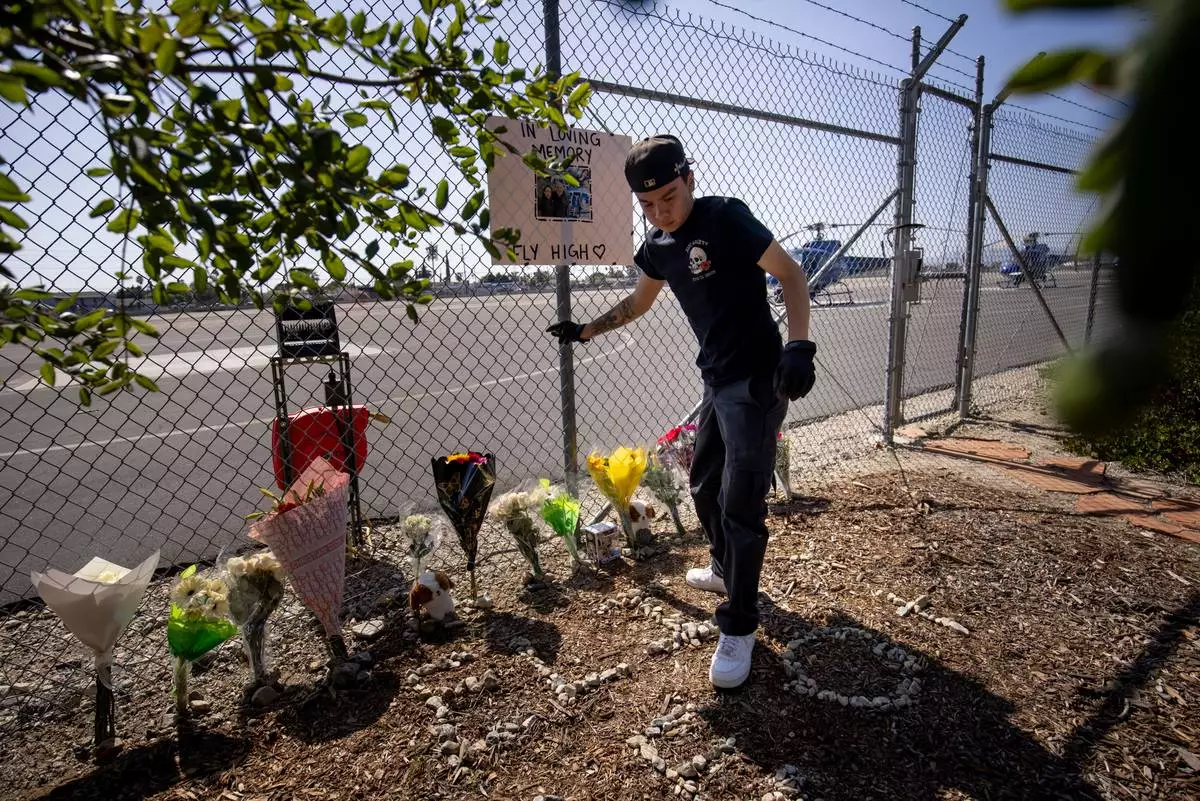
A person adjusts flowers at a memorial for Eliana Moreno and George Marciniw, who died in a helicopter crash the day prior while covering an accident for a television station, at the site where their helicopter used to park at Whiteman Airport in Los Angeles, Wednesday, Sept. 16, 2026. (AP Photo/Ethan Swope) ADDITION: Adds in a helicopter crash the day prior while covering an accident for a television station.
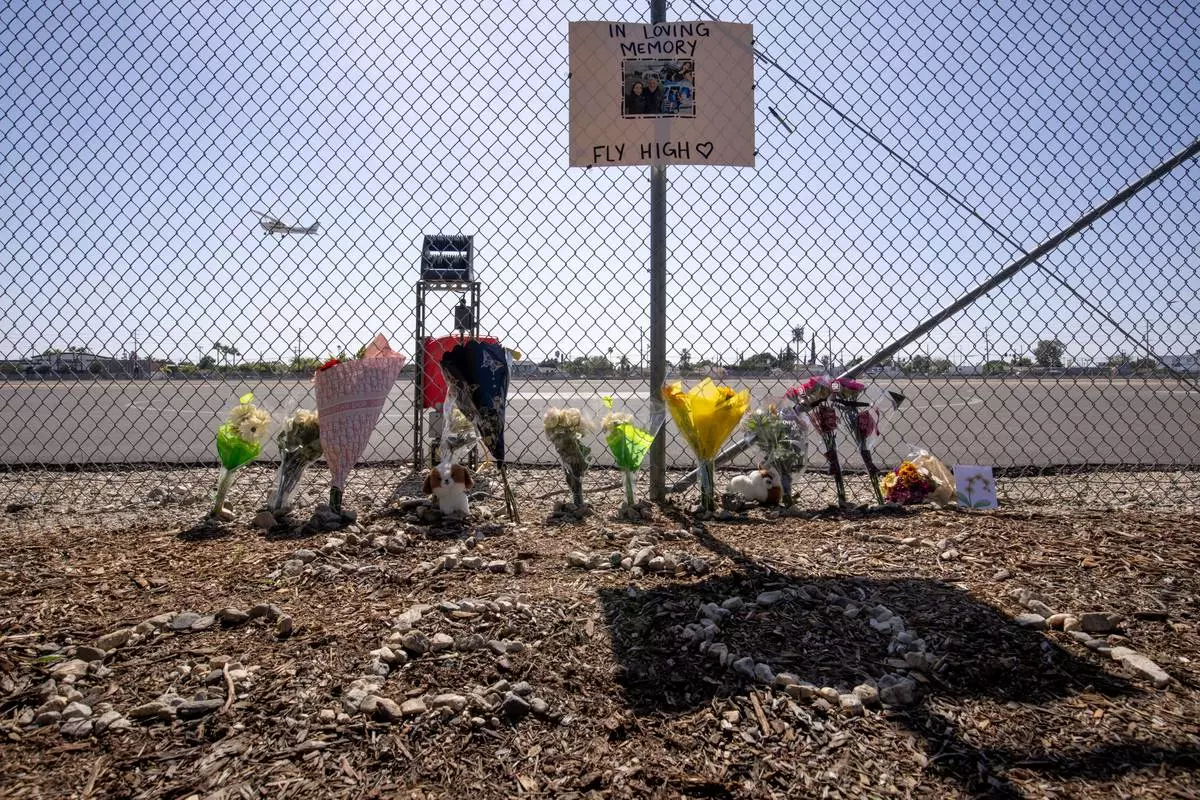
A memorial for Eliana Moreno and George Marciniw who died in a helicopter crash is seen at the site where their helicopter used to park at Whiteman Airport in Los Angeles, Wednesday, Sept. 16, 2026. (AP Photo/Ethan Swope)
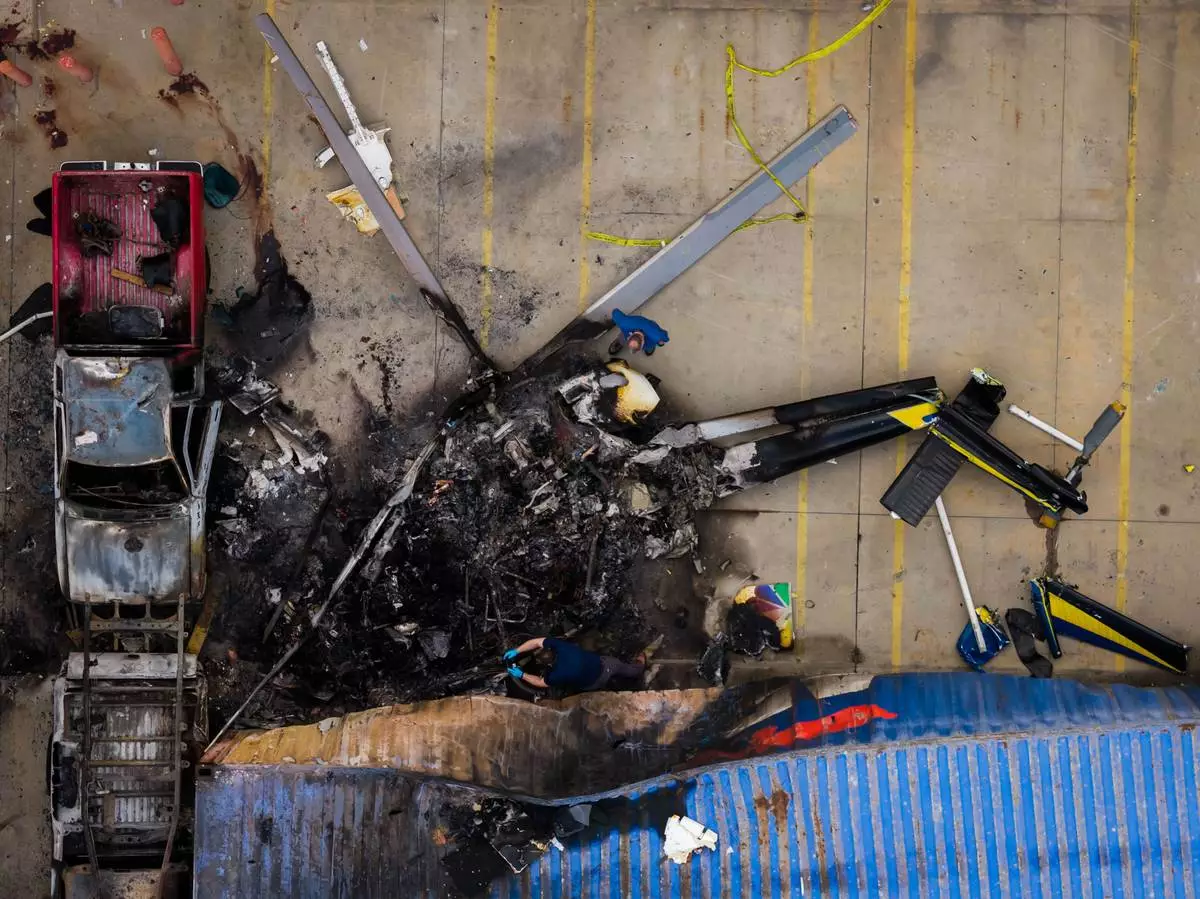
In this aerial view, people investigate the aftermath of a news helicopter crash in Chatsworth, a neighborhood in Los Angeles, on Wednesday, Sept. 16, 2026.(AP Photo/Ethan Swope)
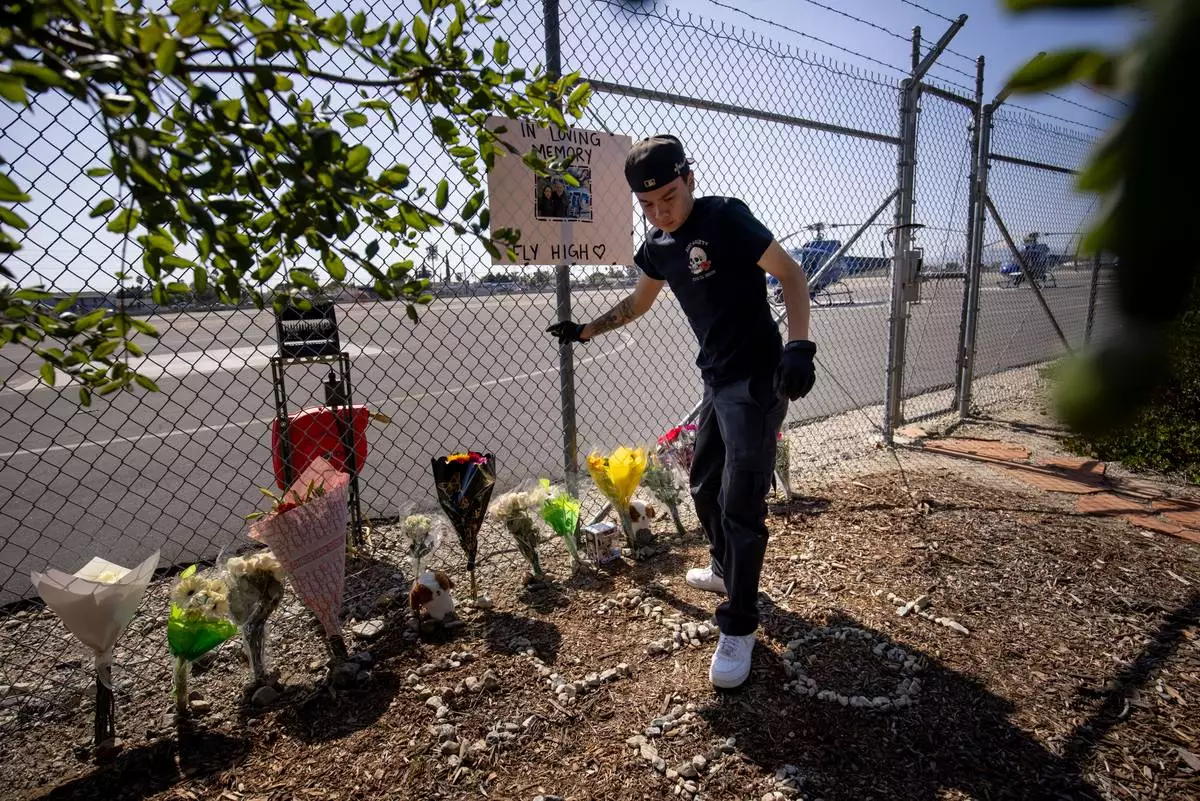
A person adjusts flowers at a memorial for Eliana Moreno and George Marciniw who died in a helicopter crash at the site where their helicopter used to park at Whiteman Airport in Los Angeles, Wednesday, Sept. 16, 2026. (AP Photo/Ethan Swope)