Skip to Content Facebook Feature Image

Teledyne FLIR Defense Grows Third-Party Payload Integration Program, Adds Emesent Hovermap LiDAR for Unmanned Air, Ground, and Detection Platforms

Business

Teledyne FLIR Defense Grows Third-Party Payload Integration Program, Adds Emesent Hovermap LiDAR for Unmanned Air, Ground, and Detection Platforms
Business

Business

Teledyne FLIR Defense Grows Third-Party Payload Integration Program, Adds Emesent Hovermap LiDAR for Unmanned Air, Ground, and Detection Platforms

2026-04-28 19:06 Last Updated At:19:30

QUANTICO, Va.--(BUSINESS WIRE)--Apr 28, 2026--

Unveiled at Modern Day Marine 2026, Teledyne FLIR Defense announced the expansion of its Third-Party Payload Integration Program with the certification of Emesent’s Hovermap LiDAR Payload. The agreement will deliver Emesent’s GPS-denied 3D-mapping capabilities across Teledyne FLIR’s unmanned aerial systems (UAS), ground robots, and radiation detection platforms.

This press release features multimedia. View the full release here: https://www.businesswire.com/news/home/20260428589843/en/

The Emesent–Teledyne FLIR combination addresses a GPS-denial gap in air and ground domains where unmanned systems can lose GPS connectivity in common operating areas, such as tunnels, urban structures, and CBRN-contaminated spaces. Using LiDAR-based Simultaneous Localization and Mapping (SLAM), Emesent’s Hovermap payload generates accurate 3D maps without GPS or external infrastructure.

On Teledyne FLIR’s SkyRanger® R70 and R80D SkyRaider® UAS platforms, Hovermap enables mapping even in GPS-denied environments. Mounted on the company’s SUGV™ 325 ground robot, Hovermap provides users with persistent 3D awareness of complex enclosed environments streamed in real-time. And integrated with Teledyne FLIR’s MUVE™ R430 radiation detection payload on the SUGV, Hovermap allows operators to see not just where a robot has been, but where radiation levels are elevated, giving CBRN teams an immediate, geo-referenced picture of the threat environment.

“Knowing the shape of a space is powerful. Knowing where the radiation is within that space, in real time, without putting a person in harm’s way, is an operational game-changer,” said Stefan Hrabar, co-founder and chief strategy officer at Emesent. “Our partnership with Teledyne FLIR Defense brings together GPS-denied mapping and radiation detection in a way that directly addresses what CBRN operators need in the field.”

“Teledyne FLIR builds platforms trusted for the most demanding CBRN missions in the world,” said Tung Ng, vice president of Unmanned Systems North America for Teledyne FLIR Defense. “Working with Emesent, we’ll be able to give operators a fused, spatial picture of the threat environment they simply haven’t had access to before."

“This is the direction the whole field is heading in, and we’re delivering it now through certified third-party payloads like Hovermap,” Ng added.

Emesent’s Hovermap represents the firm’s success in utilizing Teledyne FLIR Defense’s open-architecture, partner-enabled development ecosystem. Certified payloads are assessed for mechanical fit, electrical interface, software compatibility, and flight performance, giving customers confidence in mission-tailored capabilities from a growing partner ecosystem.

The partnership also establishes a technical foundation for future capability development. Both companies are actively developing autonomous navigation capabilities and expanding multi-sensor fusion beyond radiation to additional CBRN detection modalities.

The integrated systems will be on display at Teledyne FLIR Defense booth #1724 at Modern Day Marine 2026, April 28–30, at Marine Corps Base Quantico.

About Emesent

Emesent is an Australian-headquartered technology company with a U.S. office in Centennial, Colorado, and the maker of the Hovermap autonomous mapping platform. Hovermap uses LiDAR-based SLAM to deliver precise 3D mapping and autonomy in GPS-denied environments. With more than 1,000 systems deployed globally across defence, public safety, mining, and infrastructure sectors, Hovermap is a proven, field-ready platform trusted by military and government operators worldwide. For more information, visit www.emesent.com.

About Teledyne FLIR Defense

Teledyne FLIR Defense has been providing advanced, mission-critical technology and systems for more than 45 years. Our products are on the frontlines of the world’s most pressing military, security and public safety challenges. As a global leader in thermal imaging, we design and build sophisticated surveillance sensors for air, land and maritime use. We develop the most rugged, trusted unmanned air and ground platforms, as well as intelligent sensing devices used to detect chemicals, biological agents, radiation and explosives. At Teledyne FLIR Defense we bring together this expertise to deliver solutions that enable critical decisions and keep our world safe – from any threat, anywhere. To learn more, visit us online or follow @flir and @flir_defense.
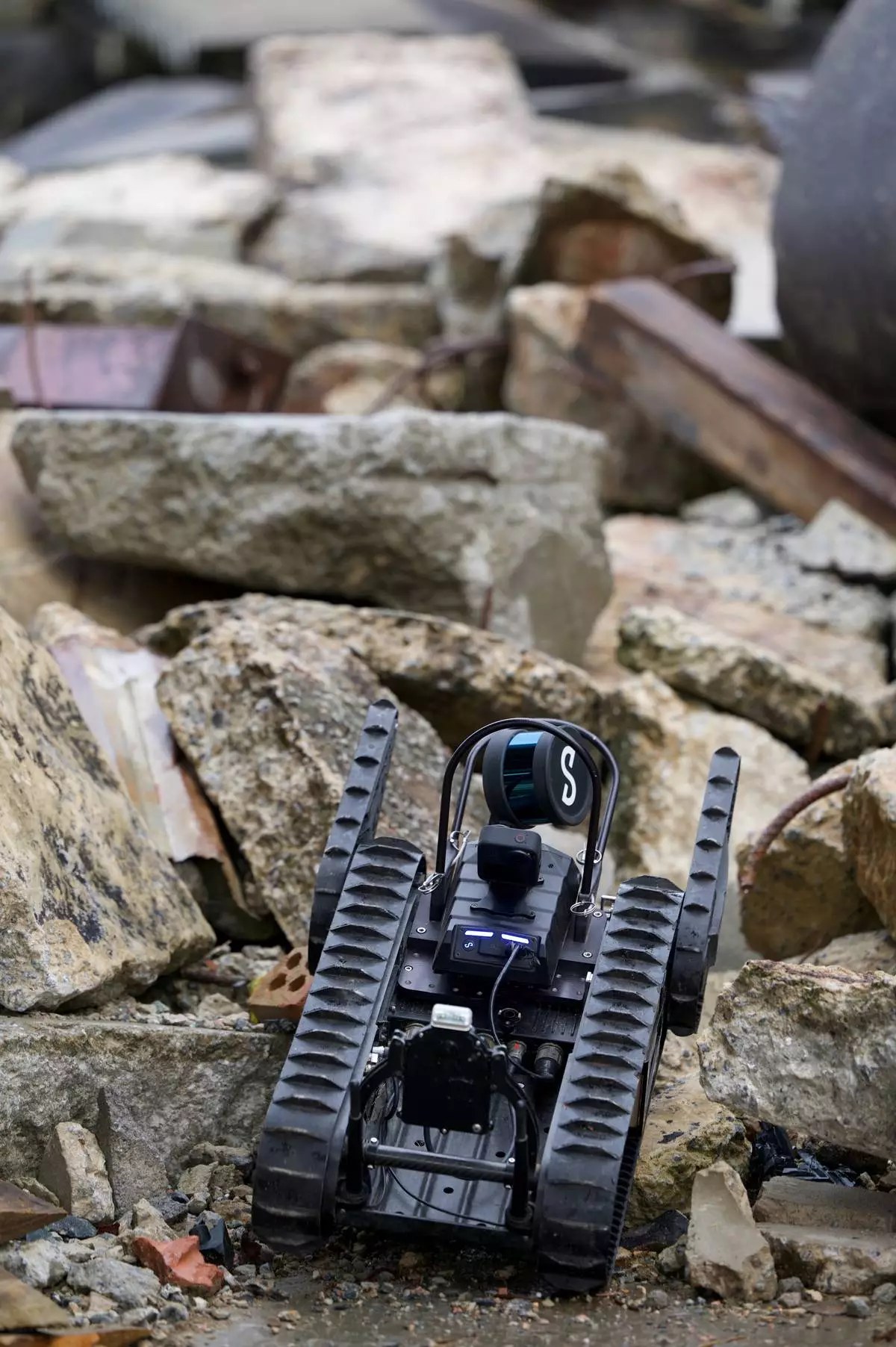
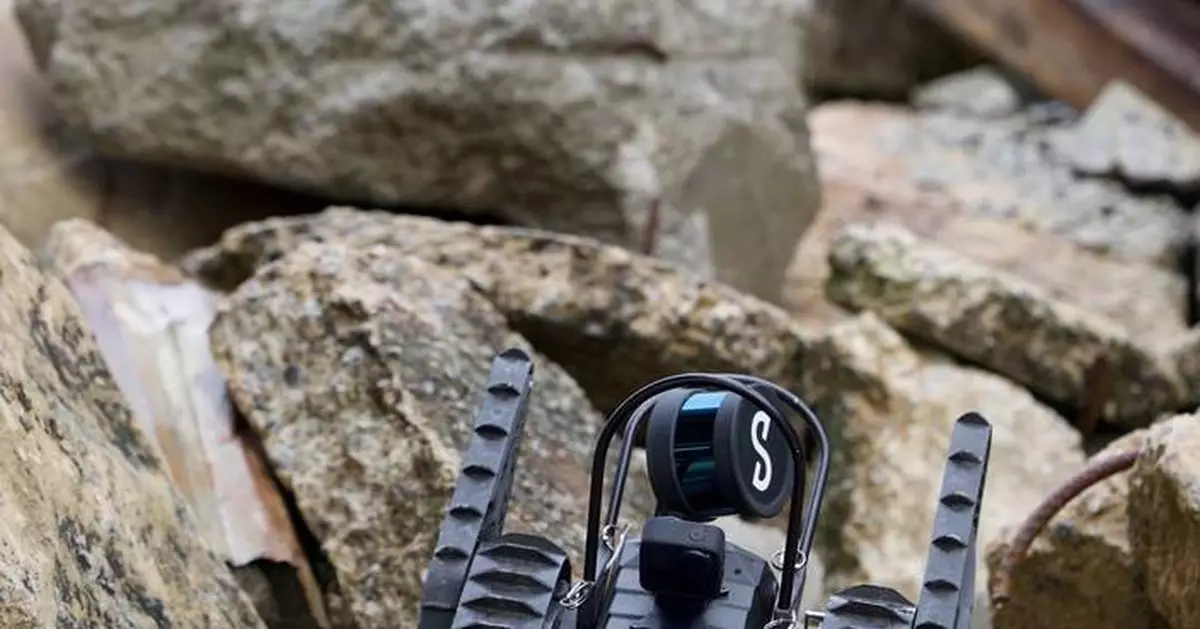
Unveiled at Modern Day Marine 2026, Teledyne FLIR Defense announced the expansion of its Third-Party Payload Integration Program with the certification of Emesent’s Hovermap LiDAR Payload. The agreement will deliver Emesent’s GPS-denied 3D-mapping capabilities across Teledyne FLIR’s unmanned aerial systems (UAS), ground robots, and radiation detection platforms. Mounted on the company’s SUGV™ 325 ground robot, Hovermap provides users with persistent 3D awareness of complex enclosed environments streamed in real-time.


Unveiled at Modern Day Marine 2026, Teledyne FLIR Defense announced the expansion of its Third-Party Payload Integration Program with the certification of Emesent’s Hovermap LiDAR Payload. The agreement will deliver Emesent’s GPS-denied 3D-mapping capabilities across Teledyne FLIR’s unmanned aerial systems (UAS), ground robots, and radiation detection platforms. Mounted on the company’s SUGV™ 325 ground robot, Hovermap provides users with persistent 3D awareness of complex enclosed environments streamed in real-time.
SEOUL, South Korea (AP) — An appeals court has raised to four years the sentence for the wife of South Korea’s ousted President Yoon Suk Yeol for corruption, about two months after her husband was sentenced to life in prison for rebellion.

In January, ex-first lady Kim Keon Hee was sentenced to 20 months in prison in a district court for receiving gifts including a Graff diamond necklace and a Chanel bag from the Unification Church in return for promises of political favors. However, she was acquitted of involvement in a stock price manipulation scheme before she became first lady.

Both parties appealed, and on Tuesday, the Seoul High Court raised her jail term to four years by convicting her of receiving another Chanel bag from the church and the price rigging charge.

The presidential couple suffered a dramatic fall from grace after Yoon’s martial law imposition in December 2024 led to his impeachment and eventually removal from office. Yoon faces a slew of criminal trials related to his martial law debacle and other scandals. Investigators say Kim was not involved in Yoon’s martial law enforcement.

The Seoul High Court said that a first lady, being closest to a president, represents the country together with her husband and has a big influence on him. It said Kim failed to meet public expectations for her integrity and rather exploited her high-profile status to get the gifts from the Unification Church.

Both Kim and an independent counsel have one week to appeal to the Supreme Court, the country’s top court. Independent counsel Min Joong-ki’s team earlier requested a 15-year term; Kim's defense team has argued Min’s investigation was politically driven.

Kim has been in jail since last August when the Seoul district court approved a warrant to arrest her, citing the chance she might destroy evidence. When Yoon was in office, Kim was embroiled in a series of scandals that hurt her husband’s approval rating and provided relentless political ammunition to his rivals.

On Dec. 3, 2024, Yoon, a conservative, abruptly declared martial law and sent troops and police officers to the National Assembly, saying he aimed to eliminate “anti-state forces” and “shameless North Korea sympathizers.” He has defended his action, calling it a desperate attempt to draw public support for his fight against the liberal opposition Democratic Party which obstructed his agenda.

In February, the Seoul Central District Court found Yoon guilty of rebellion for mobilizing military and police forces in an illegal attempt to seize the Assembly, arrest political opponents and establish unchecked power for an indefinite period.

Supporters of former South Korean President Yoon Suk Yeol watch a live TV broadcast that shows his wife Kim Keon Hee attending a hearing during a rally outside of the Seoul High Court in Seoul, South Korea, Tuesday, April 28, 2026. AP Photo/Ahn Young-joon)

Supporters of former South Korean President Yoon Suk Yeol watch a live TV broadcast that shows his wife Kim Keon Hee attending a hearing during a rally outside of the Seoul High Court in Seoul, South Korea, Tuesday, April 28, 2026. AP Photo/Ahn Young-joon)

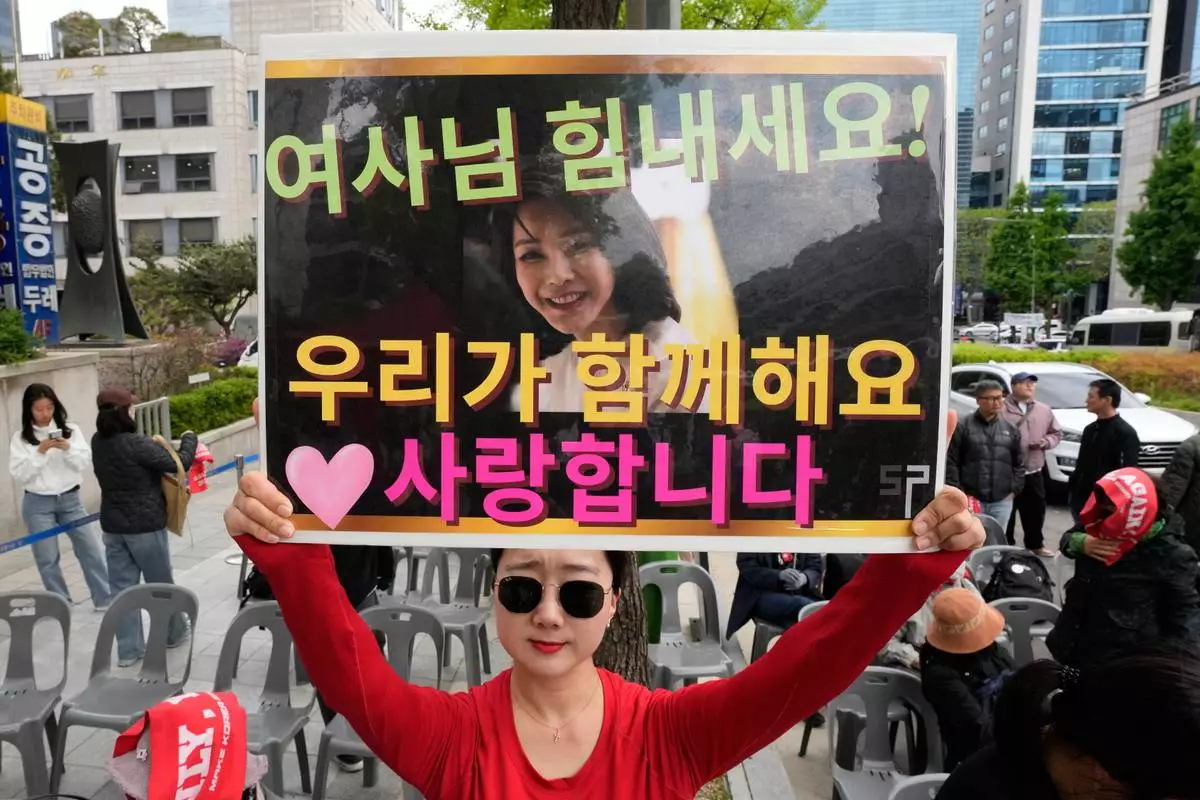
A supporter of former South Korean President Yoon Suk Yeol holds up a banner showing an image of his wife Kim Keon Hee during a rally outside of the Seoul High Court in Seoul, South Korea, Tuesday, April 28, 2026. The letters read "Stay strong, Madam! and We love you" (AP Photo/Ahn Young-joon)

A supporter of former South Korean President Yoon Suk Yeol holds up a banner showing an image of his wife Kim Keon Hee during a rally outside of the Seoul High Court in Seoul, South Korea, Tuesday, April 28, 2026. The letters read "Stay strong, Madam! and We love you" (AP Photo/Ahn Young-joon)

An image of former South Korean President Yoon Suk Yeol and his wife Kim Keon Hee is seen during a rally by supporters outside of the Seoul High Court in Seoul, South Korea, Tuesday, April 28, 2026. The letters read "Not Guilty." (AP Photo/Ahn Young-joon)

An image of former South Korean President Yoon Suk Yeol and his wife Kim Keon Hee is seen during a rally by supporters outside of the Seoul High Court in Seoul, South Korea, Tuesday, April 28, 2026. The letters read "Not Guilty." (AP Photo/Ahn Young-joon)

Recommended Articles