Mike Smith hugged Dena Glatt in the winner's circle after riding So Happy to victory in the San Vincente Stakes at Santa Anita Park in January, a joyous sign that the unheralded horse trained by her husband, Mark, might be better than expected.
“We were all excited about it,” Smith said. “And then tragedy struck.”
Dena Glatt died of heart failure just over a month later, at the age of 57. Mark now wears a bracelet with some of her ashes in it so “she’ll always be with me.”
So Happy is Mark Glatt's first Kentucky Derby horse in more than 30 years in the business, potentially the second-generation horseman's shining career achievement coming at a time of overwhelming grief.
“Some of it’s amazing. Some of it’s so sad,” Smith said Monday. “It’s just an emotional roller coaster, I can imagine, for Mark. He’s so happy on one hand, and then he’s so sad on the other because Dena’s not with him. But she is. I really feel like she is. I feel her presence, and I know how much she liked this horse.”
Nearly everything about this underdog journey makes So Happy a fan favorite, starting before he was even foaled. Decades ago, longtime breeder Leverett Miller bought his wife, Linda, a filly she named So Divine. He then took a suggestion that one of his mares, So Cunning, would be a good match with sire Runhappy.
“I said ‘OK, we’ll try it,’” recalled Miller, now 94.
The resulting colt was So Happy, initially sold for $12,000 and then $20,000 as a yearling sale as recently as October 2024. Even the $150,000 Glatt paid for him as a 2-year-old in training in March 2025 is a bargain for a thoroughbred of Triple Crown quality.
"The horse doesn’t know what you purchased him for, thank goodness," said Ana Maron, who co-owns the horse with husband Hans and Robert Norman's Norman Stables.
Combining the parents' names along with a joke about Glatt's stoic public disposition led to the moniker So Happy, which is what he has made everyone around him since his first race at Del Mar on Nov. 22. He finished first in a field of 10, leading Smith to wonder: “Who is this guy, man? Where is this coming from?”
Miller said the success was a shocker. Runhappy was a champion sprinter, but So Happy showed he could handle longer distances, which made the 1 1/4-mile Kentucky Derby a realistic possibility. His only loss came March 7, on the five-year anniversary of Linda Miller dying of cancer at age 70.
So Happy is a four-legged piece of the Miller family's legacy.
“It’s hard to put into words, isn’t it?” Leverett said. “He’s so much a part of what we’ve been doing for so many years, me and my wife and my children."
The Miller house was unusually silent when So Happy ran down the stretch in the Santa Anita Derby on April 4, beating Bob Baffert-trained favorite Potente and erasing any doubt about being a Derby contender.
“He proved himself around two turns (and) improved tremendously,” Glatt said. “He was actually pulling away late in the race. You couldn’t say that distance was really a problem for him off of such a strong effort.”
Smith, who at 60 is aiming to become the oldest jockey to win the Kentucky Derby, said he thought Dena Glatt was pushing them along that day. He also does not think anyone has seen the best yet from So Happy, who opened at 15-1 in the field of 20.
“He gets better with each and every race, it seems like, which is good,” Smith said. “He’s not flashy in the morning at all. He kind of just does what he has to do, but, man, when he gets there in the afternoon it’s like he knows the difference between practice and game time."
Hans Maron, who along with his wife started Saints or Sinners racing stable, is accustomed to watching a horse run, talking about it and moving on. So Happy has put he and Ana on a surreal path to Churchill Downs on the first Saturday in May that neither could have anticipated.
“This one’s a little different,” Hans said. “It’s been a daily discussion, worry. It’s just a little bit of a journey, but at the same time amazing. The horse has taken us here, we’re super excited and we’re just looking forward to get to the race healthy and sound and just hope he shows up for us.”
Asked what it would mean if So Happy wins the Kentucky Derby, Miller chuckled and pointed out one of the cruel realities of the sport.
“Oh my gosh,” he said. “I certainly wish that a great deal. But I also realize that it’s very unlikely.”
Only one horse will get that honor, and Todd Pletcher-trained Renegade and Brad Cox's Commandment and Further Ado look like better bets. But So Happy has exceeded every expectation so far and, in turn, put Glatt's name on the map.
Growing up in the Pacific Northwest, winning the Derby was a dream. If it happens, he'd consider it the biggest thrill of his life behind only his children being born, and So Happy has made it possible.
“He's taken me to my first Kentucky Derby," Glatt said. “He’s been very successful to this point, so, yeah, he’s high on the priority list at the moment.”
The Marons have seen it all, from the time they first became friends to dinner parties and the emotional toll of this past winter, and they get choked up just talking about Dena. For the mom-and-pop-shop owners, this is not only a chance to honor her and celebrate Smith but to show horse racing is accessible.
“Everyone thinks this sport is only for the rich — it’s the sport of kings — but it kind of lets people know that you can also get in the game,” Ana Maron said. “A family can do it. It’s not just for the rich and wealthy. It’s for anybody.”
She doesn't believe in coincidences. She does believe everything happens for a reason.
So Happy encapsulates that, with Dena Glatt perhaps his guardian angel.
“I know that she’s so proud of Mark, and she’d want him to hold his head up and enjoy this: really enjoy it, go out there and see what it’s all about,” Smith said. “He’s finally got one that’s made it there, and I’m so happy for him. Mark, for him, it’s exciting but it’s also sad.”
AP horse racing: https://apnews.com/hub/horse-racing
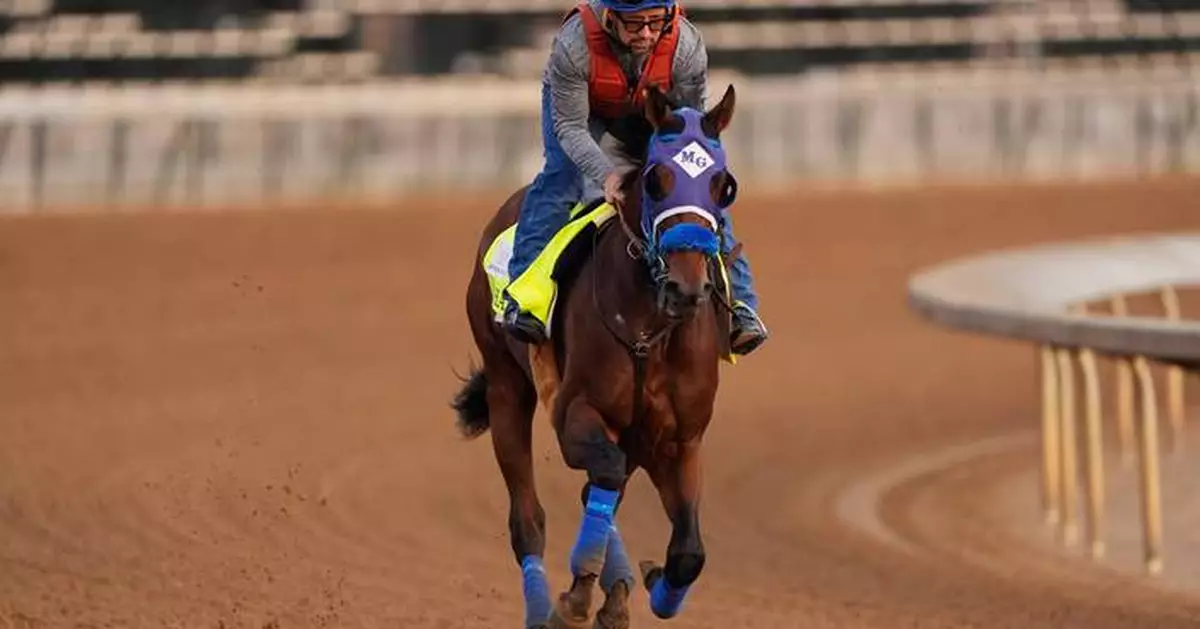
Kentucky Derby entrant So Happy works out at Churchill Downs Monday, April 27, 2026, in Louisville, Ky. (AP Photo/Charlie Riedel)
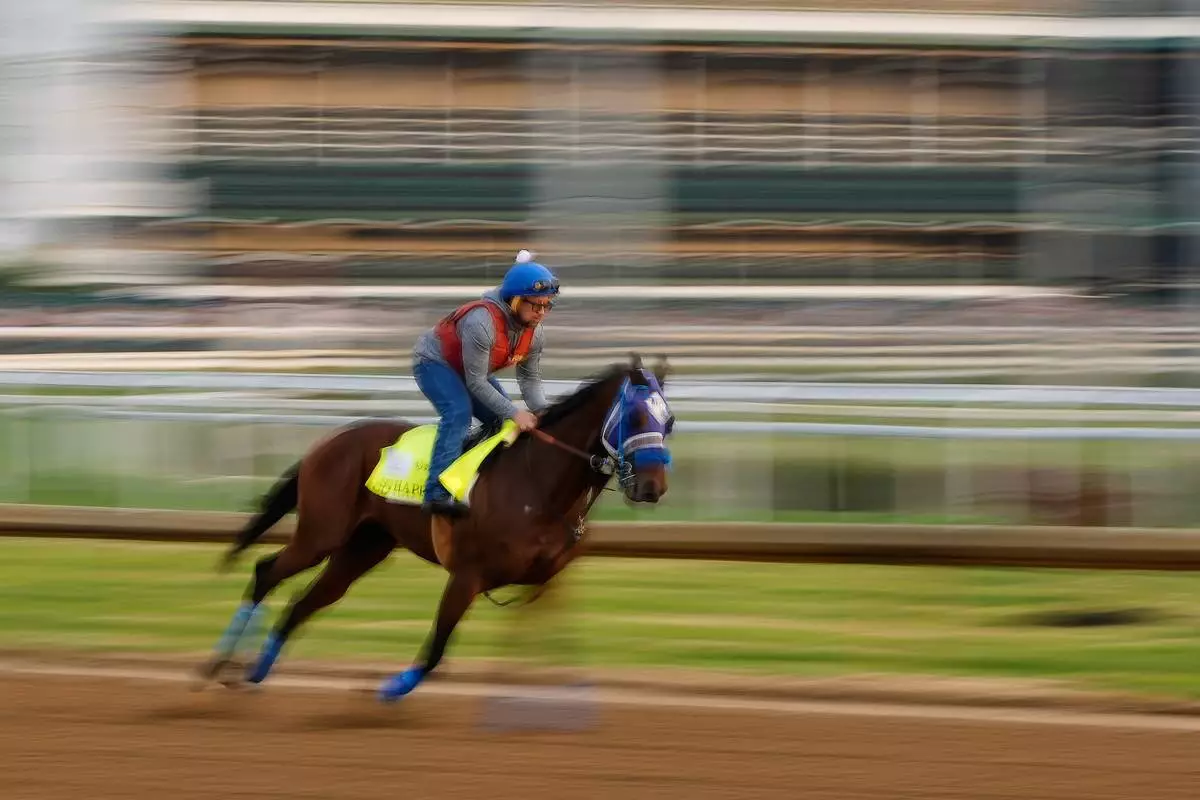
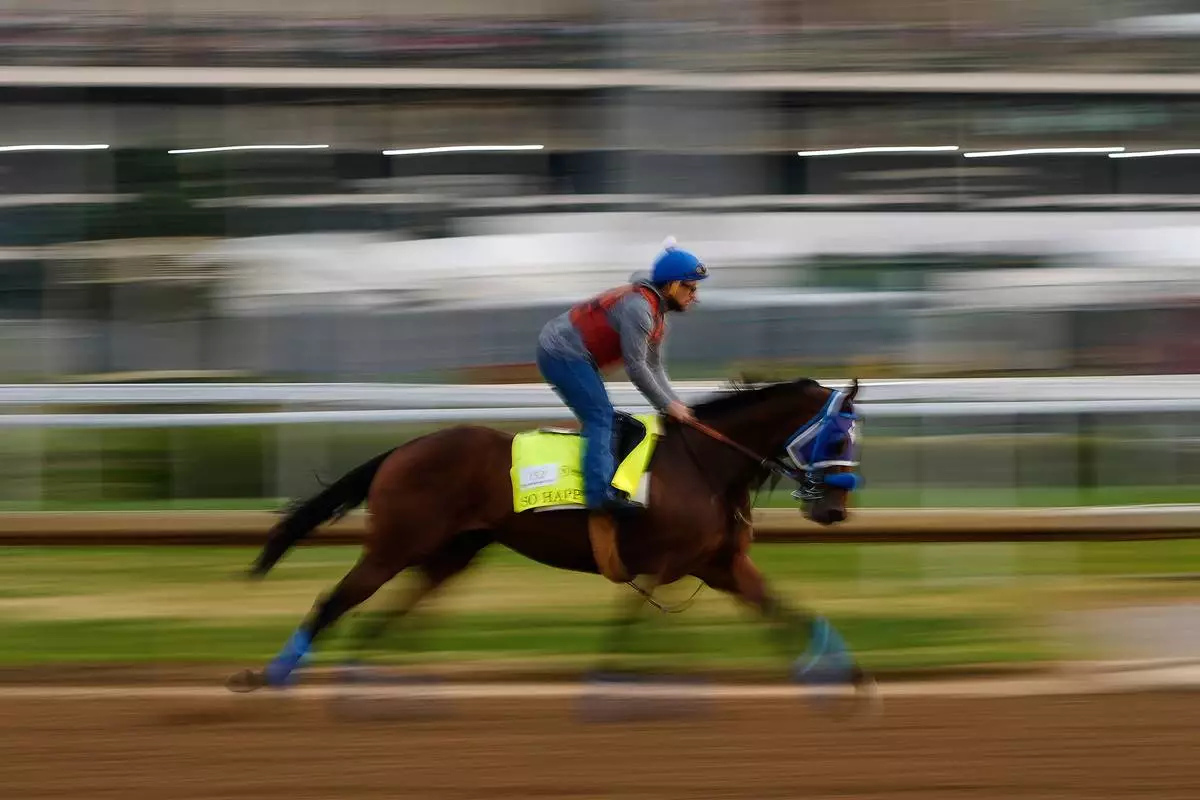
Kentucky Derby entrant So Happy works out at Churchill Downs Monday, April 27, 2026, in Louisville, Ky. (AP Photo/Charlie Riedel)
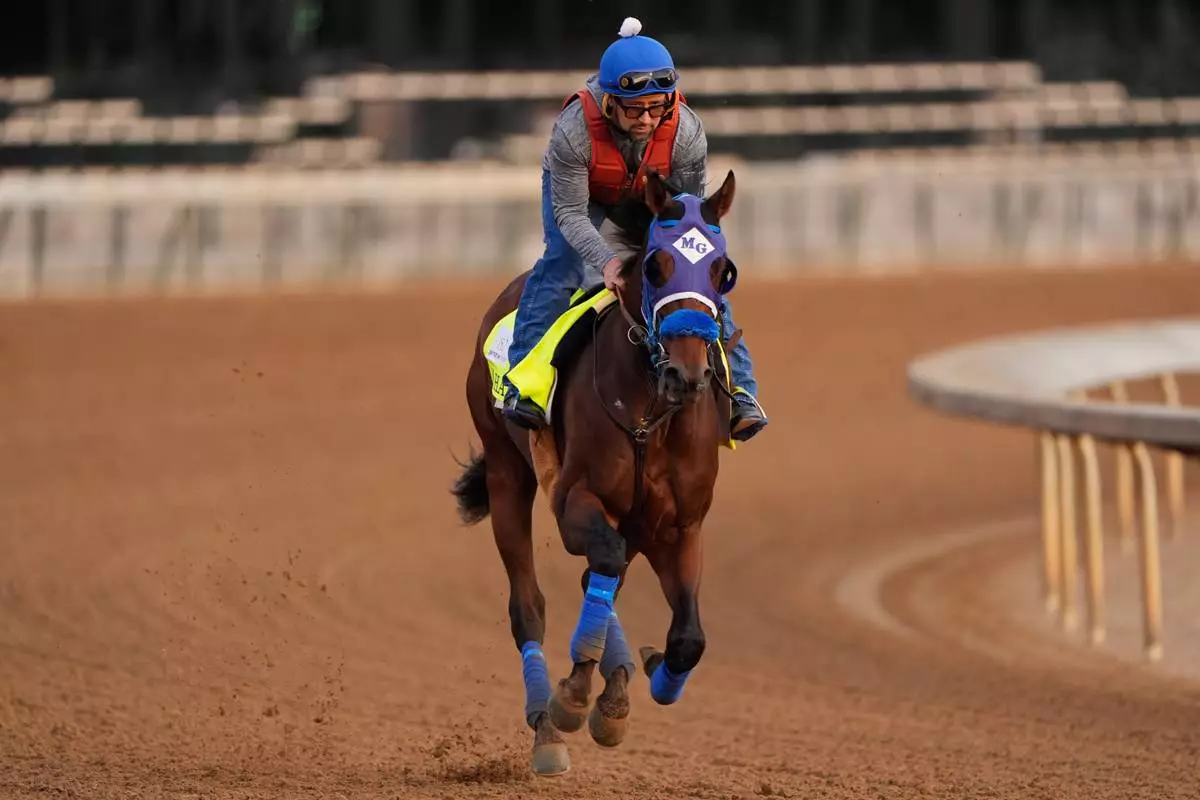
Kentucky Derby entrant So Happy works out at Churchill Downs Monday, April 27, 2026, in Louisville, Ky. (AP Photo/Charlie Riedel)