|
- Arm AGI CPU-based platforms increase performance-per-watt for modern workloads
- High-density liquid-cooled systems accelerate HPC and AI workloads
- Flexible infrastructure supports agentic AI across cloud and enterprise environments
SAN JOSE, Calif., April 28, 2026 /PRNewswire/ -- Super Micro Computer, Inc. (NASDAQ: SMCI), an AI, Enterprise, Storage, 5G/Edge Total Solution provider, today expanded its Data Center Building Block Solutions (DCBBS) portfolio with new Arm®-based server platforms powered by the new Arm AGI CPU, and new Open Compute Project (OCP) ORv3-compliant rack offerings. Supermicro leads the industry with over 20 OCP Inspired™ systems, which incorporate various OCP technologies and form factors, to simplify open data center deployments.
"Supermicro continues to advance its DCBBS with an expanded portfolio of Arm-based platforms and OCP systems for next-gen AI and HPC," said Charles Liang, president and CEO of Supermicro. "With high-density, liquid-cooled systems and energy-efficient Arm architectures, we enable scalable, flexible data centers that maximize performance-per-watt and accelerate AI adoption across cloud and enterprise environments."
DCBBS delivers complete, modular AI infrastructure. Built from validated components and sub-systems, DCBBS provides end-to-end deployment flexibility – from individual GPUs and networking switches to complete racks, site infrastructure, management software, and professional services.
"The rapid growth of AI is reshaping infrastructure requirements across the data center," said Mohamed Awad, Executive Vice President, Cloud AI Business Unit, Arm. "Arm AGI CPU-based platforms, built on Arm Neoverse technology, provide the foundation for this new generation of compute, and our collaboration with Supermicro brings these capabilities to market in flexible, high-density systems optimized for modern AI and cloud environments."
"By integrating energy-efficient Arm Neoverse platforms into Supermicro's ORv3 portfolio, the OCP Community is extending the open supply chain for AI infrastructure. This collaboration delivers the modular, liquid-cooled building blocks required to scale high-performance, energy-efficient data centers across the entire ecosystem," said Steve Helvie, Chief Emerging Ecosystem Officer, OCP Foundation.
Supermicro's expanded OCP ORv3 portfolio includes new rack configurations and purpose-built servers designed for seamless integration and high-performance workloads. A new 2U GPU system, compatible with 21-inch OCP ORv3 racks, features dual Intel® Xeon® 6 6700 series processors with P-cores, a 1400A busbar inspired by OCP with power shelves, and DC-SCM support. The system integrates the NVIDIA HGX™ B300 8-GPU platform with 5th Generation NVLink®, delivering the compute density and bandwidth required for large-scale AI deployments. Learn more here.
Also available for ORv3 environments is Supermicro's FlexTwin™ system, which is a high-density, dual-node platform that integrates two independent servers in a 1-OU chassis. Designed for HPC and AI workloads, the system supports the latest Intel processors and future Intel and AMD CPUs. The FlexTwin leverages Supermicro's DLC-2 liquid cooling solution for CPUs, memory, and VRMs—removing up to 90%* of system generated heat. Learn more here.
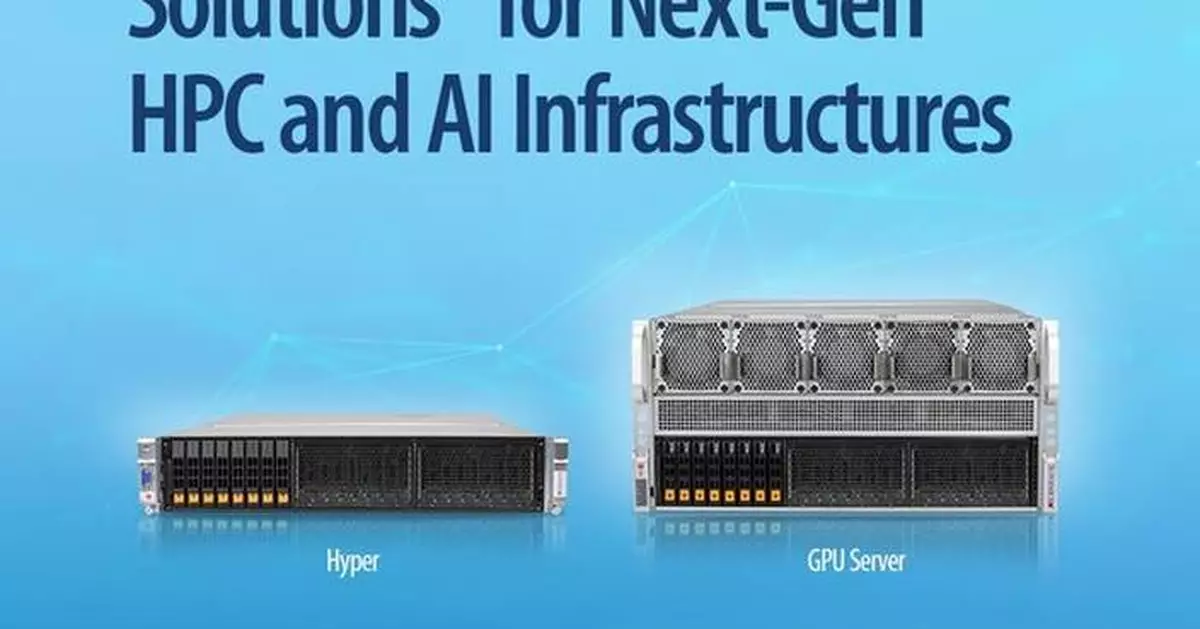
In addition, Supermicro is making available two new Arm-based systems powered by the recently announced Arm AGI CPU in 2U and 5U form factors, delivering high core density, expanded memory capacity, and flexible I/O for energy-efficient, scalable agentic AI infrastructure.
Systems Overview:
- Compact 2U Server
- Arm AGI CPU with 64, 128, or 136 Arm Neoverse® V3 cores
- 24 DIMM slots, for up to 6TB of DDR5 memory
- 8 front hot-swap 2.5" NVMe drive bays
- Details here
- Expanded 5U server
- Arm AGI CPU with 64, 128, or 136 Arm Neoverse V3 cores
- 24 DIMM slots, for up to 6TB of DDR5 memory
- 8 front hot-swap 2.5" NVMe drive bays
- Additional PCIe lanes for increasing the number of GPUs, in an I/O rich configuration
- Details here
Supermicro promotes staff volunteering at the Open Compute Project Foundation, where the company holds a seat on the OCP Advisory Board. Learn more about how Supermicro supports OCP activities and initiatives here.
*Based on Supermicro estimates
About Super Micro Computer, Inc.
Supermicro (NASDAQ: SMCI) is a global leader in Application-Optimized Total IT Solutions. Founded and operating in San Jose, California, Supermicro is committed to delivering first-to-market innovation for Enterprise, Cloud, AI, and 5G Telco/Edge IT Infrastructure. We are a Total IT Solutions provider with server, AI, storage, IoT, switch systems, software, and support services. Supermicro's motherboard, power, and chassis design expertise further enables our development and production, enabling next-generation innovation from cloud to edge for our global customers. Our products are designed and manufactured in-house (in the US, Asia, and the Netherlands), leveraging global operations for scale and efficiency and optimized to improve TCO and reduce environmental impact (Green Computing). The award-winning portfolio of Server Building Block Solutions® allows customers to optimize for their exact workload and application by selecting from a broad family of systems built from our flexible and reusable building blocks that support a comprehensive set of form factors, processors, memory, GPUs, storage, networking, power, and cooling solutions (air-conditioned, free air cooling or liquid cooling).
Supermicro, Server Building Block Solutions, and We Keep IT Green are trademarks and/or registered trademarks of Super Micro Computer, Inc.
All other brands, names, and trademarks are the property of their respective owners.
- Arm AGI CPU-based platforms increase performance-per-watt for modern workloads
- High-density liquid-cooled systems accelerate HPC and AI workloads
- Flexible infrastructure supports agentic AI across cloud and enterprise environments
SAN JOSE, Calif., April 28, 2026 /PRNewswire/ -- Super Micro Computer, Inc. (NASDAQ: SMCI), an AI, Enterprise, Storage, 5G/Edge Total Solution provider, today expanded its Data Center Building Block Solutions (DCBBS) portfolio with new Arm®-based server platforms powered by the new Arm AGI CPU, and new Open Compute Project (OCP) ORv3-compliant rack offerings. Supermicro leads the industry with over 20 OCP Inspired™ systems, which incorporate various OCP technologies and form factors, to simplify open data center deployments.
"Supermicro continues to advance its DCBBS with an expanded portfolio of Arm-based platforms and OCP systems for next-gen AI and HPC," said Charles Liang, president and CEO of Supermicro. "With high-density, liquid-cooled systems and energy-efficient Arm architectures, we enable scalable, flexible data centers that maximize performance-per-watt and accelerate AI adoption across cloud and enterprise environments."
DCBBS delivers complete, modular AI infrastructure. Built from validated components and sub-systems, DCBBS provides end-to-end deployment flexibility – from individual GPUs and networking switches to complete racks, site infrastructure, management software, and professional services.
"The rapid growth of AI is reshaping infrastructure requirements across the data center," said Mohamed Awad, Executive Vice President, Cloud AI Business Unit, Arm. "Arm AGI CPU-based platforms, built on Arm Neoverse technology, provide the foundation for this new generation of compute, and our collaboration with Supermicro brings these capabilities to market in flexible, high-density systems optimized for modern AI and cloud environments."
"By integrating energy-efficient Arm Neoverse platforms into Supermicro's ORv3 portfolio, the OCP Community is extending the open supply chain for AI infrastructure. This collaboration delivers the modular, liquid-cooled building blocks required to scale high-performance, energy-efficient data centers across the entire ecosystem," said Steve Helvie, Chief Emerging Ecosystem Officer, OCP Foundation.
Supermicro's expanded OCP ORv3 portfolio includes new rack configurations and purpose-built servers designed for seamless integration and high-performance workloads. A new 2U GPU system, compatible with 21-inch OCP ORv3 racks, features dual Intel® Xeon® 6 6700 series processors with P-cores, a 1400A busbar inspired by OCP with power shelves, and DC-SCM support. The system integrates the NVIDIA HGX™ B300 8-GPU platform with 5th Generation NVLink®, delivering the compute density and bandwidth required for large-scale AI deployments. Learn more here.
Also available for ORv3 environments is Supermicro's FlexTwin™ system, which is a high-density, dual-node platform that integrates two independent servers in a 1-OU chassis. Designed for HPC and AI workloads, the system supports the latest Intel processors and future Intel and AMD CPUs. The FlexTwin leverages Supermicro's DLC-2 liquid cooling solution for CPUs, memory, and VRMs—removing up to 90%* of system generated heat. Learn more here.
In addition, Supermicro is making available two new Arm-based systems powered by the recently announced Arm AGI CPU in 2U and 5U form factors, delivering high core density, expanded memory capacity, and flexible I/O for energy-efficient, scalable agentic AI infrastructure.
Systems Overview:
- Compact 2U Server
- Arm AGI CPU with 64, 128, or 136 Arm Neoverse® V3 cores
- 24 DIMM slots, for up to 6TB of DDR5 memory
- 8 front hot-swap 2.5" NVMe drive bays
- Details here
- Expanded 5U server
- Arm AGI CPU with 64, 128, or 136 Arm Neoverse V3 cores
- 24 DIMM slots, for up to 6TB of DDR5 memory
- 8 front hot-swap 2.5" NVMe drive bays
- Additional PCIe lanes for increasing the number of GPUs, in an I/O rich configuration
- Details here
- Arm AGI CPU with 64, 128, or 136 Arm Neoverse V3 cores
- 24 DIMM slots, for up to 6TB of DDR5 memory
- 8 front hot-swap 2.5" NVMe drive bays
- Additional PCIe lanes for increasing the number of GPUs, in an I/O rich configuration
- Details here
Supermicro promotes staff volunteering at the Open Compute Project Foundation, where the company holds a seat on the OCP Advisory Board. Learn more about how Supermicro supports OCP activities and initiatives here.
*Based on Supermicro estimates
About Super Micro Computer, Inc.
Supermicro (NASDAQ: SMCI) is a global leader in Application-Optimized Total IT Solutions. Founded and operating in San Jose, California, Supermicro is committed to delivering first-to-market innovation for Enterprise, Cloud, AI, and 5G Telco/Edge IT Infrastructure. We are a Total IT Solutions provider with server, AI, storage, IoT, switch systems, software, and support services. Supermicro's motherboard, power, and chassis design expertise further enables our development and production, enabling next-generation innovation from cloud to edge for our global customers. Our products are designed and manufactured in-house (in the US, Asia, and the Netherlands), leveraging global operations for scale and efficiency and optimized to improve TCO and reduce environmental impact (Green Computing). The award-winning portfolio of Server Building Block Solutions® allows customers to optimize for their exact workload and application by selecting from a broad family of systems built from our flexible and reusable building blocks that support a comprehensive set of form factors, processors, memory, GPUs, storage, networking, power, and cooling solutions (air-conditioned, free air cooling or liquid cooling).
Supermicro, Server Building Block Solutions, and We Keep IT Green are trademarks and/or registered trademarks of Super Micro Computer, Inc.
All other brands, names, and trademarks are the property of their respective owners.
** This press release is distributed by PR Newswire through automated distribution system, for which the client assumes full responsibility. **

Supermicro Expands Data Center Building Block Solutions® Flexibility with Arm-Based Platforms and OCP Systems for Next-Gen AI Infrastructure
DUBLIN, April 28, 2026 /PRNewswire/ -- Aon plc (NYSE: AON), a leading global professional services firm, today released its inaugural Human Capital Trends Study, revealing a critical gap at the center of enterprise AI strategies: organizations recognize their people will drive AI success, but they are not investing in their people strategies.
According to the study, 88 percent of employers agree that AI will require their workforce to develop new skills and rank human capabilities such as adaptability, leadership and change management as the most critical drivers of success in the next three years, even ahead of technical skills.
While 73 percent of organizations have already deployed or are piloting AI programs, only 18 percent report that most of their workforce has participated in AI reskilling or upskilling programs in the past year. The gap is most visible where AI strategies are advanced in isolation — without clear alignment to business objectives, operating models or the workforce capabilities required to deliver them.
Only 28 percent of organizations surveyed have hired employees with AI expertise, underscoring a continued reliance on developing talent from within. The result is a disconnect between what organizations know will drive success and how they are prioritizing resources — one that is emerging as a material risk to enterprise value.
"The winners in the application of AI will lead with world-class people strategies," said Greg Case, president and CEO of Aon. "AI represents a historic opportunity for growth, particularly for organizations that approach transformation by integrating people and technology — so they evolve in lockstep. By closing the gap between ambition and readiness, leaders can act with confidence, strengthen long‑term resilience and win today and in the future."
Workforce Readiness Is Shaping How AI Performs at Scale
As organizations invest heavily in AI, many are deploying technology faster than they are building the skills, structures and human support needed to make it effective. The study finds that many organizations continue to prioritize short-term efficiency gains over developing the workforce capabilities needed to sustain impact. Eighty percent of organizations cite automating routine tasks as a primary objective for AI; only 35 percent prioritize workforce upskilling and reskilling.
At the same time leaders acknowledge that human capabilities will increasingly determine AI success, 84 percent of employers say human strengths will become more important as automation increases and 37 percent of leaders identify future workforce skills gaps as their top concern over the next five to 10 years. Together, these findings point to a clear misalignment: organizations are accelerating automation while underinvesting in the people required to operationalize it differently.
The study underscores that people risks are business risks. Workforce readiness is a critical factor in translating AI investment into consistent execution. When leaders lack clear expectations and guardrails for how AI is used, or when readiness efforts lag behind deployment, organizations face slower adoption, fragmented decision-making and greater operational and reputational exposure — limiting the performance gains AI is expected to deliver.
"AI success ultimately depends on their people, but most are still investing primarily in the technology. That disconnect is where opportunity is lost," said Byron Beebe, CEO of Human Capital for Aon. "Closing the readiness gap takes a coordinated approach — building skills and confidence, setting clear governance and enabling leaders to guide change — so technology investments translate into sustainable performance and resilience."
Organizations that Operationalize AI Also Invest in Their People
The study also finds that organizations further along in AI deployment demonstrate stronger alignment between their technology and workforce strategy. For example, organizations that have fully deployed AI are more than twice as likely to describe their leadership's commitment to employee wellbeing as strong and visible compared to those who've discussed AI but haven't taken action.
This suggests that the ability to operationalize AI is closely tied to a broader focus on human sustainability, engagement and trust – factors that enable organizations to scale change effectively and sustain performance over time.
Turning AI Investment into Impact
Beyond identifying risk, Aon's Human Capital Trends Study outlines practical actions organizations can take to close the readiness gap and unlock value from AI. These include aligning AI strategy with workforce planning; assessing AI skills and future capability needs and investing in structured, organization-wide reskilling and upskilling strengthening leadership capability to guide change with clear governance and guardrails; and using more mature, connected people data and analytics to make smarter decisions about where to invest. Organizations that act decisively can build more resilient, confident and productive workforces and fully realize the promise of AI.
As AI adoption accelerates, organizations face a clear choice: continue prioritizing technology alone or invest equally in the workforce required to make it effective. Those that close the gap between intention and action by building skills, strengthening culture and enabling leadership will be best positioned to convert AI into a durable competitive advantage.
Read the full 2026 Human Capital Trends Study here.
ENDS
About Aon
Aon plc (NYSE: AON) exists to shape decisions for the better — to protect and enrich the lives of people around the world. Through actionable analytic insight, globally integrated Risk Capital and Human Capital expertise, and locally relevant solutions, our colleagues provide clients in over 120 countries with the clarity and confidence to make better risk and people decisions that protect and grow their businesses.
Follow Aon on LinkedIn, X, Facebook and Instagram. Stay up-to-date by visiting Aon's newsroom and sign up for news alerts here.
Media Contact
mediainquiries@aon.com
Toll-free (U.S., Canada and Puerto Rico): +1 833 751 8114
International: +1 312 381 3024
** This press release is distributed by PR Newswire through automated distribution system, for which the client assumes full responsibility. **

Nearly 90 percent of companies believe people will determine AI success, but far fewer are investing in related people strategies, Inaugural Aon Study Finds