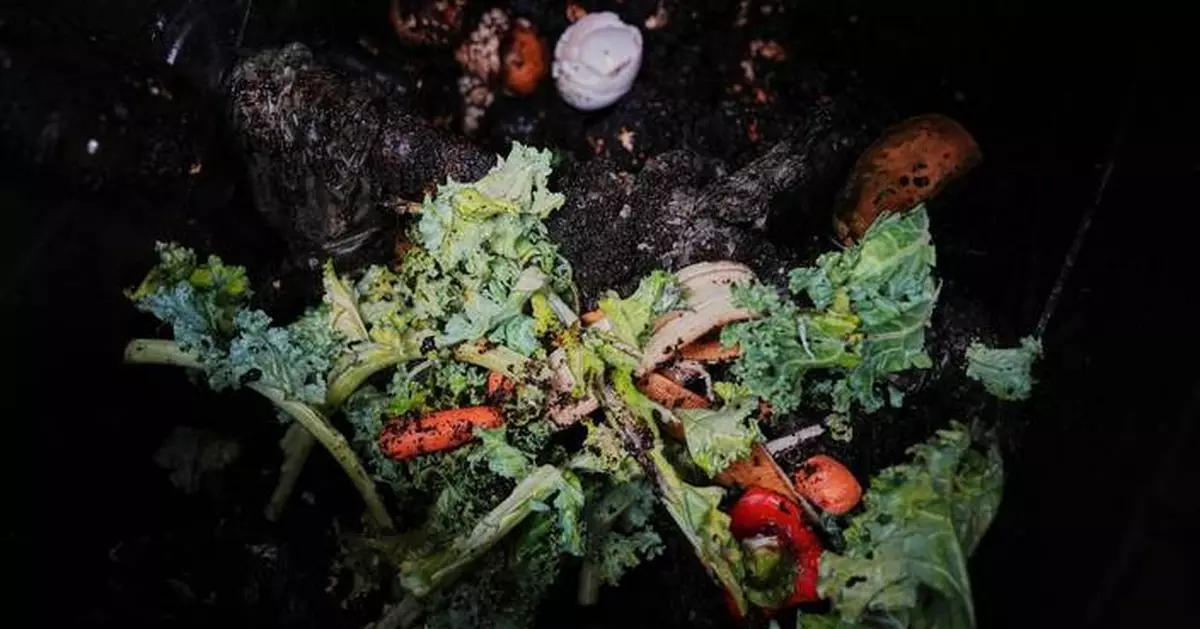
I love the idea of transforming garbage into free mulch and fertilizer. Composting is a win-win: I save money and keep my eggshells, coffee grounds and weeds out of a landfill.
Compost is the single best additive available for improving any soil type. Is your soil too sandy? Add compost. Too dense? Add compost. Lacking nutrients? Say it with me now: Add compost! That’s why we gardeners call it “black gold.”
It’s as close to a cure-all as we can get, increasing the water-holding capacity of sand and the drainage of clay, while introducing billions of beneficial organisms that will nourish your plants for a long time.
Before starting, decide whether you want an open or contained pile. From what I’ve seen, compost bins and tumblers could set you back anywhere from $50 to $300. This might be worth it to you if you’re concerned about aesthetics.
But an open pile in a back corner of the yard would work just as well. Or, you could compromise and make your own receptacle by bending a length of chicken wire into a round or oval shape, fastening its ends with strong twine or zip ties, then anchoring it into the ground with stakes.
Your pile or bin should be close enough to avoid an out-of-sight-out-of-mind situation, but maybe not right next to where you’re grilling dinner. And despite what you might think, a properly constructed pile of rotting garbage won’t create unpleasant odors.
There are two ingredient categories in compost, “browns” and “greens,” and they should be added in almost equal parts.
Browns, which are usually but not always brown, include spent perennials, dry leaves, cut-up (undyed) leather, twigs, paper and straw. They should make up 50% or slightly more of your pile’s ingredients. Browns are full of carbon and will keep things from smelling badly.
Green materials are rich in nitrogen and, likewise, are mostly green, or at least fresher than browns. They include grass clippings, fruit and vegetable scraps, and freshly picked weeds that have not gone to seed. Cornstarch packing peanuts and coffee grounds also are rich in nitrogen, so even though they defy this color-coding principle, they are considered greens, which help speed the decomposition of all the ingredients in the pile. Greens should make up 50% or slightly less of your pile.
Cutting up large or coarse ingredients like banana peels will speed up their decomposition.
Never add meat, fish, dairy, fat or oils to compost. Avoid diseased plants or weeds that have gone to seed, and skip plastic, glass or anything that won’t break down. Manure from animals that don’t consume meat (rabbits, cows, horses) is fine, but do not use waste from carnivores. That means leave dog poop and kitty litter out.
Keep your pile moist but not soggy. Monitor its moisture and sprinkle a little water on it if it begins to dry out. Give it another sprinkle every time you add a new layer of materials.
As it decomposes, the bacteria in the pile will cause its center to heat up and “cook” your compost. Turn the pile with a pitchfork or spade (or spin your tumbler) about twice a week to keep the heat evenly distributed.
The process can take anywhere from a couple of months (if your pile is small and you toss and moisten it regularly) to a couple of years (for very large or neglected piles). Regardless, you will end up with a dark, crumbly, highly nutritious amendment that resembles rich soil.
If some larger pieces, like sticks, remain in your finished compost, you can sift them out with a screen. Use a 1/2-inch (1.4-centimeter) screen if you intend to use your compost in potting mix or garden beds, and 1/4-inch (0.6 centimeter) screen for seed-starting mix. Rubbing the compost against the screen with a gloved hand will help things along.
Incorporate compost into new beds before planting, mix it into containers, scatter it over the lawn or use it in place of mulch. It will provide slow-release nutrients, fortify roots, and create rich, healthy soil that will support and protect your plants over time.
Jessica Damiano writes regular gardening columns for The Associated Press. She publishes the award-winning Weekly Dirt Newsletter. Sign up here for weekly gardening tips and advice.
For more AP gardening stories, go to https://apnews.com/hub/gardening.
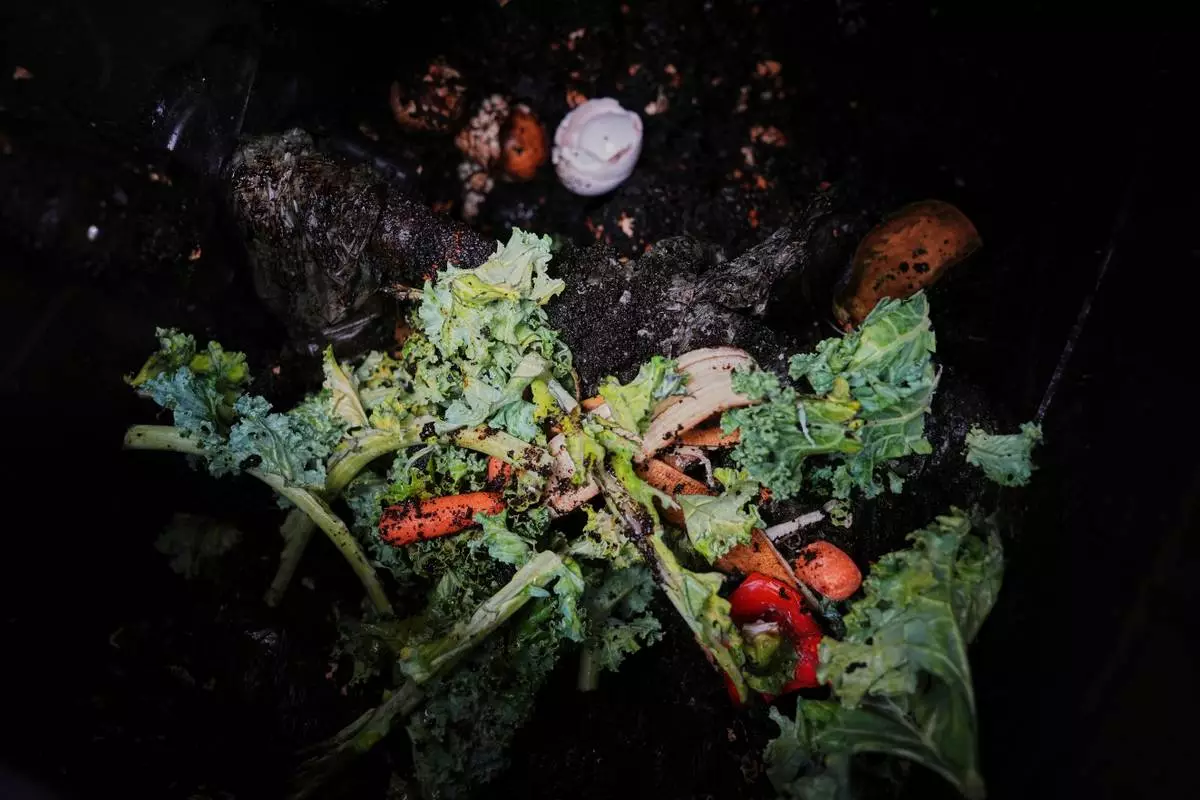
FILE - Food scraps sit inside a residential compost bin in Cincinnati on July 29, 2025. (AP Photo/Joshua A. Bickel, File)
WASHINGTON (AP) — Former FBI Director James Comey was indicted again Tuesday, this time in an investigation over a social media photo of seashells arranged on a beach that officials said constituted a threat against President Donald Trump.
The criminal case is the second in a matter of months against Comey and is part of the Trump administration Justice Department's relentless effort to prosecute political opponents of the Republican president. The seashells photo was posted nearly a year ago, but the indictment was secured as acting Attorney General Todd Blanche, a Trump loyalist who previously served as his personal lawyer, aims to prove to the president that he's the right person to hold the job permanently.
The fact that the Justice Department pursued a new case against the ex-FBI director months after a separate and unrelated indictment was dismissed could open the government to claims of a vindictive prosecution and to arguments that it is going out of its way to target Comey, who had overseen the early months of an investigation into whether the Republican president’s 2016 campaign had coordinated with Russia to sway the outcome of that year’s election. Comey was fired by Trump months into the president’s first term, and they have openly feuded ever since.
The two-count indictment charges Comey with “knowingly and willfully” making a threat to “take the life of, and to inflict bodily harm upon" Trump and with transmitting a threat in interstate commerce. It offers no evidence to support the claim that Comey knowingly made a threat against the president, especially since he has said the opposite, but suggested a “reasonable recipient who is familiar with the circumstances would interpret” the message as a threat to do harm.
The case was filed in the Eastern District of North Carolina, the state where Comey found the seashells.
Comey's lawyer did not immediately respond to a request seeking comment Tuesday, and a Justice Department spokesperson did not immediately comment.
The prosecution arises from a May post on Instagram in which Comey shared a photo of seashells he saw on a walk in the arrangement of “86 47.” He has said he assumed that the numbers reflected a political message, not a call to violence. Comey deleted the post shortly after it was made, writing: “I didn’t realize some folks associate those numbers with violence” and “I oppose violence of any kind so I took the post down.”
Nonetheless, Comey was swiftly interviewed by the Secret Service after Trump administration officials asserted that he was advocating the assassination of Trump, the 47th president.
Merriam-Webster, the dictionary used by The Associated Press, says 86 is slang meaning “to throw out,” “to get rid of” or “to refuse service to.” It notes: “Among the most recent senses adopted is a logical extension of the previous ones, with the meaning of ‘to kill.’ We do not enter this sense, due to its relative recency and sparseness of use.”
Trump, in a Fox News Channel interview in May, accused Comey of knowing “exactly what that meant."
“A child knows what that meant,” Trump said. "If you’re the FBI director and you don’t know what that meant, that meant assassination. And it says it loud and clear.”
The former FBI director was indicted in September on charges that he lied to and obstructed Congress related to testimony he gave in 2020 about whether he had authorized inside information about an investigation to be provided to a journalist. He denied any wrongdoing, and the case was subsequently dismissed after a judge concluded that the prosecutor who brought the indictment was illegally appointed.
Comey was the FBI director when Trump took office in 2017, having been appointed by then-President Barack Obama, a Democrat, and serving before that as a senior Justice Department official in President George W. Bush’s Republican administration.
But the relationship was strained from the start, including after Comey resisted a request by Trump at a private dinner to pledge his personal loyalty to the president -- an overture that so unnerved the FBI director that he documented it in a contemporaneous memorandum.
Trump fired Comey in May 2017 amid an FBI investigation into potential ties between Russia and Trump’s presidential campaign. That inquiry, later taken over by special counsel Robert Mueller, would ultimately find that while Russia interfered in the 2016 election and the Trump team welcomed the help, there was insufficient evidence to prove a criminal collaboration.
Blanche was elevated earlier this month from deputy attorney general to acting attorney general, replacing Pam Bondi, who had frustrated Trump with the department's struggles to build successful criminal cases against his adversaries. Blanche since then has moved quickly to announce politically charged prosecutions, including a case last week against the nonprofit Southern Poverty Law Center, which is accused by the Justice Department of defrauding donors by paying donors to infiltrate hate groups. The group has denied any wrongdoing.
Comey is among many Trump foes to face scrutiny over the last year.
The Justice Department, for instance, is also pursuing a criminal investigation into former CIA Director John Brennan, another key figure in the Russia investigation -- one of Trump’s chief grievances and a saga that he and his supporters have long sought retaliation for. Brennan has denied doing anything wrong.
CNN was the first to report the second indictment against Comey.
Follow the AP's coverage of former FBI Director James Comey at https://apnews.com/hub/james-comey.
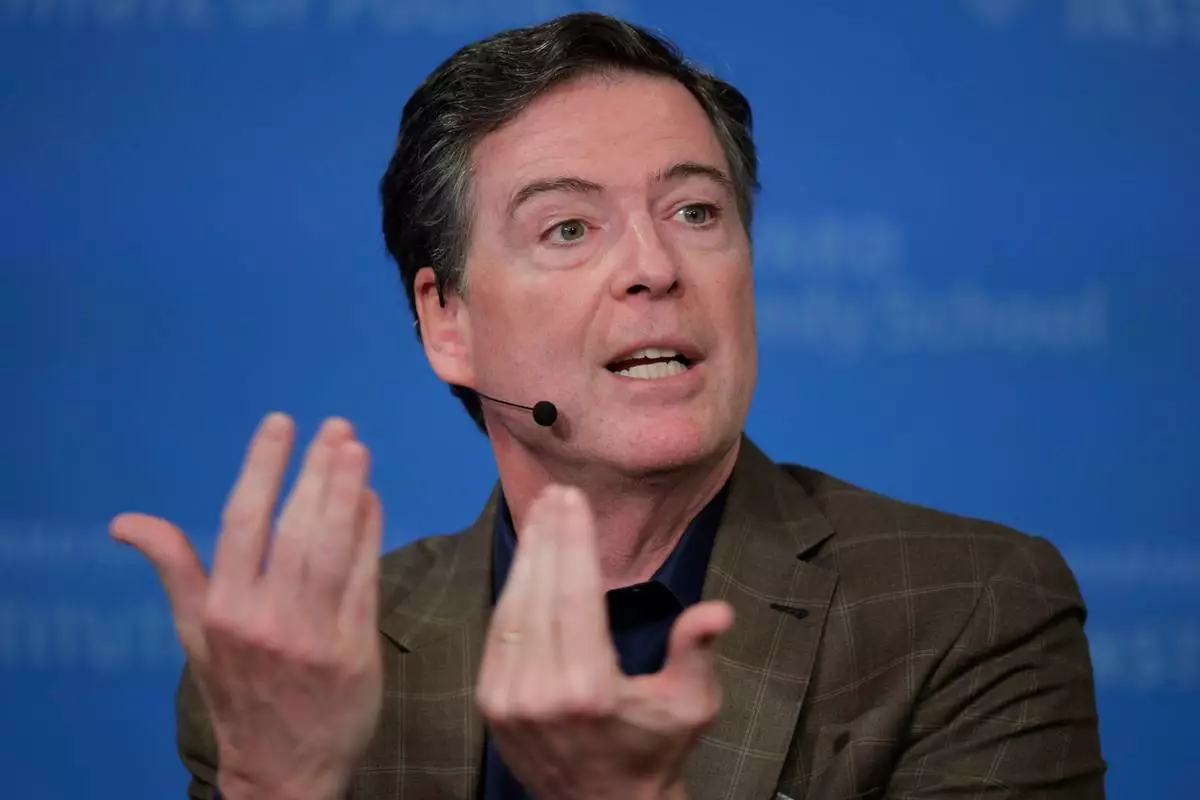
FILE - Former Director of the Federal Bureau of Investigation James Comey at Harvard University's Institute of Politics' JFK Jr. Forum in Cambridge, Mass., Feb. 24, 2020. (AP Photo/Charles Krupa, File)
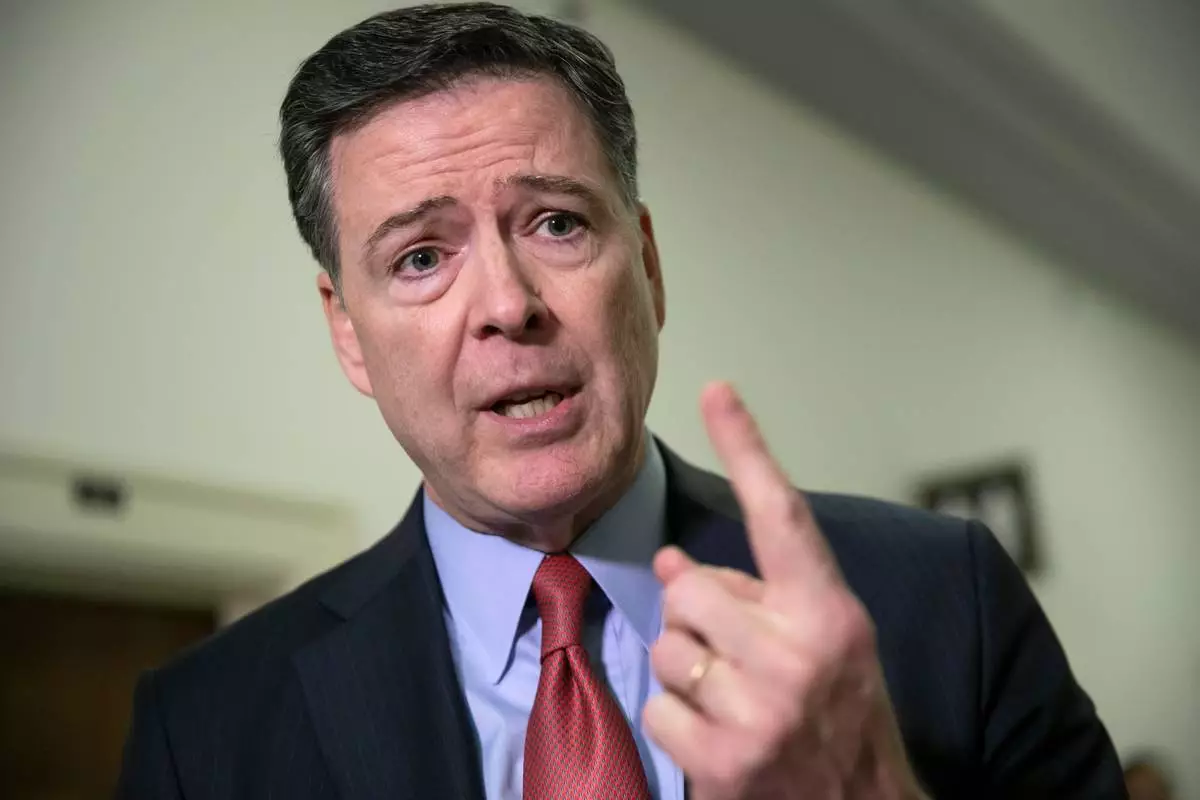
FILE - Former FBI Director James Comey speaks to reporters on Capitol Hill in Washington, Dec. 17, 2018. (AP Photo/J. Scott Applewhite, File)