ALEXANDRIA, Va. (AP) — An alleged Islamic State militant falsely confessed to helping plan a deadly suicide bombing at a Kabul airport during the U.S. military’s chaotic withdrawal from Afghanistan in 2021, a defense lawyer told jurors Tuesday at the close of the man's trial in Virginia.
The jury began deliberating after hearing attorneys' closing arguments in the federal trial of Mohammad Sharifullah, whose capture was heralded by President Donald Trump as he addressed a joint session of Congress last year. Jurors deliberated for roughly five hours without reaching a verdict and are scheduled to resume Wednesday.
Approximately 160 Afghans and 13 U.S. service members were killed in the attack on Aug. 26, 2021, when a lone suicide bomber detonated an improvised explosive device near an airport entry point known as Abbey Gate.
Defense attorney Lauren Rosen argued that prosecutors failed to present any evidence tying Sharifullah to the bombing besides his own words to FBI agents during hours of interrogation. She said her client lied about scouting a route for the suicide bomber to the airport, where U.S. troops were conducting an evacuation operation after the longest war in American history.
Rosen said Sharifullah told FBI agents what he thought they wanted to hear, possibly because he was afraid of being tortured in Pakistani custody before he was brought to the U.S.
“The problem was, he didn't know much about what actually happened that day,” Rosen told jurors. “The government has told you nothing about how this attack actually happened.”
Justice Department prosecutor Ryan White said Sharifullah played a crucial role in planning the Abbey Gate bombing and was involved in several other attacks by an Islamic State regional branch known as ISIS-K, including its March 2024 attack at a Moscow concert hall that killed roughly 140 people.
“The defendant thought nothing of killing,” White said. “For him, it was just another day at the office.”
Sharifullah, who didn't testify at his weeklong trial, is charged with one count of providing material support to a designated foreign terrorist organization resulting in death. He faces a maximum sentence of life in prison if convicted.
White said Sharifullah told a journalist that he wanted to “catch and kill the crusaders” from the U.S. for invading his country after the Sept. 11, 2001, terror attacks.
“This case is not complicated,” White said. “The defendant told you everything you need to know.”
Rosen said U.S. authorities accepted ISIS propaganda at face value when the group took responsibility for the airport bombing. She suggested that militants from a Taliban offshoot were manning Abbey Gate and could have been involved in the attack.
“You can't base your verdict on mere conjecture and speculation,” Rosen said. “That's what the prosecution is asking you to do.”
A review by U.S. Central Command found that the Abbey Gate bomber was Abdul Rahman al-Logari, an Islamic State militant who had been released from an Afghan prison by the Taliban. Sharifullah recognized the alleged bomber as an operative he had known while incarcerated, according to an FBI affidavit.
A former Marine testified to Congress that he and others had spotted two possible suspects behaving suspiciously on the morning of the bombing but didn’t get permission to act. However, the Central Command review concluded that the snipers hadn’t seen the actual bomber and that the attack was not preventable.
A prosecutor assigned to the Abbey Gate case was fired last year after a right-wing commentator publicly criticized him over his work during Democratic President Joe Biden’s administration. Michael Ben’Ary’s ouster was part of a broader purge of Justice Department veterans deemed to be insufficiently loyal to Trump, a Republican.
During his most recent presidential campaign, Trump repeatedly condemned Biden for his role in the chaotic Afghanistan withdrawal and blamed him for the Abbey Gate attack.
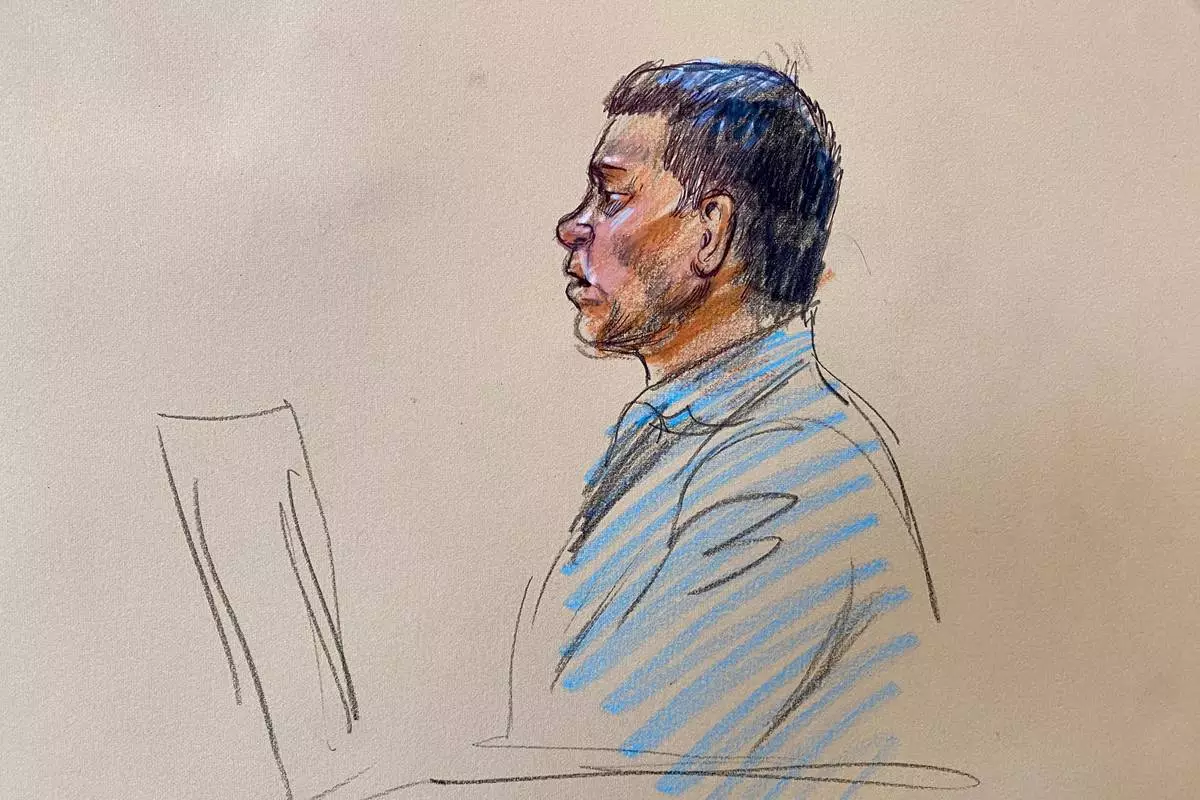
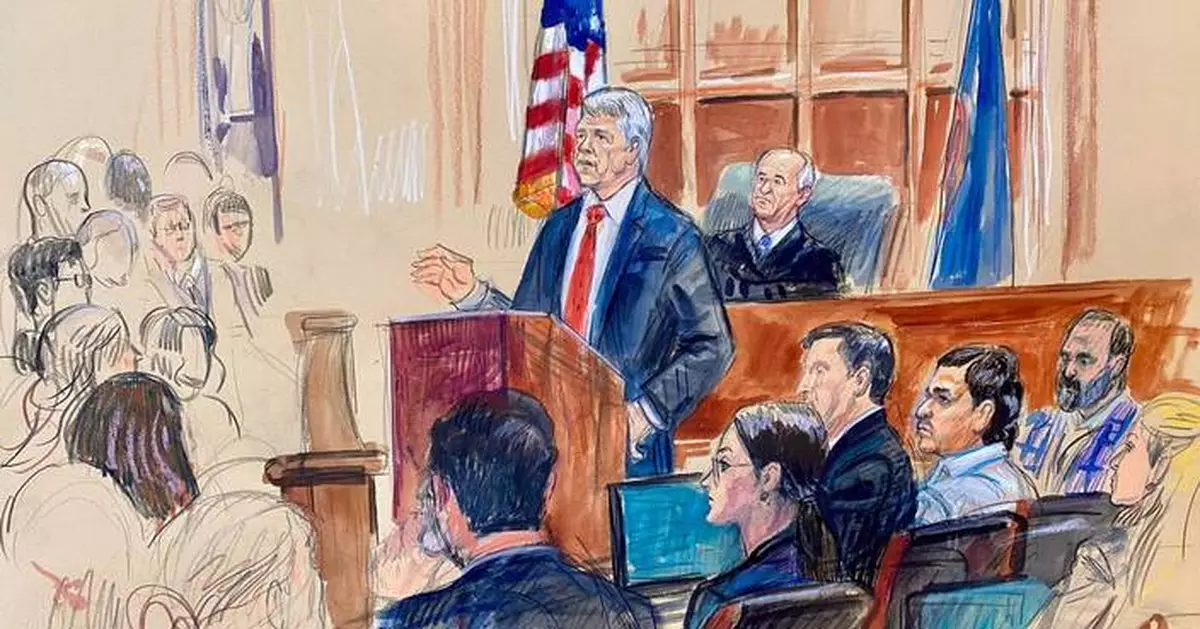
This courtroom sketch depicts government witness Prem Chhetri, a former security guard at the Canadian Embassy in Kabul, Afghanistan, testifying during the opening day of the trial for alleged Islamic State militant Mohammad Sharifullah in federal court in Alexandria, Va., Monday, April 20, 2026. (Dana Verkouteren via AP)
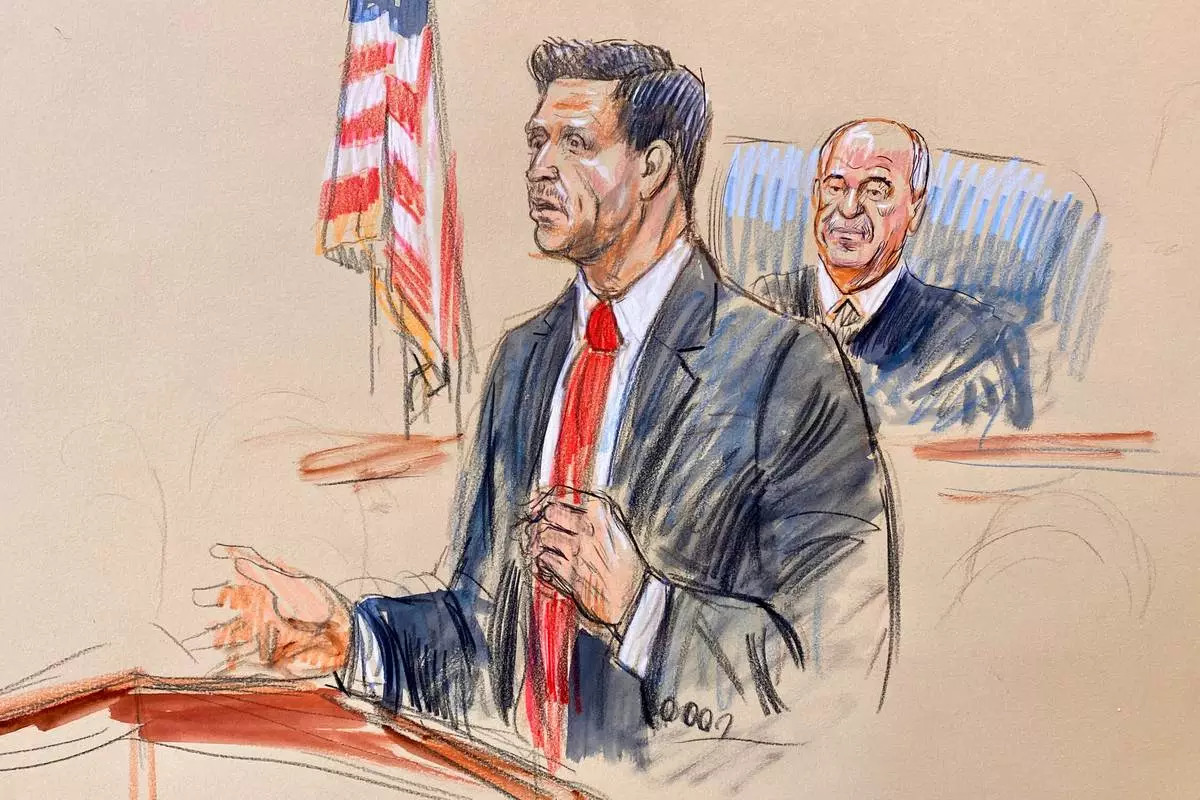
This courtroom sketch depicts defense attorney Geremy Kamens speaking as Judge Anthony J. Trenga listens during the opening day of the trial for alleged Islamic State militant Mohammad Sharifullah in federal court in Alexandria, Va., Monday, April 20, 2026. (Dana Verkouteren via AP)
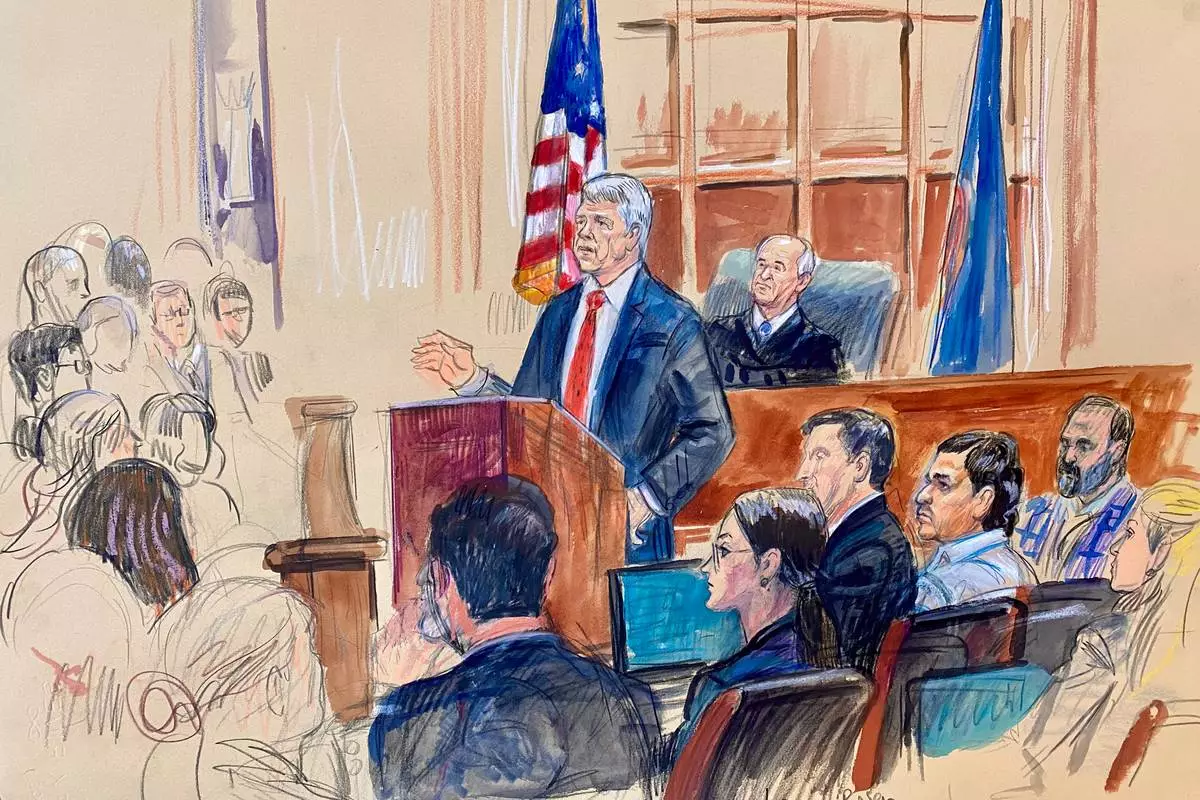
This courtroom sketch depicts Justice Department prosecutor John Gibbs speaking as defense attorneys Lauren Rosen, Geremy Kamens, from center middle seated, defendant Mohammad Sharifullah, and an interpreter, listen along with Judge Anthony John Trenga during the opening day of the trial for Sharifullah in federal court in Alexandria, Va., Monday, April 20, 2026. (Dana Verkouteren via AP)
WASHINGTON (AP) — Former FBI Director James Comey was indicted again Tuesday, this time over a social media photo of seashells arranged on a beach that officials said constituted a threat against President Donald Trump.
The criminal case is the second in months against Comey and is part of the Trump administration Justice Department's relentless effort to prosecute political opponents of the Republican president. The seashells photo was posted nearly a year ago, but the indictment was secured at a time when acting Attorney General Todd Blanche, a Trump loyalist who previously served as his personal lawyer, aims to prove to the president that he is the right person to hold the job permanently.
The fact that the Justice Department pursued a new case months after a separate and unrelated indictment was dismissed could expose the government to claims of a vindictive prosecution and to arguments that it is going out of its way to target Comey, who as FBI director had overseen the early months of an investigation into whether Trump's 2016 campaign had coordinated with Russia to sway the outcome of that year’s election.
Comey was fired by Trump months into the president’s first term as that investigation was underway, and they have openly feuded ever since.
The prosecution arises from a May post on Instagram in which Comey shared a photo of seashells he saw on a walk in the arrangement of “86 47.” He has said he assumed that the numbers reflected a political message, not a call to violence. Comey deleted the post shortly after it was made, writing: “I didn’t realize some folks associate those numbers with violence” and “I oppose violence of any kind so I took the post down.”
Nonetheless, Comey was swiftly interviewed by the Secret Service after Trump administration officials asserted that he was advocating the assassination of Trump, the 47th president.
The case was filed in the Eastern District of North Carolina, the state where Comey found the seashells.
“Well, they’re back – this time about a picture of seashells on a North Carolina beach a year ago, and this won’t be the end of it,” Comey said in a video statement Tuesday. “But nothing has changed with me. I’m still innocent, I’m still not afraid and I still believe in the independent federal judiciary. So let’s go.”
The two-count indictment charges Comey with “knowingly and willfully” making a threat to “take the life of, and to inflict bodily harm upon" Trump and with transmitting a threat in interstate commerce. It does not provide evidence that Comey knowingly threatened Trump, especially since Comey has said the opposite, but suggested a “reasonable recipient who is familiar with the circumstances would interpret” the message as a threat.
At a news conference Tuesday, Blanche refused to elaborate on any evidence of intent the government has but said: “How do you prove intent in any case? You prove intent with witnesses, with documents, with the defendant himself to the extent it's appropriate. And that's how we'll prove intent in this case.”
And in an effort to rebut claims that Comey was being selectively prosecuted, Blanche contended the case against the former FBI director was similar to other threats cases the department routinely brings against the lesser known.
“While this case is unique and this indictment stands out because of the name of the defendant, his alleged conduct is the same kind of conduct that we will never tolerate and that we will always investigate and regularly prosecute,” Blanche said.
Comey's legal team said in a statement that they “will contest these charges in the courtroom and look forward to vindicating Mr. Comey and the First Amendment.” They said he “vigorously denies” the charges.
Merriam-Webster, the dictionary used by The Associated Press, says 86 is slang meaning “to throw out,” “to get rid of” or “to refuse service to.” It notes: “Among the most recent senses adopted is a logical extension of the previous ones, with the meaning of ‘to kill.’ We do not enter this sense, due to its relative recency and sparseness of use.”
Trump, in a Fox News Channel interview in May, accused Comey of knowing “exactly what that meant."
“A child knows what that meant,” Trump said. "If you’re the FBI director and you don’t know what that meant, that meant assassination. And it says it loud and clear.”
The former FBI director was indicted in September on charges he lied to Congress in 2020 about whether he had authorized information about an investigation to be provided to a journalist. He denied any wrongdoing. The case was dismissed after a judge concluded the prosecutor who brought the indictment was illegally appointed.
Comey was the FBI director when Trump took office in 2017, having been appointed by then-President Barack Obama, a Democrat, and serving before that as a senior Justice Department official in President George W. Bush’s Republican administration.
But the relationship was strained from the start, including after Comey resisted a request by Trump at a private dinner to pledge his personal loyalty to the president -- an overture that so unnerved the FBI director that he documented it in a contemporaneous memorandum.
Trump fired Comey in May 2017 amid an FBI investigation into potential ties between Russia and Trump’s campaign. That inquiry, later taken over by special counsel Robert Mueller, found that while Russia interfered in the 2016 election and the Trump team welcomed the help, there was insufficient evidence to prove a criminal collaboration.
Blanche was elevated earlier this month from deputy attorney general to acting attorney general, replacing Pam Bondi, who had frustrated Trump with the department's struggles to build successful criminal cases against his adversaries.
Blanche since then has moved quickly to accelerate politically charged prosecutions, including a case last week against the nonprofit Southern Poverty Law Center, which is accused by the Justice Department of misleading donors by using their money to pay informants who served as leaders in the hate groups the organization was founded to fight. The group has denied any wrongdoing.
Comey is among many Trump foes to face scrutiny over the last year.
The Justice Department, for instance, is also pursuing a criminal investigation into former CIA Director John Brennan, another key figure in the Russia investigation -- one of Trump’s chief grievances and a saga he and his supporters have long sought retaliation for. Brennan has denied doing anything wrong.
CNN was the first to report the second indictment against Comey.
Follow the AP's coverage of former FBI Director James Comey at https://apnews.com/hub/james-comey.
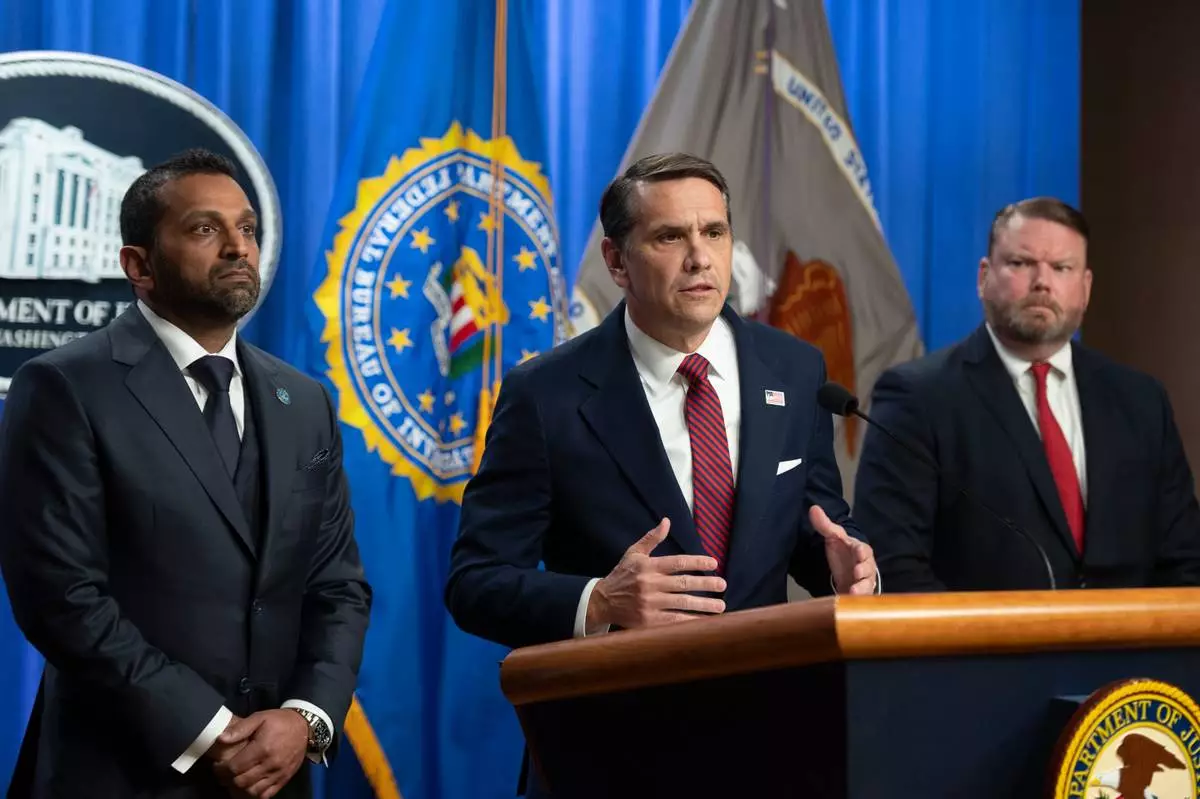
FBI Director Kash Patel, left, and Ellis Boyle, U.S. Attorney for the Eastern District of N.C., right, look on as Acting Attorney General Todd Blanche announces that former FBI Director James Comey has been indicted, at the Justice Department in Washington, Tuesday, April 28, 2026. (AP Photo/Cliff Owen)
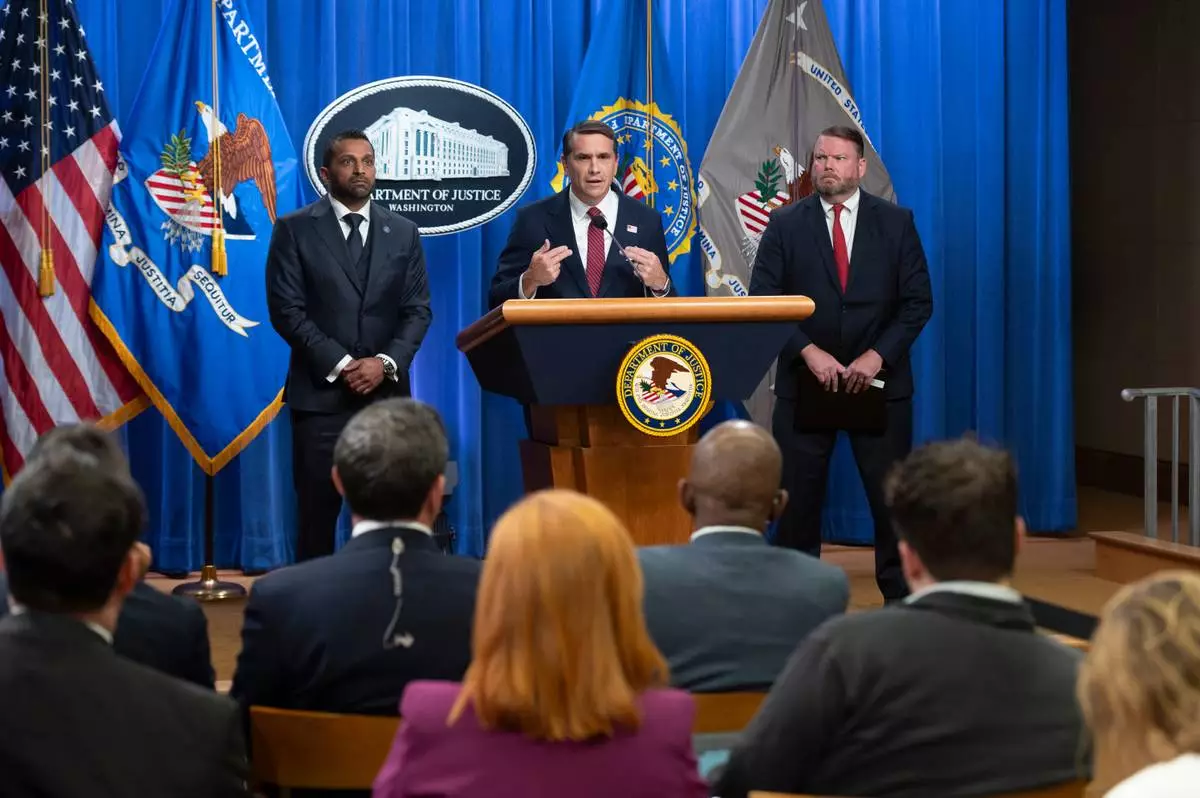
FBI Director Kash Patel, left, Acting Attorney General Todd Blanche, center, and Ellis Boyle, U.S. Attorney for the Eastern District of of N.C., announce that former FBI Director James Comey has been indicted, at the Justice Department in Washington, Tuesday, April 28, 2026. (AP Photo/Cliff Owen)
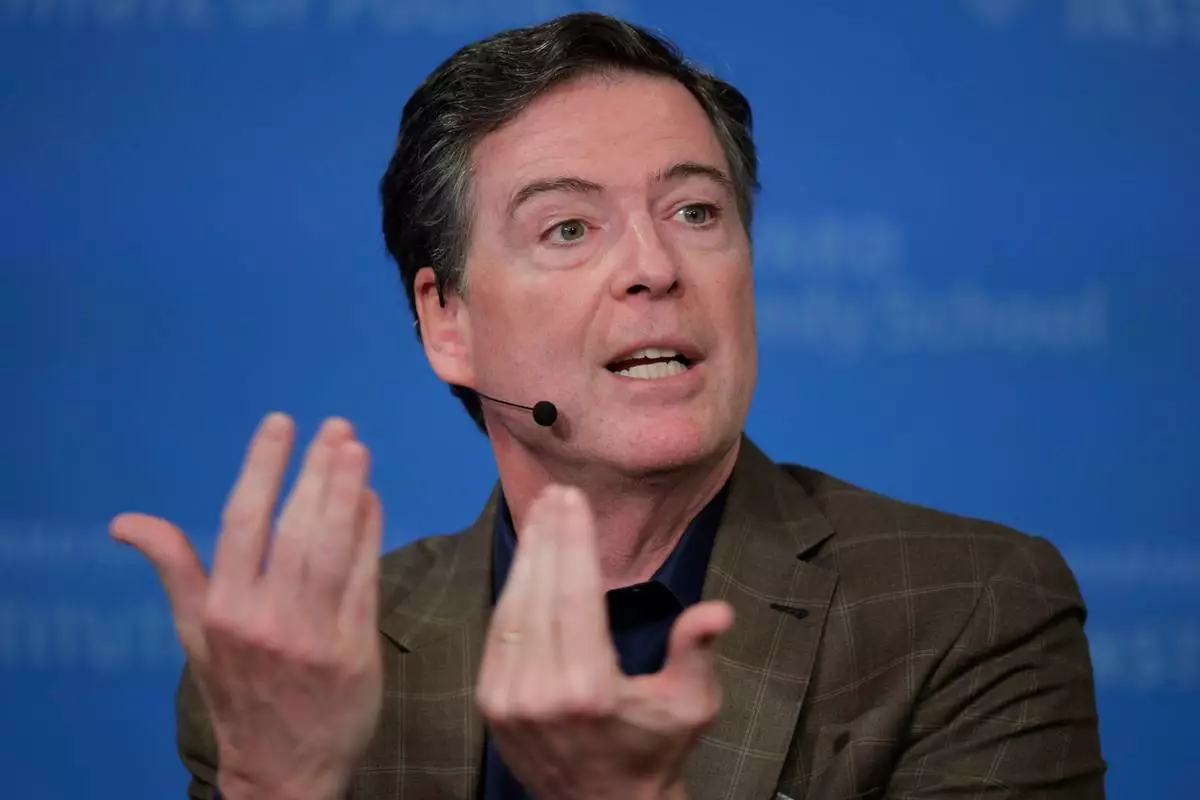
FILE - Former Director of the Federal Bureau of Investigation James Comey at Harvard University's Institute of Politics' JFK Jr. Forum in Cambridge, Mass., Feb. 24, 2020. (AP Photo/Charles Krupa, File)
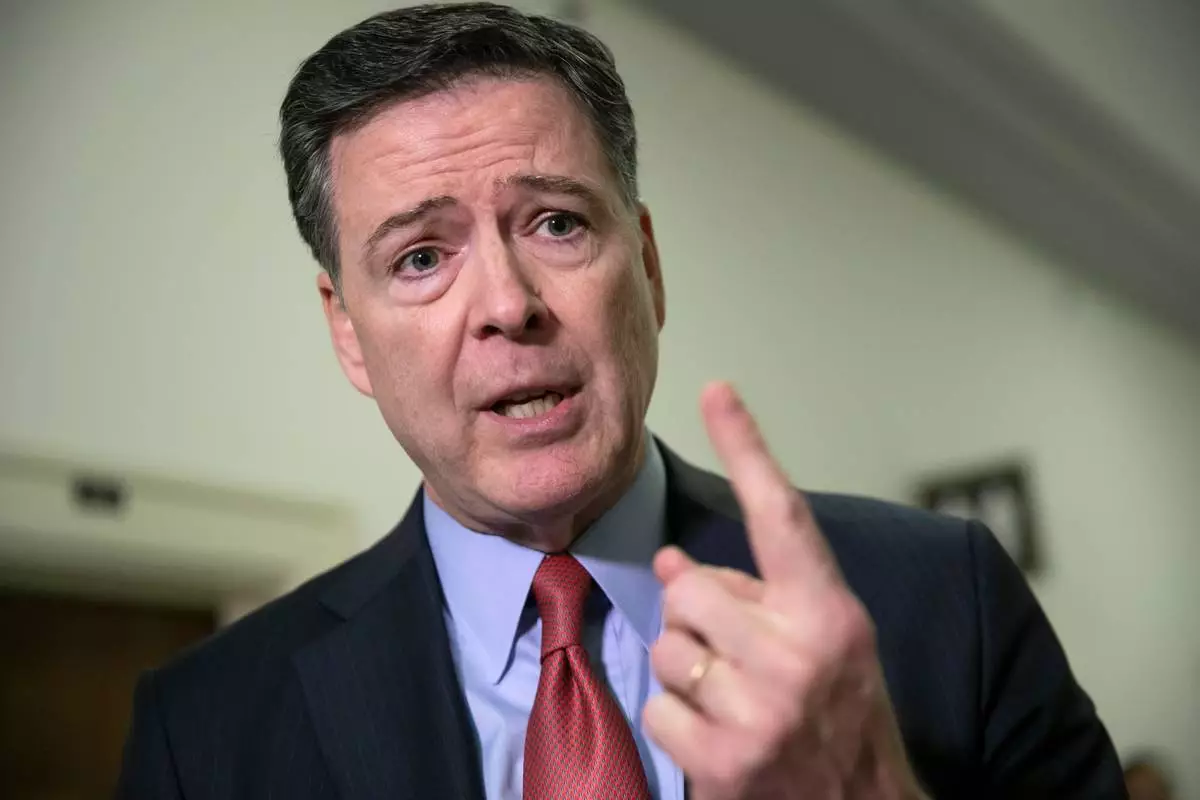
FILE - Former FBI Director James Comey speaks to reporters on Capitol Hill in Washington, Dec. 17, 2018. (AP Photo/J. Scott Applewhite, File)