A federal appeals court ruled Tuesday the Trump administration cannot jail immigrants without the chance to seek bond, citing “serious constitutional questions” related to what it said would otherwise be the broadest mass-detention-without-bond mandate in the nation's history for millions of noncitizens.
The unanimous ruling from a panel of the 2nd U.S. Circuit Court of Appeals in New York City sets the stage for a possible U.S. Supreme Court appeal. That's because panels on the 8th and 5th circuit courts have already upheld the policy put in place by President Donald Trump's administration last July.
“Today, although we part ways with two other circuits that have addressed this question, we join the overwhelming majority of federal judges across the Nation to consider it and conclude that the government’s novel interpretation of the immigration statute defies their plain text,” Judge Joseph F. Bianco wrote for the panel, which included Judges Alison J. Nathan and Jose A. Cabranes.
Under the policy, the Department of Homeland Security has been denying bond hearings to immigrants arrested across the country, including those who have been in the U.S. for years without any criminal history. That's a departure from the practice under previous administrations, when most noncitizens with no criminal record who were arrested away from the border were given the opportunity to request a bond hearing while their cases moved through immigration court.
In those cases, bond was often granted to people who were deemed not to be flight risks, and mandatory detention was limited to those who had just entered the country.
The new approach has strained the federal courts, with judges across the country facing more than 30,000 lawsuits from immigrants locked up under the Trump administration's mass deportation campaign. Left with no way to request bond in immigration court, many immigrants have turned to the federal courts instead, requesting bond through a process known a habeas corpus petition.
Attorneys for the Trump administration say the mandatory detention policy is legal under the Illegal Immigration Reform and Immigrant Responsibility Act passed in 1996. That law streamlined the process to deport people who were newly arriving in the U.S. without permission, but immigrants who were already in the country were still allowed to seek bond from an immigration judge under a different law.
That changed in July, when Todd Lyons, acting director of the U.S. Immigration and Customs Enforcement, said all immigrants targeted for deportation would be treated the same way as new arrivals.
The three-judge panel found that the government’s interpretation of the 1996 law defies the plain text of the law, its purpose and its history, and noted that Congress had set up a tiered system for immigration cases based in part on how long an immigrant had been in the country.
So far, more than 370 federal judges — or about 90% — to consider those habeas cases have also rejected the government's new approach, Bianco wrote. Bianco was nominated by Trump, Nathan by former President Joe Biden and Cabranes by former President Bill Clinton.
The 2nd Circuit case involves a man from Brazil who entered the U.S. around 2005, applied for asylum in 2016 and was granted work authorization while his application was under review.
Ricardo Aparecido Barbosa da Cunha has never been arrested or charged with a crime, owns his own home in Massachusetts where he lives with his wife and two U.S. citizen children, and runs a small construction business. He was arrested on an administrative warrant in September 2025 and placed in removal proceedings, and filed a habeas petition after an immigration judge found he was subject to mandatory detention.
The mandatory detention of noncitizens like Barbosa da Cunha for a substantial period of time would “raise serious constitutional questions, especially because the government has failed to explain how it would bear a ‘reasonable relation’ to any legitimate, non-punitive purpose,” Bianco wrote.
“Today’s ruling rightly affirms that the Trump administration’s policy of detaining immigrants without any process is unlawful and cannot stand,” said Amy Belsher, director of Immigrants’ Rights Litigation at the New York Civil Liberties Union. “The government cannot mandatorily detain millions of noncitizens, many of whom have lived here for decades, without an opportunity to seek release. It defies the Constitution, the Immigration and Nationality Act, and basic human decency.”
In a statement emailed to The Associated Press, the Department of Homeland Security pointed to a Board of Immigration Appeals ruling upholding the mandatory detention policy, and said Trump and DHS Secretary Markwayne Mullin “are now enforcing this law as it was actually written to keep America safe.”
“Regarding decisions from federal courts about mandatory detention, judicial activists have been repeatedly overruled by the Supreme Court on these questions. ICE has the law and the facts on its side and will be vindicated by higher courts,” DHS said.
FILE - The Department of Homeland Security logo during a news conference in Washington, Feb. 25, 2015. (AP Photo/Pablo Martinez Monsivais, File)
MINNEAPOLIS (AP) — Federal agents executed multiple searches in Minnesota on Tuesday, seizing records and other evidence in an ongoing fraud investigation by the Trump administration of publicly funded social programs for children, authorities said.
No details about possible crimes were disclosed, though armed agents were seen at childcare centers in the Minneapolis area. KSTP-TV said one crew even had a battering ram.
The searches occurred months after right-wing influencer Nick Shirley posted a video that said members of Minnesota’s Somali community were running fake childcare centers to collect federal subsidies. It caught the attention of the Trump administration and conservative activists, though inspectors said the centers were operating as expected.
Minnesota has been dogged by fraud: At least 65 people, many of them Somali Americans, have been convicted of ripping off a federal program that was meant to provide food to children. The investigation began during the Biden administration.
Separately, a federal prosecutor in December said as much as $9 billion in federal funds that supported 14 Minnesota-run programs since 2018 may have been stolen.
Democratic Gov. Tim Walz, who has been on the defensive about not doing enough to root out fraud, welcomed the raids Tuesday. Minnesota’s child welfare agency said it shared key information with law enforcement to “hold bad actors accountable.”
“We catch criminals when state and federal agencies share information. Joint investigations work, and securing justice depends on it,” Walz said.
The searches were being conducted at day cares, businesses and some residences, according to a person familiar with the matter who spoke to The Associated Press on the condition of anonymity because they were not authorized to publicly discuss the investigation.
Various state and federal agencies, including the Department of Homeland Security, participated in searches. At least two of the sites were in Shirley's video. Officers from Minnesota's Bureau of Criminal Apprehension were removing boxes at some locations.
“The American people deserve to know how their taxpayer money was abused. ... No stone will be left unturned,” said DHS, which also noted the cooperation of local and state authorities.
On social media, FBI Director Kash Patel mocked Walz for taking credit "while we smoke out the fraud plaguing Minnesota under your governorship.”
Jason Steck, an attorney who represents childcare centers, said some of the targeted businesses were operated by Somali immigrants. They were not his clients.
“A few childcare centers, a few autism centers, a few healthcare agencies of some type," Steck said, adding that it appeared to be a "particular sweep for fraud.”
The executive director of Child Care Aware of Minnesota, a nonprofit that serves childhood educators, said the publicity is unflattering.
“The majority are in business to do good business. You’re going to come across individuals who try to capitalize on systems that are broken and need to be fixed," Candace Yates said.
Walz ended his bid for a third term as governor in early January amid President Donald Trump’s relentless focus on fraud allegations and the state’s Somali community. Trump has used dehumanizing rhetoric, calling Somali immigrants “garbage” and “low IQ.”
Tensions between Walz and the federal government subsequently rocketed during an extraordinary immigration crackdown that led to the deaths of two people before Operation Metro Surge was eased in February.
In February, Vice President JD Vance said the government would temporarily halt $243 million in Medicaid funding to Minnesota over fraud concerns. Minnesota sued in response, warning it may have to cut healthcare for low-income families, but a judge on April 6 declined to grant a restraining order.
Walz told Congress in March that he wanted to work with the federal government in fraud investigations, but that the immigration surge had made it more difficult.
“The people of Minnesota have been singled out and targeted for political retribution at an unparalleled scale,” he said at the time.
Walz touched on the searches Tuesday night when he delivered his final State of the State speech, noting that he promised to devote his energies to fighting fraud back in January when he dropped out of the governor’s race.
“I’ve said the buck stops with me,” he told a joint meeting of the state House and Senate. “Some of you will take that as an open invitation to play politics with every incident of fraud that takes place here in Minnesota, even though I have to tell you, statistics show it’s happening in red states more than here. But so be it.”
The governor said that if lawmakers take fraud seriously, they should help him out by passing the anti-fraud package he unveiled in February.
Durkin Richer reported from Washington. Associated Press writers Steve Karnowski in Minneapolis and Corey Williams and Ed White in Detroit contributed to this story.
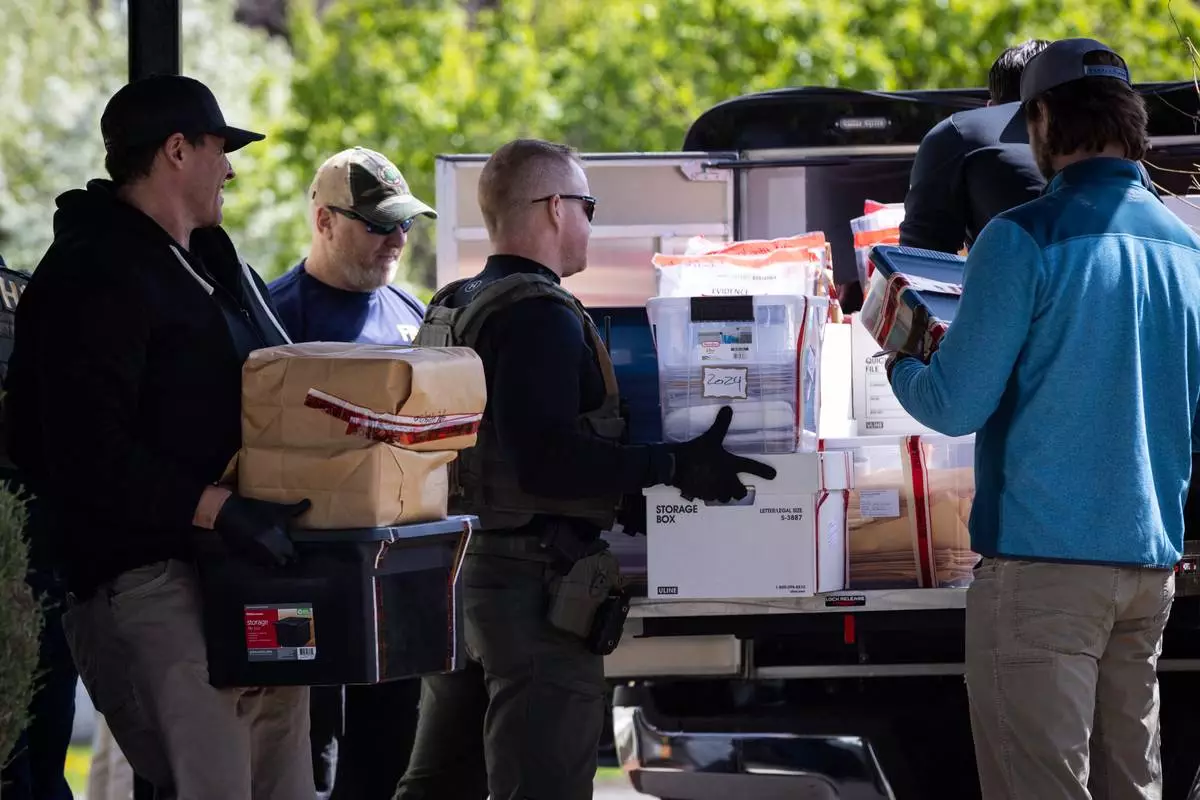
Federal and state officials load evidence into a vehicle as they execute a search warrant at The Original Childcare Center in south Minneapolis, Tuesday, April 28, 2026. (Ben Hovland/Minnesota Public Radio via AP)
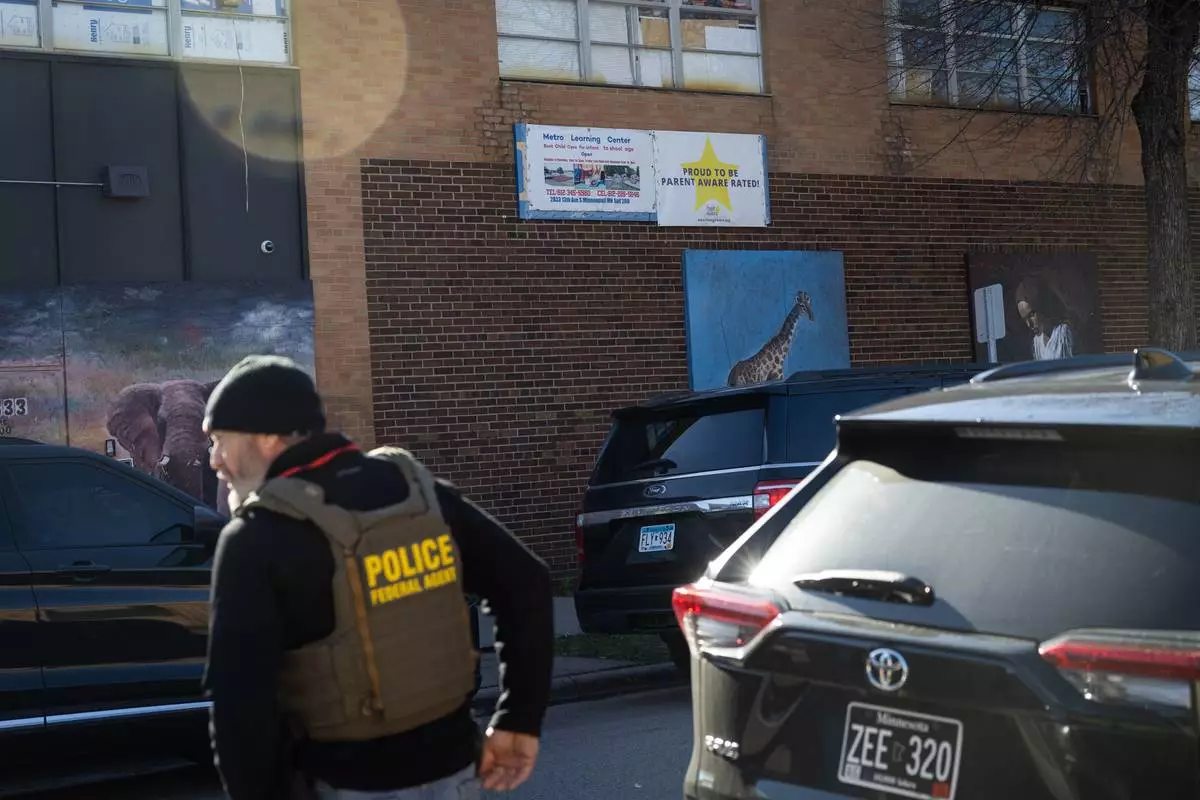
A federal police officer stands outside the Metro Learning Center in Minneapolis as federal agents execute a search warrant, Tuesday, April 28, 2026. (Ben Hovland/Minnesota Public Radio via AP)
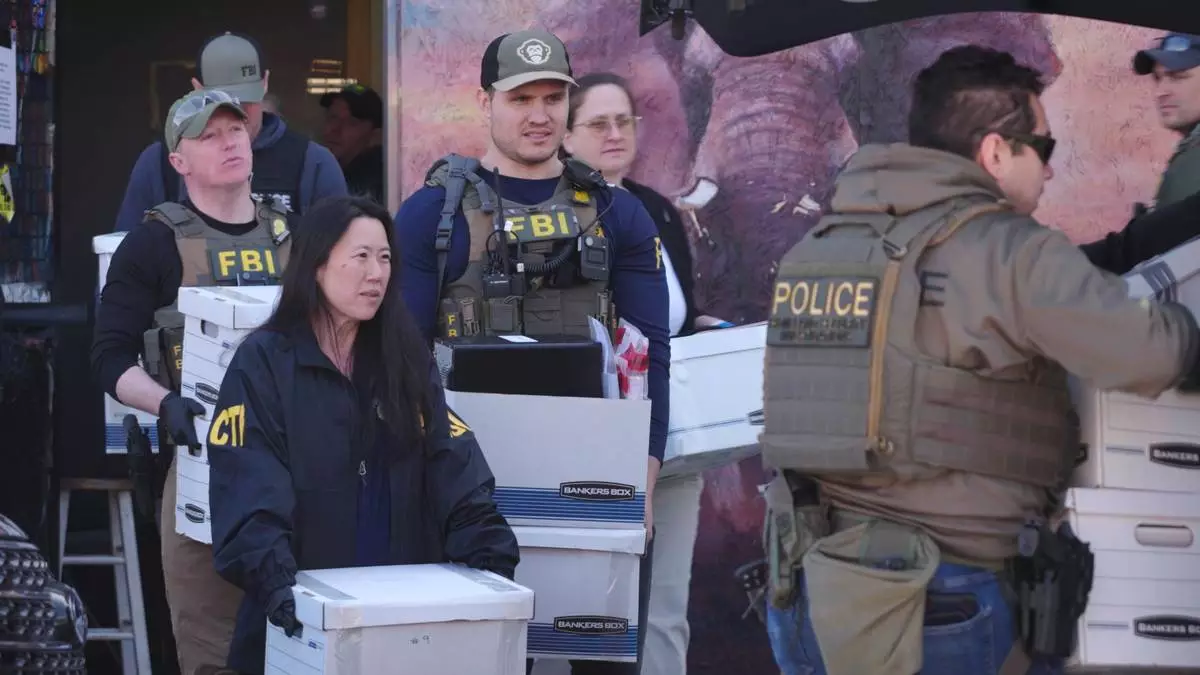
State and federal agents remove boxes of evidence collected from Metro Learning Center on Tuesday, April 28, 2026 in Minneapolis, Minn. (AP Photo/Mark Vancleave)
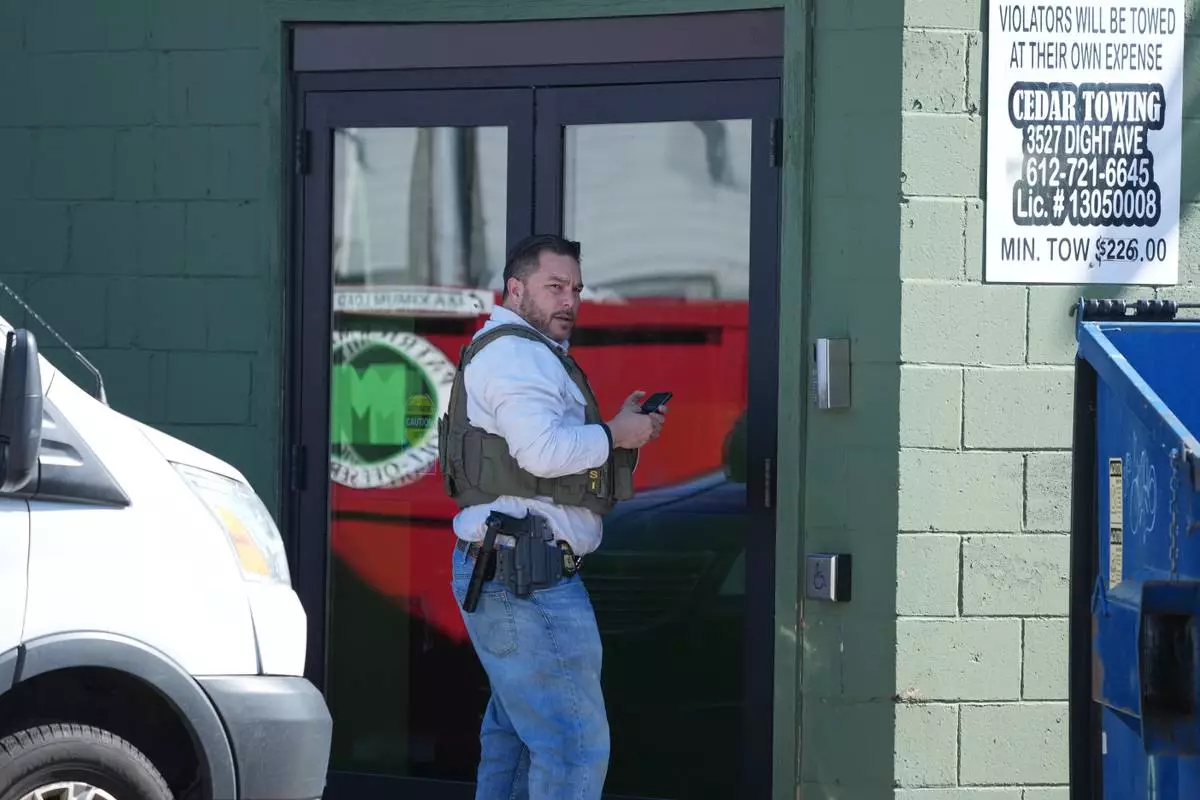
A federal officer stands outside the Mako Child Care Center in Minneapolis, Minn., Tuesday, April 28, 2026. (Anthony Soufflé/Minnesota Star Tribune via AP)
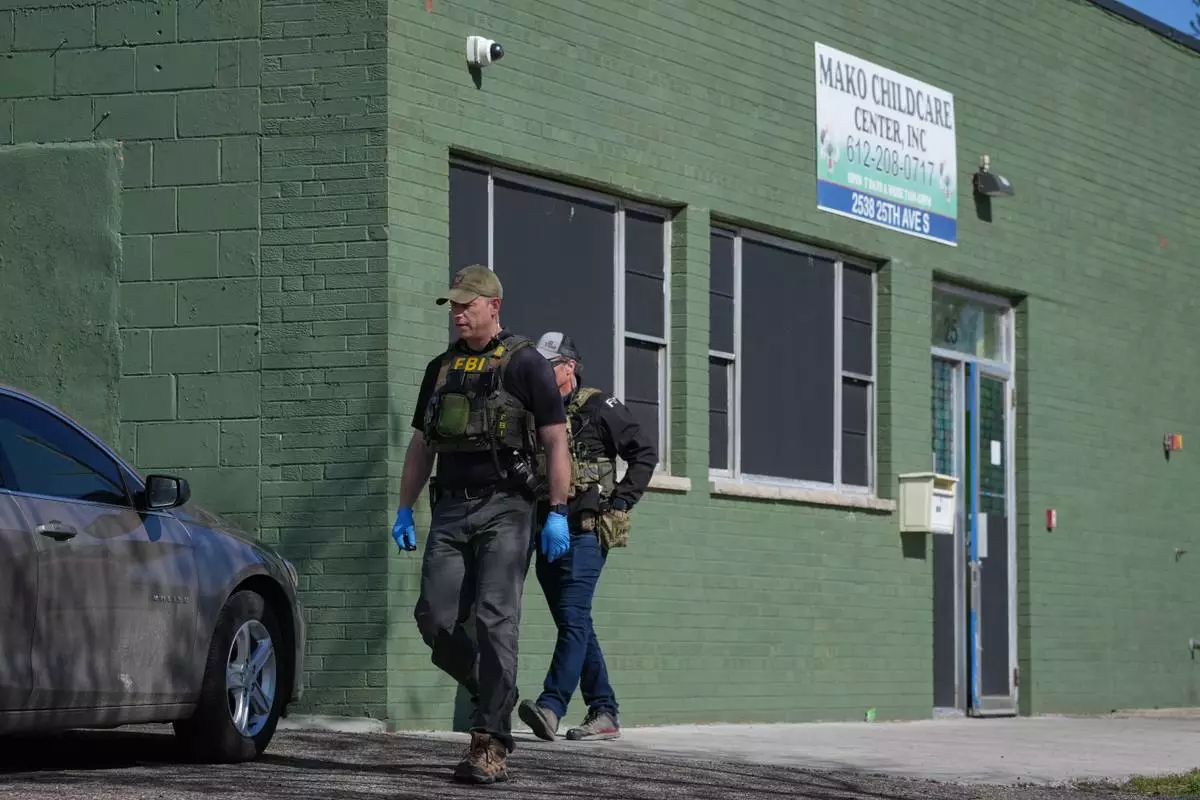
FBI agents walk outside the Mako Child Care Center in Minneapolis, Minn. on Tuesday, April 28, 2026. (Anthony Soufflé/Minnesota Star Tribune via AP)
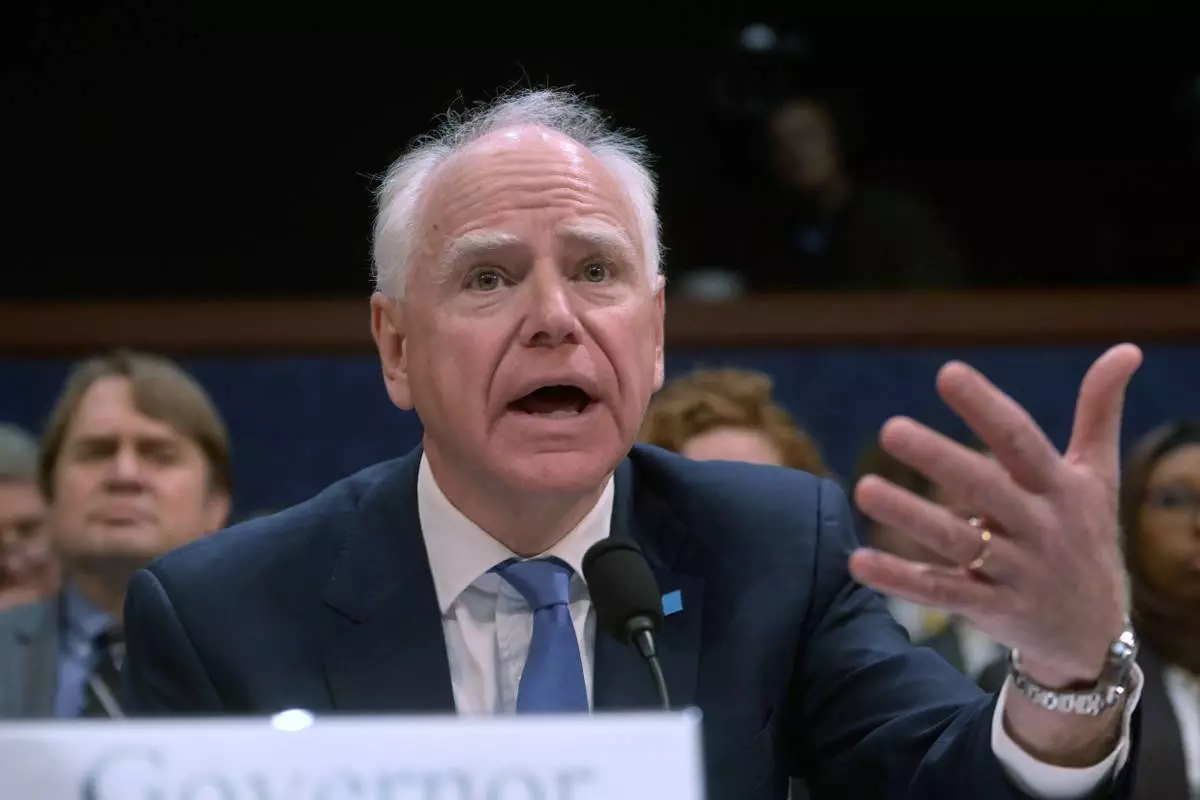
FILE - Minnesota Gov. Tim Walz speaks during a House Committee on Oversight and Government Reform hearing on oversight of fraud and misuse of Federal funds in Minnesota, March 4, 2026, on Capitol Hill in Washington. (AP Photo/Rod Lamkey, Jr., File)