WASHINGTON (AP) — The Supreme Court on Wednesday mulled the Trump administration’s push to end legal protections for migrants fleeing war and natural disaster, in one in a series of immigration cases the justices are considering against the backdrop of the president's far-reaching crackdown.
Several conservative justices appeared to be leaning in favor of the Republican administration's argument that the law limits what courts can do on program known as temporary protected status, or TPS. The outcome could come down to how Chief Justice John Roberts and Justice Amy Coney Barrett vote.
The government is appealing lower court orders that blocked the Department of Homeland Security from quickly ending temporary protected status for people from Haiti and Syria. If the justices agree with President Donald Trump, authorities potentially could strip protections from up to 1.3 million people from 17 countries, exposing them to possible deportation.
The court has sided with the administration before and allowed the end of the program for people from Venezuela as lawsuits continue to play out, though the justices did not detail their reasoning.
The Department of Justice argues that the homeland security secretary has the power to end the program, and that the law bars judges from questioning those decisions. “’No judicial review’ means no judicial review,” federal lawyers wrote in court documents.
But lawyers for about 350,000 migrants from Haiti and 6,000 from Syria say judges can consider whether authorities followed all the steps laid out in the law. They contend that in both cases, the government short-circuited the process.
Since Trump returned to the White House in January 2025, DHS has ended the protections people from 13 countries. Some who have lived and worked in the U.S. legally for more than a decade have lost jobs and housing in a matter of weeks, lawyers said. Returning to Haiti and Syria is out of the question for many people because those countries remain wracked with violence and instability, said Sejal Zota, co-founder and legal director of Just Futures Law.
“This really is life or death,” she said. Four Haitian women who were deported from the United States in February were found beheaded and dumped in a river several months later, lawyers said in court documents.
The administration appealed to the high court after judges in New York and the District of Columbia agreed to delay the end of protections. One judge found that “hostility to nonwhite immigrants” likely played a role in the decision to end protections for Haitians.
During his 2024 presidential campaign, Trump amplified false rumors that Haitian immigrants were abducting and eating dogs and cats. Federal authorities have denied racial animus played any role in the protection decisions.
Syrians were first granted protected status in 2012, during a civil war that lasted for more than a decade before the fall of President Bashar Assad’s government in late 2024.
Haitians joined the program in 2010 after a catastrophic earthquake and have been extended multiple times amid ongoing gang violence that has displaced more than a million people, according to court documents.
Maryse Balthazar was on vacation in the U.S. when the earthquake hit Haiti. She has now been in the U.S. for 16 years with temporary legal status. She has two children and works as a nursing assistant to the elderly. That profession relies on Haitian immigrants like her and would be hobbled by a Supreme Court decision that allowed their status to end, an industry group said in court papers.
For Balthazar, losing those protections would be devastating. She lost her home in Haiti to the earthquake, and another house she could have lived in was destroyed in a fire, possibly due to gang involvement. “I’d be homeless,” she said. “I’m scared … it’s a fear we are all living with.”
Other immigration cases the high court is considering this year include Trump's push to restrict birthright citizenship and the administration's power to revive a restrictive asylum policy.
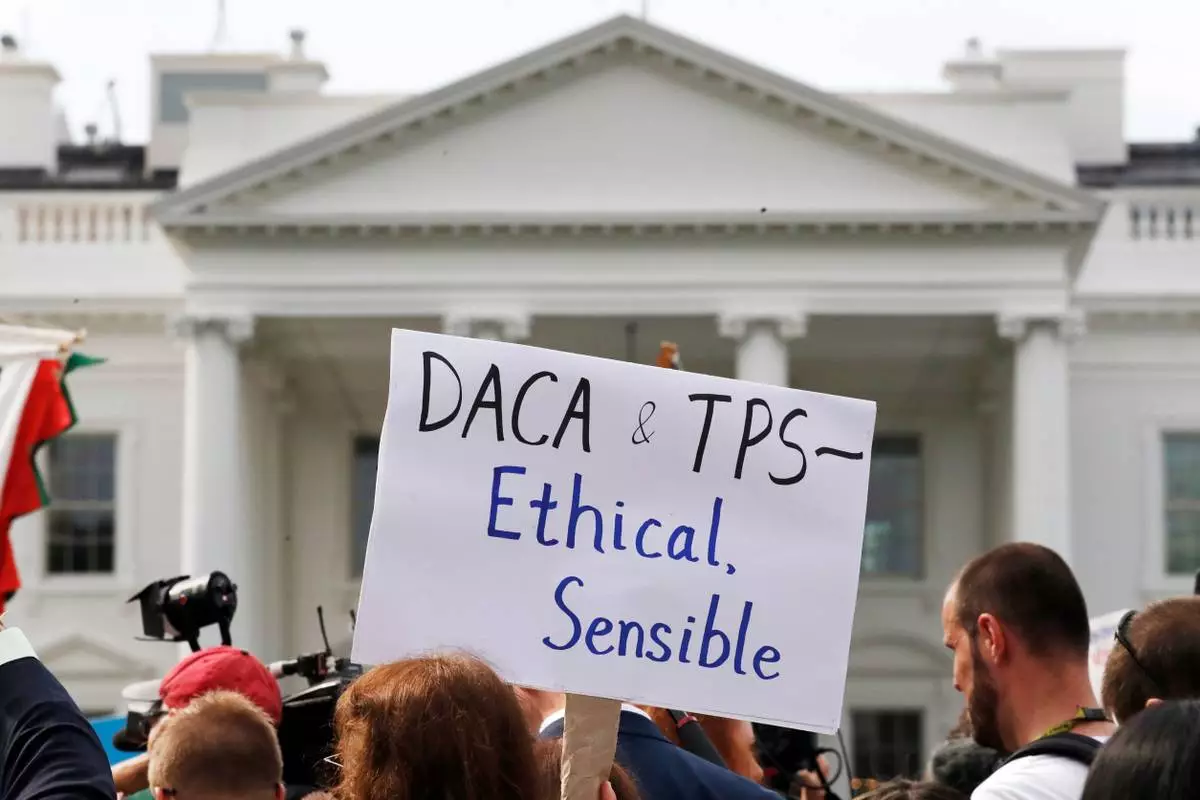
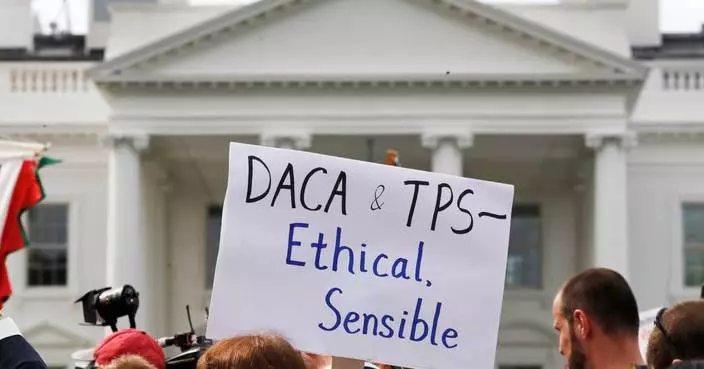
A person holds up a sign in support of the Deferred Action for Childhood Arrivals, known as DACA, and Temporary Protected Status programs during a rally in support of DACA and TPS outside of the White House, in Washington, Sept. 5, 2017. (AP Photo/Jacquelyn Martin, file)
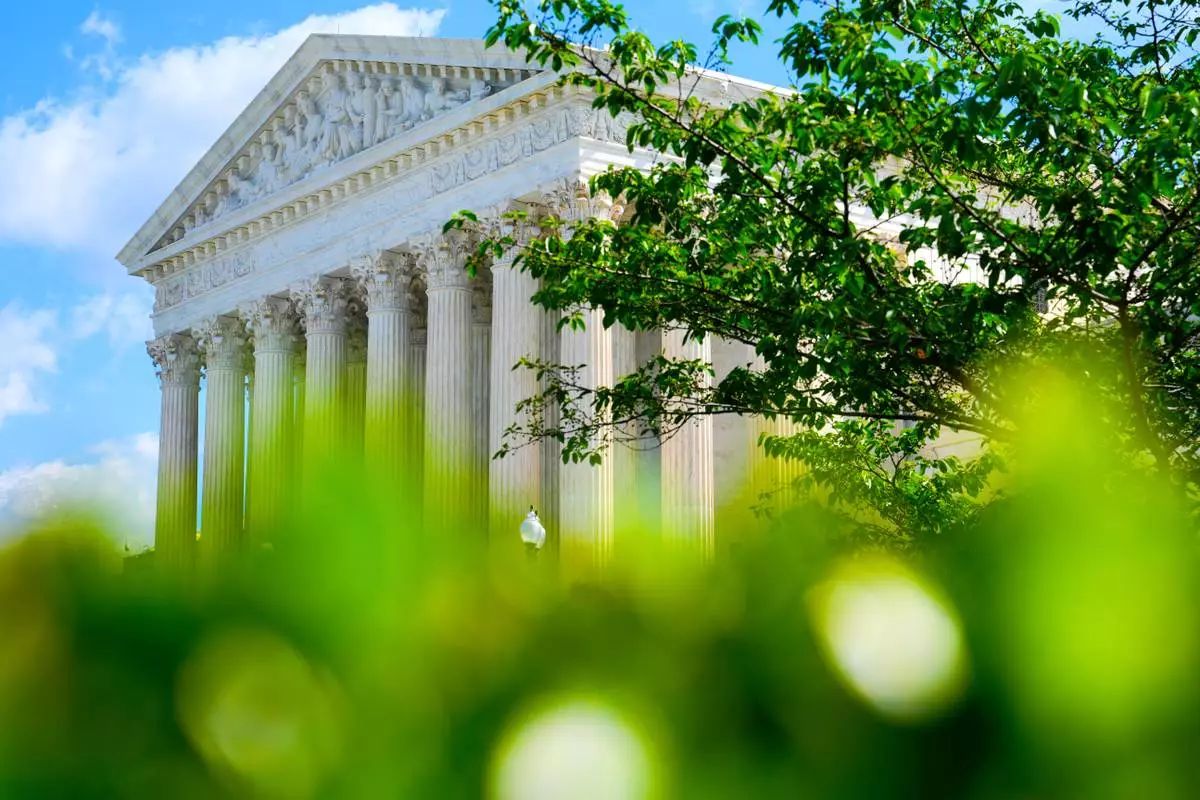
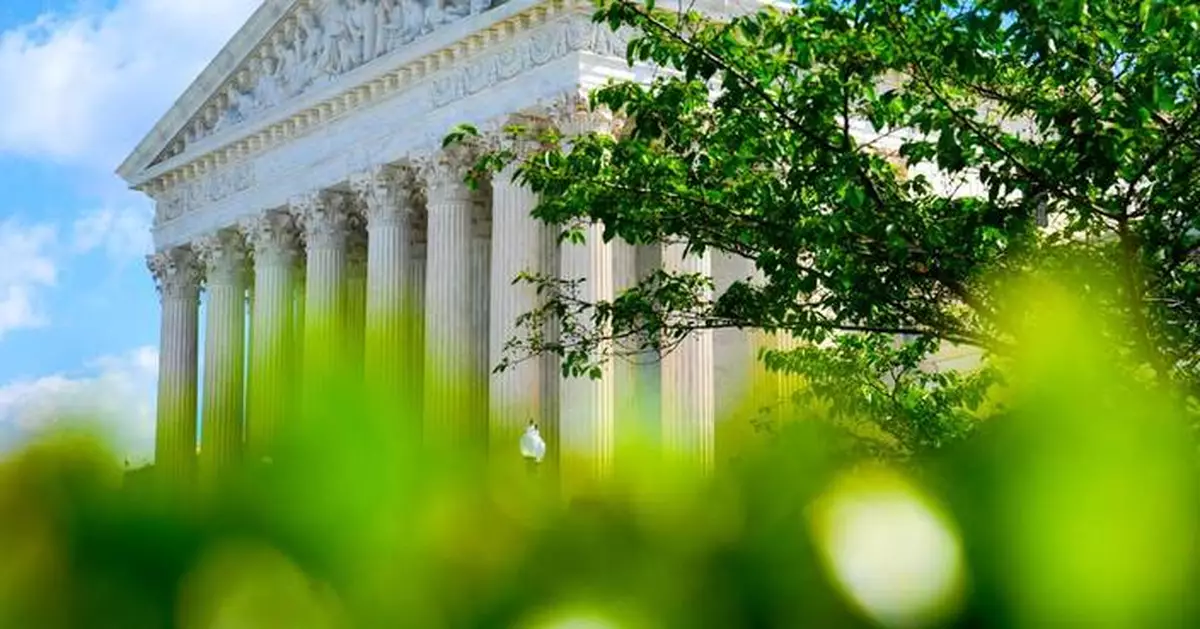
The U.S. Supreme Court is seen Friday, April 17, 2026, in Washington. (AP Photo/Mariam Zuhaib)
ALEXANDRIA, Va. (AP) — Former FBI Director James Comey appeared in court on Wednesday, kick-starting a criminal case against him that legal experts say presents significant hurdles for the prosecution and will likely be a challenge for the Justice Department to win.
Comey, who didn't enter a plea, was indicted in North Carolina on Tuesday on charges of making threats against President Donald Trump related to a photograph he posted on social media last year of seashells arranged in the numbers “86 47.” The Justice Department contends those numbers amounted to a threat against Trump, the 47th president. Comey has said he assumed the numbers reflected a political message, not a call to violence against the Republican president, and removed the post as soon as he saw some people were interpreting it that way.
The indictment is the second against Comey, a longtime adversary of Trump dating back to his time as FBI director, over the past year. The first one, on unrelated false-statement and obstruction charges, was tossed out by a judge last year. Now prosecutors pursuing the threats case face their own challenge of proving that Comey intended to communicate a true threat or at least recklessly discounted the possibility that the statement could be understood as a threat.
The indictment accuses Comey of acting “knowingly and willfully,” but its sparse language offers no support for that assertion. Acting Attorney General Todd Blanche declined to elaborate at a news conference on what evidence of intent the government has. But broad First Amendment protections for free speech, Supreme Court precedent and Comey's public statements indicating that he did not intend to convey a threat will likely impose a tall burden for the government.
“Here, ‘86’ is ambiguous — it doesn’t necessarily threaten violence and the fact that it was the FBI Director posting this openly and notoriously on a public social media site suggests that he didn’t intend to convey a threat of violence,” John Keller, a former senior Justice Department official who led a task force to prosecute violent threats against election workers, wrote in a text message.
The case was charged in the Eastern District of North Carolina, the location of the beach where Comey has said he found the shells. He is set to make his first court appearance Wednesday at the federal courthouse in Alexandria, Virginia, the state where he lives.
The Supreme Court has held that statements are not protected by the First Amendment if they meet the legal threshold of a “true threat.”
That requires prosecutors to prove, at a minimum, that a defendant recklessly disregarded the risk that a statement could be perceived as threatening violence. In a 2023 Supreme Court case, the majority held that prosecutors have to show that the “defendant had some subjective understanding of the threatening nature of his statements.”
Meanwhile, the Supreme Court has found that hyperbolic political speech is protected. In a 1969 case, the justices held that a Vietnam War protester did not make a knowing and willful threat against the president when he remarked that “If they ever make me carry a rifle the first man I want to get in my sights is L.B.J,” referring to President Lyndon B. Johnson. The court noted that laughter in the crowd when the protester made the statement, among other things, showed it wasn’t a serious threat of violence.
Regarding the current case, Merriam-Webster, the dictionary used by The Associated Press, says 86 is slang meaning “to throw out,” “to get rid of” or “to refuse service to.” It notes: “Among the most recent senses adopted is a logical extension of the previous ones, with the meaning of ‘to kill.’ We do not enter this sense, due to its relative recency and sparseness of use.”
Comey deleted the post shortly after it was made, writing: “I didn’t realize some folks associate those numbers with violence” and “I oppose violence of any kind so I took the post down.”
John Fishwick, a former U.S. attorney in the Western District of Virginia, said the government will likely try to prove that Comey should have known better as a former FBI director.
“I think they're going to try to circumstantially say that you were head of the FBI, you knew what these terms meant and you said them out to the whole world as a threat to the president,” Fishwick said, though he noted that such an argument would be challenging in light of Comey's obvious First Amendment defenses.
Comey was voluntarily interviewed by the Secret Service last year, and the fact that he was not charged with making a false statement suggests that prosecutors do not have evidence that he lied to agents Fishwick said.
Jonathan Turley, a George Washington University law professor, wrote in an opinion piece published Tuesday that “despite being one of Comey’s longest critics, the indictment raises troubling free speech issues. In the end, it must be the Constitution, not Comey, that drives the analysis and this indictment is unlikely to withstand constitutional scrutiny.”
“If it did,” he added, “it would allow the government to criminalize a huge swath of political speech in the United States.”
Kunzelman reported from Alexandria, Va.
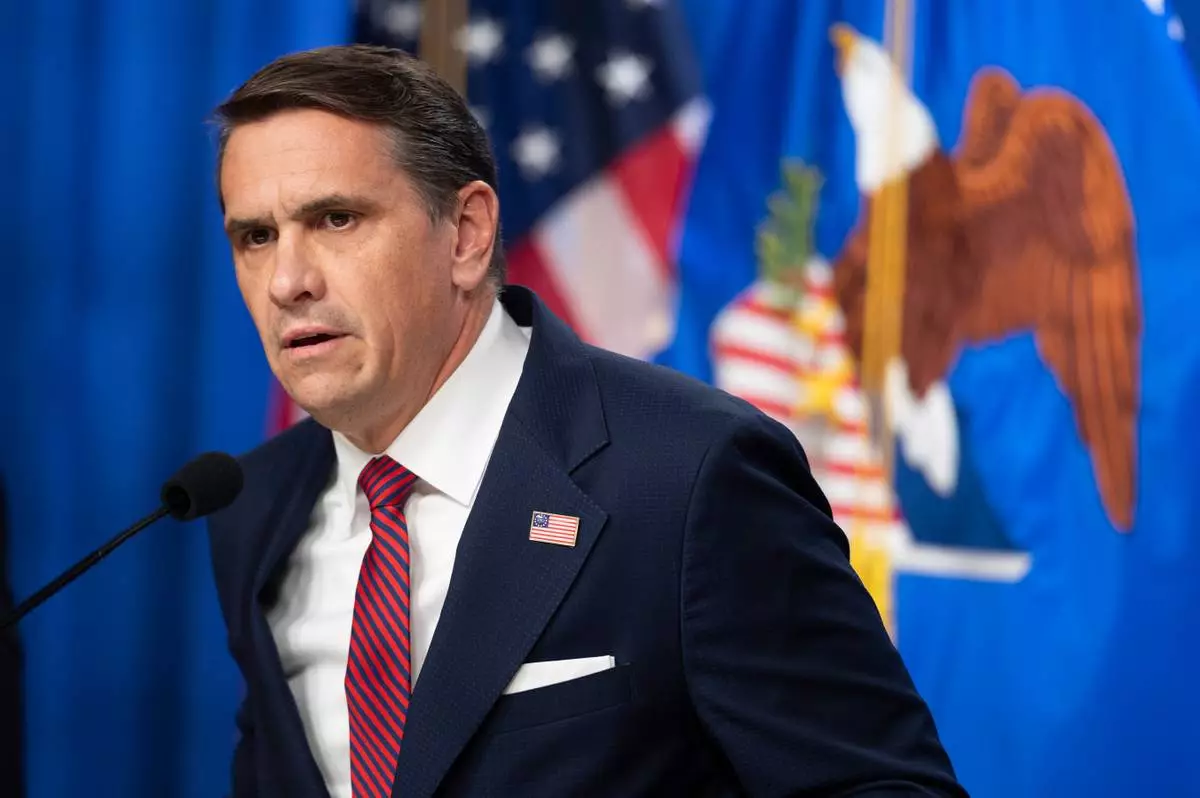
Acting Attorney General Todd Blanche announces that former FBI Director James Comey has been indicted, at the Justice Department in Washington, Tuesday, April 28, 2026. (AP Photo/Cliff Owen)
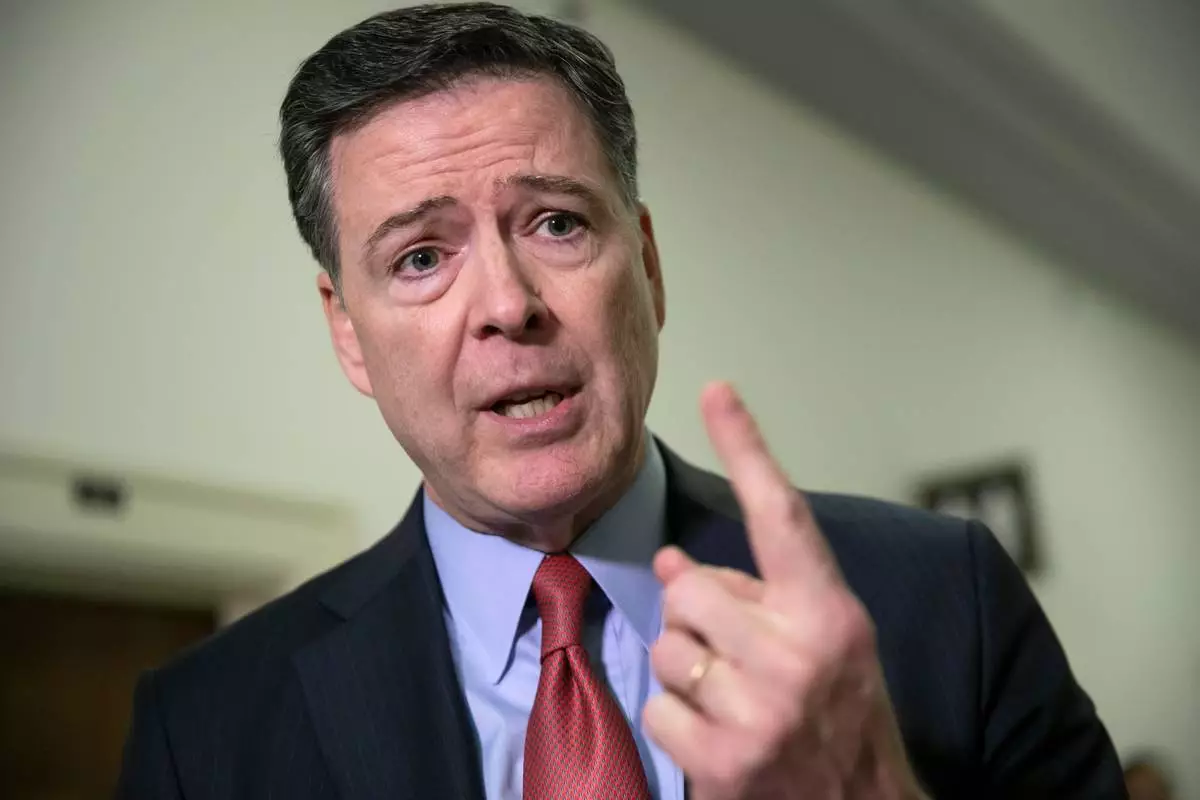
FILE - Former FBI Director James Comey speaks to reporters on Capitol Hill in Washington, Dec. 17, 2018. (AP Photo/J. Scott Applewhite, File)
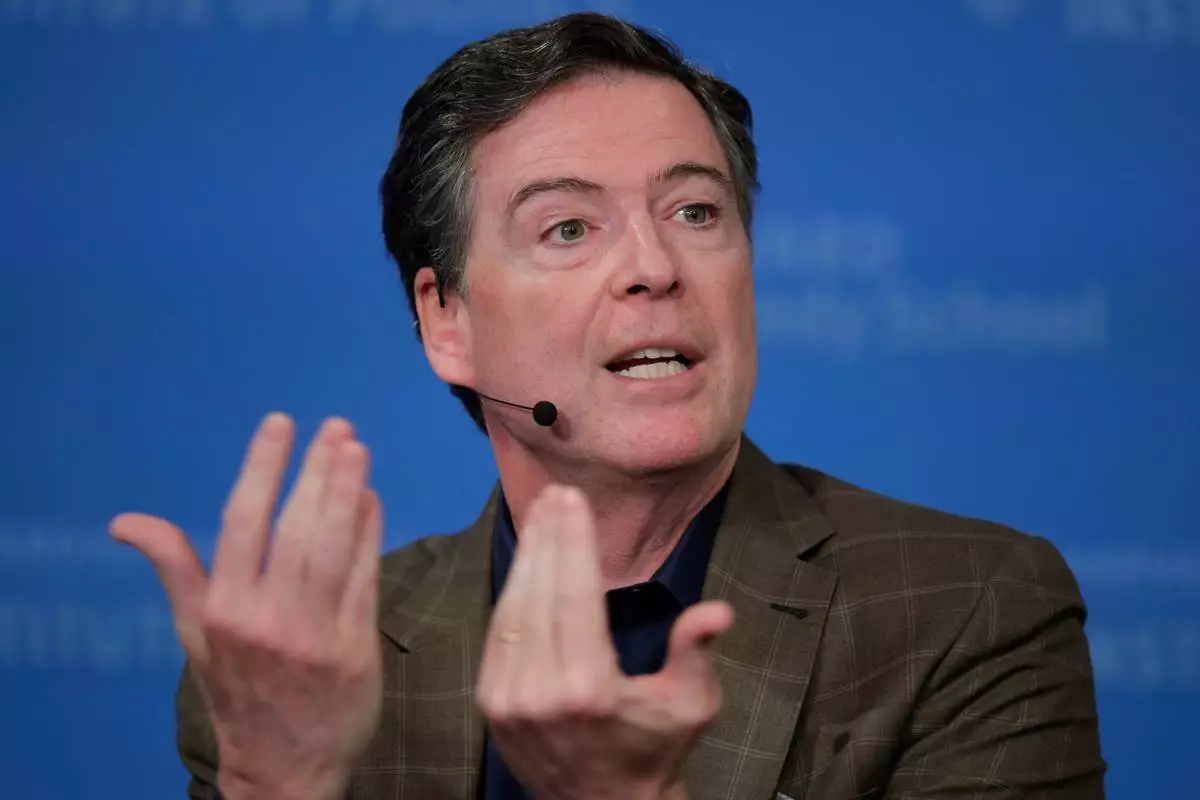
FILE - Former Director of the Federal Bureau of Investigation James Comey at Harvard University's Institute of Politics' JFK Jr. Forum in Cambridge, Mass., Feb. 24, 2020. (AP Photo/Charles Krupa, File)