VIENNA--(BUSINESS WIRE)--Apr 29, 2026--
OrphaCare, a global specialist for the development and marketing of medical devices for drug delivery and part of the AOP Health Group, has appointed Andreas Goppelt as its new Managing Director, succeeding Georg Fischer. In this role, the seasoned medical device expert will focus on broadening the company’s strategic scope and driving its next phase of growth. OrphaCare plays a key role in supporting AOP Health’s integrated therapies approach, and the Group’s long-term expansion.
This press release features multimedia. View the full release here: https://www.businesswire.com/news/home/20260429303533/en/
Andreas Goppelt brings more than 25 years of leadership experience across MedTech, biotechnology and the pharmaceutical industry. He has a proven track record of driving innovation, scaling global organizations, and delivering growth in highly regulated healthcare environments.
In his new role, Goppelt will drive OrphaCare’s expansion through a combination of geographic growth and portfolio expansion by advancing a cutting-edge product pipeline with targeted mergers and acquisitions.
Goppelt will prioritize organizational agility, digital transformation, and operational excellence. In parallel he will foster a high-performance culture built on accountability, collaboration, and empowerment.
Improving Patient Care
“With this appointment, we are further strengthening OrphaCare’s development and its contribution to improving patient care in complex and underserved therapeutic areas,” said Martin Steinhart, CEO of AOP Health Group. “OrphaCare is an essential part of our integrated therapies´ approach. Andreas Goppelt brings the experience and strategic perspective needed to further expand this important part of our business.”
“Working at OrphaCare means taking responsibility for patients who often have limited treatment options,” said Goppelt. “This requires not only expertise, but also clarity in how we work together and a shared commitment to making a real difference. My goal is to create an environment where people take ownership and are proud of the impact they have.”
About Andreas Goppelt
Prior to joining OrphaCare, Andreas Goppelt held senior executive roles including Chief Technology Officer and Chief Executive Officer. Most recently, he served at Ottobock, where he led global R&D transformation initiatives and oversaw large-scale international operations. Earlier in his career, he co-founded SWITCH Biotech and held leadership roles at Baxter BioSurgery.
Andreas Goppelt holds a Ph.D. in Biochemistry from the Ludwig-Maximilians-Universität München.
About AOP Health
AOP Health is a global enterprise group with roots in Austria, where the headquarters of AOP Orphan Pharmaceuticals GmbH ("AOP Health") is located. Since 1996, the AOP Health Group has been dedicated to developing innovative solutions to address unmet medical needs, particularly in the fields of rare diseases and intensive care medicine. The group has established itself internationally as a pioneer in integrated therapy solutions and operates worldwide through subsidiaries, representations, and a strong network of partners. With the claim "Needs. Science. Trust." the AOP Health Group emphasizes its commitment to research and development, as well as the importance of building relationships with physicians and patient advocacy groups to ensure that the needs of these stakeholders are reflected in all aspects of the company’s actions. (aop-health.com)
About OrphaCare
As part of the AOP Health Group, OrphaCare is dedicated to advancing therapies for rare diseases by developinginnovative, tailored solutions for patients with complex medical needs. Since 2018, the company has focused on organizing patient care, bringing advanced medical devices to market, and consistently placing patients at the center of everything it does.
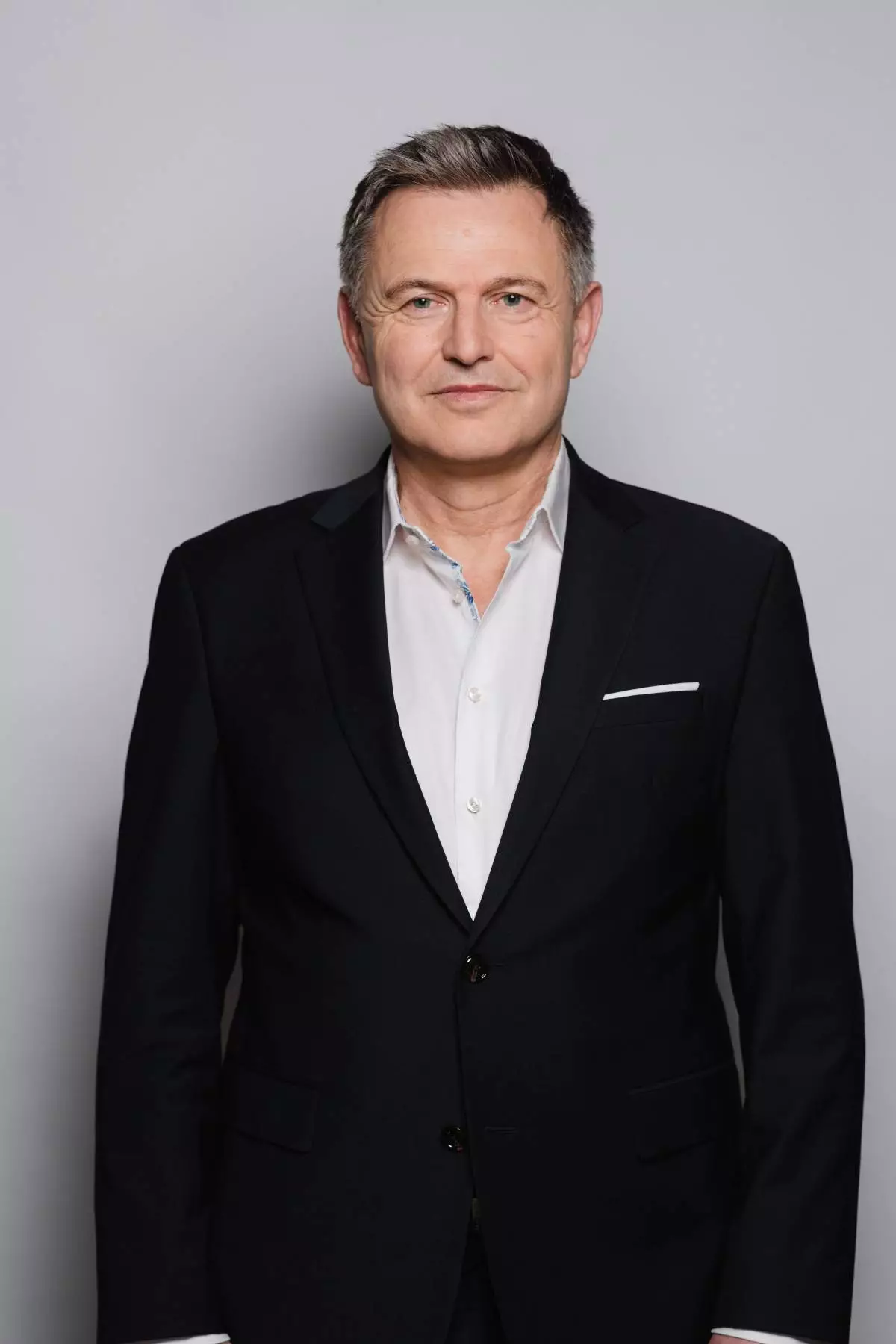
Portrait Andreas Goppelt, Managing Director OrphaCare (copyright: AOP Health/Studio Koekart)
MILAN (AP) — Italian luxury brand Ferragamo said it can map the country of origin for much of the leather used to make its coveted footwear and handbags, which is a first step in traceability according to experts.
The announcement comes during a wave of EU sustainability rules that are increasing pressure on fashion brands to account for materials in their supply chains.
The family-run and publicly traded fashion house has been issuing sustainability reports for over a decade, but the 2025 report released March 31 is the first that contains figures on material traceability — notably for leather, which experts say is harder to trace than textile fibers such as cotton.
“We have been using leather in a more sustainable way,’’ James Ferragamo, the brand’s chief transformation and sustainability officer and grandson of founder Salvatore Ferragamo, said in a recent interview. “I think it is one of the more sustainable materials in my point of view.”
Most of the tanneries working with the brand “control their water, have fair treatment of the workforce, monitor their supply chain ensuring that they’re buying leather from those who are not deforesting, and taking the right approach also in terms of breeding and animal welfare,” he said.
Traceability of materials is considered a first and necessary step for the fashion industry, which is facing a new EU framework that will require brands and their suppliers to ensure the items they produce are sustainable from the drawing board to end-of-life disposal. Precise modalities are still being defined and compliance will be phased in over the coming years.
“Traceability is an essential factor, but it’s not sufficient, I would say,’’ said Francesca Rinaldi, a sustainability expert at Milan’s Bocconi University and director of the Monitor for Circular Fashion. “It enables the implementation of sustainability and circularity.”
She said that any company that is not tracing their materials “doesn’t know their supply chain” and “could be also criticized for greenwashing.”
Eventually, EU regulations and directives are moving toward full circularity of materials to include measures extending the life cycle of garments, accessories and footwear through repairs and end-of-life management, including recycling and upcycling, she said.
The EU is also phasing in restrictions on destroying unsold apparel, accessories and footwear produced by companies with more than 250 employees and more than 40 million euros ($46.8 million) in annual revenues.
The family run fashion house was founded in 1927 by Salvatore Ferragamo in Florence, after his return from Hollywood, where he had established himself as shoemaker to the stars with clients including Marilyn Monroe and Judy Garland. Material scarcity during World War II pushed Ferragamo to experiment with alternatives, substituting wicker for leather and using cork for soles, the younger Ferragamo said.
In keeping with its origins, Ferragamo remains primarily a footwear and leather goods maker. Together, they comprised 86% of 2025 sales of 976.5 million euros ($1.1 billion).
Ferragamo launched its initiative on leather traceability with the calf leather used for the iconic Fiamma bag, tracing it from breeding to assembly, the group announced in its 2024 annual report.
In 2025, Ferragamo enlisted strategic tanneries accounting for 80% of the hides it buys in a project to identify the country of origin of raw materials through supplier declarations. When including textiles such as cotton, silk and nylon, the company says 81% of its materials are certified under third-party sustainability standards.
“Today there is not one single solution, one single technological solution to trace the leather to the birth farm of the cows,’’ said Davide Triacca, Ferragamo’s sustainability director. “We got to that result through a very dedicated and consistent approach and today we are able to trace more than 80% of the entire leather that we supply and the vast majority of which comes from Europe.”
The EU does not require leather to be traceable. Sustainability experts underscore that approaches based on country-level mapping and supplier declarations do not establish a full chain of custody and instead reflect an early stage of traceability.
Ferragamo’s sustainability journey has included a capsule collection with silky textiles made from orange fibers in 2017, one of its first research investments, and more recently the Nova men’s tote made with nylon from castor oil instead of fossil oil, and the Back to Earth collection featuring the brand’s trademark Hug handbag treated with vegetable dyes.
“Research keeps on going. It’s something that we’re doing all the time,'' Ferragamo said. “We’re trying to find different ways of creating different materials. And sometimes the materials that we produce are not ready for market. But it doesn’t mean that we don’t experiment.”

Bags are displayed as James Ferragamo, Men's and Women's Leather Product Director for the Salvatore Ferragamo group, talks during an interview with the Associated Press in Milan, Italy, Wednesday, April 22, 2026. (AP Photo/Antonio Calanni)
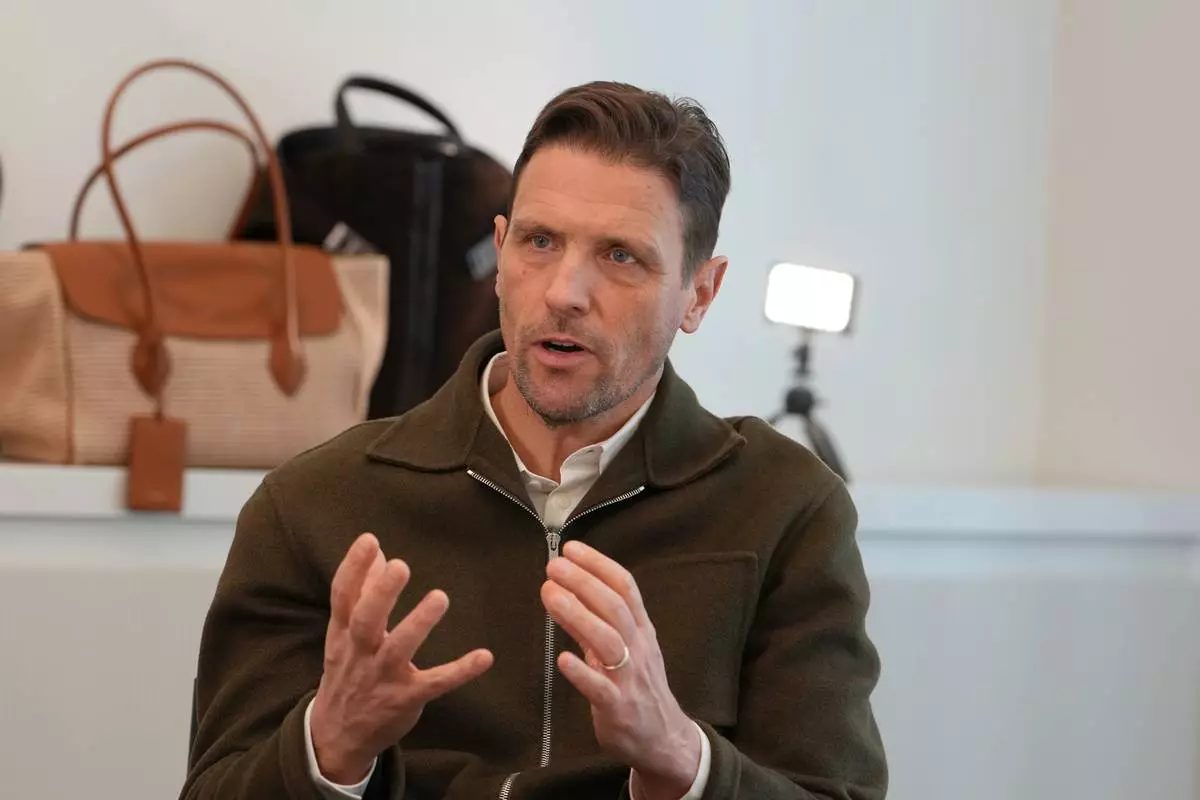
James Ferragamo, Men's and Women's Leather Product Director for the Salvatore Ferragamo group, talks with journalist during an interview with Associated Press in Milan, Italy, Wednesday, April 22, 2026. (AP Photo/Antonio Calanni)

Davide Triacca, Sustainability Director for the Salvatore Ferragamo group, talks with journalist during an interview with Associated Press in Milan, Italy, Wednesday, April 22, 2026. (AP Photo/Antonio Calanni)

Bags are displayed during an interview with James Ferragamo, Men's and Women's Leather Product Director for the Salvatore Ferragamo group, with Associated Press in Milan, Italy, Wednesday, April 22, 2026. (AP Photo/Antonio Calanni)

A Salvatore Ferragamo story is seen in downtown Milan, Italy, Wednesday, April 22, 2026. (AP Photo/Antonio Calanni)