TEHRAN, Iran (AP) — Iran’s national rial currency hit a record low Wednesday of 1.8 million to the dollar as a shaky ceasefire with the U.S. and Israel holds.
The rial had remained stable in the early weeks of the war that began Feb. 28, in part because there was little trading or imports.
The rial began to slide two days ago. Experts warn that its fall is likely to further fuel inflation in a country where many imported goods, from food and medicine to electronics and raw materials, are affected by the dollar rate.
A U.S. naval blockade during the ceasefire has increased pressure on Iran’s already battered economy, cutting into a key source of government revenue and hard currency by stopping or intercepting oil shipments.
Pakistani Prime Minister Shehbaz Sharif said Wednesday his government was continuing efforts to help ease tensions between the U.S and Iran following an initial round of direct talks on April 11.
The latest slide of Iran's currency comes months after a currency shock helped fuel nationwide protests in January. At the time, the rial weakened from about 1.4 million to 1.6 million to the dollar in less than a week, deepening public anger over rising prices and fears about the country’s economic future.
Iran’s economy has faced decades of sanctions, chronic inflation and a widening gap between official and open-market exchange rates.
Prices of basic household goods had already been rising before the rial's latest fall, adding to pressure on Iranian families. Over the past two weeks, people buying daily essentials have faced higher prices for milk, yogurt, cooking oil, bread, rice, cheese and detergents.
The increases point to broader inflationary pressure in the economy driven by uncertainty, supply disruptions, higher transport and production costs and the continuing impact of the U.S. blockade. The rial’s latest slide is likely to add further pressure particularly on goods tied to imports, packaging and raw materials.
The economic pressure also has extended to the labor market. The reformist Shargh newspaper reported Monday that 500 workers at Pinak in Rasht and 700 workers at Borujerd Textile Factory had been laid off since the beginning of the new Iranian calendar year in late March after their contracts ended.
The reported layoffs add to concerns that rising costs, weaker demand and uncertainty after the war and blockade are forcing some companies to cut jobs or avoid renewing temporary contracts.
Associated Press writer Munir Ahmed in Islamabad contributed to this report.
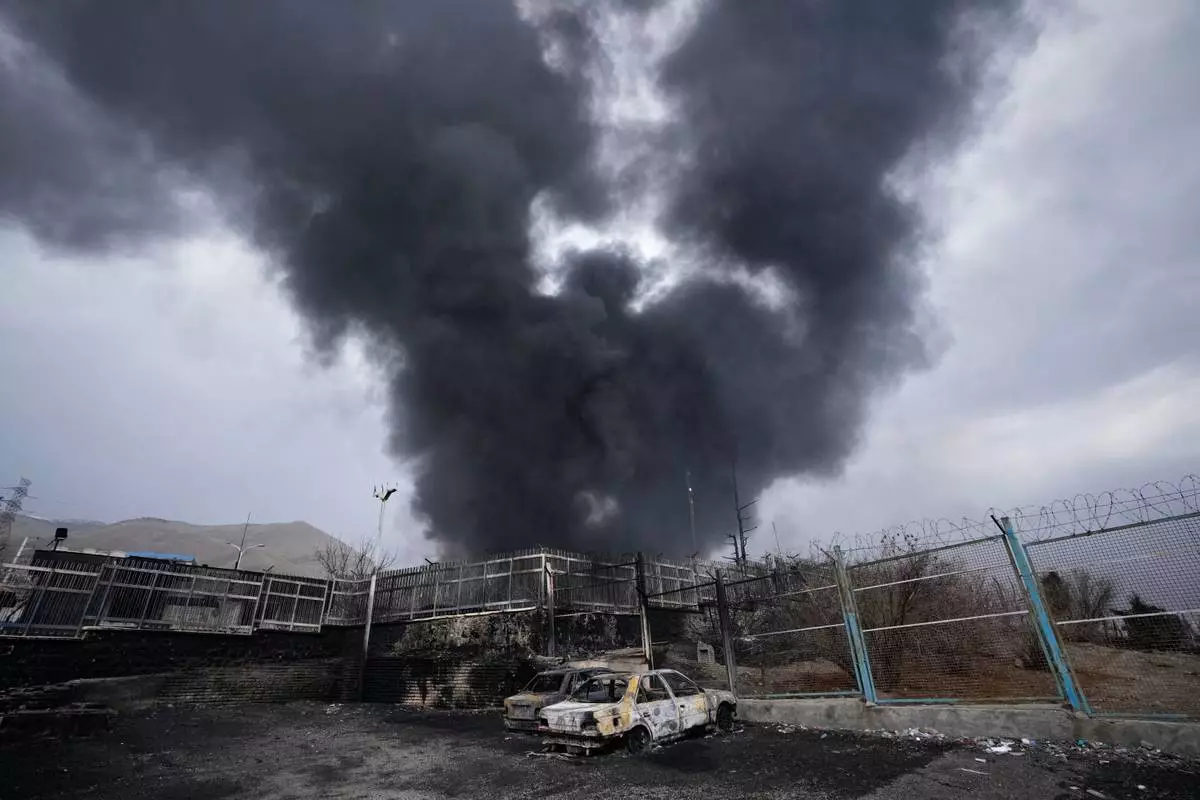
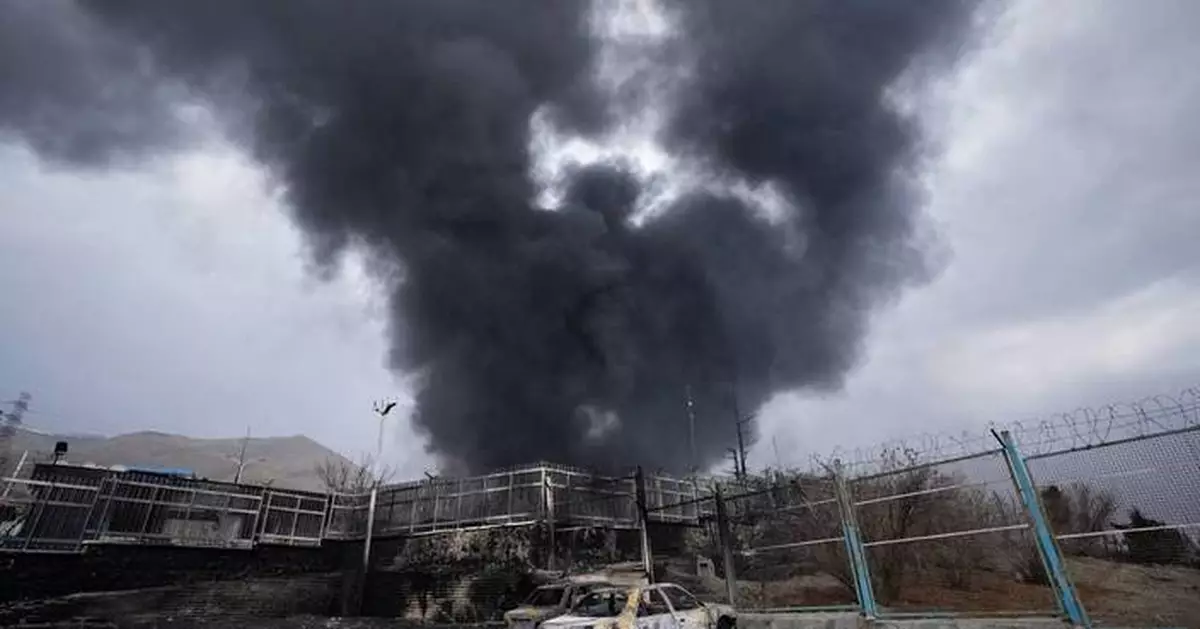
FILE - A thick plume of smoke rises from an oil storage facility hit by a U.S.-Israeli strike in Tehran, Iran, March 8, 2026. (AP Photo/Vahid Salemi, File)
WASHINGTON (AP) — Defense Secretary Pete Hegseth will face questioning from lawmakers Wednesday for the first time since the Trump administration launched the war against Iran, which Democrats have contested as a costly conflict of choice waged without congressional approval.
The hearing before the House Armed Services Committee is being held to discuss the administration's 2027 military budget proposal, which would boost defense spending to a historic $1.5 trillion. Hegseth and the chairman of the Joint Chiefs of Staff, Gen. Dan Caine, are expected to stress the need for more drones, missile defense systems and warships.
Democrats are likely to pivot to the ballooning costs of the Iran war, huge drawdown of critical U.S. munitions and bombing of a school that killed children. Some lawmakers also may question how prepared the military was to shoot down swarms of Iranian drones, some of which penetrated U.S. defenses and killed or injured American troops.
While a ceasefire is now in place, the U.S. and Israel launched the war Feb. 28 without congressional oversight. House and Senate Democrats have failed to pass multiple war power resolutions that would have required President Donald Trump to halt the conflict until Congress authorizes further action.
Republicans have said they will keep faith in Trump’s wartime leadership, for now, citing Iran’s nuclear program, the potential for talks to resume and the high stakes of withdrawal. Still, GOP lawmakers are eager for the conflict to end, and some are eyeing future votes that could become an important test for the president if the war drags on.
Iran's closing of the Strait of Hormuz, a vital shipping corridor for the world's oil, has sent fuel prices skyrocketing and posed problems for Republicans ahead of the midterm elections. The U.S. has responded with a Navy blockade of Iranian shipping and further built up its military forces in the region — with three aircraft carriers in the Middle East for the first time in more than 20 years.
The countries appear locked in a stalemate, with Trump unlikely to accept Tehran's latest offer to reopen the strait if the U.S. ends the war, lifts its sea blockade and postpones nuclear talks.
Hegseth has avoided public questioning from lawmakers about the war, although he and Caine have held televised Pentagon briefings. Hegseth has mostly taken questions from conservative journalists, while citing Bible passages to castigate mainstream outlets.
The defense secretary will face a much different dynamic Wednesday as well as on Thursday, when he and Caine also are set to face the Senate Armed Services Committee. Lawmakers' questions are likely to go beyond the budget and even the war to Hegseth's ousting of top military leaders.
Besides Navy Secretary John Phelan's departure last week, Hegseth recently ousted the Army’s top uniformed officer, Gen. Randy George, as well as several other top generals, admirals and defense leaders.
“Tell us why. You know these are important positions. We are in a war posture with Iran,” said North Carolina Sen. Thom Tillis, a Republican.
Tillis, who was a crucial vote to confirming the defense secretary, added that Hegseth’s management of the Pentagon had caused him to have second thoughts on his support.
“He may be able to clean it up, but on its face, you don’t go through the number of highly reputable, senior-level officials, admirals and generals,” Tillis added.
Rep. Austin Scott, a Georgia Republican, condemned George's termination during a House Armed Services Committee hearing last week, saying that “some of us are not through asking the questions about that.”
“I think the firing of Gen. George was an extreme disservice to the United States Army,” Scott said. “And I think it was reckless conduct.”
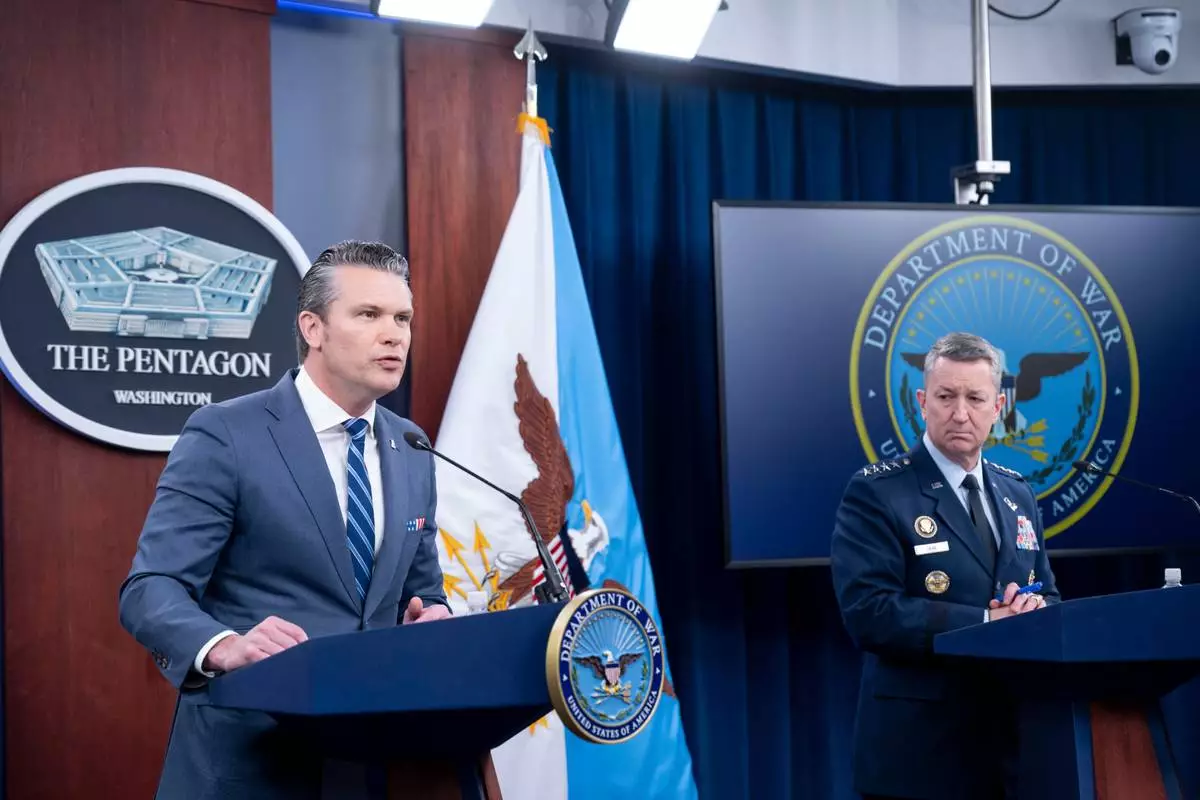
Defense Secretary Pete Hegseth and Chairman of the Joint Chiefs of Staff Gen. Dan Caine speaks to members of the media during a press briefing at the Pentagon, Thursday, April 16, 2026 in Washington. (AP Photo/Kevin Wolf)