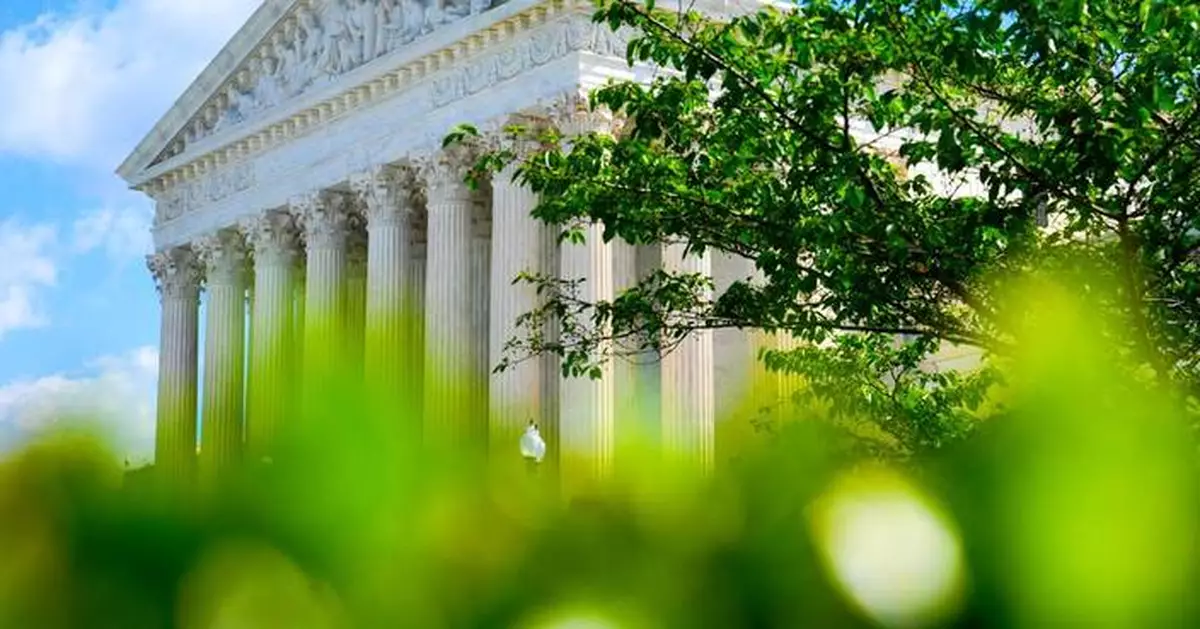
WASHINGTON (AP) — The Supreme Court on Wednesday sided with a faith-based pregnancy center that raised First Amendment concerns about an investigation into whether it misled people to discourage abortions.
The high court's unanimous ruling is a procedural victory for First Choice Women’s Resource Centers, which is challenging a New Jersey investigation of its practices.
The conservative-majority court has given abortion opponents high-profile wins in recent years, most notably the watershed case that overturned the nationwide right to abortion in 2022. First Choice, though, had also drawn support from the American Civil Liberties Union, which supports abortion rights but backed the group's First Amendment concerns.
The Supreme Court's decision lets First Choice sue over a state-issued subpoena in federal court, though the ruling does not resolve the underlying case.
Lawyer Erin Hawley with the Alliance Defending Freedom argued the case, and said the group looks forward to taking up the case in federal court if New Jersey's attorney general decides to "continue these efforts on remand.”
Facilities often known as “crisis pregnancy centers” have been on the rise in the United States as Republican-controlled states enforce bans or restrictions on abortion and some steer tax dollars to the centers, which provide prenatal care and steer women to carrying pregnancies to term.
As Democratic-leaning states seek to protect abortion access, several have investigated whether the anti-abortion centers mislead women, including by implying they offer abortions.
In New Jersey, then-Democratic Attorney General Matthew Platkin sent a subpoena asking for donor lists and other information.
First Choice pushed back, arguing the investigation was baseless and the demand for donor lists threatened their First Amendment rights to free speech and association. They tried to challenge the subpoena in federal court, but a judge found the case was not yet far enough along. An appeals court agreed.
First Choice then turned to the Supreme Court.
They argued access to federal court is important in cases where government investigators are accused of misusing state power, and the ACLU agreed that subpoenas seeking donor information can scare away supporters.
The state argued that the information would only be used to ask donors whether they had been deceived about First Choice’s services, and the subpoena could not have threatened their First Amendment rights because the group hadn’t yet been required to turn over any information.
A court order is required to enforce the subpoena, and the judge overseeing the underlying case has so far only ordered the two sides to negotiate.
New Jersey also argued that allowing First Choice to sue could usher in a glut of lawsuits from the thousands of businesses that get similar subpoenas.
The Trump administration weighed in to support First Choice. The Justice Department argued that any impact would be relatively small since the decision would only apply to groups with similar First Amendment arguments.
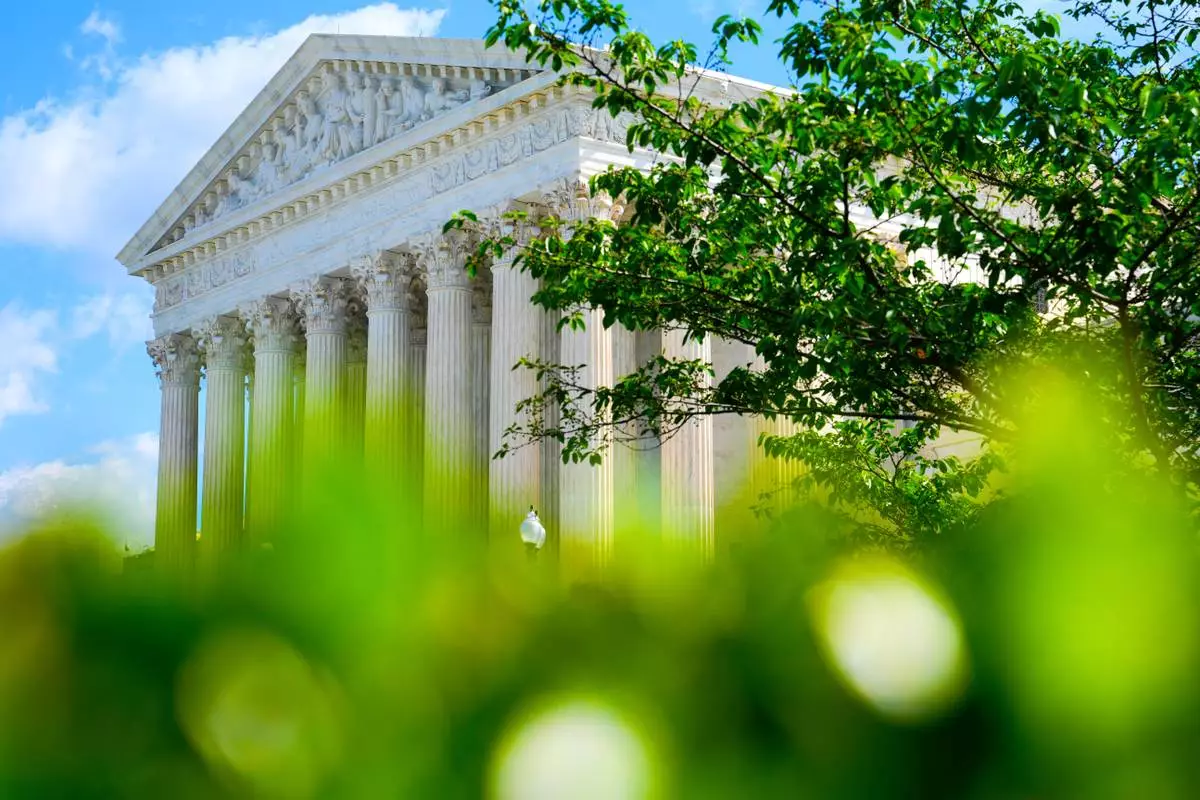
The U.S. Supreme Court is seen Friday, April 17, 2026, in Washington. (AP Photo/Mariam Zuhaib)
BEIRUT (AP) — A group of Australian women and children who left a camp in Syria that houses people with alleged ties to Islamic State group militants are stuck in the country because Australian authorities have refused to allow their return, Syrian officials said Wednesday.
Thirteen women and children from four families last week left Roj camp, a remote facility near the border with Iraq that houses relatives of suspected militants, on Friday and headed to Syria's capital.
An official at the camp at the time said that the families were expected to remain in Damascus for around 72 hours and then be sent to Australia.
In response to an Associated Press inquiry about their status, Syria's information ministry said in a statement that after the families left the camp, the foreign ministry was informed that "the Australian government had refused to receive them.”
They were turned back before reaching Damascus International Airport, the information ministry's statement said.
“These families are still awaiting a solution, which can only be achieved through coordination with the relevant international parties.”
Australian Prime Minister Anthony Albanese said at a news conference on Wednesday that “we are providing no support for repatriation and no assistance for these people.”
At a separate news conference in Beijing, Australia’s Foreign Minister Penny Wong on Wednesday said that her government has made “very clear that we are not assisting in their repatriation.”
Syria's information ministry said that the families, through a lawyer, had obtained passports that were delivered by an “individual” that it didn't identify while they were still in northeastern Syria in an area under the control of the Kurdish-led Syrian Democratic Forces, or SDF.
A Lebanese-Australian doctor, Jamal Rifi, previously told Australian media that he was helping to coordinate the repatriation effort. Rifi couldn't be reached for comment.
A previous attempt to return 34 women and children to Australia from the camp in February was turned back by Syrian authorities.
Former IS fighters from multiple countries, along with their wives and children, were held in a network of camps and detention centers in northeast Syria after the militant group lost control of its territory in Syria in 2019. Though defeated, the group still has sleeper cells that carry out deadly attacks in Syria and Iraq.
The larger al-Hol camp has now been closed down, and thousands of suspected IS militants previously held in Syria were transferred to Iraq by the U.S. military to stand trial there.
The moves came after fighting between government forces and the SDF in January. Government forces seized much of the territory formerly held by the SDF. Amid the chaos, many detainees fled al-Hol and some prisoners escaped from a detention center.
Australian governments have repatriated Australian women and children from Syrian detention camps on two occasions. Other Australians have also returned without government assistance.
Associated Press writers Rod McGuirk in Melbourne, Australia and E. Eduardo Castillo in Beijing contributed to this report.
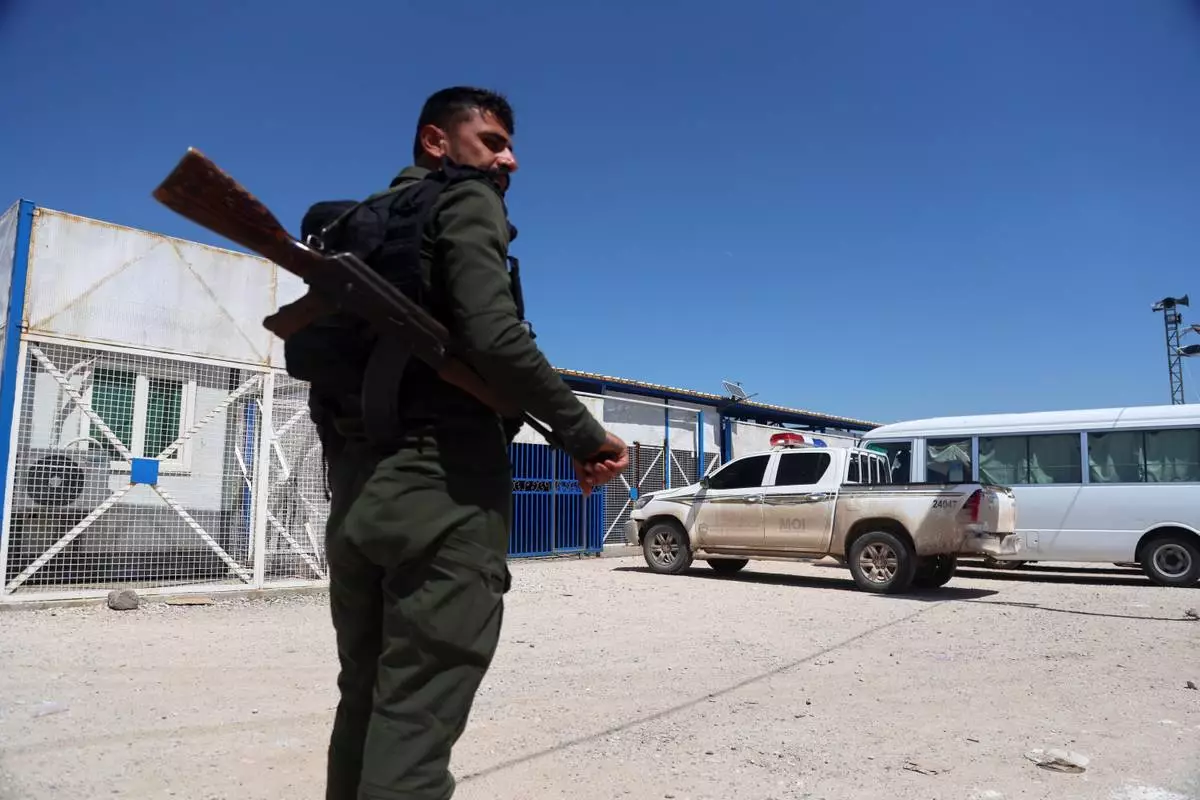
A soldier stands guard as vehicles arrive at Roj Camp in eastern Syria, housing people with alleged ties to Islamic State militants, to transport Australian families to Damascus as part of a second repatriation effort by Syrian authorities, Friday, April 24, 2026. (AP Photo/Baderkhan Ahmad)
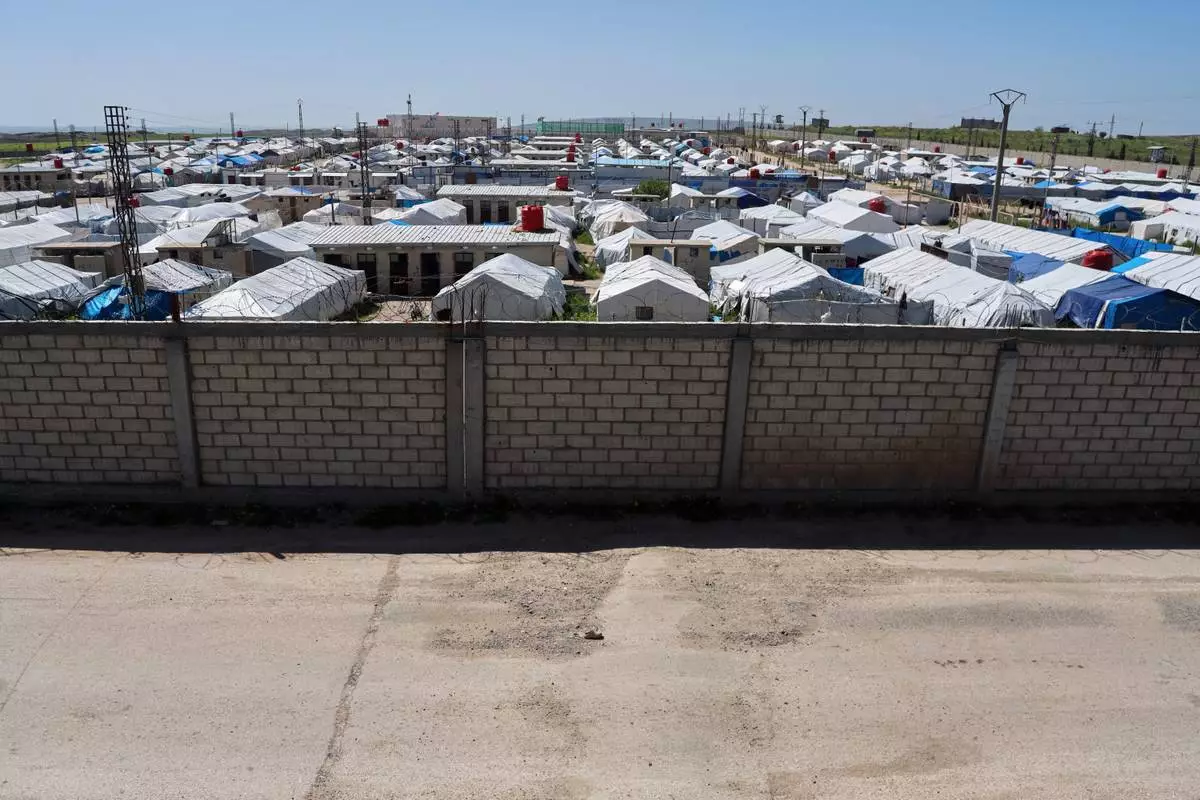
A brick wall surrounds a tent camp housing people with alleged ties to Islamic State militants at Roj Camp in eastern Syria, Friday, April 24, 2026. (AP Photo/Baderkhan Ahmad)
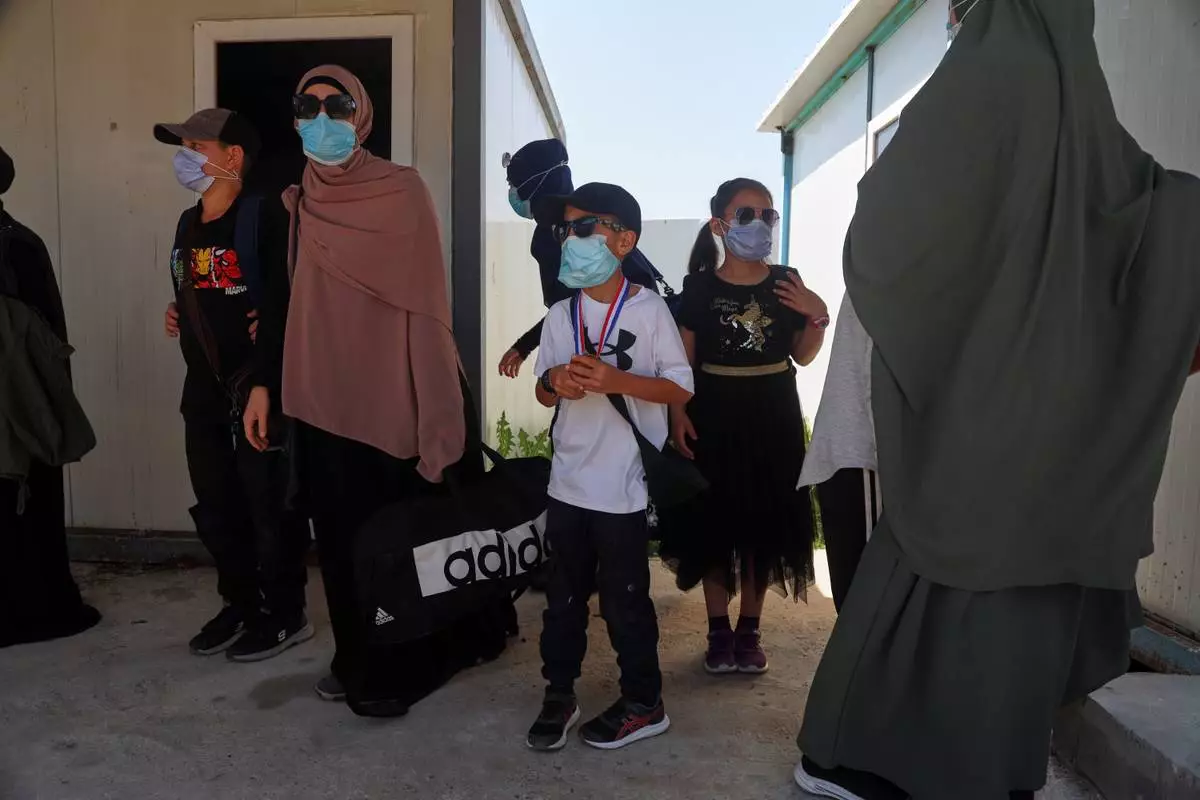
Members of Australian families at Roj Camp in eastern Syria, housing people with alleged ties to Islamic State militants, prepare to leave for Damascus as part of a second repatriation effort by Syrian authorities, at Roj Camp in eastern Syria, Friday, April 24, 2026. (AP Photo/Baderkhan Ahmad)