HOUSTON--(BUSINESS WIRE)--Apr 29, 2026--
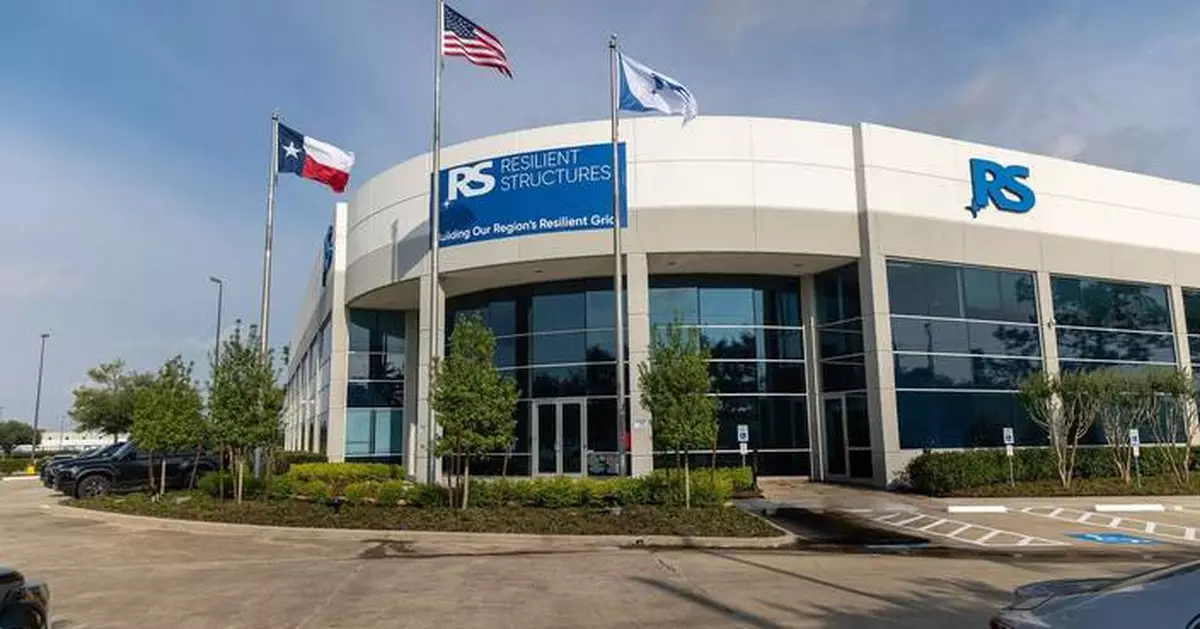
Resilient Structures (RS), a leading manufacturer of high-performance composite utility poles, today announced the grand opening and production launch at its Houston manufacturing facility, marking a significant investment in grid reliability and economic growth across the Gulf Coast region.
This press release features multimedia. View the full release here: https://www.businesswire.com/news/home/20260429237355/en/
The facility, located in Humble, Texas, will support utilities as they strengthen infrastructure to improve reliability in the face of more frequent severe weather. The site will play a key role in ongoing efforts to enhance service reliability for communities across the Gulf Coast region.
To mark the occasion, RS held a celebration on April 28, bringing together local officials, utilities, and community partners. The event featured remarks from RS CEO John Higgins, CenterPoint Energy COO Jesus Soto, Partnership Lake Houston President & CEO Ray Hernandez, and Texas State Representative Charles Cunningham, as well as a ribbon-cutting ceremony and facility tours.
“This facility represents what’s possible when utilities, industry, and communities work together to get ahead of a challenge,” said CEO Higgins. “The demand for a stronger, more reliable grid is only increasing, and this facility gives our utility customers the ability to deploy resilient infrastructure faster, at scale, and closer to where it’s needed most.”
At the event, Higgins also announced plans to install two additional production lines at the Houston facility. Once fully operational, the added lines are expected to double the site’s production capacity and create an additional 150 high-quality jobs, further expanding RS’s ability to support utilities across the Gulf Coast as demand for resilient infrastructure grows.
Beyond the initial capital investment, the facility is expected to generate a meaningful local economic impact. It is creating more than 200 jobs in the Houston area initially, with the two additional production lines expected to add another 150 jobs once online. It will also support a broader network of regional suppliers and partners.
“I welcome this new business into the Lake Houston community and know the partnership with CenterPoint will help ensure a reliable grid for the future,” said Rep. Cunningham. “The economic growth created by more than 200 new jobs is significant and commendable. Resilient Structures will be a valuable and key partner in our area.”
By expanding domestic manufacturing capacity in Houston, RS aims to help utilities accelerate grid hardening efforts, while improving delivery timelines and reducing reliance on global supply chains.
The Houston facility will serve as a strategic hub for RS’s operations in the region, supporting long-term grid modernization efforts and helping utilities deliver more reliable service to the communities they serve.
About Resilient Structures
Resilient Structures (RS) is a premier North American manufacturer of high-performance composite utility structures designed to harden the electrical grid against extreme weather and environmental threats. In business for over 30 years, RS is backed by Energy Impact Partners, a global investment firm with a strategic focus on the energy sector and Werklund Growth Fund, an investment firm backed by the Werklund family. RS operates three strategic manufacturing facilities in St. George, Utah; Tilbury, Ontario; and Humble, Texas.
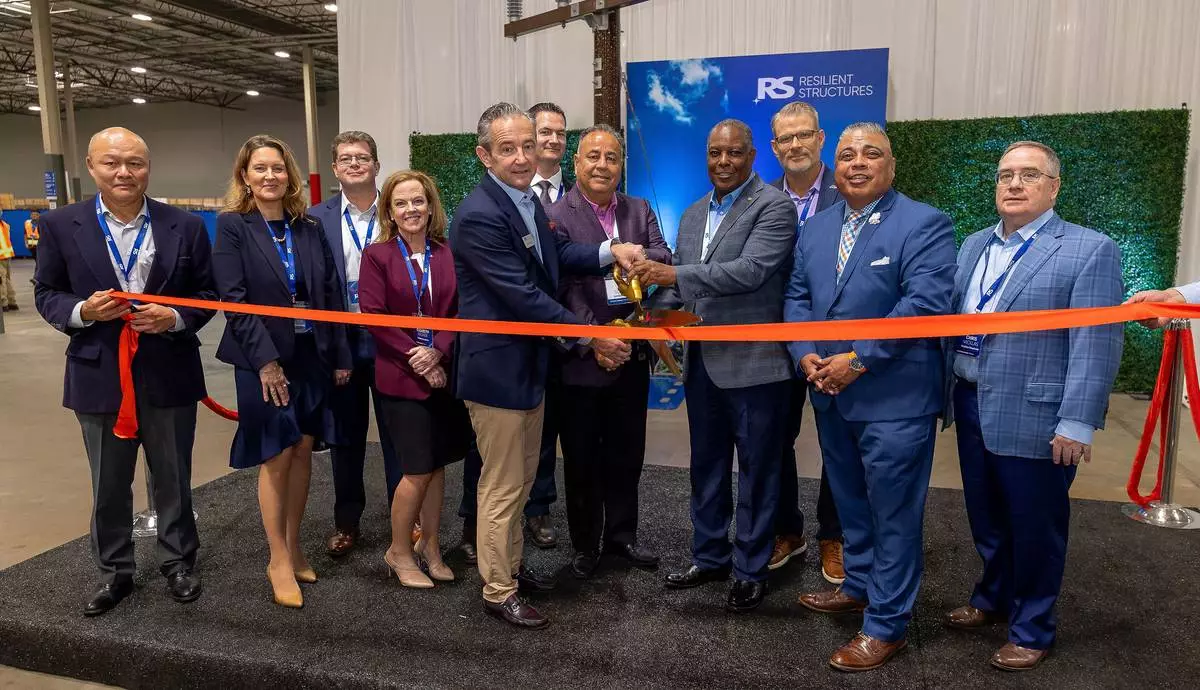
Resilient Structures leadership, partners, and community officials participate in a ribbon-cutting ceremony (left to right): Cher Tan, Senior Director of Marketing, RS; Marina Carter, Senior Director of Human Resources, RS; Scott Holmes, Chief Technology Officer, RS; Elizabeth V. Knower, Senior Vice President, Legal, RS; Brent Wagar, Senior Vice President, Operations, RS; John Higgins, CEO, RS; Jesus Soto, COO, CenterPoint Energy; Texas State Representative Charles Cunningham; Rob Krotee, Executive Vice President, RS; Ray Hernandez, President & CEO, Partnership Lake Houston; and Christopher Micklas, Chief Financial Officer, RS.

Resilient Structures CEO John Higgins delivers remarks during the grand opening of the company’s Houston manufacturing facility in Humble, Texas.
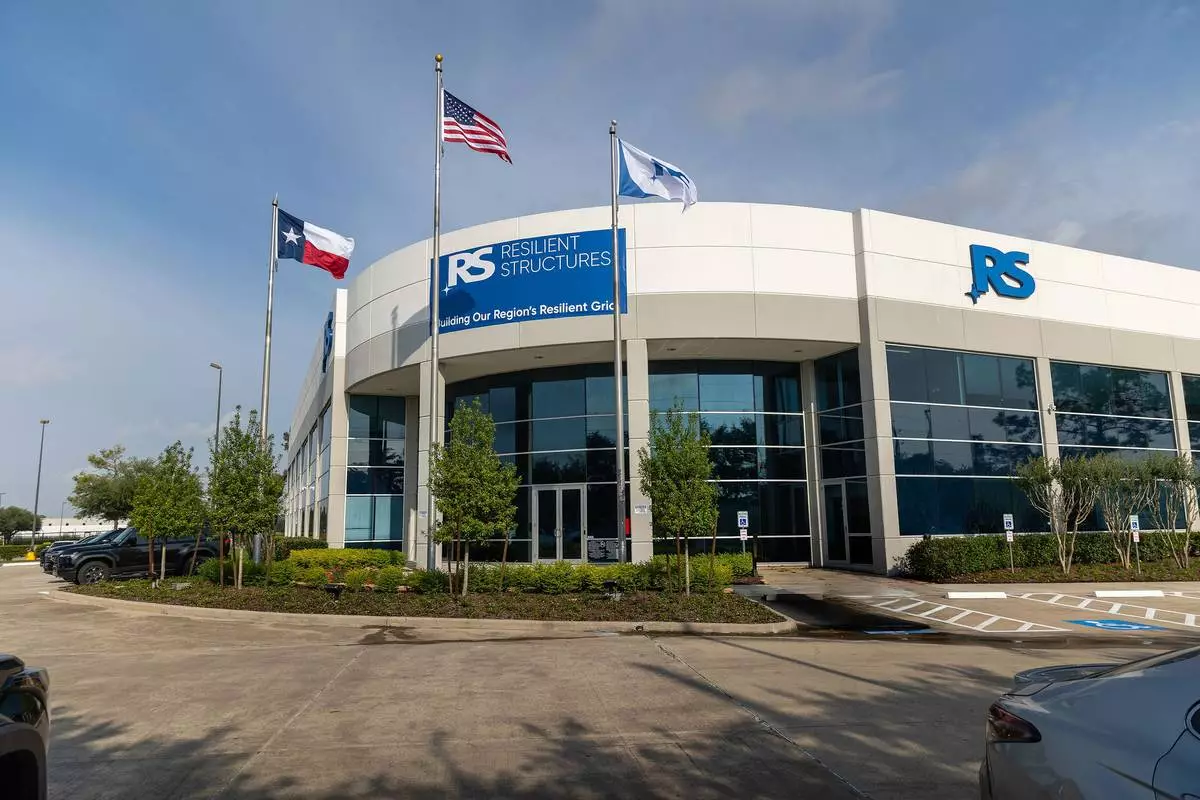
Resilient Structures’ Houston manufacturing facility in Humble, Texas, where the company produces high-performance composite utility poles.
UNITED NATIONS (AP) — The majority of Iran’s highly enriched uranium is likely still at its Isfahan nuclear complex, which was bombarded by airstrikes last year and faced less intense attacks in this year's U.S.-Israeli war, the U.N. nuclear agency's leader told The Associated Press.
Rafael Grossi said in an interview Tuesday that the International Atomic Energy Agency has satellite images showing the effects of the latest U.S.-Israeli airstrikes against Iran and that “we continue to get information.”
IAEA inspections ended at Isfahan when Israel last June launched a 12-day war that saw the United States bomb three Iranian nuclear sites.
The U.N. nuclear watchdog believes a large percentage of Iran's highly enriched uranium “was stored there in June 2025 when the 12-day war broke out, and it has been there ever since,” Grossi said.
“We haven't been able to inspect or to reject that the material is there and that the seals — the IAEA seals — remain there,” he said. “I hope we'll be able to do that, so what I tell you is our best estimate.”
Images from an Airbus satellite show a truck loaded with 18 blue containers going into a tunnel at the Isfahan Nuclear Technology Center on June 9, 2025, just before last year's war started. Those containers, believed to contain highly enriched uranium, likely remain there.
The IAEA also wants to inspect Iran's nuclear facilities at Natanz and Fordo, where there is also some nuclear material, the IAEA director general added.
Iran is a party to the Nuclear Nonproliferation Treaty, whose five-year review is underway at U.N. headquarters. Under its provisions, Iran is required to open its nuclear facilities to IAEA inspection, Grossi said.
Iran has 440.9 kilograms (972 pounds) of uranium that is enriched up to 60% purity, a short, technical step from weapons-grade levels of 90%, according to the agency. Grossi has said the IAEA believes roughly 200 kilograms (about 440 pounds) is stored in tunnels at the Isfahan site.
The Iranian stockpile could allow the country to build as many as 10 nuclear bombs, should it decide to weaponize its program, Grossi told the AP last year.
Tehran long has insisted its nuclear program is peaceful. President Donald Trump said one of the major reasons the U.S. went to war was to deny Iran the ability to develop nuclear weapons, even as he has insisted that the strikes last summer “obliterated” the country's atomic program.
Grossi told a U.N. press conference Wednesday that Iran declared a new uranium enrichment facility at Isfahan last June and that IAEA inspectors were scheduled to visit the day strikes began. He said the facility apparently was not hit in attacks on Isfahan this year or last.
Grossi said the IAEA has discussed with Russia and others the possibility of sending Iran's highly enriched uranium out of the country — a complex operation that would require either a political agreement or a major U.S. military operation in hostile territory.
Trump said Wednesday that Russian President Vladimir Putin renewed his offer to help the United States handle Iran's enriched uranium. Trump said he told Putin it was more important the Russian leader “be involved with ending the war with Ukraine.”
Grossi, meanwhile, noted that “what's going to be important is that that material leaves Iran” or is blended to reduce its enrichment.
He said the IAEA participated in U.S.-Iran nuclear talks in February but has not been part of recent ceasefire negotiations mediated by Pakistan. He said the agency has been in discussions separately with the U.S. and informally with Iran.
Trump told Axios on Wednesday that he’s rejecting Iran's latest proposal, which had called for postponing discussions on its nuclear program but ending its chokehold on the Strait of Hormuz, a crucial sea route for oil and natural gas shipments, if the U.S. lifts its blockade and ends the war.
Grossi told reporters Wednesday that Iran had a much smaller nuclear program with one type of centrifuge in 2015 when it agreed to rein in its nuclear program in a deal with six major powers. Trump pulled the U.S. out of the agreement in 2018.
The IAEA chief said negotiations now are a “completely different ballgame” because of Iran's “exponential progress” not only on enriching uranium but using the latest generation of centrifuges, different compounds and new facilities.
It would take “political will” from Tehran to reach a deal, Grossi told AP, stressing that “Iran has to be convinced that it is important to negotiate.”
Iran's leaders say they are willing to negotiate and so does the Republican U.S. president, Grossi said, but “where the frustration kicks in, apparently for both, is that they do not seem to come to agreement, or be at an eye-to-eye level, on what needs to be done first, or on how.”
Calling himself a negotiator who likes to see a “flicker of hope,” Grossi noted that “one important thing is that there is apparently an interest on both sides to come to an agreement.”
Asked if he thinks the Iranians are serious about making a deal, Secretary of State Marco Rubio told Fox News Channel this week that they are skilled negotiators looking to buy time and that any agreement must be "one that definitively prevents them from sprinting towards a nuclear weapon at any point.”
AP writer Aamer Madhani in Washington contributed to this report.

Rafael Grossi, International Atomic Energy Agency (IAEA) Director General and a candidate for United Nations Secretary-General, speaks during an interview at U.N. headquarters, Tuesday, April 28, 2026. (AP Photo/Yuki Iwamura)
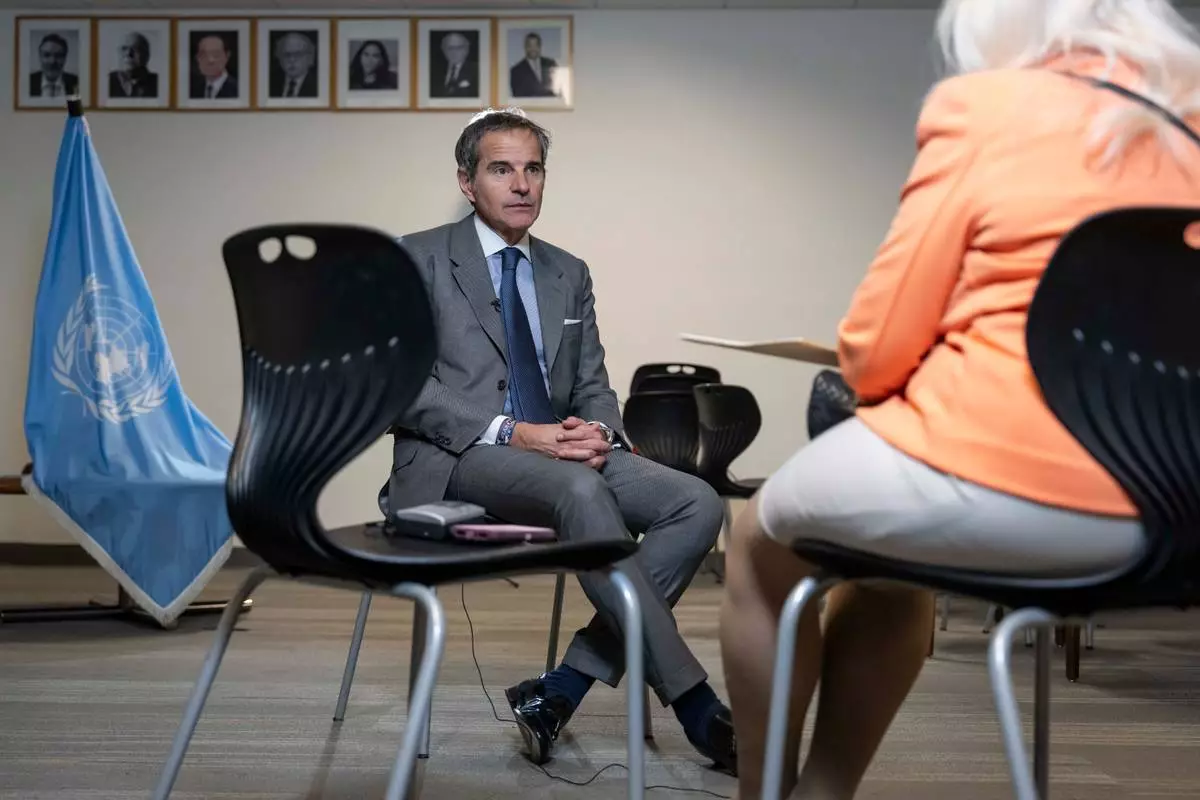
Rafael Grossi, International Atomic Energy Agency (IAEA) Director General and a candidate for United Nations Secretary-General, speaks during an interview at U.N. headquarters, Tuesday, April 28, 2026. (AP Photo/Yuki Iwamura)
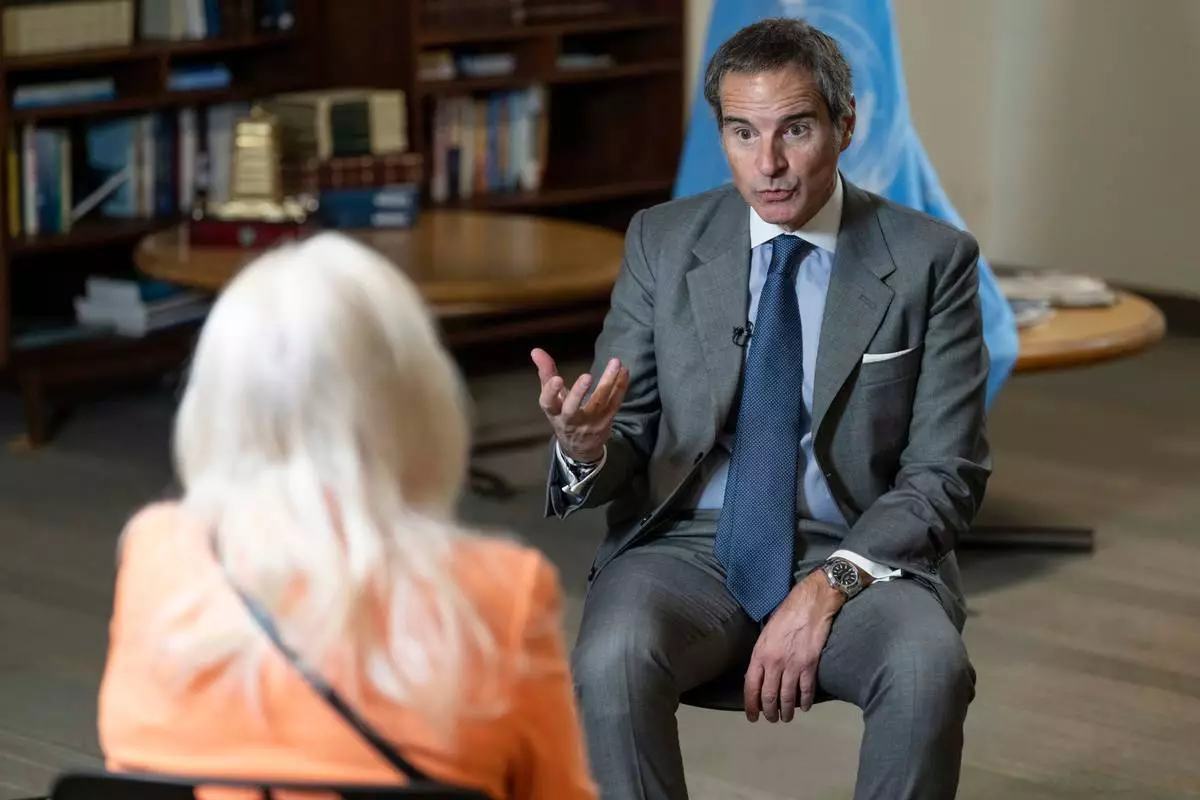
Rafael Grossi, International Atomic Energy Agency (IAEA) Director General and a candidate for United Nations Secretary-General, speaks during an interview at U.N. headquarters, Tuesday, April 28, 2026. (AP Photo/Yuki Iwamura)

Rafael Grossi, International Atomic Energy Agency (IAEA) Director General and a candidate for United Nations Secretary-General, speaks during an interview at U.N. headquarters, Tuesday, April 28, 2026. (AP Photo/Yuki Iwamura)
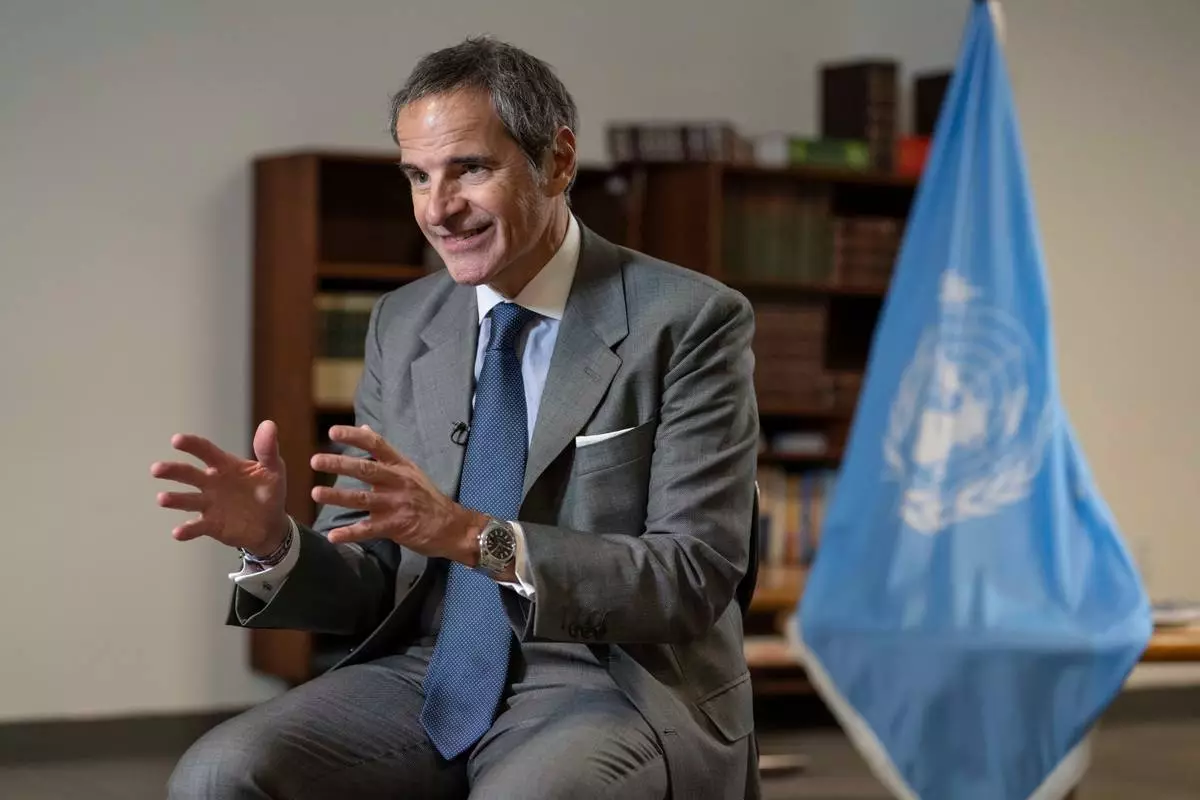
Rafael Grossi, International Atomic Energy Agency (IAEA) Director General and a candidate for United Nations Secretary-General, speaks during an interview at U.N. headquarters, Tuesday, April 28, 2026. (AP Photo/Yuki Iwamura)
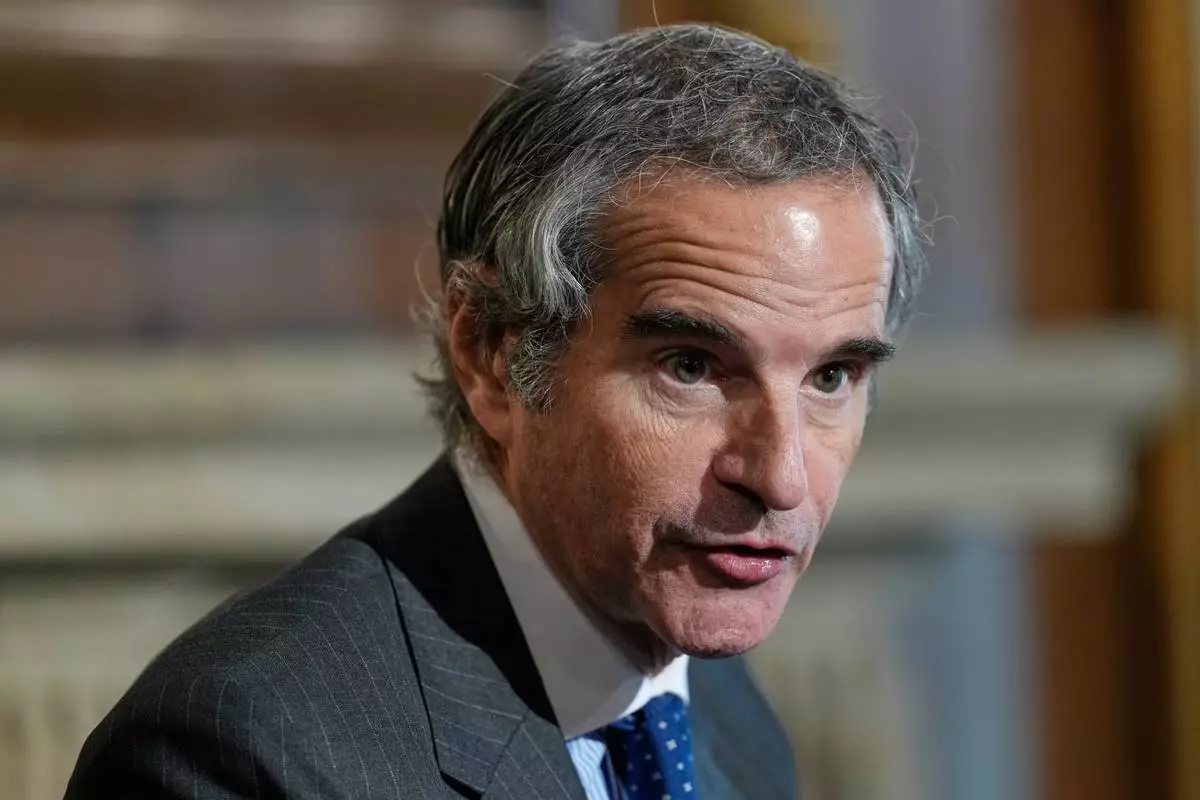
FILE - Rafael Grossi speaks during an event at the Council on Foreign Relations in New York, April 23, 2026. (AP Photo/Seth Wenig, File)