DAKAR, Senegal (AP) — A pro-Russian activist accused of backing a failed coup in Benin appeared in court Wednesday in South Africa over separate charges of attempting to illegally leave that country with the help of a member of a far-right white nationalist group.
Kémi Séba, a prominent Beninese influencer, faces charges of conspiracy to commit a crime and immigration violations. He also faces extradition to Benin, where he was declared wanted for “inciting rebellion” after publicly backing a failed coup there last December.
Séba, whose legal name is Stellio Gilles Robert Capo Chichi, was born in France to Beninese parents but was stripped of his French citizenship.
He remains in custody after a judge Wednesday postponed a bail hearing to May 11.
Here's what to know about the activist:
Séba, who has some 1.5 million followers on Facebook, is the leader of Pan-Africanist Emergency, a group he founded in 2015 that describes itself as a “Black rights organization, specializing in issues related to sovereignty, neocolonialism and the promotion of social justice.”
He has also built a large following on social media using viral videos that attack France’s political and economic influence in Africa while advocating for the military juntas who seized power in the region mostly on the back of anti-French sentiments.
He has often been accused of pushing Russian propaganda in Africa, but he defends his activities as “pan-African.” Séba has publicly praised Russian President Vladimir Putin and aligned himself with pro-Russian networks tied to late Wagner mercenary group chief Yevgeny Prigozhin, according to the U.S. State Department.
Séba has also met with Russian authorities on several occasions. He has denied accusations of being a Russian agent.
France convicted him multiple times for inciting racial hatred and he was stripped of his French citizenship in 2024. Shortly after, he was issued a diplomatic passport by Niger's military junta, which made him a “special adviser” to the country's leader, Gen. Abdourahamane Tchiani.
Beninese authorities in December declared Séba wanted after he posted a video supporting soldiers who had tried to topple the government of Benin's President Patrice Talon. The coup collapsed within hours after loyalist forces, backed by Nigerian fighter jets and regional troops, intervened.
Séba celebrated the coup attempt in his country of citizenship as it unfolded. In a video that later went viral, he called it “the day of liberation” and praised the mutineers as “patriotic.” Benin issued an international arrest warrant for him on Dec. 12, charging him with inciting rebellion.
When he was arrested earlier this month, South African police issued a statement noting that the activist “is indeed a wanted fugitive in Benin in relation to crimes against the state.”
Séba was arrested alongside his son and a far-right South African activist during a sting operation at a Pretoria shopping center. The police said they foiled a purported plan for them to illegally cross the border into neighboring Zimbabwe and eventually reach Europe.
The man accused of arranging that crossing was François van der Merwe, a member of the Bittereinders — a South African far-right group that advocates for the creation of a whites-only Afrikaner and Boer state and says it rejects multiculturalism. He was accused of accepting roughly R250,000 ($15,000) to facilitate Séba's cross-border movements.
The alliance between the self-described African liberation activist and a far-right white nationalist activist may be less surprising than it appears, analysts say.
Christophe Premat, a political scientist at Stockholm University, says Séba has long embraced “ethno-differentialism,” a belief in strict racial separation that he shares, from opposite ends, with the Bittereinders.
The Kremlin has also in recent years courted South African far-right groups, including those claiming to defend Afrikaner and Boer identity, according to Burgert Senekal, a research fellow at the University of the Free State in South Africa, who studied Russian information operations in the country.
Follow AP’s Africa coverage at: https://apnews.com/hub/africa
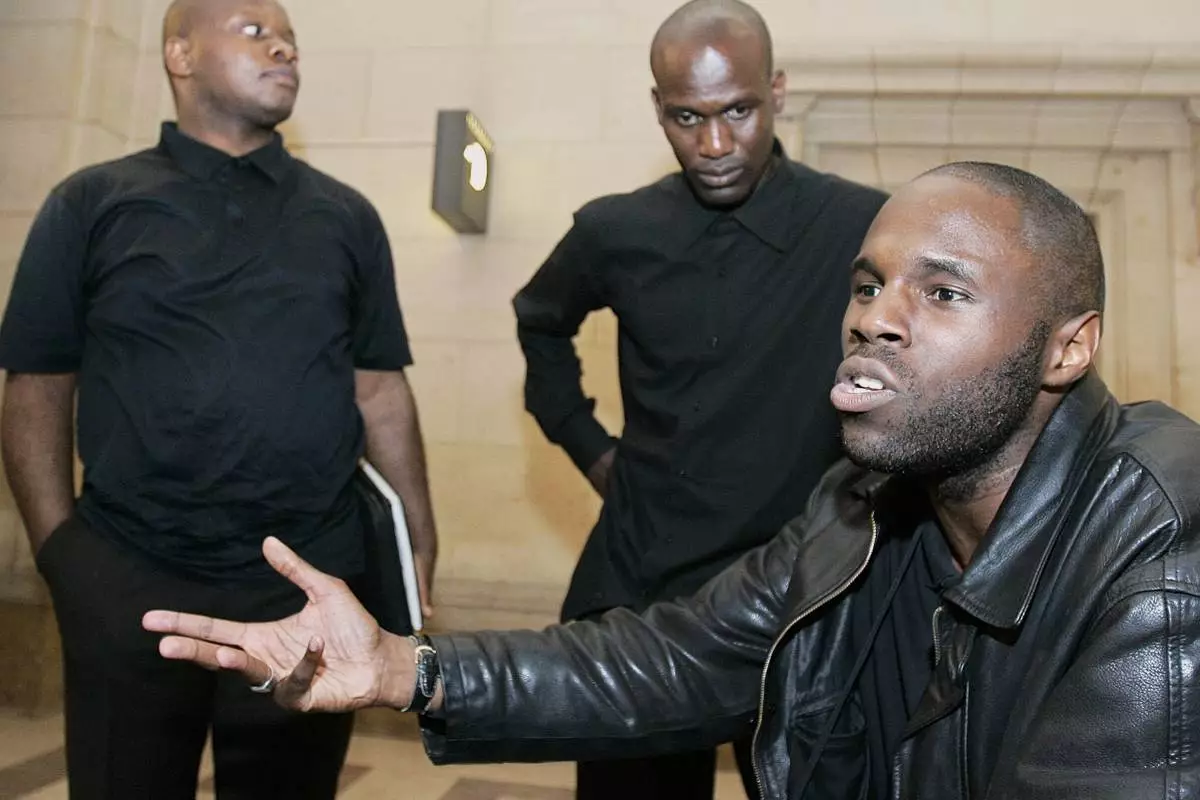
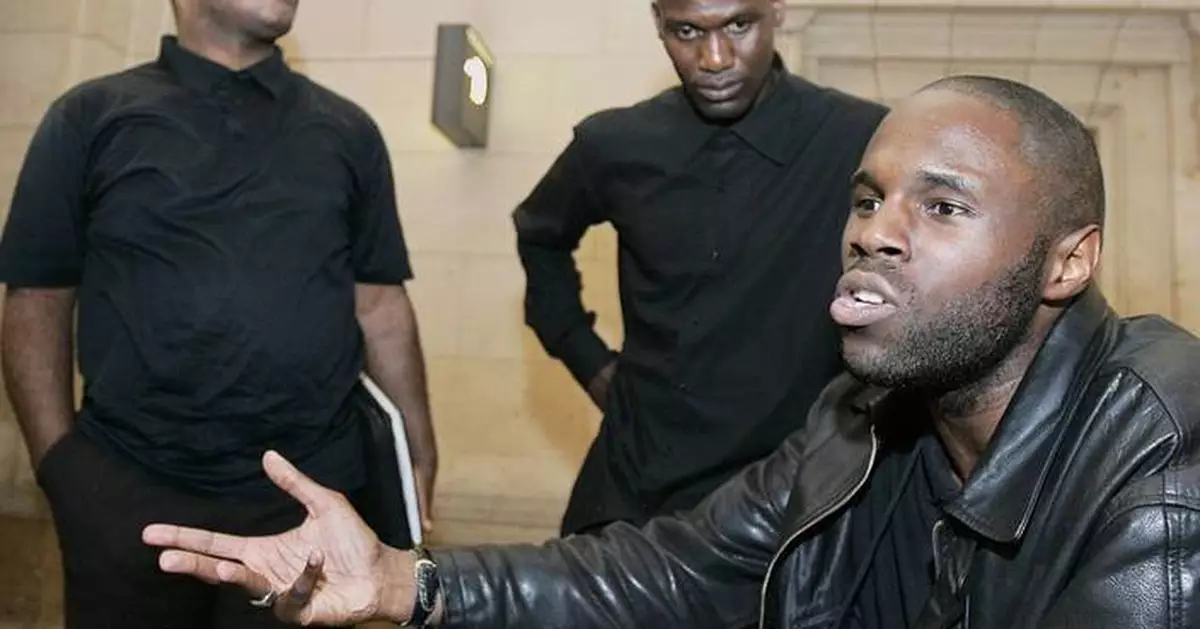
FILE - Kemi Seba, right, gestures during an interview in Paris, June 28, 2006. (AP Photo/Michel Euler, File)
WASHINGTON (AP) — Jerome Powell said Wednesday he plans to remain on the board of the Federal Reserve after his term as chair ends next month “for an undetermined period of time,” saying the “unprecedented” legal attacks by the Trump administration have put the independence of the nation's central bank at risk.
“I worry these attacks are battering this institution and putting at risk the things that really matter to the public,” Powell said in remarks at a press conference after the Fed announced its decision to keep its benchmark interest rate unchanged.
Powell’s decision to stay — the first time a Fed chair will remain on the board as a governor since 1948 — denies President Donald Trump a chance to fill a seat on the central bank’s seven-member governing board with his own appointee. The Senate Banking Committee earlier approved Powell’s successor as chair, Trump appointee Kevin Warsh, on a party-line vote. Powell will continue as a Fed governor, possibly until January 2028. Warsh, if confirmed, will take a seat currently held by Stephen Miran, a previous Trump appointee, whose term ended in January.
Powell's move could make it a bit harder for Warsh to engineer the rate cuts that Trump has demanded, and Warsh advocated for last year, economists say.
“It probably means it will take Warsh a little bit longer to build the consensus he is trying to build,” said David Seif, chief economist for developed markets at Nomura, an investment bank.
U.S. Attorney for the District of Columbia Jeanine Pirro said on X Friday that her office was ending its probe into the Fed’s extensive building renovations because the Fed’s inspector general would scrutinize them instead. But she added that her office could reopen the investigation if “the facts warrant doing so.”
Apparently that didn't bring Powell the closure he felt is needed.
“I’m waiting for the investigation to be well and truly over with finality and transparency," he said. "I’m waiting for that and I will leave when I think it appropriate to do so.”
The Fed Wednesday left its benchmark interest rate unchanged for the third straight meeting but signaled it could still cut rates in the coming months, moves that attracted the most dissents since October 1992. Three officials dissented in favor of removing the reference to a future cut, while a fourth, Miran, dissented in favor of an immediate rate cut.
The dissents underscore the level of division on the Fed's 12-member rate-setting committee ahead of the end of Powell's term as chair on May 15.
“Developments in the Middle East are contributing to a high level of uncertainty about the economic outlook,” the Fed said in a statement after its two-day meeting. “Inflation is elevated, in part reflecting the recent increase in global energy prices.”
Warsh has promised “regime change” at the central bank and may make sweeping changes to its economic models, communications strategies, and balance sheet. He has argued in favor of rate cuts, as Trump has demanded, but he will likely find it harder to implement them with inflation topping 3%, above the Fed’s target of 2%.
When asked if he believed Warsh would stand up to political pressure from Trump, Powell answered, “He testified very strongly at his hearing, and I take him at his word.”
The three officials who dissented against hinting that the Fed may reduce borrowing costs were Beth Hammack, president of the Federal Reserve Bank of Cleveland; Neel Kashkari, president of the Minneapolis Fed; and Lorie Logan, president of the Dallas Fed. The regional Fed bank presidents have historically been more likely to dissent, while the Washington-based governors more often support the chair.
The dissents could renew tension between the Trump administration and the bank presidents, who White House officials have previously criticized.
Beth Ann Bovino, chief economist at US Bank, said the dissents demonstrated that Fed policymakers are “very independent" and will likely be on hold for months longer. She has forecast a rate cut in December but now isn't sure. Wall Street investors on average don't expect a reduction until well into next year, according to futures pricing.
Powell's decision to stay on could worsen tensions with the Trump administration and would create what some analysts refer to as a “two Popes” scenario, with a chair and former chair both on the Fed’s board. In that case, divisions among policymakers could increase, if some decided to follow Powell's lead rather than Warsh's.
Powell dismissed the notion that his staying on could cause dissension, saying, “My intention is not to interfere," later adding that, “I’m not looking to be a high profile dissident or anything like that."
Still, Powell said he remained concerned about the Fed's independence from the White House, which he said is essential to its ability to set rates to benefit the public, rather than in response to political pressure. When the Fed raises or cuts its short-term rate, over time it affects the cost of mortgages, auto loans, and business borrowing.
Fed independence remains “at risk,” he said. "We’re having to resort to the courts to enforce our ... ability to make monetary policy without political considerations. We’ve had to do that and we’ve been successful so far, but that’s not over, none of that has concluded yet.”
The unusual situation comes while the economic picture remains unusually murky, putting the Fed in a difficult spot. Inflation has jumped to 3.3%, a two-year high, as the war has sharply raised gas prices. That makes it harder for the central bank to reduce rates. The Fed typically leaves rates unchanged, or even raises them, if inflation is worsening.
At the same time, hiring has ground almost to a halt, leaving those without jobs frustrated by the difficulty of finding new ones. Typically, the Fed cuts rates when the job market is weak, to spur more spending and job gains.
But layoffs also remain low, as employers appear to be following a “ low-hire, low-fire ” strategy. Many Fed officials have suggested that as long as the unemployment rate is low, the central bank doesn't need to cut rates to spur more spending and hiring. Unemployment declined to 4.3% in March, from 4.4%.
AP Writer Alex Veiga contributed to this report.
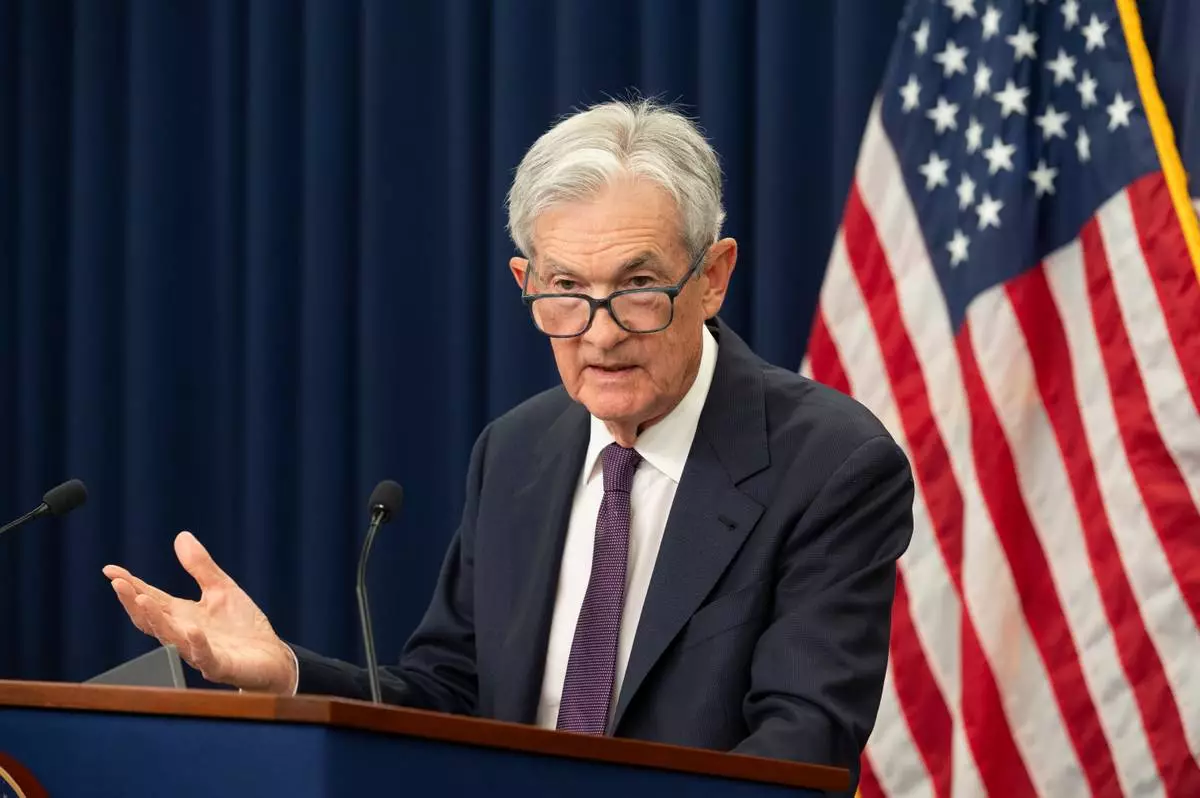
Federal Reserve Chairman Jerome Powell speaks during a news conference at the Federal Reserve following the Federal Open Market Committee meeting in Washington, Wednesday, April 29, 2026. (AP Photo/Cliff Owen)
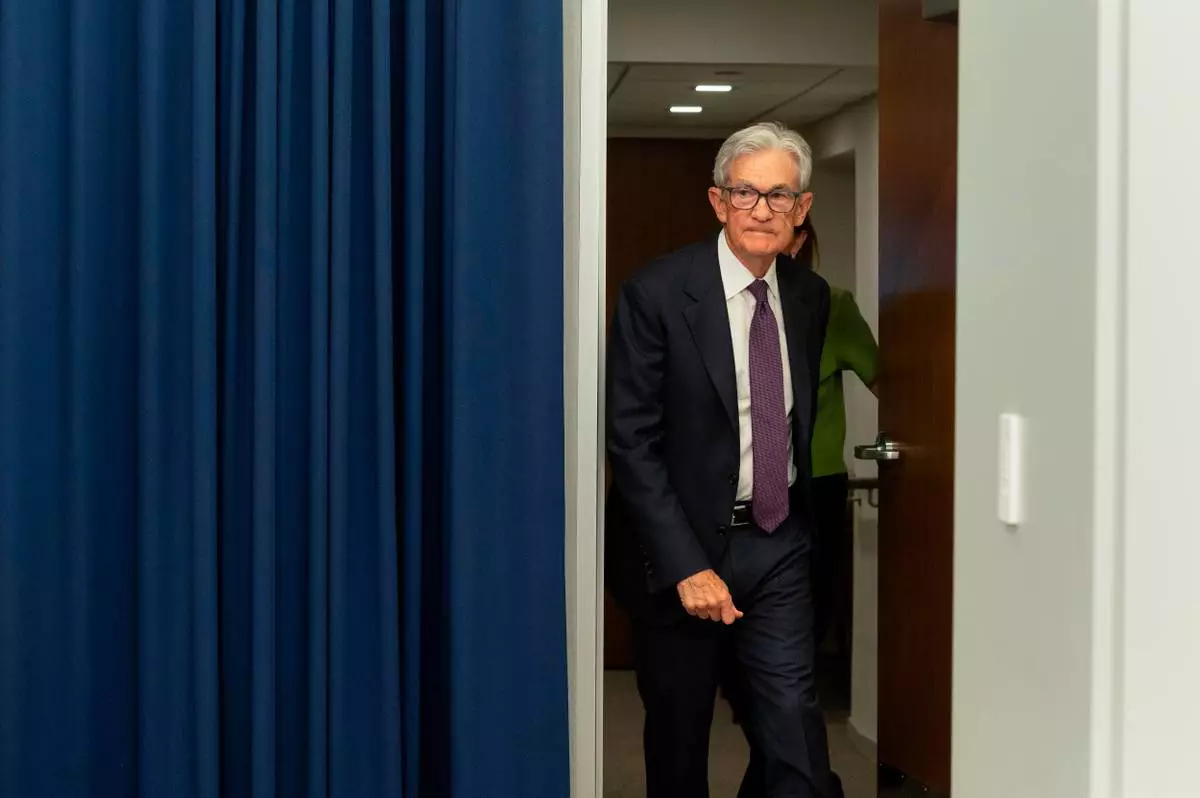
Federal Reserve Chairman Jerome Powell arrives for a news conference at the Federal Reserve, following the Federal Open Market Committee meeting, in Washington, Wednesday, April 29, 2026. (AP Photo/Cliff Owen)
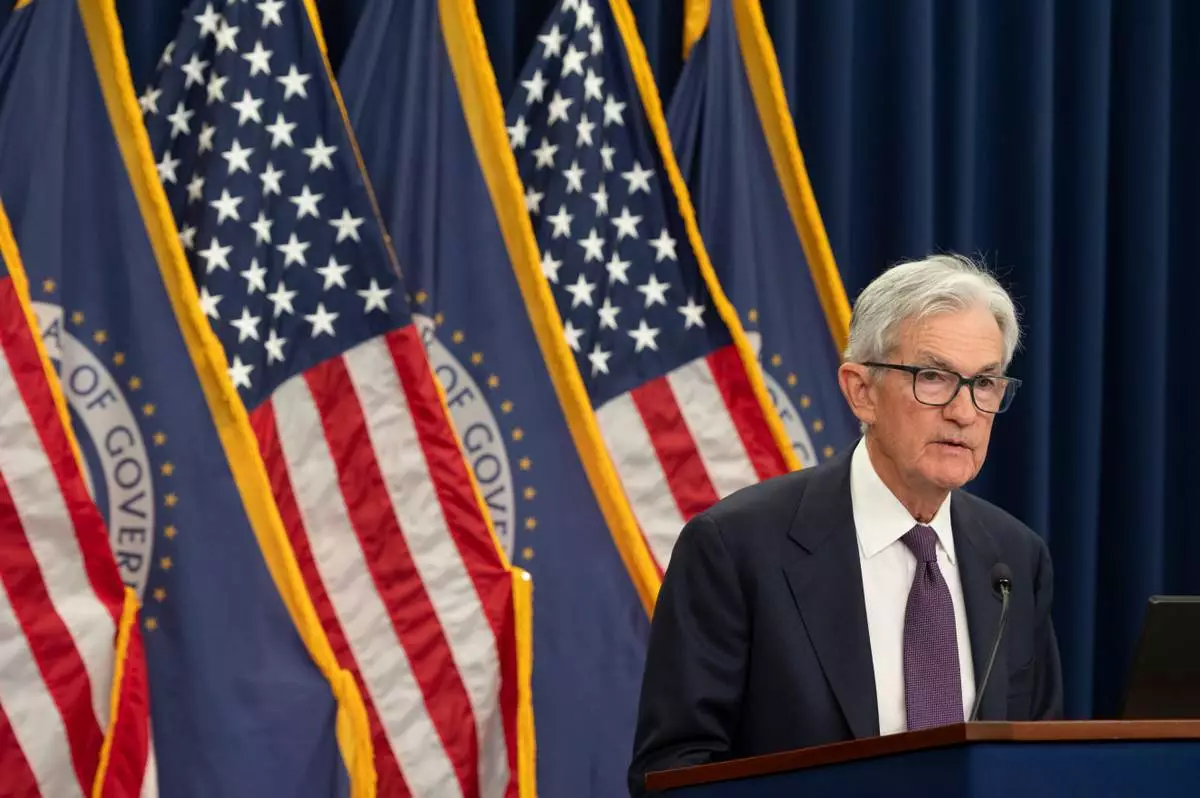
Federal Reserve Chairman Jerome Powell speaks at a news conference at the Federal Reserve following the Federal Open Market Committee meeting in Washington, Wednesday, April 29, 2026. (AP Photo/Cliff Owen)
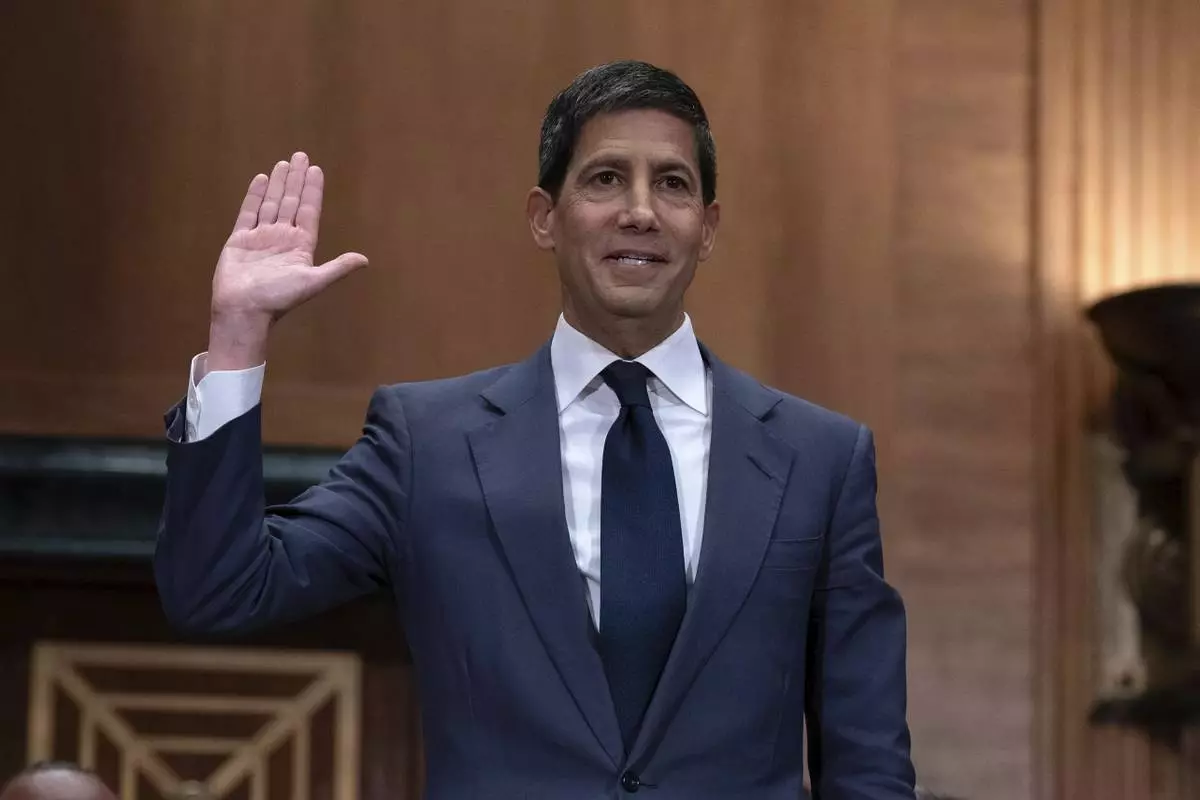
Kevin Warsh is sworn in during his nomination hearing to be a member and chairman of the Federal Reserve Board of Governors before the Senate Banking, Housing and Urban Affairs Committee on Capitol Hill, in Washington Tuesday, April 21, 2026. (AP Photo/Jose Luis Magana)
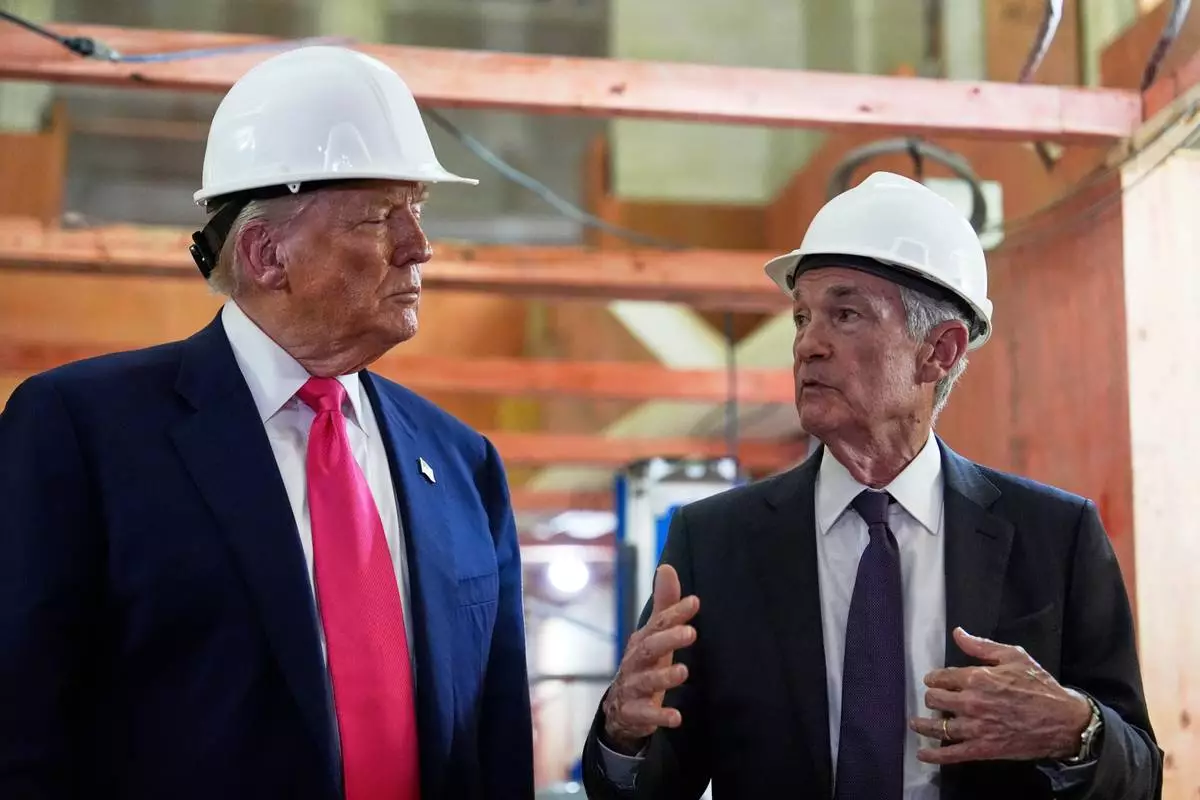
FILE - President Donald Trump listens to Federal Reserve Chairman Jerome Powell speak during a visit to the Federal Reserve, July 24, 2025, in Washington. (AP Photo/Julia Demaree Nikhinson, File)
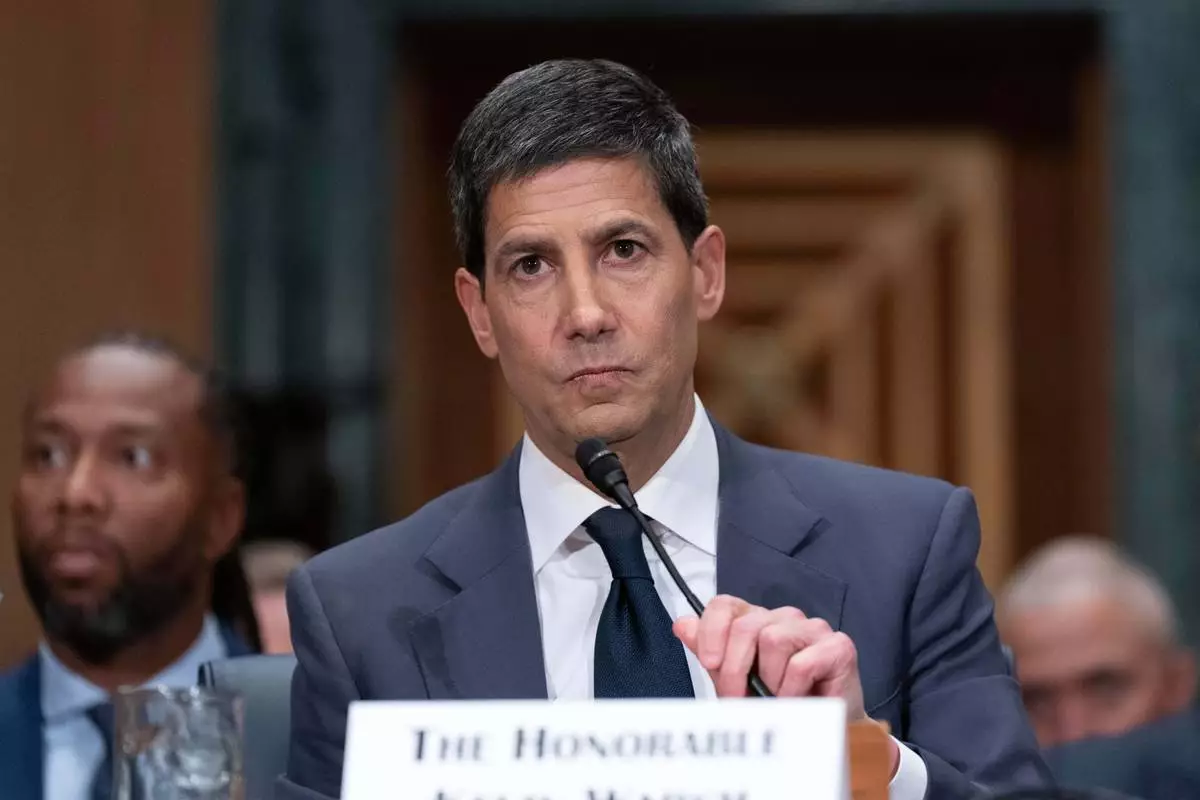
Kevin Warsh testifies during his nomination hearing to be a member and chairman of the Federal Reserve Board of Governors before the Senate Banking, Housing and Urban Affairs Committee on Capitol Hill, in Washington Tuesday, April 21, 2026. (AP Photo/Jose Luis Magana)
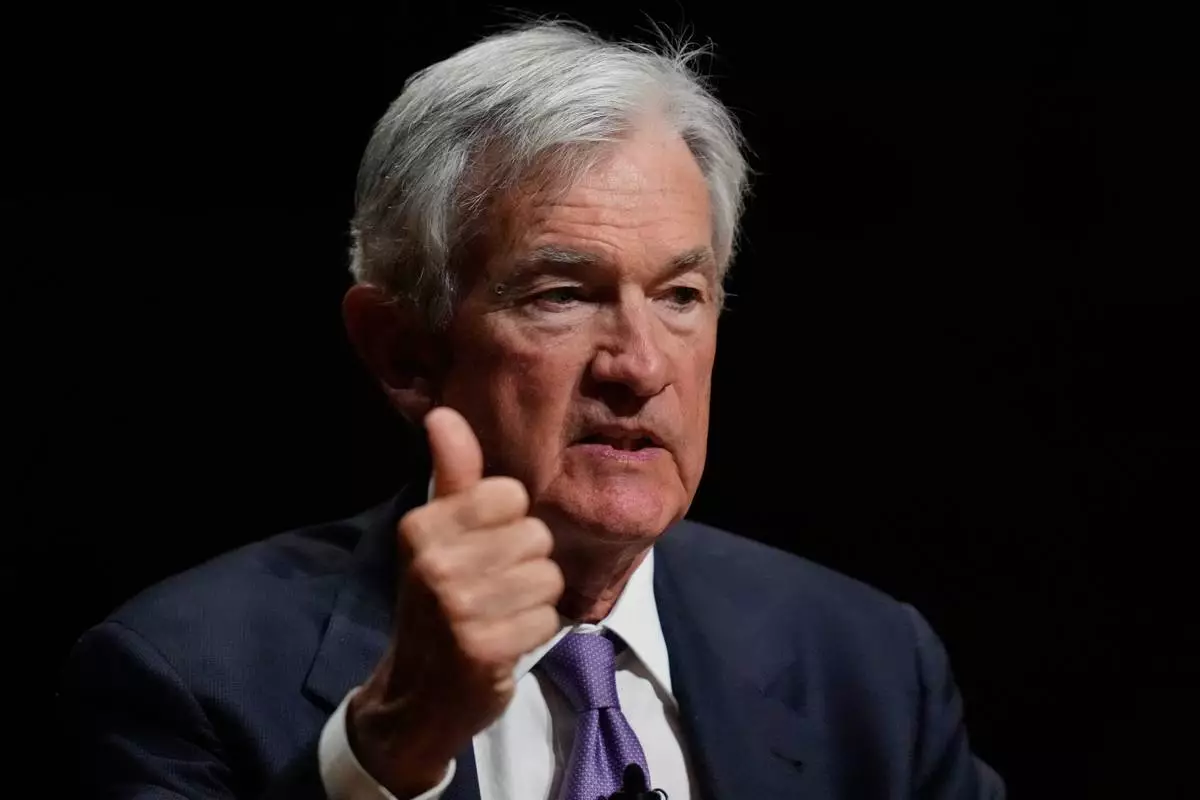
FILE - Federal Reserve Chair Jerome Powell addresses students at Harvard University, March 30, 2026, in Cambridge, Mass. (AP Photo/Charles Krupa, File)
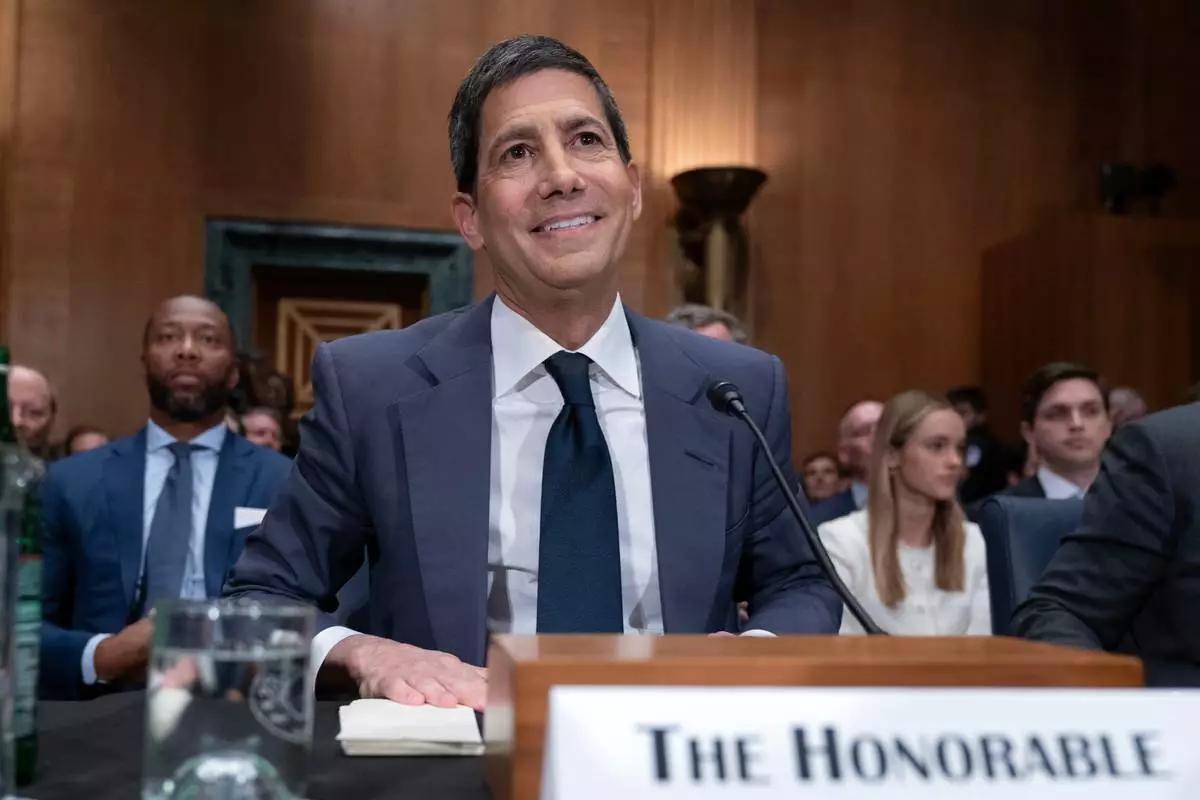
Kevin Warsh testifies during his nomination hearing to be a member and chairman of the Federal Reserve Board of Governors before the Senate Banking, Housing and Urban Affairs Committee on Capitol Hill, in Washington Tuesday, April 21, 2026. (AP Photo/Jose Luis Magana)