ST. PAUL, Minn. (AP) — Minnesota has been beset by a series of complex, overlapping fraud investigations that have stretched over several years and involve potentially billions of dollars in wasted federal funding.
President Donald Trump pointed to the scandals as justification for launching a massive immigration crackdown that he initially said would focus on the state’s large Somali community, but most of the over 4,000 people arrested were Hispanic. While the administration claimed it was arresting “the worst of the worst,” most of those caught up in the dragnet had no criminal records.
Click to Gallery
FBI agents walk outside the Mini Child Care Center (formerly Mako Childcare) in Minneapolis, Minn. on Tuesday, April 28, 2026. (Anthony Soufflé/Minnesota Star Tribune via AP) CORRECTION: Mini Child Care, not Mako Child Care
A federal officer stands outside the Mini Child Care Center (formerly Mako Childcare) in Minneapolis, Minn., Tuesday, April 28, 2026. (Anthony Soufflé/Minnesota Star Tribune via AP) CORRECTION: Mini Child Care, not Mako Child Care
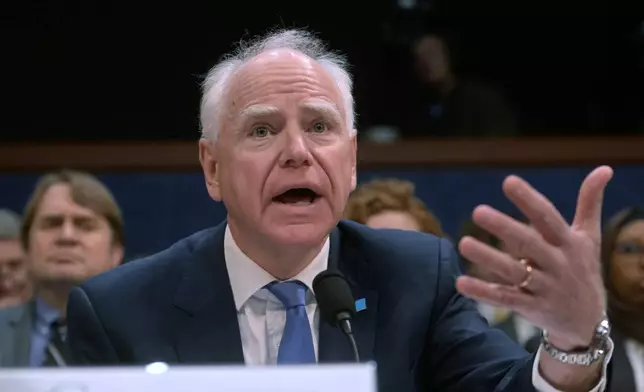
FILE - Minnesota Gov. Tim Walz speaks during a House Committee on Oversight and Government Reform hearing on oversight of fraud and misuse of Federal funds in Minnesota, March 4, 2026, on Capitol Hill in Washington. (AP Photo/Rod Lamkey, Jr., File)
State and federal agents remove boxes of evidence collected from Metro Learning Center on Tuesday, April 28, 2026 in Minneapolis, Minn. (AP Photo/Mark Vancleave)
Federal and state officials load evidence into a vehicle as they execute a search warrant at The Original Childcare Center in south Minneapolis, Tuesday, April 28, 2026. (Ben Hovland/Minnesota Public Radio via AP)
The latest development was a series of searches Tuesday by federal agents who seized records and other evidence connected with an investigation of publicly funded social programs for children.
The problem of fraud in social service programs in Minnesota exploded into public view with a pandemic-era feeding program called Feeding Our Future for schoolchildren. Federal prosecutors estimate the scandal resulted in fraud losses of $300 million. It has led to charges against close to 80 defendants since the first cases were announced in 2022 and at least 65 convictions so far. The defendants were accused of fraudulently claiming to feed millions of meals to children.
According to the U.S. Attorney's Office, the overwhelming majority of defendants were of Somali descent, and most of them were U.S. citizens, although the alleged ringleader, Aimee Bock, is white. Bock was convicted last year of multiple counts involving conspiracy, wire fraud and bribery. She's scheduled to be sentenced May 21.
It wasn't the first time scammers hit social services in Minnesota. The state's Office of the Legislative Auditor reported in 2019 that investigators suspected that fraud in one childcare program amounted to $100 million or more annually.
Trump suggested around Thanksgiving that Minnesota was “a hub of fraudulent money laundering activity” under Gov. Tim Walz, who was the Democrats’ vice presidential nominee in the 2024 election.
“Somali gangs are terrorizing the people of that great State, and BILLIONS of Dollars are missing. Send them back to where they came from,” Trump wrote on social media. “It’s OVER!”
The Trump administration launched the immigration crackdown in Minnesota in early December and dubbed it Operation Metro Surge. Around 3,000 federal officers were deployed into the state in what the administration called its largest immigration enforcement action ever. That sparked protests as residents took to the streets to try to protect immigrants from arrest — protests that grew even larger after the killings of two people by federal officers.
Federal prosecutors dropped a bombshell when they announced charges in December in a new set of Medicaid fraud cases involving child nutrition, housing services and programs meant to assist children with autism, which for unknown reasons runs high in the Somali community. First Assistant U.S. Attorney Joe Thompson, who led the Feeding Our Future prosecutions, estimated that half or more of the roughly $18 billion in federal funds that supported 14 Minnesota-run programs since 2018 may have been stolen.
“The magnitude cannot be overstated,” said Thompson, who later quit in an exodus of career officials resigning or retiring over objections to Trump administration directives. “What we see in Minnesota is not a handful of bad actors committing crimes. It’s staggering, industrial-scale fraud.”
That often-cited dollar figure was just an estimate. The total losses alleged in the various fraud cases charged so far add up to far less.
The day after Christmas, right-wing influencer Nick Shirley posted a lengthy video with allegations that members of the Minneapolis Somali community were running fake childcare centers so they could collect federal subsidies. That caught the attention of the Trump administration and conservative activists, though state inspectors discounted the allegations.
On Tuesday, federal agents executed 22 search warrants in Minnesota, seizing records and other evidence in what authorities said was an ongoing fraud investigation into social programs for children. Armed agents were seen at several childcare centers. At least two of the sites had been shown in Shirley’s video.
Several state and federal agencies participated, including the Department of Homeland Security. Officers from Minnesota’s Bureau of Criminal Apprehension removed boxes from some locations. Democratic state Attorney General Keith Ellison said the Medicaid Fraud Control Unit in his office conducted searches in collaboration with federal law enforcement at five sites. Minnesota’s child welfare agency said it shared key information.
It's not clear if or when any criminal charges might result from the searches. Fraud investigations are often complex and can take many months.

FBI agents walk outside the Mini Child Care Center (formerly Mako Childcare) in Minneapolis, Minn. on Tuesday, April 28, 2026. (Anthony Soufflé/Minnesota Star Tribune via AP) CORRECTION: Mini Child Care, not Mako Child Care

A federal officer stands outside the Mini Child Care Center (formerly Mako Childcare) in Minneapolis, Minn., Tuesday, April 28, 2026. (Anthony Soufflé/Minnesota Star Tribune via AP) CORRECTION: Mini Child Care, not Mako Child Care
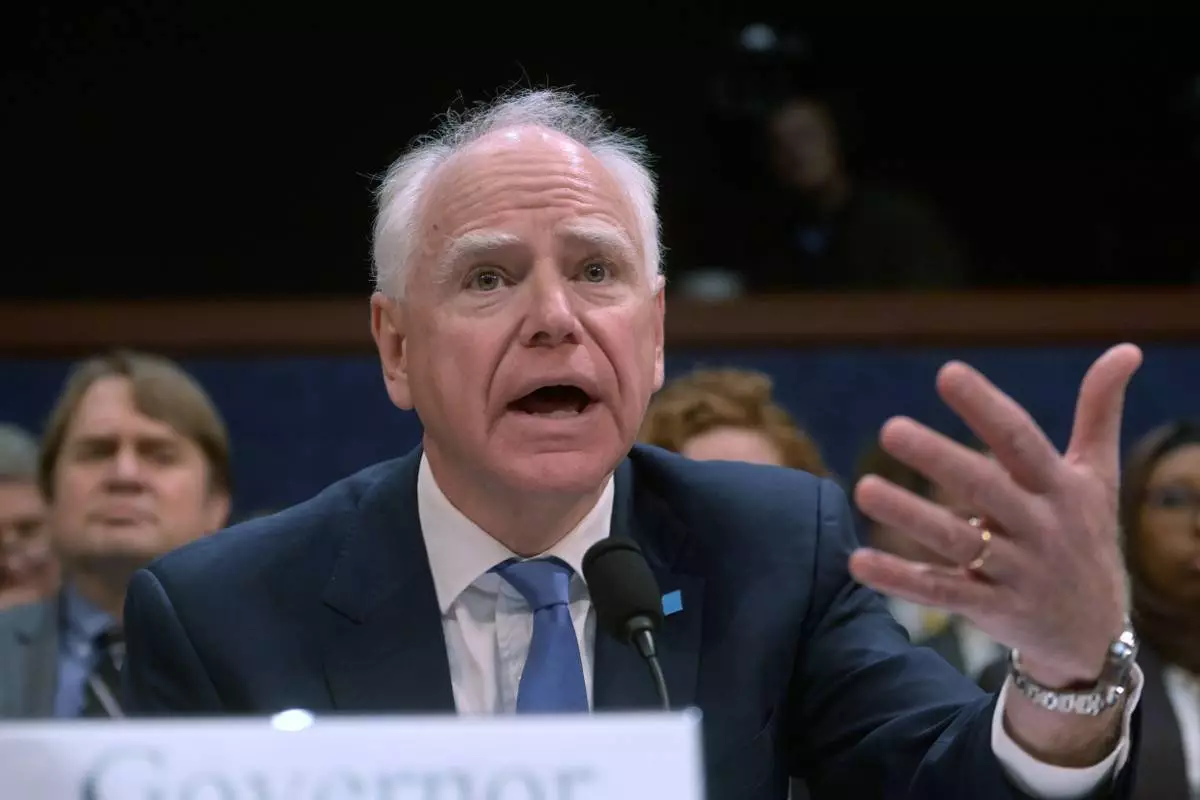
FILE - Minnesota Gov. Tim Walz speaks during a House Committee on Oversight and Government Reform hearing on oversight of fraud and misuse of Federal funds in Minnesota, March 4, 2026, on Capitol Hill in Washington. (AP Photo/Rod Lamkey, Jr., File)

State and federal agents remove boxes of evidence collected from Metro Learning Center on Tuesday, April 28, 2026 in Minneapolis, Minn. (AP Photo/Mark Vancleave)

Federal and state officials load evidence into a vehicle as they execute a search warrant at The Original Childcare Center in south Minneapolis, Tuesday, April 28, 2026. (Ben Hovland/Minnesota Public Radio via AP)
NEW YORK (AP) — Scottish entrepreneur Mike Welch made his fortune as an online tire retailer. But he says he might've traded that lucrative career for one in funeral services if not for an intervention from the charity of King Charles III.
A dyslexic teenager from a working-class background, Welch struggled with his college entry exams and took a job installing tires after leaving school at age 15. When he lost that gig, he lined up at the Liverpool job center. The job board featured a funeral director's listing — a “great career," he's sure, but “pretty grim" — and an advertisement for a charity event where entrepreneurs could win business grants.
Welch took that one and, less than 24 hours later, found himself inside a church filled with vintage furniture and friendly grandparents. It looked nothing like ABC's “Shark Tank," but he recalls feeling very much like one of the reality show's contestants as he described his proposal to sell cheaper tires to niche customers like his friends who drove souped-up cars.
That was Welch's first interaction with the then-Prince's Trust, which became known as The King's Trust when King Charles III became Britain's ruling monarch in 2023. “It wasn’t a well thought out plan, really,” said Welch, who is now based in Florida. “But they backed me. And they backed my enthusiasm. And they gave me a chance.”
Generations of Brits can tell stories similar to Welch, thanks to The Prince's Trust and The King's Trust, which have been supporting young people launch their careers since 1976, when then-Prince Charles took his Royal Navy severance pay and established the charity at a time of great economic distress for the United Kingdom. In the past 50 years, the King's Trust says it has reached more than 1.3 million young Brits through its education and employment initiatives, creating numerous success stories including those of celebrated actor Idris Elba and noted fashion designer Ozwald Boateng.
As Charles and Queen Camilla continued their first state visit to the U.S. since he became king, they nodded to The King's Trust with a gala Wednesday in New York, as the charity works to deepen its impact in more than two dozen countries including the United States. Attendees included Anna Wintour, Charlotte Tilbury, Donatella Versace, Lionel Richie and Martha Stewart.
At the event, Charles emphasized that “potential and latent talent truly knows no bounds once you help develop it.”
“I won't see the long-distance future,” he told attendees. "But I'm enormously grateful to you all for what you can all do as supporters to help this vital endeavor, to champion the next generation, ensuring their talent and ambition continue to strengthen our societies for many years to come.”
Members of the British Royal Family have traditionally served as patrons of charities, boosting awareness and fundraising for existing organizations in the areas where they rule as nobles. Observers say Charles' lasting interest in young people's employment is evident as he continues lending his title to its expanding work.
The trust's programs reach young people through schools and established nonprofit partners. They include Get Hired, which helps young people land their first jobs, and the Development Awards, a grant that helps them afford purchases to advance their careers such as a laptop or professional clothing.
The Enterprise Challenge is an afterschool program where students develop businesses that address a problem in their community.
“What we see every time is that young people want to be helped. They want to be taken seriously,” said Jeremy Green, a trustee of the King’s Trust Group Company and chair of the King’s Trust USA. "And it’s not just giving them money. It’s giving them opportunity.”
LaKenya Sharpe, principal of The Collins Academy High School in the Chicago neighborhood of North Lawndale, said being taken seriously by such an organization has meant the world to her students. They won King's Trust US' Enterprise Challenge for launching a business that grows and sells fresh vegetables to stores in their area, which lacked access to stores that sold produce.
The “babies” in her community often feel as if no one pays attention to them, she said.
“This shows that they can achieve anything," Sharpe added. "Their belief now is ‘Oh, other people are watching. Other people are seeing this.’ And they ask "How far can this go?" My answer is, “It can go as far as you guys take it. Don’t let anything limit you.'”
Wednesday's gala aims to showcase “the very best of British-American philanthropy through the individual arts, culture, investments between the two countries,” according to The King’s Trust USA CEO Victoria Gore.
The gala arrives at a moment of unusual tension between the elected leaders of the two longstanding allies. British Prime Minister Keir Starmer’s refusal to support the United States’ war in Iran has angered President Donald Trump.
Charles noted the “wonderful opportunity” to celebrate “the enduring cultural bond” between the two countries, whose relationship he said is “rooted in shared creativity, enterprise and values.”
“Reminding us we are truly greater together. That's the point,” Charles told attendees.
The trust’s leaders emphasized they'd been planning anniversary celebrations long before the recent rift. But Charles' emphasis on the country’s deep philanthropic ties could serve as a reminder of their shared interests, said JP Tribe, a senior lecturer in law at the University of Liverpool who has written about royal patronages.
Tribe hoped the gala showed “that both countries have and can continue to engage in very positive public benefit activity that helps the most disadvantaged in our society.”
The King's Trust US has set a goal to reach 1,000 young people in the United States this year.
Their biggest partner in that effort is City Year, the education nonprofit that introduced The Collins Academy to The King’s Trust and sends young adults to help teach in schools nationwide. AmeriCorps members are helping them pilot a version of the “Get Hired” program. They're also relying on the nonprofit Per Scholas and Maryland school districts to test some other programs.
Gore said student participants tend to be very focused on their immediate communities. The goal is to show them they can have an impact where they live.
"Keeping employment in communities and keeping people in communities is actually the key to everyone’s success," Gore said.
Welch said it doesn't require giant investments to make an impact. He received a 500 pound ($677) grant and, perhaps more importantly, a mentor who provided office space for the nascent company that he’d eventually sell for 50 million pounds ($68 million) to Michelin.
He said the blueprint for The King's Trust's expansion to succeed already exists. It's just a matter of building relationships with on-the-ground partners who can reach the people with the most need.
“What we see in Chicago, what we see in Orlando, is really no different -- with obvious local nuances," said Welch, who launched his latest venture the Anglo Atlantic advisory and investment firm. "But it’s not very different to what we see in Liverpool, Birmingham, Manchester.”
Associated Press coverage of philanthropy and nonprofits receives support through the AP’s collaboration with The Conversation US, with funding from Lilly Endowment Inc. The AP is solely responsible for this content. For all of AP’s philanthropy coverage, visit https://apnews.com/hub/philanthropy.
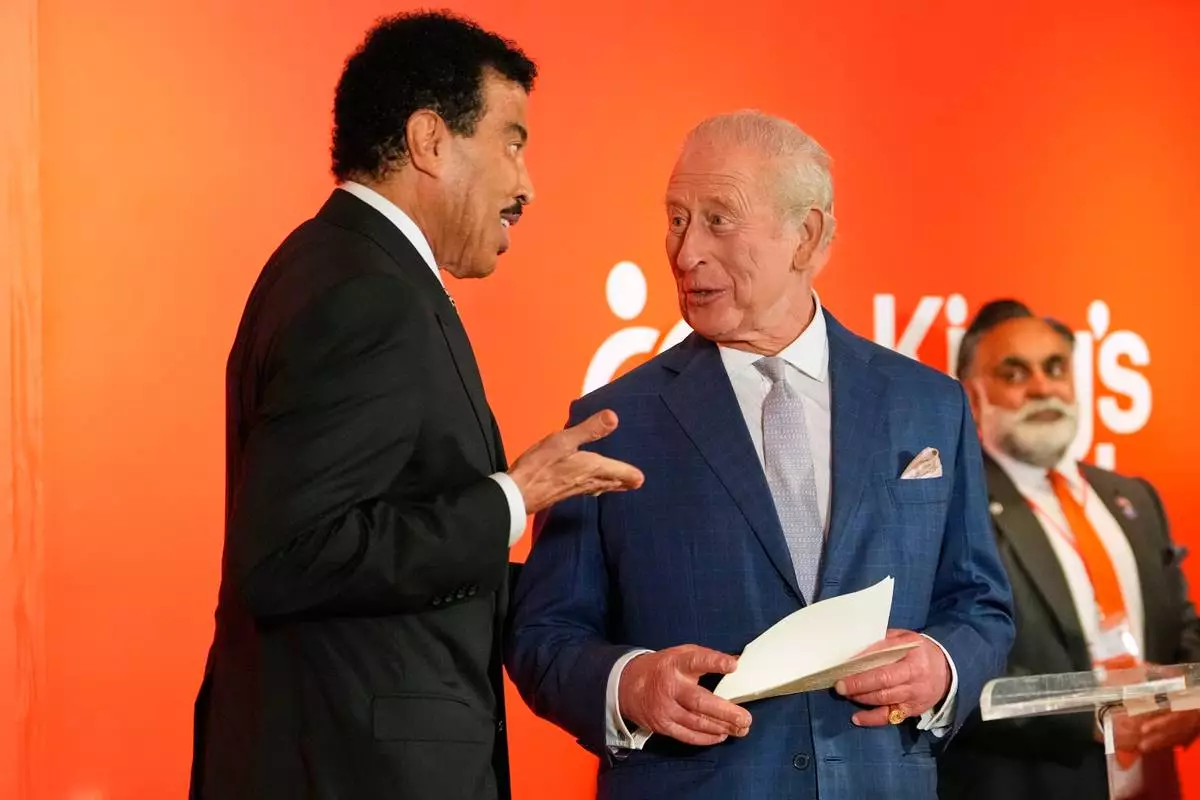
Lionel Richie speaks with Britain's King Charles III during a cultural reception Wednesday, April 29, 2026, in New York. (AP Photo/Yuki Iwamura, Pool)
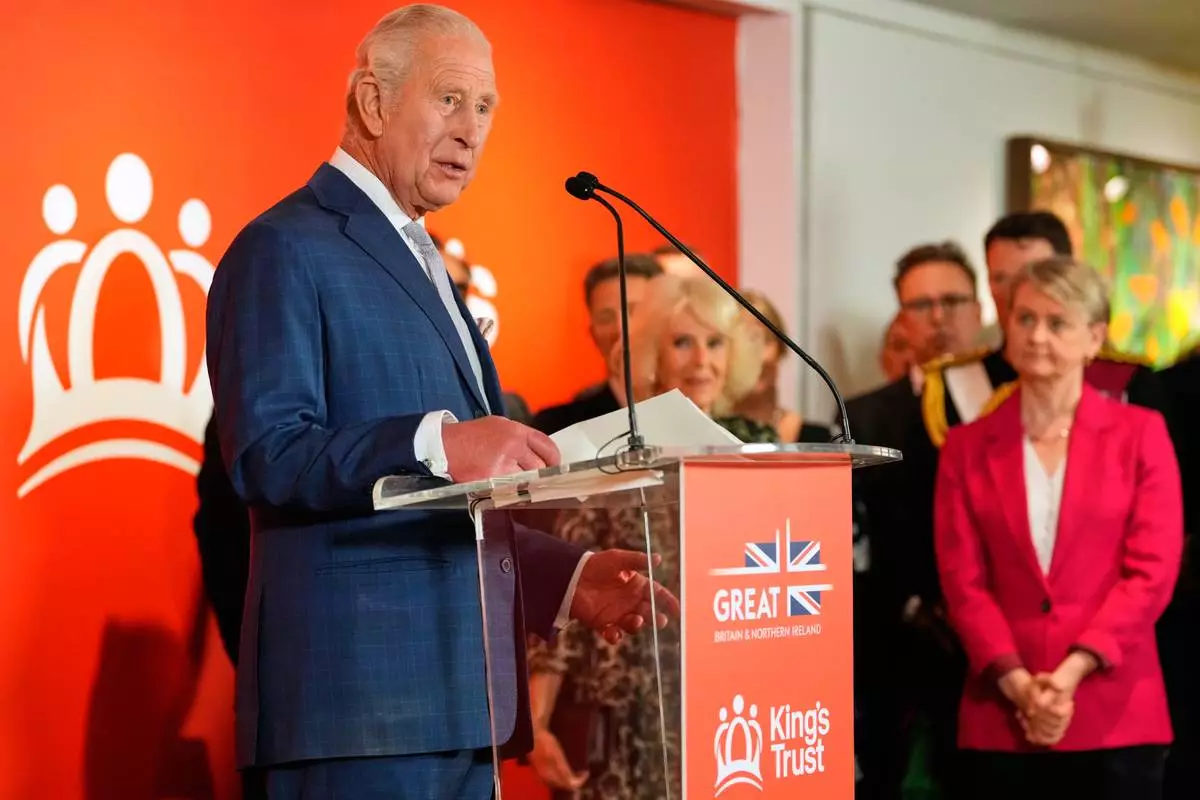
Britain's King Charles III speaks during a cultural reception Wednesday, April 29, 2026, in New York. (AP Photo/Yuki Iwamura, Pool)
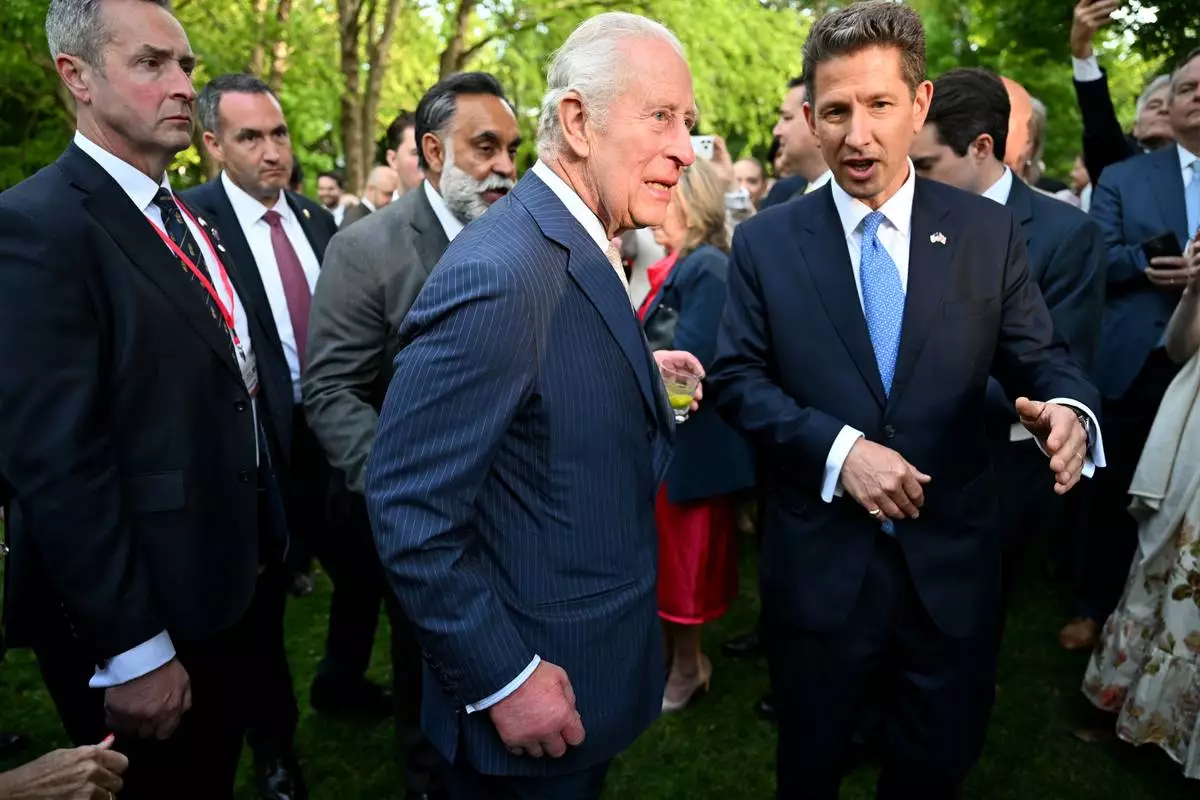
Britain's King Charles III speaks with Christian Turner, British ambassador to the United States, during a garden party at the British Embassy, Monday, April 27, 2026, in Washington. (Roberto Schmidt/Pool via AP)
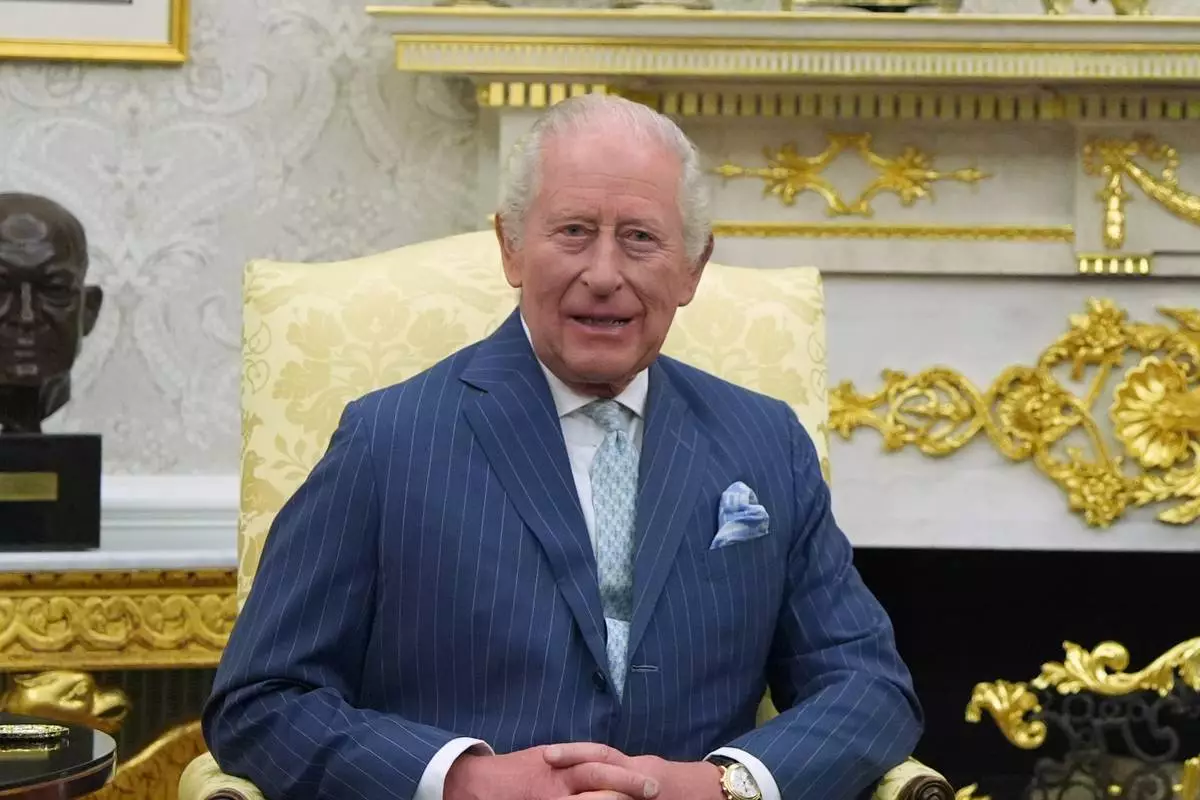
Britain's King Charles III meets with President Donald Trump in the Oval Office of the White House, Tuesday, April 28, 2026, in Washington, during a State Visit. (AP Photo/Alex Brandon)