FEHD continues to enhance occupational safety and health as well as working environment of cleansing workers through introduction of new technologies
A spokesman for the Food and Environmental Hygiene Department (FEHD) said today (April 30) that the department is committed to providing frontline cleansing workers with an appropriate working and resting environment. In recent years, the FEHD has actively introduced new technologies and automated equipment to reduce the physical strain on workers, and has continued to improve various welfare and heat stroke prevention measures to comprehensively safeguard the occupational safety and health (OSH) of frontline staff.
Click to Gallery
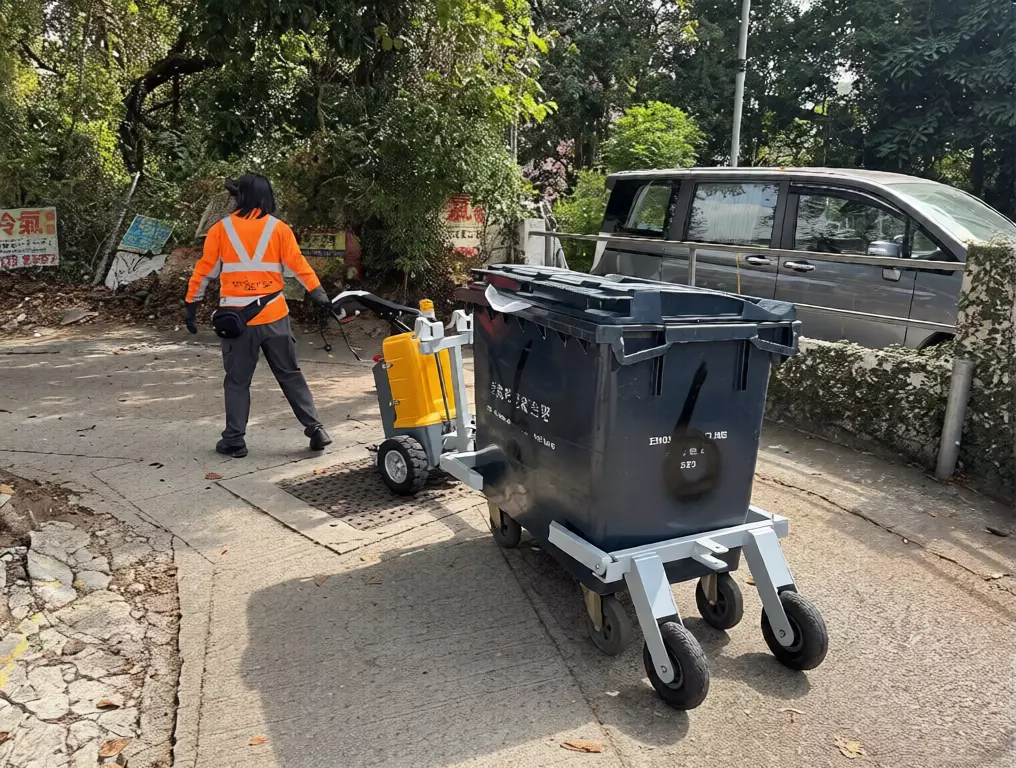
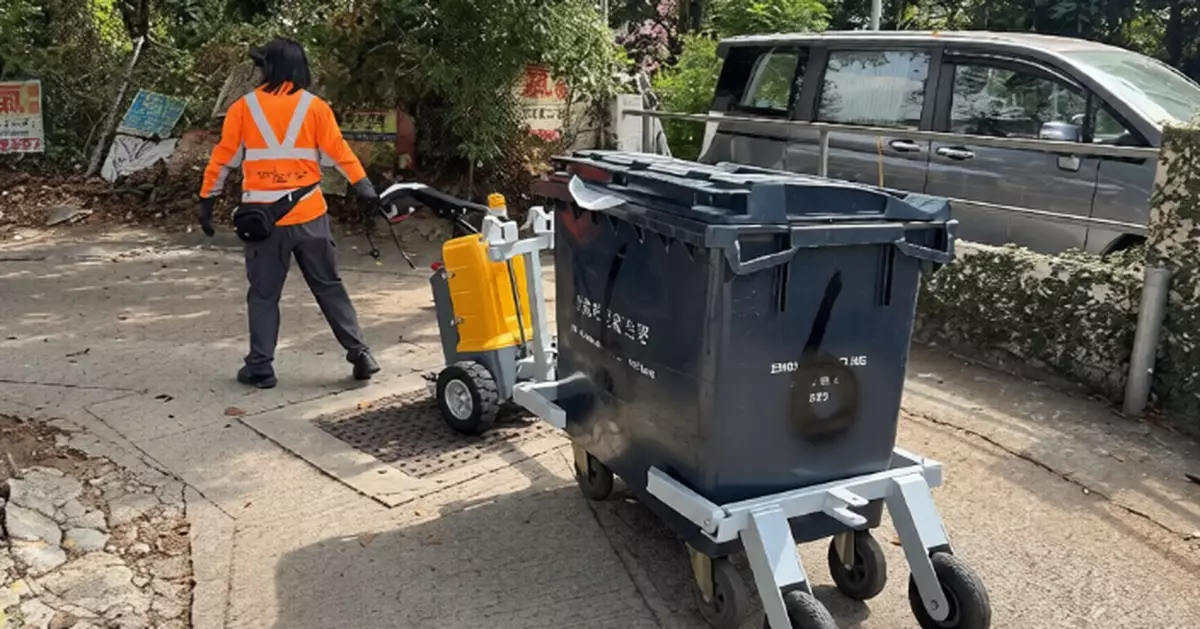
A spokesman for the Food and Environmental Hygiene Department (FEHD) said today (April 30) that the FEHD is committed to providing frontline cleansing workers with an appropriate working and resting environment. In recent years, the FEHD has actively introduced new technologies and automated equipment to reduce the physical strain on workers, and has continued to improve various welfare and heat stroke prevention measures to comprehensively safeguard the occupational safety and health of frontline staff. Photo shows a rural worker conveying a large-sized waste container with the assistance of an electric tractor. Source: HKSAR Government Press Releases
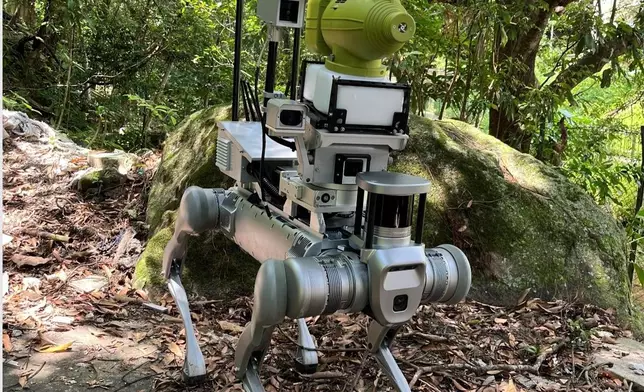
A spokesman for the Food and Environmental Hygiene Department (FEHD) said today (April 30) that the FEHD is committed to providing frontline cleansing workers with an appropriate working and resting environment. In recent years, the FEHD has actively introduced new technologies and automated equipment to reduce the physical strain on workers, and has continued to improve various welfare and heat stroke prevention measures to comprehensively safeguard the occupational safety and health of frontline staff. Photo shows an industrial-grade robot dog carrying out an anti-mosquito fogging operation that reduces the burden on workers for having to wear full protective gear to work in woodlands. Source: HKSAR Government Press Releases
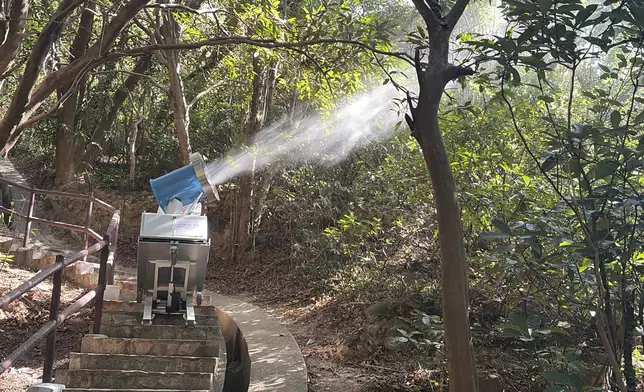
A spokesman for the Food and Environmental Hygiene Department (FEHD) said today (April 30) that the FEHD is committed to providing frontline cleansing workers with an appropriate working and resting environment. In recent years, the FEHD has actively introduced new technologies and automated equipment to reduce the physical strain on workers, and has continued to improve various welfare and heat stroke prevention measures to comprehensively safeguard the occupational safety and health of frontline staff. Photo shows a stairlift transporting a large ultra-low volume fogger along stairs uphill for a large-scale mosquito control operation, reducing the physical strain on workers who would otherwise need to carry the equipment up the hill. Source: HKSAR Government Press Releases
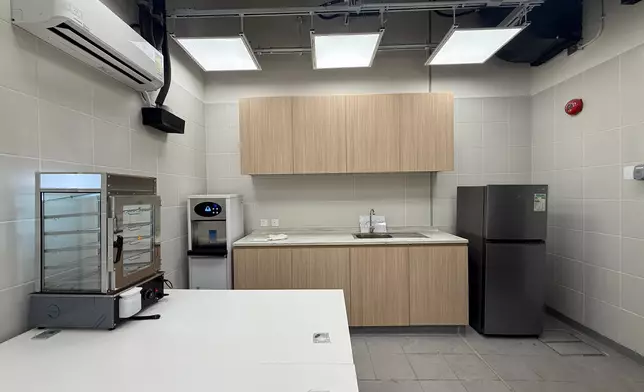
A spokesman for the Food and Environmental Hygiene Department (FEHD) said today (April 30) that the FEHD is committed to providing frontline cleansing workers with an appropriate working and resting environment. Since 2023, it has installed about 190 solar cooling stations equipped with solar-powered facilities, including air coolers, electric fans, and exhaust fans. Solar-powered and staff convenience facilities have also been added to another 29 staff resting places or village-type refuse collection points. Photo shows a staff resting room equipped with convenience facilities. Source: HKSAR Government Press Releases
The spokesman said, "Frontline cleansing workers play a crucial role in maintaining environmental hygiene in Hong Kong. Besides continuously reviewing the basic needs of frontline cleansing workers, including ensuring that they are all provided with drinking water, places for short breaks, water for cleansing tools, and toilet facilities in their work zones, the FEHD keeps on refurbishing facilities and bringing in modern tools to further improve their working environment."
The FEHD attaches great importance to the working and resting environment of frontline cleansing workers. There are some 950 village-type refuse collection points (RCPs)/RCPs with temporary structures under the department's management. While most of them are located in rural or remote areas and hence are subject to geographical constraints, the FEHD strives to ensure that cleansing workers have access to drinking water, places for short breaks during hot weather, water for cleansing tools, and toilet facilities in their work zones or within a few minutes' walk. To further enhance the resting environment for workers, the FEHD has installed about 190 solar cooling stations since 2023. These stations are equipped with solar-powered facilities, including air coolers, electric fans, and exhaust fans. Solar-powered and staff convenience facilities have also been added to another 29 staff resting places or village-type RCPs.
Moreover, in newly built or refurbished off-street RCPs since 2020, the FEHD has, depending on the actual site conditions, endeavoured to provide staff with changing and personal storage spaces, facilities for short breaks and meals, as well as amenities such as cold and hot water dispensers, microwave ovens, electric steamers, refrigerators, electric fans, tables and chairs, and power sockets wherever possible. Air conditioning systems will also be installed in the staff resting rooms where feasible.
Heat stroke prevention for staff is of paramount importance. The FEHD has conducted assessments for departmental staff in accordance with the criteria provided in the Labour Department's Guidance Notes on Prevention of Heat Stroke at Work, and required contractors to perform similar assessments for their employees. Staff have received written notification of the assessment results, which have also been put up at roll-call points. When the Heat Stress at Work Warning is in effect, the FEHD and its contractors will strictly arrange rest breaks for employees based on the adjusted hourly rest time. In addition, all frontline cleansing workers of the FEHD have been provided with work uniforms that have sweat-wicking, breathable and reflective properties, and are equipped with portable waist-mounted fans to help keep themselves cool.
To enhance OSH protection for contractors' staff, the FEHD has collaborated with the Hong Kong Research Institute of Textiles and Apparel to develop new work shoes and raincoats for cleansing workers. The new work shoes are designed with good breathability, waterproofing, durability, slip resistance, shock absorption and antimicrobial functions, and are incorporated with ergonomic features to reduce the risk of foot injuries. The new raincoats are made from high-quality fabrics that are waterproof, breathable and durable, and with thermoregulation functions. The FEHD has included a new clause in its tender invitations for public cleansing service contracts, requiring contractors to provide such new gear.
To reduce the physical strain on workers, the FEHD has also been introducing new technologies and a range of new electric equipment as follows:
(1) Mini dumper trucks: To reduce the instances of rural workers manually pushing waste containers over long distances, the FEHD has added a clause in relevant contracts since 2022, requiring contractors to provide 3.5-tonne mini dumper trucks for the transportation of waste containers. This has significantly improved work efficiency and the OSH level.
(2) Electric tractors: To assist workers in conveying large-sized waste containers, the FEHD tested the use of electric tractors with a maximum load of 1 000 kilograms last year. The electric tractors are designed with trailers that are compatible with the commonly used wheeled-type waste containers, and are equipped with autobrakes and flashing lights. The use of electric tractors will be tested in more rural locations this year.
(3) Industrial-grade robot dogs: To address challenges posed by remote areas and rugged terrain, the FEHD introduced industrial-grade robot dogs last year for refuse transportation. Each robot dog is capable of carrying loads of over 30kg, navigating slopes and operating for up to six hours. In addition, robot dogs are deployed in anti-mosquito fogging operations to reduce the burden on pest control workers who would otherwise have to wear full protective gear for working in woodlands.
(4) Stairlifts: The FEHD is testing the use of stairlifts to transport large ultra-low volume foggers along stairs uphill for large-scale mosquito control operations. This will not only reduce the physical strain on workers who would otherwise need to carry the equipment up the hill, but also expand the coverage of mosquito control.
(5) Electrically assisted trolleys: The FEHD is working with the Jockey Club Design Institute for Social Innovation of the Hong Kong Polytechnic University to further optimise the design of electrically assisted trolleys by adding autobrakes and improving the water resistance of their batteries. The newly designed trolleys are foldable with a maximum load of 100kg, and are equipped with safety features, such as reflective edges, horns, rear lights and dual braking systems that work electrically and mechanically, which can effectively reduce the risk of the trolleys speeding forward out of control when transporting heavy loads downslope. It is expected that the trolleys will be distributed to frontline cleansing workers for trial use in the second quarter of this year.
The FEHD has long placed emphasis on the safety of cleansing workers working on the roads, and on providing relevant training. To reduce the risks faced by staff working on the roads, the department has widely deployed more than 10 teams of new mechanical street sweepers in various districts to sweep roads, footbridges and central dividers and replace manual sweeping. Furthermore, according to the Occupational Safety and Health Regulation (Cap. 509A), contractors have a duty to ensure the safety and health of their employees at work as far as practicable. The FEHD has stipulated in service contracts requiring the employment of non-skilled workers that contractors shall undertake to provide their employees with the necessary training (including OSH training in relation to the provision of the specified services) and to ensure that all employees, in performing the specified services, must wear special protective clothing and gear (such as work uniforms that have reflective properties and trolleys fitted with reflective materials) as considered essential or appropriate by the Government. On the other hand, the FEHD has been providing departmental staff with adequate protective clothing and gear, as well as OSH information and relevant training to ensure that they have sufficient safety awareness.
The spokesman stressed that the FEHD will continue to proactively explore and introduce more suitable technologies and gear to keep pace with the times, so as to continue improving the working environment for cleansing workers.
A spokesman for the Food and Environmental Hygiene Department (FEHD) said today (April 30) that the FEHD is committed to providing frontline cleansing workers with an appropriate working and resting environment. In recent years, the FEHD has actively introduced new technologies and automated equipment to reduce the physical strain on workers, and has continued to improve various welfare and heat stroke prevention measures to comprehensively safeguard the occupational safety and health of frontline staff. Photo shows a rural worker conveying a large-sized waste container with the assistance of an electric tractor. Source: HKSAR Government Press Releases
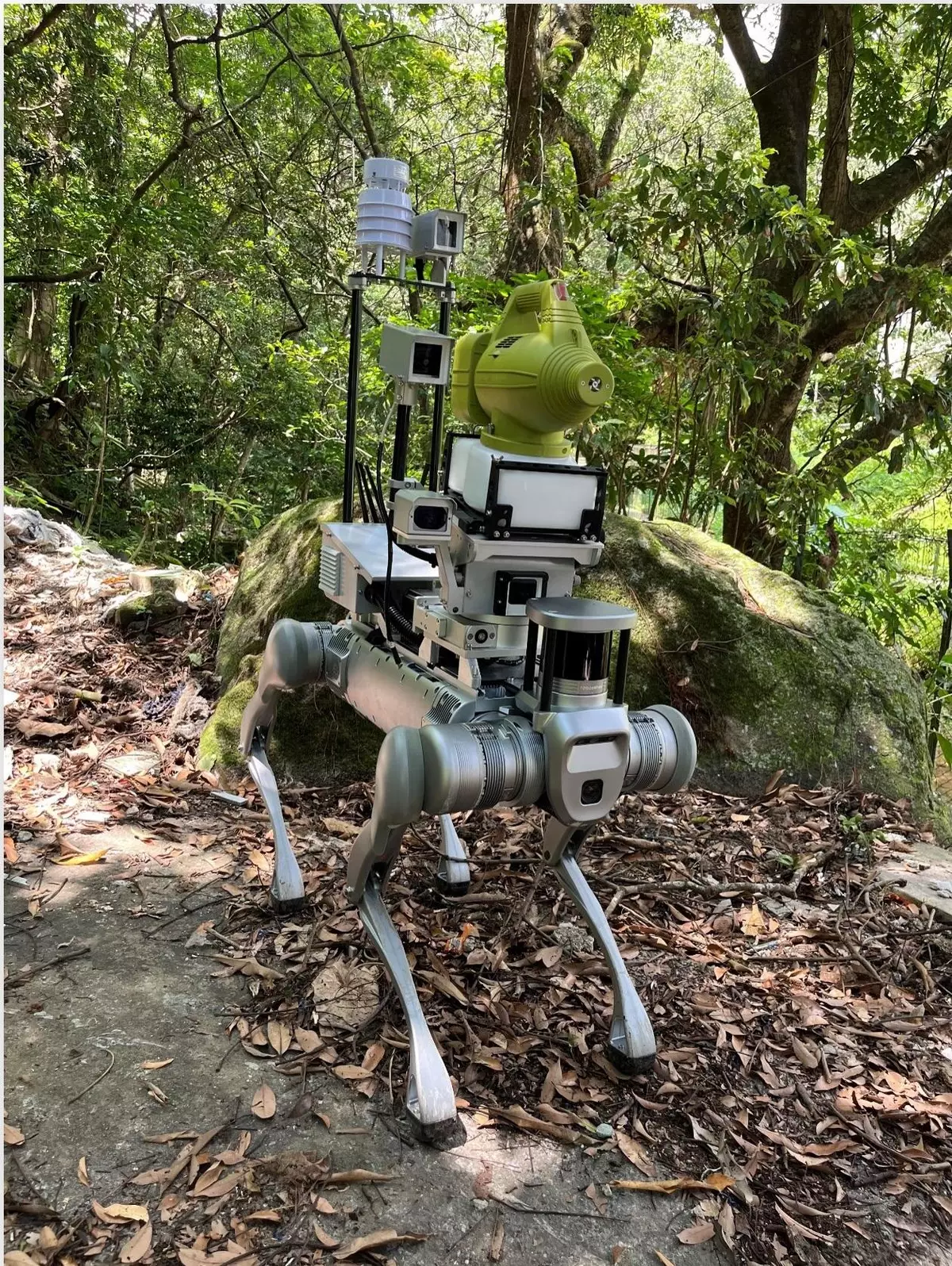
A spokesman for the Food and Environmental Hygiene Department (FEHD) said today (April 30) that the FEHD is committed to providing frontline cleansing workers with an appropriate working and resting environment. In recent years, the FEHD has actively introduced new technologies and automated equipment to reduce the physical strain on workers, and has continued to improve various welfare and heat stroke prevention measures to comprehensively safeguard the occupational safety and health of frontline staff. Photo shows an industrial-grade robot dog carrying out an anti-mosquito fogging operation that reduces the burden on workers for having to wear full protective gear to work in woodlands. Source: HKSAR Government Press Releases
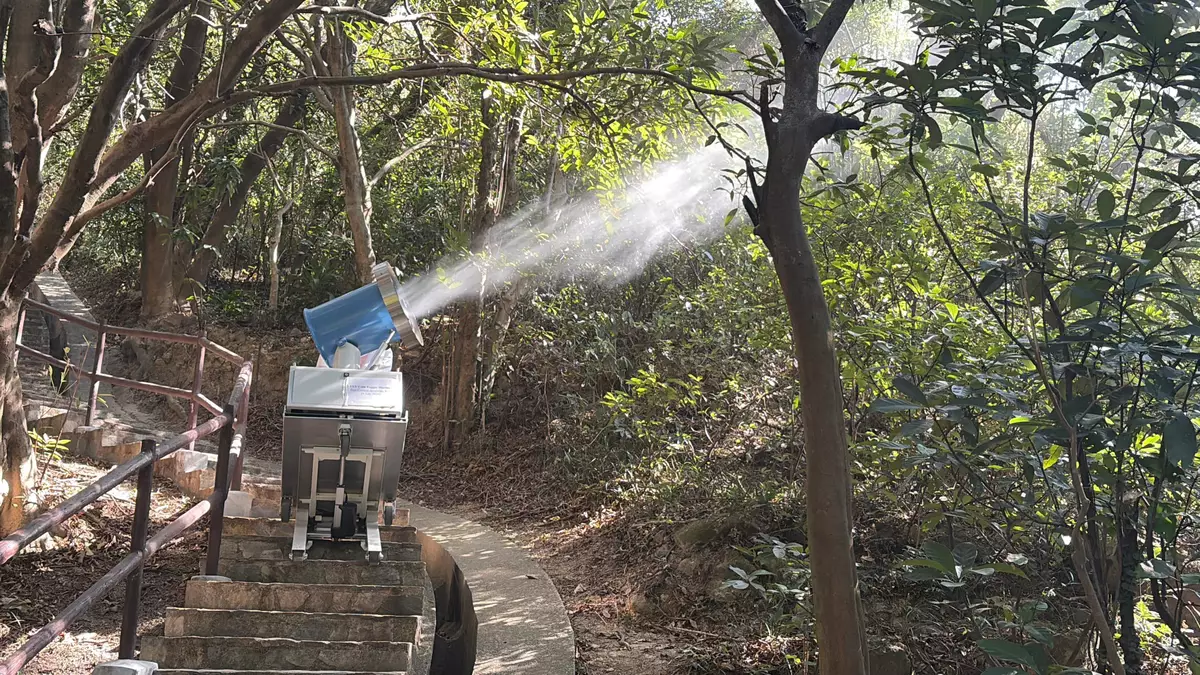
A spokesman for the Food and Environmental Hygiene Department (FEHD) said today (April 30) that the FEHD is committed to providing frontline cleansing workers with an appropriate working and resting environment. In recent years, the FEHD has actively introduced new technologies and automated equipment to reduce the physical strain on workers, and has continued to improve various welfare and heat stroke prevention measures to comprehensively safeguard the occupational safety and health of frontline staff. Photo shows a stairlift transporting a large ultra-low volume fogger along stairs uphill for a large-scale mosquito control operation, reducing the physical strain on workers who would otherwise need to carry the equipment up the hill. Source: HKSAR Government Press Releases
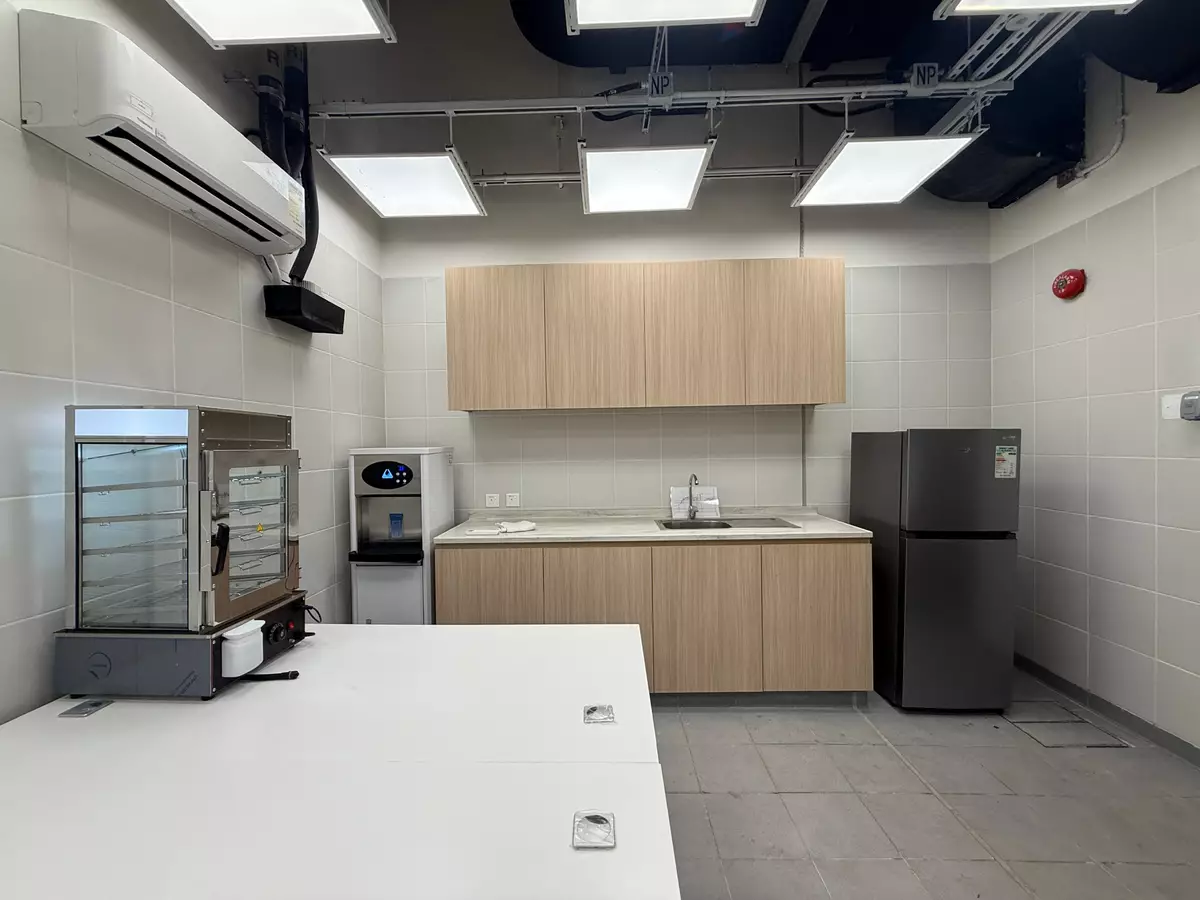
A spokesman for the Food and Environmental Hygiene Department (FEHD) said today (April 30) that the FEHD is committed to providing frontline cleansing workers with an appropriate working and resting environment. Since 2023, it has installed about 190 solar cooling stations equipped with solar-powered facilities, including air coolers, electric fans, and exhaust fans. Solar-powered and staff convenience facilities have also been added to another 29 staff resting places or village-type refuse collection points. Photo shows a staff resting room equipped with convenience facilities. Source: HKSAR Government Press Releases