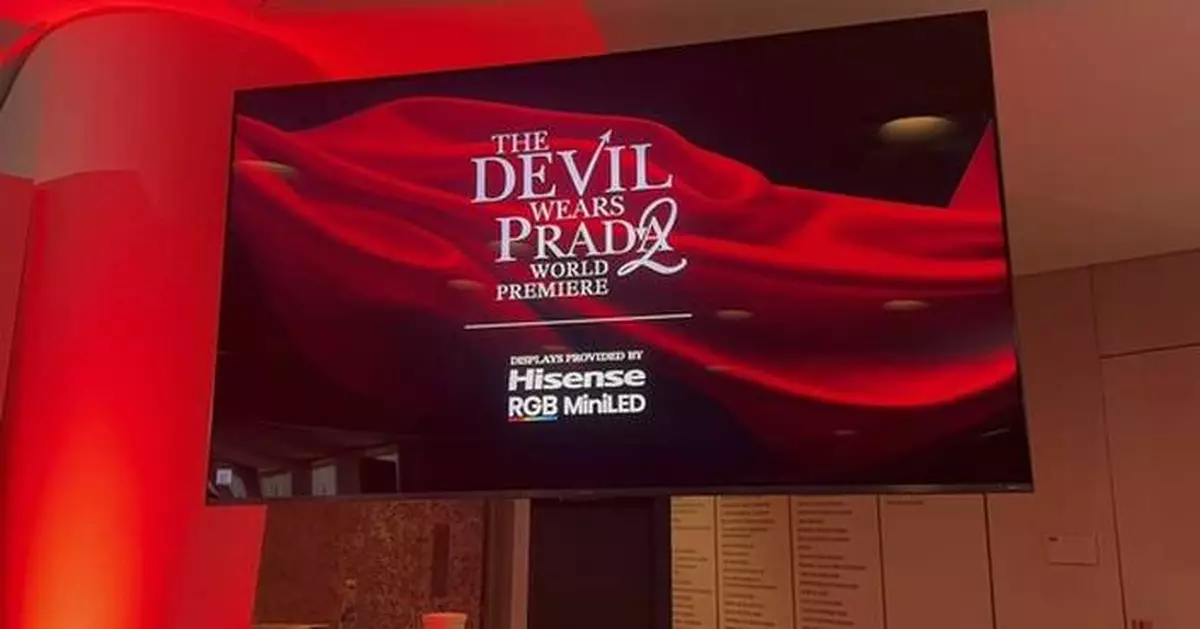
- RGB MiniLED displays take center stage at the World Premiere of the movie in New York, showcasing the live stream for guests and fans in Times Square
- Design-forward Hisense displays featured inside the iconic Runway offices in the film
QINGDAO, China, April 30, 2026 /PRNewswire/ -- Hisense, a leading brand in TV displays, redefines the intersection of innovation and aesthetics through a landmark collaboration with 20th Century Studios' The Devil Wears Prada 2, in theaters May 1st. This campaign brings Hisense's pioneering RGB MiniLED display technology into the heart of the fashion and cultural world, marking a new step in expanding the role of advanced displays.
This strategic collaboration came to life at The Devil Wears Prada 2 World Premiere, where Hisense RGB TVs were integrated into a high‑profile global red‑carpet setting defined by visual storytelling and global cultural attention. This premiere activation demonstrates how next-generation display technology is becoming essential in spaces where visual expression, fashion, and cinematic design are paramount.
At the core of this campaign is Hisense's latest RGB MiniLED evolution, which not only enhances color accuracy, brightness precision, and contrast depth, but also enables displays to meet the demands of more visually sophisticated, design-conscious spaces.
As screens become part of broader aesthetic experiences, Hisense is positioning its TVs as more than entertainment devices—transforming them into design-forward elements within contemporary culture. Hisense TV screens are featured within the new film, inside the iconic Runway offices, reinforcing the brand's presence within one of the most recognizable spaces in fashion and cinema. The move into fashion and cultural contexts reflects a wider shift in how display technology is perceived and applied.
Alongside this, Hisense continues to accelerate the rollout of its latest product lineup, including the new UR9 series, designed to bring flagship-level picture performance to a broader audience. By extending RGB MiniLED into fashion and cultural arenas, Hisense is redefining the role of television—bridging technology, design, and modern lifestyle in new and unexpected ways.
About Hisense
Hisense, founded in 1969, is a globally recognized leader in home appliances and consumer electronics with operations in over 160 countries, specializing in delivering high-quality multimedia products, home appliances, and intelligent IT solutions. According to Omdia, Hisense ranks No. 1 globally in the 100-inch and over TV segment (2023-2025). As The Origin of RGB MiniLED, Hisense continues to lead the next-generation RGB MiniLED innovation. As the official sponsor of the FIFA World Cup 2026TM, Hisense is committed to global sports partnerships as a way to connect with audiences worldwide.
About The Devil Wears Prada 2
Twenty years after making their iconic turns as Miranda, Andy, Emily and Nigel—Meryl Streep, Anne Hathaway, Emily Blunt and Stanley Tucci return to the fashionable streets of New York City and the sleek offices of Runway Magazine in 20th Century Studios' "The Devil Wears Prada 2," the eagerly awaited sequel to the 2006 phenomenon that defined a generation. The film is directed by David Frankel, written by Aline Brosh McKenna, produced by Wendy Finerman, and executive produced by Michael Bederman, Karen Rosenfelt and Aline Brosh McKenna.
QINGDAO, China, April 30, 2026 /PRNewswire/ -- Hisense, a leading brand in TV displays, redefines the intersection of innovation and aesthetics through a landmark collaboration with 20th Century Studios' The Devil Wears Prada 2, in theaters May 1st. This campaign brings Hisense's pioneering RGB MiniLED display technology into the heart of the fashion and cultural world, marking a new step in expanding the role of advanced displays.
This strategic collaboration came to life at The Devil Wears Prada 2 World Premiere, where Hisense RGB TVs were integrated into a high‑profile global red‑carpet setting defined by visual storytelling and global cultural attention. This premiere activation demonstrates how next-generation display technology is becoming essential in spaces where visual expression, fashion, and cinematic design are paramount.
At the core of this campaign is Hisense's latest RGB MiniLED evolution, which not only enhances color accuracy, brightness precision, and contrast depth, but also enables displays to meet the demands of more visually sophisticated, design-conscious spaces.
As screens become part of broader aesthetic experiences, Hisense is positioning its TVs as more than entertainment devices—transforming them into design-forward elements within contemporary culture. Hisense TV screens are featured within the new film, inside the iconic Runway offices, reinforcing the brand's presence within one of the most recognizable spaces in fashion and cinema. The move into fashion and cultural contexts reflects a wider shift in how display technology is perceived and applied.
Alongside this, Hisense continues to accelerate the rollout of its latest product lineup, including the new UR9 series, designed to bring flagship-level picture performance to a broader audience. By extending RGB MiniLED into fashion and cultural arenas, Hisense is redefining the role of television—bridging technology, design, and modern lifestyle in new and unexpected ways.
About Hisense
Hisense, founded in 1969, is a globally recognized leader in home appliances and consumer electronics with operations in over 160 countries, specializing in delivering high-quality multimedia products, home appliances, and intelligent IT solutions. According to Omdia, Hisense ranks No. 1 globally in the 100-inch and over TV segment (2023-2025). As The Origin of RGB MiniLED, Hisense continues to lead the next-generation RGB MiniLED innovation. As the official sponsor of the FIFA World Cup 2026TM, Hisense is committed to global sports partnerships as a way to connect with audiences worldwide.
About The Devil Wears Prada 2
Twenty years after making their iconic turns as Miranda, Andy, Emily and Nigel—Meryl Streep, Anne Hathaway, Emily Blunt and Stanley Tucci return to the fashionable streets of New York City and the sleek offices of Runway Magazine in 20th Century Studios' "The Devil Wears Prada 2," the eagerly awaited sequel to the 2006 phenomenon that defined a generation. The film is directed by David Frankel, written by Aline Brosh McKenna, produced by Wendy Finerman, and executive produced by Michael Bederman, Karen Rosenfelt and Aline Brosh McKenna.
** This press release is distributed by PR Newswire through automated distribution system, for which the client assumes full responsibility. **

Hisense Elevates Fashion and Culture with Iconic Campaign in Celebration of The Devil Wears Prada 2 in Theaters May 1
|
MANILA, Philippines, April 30, 2026 /PRNewswire/ -- The Philippines is stepping into the global culinary spotlight as the Ilocos empanada—an iconic street food from Northern Luzon—captures international attention and fuels growing interest in Filipino cuisine and culture-driven travel.
Driven by viral social media content, particularly on short-form video platforms, the Ilocos empanada has emerged as one of 2026's most talked-about dishes. Known for its vibrant orange crust, crisp texture, and savory filling, it is fast becoming a symbol of the Philippines' rich culinary identity rooted in history, locality, and everyday life.
More than a passing trend, its global rise reflects a broader shift toward authentic, experience-led gastronomy, where travelers seek deeper cultural connections through food. Filipino cuisine is gaining recognition not only for its bold flavors, but for the stories behind each dish. The Ilocos empanada exemplifies this, reflecting the region's identity, its ingredients, and its way of life.
A Dish Shaped by Place and Tradition
Originating from Ilocos Norte, the Ilocos empanada is a distinct evolution of the Spanish empanada, adapted over time using local ingredients and agricultural bounty. Unlike its Latin counterparts, which typically use wheat-based dough, the Ilocano version is made from rice flour, resulting in a lighter, crispier texture shaped by the region's strong rice farming tradition.
Its signature orange hue comes from annatto seeds (achuete), a natural coloring widely used in Filipino cooking. The filling is equally rooted in locality: shredded green papaya, mung beans, egg, and Ilocos longganisa—a native sausage known for its bold, garlicky flavor. Each ingredient reflects resourcefulness and regional abundance, with green papaya showcasing the Ilocano practice of maximizing available produce, and mung beans adding both texture and nourishment.
Preparation is both craft and performance. Vendors shape the dough by hand, crack eggs directly into the filling, and fry each empanada to order in large woks. The result is a sensory experience defined by sound, color, and aroma, best enjoyed fresh and paired with sukang Iloko (sugarcane vinegar), which adds a sharp, tangy contrast to its richness.
From Street Staple to Global Spotlight
In Ilocos Norte, empanadas are more than just food, they are a communal experience. Cooked fresh in town plazas and markets, they are often enjoyed as quick, affordable snacks that bring people together across generations.
Today, that same accessibility is driving global appeal. As international audiences discover the Ilocos empanada online, its bold appearance and dynamic preparation—from its vibrant color to the audible crunch—have made it highly shareable, sparking curiosity that extends beyond the screen.
Its rise underscores a broader global shift in travel behavior, where street food is no longer seen as secondary to fine dining, but as a primary gateway into a destination's identity, offering authenticity, immediacy, and cultural depth.
A Gateway to Filipino Culinary Discovery
The growing popularity of the Ilocos empanada signals a wider opportunity to discover culinary gems across the Philippines' 82 provinces. Across the country, similar stories unfold through food: from Manila's vibrant street stalls serving balut and kwek-kwek, to Cebu City's pungko-pungko culture where locals gather around shared tables for freshly fried specialties, all the way to Davao City's vibrant street food scene shaped by its rich agricultural produce—particularly durian, mangosteen, and pomelo—featured in inventive snacks and desserts.
What sets the Philippines apart is its deep connection between food and daily life. Meals are not just consumed, they are shared, celebrated, and embedded in the community. From roadside grills to town plazas, each dish reflects local identity and heritage, making the Philippines a destination where every bite tells a story and every street corner offers a new discovery.
For more information on Philippine culinary destinations and travel experiences, visit the Department of Tourism Philippines' official website tourism.gov.ph.
Facebook - DOT Philippines | Instagram | X | Tiktok | Youtube
MANILA, Philippines, April 30, 2026 /PRNewswire/ -- The Philippines is stepping into the global culinary spotlight as the Ilocos empanada—an iconic street food from Northern Luzon—captures international attention and fuels growing interest in Filipino cuisine and culture-driven travel.
Driven by viral social media content, particularly on short-form video platforms, the Ilocos empanada has emerged as one of 2026's most talked-about dishes. Known for its vibrant orange crust, crisp texture, and savory filling, it is fast becoming a symbol of the Philippines' rich culinary identity rooted in history, locality, and everyday life.
More than a passing trend, its global rise reflects a broader shift toward authentic, experience-led gastronomy, where travelers seek deeper cultural connections through food. Filipino cuisine is gaining recognition not only for its bold flavors, but for the stories behind each dish. The Ilocos empanada exemplifies this, reflecting the region's identity, its ingredients, and its way of life.
A Dish Shaped by Place and Tradition
Originating from Ilocos Norte, the Ilocos empanada is a distinct evolution of the Spanish empanada, adapted over time using local ingredients and agricultural bounty. Unlike its Latin counterparts, which typically use wheat-based dough, the Ilocano version is made from rice flour, resulting in a lighter, crispier texture shaped by the region's strong rice farming tradition.
Its signature orange hue comes from annatto seeds (achuete), a natural coloring widely used in Filipino cooking. The filling is equally rooted in locality: shredded green papaya, mung beans, egg, and Ilocos longganisa—a native sausage known for its bold, garlicky flavor. Each ingredient reflects resourcefulness and regional abundance, with green papaya showcasing the Ilocano practice of maximizing available produce, and mung beans adding both texture and nourishment.
Preparation is both craft and performance. Vendors shape the dough by hand, crack eggs directly into the filling, and fry each empanada to order in large woks. The result is a sensory experience defined by sound, color, and aroma, best enjoyed fresh and paired with sukang Iloko (sugarcane vinegar), which adds a sharp, tangy contrast to its richness.
From Street Staple to Global Spotlight
In Ilocos Norte, empanadas are more than just food, they are a communal experience. Cooked fresh in town plazas and markets, they are often enjoyed as quick, affordable snacks that bring people together across generations.
Today, that same accessibility is driving global appeal. As international audiences discover the Ilocos empanada online, its bold appearance and dynamic preparation—from its vibrant color to the audible crunch—have made it highly shareable, sparking curiosity that extends beyond the screen.
Its rise underscores a broader global shift in travel behavior, where street food is no longer seen as secondary to fine dining, but as a primary gateway into a destination's identity, offering authenticity, immediacy, and cultural depth.
A Gateway to Filipino Culinary Discovery
The growing popularity of the Ilocos empanada signals a wider opportunity to discover culinary gems across the Philippines' 82 provinces. Across the country, similar stories unfold through food: from Manila's vibrant street stalls serving balut and kwek-kwek, to Cebu City's pungko-pungko culture where locals gather around shared tables for freshly fried specialties, all the way to Davao City's vibrant street food scene shaped by its rich agricultural produce—particularly durian, mangosteen, and pomelo—featured in inventive snacks and desserts.
What sets the Philippines apart is its deep connection between food and daily life. Meals are not just consumed, they are shared, celebrated, and embedded in the community. From roadside grills to town plazas, each dish reflects local identity and heritage, making the Philippines a destination where every bite tells a story and every street corner offers a new discovery.
For more information on Philippine culinary destinations and travel experiences, visit the Department of Tourism Philippines' official website tourism.gov.ph.
Facebook - DOT Philippines | Instagram | X | Tiktok | Youtube
** This press release is distributed by PR Newswire through automated distribution system, for which the client assumes full responsibility. **
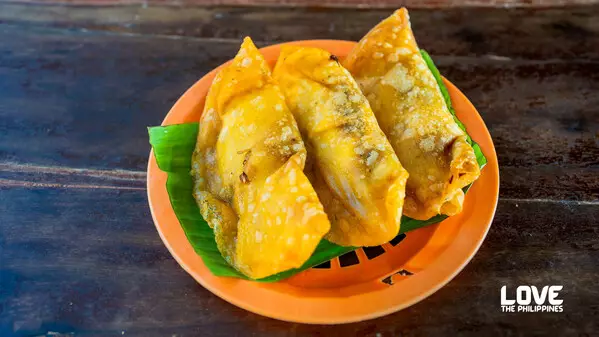
The Orange Crunch: Ilocos Empanada Emerges as 2026's Global Food Darling, Driving Interest in Philippine Culinary Tourism