China's Labor Day holiday kicked off with a nationwide travel surge on Friday as millions took to trains, highways, ferries, and flights to start their holiday journeys.
Railway authorities estimated 24.8 million passenger trips nationwide on May 1 alone, with 2,070 extra trains added to meet travel demand.
On the highways, the Ministry of Transport projected daily expressway traffic to reach 70 million vehicle trips, the highest single-day figure ever for a Labor Day holiday, with tolls waived from May 1 to May 5 for passenger vehicles carrying no more than seven seats. Notably, nearly 24 percent of the traffic is made up of new energy vehicles.
The Maritime Safety Administration reported an estimated 9.2 million passenger trips during the holiday, up 6.8 percent year on year. Routes across the Qiongzhou Strait and popular city sightseeing cruises would be particularly busy.
On Friday, the Qiongzhou Strait alone was expected to handle 120,000 passenger trips and 31,000 vehicle trips, including 20,000 trips by new energy vehicles, a 60-percent increase over last year. Maritime authorities in Hainan, Guangdong, and Guangxi have completed special safety checks on 57 ferries and four barge vessels operating during the holiday.
Civil aviation experienced its own travel peak, with passenger flows concentrated among the Beijing-Tianjin-Hebei, Yangtze River Delta, Guangdong-Hong Kong-Macao, and Chengdu-Chongqing city clusters.
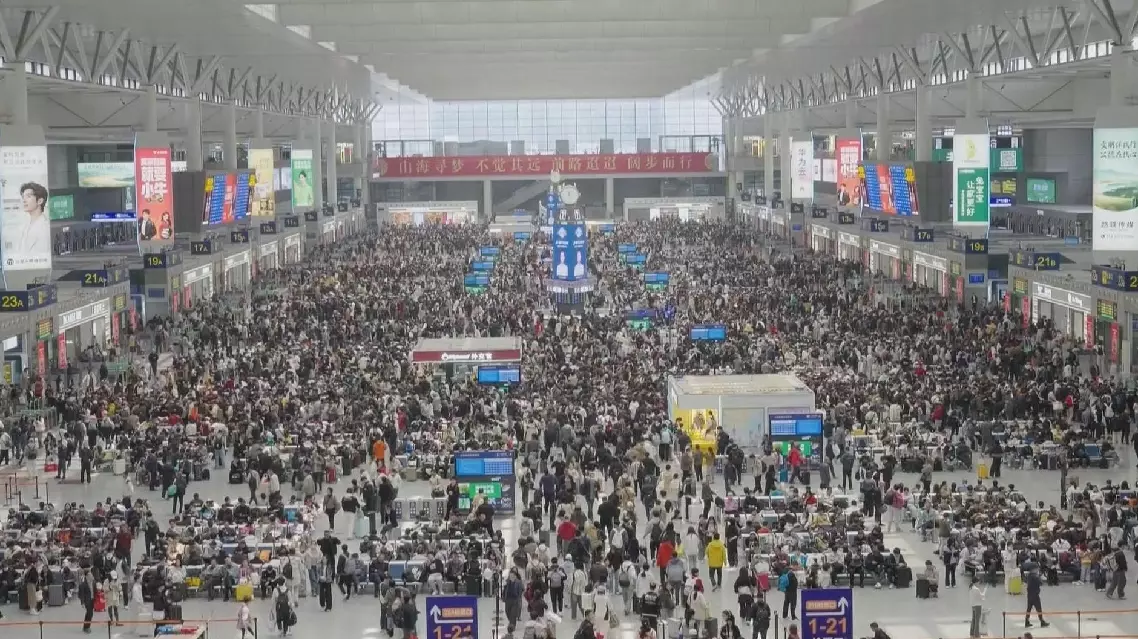
Labor Day holiday sees record high travel flow in China
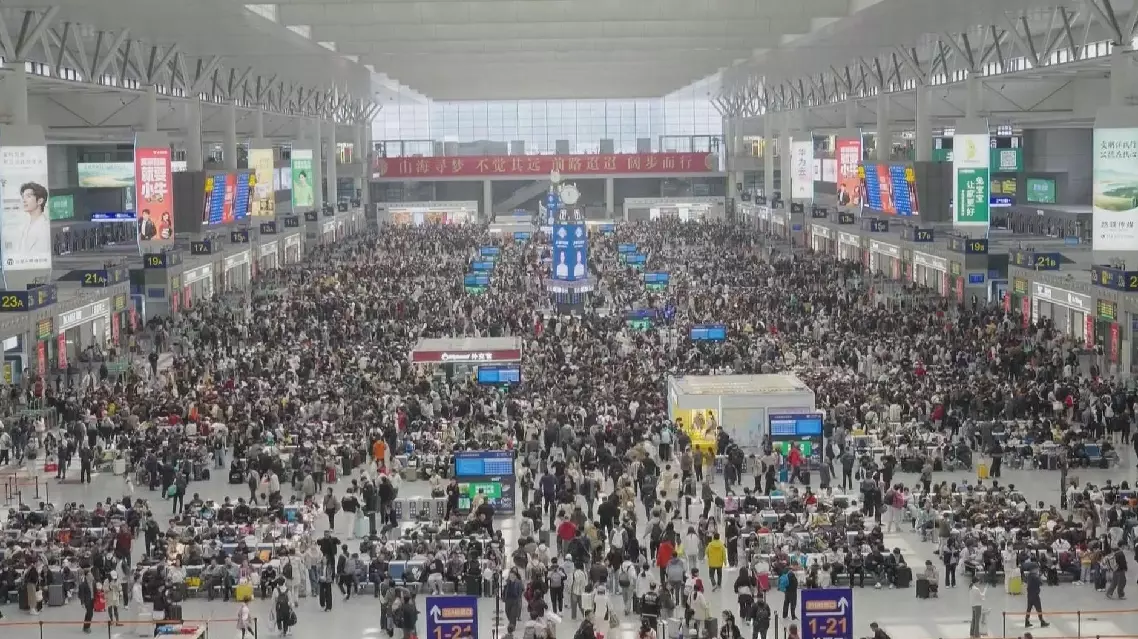
Labor Day holiday sees record high travel flow in China
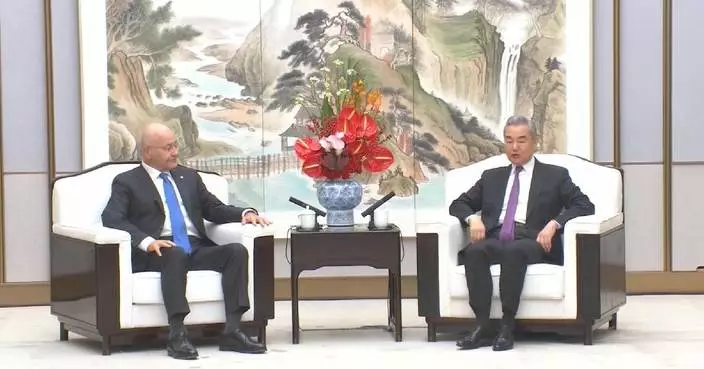
China and the United States have both the capability and the responsibility to jointly develop and govern artificial intelligence (AI) well, ensuring that its development remains under human control and benefits the people, China's top diplomat Wang Yi said on Friday.
"We should not only guard against risks but also engage in cooperation to jointly discuss globally applicable rules and standards so that AI serves to promote common prosperity and safeguard common security," Wang said.
China maintains that AI development should be inclusive, beneficial, for the positive and for good, he said.
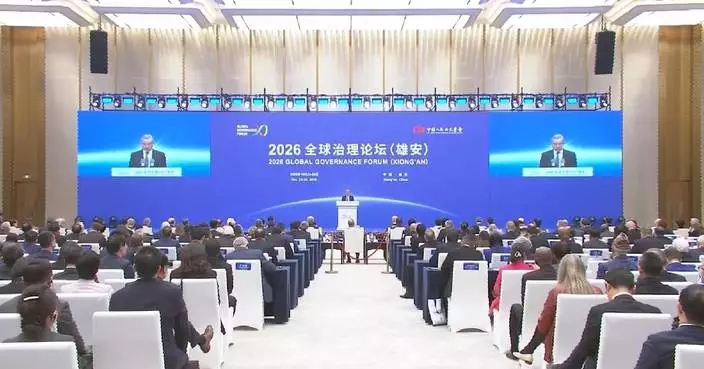
Wang, Chinese foreign minister and a member of the Political Bureau of the Communist Party of China Central Committee, made the remarks during his meeting with co-chair of the Board of Trustees of the Asia Society John L. Thornton and The New York Times columnist Thomas L. Friedman, who are in China for the 2026 Global Governance Forum (Xiongan).
Noting that the world is currently confronted with multiple governance deficits in areas including peace, development and security, Wang said that in September 2025, President Xi Jinping put forward the Global Governance Initiative, which provided an important public good for the world and received wide recognition and support from the international community.
By hosting the global governance forum in Xiongan New Area, north China's Hebei Province, China hopes to pool consensus from various parties and jointly promote the reform of the global governance system, Wang added.
Thornton and Friedman expressed congratulations on President Xi's successful visit to the United States, hoping that the two countries will enhance cooperation on AI and provide important public goods for the world.
They said that the international community is paying close attention to the upcoming APEC Economic Leaders' Meeting hosted by China, and expects that China will take this opportunity to play a unique and positive role in tackling global challenges.
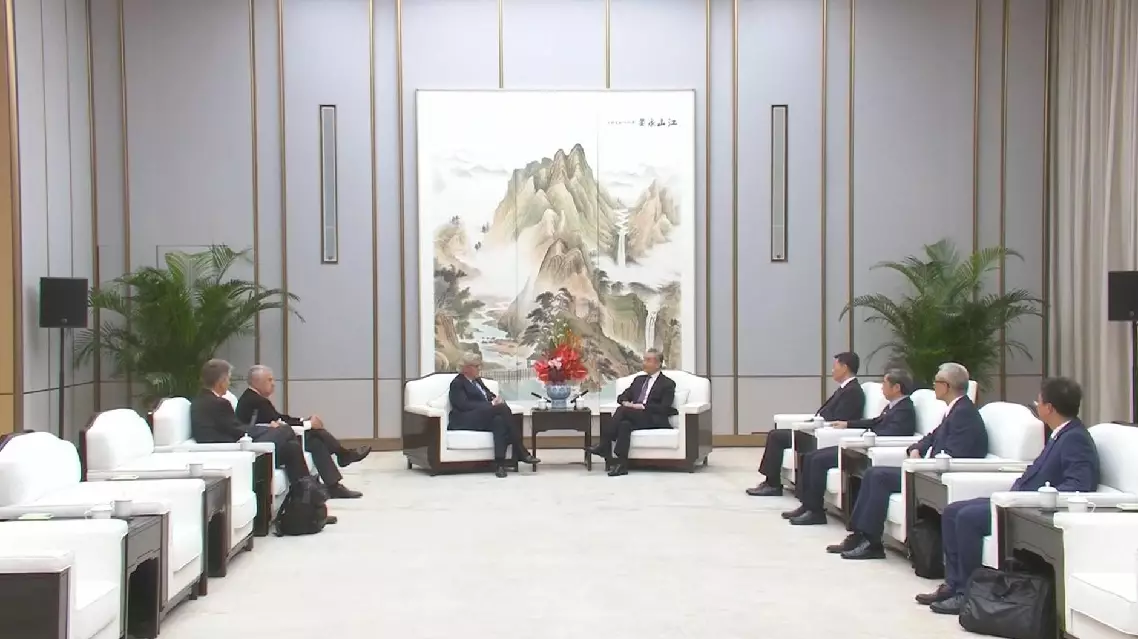
China's top diplomat calls for China-U.S. joint efforts on AI development, governance