IRVINE, Calif.--(BUSINESS WIRE)--May 1, 2026--
American Lending Center Holdings Inc. (ALC), a mission-driven non-bank lending institution and federally designated EB-5 Regional Center, today announced the full repayment of its $146 million EB-5 senior loan for Fervo Energy’s Cape Station Phase I Project.
This press release features multimedia. View the full release here: https://www.businesswire.com/news/home/20260501708139/en/
The repayment marks the completion of the project’s financing cycle in approximately 18 months and represents one of the largest utility-scale energy projects involving EB-5 financing under the EB-5 Reform and Integrity Act of 2022 (RIA) to reach successful completion.
Cape Station is part of Fervo Energy’s broader effort to advance next-generation geothermal technology, designed to deliver carbon-free, reliable energy at scale. The project brings together a unique combination of capital sources, technical innovation, and strategic partnerships. Located in Beaver County, Utah, the project reflects the growing role of innovative infrastructure investments in expanding access to clean energy while supporting economic development in underserved regions.
“This outcome reflects strong coordination across project partners and disciplined execution throughout the development process,” said John Shen, founder and CEO, American Lending Center. “We’re pleased to have supported a project that not only met its financing objectives within a relatively short timeframe, but also contributes to advancing reliable, carbon-free energy solutions.”
In addition to its repayment timeline, the project is expected to generate job creation significantly exceeding—approximately 2x—EB-5 program requirements. As one of the early projects under RIA to reach full-cycle repayment, it reflects a broader shift in how EB-5 capital can be deployed to support complex, technology-driven infrastructure developments.
“At ALC, we take an immigrant-first investing approach—structuring capital with a focus on investor outcomes while supporting projects that deliver meaningful economic and community impact,” said Gary N. Merson, President, American Lending Center. “This project illustrates how that approach can align investor’s goals with the advancement of transformative industries like clean energy.”
The successful repayment of Cape Station Phase I highlights the importance of collaboration among capital providers, project developers, and industry partners in bringing innovative energy solutions to market. As development progresses, the broader Cape Station project is expected to contribute significantly to the expansion of firm, carbon-free geothermal energy in the United States.
About American Lending Center
American Lending Center Holdings Inc. (ALC) is a mission-driven, private, non-bank lender committed to expanding access to capital, creating jobs, and driving sustainable economic growth across the United States. As a federally designated EB-5 regional center, ALC partners with investors to revitalize communities, create jobs, and finance sustainable projects that strengthen local economies—especially in underserved areas. At the time of this announcement, ALC has reached a new milestone, securing its 40th I-956F project approval—an EB-5 industry-leading achievement.
ALC is dedicated to advancing innovation and sustainability by supporting startups and projects in sectors including renewable energy, agriculture, and rural healthcare. At ALC, we believe in building stronger communities by fostering entrepreneurship, leveraging global investment, and creating opportunities that empower future generations.
Follow American Lending Center on LinkedIn, JD Supra, Facebook, X, and YouTube.
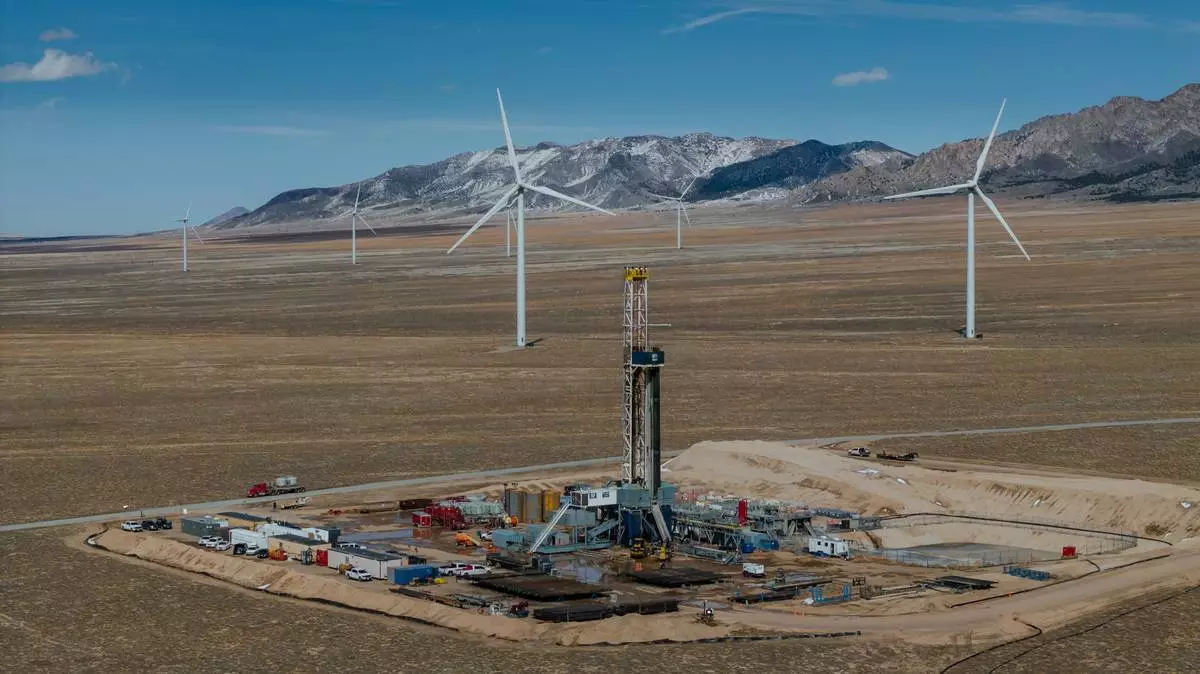
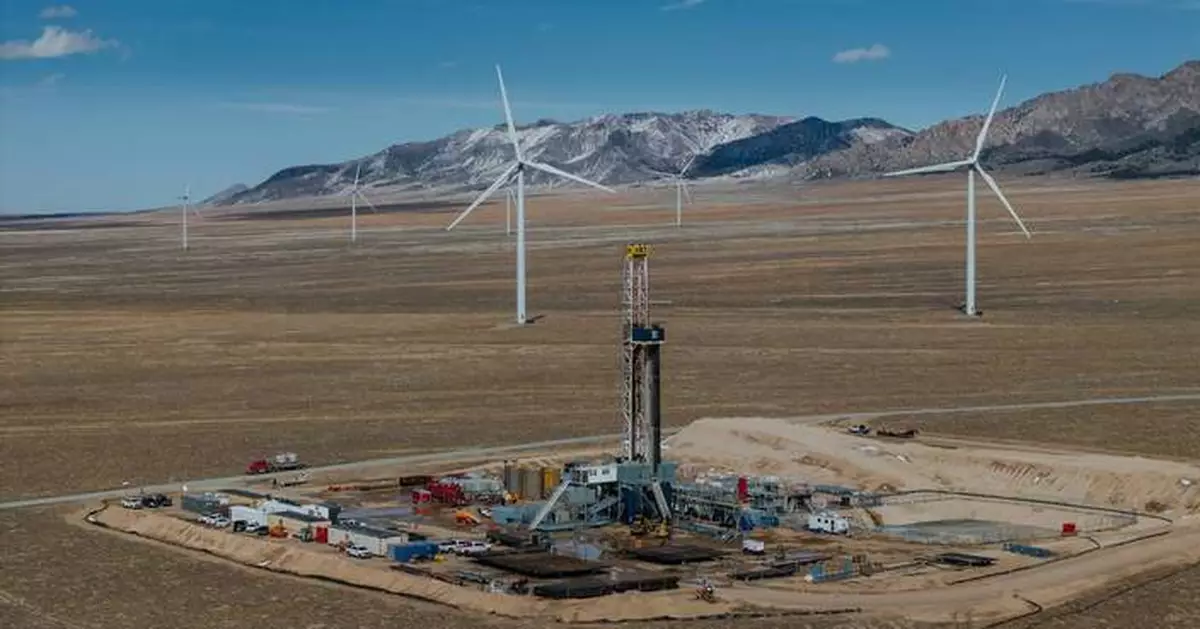
Cape Station geothermal development located in Beaver County, Utah, northeast of Milford. Photo taken by Fervo Energy.
President Donald Trump's administration is arguing that the war in Iran has already ended because of the ceasefire that began in early April, an interpretation that would allow the White House to avoid the need to seek congressional approval.
The statement furthers an argument laid out by Defense Secretary Pete Hegseth during testimony in the Senate on Thursday, when he said the ceasefire effectively paused the war. Under that rationale, the administration has not yet met the requirement mandated by a 1973 law to seek formal approval from Congress for military action that extends beyond 60 days.
While the ceasefire has since been extended, Iran maintains its chokehold on the Strait of Hormuz, and the U.S. Navy is maintaining a blockade to prevent Iran’s oil tankers from getting out to sea.
Here's the latest:
The former Democratic president is wading into the midterms, making his first political endorsement of the 2026 cycle by backing Keisha Lance Bottoms for the state’s top job.
Bottoms served as Biden’s senior adviser for public engagement after her tenure as Atlanta mayor.
In a one-minute video promoting her candidacy, Biden praised her track record as mayor and said “those same qualities that made her a great mayor made her invaluable to our administration — smart, focused, gets things done.”
“She handled it all with steady and thoughtful leadership,” Biden said in the video. “That’s the definition of battle-tested.”
When Homeland Security Secretary Markwayne Mullin was questioned by senators during his confirmation hearing about his vision for implementing President Trump’s mass deportation agenda, he said his goal was to keep his department off the front pages of the news.
To some degree, he has. Gone are the social media video clips of now-retired Border Patrol commander Greg Bovino clashing with protesters. Mullin’s predecessor, Kristi Noem, made her first trip as secretary to New York City to make arrests with Immigration and Customs Enforcement. In contrast, Mullin went to North Carolina to review hurricane recovery efforts.
The Republican administration appears to be recalibrating its approach to a centerpiece policy that helped bring Trump back to the White House, moving in many ways away from aggressive, public-facing tactics toward a quieter approach to enforcement. Despite that shift, the administration insists it’s not backing down from its lofty deportation goals.
▶ Read more
Many Republicans who have been uneasy with Trump’s war in Iran emphasized that there would be a May 1 deadline for Congress to intervene. But the date is now set to pass with no action from GOP lawmakers who continue to defer to the White House.
Under the War Powers Resolution of 1973, Congress must declare war or authorize the use of force within 60 days — a deadline that falls on Friday — or within 90 days if the president asks for an extension. But Congress made no attempt at enforcing that requirement, leaving town for a week on Thursday after the Senate rejected a Democratic attempt to halt the war for a sixth time.
The Trump administration has shown no interest in seeking congressional approval at all. It is arguing that the deadlines set by the law don’t apply because the war in Iran effectively ended when a ceasefire began in early April.
Senate Majority Leader John Thune, R-S.D., said Thursday he doesn’t plan on a vote to authorize force in Iran or otherwise weigh in.
▶ Read more
President Donald Trump granted a key approval Thursday for a major new oil pipeline from Canada into the U.S. that’s been dubbed “Keystone Light” over its similarities to a contentious project blocked by the Biden administration.
The three-foot-wide (1 meter) Bridger Pipeline Expansion would carry up to 550,000 barrels (87,400 cubic meters) of oil a day from Canada through Montana and Wyoming, where it would link with another pipeline.
The pipeline needs additional state and federal environmental approvals before construction, which company officials expect to start next year. Environmentalists hope to stop the project over worries that the pipeline could break and spill.
At peak volume, the 650-mile (1,050-kilometer) pipeline would move two-thirds as much oil as the better-known Keystone XL pipeline that got partially built before President Joe Biden, citing climate change, canceled its permit on the day he took office in 2021.
▶ Read more
Federal prosecutors released a video Thursday showing the moment authorities say a man armed with guns and knives tried to storm the White House Correspondents’ Association dinner and attempt to kill Trump.
Jeanine Pirro, the U.S. attorney for Washington, posted the video on social media amid questions over whose bullet struck a Secret Service officer as Cole Tomas Allen ran through security with a long gun toward the hotel ballroom packed with journalists, administration officials and others.
Prosecutors had previously claimed the agent was shot in the bullet-resistant vest during the melee, but had not confirmed it was Allen who shot the agent. Pirro, however, said Thursday that there is no evidence that the officer was hit by friendly fire.
Allen was injured but was not shot during the Saturday night attack at the Washington Hilton, which disrupted one of the highest-profile annual events in the nation’s capital.
▶ Read more
The Trump administration is arguing that the war in Iran has already ended because of the ceasefire that began in early April, an interpretation that would allow the White House to avoid the need to seek congressional approval.
The statement furthers an argument laid out by Defense Secretary Pete Hegseth during testimony in the Senate earlier Thursday, when he said the ceasefire effectively paused the war. Under that rationale, the administration has not yet met the requirement mandated by a 1973 law to seek formal approval from Congress for military action that extends beyond 60 days.
A senior administration official, who spoke on condition of anonymity to discuss the administration’s position, said for purposes of that law, “the hostilities that began on Saturday, Feb. 28 have terminated.” The official said the U.S. military and Iran have not exchanged fire since the two-week ceasefire that began April 7.
While the ceasefire has since been extended, Iran maintains its chokehold on the Strait of Hormuz, and the U.S. Navy is maintaining a blockade to prevent Iran’s oil tankers from getting out to sea.
▶ Read more
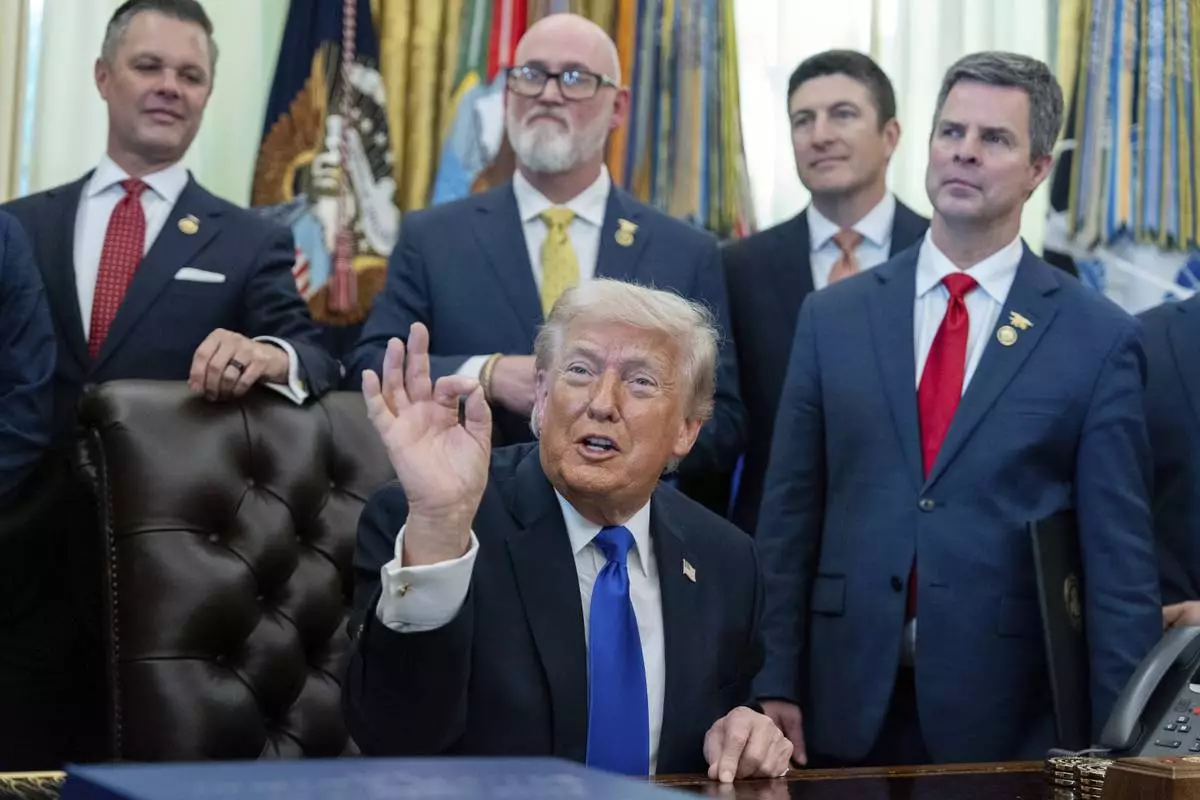
President Donald Trump speaks in the Oval Office of the White House, Thursday, April 30, 2026, in Washington. (AP Photo/Alex Brandon)
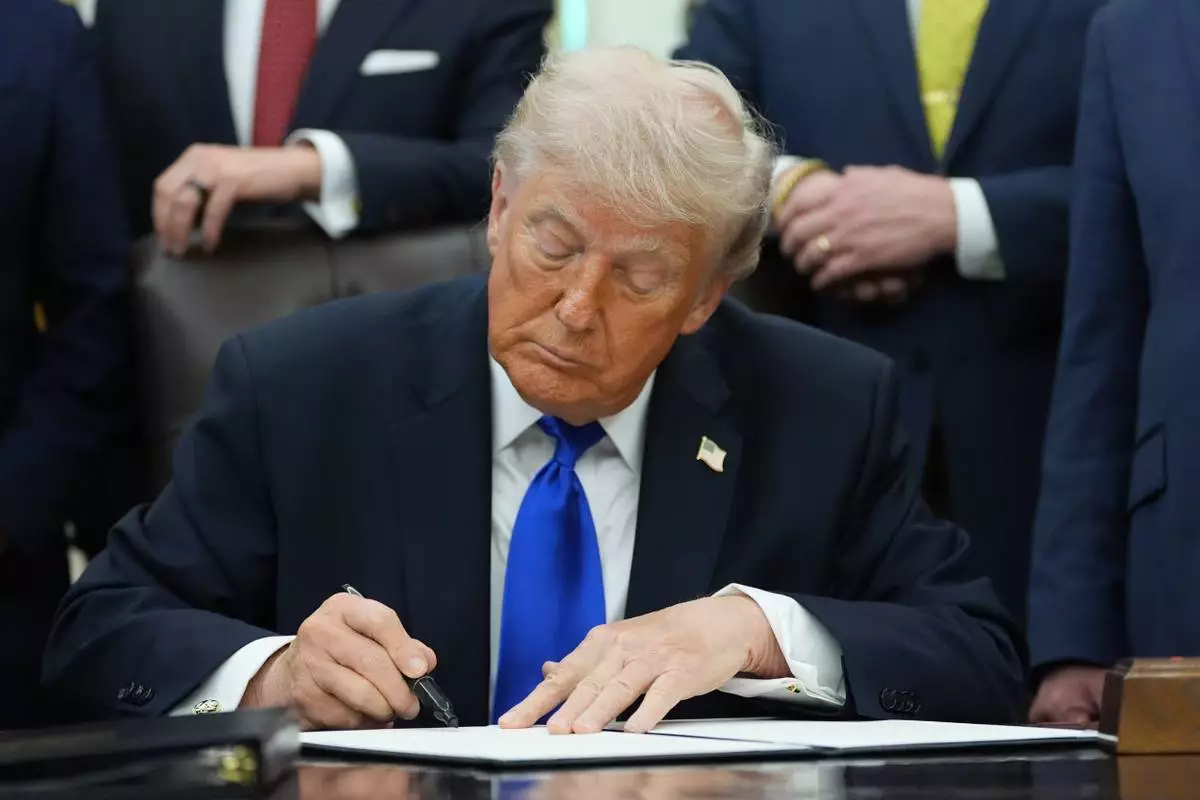
President Donald Trump signs a presidential permit regarding pipeline construction in the Oval Office of the White House, Thursday, April 30, 2026, in Washington. (AP Photo/Alex Brandon)