NEW YORK (AP) — A federal judge on Friday blocked the Trump administration from forcing about 3,000 Yemeni refugees to leave the U.S., ruling that Temporary Protected Status repeatedly granted to them and due to expire Monday should be extended again.
Judge Dale E. Ho in Manhattan extended the status temporarily while a lawsuit seeking to preserve the protections plays out. In an emergency order, he wrote that people granted the status are ordinary, law-abiding people who the U.S. government had determined could face threats to their safety if they were returned to a country facing an ongoing armed conflict.
Amid its immigration crackdown, the Trump administration has terminated Temporary Protected Status for people from nine countries, including Haiti, Venezuela and Ethiopia. Before Ho’s ruling, protections for Yemeni refugees were set to end on Monday, according to U.S. Citizenship and Immigration Services.
People with Temporary Protected Status are eligible to remain in the U.S., may not be removed from the country, and are able to receive work and travel authorization.
In his ruling, Ho criticized former Homeland Security Secretary Kristi Noem, saying Congress had established a process for Temporary Protected Status to be altered or rescinded, but she had not followed it.
He was particularly critical of a social media message she sent out in early December in which she said she had just met with President Donald Trump and was recommending a full travel ban “on every damn country that's been flooding our nation with killers, leeches, and entitlement junkies.”
On Feb. 13, he noted, Noem announced in a news release that Temporary Protected Status would be terminated for Yemen, finding that letting them stay in the U.S. was “contrary to our national interest.”
“TPS holders from Yemen are not ‘killers, leeches, and entitlement junkies,’ ” Ho wrote at the start of his conclusion in his 36-page decision.
He noted that among 2,810 Yemenis who hold TPS status and another 425 who have applied were a pregnant 33-year-old Detroit woman due to give birth this month whose unborn child has a congenital heart condition that is not treatable in Yemen and a 50-year-old former human rights worker in Brooklyn who is a target of Houthi-aligned militias in Yemen.
“Temporary means temporary and the final word will not be from activist judges legislating from the bench," the U.S. Department of Homeland Security said in a statement.
“Allowing TPS Yemen beneficiaries to remain temporarily in the United States is contrary to our national interest," the department’s statement said, emphasizing that the Trump administration is “returning TPS to its original temporary intent.”
Razeen Zaman, director of immigrant rights at the Asian American Legal Defense and Education Fund, applauded Ho's ruling, saying that “the court has made clear that humanitarian statutes like TPS cannot be used as a deportation pipeline."
Zaman said in a release that Homeland Security had determined that it was unsafe for Yemeni refugees to return to their country “but terminated their protection anyway.”
Zaman said Ho's ruling "affirms that protection must be based on facts and conditions on the ground, not on the political appetite to end it.”
Noem announced her decision to end Temporary Protected Status for Yemen in February. The Department of Homeland Security on Friday said she had reviewed conditions in the country and consulted with government agencies before determining that Yemen no longer met the legal requirements for temporary status.
The Asian American Legal Defense and Education Fund included comments from several lawsuit plaintiffs in its press release heralding Ho's ruling.
One plaintiff identified by a pseudonym to protect his safety wrote that the people fighting to preserve protections for Yemenis were “doctors, engineers, and pilots like myself, and also drivers, deli workers, and countless other people who contribute meaningfully every day, supporting not just our own families but the broader fabric of society.”
He added that their presence "represents resilience, skill, and dedication — values that strengthen the nation as a whole.”
A woman also identified by a pseudonym called Ho's decision “a lifeline for my family.” She added: "It is the moment we finally breathed a sigh of relief after months of existential anxiety,”
Yemen was initially designated for Temporary Protected Status in 2015, about a year after the country’s civil war began.
As the war persisted, the Obama and Biden administrations extended the designation multiple times, most recently in 2024, when officials estimated that 2,300 Yemenis were eligible to reregister for protected status and that 1,700 Yemenis were newly eligible.
Ho cited other instances in which courts have recently permitted those who have fled other countries under various circumstances to stay in the U.S.
Associated Press writer Larry Neumeister contributed to this report.
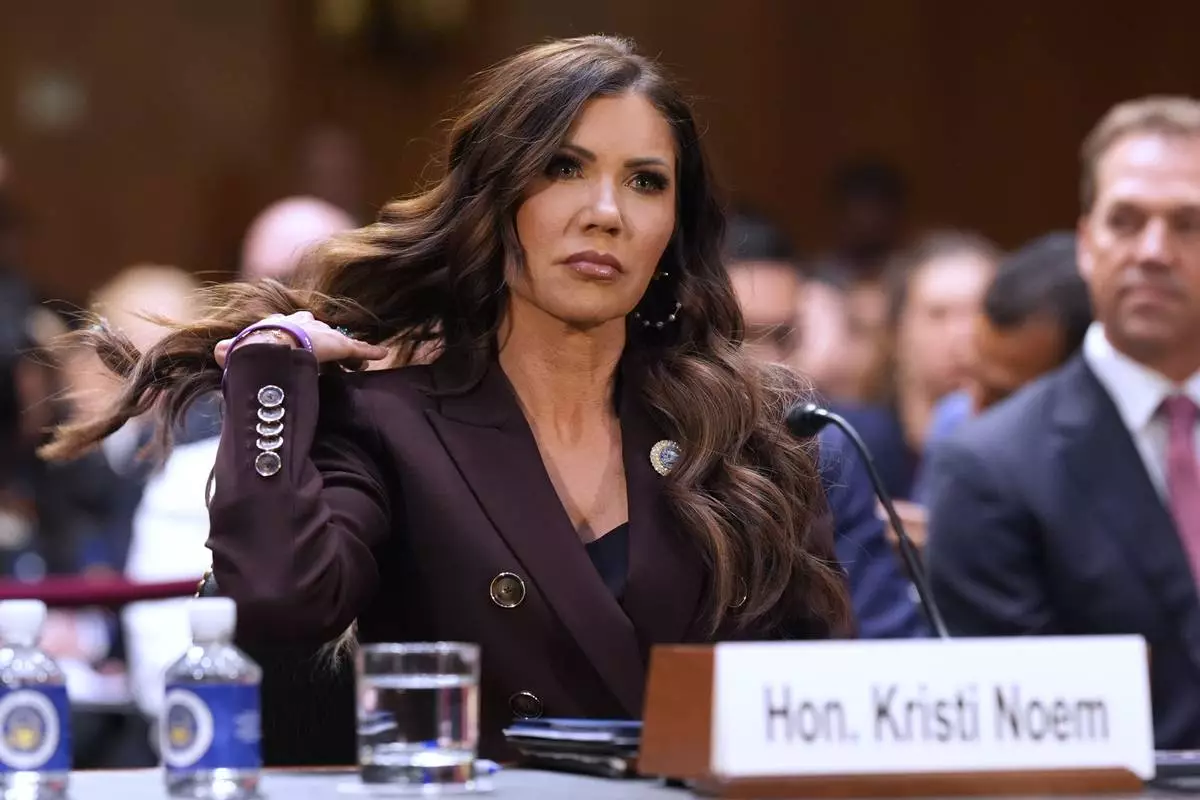
FILE - Homeland Security Secretary Kristi Noem appears for an oversight hearing before the Senate Judiciary Committee, at the Capitol in Washington, March 3, 2026. (AP Photo/J. Scott Applewhite, File)
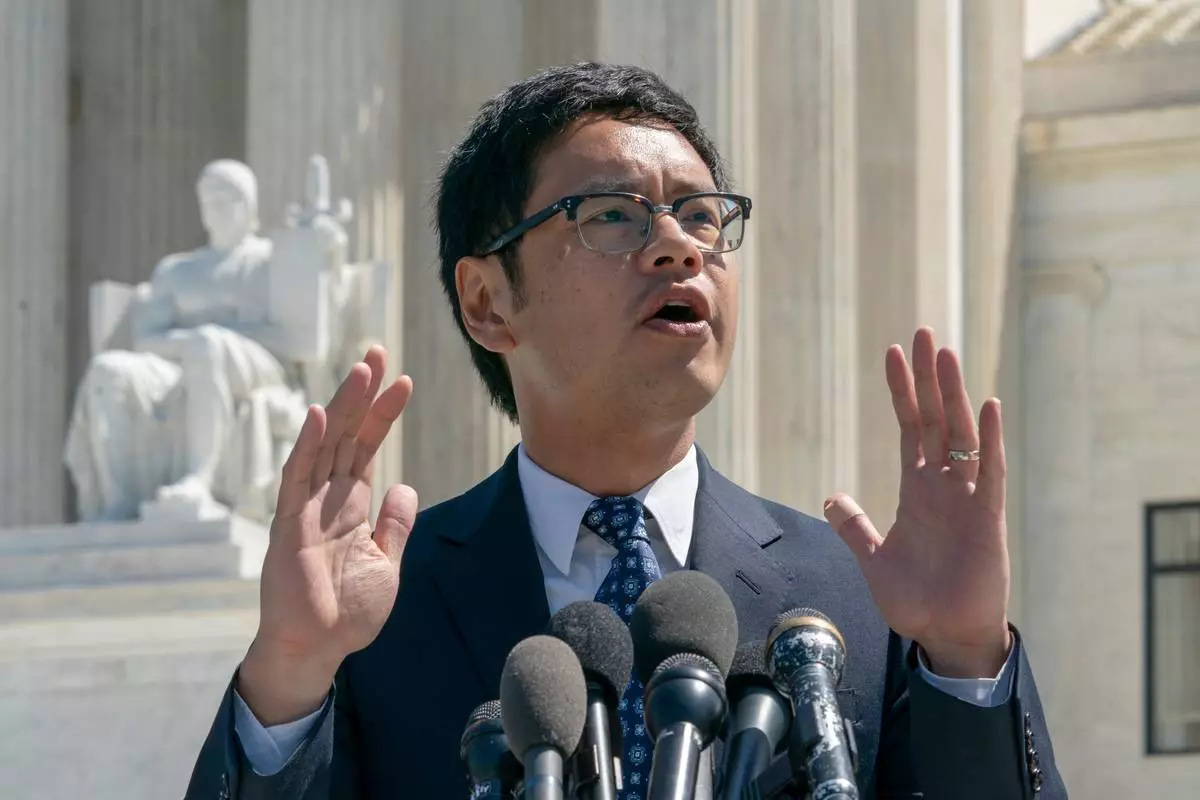
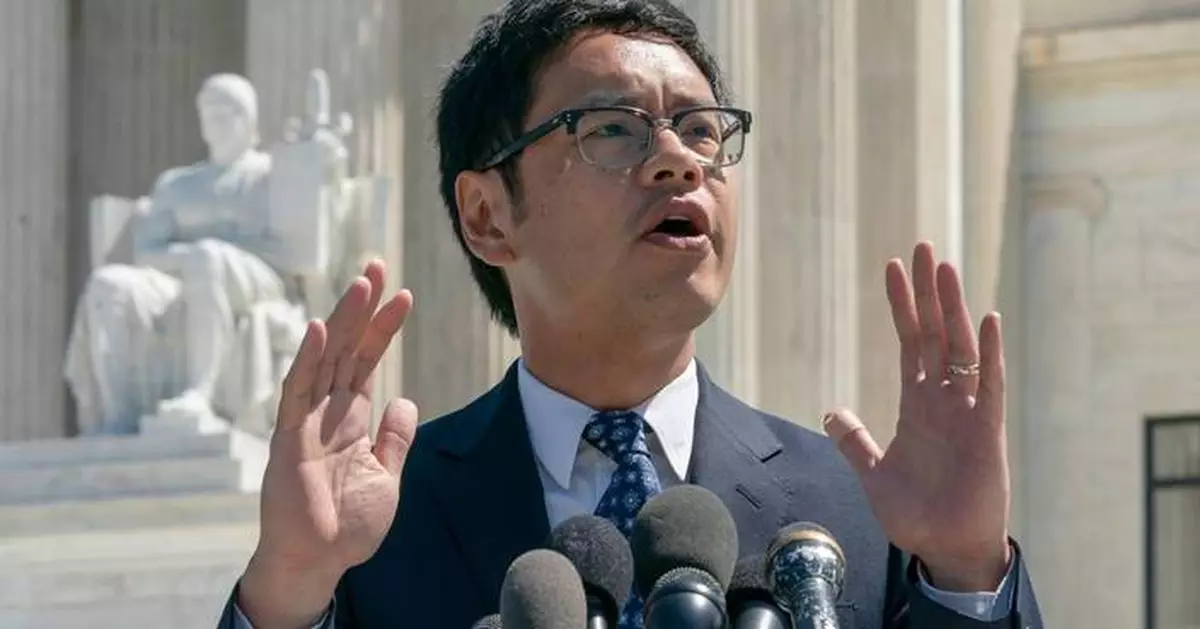
FILE - Dale Ho, an attorney for the American Civil Liberties Union, speaks to reporters after he argued before the Supreme Court against the Trump administration's plan to ask about citizenship on the 2020 census, in Washington, April 23, 2019. (AP Photo/J. Scott Applewhite, File)
A Trump administration task force has alleged wide-ranging discrimination against Christians during the tenure of former President Joe Biden, claiming in a new report they were targeted in areas such as education, tax law and prosecution of anti-abortion protesters.
Progressive groups criticized the report, saying it fails to document a pattern of discrimination, focuses on causes favored by conservative Christians and amounts to “advocacy dressed up as investigation.”
The Task Force to Eradicate Anti-Christian Bias, created within the Justice Department by President Donald Trump last year, issued its conclusions Thursday in a 200-page report.
“When Christian beliefs about morality and human nature conflicted with the Biden Administration’s views, religious rights often suffered," the report said.
The task force — which included numerous Cabinet secretaries — didn't accuse the Biden administration of any large pattern of suppressing churches themselves or the right to worship. But the report did accuse it of taking a hard line against those who advocated for conservative policies on the basis of their faith in such areas as abortion, gender, school curriculum and vaccine exemptions.
“The Biden Administration generally tolerated religious beliefs that were privately held but zealously pursued actions to limit Christians’ ability to act in accordance with their faith," it said.
Critics said the report essentially equates one strand of conservative Christianity to be representative of Christians overall, then construes policy disagreements to be persecution.
The report is “advocacy dressed up as investigation,” said Jim Simpson, executive director of the Center on Faith and Justice at Georgetown University.
He said the report falsely deems policy disagreements to be “evidence of anti-Christian bias rather than the normal functioning of a pluralistic democracy." He also said it falsely positions Christians — nearly two-thirds of Americans — as “a persecuted minority despite being the country’s largest and most politically influential religious group.”
The task force report contends that the Biden-era Justice Department sought severe penalties for anti-abortion activists who illegally blockaded clinics and took such protests more seriously than threats to pregnancy resource centers — often Christian-run facilities that seek to persuade women not to obtain abortions.
It cited a group of people convicted in federal court and sentenced to prison after invading and blockading a Washington abortion clinic. Trump pardoned them in 2025.
The report contended that the Biden administration “sidelined Christians in favor of their preferred constituencies.”
One section of the report accuses Biden of “replacing Easter" with Transgender Day of Visibility, which takes place every March 31. That event coincided with Easter on 2024. In fact, Biden issued proclamations honoring both occasions. The report accused Biden of “profound lack of consideration for the Christian faith.”
Christian groups have mixed views on LGBTQ+ issues, with some progressive churches flying Pride flags. Conservative denominations generally oppose same-sex marriage and transgender rights. The report chided the Biden administration for flying Pride flags at U.S. Embassies, including at the Vatican.
Melissa Rogers, who served as executive director of the White House Office of Faith-Based and Neighborhood Partnerships under Biden, contrasted Trump's Easter messaging this year with his predecessor's.
“President Biden spent Easter and Orthodox Easter wishing Christians worldwide joyful Resurrection Sundays, not by pretending to be Jesus, by tweeting profanities, and by attacking the pope,” she said.
She also noted that Biden is a devout Catholic, and that his administration's officials routinely met with Christian and other faith leaders to cooperate on a wide range of concerns, from the security of sanctuaries to immigration to supporting COVID-19 clinics.
The task force’s report criticized a Biden-era Justice Department memo that discussed possible efforts to prevent violence and threats targeting school boards. The discussions never led to federal action, and then-Attorney General Merrick Garland defended the effort, saying it was to curtail violence, not inhibit debates over policy.
The report did not directly say how it considered this anti-Christian bias, though many school board meetings in that time period did draw conservative Christians and other critics denouncing school policies and lessons on such topics as gender and race.
The report also criticized denials in federal agencies for Christians seeking exemptions from such things as COVID-19 vaccine mandates.
It criticized federal regulators that had told a Catholic hospital in Oklahoma to snuff its chapel candle, deemed a safety hazard because of the risk of combustion to patients with oxygen equipment. The hospital was allowed to keep the candle while putting up a barrier and a warning notice.
The report also cited what it said were disproportionately heavy fines imposed by Biden's Department of Education on two Christian universities — Grand Canyon University for allegedly deceiving thousands of students over program costs, and Liberty University for failures to comply with required disclosures of crime statistics. The Trump administration cleared Grand Canyon University of the charges and rescinded the fine.
Amanda Tyler, executive director of the Baptist Joint Committee for Religious Liberty, criticized the report for “cherry-picked anecdotes” that don't add up to a pattern of persecution.
“To the extent that the government ever did overreach or violate the law in any of these examples, the courts of law, not a partisan political report, provide the right venue to settle any legal disputes,” she said. “Focusing government resources on this narrow issue while ignoring or discounting the much more widespread instances of anti-religious discrimination against other faith groups in the U.S. further harms religious freedom for all.”
The report comes even as the Religious Liberty Commission, another entity created by Trump, prepares a report on its findings; its hearings featured many of the same grievances cited by the task force.
Associated Press religion coverage receives support through the AP’s collaboration with The Conversation US, with funding from Lilly Endowment Inc. The AP is solely responsible for this content.
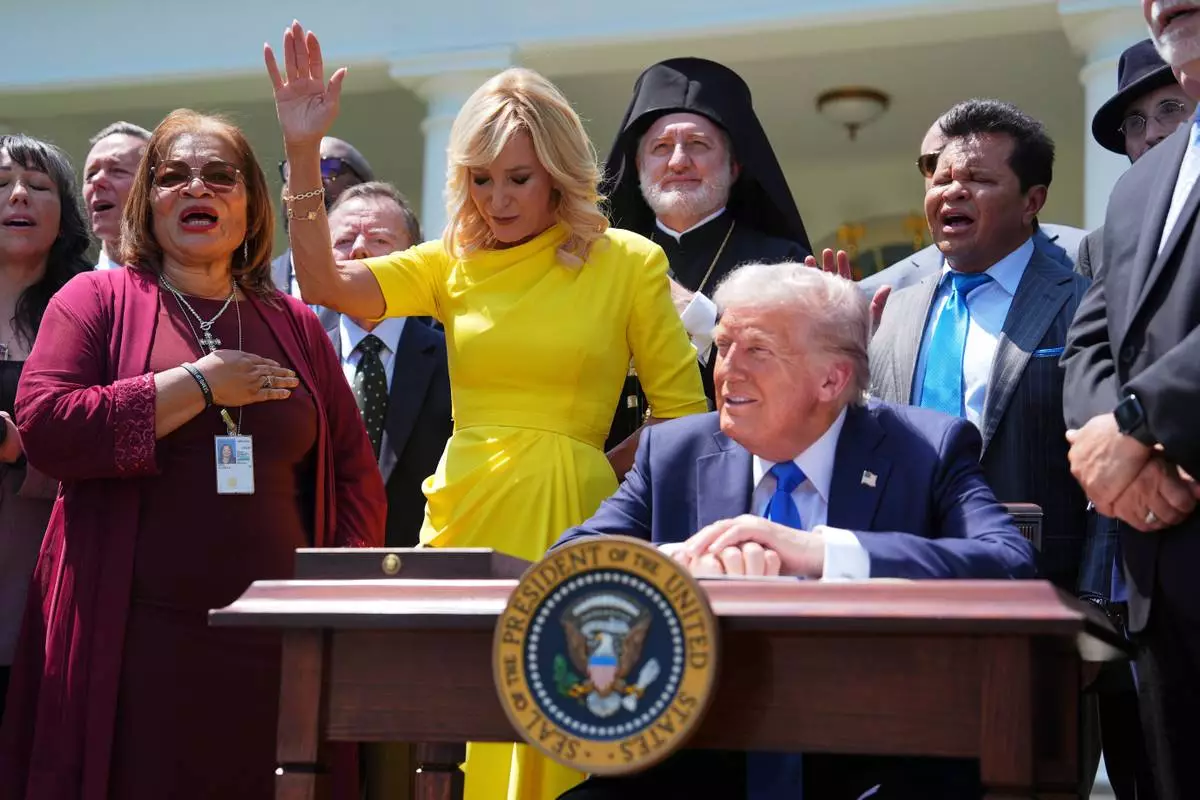
FILE - President Donald Trump sits at a desk as he and religious leaders listen to a musical performance before Trump signs an executive order during a National Day of Prayer event in the Rose Garden of the White House, May 1, 2025, in Washington. (AP Photo/Evan Vucci, File)
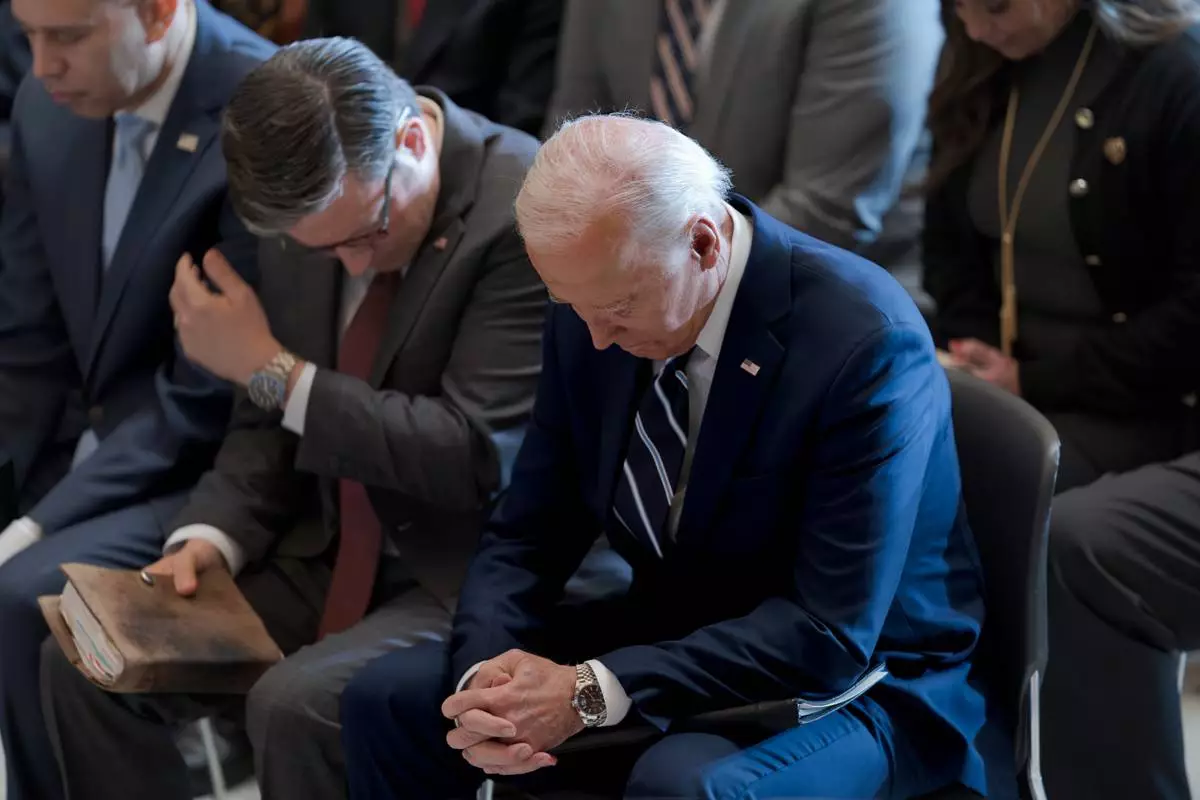
FILE- President Joe Biden, with from left, House Minority Leader Hakeem Jeffries, D-N.Y., and House Speaker Mike Johnson of La., pray and listen during the National Prayer Breakfast, Feb. 1, 2024, at the Capitol in Washington. (AP Photo/J. Scott Applewhite, File)
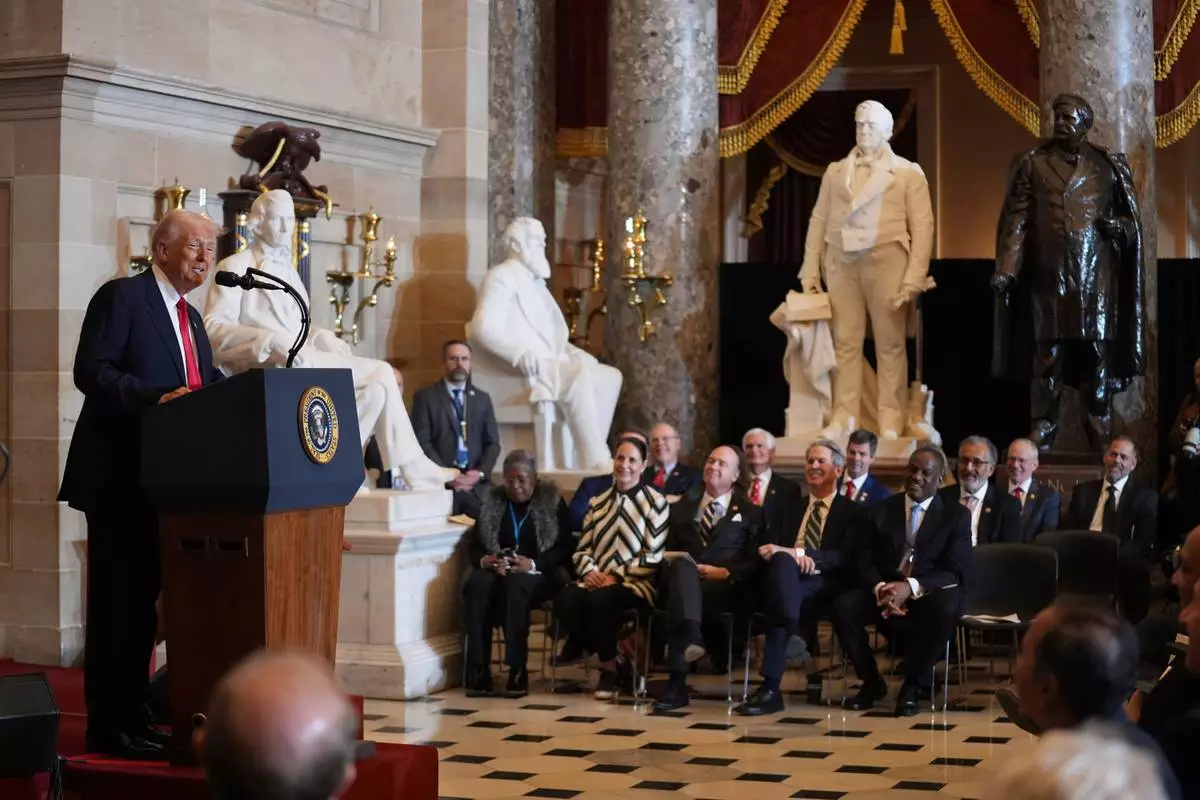
FILE - President Donald Trump speaks during the National Prayer Breakfast, at the Capitol in Washington, Feb. 6, 2025. (AP Photo/Evan Vucci, File)