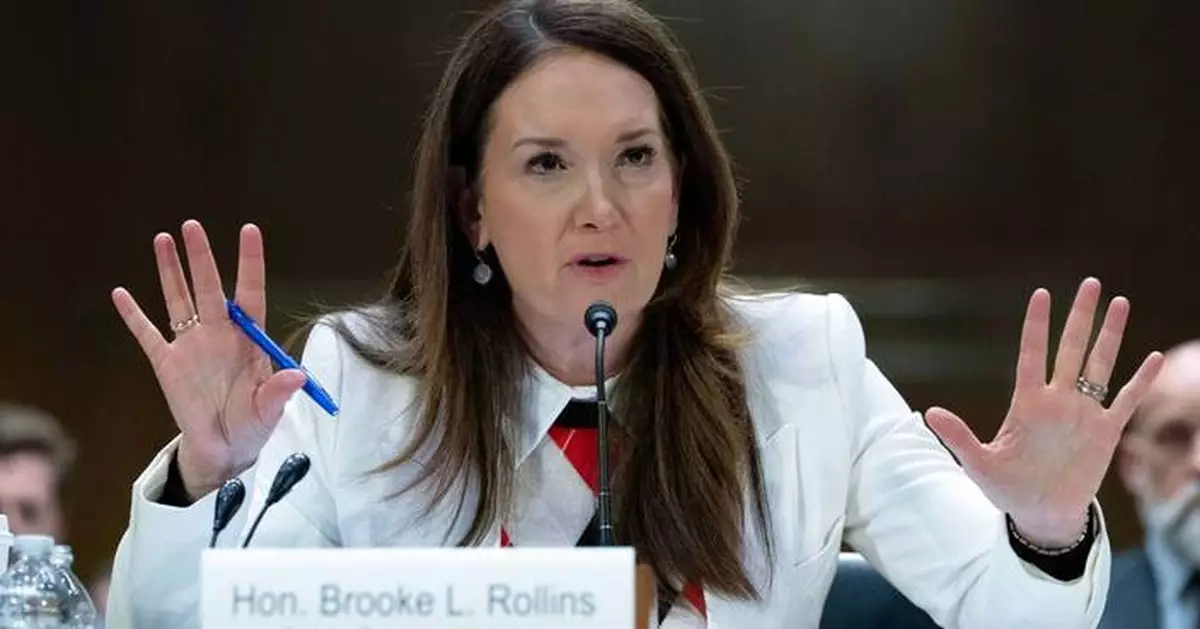
Agriculture Secretary Brooke Rollins this week attributed a multimillion-person drop in the number of participants receiving food stamps through the Supplemental Nutrition Assistance Program to the tamping down of fraud and an improved economy.
But experts discount those factors, saying the primary driver of the decrease was more likely new legislation that changed how the program runs.
Here's a closer look at the facts.
ROLLINS: “As of just a couple of days ago, we now have moved 4.3 million Americans off of the food stamp program. A lot of that is fraud. A lot of it is people taking the program that shouldn’t have been. And a lot of it is just a better economy. We’ve had wage growth that has outpaced inflation for the first time since early 2021. This is a really big day. So people don’t need food stamps.”
THE FACTS: SNAP beneficiaries decreased by nearly 4.3 million from January 2025 to January 2026, according to preliminary government data released by the Agriculture Department. However, experts say new requirements mandated by a massive tax and spending cut bill Republicans pushed through Congress last summer are the primary reasons.
The bill is projected to cut $186 billion in federal spending — 20% — from SNAP over 10 years, according to the Congressional Budget Office.
“What we've seen in terms of the data is that the trend in participation declines seems to be related to the program being harder to access,” said Roger Figueroa, an assistant professor at Cornell University who studies food insecurity from a public health perspective.
Fraud within the SNAP is small, according to experts — not nearly enough to account for such a significant drop.
In financial year 2023, the latest data that is available, 41,476 people were disqualified from SNAP for fraud. That includes people who erroneously reported information during the application process and people who exchanged benefits for cash or other noneligible items. Out of 42,176,946 total participants that's less than 1%.
“I don't see any evidence supporting a significant reduction in fraud as a driver of what we're seeing as far as declining SNAP participation,” said Caitlin Caspi, an associate professor at the University of Connecticut who studies food insecurity.
Asked for data to support Rollins' claim about fraud's relationship to the decrease of SNAP beneficiaries, the USDA directed The Associated Press to reporting from the New York Post and the Foundation for Government Accountability on broad-based categorical eligibility. SNAP applicants in most states may be eligible for SNAP using this policy if they qualify for non-cash benefits from the federal Temporary Assistance for Needy Families program or similar state-run efforts.
BBCE has beencriticized for allowing states too much flexibility in determining who is eligible for SNAP by removing asset maximums, using a higher limit for gross income or both. The Trump administration hopes to do away with the policy, but for now it is a legal option.
The U.S. economy generally performed strongly in 2025 after getting off to a bumpy start. Gross domestic product shrank for the first time in three years during the first quarter, but growth rebounded in the second half of the year. It slowed in the fourth quarter, but continued to accelerate at the start of 2026, expanding at a modest 2% pace from January through March, rebounding from a record 43-day government shutdown last year.
But while the economy is strong, food prices are rising. They were up 3.1% in 2025 and are expected to increase 2.9% in 2026. And for many of those facing ongoing financial hardship, a strong economy typically doesn't make a difference.
“We have a persistent poverty problem in this country," said Kate Bauer, an associate professor of nutritional sciences at the University of Michigan. “And we have huge economic disparities. And most people, even in good economic times, are not able to pull their families out of poverty.”
Wage growth, at 3.4%, did outpace inflation, at 3.3%, in March, though it was not the first time since 2021, as Rollins claimed. And yet in 2025 higher-income Americans benefited more than lower-income households, which struggled with weaker income gains and steep prices. Plus, hiring was sluggish and the unemployment rate ticked up.
“We're not seeing a linear kind of drop-off,” said Caspi. “We are not seeing, if you look at the unemployment rates, things that might be an indicator that a strong economy was driving this change. We don't see, for example, a pattern of decline in unemployment that would match the pattern of decline in SNAP participation.”
Experts say some of the biggest drivers in the drop of SNAP participants were changes made in the 940-page “One Big Beautiful Bill Act,” also known as H.R. 1. For example, it mandated that certain adults who were previously exempt from work requirements are now subject to them.
There are two types of work requirements for eligibility. General rules apply to most people age 16-59, but able-bodied adults without dependents must follow stricter guidelines —- made even stricter by H.R. 1 —- unless they qualify for an exemption. Participants can meet the more stringent requirements by working or participating in a work program for at least 80 hours a month. They do not need to be paid.
Previously, able-bodied adults older than 54 without dependents were exempt from the enhanced requirements. That age has been raised to 64. And the bill lowered the age of children whom a person is responsible for to qualify for an exemption from 18 to 14. Homeless people, veterans and former foster children 24 or younger are no longer exempt either.
“Families have lots of really complicated situations and you can't just say to people, in 10 days or in one month, go find 80 hours a week of work when you don't have the skills and those jobs aren't available in your community," said Bauer.
SNAP eligibility applies only to U.S. citizens and some lawful immigrants, although groups such as refugees and asylees no longer qualify because of H.R. 1.
In January 2025, when Trump was sworn in as president for his second term, there were approximately 42.83 million SNAP participants. That number dropped nearly 10% by January 2026, to about 38.55 million. The majority of the decline occurred in the second half of the year, after Trump signed H.R. 1 in July. There was a decrease of just 743,572 people from January 2025 to June 2025 and one of about 3.47 million from July 2025 to January 2026.
The Congressional Budget Office predicted that the bill would cause such a sharp drop, estimating in an August 2025 report that certain provisions would “reduce participation in SNAP by roughly 2.4 million people in an average month over the 2025-2034 period.”
“It shouldn't be surprising that we are seeing this decline and it shouldn't be a leap in logic to think that these declines are attributable to H.R. 1.,” said Caspi.
Find AP Fact Checks here: https://apnews.com/APFactCheck.
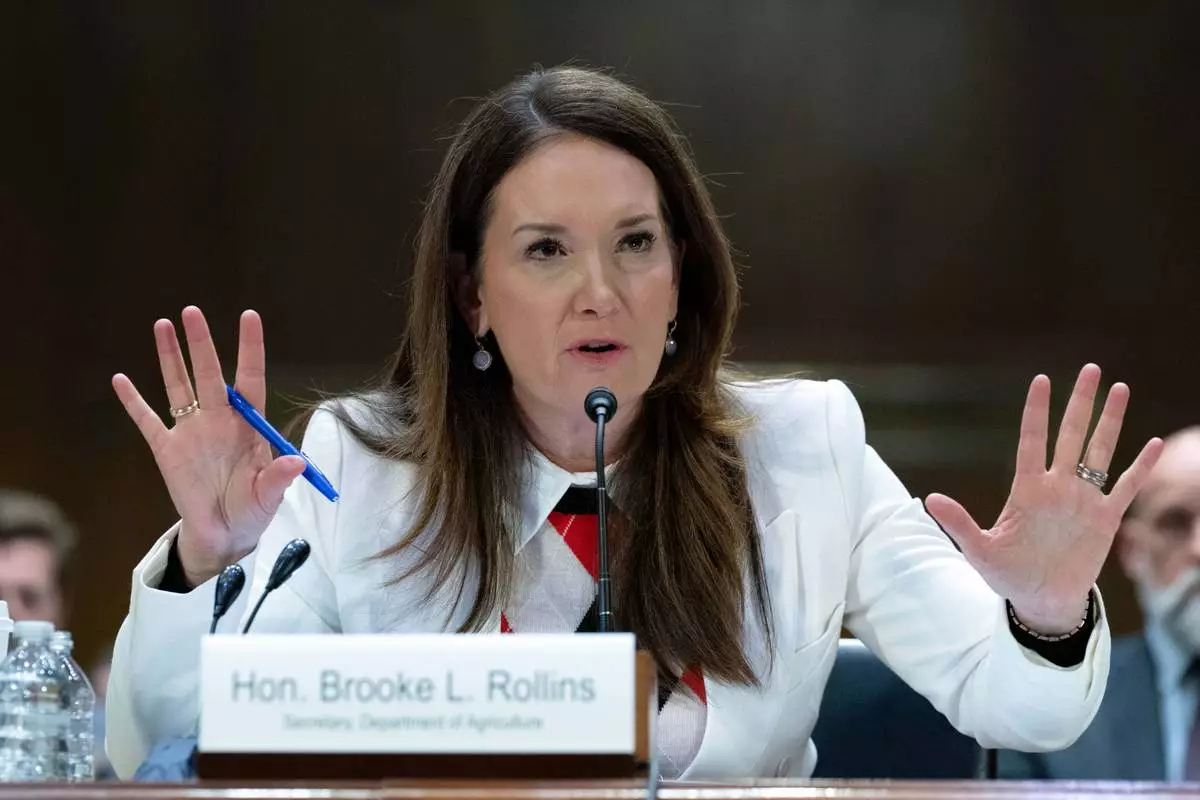
Agriculture Secretary Brooke Rollins testifies before the Senate Committee on Appropriations, Subcommittee on Agriculture, Rural Development, Food and Drug Administration, and Related Agencies hearing on the Agriculture Department budget for fiscal year 2027 on Capitol Hill, Wednesday, April 22, 2026, in Washington. (AP Photo/Jose Luis Magana)
PARIS (AP) — Activists worldwide held May Day rallies and street protests Friday, calling for peace, higher wages and better working conditions as many workers grapple with rising energy costs and shrinking purchasing power tied to the Iran war.
May 1 is a public holiday in many countries to mark International Workers’ Day, or Labor Day, when workers’ unions traditionally rally around wages, pensions, inequality and broader political issues. Demonstrations were held from Seoul, Sydney and Jakarta to many European capitals. In the U.S., activists opposing President Donald Trump’s policies also held marches and boycotts.
“Working people refuse to pay the price for Donald Trump’s war in the Middle East,” the European Trade Union Confederation, which represents 93 trade union organizations in 41 European countries, said. “Today’s rallies show working people will not stand by and see their jobs and living standards destroyed.”
What to know about May Day:
Rising living costs linked to the conflict in the Middle East was as a key theme in Friday’s rallies.
On a main avenue in Casablanca, Morocco’s largest city, taxi drivers honked their horns and bus drivers parked their vehicles to protest rising fuel costs.
“All my expenses have gone up, but my wages haven’t budged,” Akherraz Lhachimi of the Moroccan Labor Union said.
Several rallies were staged in South Africa, where the head of the Congress of South African Trade Unions, Zingiswa Losi, said workers were “suffocating” under rising costs of food, electricity, transportation and healthcare.
Turkish authorities in Istanbul detained hundreds of demonstrators for attempting to march in areas declared off-limits on security grounds, most notably central Taksim Square, the epicenter of 2013 protests. May Day rallies in Turkey are frequently marred by clashes with authorities.
A demonstration in Santiago, Chile, ended with vandalism and clashes between protesters and police, who used water cannons and tear gas to disperse the crowd.
Several thousand people gathered across Portugal as unions rallied together to protest proposed changes to labor laws that including making worker dismissals easier and reducing miscarriage bereavement leave.
“It’s the only voice we have,” public sector worker Paulo Domingues said of the protests.
May Day carries special meaning this year in France, after a heated debate about whether employees should be allowed to work on the country’s most protected public holiday — the only day when most employees have a mandatory paid day off.
Tens of thousands of people joined marches across the country, including in Paris, where brief scuffles with police broke out.
Almost all businesses, shops and malls are closed, and only essential sectors such as hospitals, transport and hotels are exempt.
A recent parliamentary proposal to expand work on the day prompted major outcry from unions and left-wing politicians.
Faced with the dispute, the government this week introduced a bill that would allow bakeries and florists to open. It is customary in France to give lily of the valley flowers on May Day as a symbol of good luck.
“May 1 is not just any day,” Small and Medium-sized Businesses Minister Serge Papin said. “It symbolizes social gains stemming from a century of building social rules that have led to the labor code we know in France.”
In the United States, where May Day is not a federal holiday, May Day Strong, a coalition of activist groups and labor unions, urged people to protest under the banner of “workers over billionaires” and called for an economic blackout through “no school, no work, no shopping.”
New York City Mayor Zohran Mamdani addressed a largely supportive crowd at a Manhattan rally organized by unions and immigrant advocates. He reiterated his promise to raise taxes on the wealthy and “protect our neighbors from the cruelty of ICE,” or Immigration and Customs Enforcement.
At a protest outside the New York Stock Exchange, multiple people were arrested, according to police, who did not have an exact count or information on charges. Video showed some protesters tried to chain themselves to a railing. One struggled with officers.
Across the U.S., many protesters voiced opposition to Trump’s policies, including his immigration crackdown.
“We’re seeing tons and tons of attacks on working people and on oppressed communities from the Trump administration, both at home and abroad,” said Kathryn Stender, an activist with the Party for Socialism and Liberation who was among thousands at a rally in a Chicago park.
The atmosphere there was festive, with Native American dancers, mariachi bands and monarch butterfly signs, which have become a symbol of the immigrant rights movement.
While labor and immigrant rights are historically intertwined, the focus of May Day rallies in the U.S. shifted to immigration in 2006. That’s when roughly 1 million people, including nearly half a million in Chicago alone, took to the streets to protest federal legislation that would have made living in the U.S. without legal permission a felony.
May Day, or International Workers’ Day, traces back more than a century to a pivotal period in U.S. labor history.
In the 1880s, unions pushed for an eight-hour workday. A Chicago rally in May 1886 turned deadly when a bomb exploded and police responded with gunfire. Several labor activists — most of them immigrants — were convicted of conspiracy and other charges; four were executed.
Unions later designated May 1 to honor workers. A monument in Chicago’s Haymarket Square commemorates them with the inscription: “Dedicated to all workers of the world.”
Associated Press journalists from around the world contributed to this report.
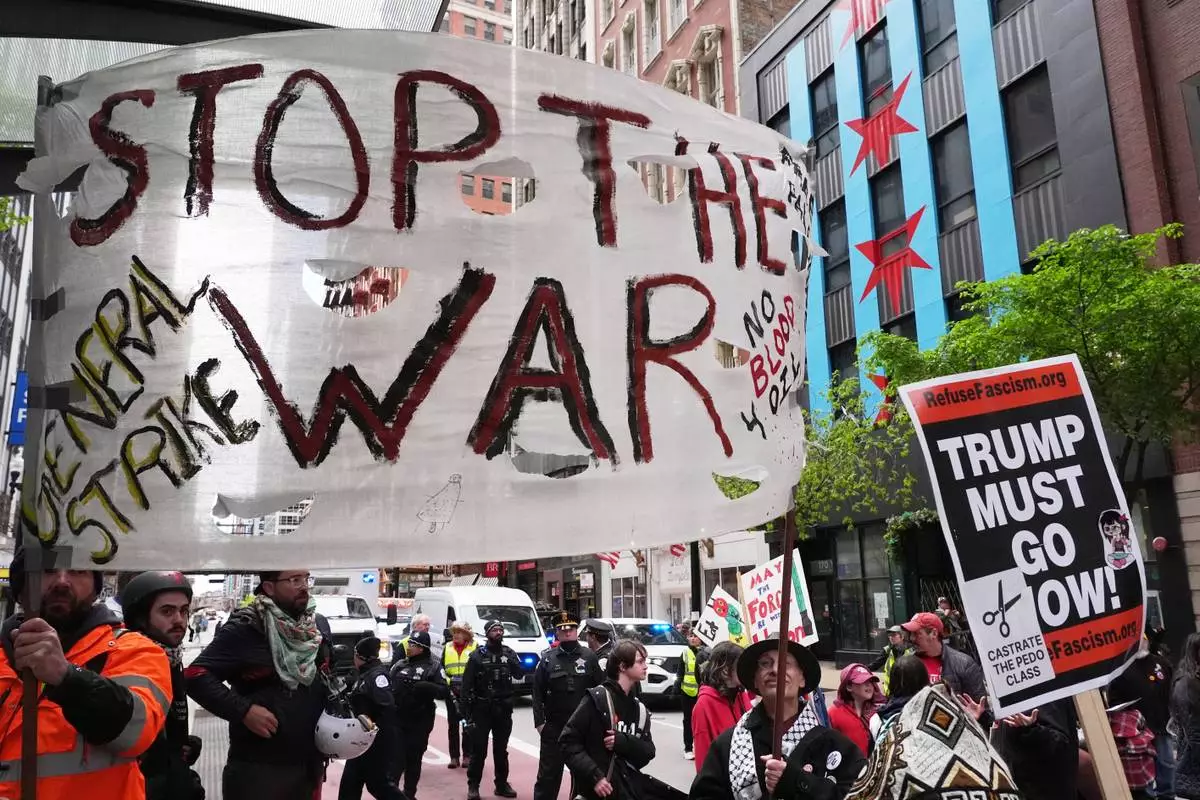
People march during a May Day rally in Chicago, Friday, May 1, 2026. (AP Photo/Nam Y. Huh)
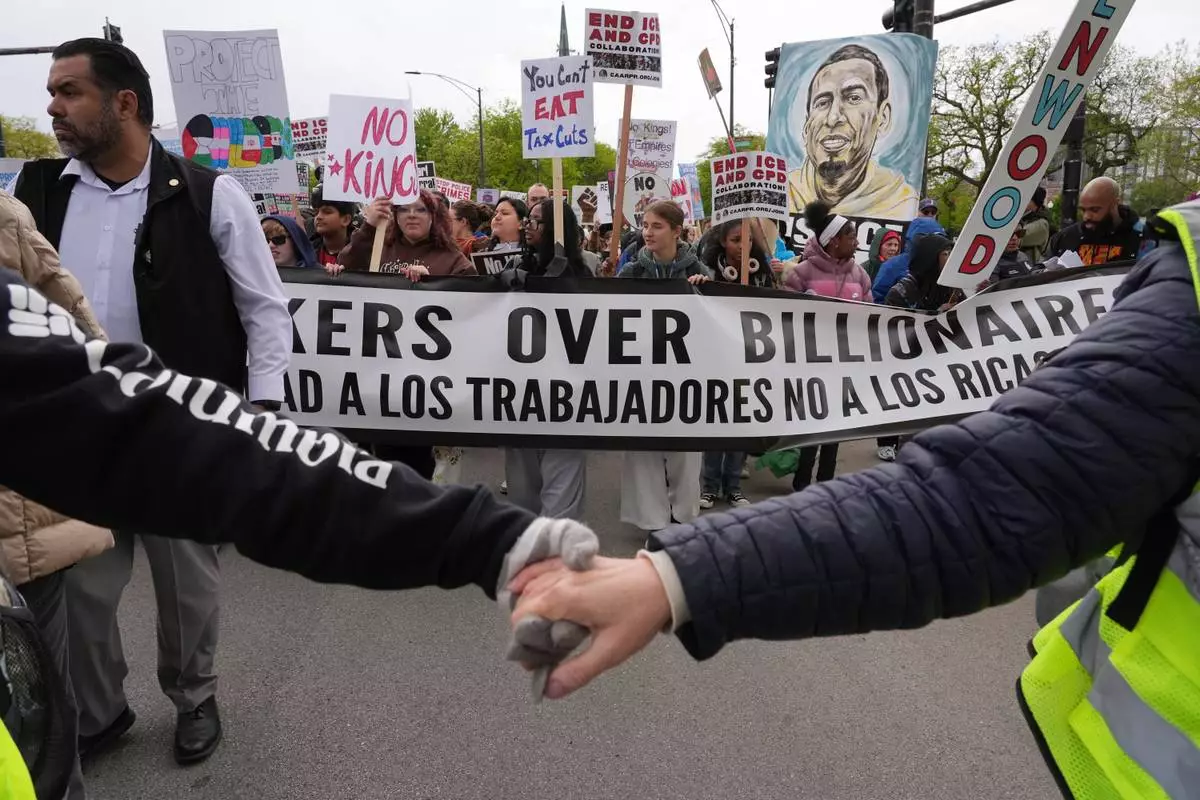
People hold hands at Union park for a May Day rally in Chicago, Friday, May 1, 2026. (AP Photo/Nam Y. Huh)

Turkish, right, and Greek Cypriots gathering s they marking May Day inside the U.N. buffer zone at Ledra Palace hotel in the divided capital of Nicosia, Friday, May 1, 2026. (AP Photo/Petros Karadjias)
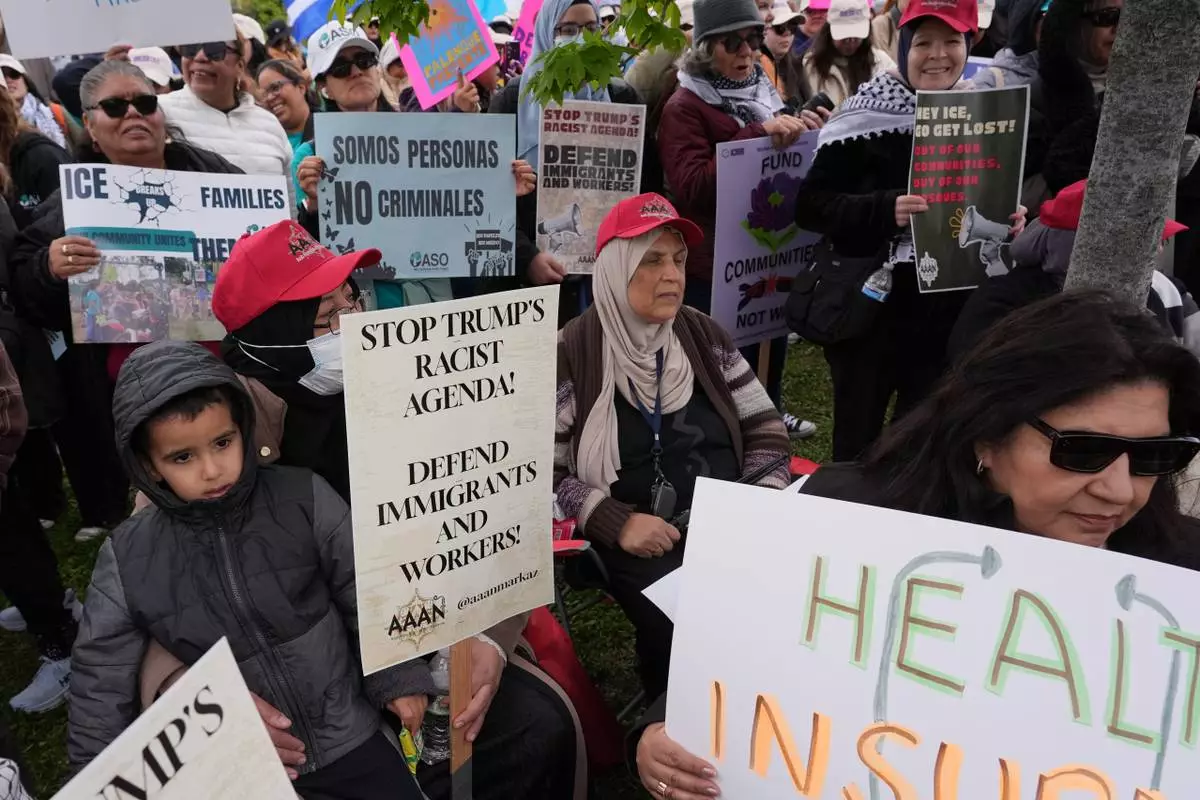
People gather before a May Day rally in Chicago, Friday, May 1, 2026. (AP Photo/Nam Y. Huh)

An effigy of U.S. President Donald Trump burns during an International Workers' Day march marking May Day in Panama City, Friday, May 1, 2026. (AP Photo/Matias Delacroix)
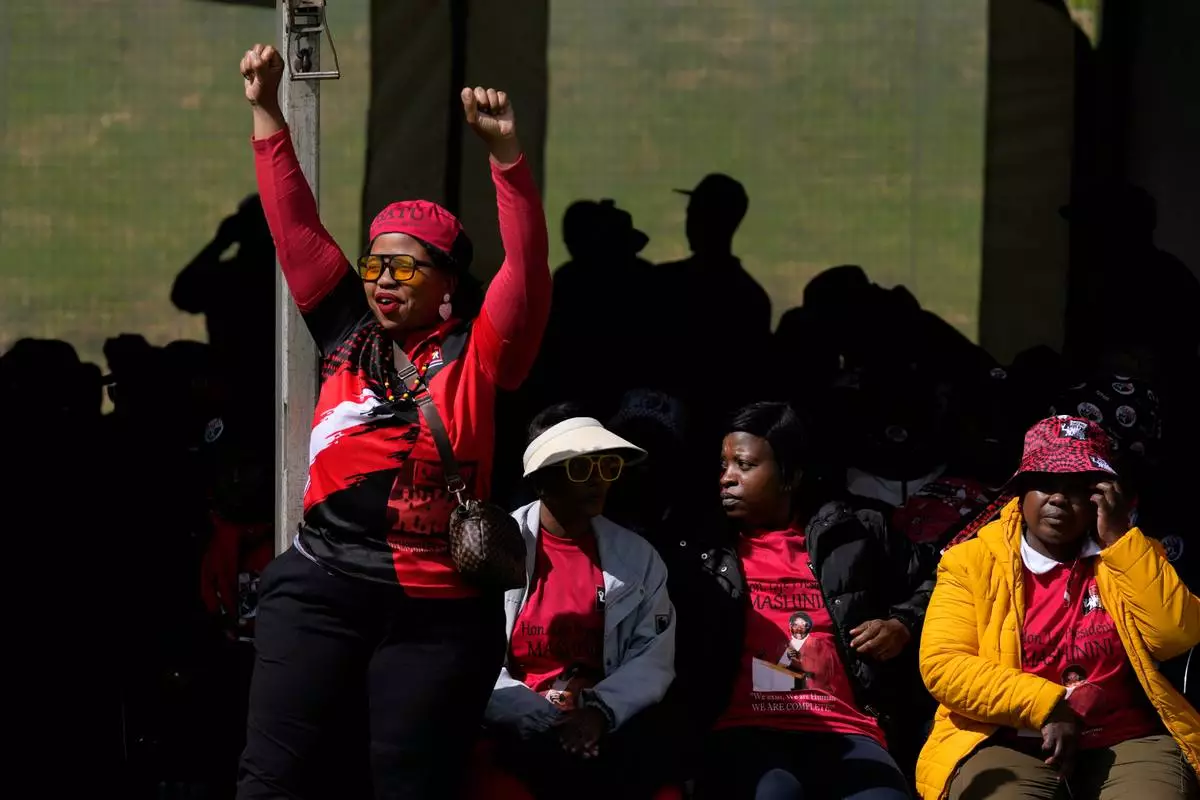
Members of trade unions take part in a May Day rally in Tsakane, east of Johannesburg, South Africa, Friday, May 1, 2026. (AP Photo/Themba Hadebe)

Protesters march during the May Day demonstration in Rennes, western France, Friday, May 1, 2026. (AP Photo)
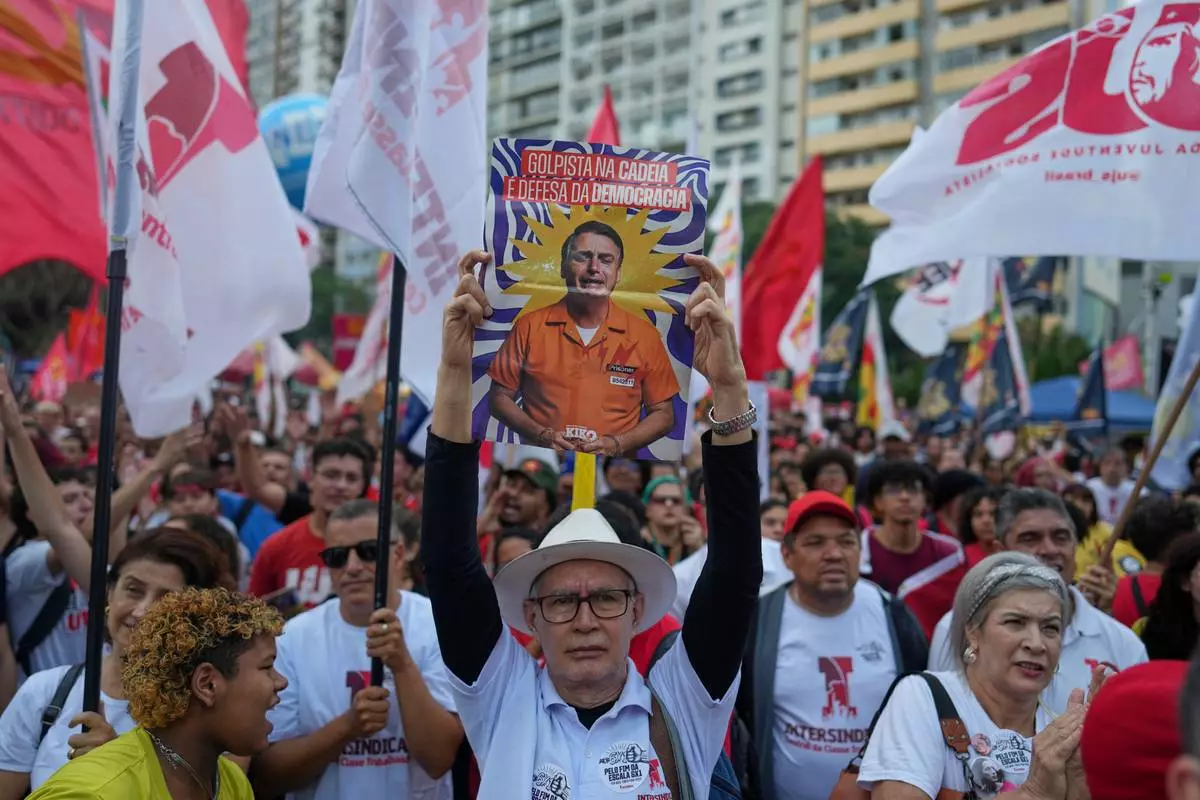
A man holds a picture or former Brazilian President Jair Bolsonaro wearing a prison uniform during a May Day rally demanding greater labor rights in Sao Paulo, Brazil, Friday, May 1, 2026. (AP Photo/Andre Penner)
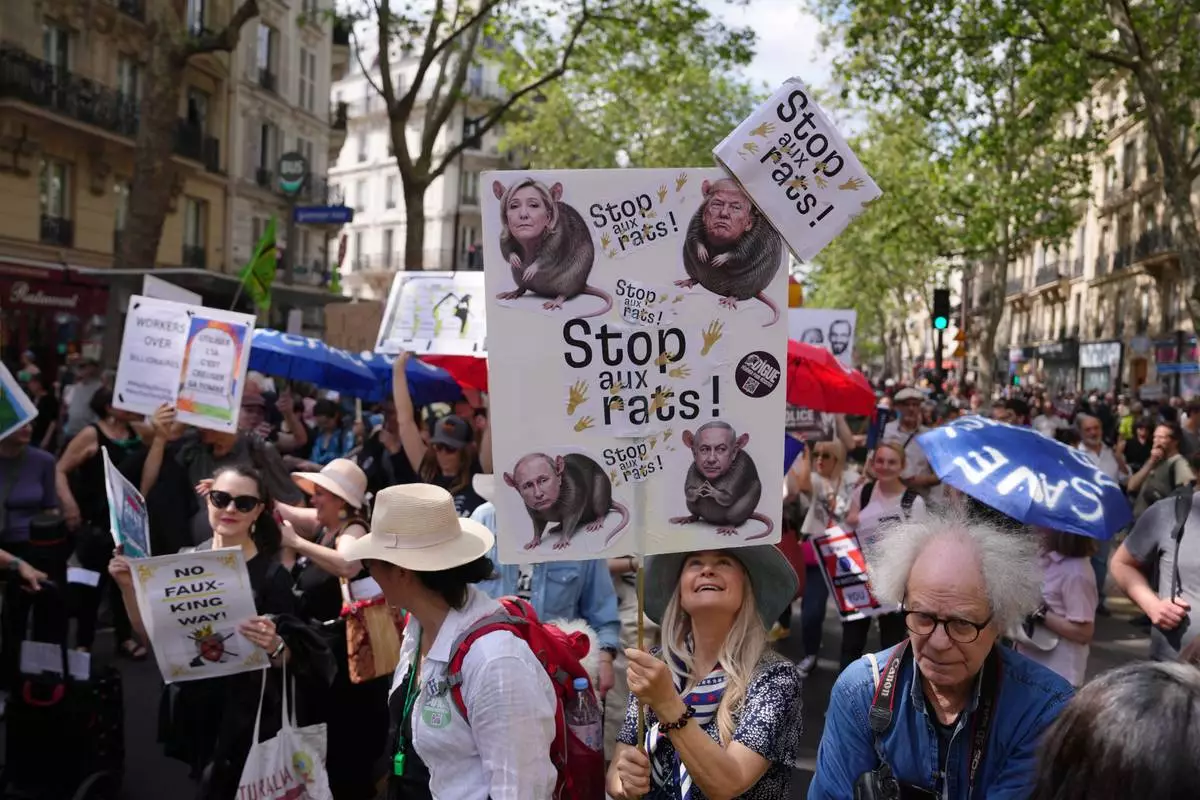
Protesters march during the May Day demonstration in Paris, Friday, May 1, 2026. (AP Photo/Aurelien Morissard)
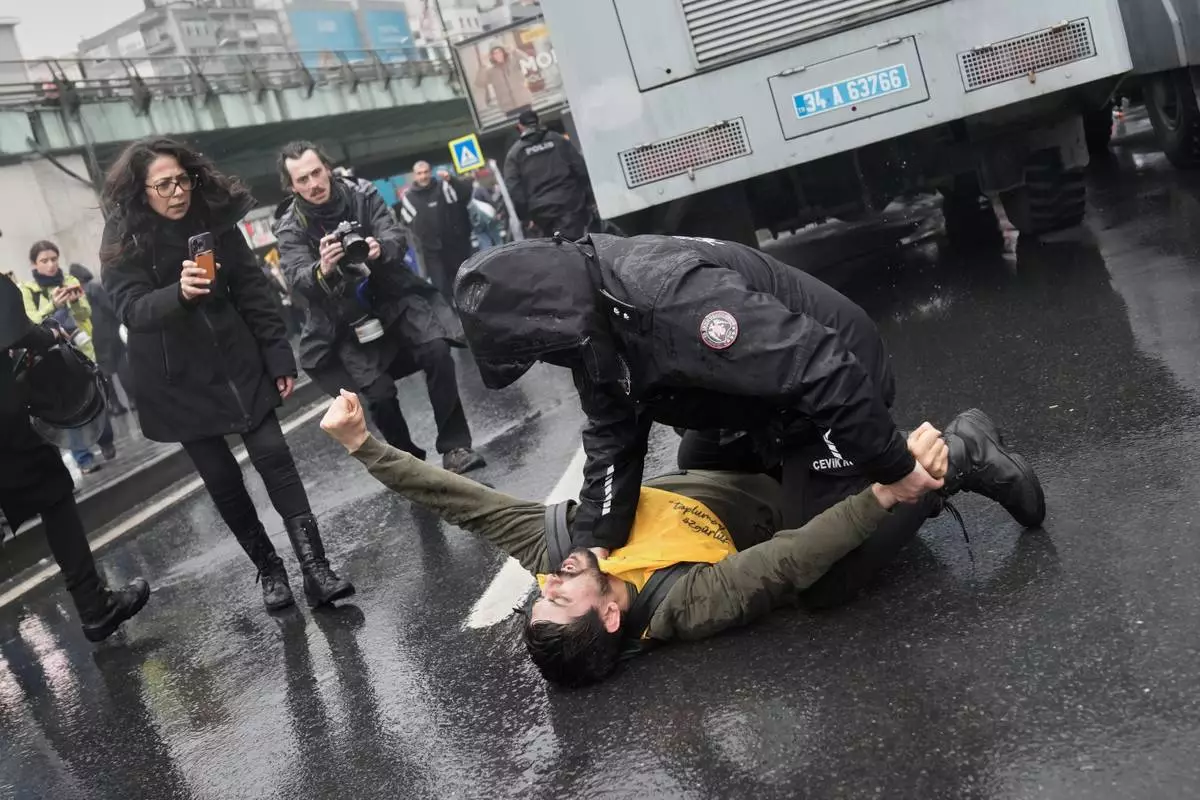
An union member is detained by a Turkish police officer as people try to march towards Taksim square in Istanbul, Turkey, Friday, May 1, 2026, during Labor Day celebrations. (AP Photo/Khalil Hamra)
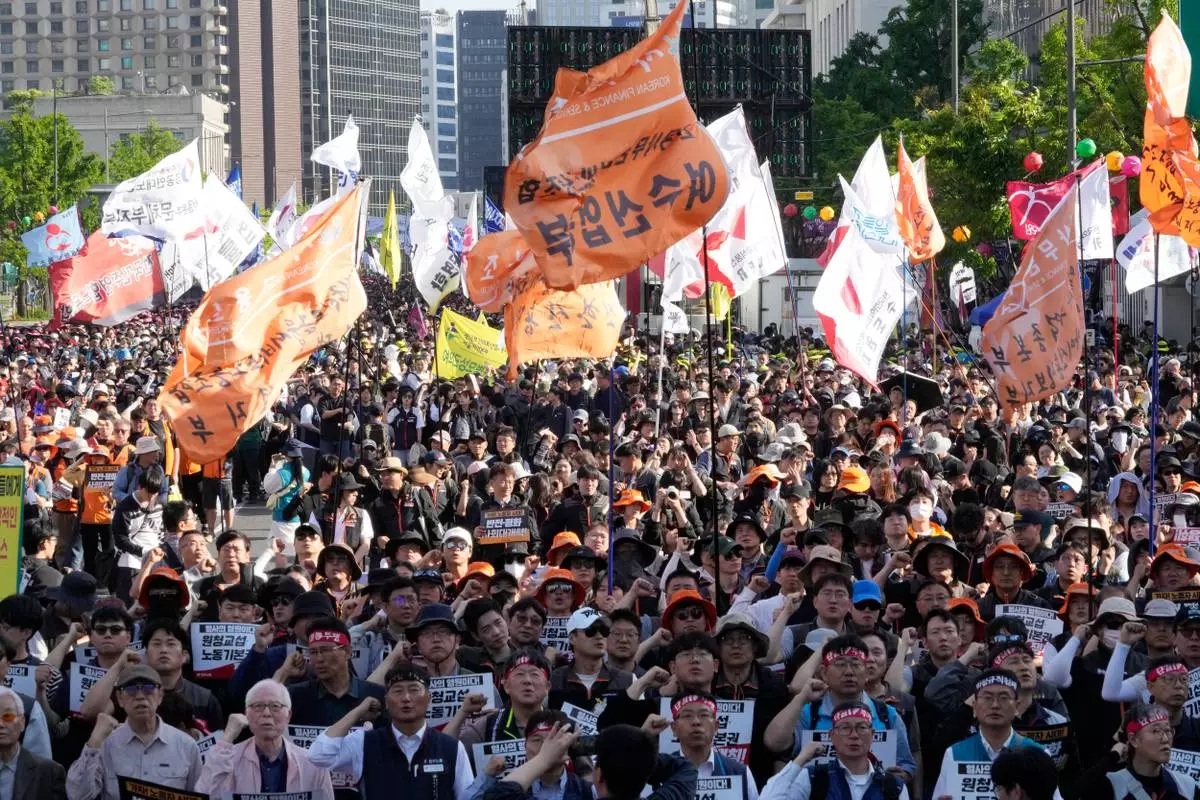
Members of the Korean Confederation of Trade Unions stage a rally on May Day in Seoul, South Korea, Friday, May 1, 2026. (AP Photo/Ahn Young-joon)
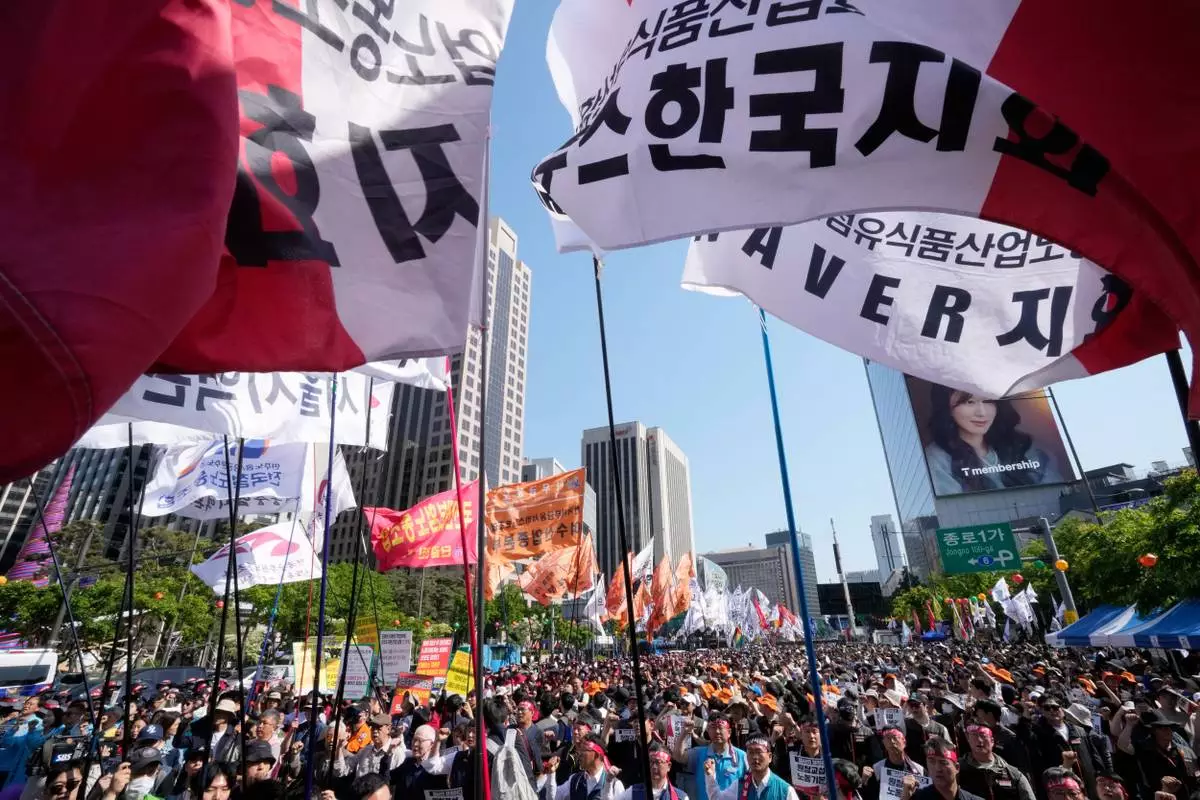
Members of the Korean Confederation of Trade Unions stage a rally on May Day in Seoul, South Korea, Friday, May 1, 2026. (AP Photo/Ahn Young-joon)
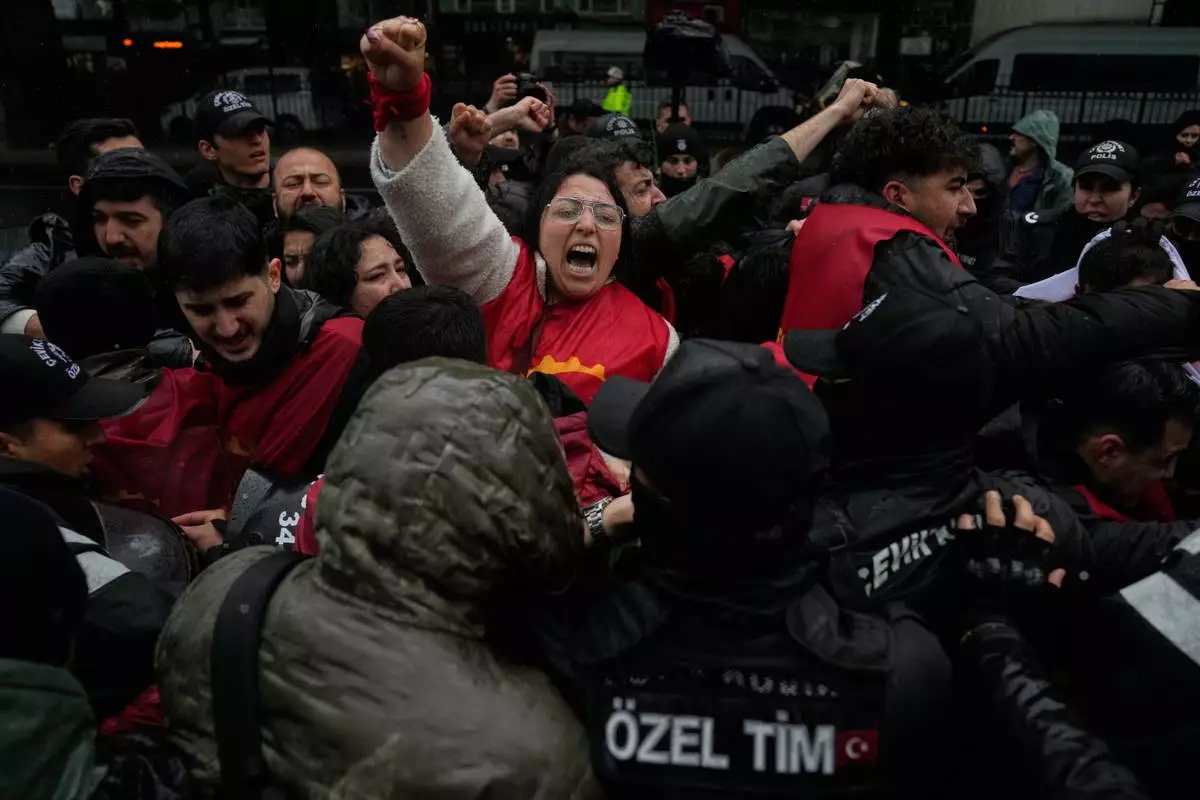
Union members scuffle with Turkish police officers as they try to march towards Taksim square in Istanbul, Turkey, Friday, May 1, 2026, during Labor Day celebrations. (AP Photo/Khalil Hamra)
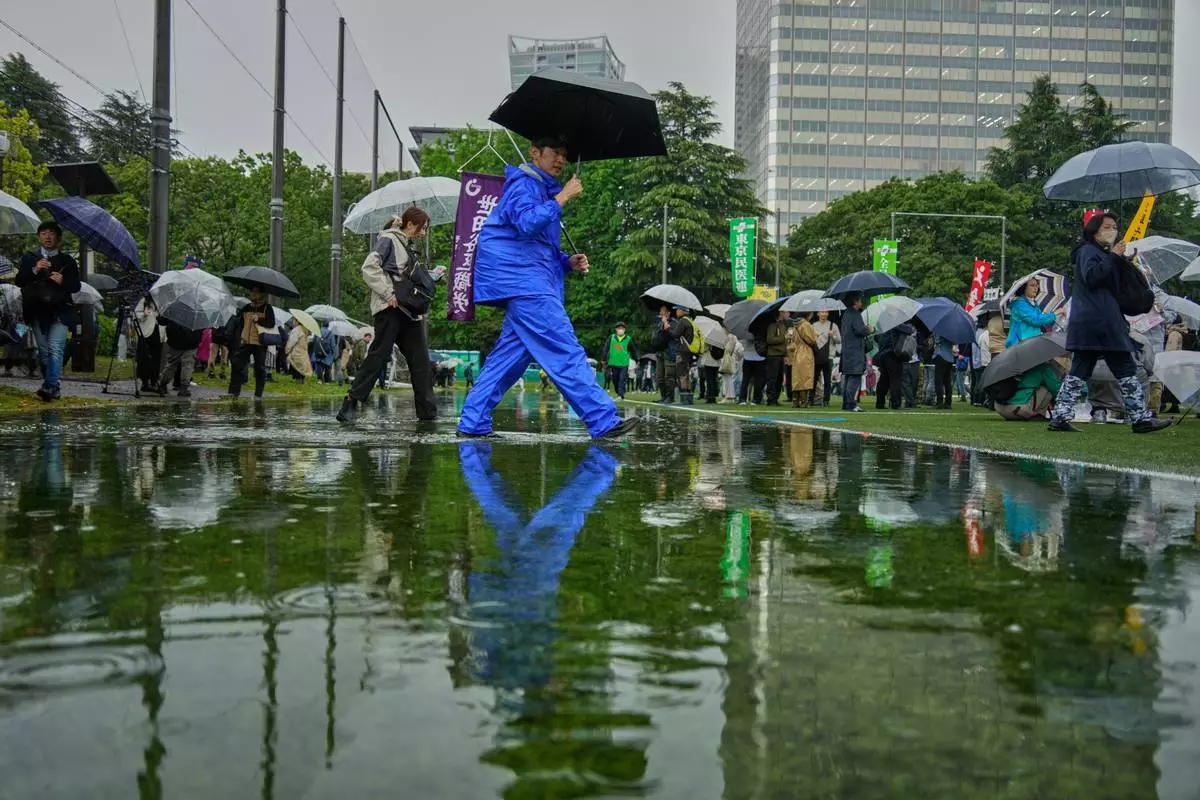
Union members carefully step through rain-formed puddles to participate in a May Day rally in the rain Friday, May 1, 2026, in Tokyo. (AP Photo/Eugene Hoshiko)
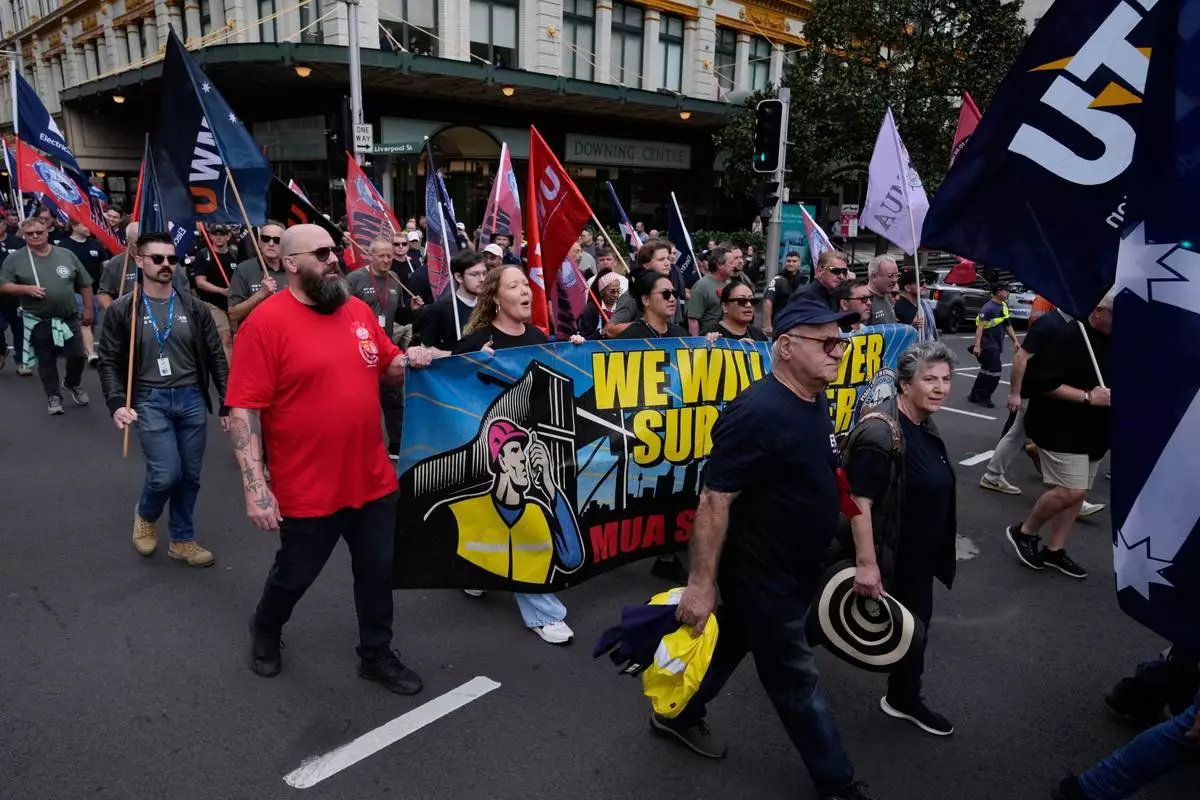
People march to mark International Workers' Day, also known as May Day, in Sydney, Friday, May 1, 2026. (AP Photo/Rick Rycroft)

People march to mark International Workers' Day, also known as May Day, in Sydney, Friday, May 1, 2026. (AP Photo/Rick Rycroft)
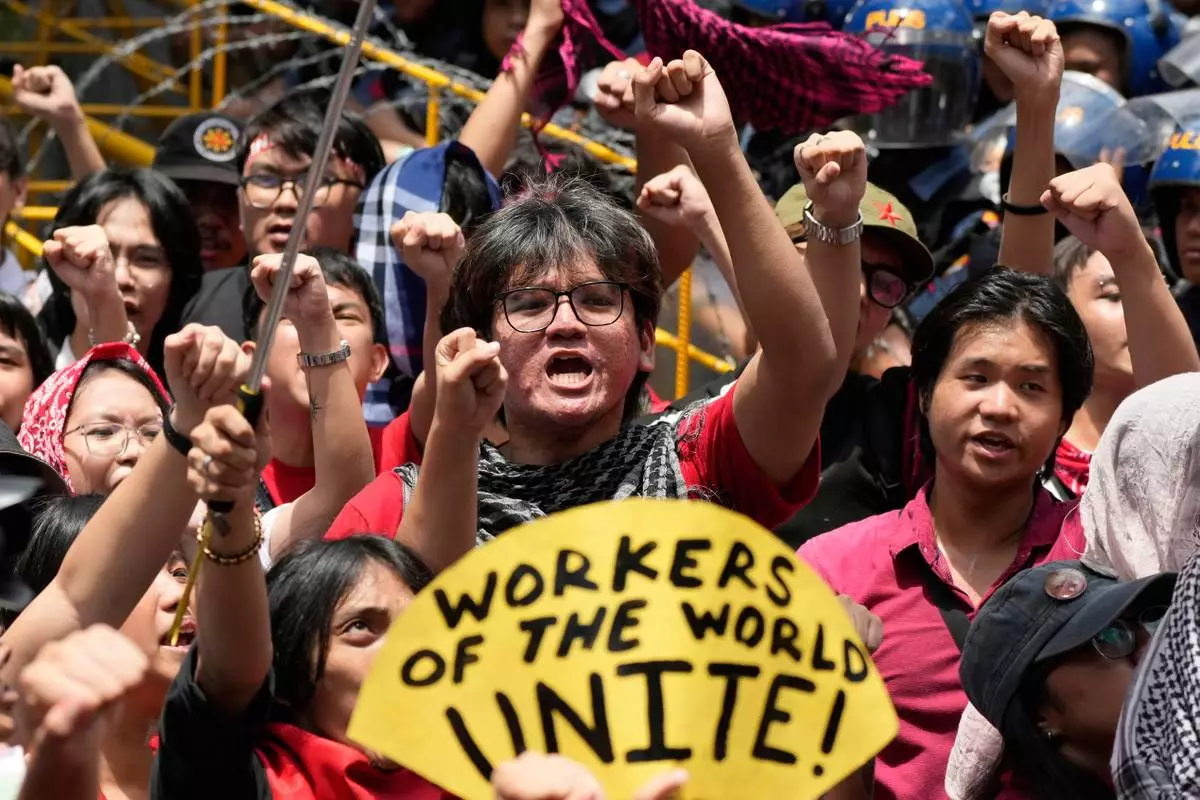
FILE - Activist and workers raise their clenched fists during a May Day rally in Manila, Philippines, May 1, 2025. (AP Photo/Aaron Favila, File)
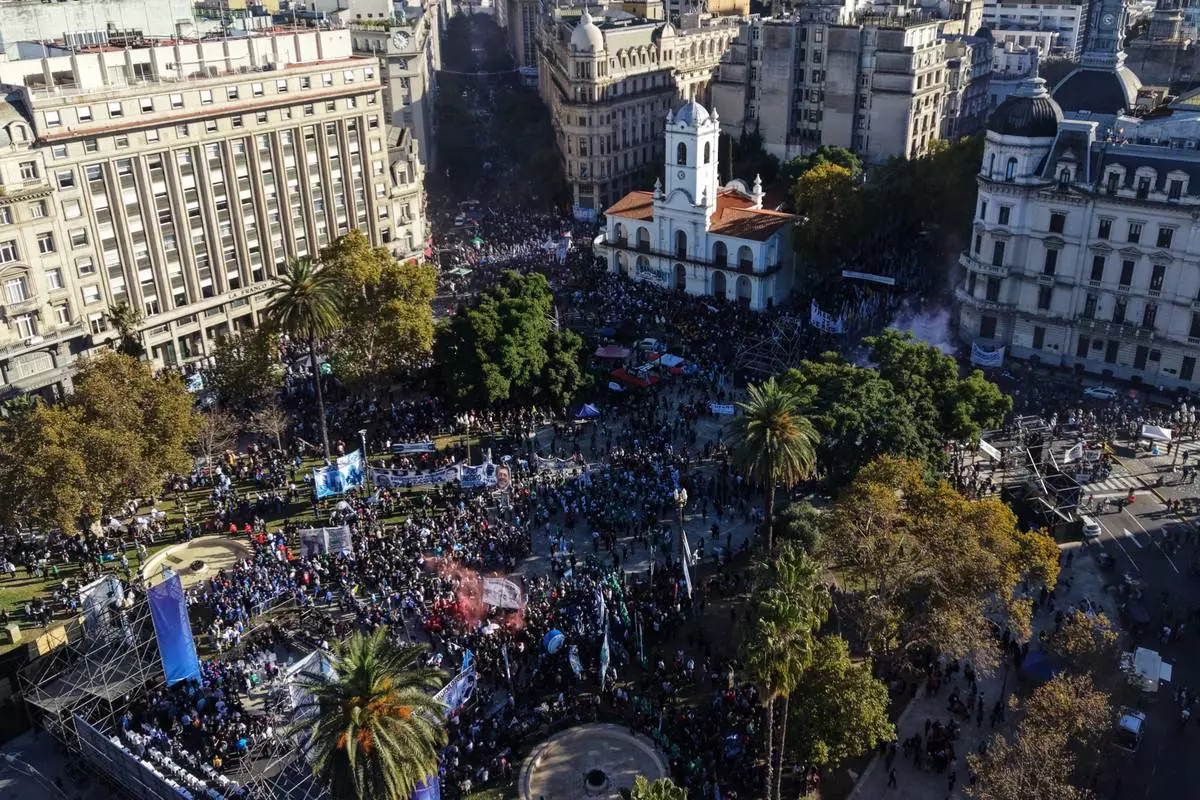
Laborers protest during a May Day demonstration in Buenos Aires, Argentina, Thursday, April 30, 2026. (AP Photo/Rodrigo Abd)
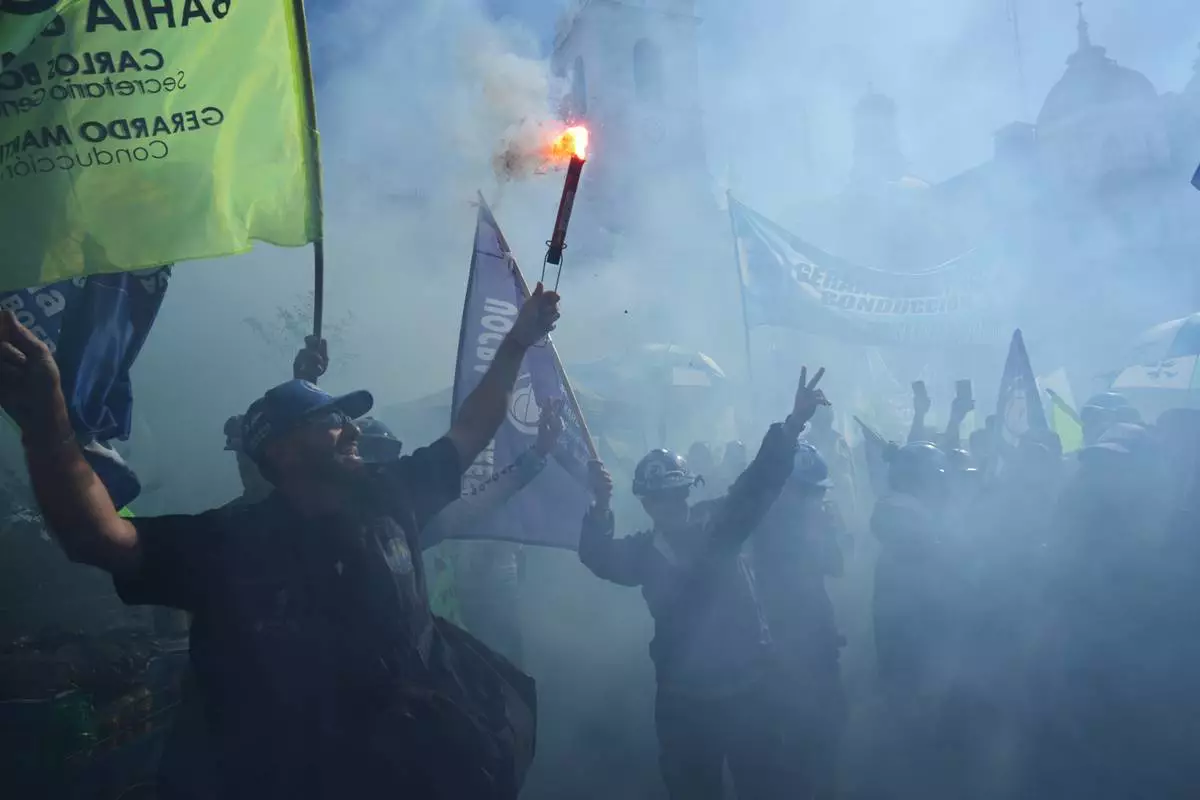
Laborers hold flares during a May Day demonstration in Buenos Aires, Argentina, Thursday, April 30, 2026. (AP Photo/Rodrigo Abd)
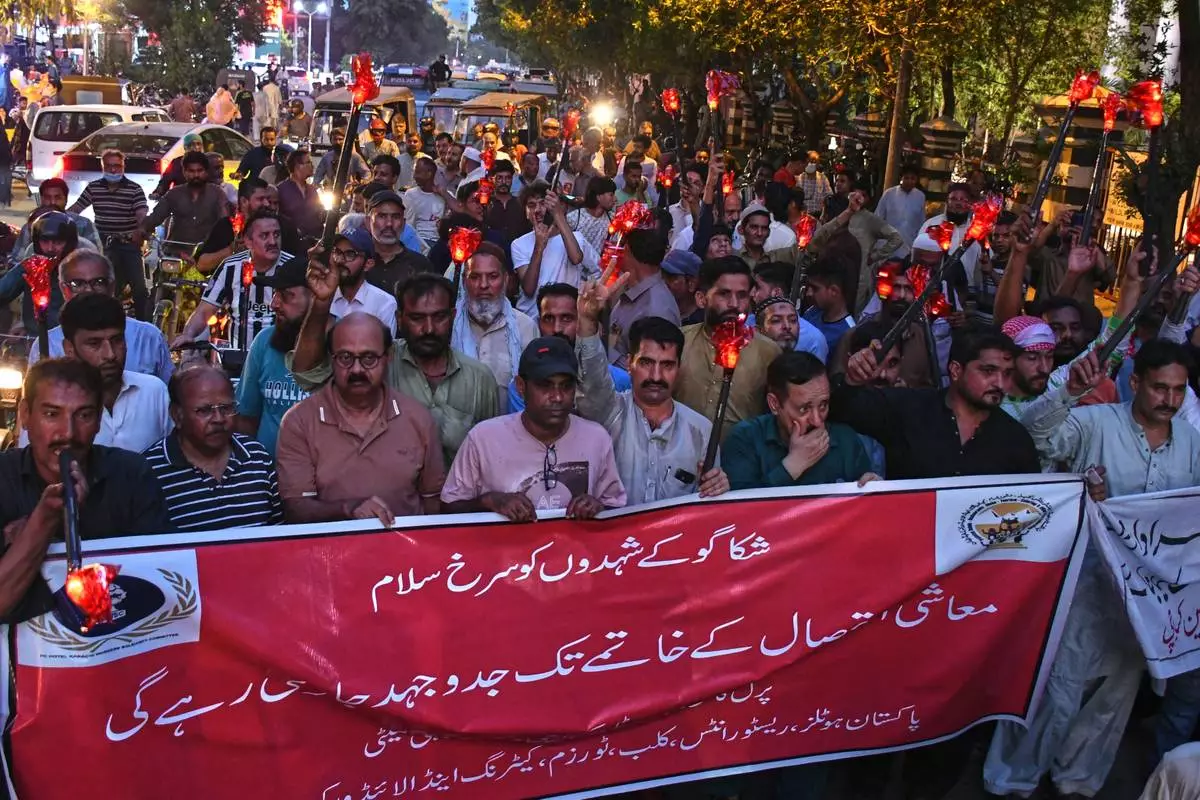
Members of trade unions take part in a rally a day ahead of the International Labor Day, in Karachi, Pakistan, Thursday, April 30, 2026. The banner in center reading as 'red salute to the martyrs of Chicago and the struggle will continue until economic exploitation is ended' (AP Photo/Ali Raza)
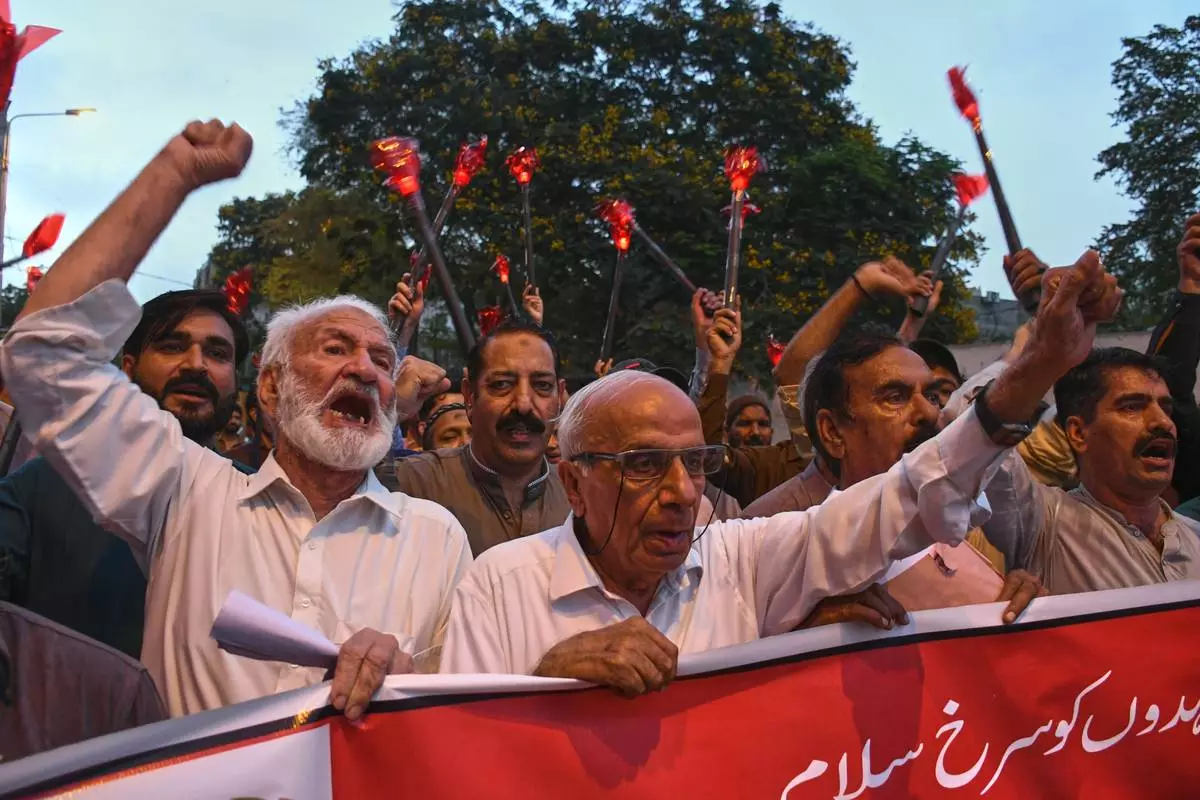
Members of trade unions take part in a rally a day ahead of the International Labor Day, in Karachi, Pakistan, Thursday, April 30, 2026. (AP Photo/Ali Raza)