Skip to Content Facebook Feature Image

US warns shipping firms they could face sanctions over paying Iranian tolls in the Strait of Hormuz

News

US warns shipping firms they could face sanctions over paying Iranian tolls in the Strait of Hormuz
News

News

US warns shipping firms they could face sanctions over paying Iranian tolls in the Strait of Hormuz

2026-05-02 16:04 Last Updated At:16:10

DUBAI, United Arab Emirates (AP) — The United States is warning shipping companies that they could face sanctions for making payments to Iran to safely pass through the Strait of Hormuz.

The alert posted Friday by the U.S. Office of Foreign Assets Control adds another layer of pressure in the standoff between the U.S. and Iran over control of the Strait of Hormuz.

More Images
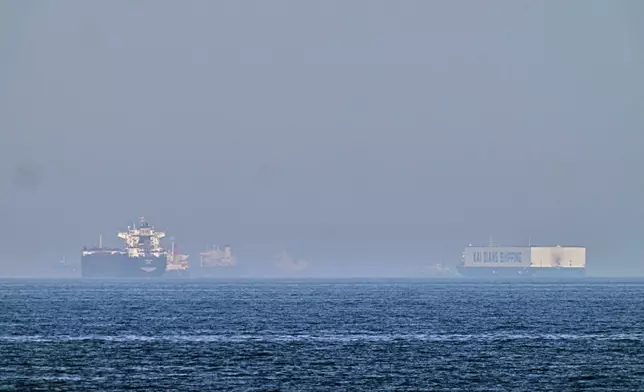
A tanker, left, and a car carrier are anchored at sea in the Gulf of Oman near the Strait of Hormuz, as seen from the coast near Khor Fakkan, United Arab Emirates, Friday, May 1, 2026.(AP Photo/Fatima Shbair)
A tanker, left, and a car carrier are anchored at sea in the Gulf of Oman near the Strait of Hormuz, as seen from the coast near Khor Fakkan, United Arab Emirates, Friday, May 1, 2026.(AP Photo/Fatima Shbair)

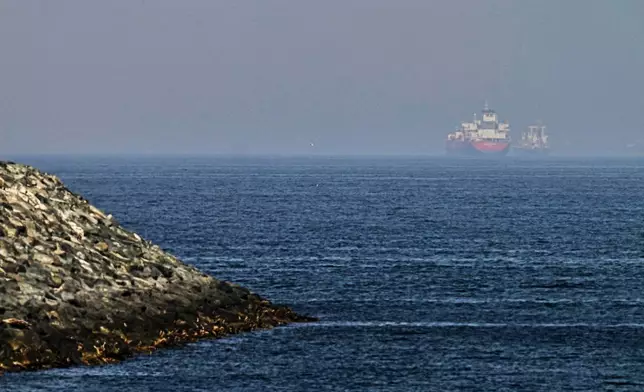
Cargo ships are seen at sea near the Strait of Hormuz, as viewed from a rocky shoreline near Khor Fakkan, United Arab Emirates, Friday, May 1, 2026. (AP Photo/Fatima Shbair)
Cargo ships are seen at sea near the Strait of Hormuz, as viewed from a rocky shoreline near Khor Fakkan, United Arab Emirates, Friday, May 1, 2026. (AP Photo/Fatima Shbair)

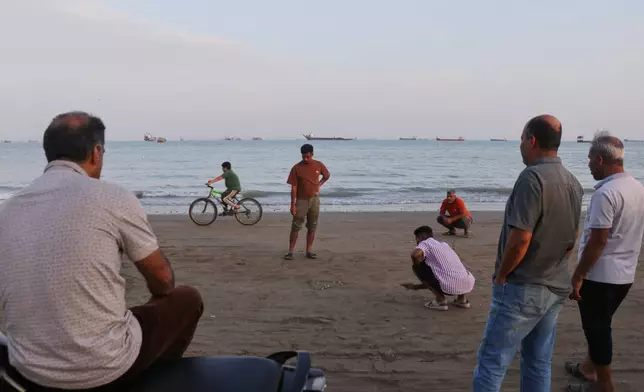
Men gather along the shore, some crouching and watching a game, as a mix of bulk carriers, cargo ships, and service vessels line the horizon in the Strait of Hormuz off Bandar Abbas, Iran, Monday, April 27, 2026.(Razieh Poudat/ISNA via AP)
Men gather along the shore, some crouching and watching a game, as a mix of bulk carriers, cargo ships, and service vessels line the horizon in the Strait of Hormuz off Bandar Abbas, Iran, Monday, April 27, 2026.(Razieh Poudat/ISNA via AP)
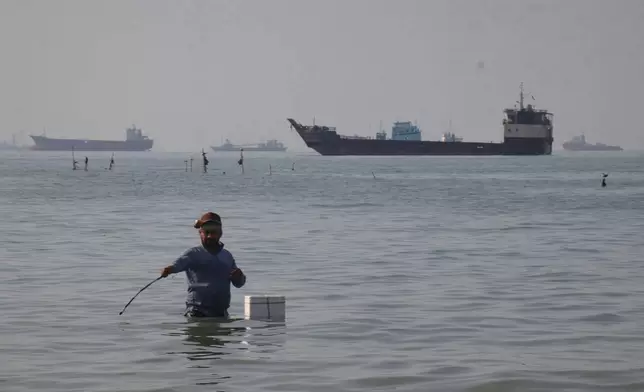
A man stands in the water, appearing to fish, as bulk carriers, cargo ships, and service vessels line the horizon in the Strait of Hormuz off Bandar Abbas, Iran, Monday, April 27, 2026.(Razieh Poudat/ISNA via AP)

A man stands in the water, appearing to fish, as bulk carriers, cargo ships, and service vessels line the horizon in the Strait of Hormuz off Bandar Abbas, Iran, Monday, April 27, 2026.(Razieh Poudat/ISNA via AP)

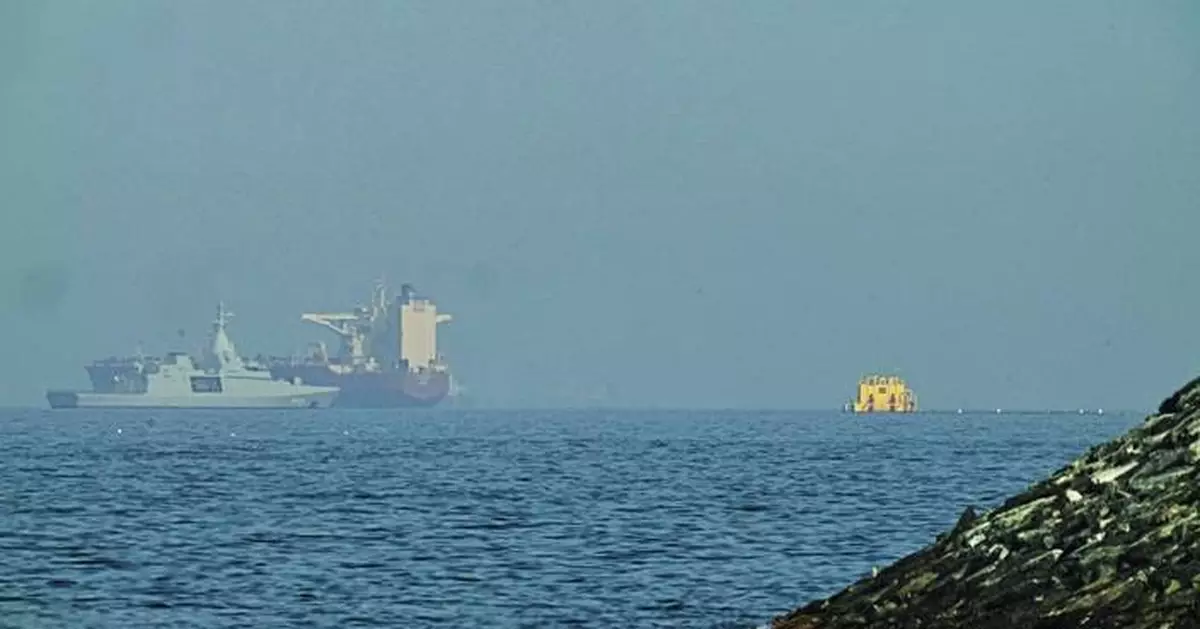
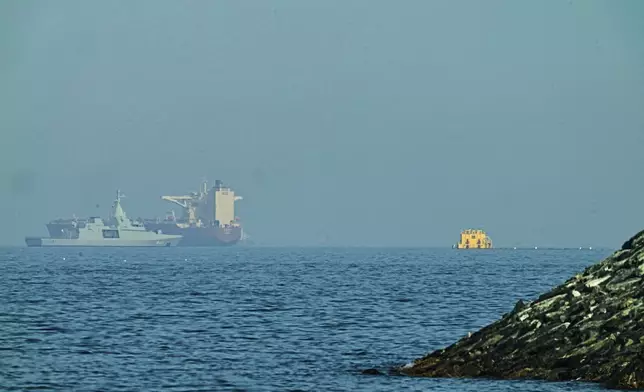
An Emirati patrol boat, left, is near a tanker anchored in the Gulf of Oman near the Strait of Hormuz, as seen from a coastal road near Khor Fakkan, United Arab Emirates, Friday, May 1, 2026. (AP Photo/Fatima Shbair)

An Emirati patrol boat, left, is near a tanker anchored in the Gulf of Oman near the Strait of Hormuz, as seen from a coastal road near Khor Fakkan, United Arab Emirates, Friday, May 1, 2026. (AP Photo/Fatima Shbair)

About a fifth of the world's trade in oil and natural gas typically passes through the strait at the mouth of the Persian Gulf in peacetime.

Iran effectively closed the strait to normal traffic by attacking and threatening to attack ships after the U.S. and Israel launched a war on Feb. 28. It later began offering some ships safe passage by detouring them through alternate routes closer to its shoreline, charging fees at times for the service.

That “tollbooth” effort is the focus of the U.S. sanctions warning.

The payment demands could include transfers not only in cash but also “digital assets, offsets, informal swaps, or other in-kind payments,” including charitable donations and payments at Iranian embassies, OFAC said.

“OFAC is issuing this alert to warn U.S. and non-U.S. persons about the sanctions risks of making these payments to, or soliciting guarantees from, the Iranian regime for safe passage. These risks exist regardless of payment method,” it said.

The U.S. responded to Iran's closure of the strait with a naval blockade of its own on April 13, preventing any Iranian tankers from leaving and depriving Iran of oil revenue it needs to shore up its ailing economy.

The U.S. Central Command said 45 commercial ships have been told to turn around since the blockade began.

The warning came as U.S. President Donald Trump swiftly rejected Iran’s latest proposal to end the war between the countries.

“They want to make a deal, I’m not satisfied with it, so we’ll see what happens,” Trump said Friday at the White House. He didn't elaborate on what he saw as its shortcomings but expressed frustration with the Iranian leadership.

“It’s a very disjointed leadership,” Trump said. “They all want to make a deal, but they’re all messed up.”

Iran’s state-run IRNA news agency reported Iran handed over its plan to mediators in Pakistan on Thursday night.

The shaky three-week ceasefire between the U.S. and Iran appears to be holding, though both countries have traded accusations of violations. The standoff is increasingly putting pressure on the global economy, driving up prices and leading to shortages of fuel and other products tied to the oil industry.

Negotiations continued by phone after Trump called off his envoys’ trip to Pakistan last week, the president said. Trump this week floated a new plan to reopen the critical passageway used by America’s Gulf allies to export their oil and gas.

Iranian Foreign Minister Abbas Araghchi has briefed many of his regional counterparts on the country's initiatives to end the war, according to his social media. He also held talks Friday with European Union foreign policy chief Kaja Kallas, who is in contact with the EU’s Gulf partners.

Iran on Saturday said it hanged two men convicted of spying for Israel.

The Iranian judiciary's news outlet, Mizanonline, identified the men as Yaghoub Karimpour and Nasser Bekrzadeh. It said they were hanged after the country’s Supreme Court upheld earlier death sentences.

The news outlet said Karimpour was accused of sending “sensitive information” to an officer in Israel's Mossad intelligence agency, while Bekrzadeh was alleged to have sent details about government and religious leaders as well as information about Natanz. The central Iranian city is home to a nuclear enrichment facility bombed by Israel and the U.S. last year.

Iran has hanged more than a dozen people over alleged espionage and terrorist activities in recent weeks.

Fu Cong, the Chinese ambassador to the United Nations, said Friday that maintaining the ceasefire is “the most urgent issue,” as well as bringing together the sides to resume good faith negotiations “to make sure that the ground is laid for reopening of Hormuz.”

Foreign Minister Wang Yi “has been on the phone almost constantly” with representatives from all sides, Fu said, adding that China supports Pakistan’s efforts to mediate between the parties.

Fu stressed the root cause of the tremendous suffering in Iran and neighboring countries and the growing turmoil in the global economy, especially in developing countries, “is the illegitimate war by the U.S. and Israel.”

Associated Press writers Collin Binkley in Washington, Nasser Karimi in Tehran and Edith Lederer at the U.N. contributed to this report
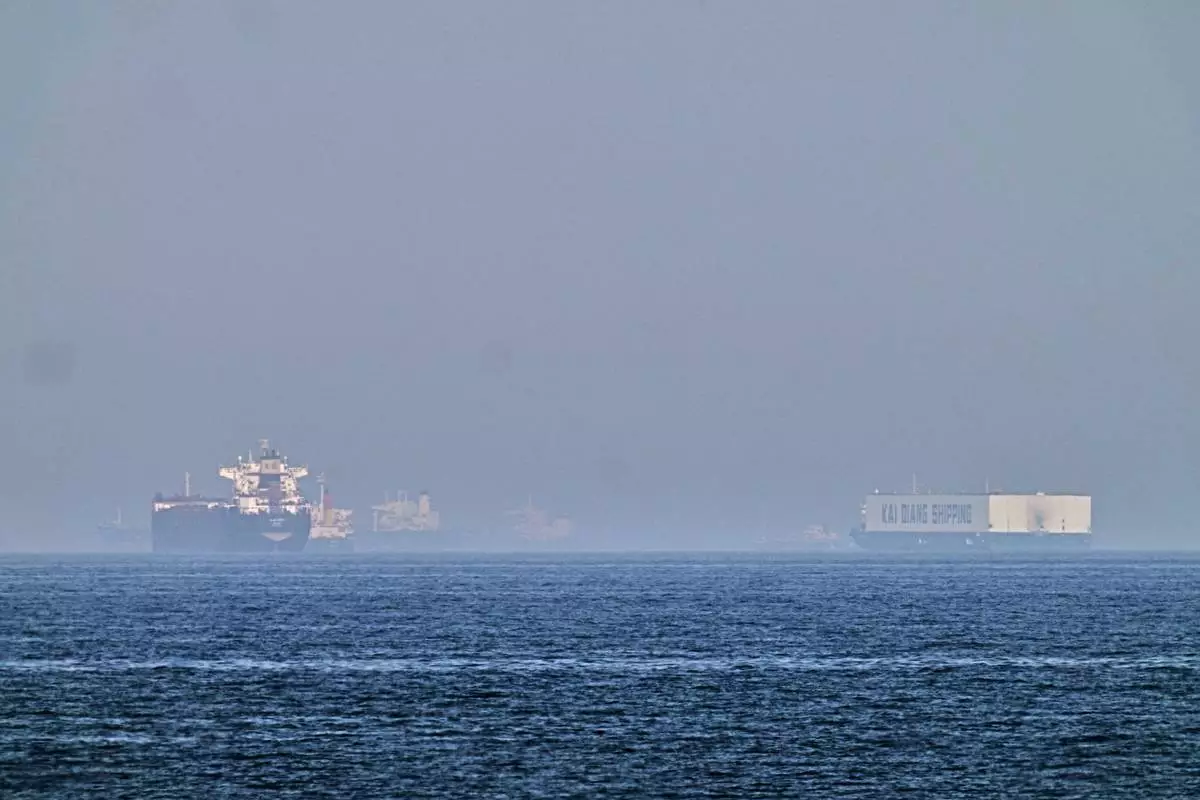
A tanker, left, and a car carrier are anchored at sea in the Gulf of Oman near the Strait of Hormuz, as seen from the coast near Khor Fakkan, United Arab Emirates, Friday, May 1, 2026.(AP Photo/Fatima Shbair)
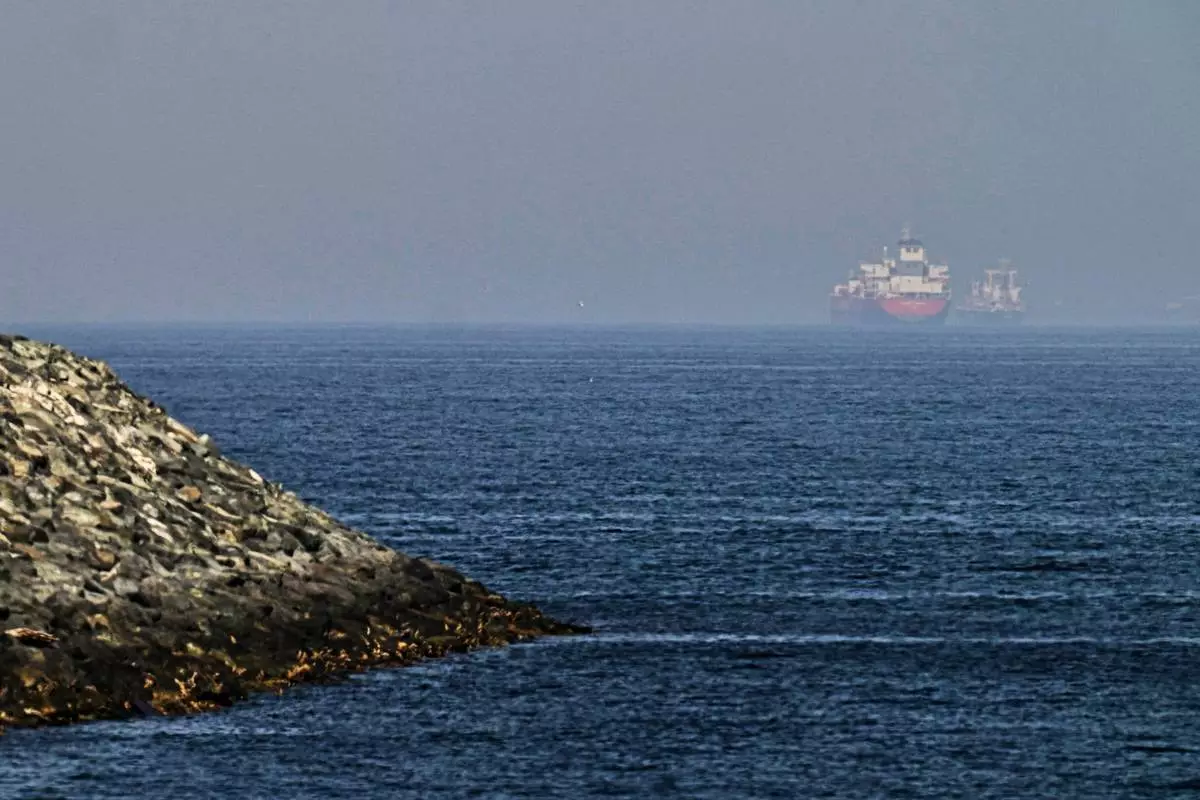
A tanker, left, and a car carrier are anchored at sea in the Gulf of Oman near the Strait of Hormuz, as seen from the coast near Khor Fakkan, United Arab Emirates, Friday, May 1, 2026.(AP Photo/Fatima Shbair)

Cargo ships are seen at sea near the Strait of Hormuz, as viewed from a rocky shoreline near Khor Fakkan, United Arab Emirates, Friday, May 1, 2026. (AP Photo/Fatima Shbair)
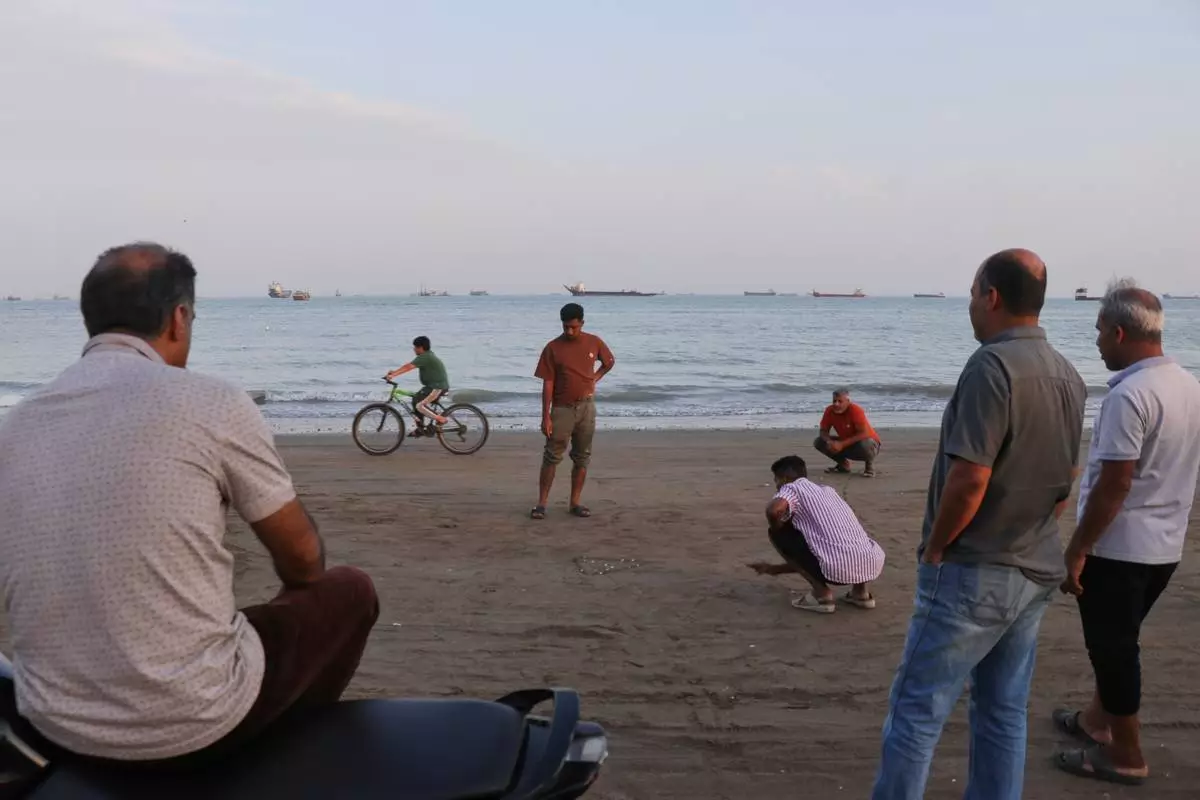
Cargo ships are seen at sea near the Strait of Hormuz, as viewed from a rocky shoreline near Khor Fakkan, United Arab Emirates, Friday, May 1, 2026. (AP Photo/Fatima Shbair)

Men gather along the shore, some crouching and watching a game, as a mix of bulk carriers, cargo ships, and service vessels line the horizon in the Strait of Hormuz off Bandar Abbas, Iran, Monday, April 27, 2026.(Razieh Poudat/ISNA via AP)
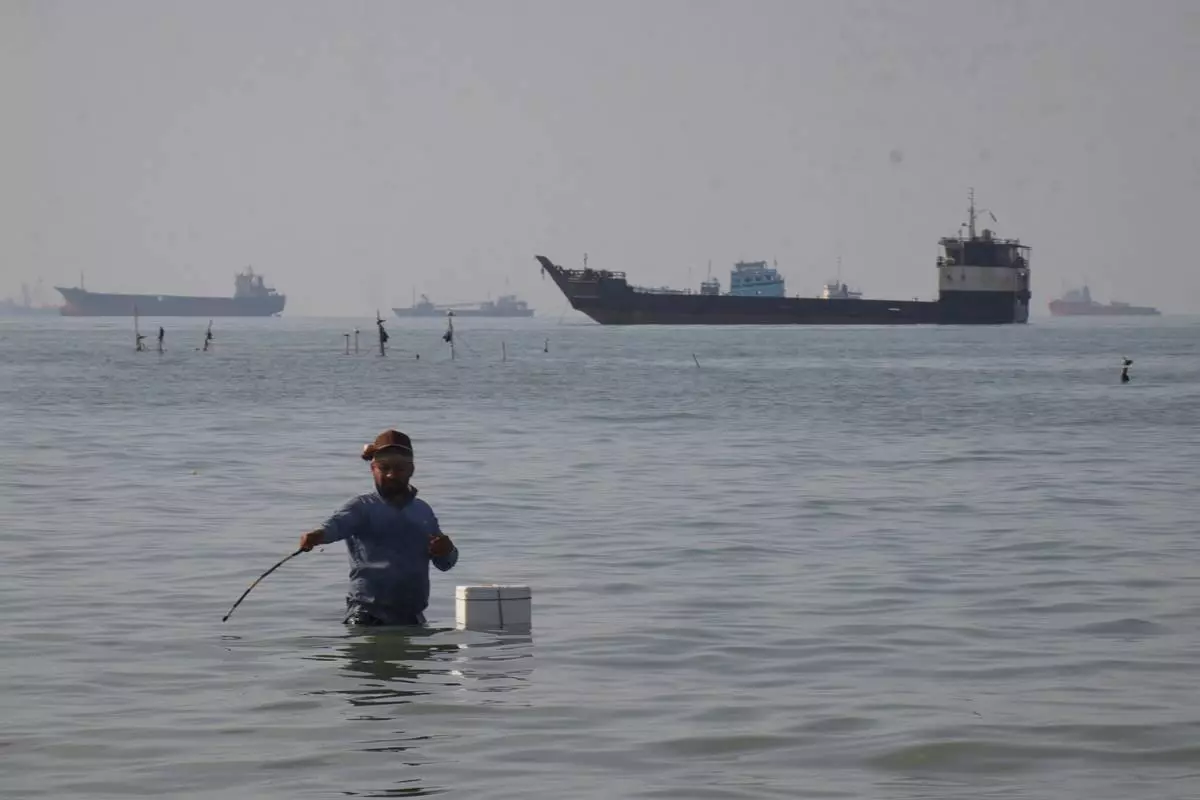
Men gather along the shore, some crouching and watching a game, as a mix of bulk carriers, cargo ships, and service vessels line the horizon in the Strait of Hormuz off Bandar Abbas, Iran, Monday, April 27, 2026.(Razieh Poudat/ISNA via AP)
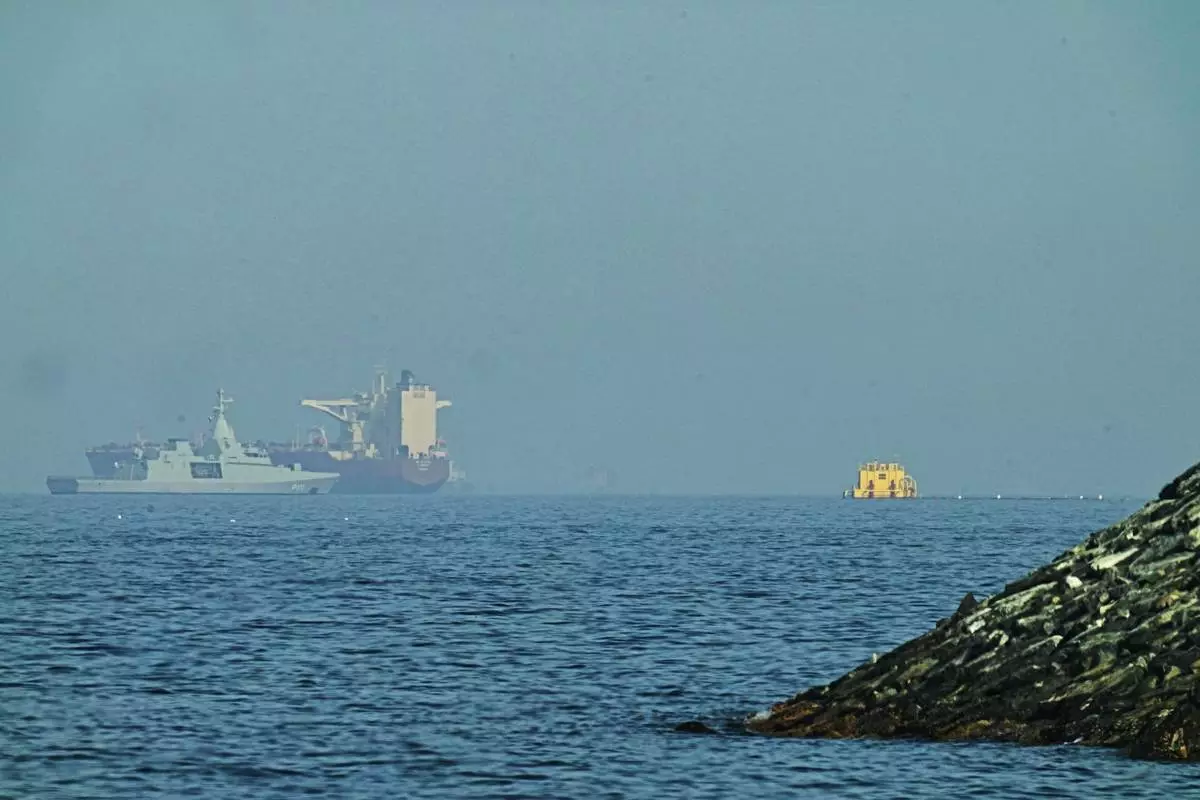
A man stands in the water, appearing to fish, as bulk carriers, cargo ships, and service vessels line the horizon in the Strait of Hormuz off Bandar Abbas, Iran, Monday, April 27, 2026.(Razieh Poudat/ISNA via AP)

A man stands in the water, appearing to fish, as bulk carriers, cargo ships, and service vessels line the horizon in the Strait of Hormuz off Bandar Abbas, Iran, Monday, April 27, 2026.(Razieh Poudat/ISNA via AP)

An Emirati patrol boat, left, is near a tanker anchored in the Gulf of Oman near the Strait of Hormuz, as seen from a coastal road near Khor Fakkan, United Arab Emirates, Friday, May 1, 2026. (AP Photo/Fatima Shbair)

An Emirati patrol boat, left, is near a tanker anchored in the Gulf of Oman near the Strait of Hormuz, as seen from a coastal road near Khor Fakkan, United Arab Emirates, Friday, May 1, 2026. (AP Photo/Fatima Shbair)
Ukrainian drones are flying deep into Russia to strike oil facilities, sending up plumes of smoke that can be seen from space and bringing toxic rain to tourist destinations on the Black Sea.

The attacks are aimed at slashing Moscow’s oil exports, a key source of funding for its grinding invasion of Ukraine. But the economic impact is so far unclear, as the rise in oil prices from the Iran war, and a related easing of U.S. sanctions, have helped replenish the Kremlin’s coffers.

Still, the range of the attacks and their environmental impact is bringing the war home to ordinary Russians far from the front lines.

Ukrainian drones have hit the oil refinery and export terminal in the Black Sea town of Tuapse on four occasions in just over two weeks, sparking fires that prompted local evacuations and sent up massive plumes of smoke. The town is roughly 450 kilometers (280 miles) from the front lines.

In a video posted by local Gov. Veniamin Kondratyev after the third attack on April 18, an emergency official said boiling oil products had spilled onto the street, damaging cars.

Ukraine said Thursday that it hit an oil pumping station in Russia’s Perm region, more than 1,500 kilometers (900 miles) from Ukraine, two days in a row. Russian media reported the attacks, though Perm Gov. Dmitry Makhonin said only that drones had hit industrial facilities.

Ust-Luga on the Baltic Sea, one of Russia’s largest oil and gas export terminals, was hit three times in the space of a week in late March. It is more than 800 kilometers (500 miles) away from Ukraine.

In a broadcast several weeks later, regional Gov. Alexander Drozdenko declared that the area around St. Petersburg, Russia’s second largest city, was a “front-line region” due to aerial threats.

Ukraine’s President Volodymyr Zelenskyy has compared such strikes to the international sanctions on Russia. They are seen as even more crucial now that Moscow is collecting windfall profits from the global energy crisis linked to Iran’s closure of the Strait of Hormuz.

Zelenskyy said Friday that Russia has lost at least $7 billion since the start of the year as a direct result of attacks on its oil sector. Earlier in the week, he said Ukrainian intelligence indicates a drop in exports from key oil ports such as Ust-Luga and Primorsk.

Drone strikes have also disrupted Russia's oil refining capacities, while sanctions make it difficult to acquire replacement parts, experts say.

But the full economic impact remains unclear as Russia benefits from the Mideast crisis.

Russian crude and oil product exports rose by 320,000 barrels per day month-on-month to hit 7.1 million in March, the International Energy Agency said. Rising prices meant that oil export revenues almost doubled, from $9.7 billion to $19 billion. It is unclear whether April's strikes will disrupt that trend.

“U.S. action against Iran has saved both the Russian oil sector and the federal budget from a crisis that was clearly developing in late February,” said Chris Weafer, CEO of Macro-Advisory Ltd. Consultancy.

The damage to Russia’s oil infrastructure has meanwhile been far less significant than the massive explosions would suggest, he said.

“If you hit an oil tank, particularly an oil tank that’s not full, the vapors ignite and you get the flames. So it looks very spectacular.” But that only delays deliveries by a couple of days, he said.

“It’s much less damaging than hitting the pump stations or the compressors or the loading infrastructure. And that appears to be well protected. The tanks are not.”

The ability to strike key infrastructure deep inside Russia has highlighted Ukraine’s growing military capabilities and put pressure on Moscow’s overstretched air defenses. It has also forced more Russians to confront the consequences of a war their government claims to be winning.

Ukraine’s Defense Ministry says its forces have more than doubled the range of their deep-strike capabilities since Russia’s full-scale invasion in February 2022. The increased range also allows drones to attack locations from different directions, complicating countermeasures.

“Drone attacks have so far been a very successful case of leveraging simple technologies and domestically assembled technology to attack Russia in places that, at the start of the war, they just would have never expected to be attacked,” said Marcel Plichta, a Ph.D. candidate in the School of International Relations at the University of St Andrews.

“This capability just didn’t exist” four years ago, he said.

Russian officials are usually reluctant to comment on deep strikes.

But the Tuapse attacks and the images that followed gained traction in Russian media. Russian President Vladimir Putin warned of “serious environmental consequences” while insisting things were under control.

Officials warned that high levels of benzene, a carcinogen found in oil products, had been recorded in the air while fires burned and urged residents to limit time outdoors.

Residents also widely reported “black rain,” oily droplets falling on their skin and clothes. Local news outlets posted images of stray dogs and cats with their coats stained gray. Oil spills along the coastline have coated birds and fish, and Russian media recently circulated images of beached dolphins.

Those images are shocking to Russians accustomed to vacationing on the Black Sea coast.

Vladimir Slivyak, co-chairman of the Russian environmental group Ecodefense, said there could be long-term consequences for human health and the region’s ecosystem.

“There is a lot of oil in the sea,” he said. “In the next few years, every storm will be bringing more oil pollution onto the coast.”

There has not yet been a public backlash to the strikes, as authorities wage a crackdown on dissent. But that could change as the damage spreads.

“I think a lot of people understand that there is a very big difference between what Putin says and what regional authorities are saying, and what’s really going on,” Slivyak said.

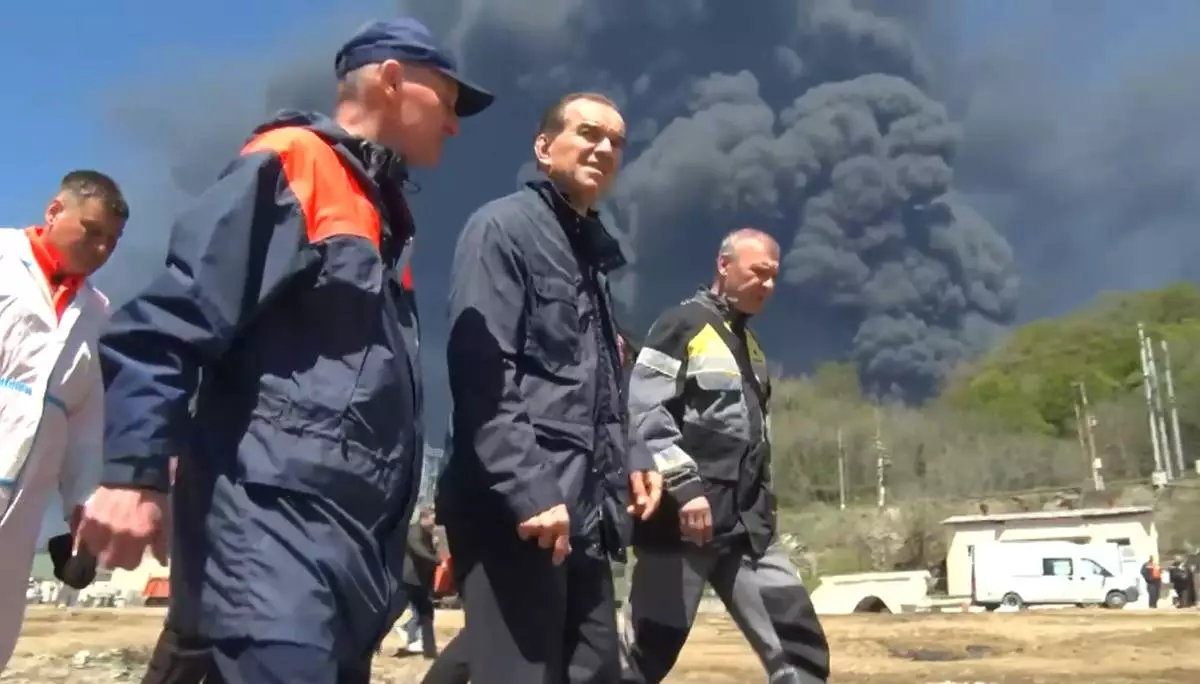
FILE - In this image taken from a video released by Gov. Veniamin Kondratyev's Telegram channel, Kondratyev, 2nd right, inspects the aftermath of a drone attack on the oil refinery and terminal in Tuapse, Russia, on Wednesday, April 29, 2026. (Gov. Veniamin Kondratyev Telegram channel via AP, File)

FILE - In this image taken from a video released by Gov. Veniamin Kondratyev's Telegram channel, Kondratyev, 2nd right, inspects the aftermath of a drone attack on the oil refinery and terminal in Tuapse, Russia, on Wednesday, April 29, 2026. (Gov. Veniamin Kondratyev Telegram channel via AP, File)

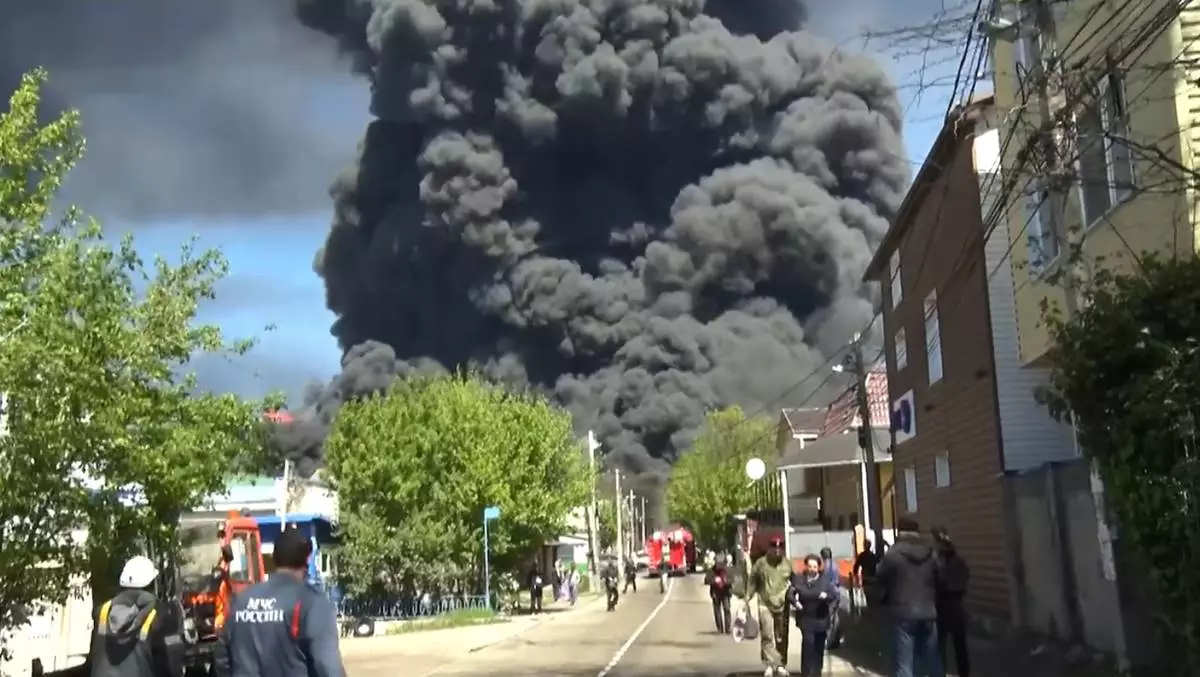
FILE - In this image taken from video released by Gov. Veniamin Kondratyev's Telegram channel, smoke rises after a drone attack on the oil refinery and terminal in Tuapse, Russia, Wednesday, April 29, 2026. (Gov. Veniamin Kondratyev Telegram channel via AP, File)

FILE - In this image taken from video released by Gov. Veniamin Kondratyev's Telegram channel, smoke rises after a drone attack on the oil refinery and terminal in Tuapse, Russia, Wednesday, April 29, 2026. (Gov. Veniamin Kondratyev Telegram channel via AP, File)

Recommended Articles