U.S. medical students currently on a ten-day exchange program in China have urged both nations to set aside geopolitical differences and embrace mutual learning to improve patient care and strengthen health systems on both sides.
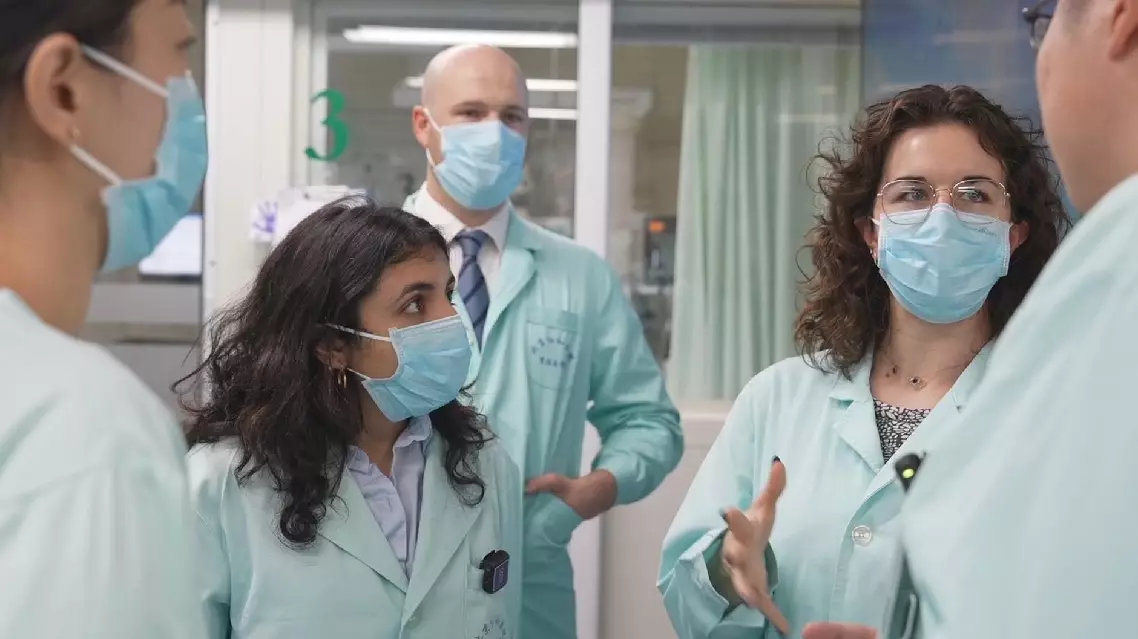
In the general intensive care unit (ICU) of the prestigious Peking Union Medical College Hospital in Beijing, a quiet intensity filled the air as 15 visiting U.S. medical students and faculty observed critical care decisions unfolding in real time.
More than a clinical observation, for these future physicians, the scene embodies a shared mission that transcends borders.
The group is in China on a ten-day exchange program visiting top-tier hospitals in Beijing, Shanghai, and Changsha City in central China's Hunan Province. Organized to deepen understanding of China's healthcare system and foster dialogue with Chinese counterparts, the initiative comes at a time when geopolitical tensions often overshadow opportunities for collaboration.
"On the day-to-day basis, the ICU here functions very similar to the way that it does in the U.S. There's less interdisciplinary care. And [in] the Chinese ICU, the doctors take on a higher load of work. So, I think we have just a lot to learn from each other, and beyond that, even things like academia and innovation and technology," said Hanin Elhagehassan, a medical student at the University of Michigan Medical School.
China's highly centralized healthcare model, where major hospitals manage enormous patient volumes daily, stands in sharp contrast to the U.S. system's emphasis on primary care and referral networks. Nowhere is this difference more apparent than in emergency departments.
"The efficiency of the triaging system, and the emergency department here, patients are very quickly sorted to the service that they're being cared for. And I think that allows the hospital to have a much higher throughput," said Stephen Dowker, another medical student at the University of Michigan Medical School.
At a pituitary center outpatient clinic in Peking Union Medical College Hospital, U.S. students watched a leading specialist consult nearly 13 patients in a single morning, a pace uncommon in American practice.
"The door would open, and one patient would leave, and the next patient would come in, and it's not like this in the United States. He was able to talk to everybody with compassion and patience, and explain [things]. It didn't seem like the experience was lacking for the patients, but the efficiency was amazing," said Nina Yoh, a resident physician in neurosurgery at the New York-Presbyterian Hospital.
The contrasting medical systems of China and the United States have evolved in response to distinct demographic, economic, and social pressures. Rather than viewing these differences as barriers, the visiting students emphasized that they serve as perfect opportunities for mutual learning.
"I think it's regretful that in this day and age, we are seen purely as competitors instead of collaborators. So, I hope that we can use this trip as a launching pad," said Mohamed Fawaz, a medical student at the University of Michigan Medical School.
"We are more similar than we are different, and we are facing a lot of the same problems. And being able to learn from each other about the different strategies that we are using to solve these problems would benefit everyone and especially our patients and countries," said Jeremy Hogaboom, another medical student at the University of Michigan Medical School.
As global health challenges demand coordinated international responses, exchanges like this underscore medicine's unique capacity to build bridges. These medical students are coming away from the exchange with a clear understanding that collaboration is not idealistic but essential.
US med students call for collaboration over competition during exchange visit to China