Skip to Content Facebook Feature Image

Spirit Airlines built a model the industry copied. Then it collapsed

News

Spirit Airlines built a model the industry copied. Then it collapsed
News

News

Spirit Airlines built a model the industry copied. Then it collapsed

2026-05-03 00:19 Last Updated At:00:20

Spirit Airlines, the scrappy discounter that once rattled the industry with cheeky ads and rock-bottom fares, took its final flight after 34 years of upending the business of flying.

Once worth as much as roughly $5.5 billion on the stock market, the airline known for its bright yellow planes said Saturday it had shut down after its final flight departed from Detroit and landed safely in Dallas.

“For more than 30 years, Spirit Airlines has played a pioneering role in making travel more accessible and bringing people together while driving affordability across the industry,” CEO Dave Davis said in a statement.

The announcement comes after two bankruptcy filings in as many years that allowed Spirit to repay lenders. That was followed in recent months by a final, mad-dash scramble to save money by cutting routes, squeezing concessions from unions and pursuing a potential financing deal with the Trump administration that could have provided a lifeline had it panned out.

But in the end, higher jet fuel prices triggered by the Iran war drained cash from the business at an accelerating pace, forcing it to call it quits.

“This is tremendously disappointing and not the outcome any of us wanted," Davis said.

It began as Charter One Airlines, which ran vacation tours in the early 80s, then grew in popularity and profits two decades later with no-frills “unbundled” fares allowing travelers to forgo basic services — bag handling, seat selection, even the printing of tickets — or pay extra.

Proudly penny-pinching and irritatingly so for many passengers, Spirit was for years run by the famously frugal Ben Baldanza, who ordered his burgers plain, bristled at paying extra for pickles he didn't want, and flew in the same cramped seats as his customers. He was unapologetic about the airline’s nickel-and-diming them, saying the issue wasn’t that Spirit was cheap, but that passengers were seeing an itemized bill for the first time — and didn’t like it.

For all the complaints, though, Spirit’s model became so influential that giant airlines with decades more operating history and global destinations found they had to follow suit by slashing prices and introducing “basic economy” fares.

On its final day of operations, Spirit had safely flown more than 50,000 passengers, a company spokesperson said. The airline was also working to get more than 1,300 crew members back home. About 17,000 employees — some with more than 25 years at the airline — learned Friday they had lost their jobs, many finding out through media reports, the spokesperson said.

In a memo Saturday to members, the Spirit flight attendants union acknowledged the end of the airline and the toll on workers.

“While the country has had a blast making Spirit the butt of the joke, we’ve built a strength together that could withstand anything that anyone throws at us," it said. “And that is no joke.”

Despite its abrupt end, Spirit left behind a reputation that was impossible to ignore.

Kendria Talton, who flew Friday on Spirit from Dallas to Atlanta with her daughter for a dance competition, arrived at the airport Saturday trying to find a new way home.

Talton said she had flown Spirit multiple times because of the price. “Other than that, I mean nobody even likes Spirit,” she said. “They’ve always talked about Spirit for years.”

A key part of that image came from its bold, over-the-top ads that some critics slammed as tasteless and indeed sometimes backfired.

After the Deepwater Horizon disaster in 2010, the company ran a “Check Out the Oil on Our Beaches” ad, playing on the double entendre of suntan oil and the real black stuff.

Next up was a “Weiner Sale” after New York Congressman Anthony Weiner was caught in a sexting scandal, an ad that also included the line, “fares just too hard to resist.” Later came its infamous “MILF Sale,” referring to “Many Islands, Low Fares,” but also referencing, with a wink and a nod, to the sexual acronym.

Ironically, Spirit was also taken down by its own success as more traditional airlines mimicked its offering and began to steal its customers with their own low fares.

Spirit had been struggling with losses for years, but its going-out-of-business announcement still came as a shock.

Just a few months earlier this year, Spirit said it would likely emerge from its second bankruptcy in the late spring or early summer after striking a preliminary deal with lenders.

Then the U.S. and Israel launched strikes on Iran four days later, sending global crude prices soaring above $100. Gasoline prices followed closely behind and jet fuel prices more than doubled in some markets.

Spirit struggled especially during and after the COVID-19 pandemic, amid rising operational costs and its mounting debt. By its first Chapter 11 filing in November 2024, Spirit had lost more than $2.5 billion since the start of 2020.

University of Houston student Angelina Deruelle, 23, was at Fort Lauderdale–Hollywood International Airport on Friday, Spirit’s final day of operations, after her flight to Texas was canceled. She said the loss of the airline as an affordable travel option would be difficult to accept.

“I feel like Spirit is just affordable, simple, nothing too fancy," she said. "It’s just like home.”

Associated Press journalists Jeff Amy in Atlanta, Michelle Chapman in New York and Daniel Kozin in Fort Lauderdale, Florida, contributed to this report.
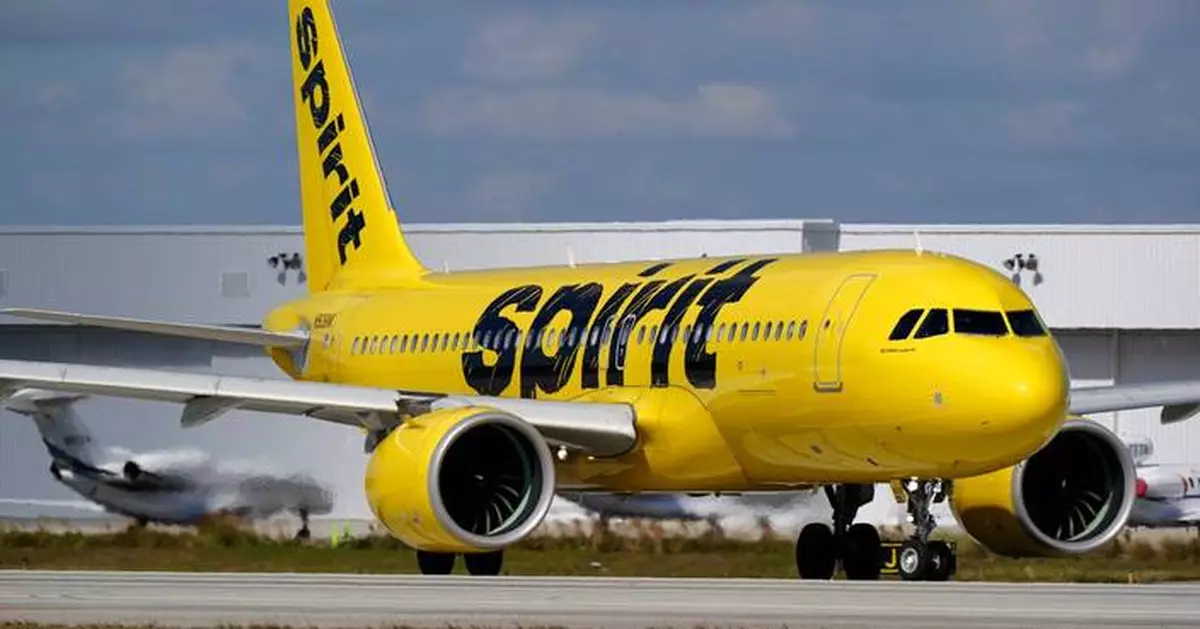
FILE - A Spirit Airlines Airbus A320 prepares to take off from Fort Lauderdale-Hollywood International Airport, Jan. 19, 2021, in Fort Lauderdale, Fla. (AP Photo/Wilfredo Lee, File)

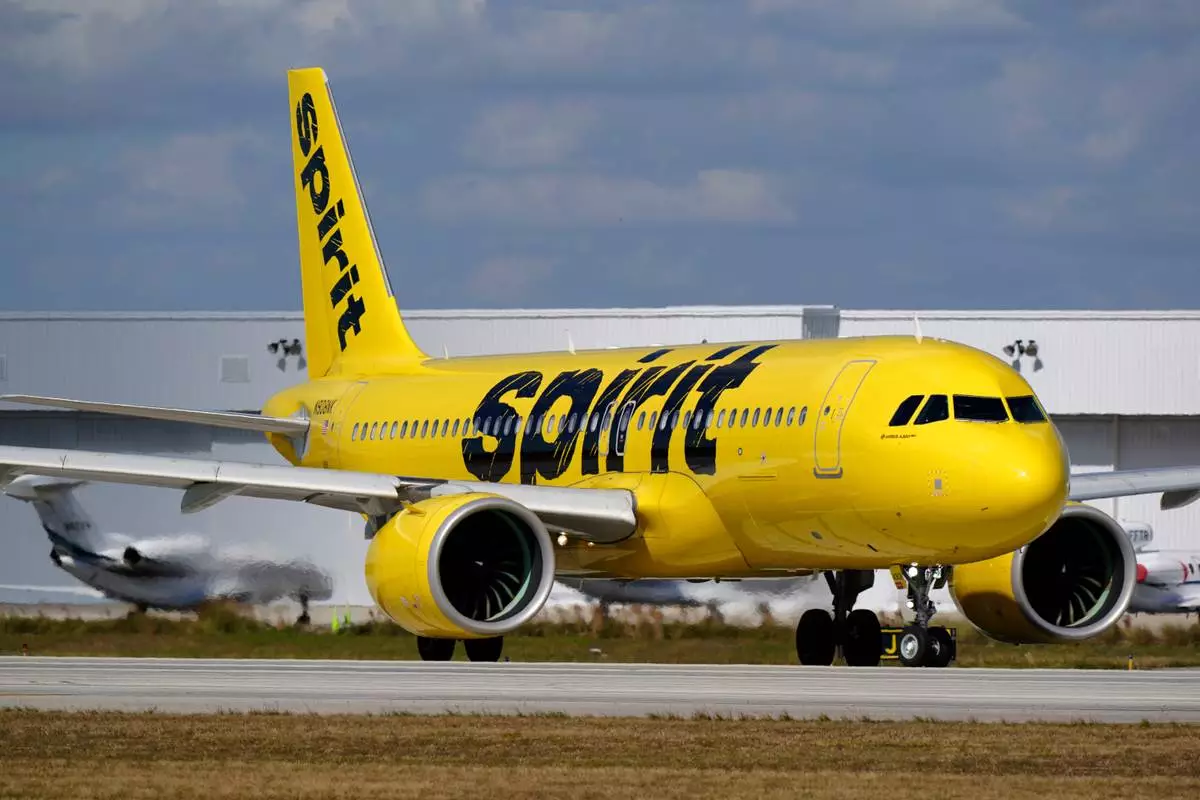
FILE - A Spirit Airlines Airbus A320 prepares to take off from Fort Lauderdale-Hollywood International Airport, Jan. 19, 2021, in Fort Lauderdale, Fla. (AP Photo/Wilfredo Lee, File)
In the biggest jolt to abortion policy in the U.S. since the overturning of Roe v. Wade, a federal appeals court has restricted access to one of the most common ways to end early pregnancies, by blocking the mailing of mifepristone prescriptions.

The unanimous ruling Friday from the New Orleans-based 5th U.S. Circuit Court of Appeals marks a substantial victory for abortion opponents seeking to stem the flow of abortion pills prescribed online that they view as subverting state bans on the procedure.

The ruling, which is expected to be appealed to the U.S. Supreme Court, requires that mifepristone be distributed only in person and at clinics, overruling regulations set by the federal Food and Drug Administration.

Here's what to know.

Frustrated with a lack of federal action against medicated abortions, Louisiana Attorney General Liz Murrill sued the FDA last month, saying its regulations undermined the state’s ban on abortions at all stages of pregnancy.

“The regulation creates an effective way for an out-of-state prescriber to place the drug in the hands of Louisianans in defiance of Louisiana law,” Judge Kyle Duncan, who was appointed by President Donald Trump, wrote in the ruling.

FDA officials have said the agency is conducting a new review of mifepristone’s safety, but the appeals court noted that there was no timeline for its completion.

Friday’s ruling is in effect while the case works its way through the courts. It affects all states, even those without abortion restrictions.

There is little precedent for a federal court overruling the scientific regulations of the FDA, and it remains to be seen how the decision could impact how the drug is dispensed long-term.

Murrill, a Republican, celebrated the ruling as a “victory for life” while other anti-abortion advocates cheered the reversal of rules finalized under President Joe Biden that ended a longstanding requirement that the pills be obtained at an in-person doctor’s visit.

Representatives for the FDA and the U.S. Department of Justice did not immediately respond to requests for comment.

Danco Laboratories, a mifepristone manufacturer and defendant in the lawsuit, asked the appeals court late Friday to put its order on hold for one week to give the company time to seek relief from the Supreme Court. The court had not responded to the request as of midday Saturday.

Mifepristone was approved in 2000 as a safe and effective way to end early pregnancies. It is typically used in combination with a second drug, misoprostol, which is not affected by the ruling but is less effective on its own.

Surveys have found that the majority of abortions in the U.S. are administered using pills and that about one in four abortions nationally are prescribed via telehealth. Providers have suggested that its availability through telehealth is a reason why the number of abortions in the U.S. has not fallen since Roe was overturned in 2022.

As a result, abortion pills and those who prescribe them out of state have become key targets of abortion opponents.

Some Democratic-led states have adopted laws that aim to protect providers who prescribe via telehealth and mail the pills to states with bans. Those so-called shield laws are being tested through civil and criminal cases in Louisiana and Texas.

One telehealth provider in a state with a shield law, Dr. Angel Foster, was working with legal experts to understand how the ruling would impact her organization, The Massachusetts Medication Abortion Project.

"We will do everything in our power to continue providing care to people in all 50 states,” she said.

The case could again make abortion a key issue in the midterm elections as Democrats aim to take back control of the U.S. House and Republicans fight to hold on to a narrow majority.

Recent electoral results suggest that voters seeking to maintain abortion access have the political momentum. Since Roe was overturned, abortion has been on the ballot directly in 17 states. Voters have sided with the abortion-rights side in 14 of those questions.

Abortion-rights supporter Fatima Goss Graves, president and CEO of the National Women’s Law Center, slammed the ruling as “deeply out of step with both the public and fact-based science.”

Trump received criticism after the ruling from some anti-abortion advocates who expressed frustration that he did not take action himself to block distribution of the pill.

The FDA under Trump approved another generic version of mifepristone last year, which peeved some allies of the Republican president.

“It’s shameful that the Trump administration’s inaction has forced pro-life states to take their battle to the federal courts,” said Marjorie Dannenfelser, president of Susan B. Anthony Pro-Life America, who also applauded the ruling.

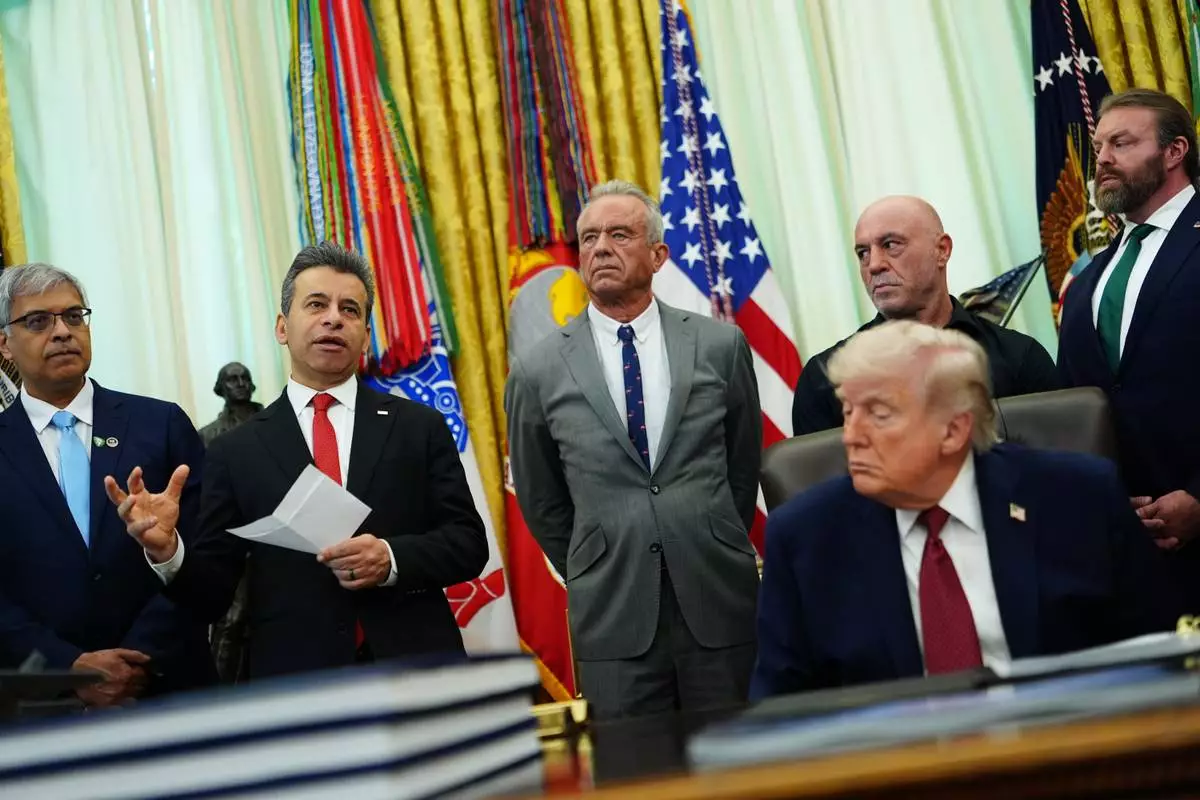
Dr. Marty Makary, commissioner of the Food and Drug Administration, speaks while, from left, National Institutes of Health Director Dr. Jay Bhattacharya, Health and Human Services Secretary Robert F. Kennedy Jr., Joe Rogan, President Donald Trump, Joe Rogan and CEO of Americans for Ibogaine W. Bryan Hubbard listen in the Oval Office of the White House, Saturday, April 18, 2026, in Washington. (AP Photo/Julia Demaree Nikhinson)

Dr. Marty Makary, commissioner of the Food and Drug Administration, speaks while, from left, National Institutes of Health Director Dr. Jay Bhattacharya, Health and Human Services Secretary Robert F. Kennedy Jr., Joe Rogan, President Donald Trump, Joe Rogan and CEO of Americans for Ibogaine W. Bryan Hubbard listen in the Oval Office of the White House, Saturday, April 18, 2026, in Washington. (AP Photo/Julia Demaree Nikhinson)

FILE - Attorney General Liz Murrill speaks with the news media, Oct. 15, 2025, in Washington. (AP Photo/Cliff Owen, File)

FILE - Attorney General Liz Murrill speaks with the news media, Oct. 15, 2025, in Washington. (AP Photo/Cliff Owen, File)

Recommended Articles