Skip to Content Facebook Feature Image

New Met Gala fashion exhibit seeks to ‘reclaim’ body types that art history has ignored

ENT

New Met Gala fashion exhibit seeks to ‘reclaim’ body types that art history has ignored
ENT

ENT

New Met Gala fashion exhibit seeks to ‘reclaim’ body types that art history has ignored

2026-05-04 00:02 Last Updated At:00:10

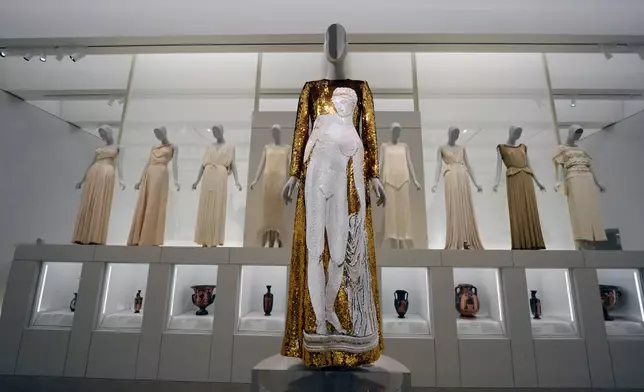
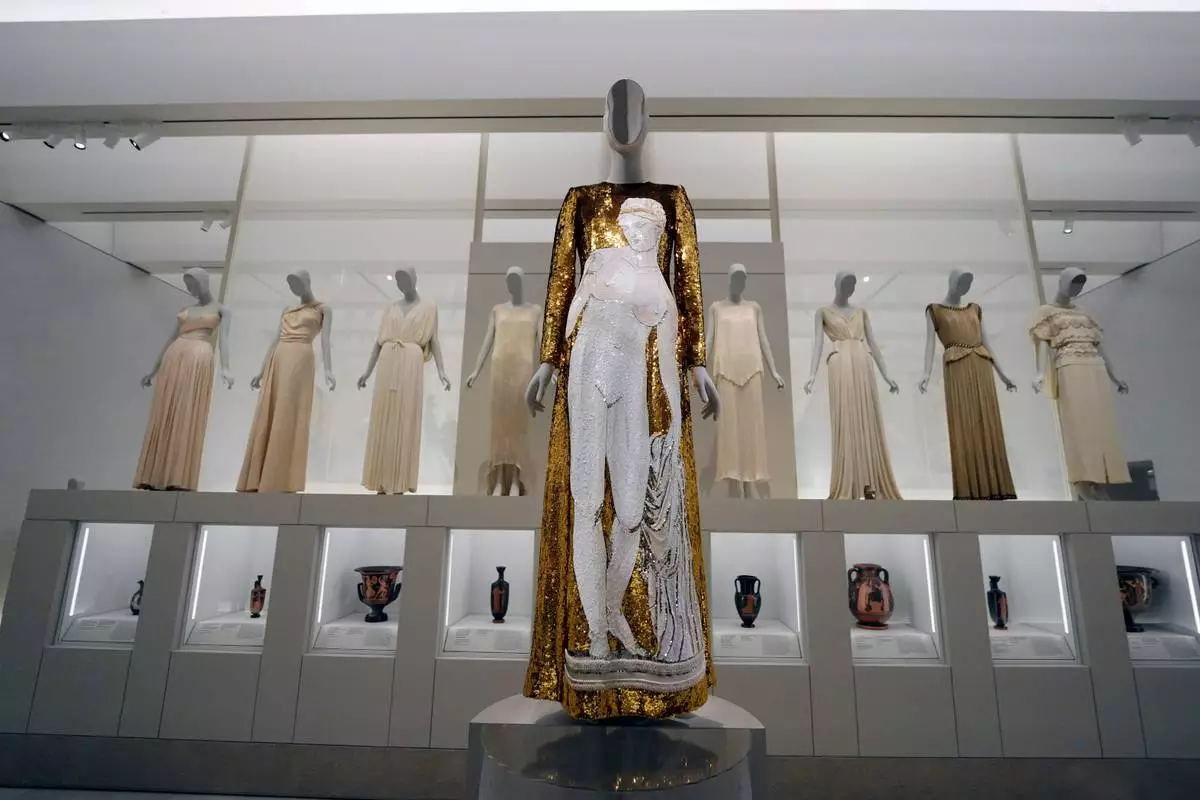
NEW YORK (AP) — One of the first sights we see in “Costume Art,” the new fashion exhibit to be launched at Monday’s Met Gala, is a glittering column gown by Dolce & Gabbana, its shimmering gold sequins surrounding an image of Aphrodite.

The Greek goddess stands on a pedestal, holding a golden apple bestowed on her for her beauty — a classic ideal of beauty as old as, well, ancient Greece.

More Images
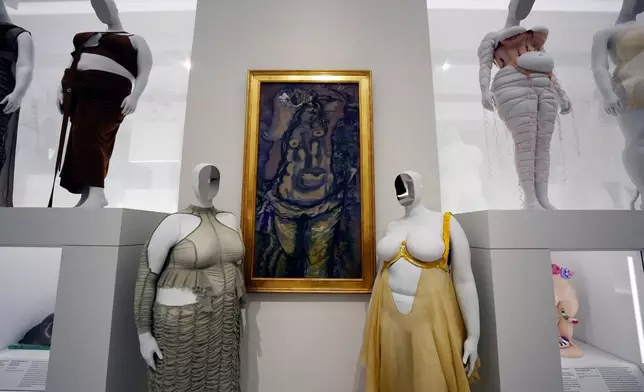
Designs in the "Corpulent Body" section are displayed at the Metropolitan Museum of Art's Costume Institute exhibition, "Costume Art," on Saturday, May 2, 2026, in New York. (Photo by Charles Sykes/Invision/AP)
Designs in the "Corpulent Body" section are displayed at the Metropolitan Museum of Art's Costume Institute exhibition, "Costume Art," on Saturday, May 2, 2026, in New York. (Photo by Charles Sykes/Invision/AP)

A design by Dolce & Gabbana in the "Classical Body" section is displayed at the Metropolitan Museum of Art's Costume Institute exhibition, "Costume Art," on Saturday, May 2, 2026, in New York. (Photo by Charles Sykes/Invision/AP)
A design by Dolce & Gabbana in the "Classical Body" section is displayed at the Metropolitan Museum of Art's Costume Institute exhibition, "Costume Art," on Saturday, May 2, 2026, in New York. (Photo by Charles Sykes/Invision/AP)
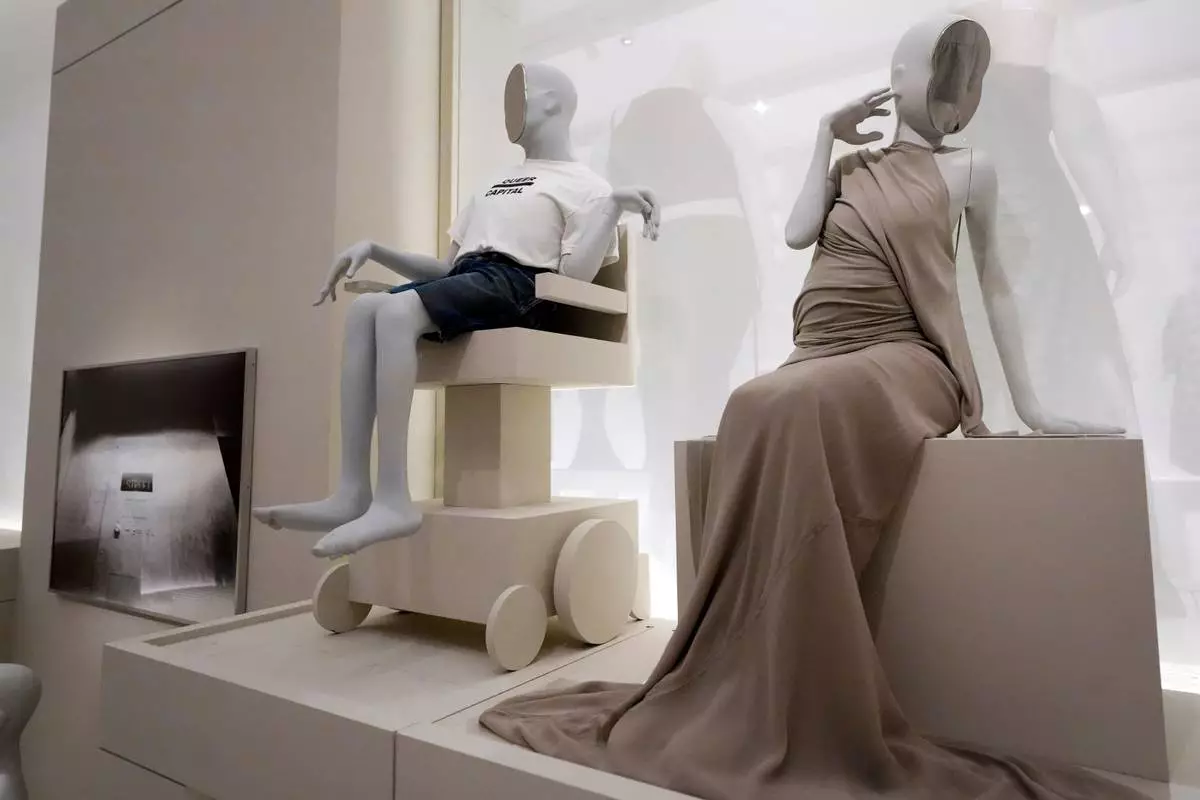
Designs by Willie Norris Workshop on an Aariana Rose Philip mannequin, left, and Rick Owens on a Goddess Bunny mannequin are displayed in the "Disabled Body" section of the Metropolitan Museum of Art's Costume Institute exhibition, "Costume Art," on Saturday, May 2, 2026, in New York. (Photo by Charles Sykes/Invision/AP)

Designs by Willie Norris Workshop on an Aariana Rose Philip mannequin, left, and Rick Owens on a Goddess Bunny mannequin are displayed in the "Disabled Body" section of the Metropolitan Museum of Art's Costume Institute exhibition, "Costume Art," on Saturday, May 2, 2026, in New York. (Photo by Charles Sykes/Invision/AP)

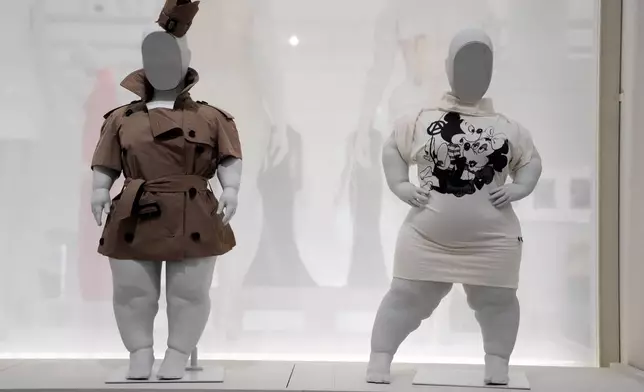
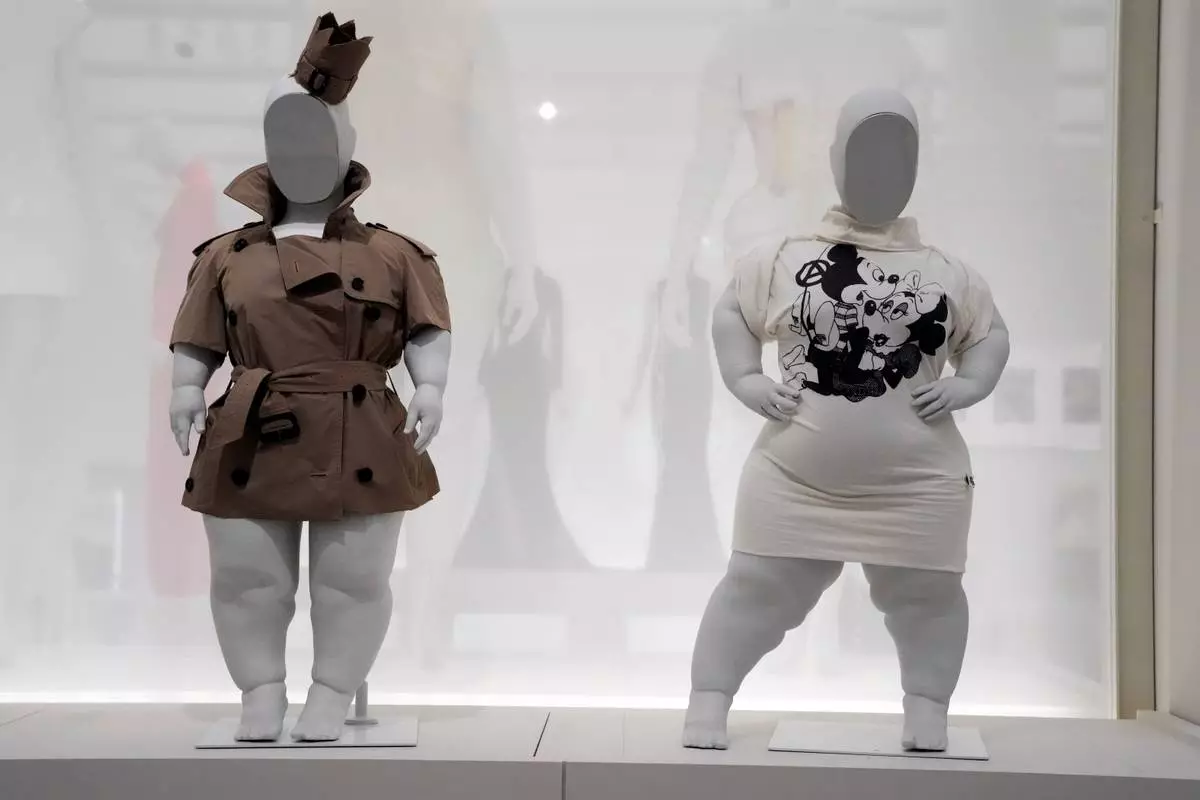
Designs by Burberry, left, and Vivienne Westwood are displayed on Sinéad Burke mannequins in the "Disabled Body" section of the Metropolitan Museum of Art's Costume Institute exhibition, "Costume Art," on Saturday, May 2, 2026, in New York. (Photo by Charles Sykes/Invision/AP)

Designs by Burberry, left, and Vivienne Westwood are displayed on Sinéad Burke mannequins in the "Disabled Body" section of the Metropolitan Museum of Art's Costume Institute exhibition, "Costume Art," on Saturday, May 2, 2026, in New York. (Photo by Charles Sykes/Invision/AP)

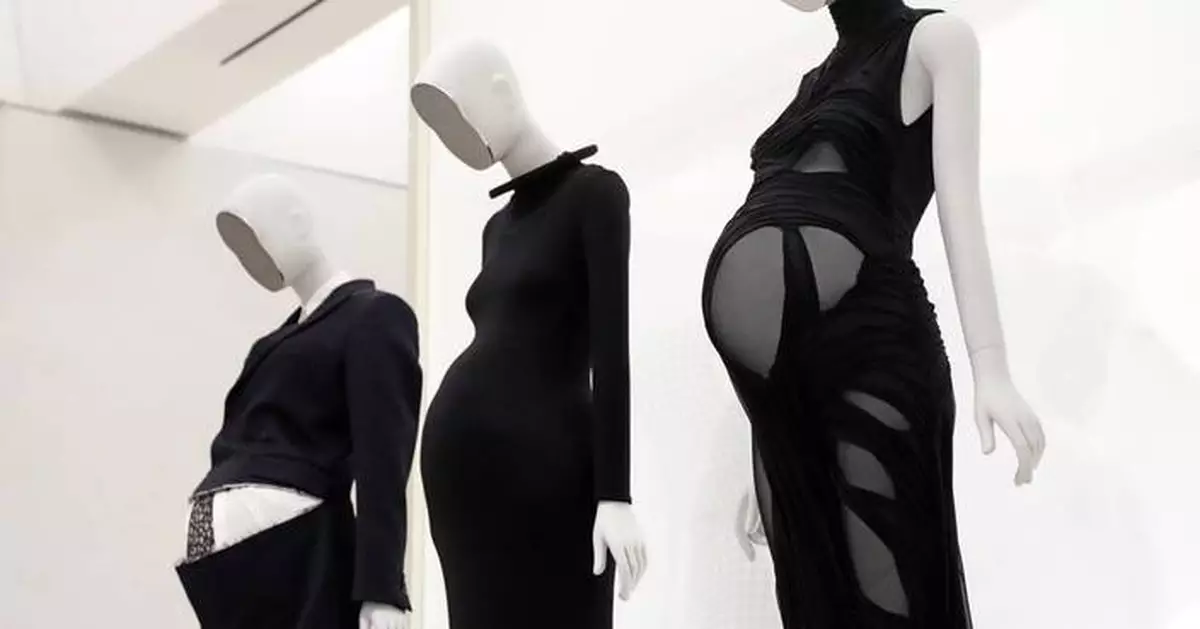
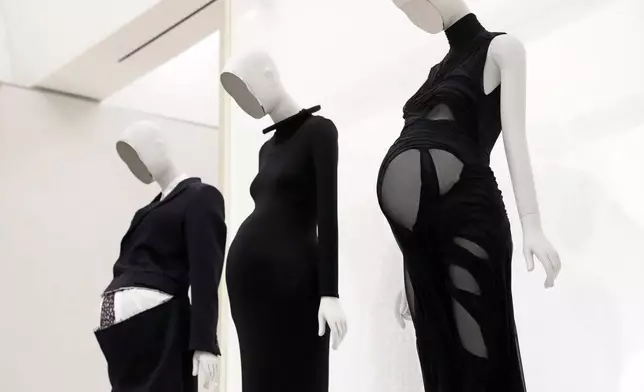
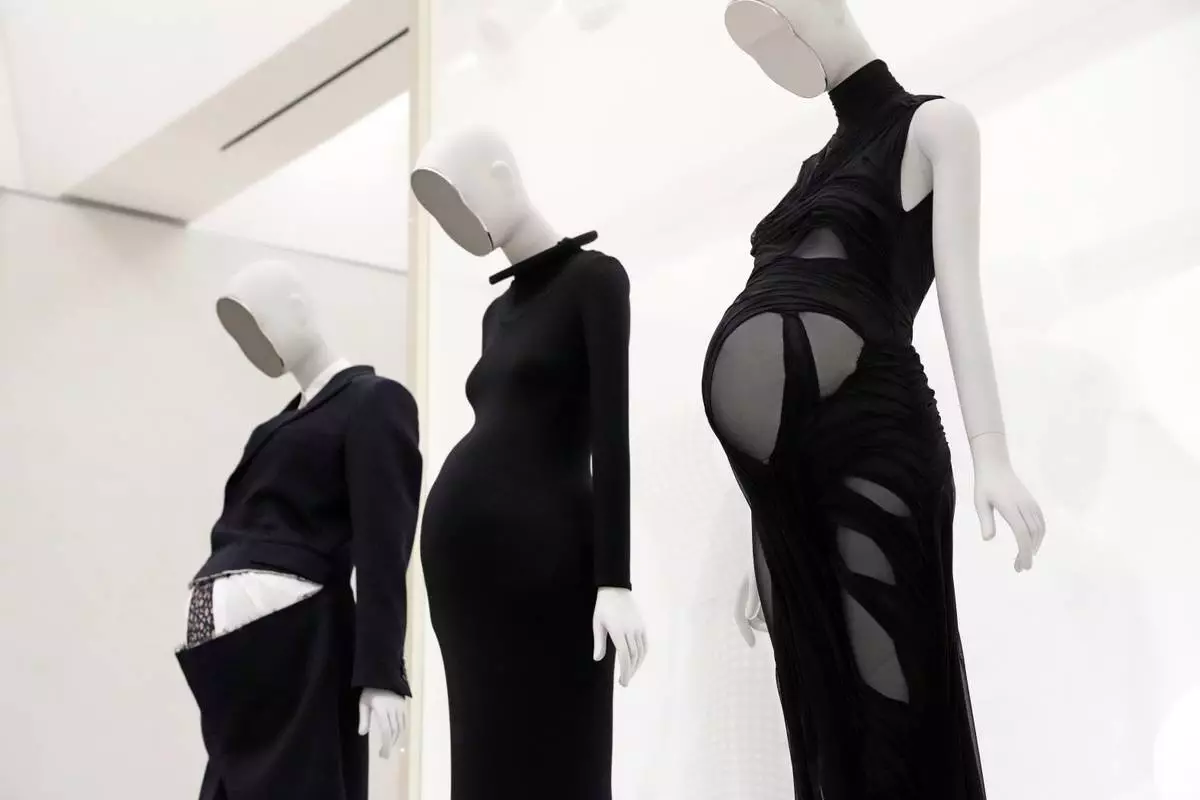
Designs in the "Pregnant Body" section are displayed at the Metropolitan Museum of Art's Costume Institute exhibition, "Costume Art," on Saturday, May 2, 2026, in New York. (Photo by Charles Sykes/Invision/AP)

Designs in the "Pregnant Body" section are displayed at the Metropolitan Museum of Art's Costume Institute exhibition, "Costume Art," on Saturday, May 2, 2026, in New York. (Photo by Charles Sykes/Invision/AP)

But the idea of “Costume Art,” which examines the dressed body through centuries of art history, is not to celebrate the classical form. It is rather, says Andrew Bolton, longtime curator at the Metropolitan Museum of Art’s Costume Institute, to use that form as a launch pad.

“Now, we go through and reclaim the body,” he says, leading a reporter through the gleaming new Conde M. Nast galleries that the show will inaugurate.

The corpulent body. The disabled body. The pregnant body. The aging body. The new show, which gala guests will view before it opens to the public May 10, is the most consciously body-positive show the museum has attempted. Perhaps its most prominent feature is a group of new mannequins, based on real people with a wide variety of body types.

There is even, in the “aging body” section, an enormous gray hoodie, emblazoned with the phrase: “I’M RETIRED. (This is as dressed up as I get.)” Just in case you’re tired of the whole glittery glamour thing.

Bolton took The Associated Press through the exhibit late last week as a huge team of installers was busy hammering, nailing, posing and otherwise adjusting the 400 items on display. Here are some of the highlights.

Last year, the Met Gala, a fundraiser for the Costume Institute, brought in a record $31 million. That gargantuan sum alone — it grows every year — can explain why the museum has granted its only self-funding department some prominent new digs, fashioned from former retail space on the museum’s main floor, right off the Great Hall. “We're in the epicenter of the museum,” notes Bolton, with evident pride. It will house all future fashion exhibits, making them easier to reach for guests and enabling shows to last longer; “Costume Art” will be up for 8 months.

The show travels through centuries of art history by pairing art objects with fashion garments, making the argument that not only is fashion art — that's indeed the gala dress code — but more profoundly, art is fashion. Its first main gallery bears the title “Bodily Being in its Diversity,” and begins with flowing Grecian-style gowns, paired with images on Greek vases or flasks. But the display soon veers from classic forms into those that fashion has traditionally ignored.

Bolton argues that the pregnant body has either been ignored or stereotyped in art. Here, he presents designers — often female, working in the late 20th century or later — who have explored and accentuated the expectant form. The so-called “pregnancy dress” from British designer Georgina Godley, which appeared in her 1986 “Bump and Lump” collection, is a straightforward celebration of the extended pregnant belly. It is paired with a rare (for the time) 1920 sculpture by French artist Edgar Degas, “Pregnant Woman” — a nude figure holding her belly and seeming to reflect on what's to come.

Garments on display here include the corsetry of designer Michaela Stark, who posed herself for three of the new mannequins. One of them displays the corsetry ensemble “Fat Not Fertile” — fighting the trope that a larger body represents reproduction and fertility. Stark uses corsets to bind the flesh and accentuate, not hide it — to “bring back power to the female form.” The ensemble is paired with an ancient marble statuette resembling the same body type.

A striking subset of the Reclaimed Body section explores the disabled body, itself divided into different types of disability: physical, sensory and cognitive.

In one ensemble, a mannequin based on Paralympian athlete, model and actor Aimee Mullins wears a pair of Victorian-esque Alexander McQueen boots, which are really prosthetic limbs. The outfit is paired with a 1965 sculpture, “The Amputee,” by John Gutmann.

Irish disability activist Sinéad Burke, who was born with dwarfism, also posed for two mannequins. One wears a Burberry trench coat, cut down for length — and including part of a discarded sleeve, refashioned into a headpiece. The other is a Vivienne Westwood and Malcolm McLaren “Mickey and Minnie” dress, paired with an ancient Egyptian statue of a dancing dwarf.

Model and activist Aariana Rose Philip, who uses a wheelchair, also posed for a mannequin, placed in its own chair — wearing a pair of denim shorts and a shirt bearing the slogan: “Queer Capital.” The display is accompanied by a work from artist Lucy Jones, who, like Philip, lives with cerebral palsy.

Exploring a less visible disability is a coat by Scottish designer Nadia Pinkney, who paid homage in her “Remember Me Knot” collection to both her grandmother and great-grandmother, who had Alzheimer’s. The coat’s pattern — derived, according to curators, from brain scans — is meant to reflect the “physiological tangles” the disease inflicts on the brain’s structure.

It's paired with a lithograph by Willem de Kooning, whose own experience with Alzheimer’s affected his late-career work.

The second main gallery is devoted not to diversity so much as commonality — those things that unite us all. Like aging, which the show seeks to reframe as “a mode of sophistication rather than biological decline.” And mortality. There’s also a whole bloody section on, well, blood.

This includes Westwood’s “Martyr to Love” evening jacket where shiny beads represent a muscled torso, and deep red beading portrays blood dripping from a wound. It is paired with German painter Albrecht Dürer’s “Man of Sorrows with Arms Outstretched.”

“Costume Art” opens to the public May 10 and runs through Jan. 10, 2027.
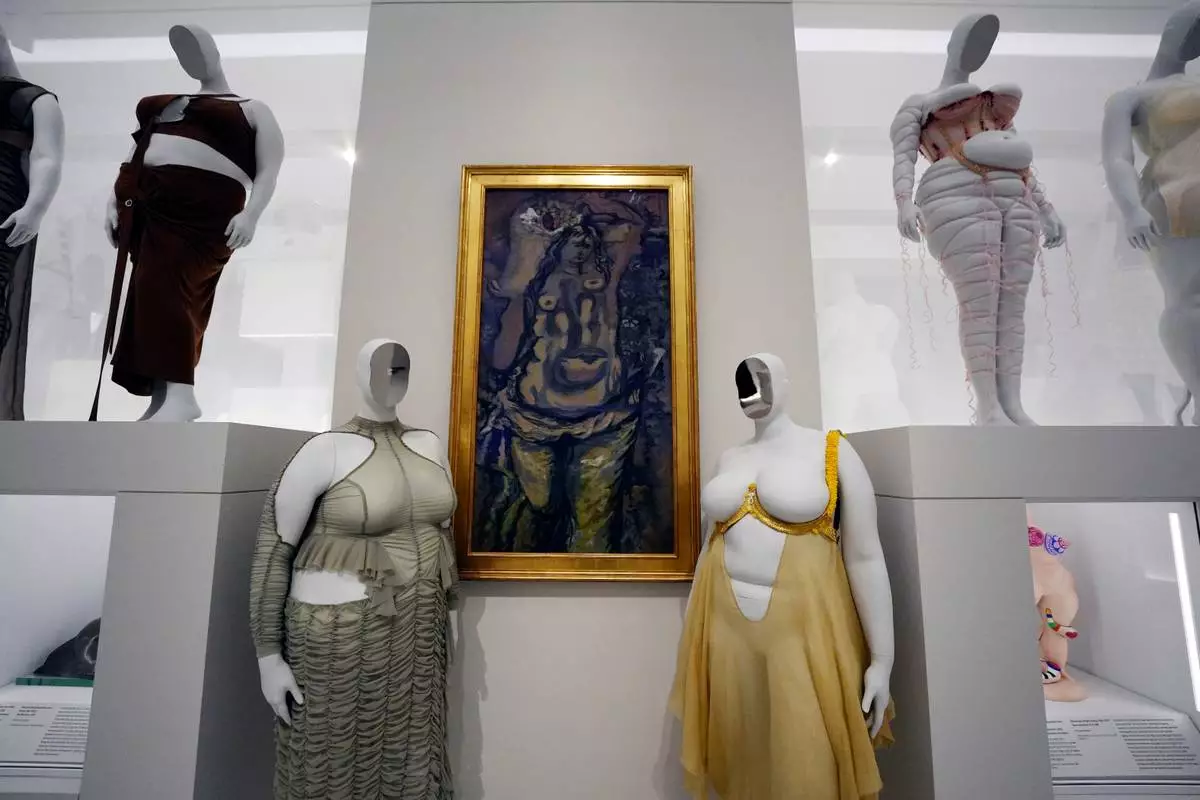
Designs in the "Corpulent Body" section are displayed at the Metropolitan Museum of Art's Costume Institute exhibition, "Costume Art," on Saturday, May 2, 2026, in New York. (Photo by Charles Sykes/Invision/AP)
Designs in the "Corpulent Body" section are displayed at the Metropolitan Museum of Art's Costume Institute exhibition, "Costume Art," on Saturday, May 2, 2026, in New York. (Photo by Charles Sykes/Invision/AP)
A design by Dolce & Gabbana in the "Classical Body" section is displayed at the Metropolitan Museum of Art's Costume Institute exhibition, "Costume Art," on Saturday, May 2, 2026, in New York. (Photo by Charles Sykes/Invision/AP)
A design by Dolce & Gabbana in the "Classical Body" section is displayed at the Metropolitan Museum of Art's Costume Institute exhibition, "Costume Art," on Saturday, May 2, 2026, in New York. (Photo by Charles Sykes/Invision/AP)
Designs by Willie Norris Workshop on an Aariana Rose Philip mannequin, left, and Rick Owens on a Goddess Bunny mannequin are displayed in the "Disabled Body" section of the Metropolitan Museum of Art's Costume Institute exhibition, "Costume Art," on Saturday, May 2, 2026, in New York. (Photo by Charles Sykes/Invision/AP)

Designs by Willie Norris Workshop on an Aariana Rose Philip mannequin, left, and Rick Owens on a Goddess Bunny mannequin are displayed in the "Disabled Body" section of the Metropolitan Museum of Art's Costume Institute exhibition, "Costume Art," on Saturday, May 2, 2026, in New York. (Photo by Charles Sykes/Invision/AP)

Designs by Burberry, left, and Vivienne Westwood are displayed on Sinéad Burke mannequins in the "Disabled Body" section of the Metropolitan Museum of Art's Costume Institute exhibition, "Costume Art," on Saturday, May 2, 2026, in New York. (Photo by Charles Sykes/Invision/AP)

Designs by Burberry, left, and Vivienne Westwood are displayed on Sinéad Burke mannequins in the "Disabled Body" section of the Metropolitan Museum of Art's Costume Institute exhibition, "Costume Art," on Saturday, May 2, 2026, in New York. (Photo by Charles Sykes/Invision/AP)

Designs in the "Pregnant Body" section are displayed at the Metropolitan Museum of Art's Costume Institute exhibition, "Costume Art," on Saturday, May 2, 2026, in New York. (Photo by Charles Sykes/Invision/AP)

Designs in the "Pregnant Body" section are displayed at the Metropolitan Museum of Art's Costume Institute exhibition, "Costume Art," on Saturday, May 2, 2026, in New York. (Photo by Charles Sykes/Invision/AP)

DUBAI, United Arab Emirates (AP) — A cargo ship near the Strait of Hormuz has reported being attacked by multiple small craft, the British military’s United Kingdom Maritime Trade Operations center said Sunday, marking at least two dozen attacks in and around the strait since the Iran war began.

All crew on the unidentified northbound carrier were safe after the attack off Sirik, Iran, east of the strait, the monitor said. Iranian officials have asserted that they control the strait and that ships not affiliated with the United States or Israel can pass if they pay a toll.

There was no immediate claim of responsibility for the attack, the first reported in the area since April 22, when a cargo ship reported being fired upon, the monitor said. The threat level in the area remains critical. Tehran effectively closed the strait by attacking and threatening ships.

Iranian patrol boats, some powered only by twin outboard motors, are small, nimble and hard to detect and have attacked several ships. President Donald Trump last month ordered the U.S. military to “shoot and kill” small Iranian boats that deploy mines in the strait.

The fragile three-week ceasefire appears to be holding, though Trump on Saturday told journalists that further strikes remained a possibility.

Iran’s latest proposal to the United States wants issues between them to be resolved within 30 days and aims to end the war rather than extend the ceasefire, according to Iran’s state-linked media.

Trump on Saturday said he was reviewing the proposal but expressed doubt it would lead to a deal, adding on social media that “they have not yet paid a big enough price for what they have done to Humanity, and the World, over the last 47 years” since the Islamic Revolution there.

Iran’s 14-point proposal also calls for the U.S. lifting sanctions on Iran, ending the U.S. naval blockade of Iranian ports, withdrawing forces from the region and ceasing all hostilities, including Israel’s operations in Lebanon, according to the semiofficial Nour News and Tasnim agencies, which have close ties to Iran's security organizations.

There was no mention in those reports, however, of Iran's nuclear program and its enriched uranium, long the central issue in tensions with the U.S. and one that Tehran would rather address later.

Iran sent its reply via Pakistan, which hosted face-to-face talks last month between Iran and the United States.

Pakistan's prime minister, foreign minister and army chief continue to encourage the U.S. and Iran to speak directly, according to two officials in Pakistan who spoke on condition of anonymity because they were not authorized to speak to the media.

Also on Sunday, Iranian Foreign Minister Abbas Araghchi spoke with Oman’s Foreign Minister Badr al-Busaidi, who oversaw previous rounds of talks before the war.

Trump has offered a plan to reopen the Strait of Hormuz at the mouth of the Persian Gulf, where about a fifth of the world’s trade in oil and natural gas typically passes, along with fertilizer badly needed by farmers around the world.

Iran's grip on the strait, imposed after the U.S. and Israel launched the war on Feb. 28, has shaken global markets.

Tehran “will not back down from our position on the Strait of Hormuz, and it will not return to its prewar conditions," Iran’s deputy parliament speaker said Sunday. Ali Nikzad, who has no decision-making power in parliament, spoke while visiting port facilities on strategic Larak Island.

The U.S. has warned shipping companies they could face sanctions for paying Iran in any form, including digital assets, to transit the strait safely.

Meanwhile, the U.S. naval blockade since April 13 is depriving Tehran of oil revenue it needs to shore up its ailing economy. The U.S. Central Command on Saturday said 48 commercial ships have been told to turn back.

“We think that they’ve gotten less than $1.3 million in tolls, which is a pittance on their previous daily oil revenues,” U.S. Treasury Secretary Scott Bessent told Fox News on Sunday. He said Iran's oil storage is rapidly filling up and "they’re going to have to start shutting in wells, which we think could happen in the next week.”

On Sunday, the second day of Iran's working week, the rial weakened further against the U.S. dollar. In Tehran’s Ferdowsi Street, the capital’s main currency exchange hub, the dollar was trading at 1,840,000 rials.

Analysts say there is a strong possibility the currency will slip further.

The rial was trading at 1.3 million to the dollar in December, a record low at the time, and triggered widespread protests over the worsening economy. Markets in Tehran remain unstable, with prices of some goods rising daily.

According to reports in Iranian media, several factories have not renewed contracts for workers after the Iranian new year in March, and significant numbers have lost their jobs.

Yousef Pezeshkian, the son and adviser of President Masoud Pezeshkian, wrote on Telegram that both the United States and Iran see themselves as the winner of the war and are unwilling to back down.

The Norwegian Nobel Committee on Saturday urged Iran to immediately transfer imprisoned Nobel Peace Prize laureate Narges Mohammadi for treatment by her medical team in Tehran after her health sharply deteriorated.

The committee said it was in touch with Mohammadi’s family and lawyer, and that the 2023 laureate’s life remains at risk.

The rights lawyer fainted twice in prison on Friday in the northwestern city of Zanjan, her foundation said, and was admitted to a local hospital. Her lawyers have said she is believed to have suffered a heart attack in late March.

Lidman reported from Tel Aviv, Israel. Associated Press writers Amir Vahdat in Tehran, Iran and Munir Ahmed in Islamabad contributed to this report.

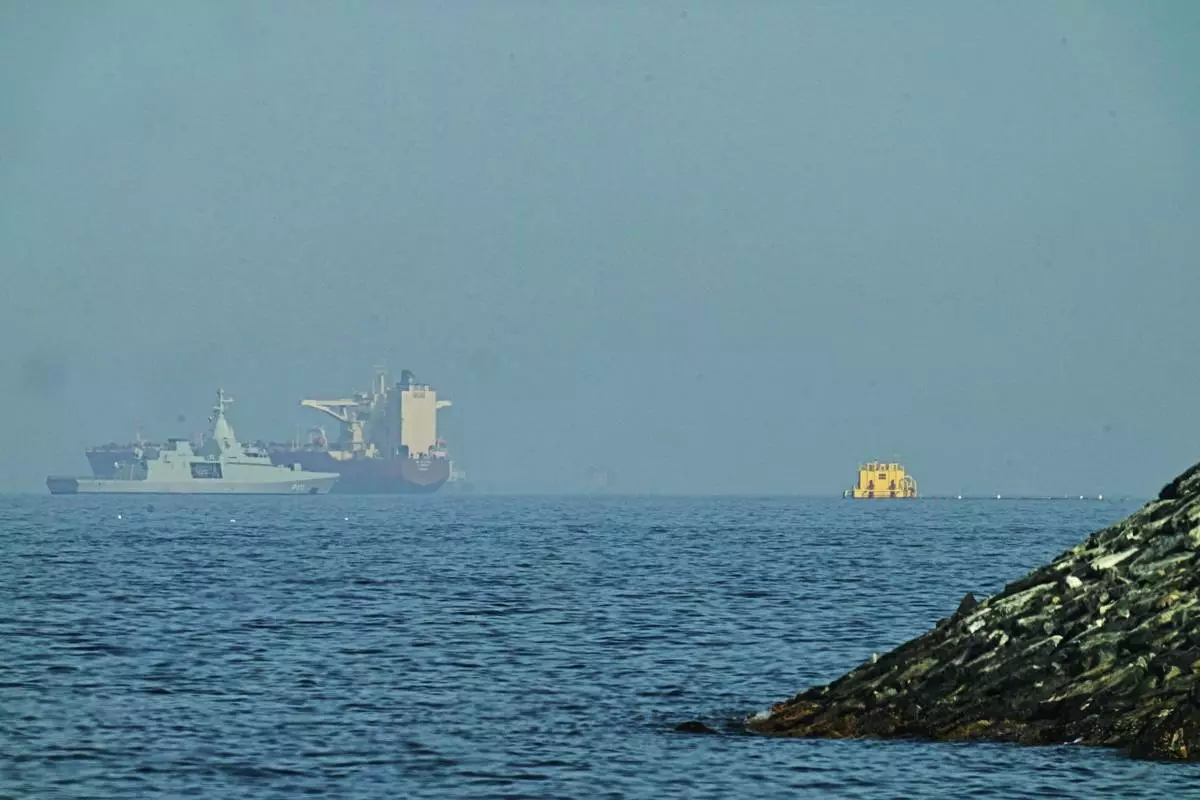
An Emirati patrol boat, left, is near a tanker anchored in the Gulf of Oman near the Strait of Hormuz, as seen from a coastal road near Khor Fakkan, United Arab Emirates, Friday, May 1, 2026. (AP Photo/Fatima Shbair)

An Emirati patrol boat, left, is near a tanker anchored in the Gulf of Oman near the Strait of Hormuz, as seen from a coastal road near Khor Fakkan, United Arab Emirates, Friday, May 1, 2026. (AP Photo/Fatima Shbair)

A child holds an Iranian flag through the window of a vehicle in northern Tehran, Iran, Friday, May 1, 2026. (AP Photo/Vahid Salemi)

A child holds an Iranian flag through the window of a vehicle in northern Tehran, Iran, Friday, May 1, 2026. (AP Photo/Vahid Salemi)

A groom and bride ride on their motorbike in northern Tehran, Iran, Friday, May 1, 2026. (AP Photo/Vahid Salemi)

A groom and bride ride on their motorbike in northern Tehran, Iran, Friday, May 1, 2026. (AP Photo/Vahid Salemi)

Vehicles drive past a billboard with graphic showing Strait of Hormuz and sewn lips of U.S. President Donald Trump in a square in downtown Tehran, Iran, Saturday, May 2, 2026. (AP Photo/Vahid Salemi)

Vehicles drive past a billboard with graphic showing Strait of Hormuz and sewn lips of U.S. President Donald Trump in a square in downtown Tehran, Iran, Saturday, May 2, 2026. (AP Photo/Vahid Salemi)

Recommended Articles