DETROIT (AP) — Cade Cunningham had 32 points and 12 assists, Tobias Harris added 30 points and the Detroit Pistons beat the Orlando Magic 116-94 in Game 7 on Sunday to win a playoff series for the first time in 18 years.
Cunningham averaged 32.4 points for Detroit, which last won a postseason series by beating Orlando in the second round in 2008. The Pistons advance to play the winner of Sunday evening’s Game 7 between the Cleveland Cavaliers and the Toronto Raptors. Game 1 will be Tuesday at Little Caesars Arena.
Click to Gallery
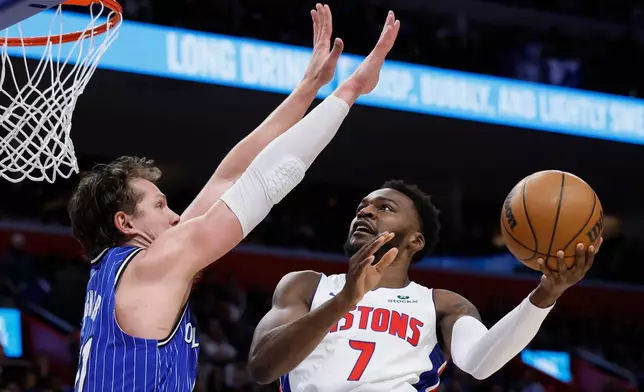
Detroit Pistons forward Paul Reed (7) goes to the basket against Orlando Magic forward Moritz Wagner, left, during the first half in Game 7 of a first-round NBA basketball playoffs series Sunday, May 3, 2026, in Detroit. (AP Photo/Duane Burleson)
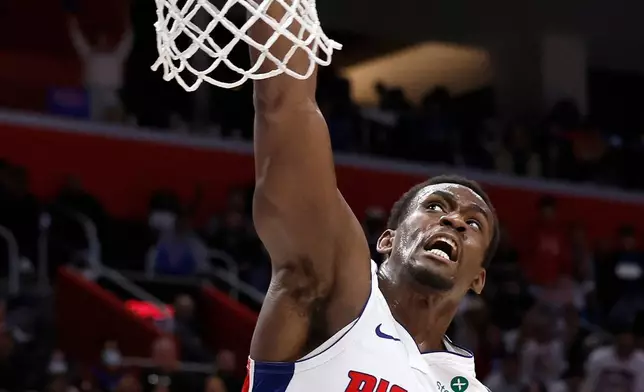
Detroit Pistons center Jalen Duren dunks against the Orlando Magic during the first half in Game 7 of a first-round NBA basketball playoffs series Sunday, May 3, 2026, in Detroit. (AP Photo/Duane Burleson)
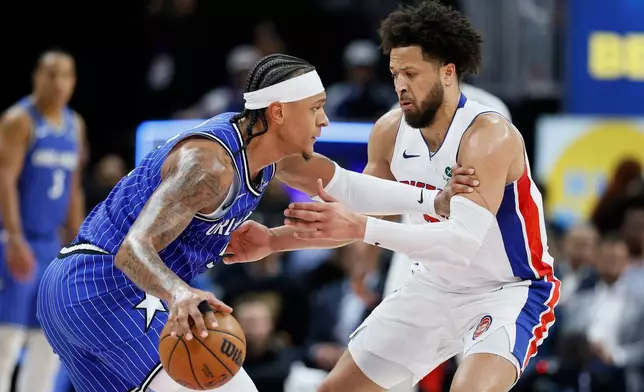
Orlando Magic forward Paolo Banchero, left, drives against Detroit Pistons guard Cade Cunningham, right, during the first half in Game 7 of a first-round NBA basketball playoffs series Sunday, May 3, 2026, in Detroit. (AP Photo/Duane Burleson)
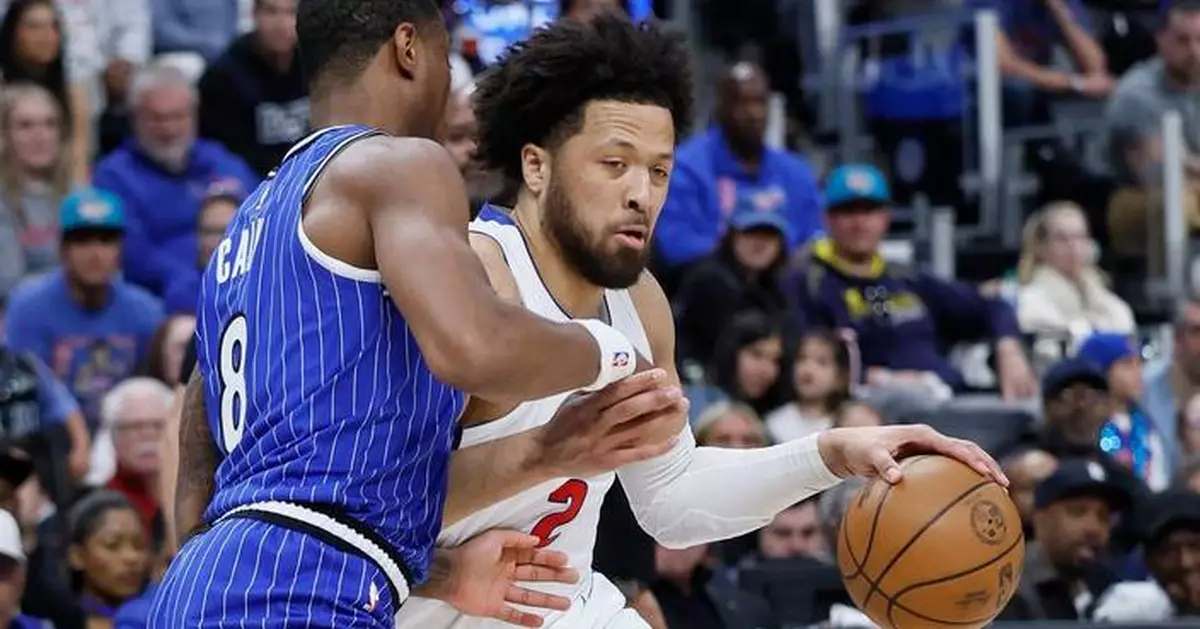
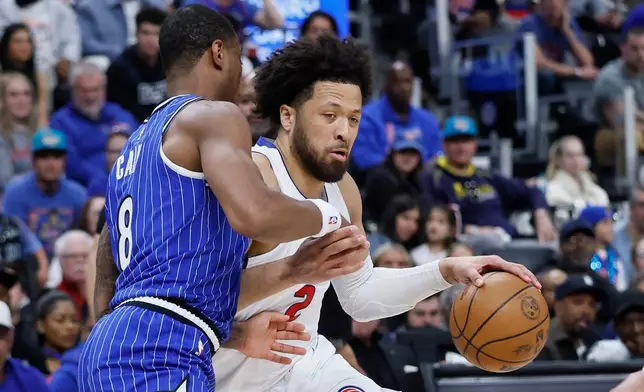
Detroit Pistons guard Cade Cunningham (2) drives against Orlando Magic forward Jamal Cain (8) during the first half in Game 7 of a first-round NBA basketball playoffs series Sunday, May 3, 2026, in Detroit. (AP Photo/Duane Burleson)
The Pistons became the 15th team in NBA history to overcome a 3-1 deficit and the second in the last two nights, after the Philadelphia 76ers came back to eliminate Boston.
They trailed by 24 points in Game 6 in Orlando before rallying to take the series at home. Orlando only scored 113 points in the final six quarters of the series — an average of 18.8 per period.
Cunningham and Harris became the first Pistons teammates to score 30 points in a playoff game since Bob Lanier (33) and Howard Porter (30) against the Golden State Warriors on April 17, 1977.
Paolo Banchero scored 38 for the Magic.
Each team needed a second scoring option in Game 7. Cunningham had carried the Pistons while Banchero was Orlando's only weapon after Franz Wagner was injured in Game 4.
Harris filled that role for Detroit, but Orlando only had one other player reach double figures in the first three quarters, as Desmond Bane had 10.
The Pistons also got a big game from All-Star center Jalen Duren. He was outplayed by Wendell Carter Jr. in the first six games, but put up his first double-double of the series with 15 points and 15 rebounds.
Harris scored 17 points in the second quarter as the Pistons finished the half on a 9-2 run to take a 60-49 lead.
The Pistons' surge continued into the second half, as they opened the third quarter with a 11-2 run to go up 71-51. Nine of the points came from Cunningham and Harris.
The Magic finished the third quarter with 15 points — the third time in their last five periods they couldn't reach 20 points.
Daniss Jenkins hit a buzzer-beating 3-pointer to give Detroit a 83-64 lead going into the fourth, and the Magic never threatened down the stretch.
AP NBA: https://apnews.com/hub/nba
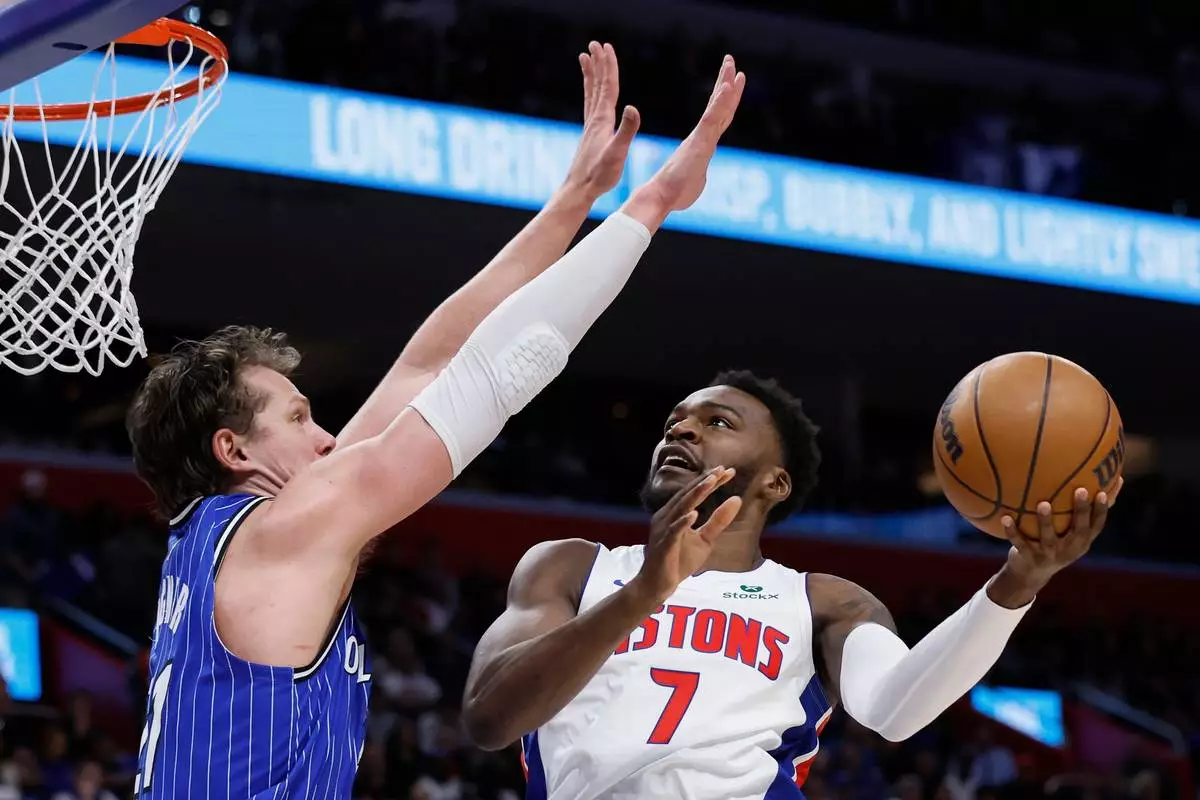
Detroit Pistons forward Paul Reed (7) goes to the basket against Orlando Magic forward Moritz Wagner, left, during the first half in Game 7 of a first-round NBA basketball playoffs series Sunday, May 3, 2026, in Detroit. (AP Photo/Duane Burleson)
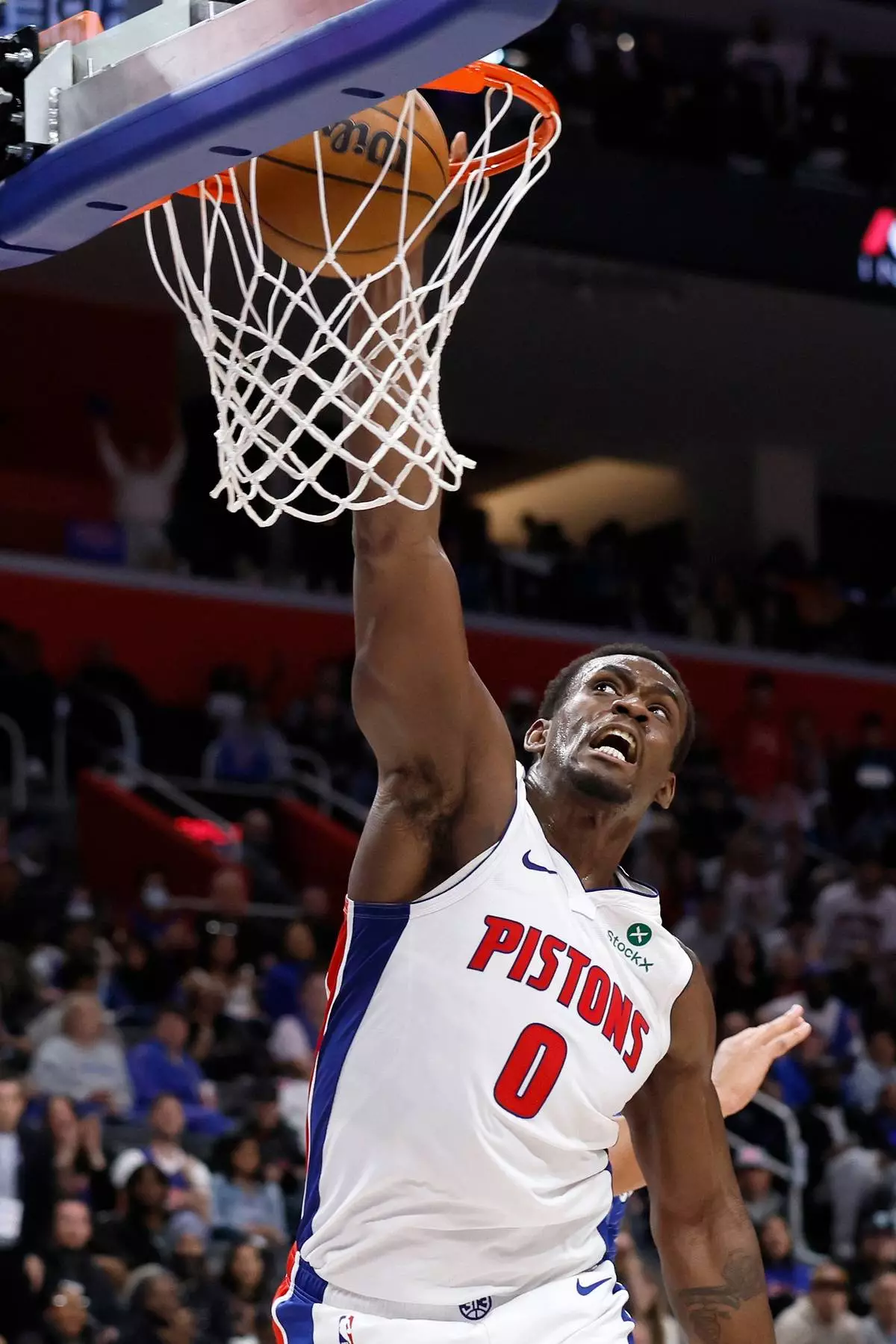
Detroit Pistons center Jalen Duren dunks against the Orlando Magic during the first half in Game 7 of a first-round NBA basketball playoffs series Sunday, May 3, 2026, in Detroit. (AP Photo/Duane Burleson)
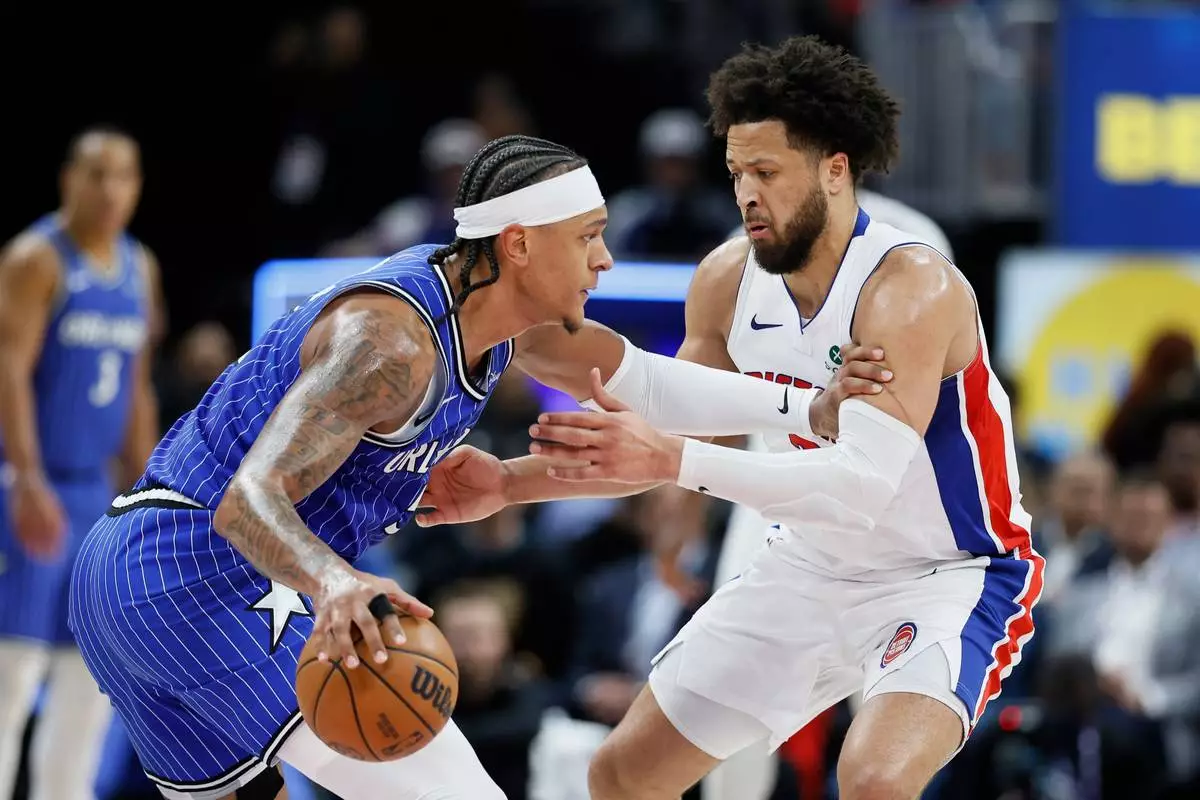
Orlando Magic forward Paolo Banchero, left, drives against Detroit Pistons guard Cade Cunningham, right, during the first half in Game 7 of a first-round NBA basketball playoffs series Sunday, May 3, 2026, in Detroit. (AP Photo/Duane Burleson)
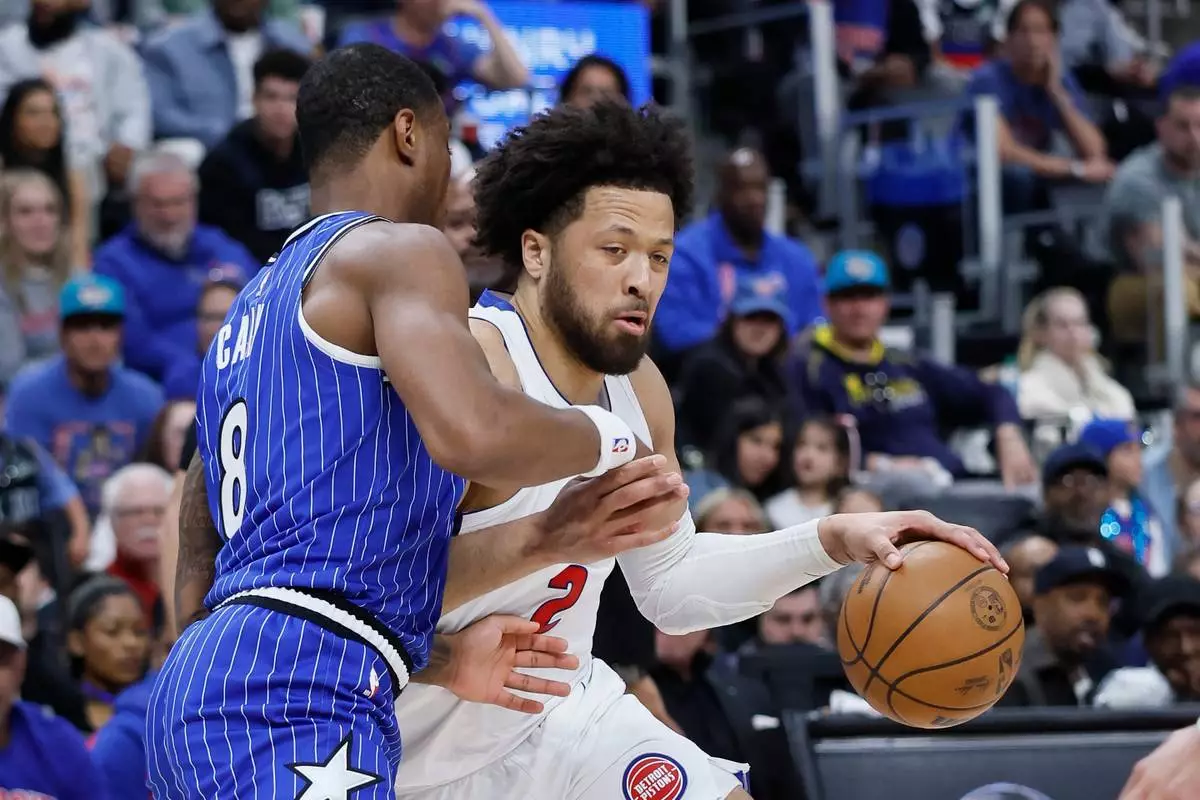
Detroit Pistons guard Cade Cunningham (2) drives against Orlando Magic forward Jamal Cain (8) during the first half in Game 7 of a first-round NBA basketball playoffs series Sunday, May 3, 2026, in Detroit. (AP Photo/Duane Burleson)
MARICA, Brazil (AP) — When Sávio Conrado Mura left his Indigenous village of stilt houses located deep in the Amazon rainforest in early April, he departed with the hopes of representing his people as a professional soccer player and, maybe, one day playing for the Brazilian national team at the World Cup.
Mura's first step toward earning the chance to don the famous yellow jersey once worn by Pelé and so many other Brazilian soccer greats took place on Sunday in an empty stadium in Rio de Janeiro with a team exclusively made up of Indigenous players.
The 21-year-old goalkeeper, who takes his last name from the Mura people of his birth, left his headdresses and bows behind to play for Originarios, a new soccer club in Rio’s fifth division that is mainly for players under the age of 23. He and 25 more youngsters from 13 native Brazilian groups have been getting ready by living and training in Marica, a city of 200,000 located about 25 miles (40 kilometers) from Rio.
“I am already a role model for my community,” Mura told The Associated Press after a training session on Thursday. “If me playing in a World Cup is God’s will, I will take it.”
His team won 2-0 despite coach Huberlan Silva not being able to field five of his starters for different reasons. Still, Originarios delivered a solid performance in front of a few dozen locals — none of its fans could travel to the Rua Bariri stadium in Rio.
Mura says he is the only person to ever leave his village, which is near the city of Autazes next to one of the smaller tributaries of the sprawling Amazon River, with the aim of becoming a professional soccer player. His journey from the depths of the rainforest to begin his pro career with Originarios took three days of travel by boat, car and airplane to reach Rio.
The Originarios team has gathered players from 10 Brazilian states, with 15 of them being chosen from about 400 videos of Indigenous players. Coach Wesley Terena, who has experience in amateur tournaments, also brought some trusted players with him. An Originarias team of female players is expected to start play in 2027, the same year Brazil hosts the Women’s World Cup.
Off the field, the players live together, sing songs in their native tongues and cover their bodies in war paint to keep traditions alive. But once soccer practice begins, they focus on drills, ball control and fitness.
On Sunday, their rival Barcelona, a Rio-based team named after the more famous Spanish club, was never a match for Originarios, which scored both of its goals in the first half.
The Originarios project that drew Mura thousands of miles (kilometers) from the remote Amazon waterways to the urban sprawl of Rio exemplifies how difficult it is for Indigenous peoples in Brazil to display their talents without leaving their communities behind. They do play tournaments back home, but all are amateur and not widely seen by most in the soccer-crazy South American country.
Government figures show Brazil’s Indigenous population is less than 1% of its 213 million residents. There have been some players with Indigenous roots in Brazilian league teams and the national team, but no fully Indigenous man has ever played in any of the top four divisions.
Although Originarios is a professional team, it doesn’t disclose player salaries and a lot of its structure is still amateurish. Players have to ride in a school bus loaned by the city of Marica to train at a rented facility. Practice needs to finish by 11 a.m. because the bus has kids to pick up soon afterward.
But those hurdles don’t bother the players.
“I am so focused on soccer now,” said Edilson Nunes da Silva Karai Mirim, a 25-year-old member of the squad from the Guarani Mbya people who likes to entertain his teammates by playing his guitar. “This song in my language says the sun may rise to give us strength. Strength for our struggles each day, and that every day can be blessed.”
Founded in 1981, Gavião Kyikateje fielded an almost entirely Indigenous team in 2014 and played in the top division of Para state’s championship. The club now plays in the second division and its team is mixed.
Some Brazilian national team players who played in World Cups claim to have Indigenous roots, such as Garrincha, who won the biggest prize in soccer in 1958 and 1962 as a teammate of Pelé, and Paulinho, who played in the 2014 and 2018 tournaments.
Anderson Terra, the team’s administrator, is the mind behind Originarios. He also chairs the Instituto Terra do Saber, which works with Guarani Mbya populations in the city of Marica.
Terra said the team became possible because of a deal with a Rio-based club named Ceres, which had playing rights in the league but did not have plans to have a soccer team this year. Otherwise, Originarios would have had to raise up to 1.3 million Brazilian reais ($260,000) to pay local and national soccer bodies to compete.
“We don’t want to reach Brazil’s top league. Competing is important, it will happen, but our main goal is to provide opportunities,” Terra said. “The vast majority of these boys come because they have a dream. This tournament is for under-23 players, only five may be above that age.”
If climbing up divisions in Rio’s lower leagues doesn’t come quickly, Originarios already has offers to play overseas and display its special red shirt — a reference to urucum, a natural paint that is used by Indigenous peoples in Brazil as a symbol of power and life.
“(Soccer) is not just a game,” the team’s profile on Instagram says ahead of its debut. “This is a landmark, it is resistance and it is pride.”
Coach Huberlan Silva said after Sunday's win that he wants Originarios to one day inspire fans beyond the discussion about their roots. He said there are several Indigenous players in Brazil's top flight division but that prejudice against native Brazilians playing soccer has stopped them from associating themselves with their own ethnicities.
“We need to start breaking barriers and start telling their stories, they have wonderful stories about their people, their villages,” Silva said. “They want to tell it with the ball at their feet.”
Savarese reported from Sao Paulo. Associated Press reporter Mario Lobão contributed to this report.
AP soccer: https://apnews.com/hub/soccer
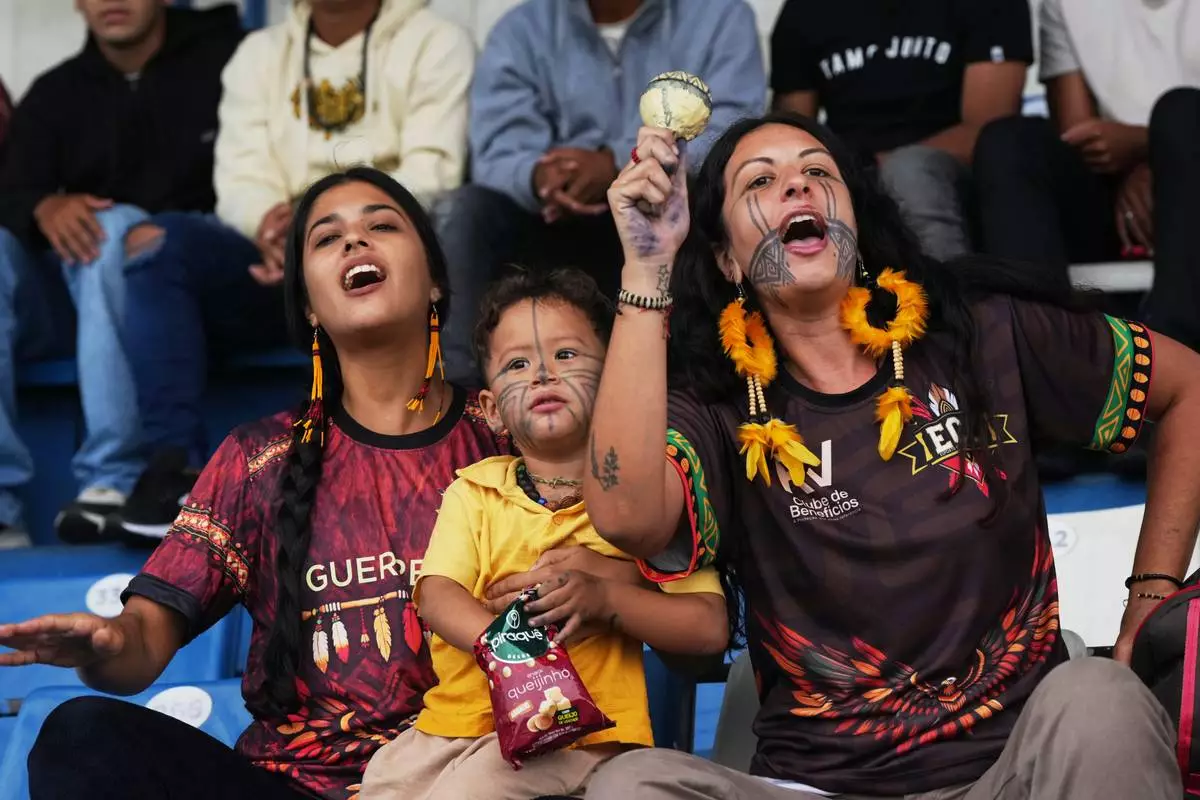
Fans of Originarios, a new soccer team in Rio's fifth division made up exclusively of Indigenous players, cheer during a match against Barcelona in Rio de Janeiro, Sunday, May 3, 2026. (AP Photo/Silvia Izquierdo)
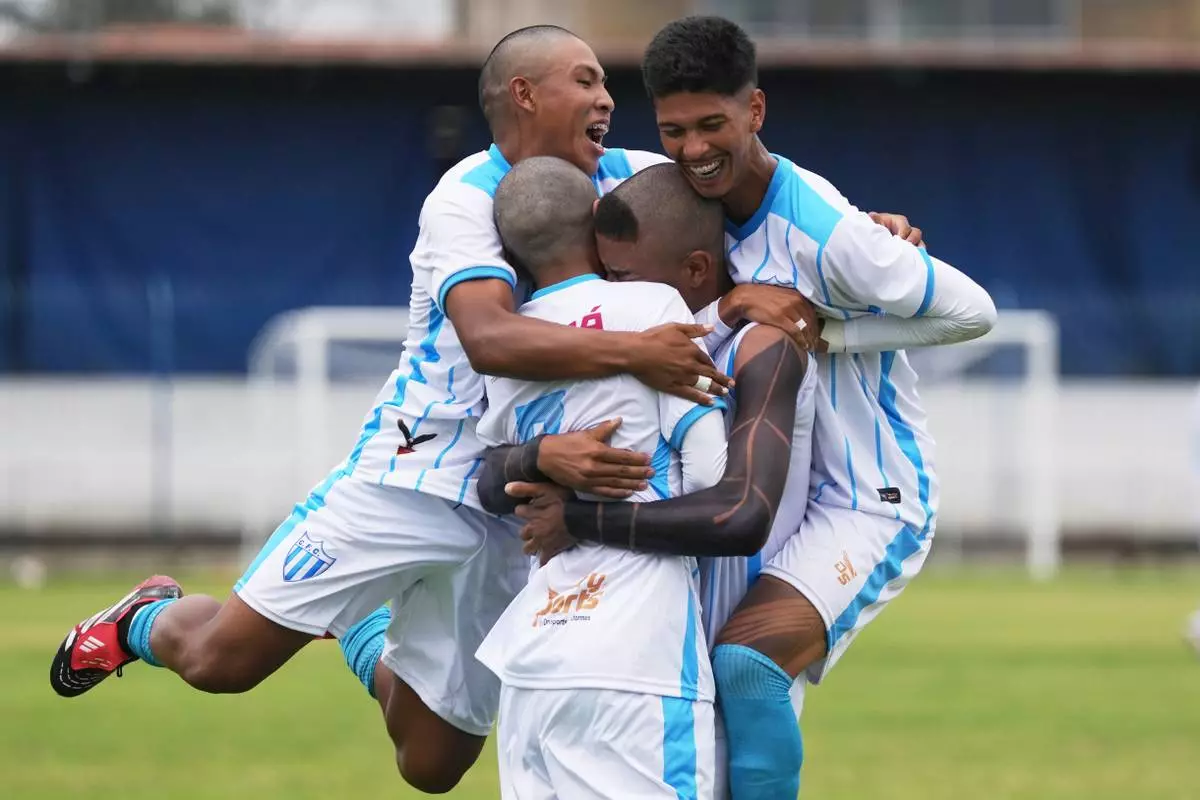
Players of Originarios, a new team in Rio's fifth division made up exclusively of Indigenous players, celebrate after scoring a goal against Barcelona during a Campeonato Carioca match in Rio de Janeiro, Sunday, May 3, 2026. (AP Photo/Silvia Izquierdo)
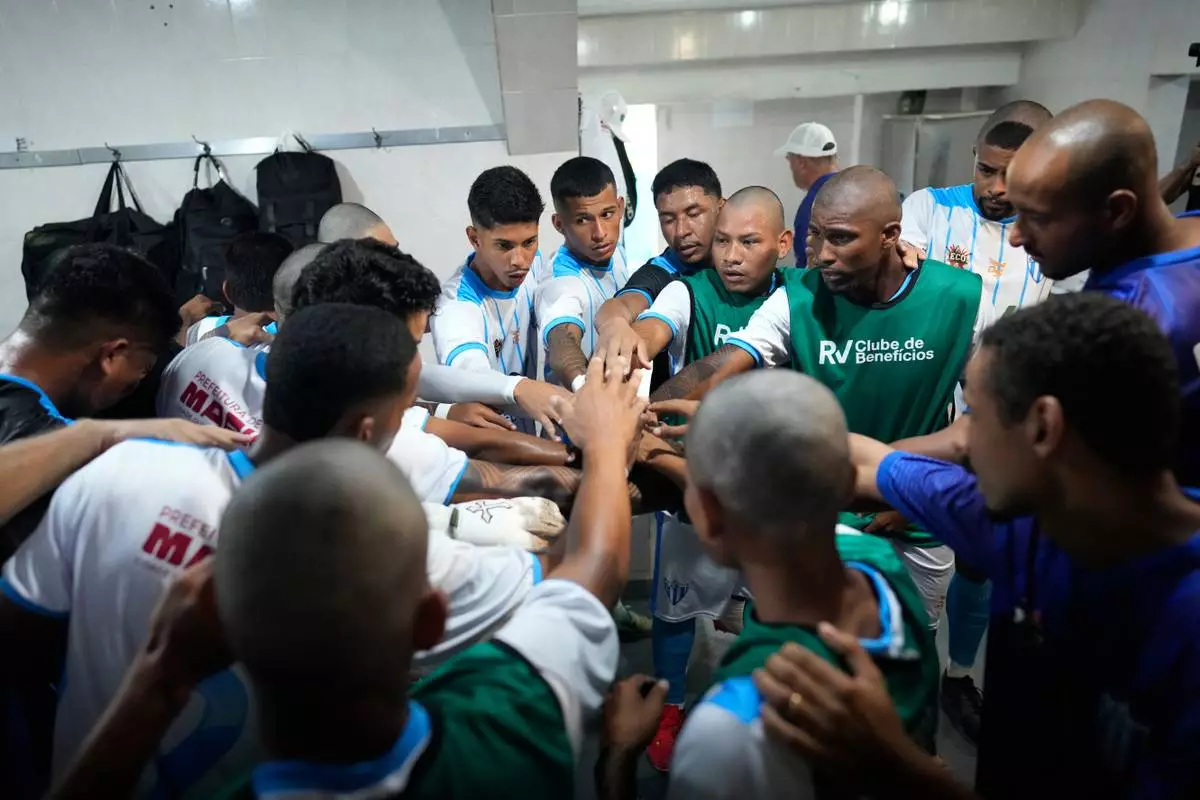
Players of Originarios, a new team in Rio's fifth division made up exclusively of Indigenous players, gather in the dressing room before a match against Barcelona in Rio de Janeiro, Sunday, May 3, 2026. (AP Photo/Silvia Izquierdo)
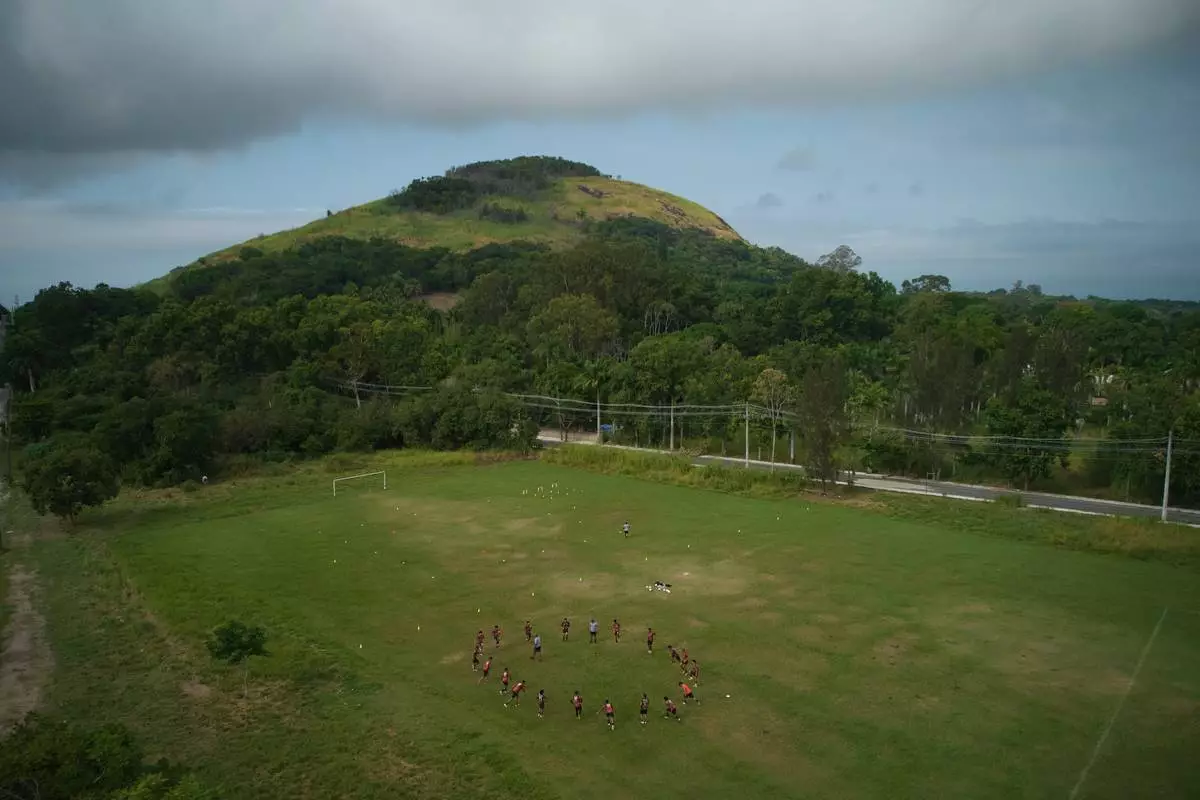
Members of Originarios, a new soccer team in Rio's fifth division made up exclusively of Indigenous players, train in Marica, Brazil, Tuesday, April 28, 2026. (AP Photo/Silvia Izquierdo)
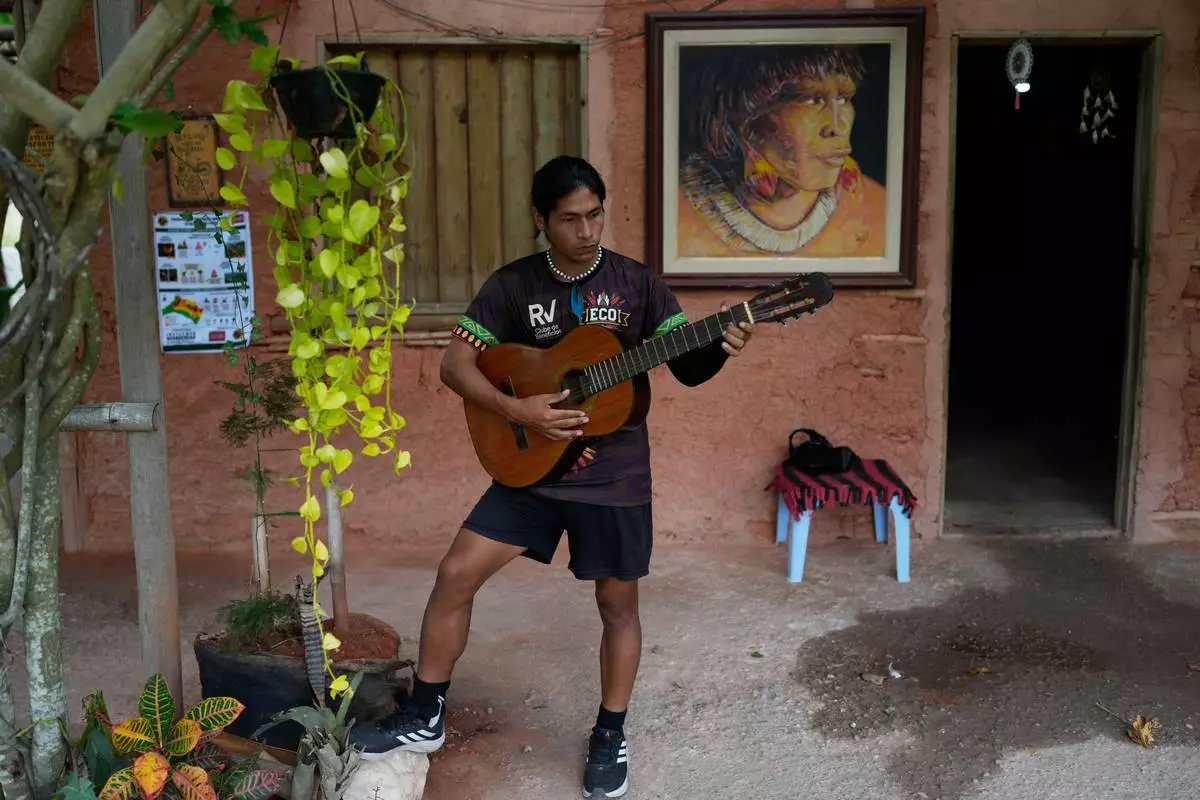
Edilson Nunes da Silva, a player of Originarios, a new soccer team in Rio's fifth division made up exclusively of Indigenous players, plays the guitar at his home in Mata Verde Bonita village in Marica, Brazil, Tuesday, April 28, 2026. (AP Photo/Silvia Izquierdo)
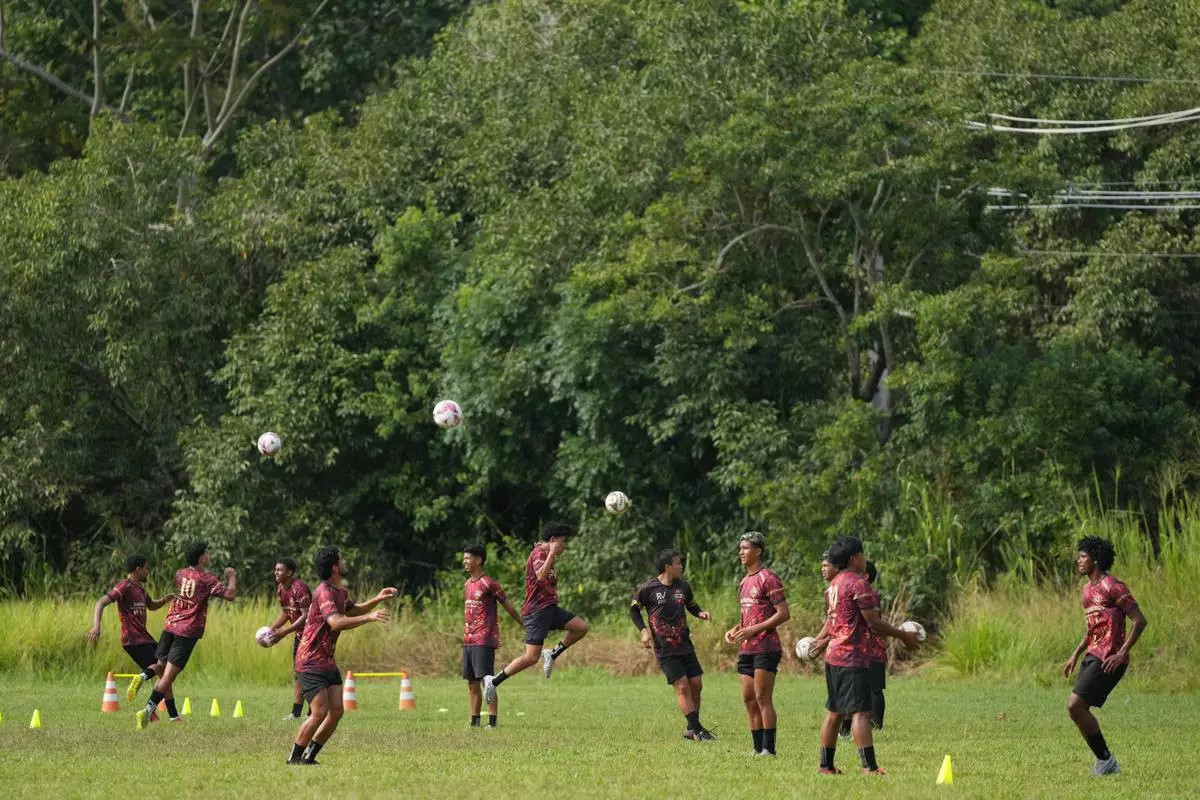
Members of Originarios, a new soccer team in Rio's fifth division made up exclusively of Indigenous players, train in Marica, Brazil, Tuesday, April 28, 2026. (AP Photo/Silvia Izquierdo)
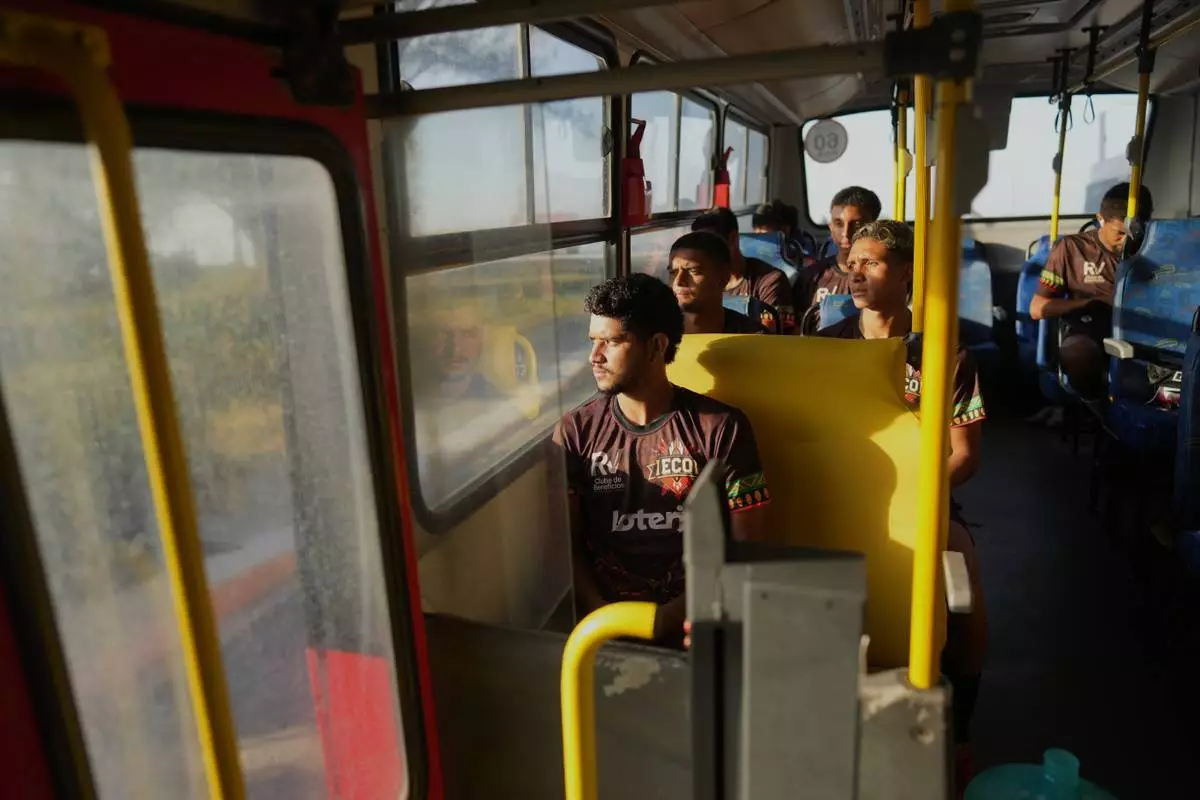
Players of Originarios, a new soccer team in Rio's fifth division made up exclusively of Indigenous players, ride a bus to practice in Marica, Brazil, Tuesday, April 28, 2026. (AP Photo/Silvia Izquierdo)
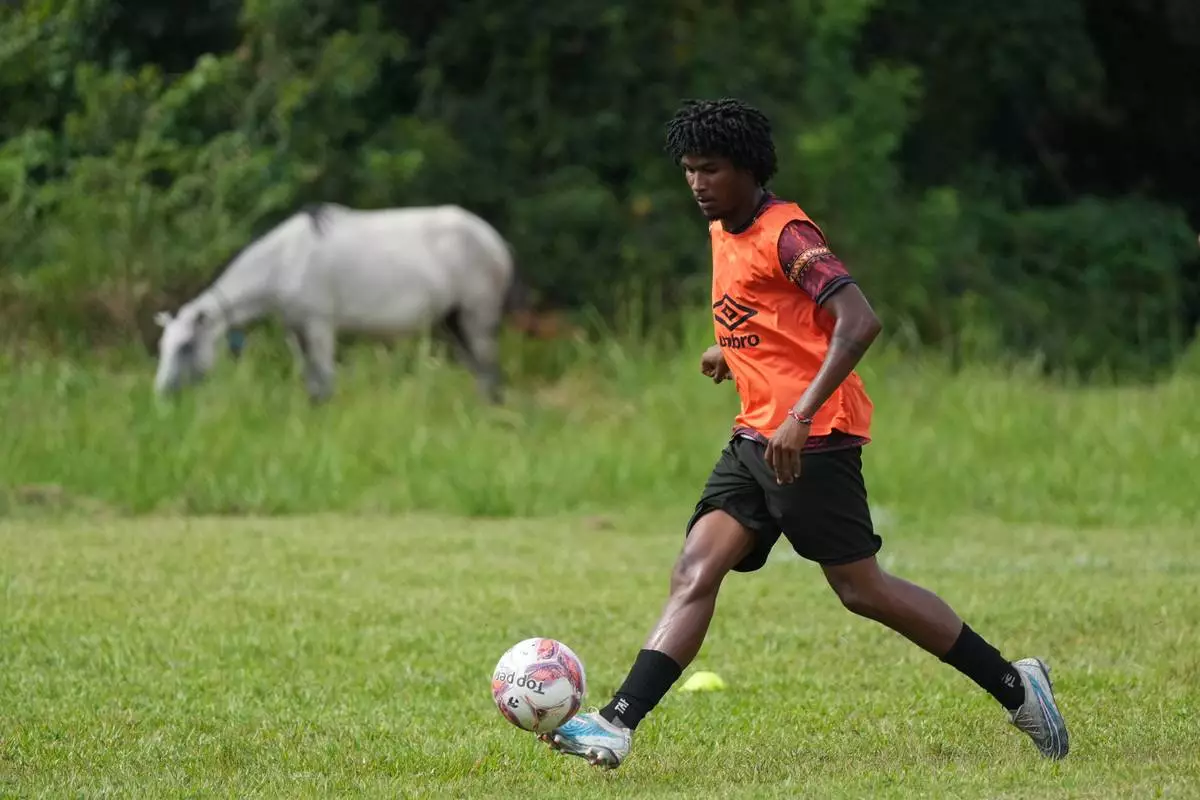
A player for Originarios, a new soccer club in Rio's fifth division made up exclusively of Indigenous players, controls the ball during a training session in Marica, Brazil, Tuesday, April 28, 2026. (AP Photo/Silvia Izquierdo)